Printed Custom Plastic Garment Bags Quote for Tea Brands
A printed Custom Plastic Garment Bags quote for tea should tell you more than the unit price. The useful quote explains what the bag is made from, how it will be printed, what tolerance the supplier can hold, how the closure works, and what happens when you reorder the same packaging six months later.
Tea companies often use garment-style Bags for Branded merchandise, apparel inserts, gift bundles, staff uniforms, retail kits, event packs, and subscription extras that ship alongside tea. These items may not touch the tea itself, but they still sit inside the brand experience. A clean, well-sized outer bag keeps fabric, cards, sleeves, and bundled pieces from picking up dust or scuffs, and it makes the order look intentional when it reaches a retailer, warehouse, or customer.
Practical rule: the right bag should reduce handling problems, protect the presentation, and be repeatable. If it only looks cheap on the quote sheet, it may become expensive in packing, returns, or inconsistent reorders.
Why Tea Brands Spec Garment Bags Before Launch
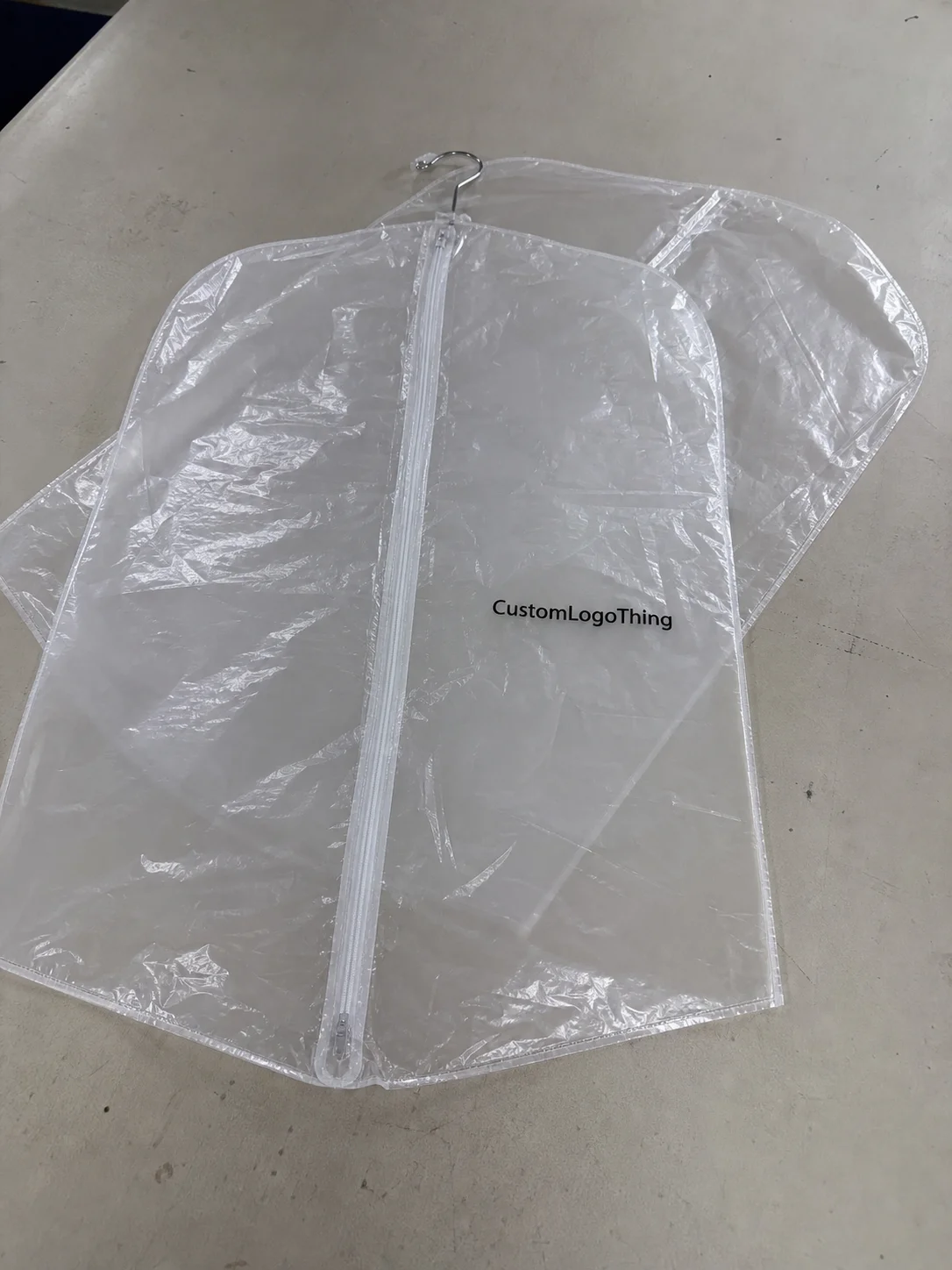
Packaging decisions made late tend to be rushed, and rushed outer packaging is easy to spot. The bag may be slightly too tight, the seal may sit over the logo, the film may haze the product more than expected, or the print may land too close to a fold. None of those problems is dramatic on its own. Together, they make a launch feel less controlled.
For tea brands, garment bags are most useful when the product mix extends beyond loose leaf, sachets, tins, or cartons. A folded T-shirt, apron, fabric pouch, branded towel, sampler bundle, or retail display kit often needs a flexible outer pack that protects without adding the weight and cost of a rigid carton. The bag also helps warehouse teams identify, stack, and pick related items without opening every bundle.
Different channels place different demands on the same bag. Retail display needs clarity and a logo that reads at arm's length. Wholesale handoffs need clean packing and reliable seals. Subscription boxes need consistency because customers compare what they receive from month to month. Event merchandise needs speed at the packing table and enough durability to survive transport, setup, and handling.
That is why buyers should define the outer bag before the first shipment, not after the product has already arrived at the warehouse. Size, closure, film, and artwork placement affect labor. If the bag is too snug, packers slow down. If the flap does not close cleanly, orders need rework. If the logo lands under a fold, the printed branding loses most of its value.
Good garment bag specifications also support margin control. A slightly better film or a more practical closure may add a few cents per unit, but it can prevent repacking, product scuffing, messy presentation, and avoidable customer service issues. Smaller packaging mistakes can cost more than the packaging itself when they affect a launch, seasonal release, or wholesale shipment with a fixed delivery window.
Bag Construction, Film Choices, and Print Options
Material choice drives clarity, stiffness, tear resistance, print appearance, sealing behavior, and price. The most common films for printed garment bags are LDPE, HDPE, co-extruded film, and recycled-content blends. Each can be the right choice, but not for the same job.
LDPE is widely used because it is flexible, reasonably clear, and easy to convert into common bag formats. It works well for lighter retail presentation, folded apparel, and simple merchandise packs. It has a softer hand feel than HDPE and usually gives a cleaner view of the contents, which matters when the merchandise itself is part of the sale.
HDPE is stiffer and has more crinkle. It is not usually selected when high clarity is the main requirement, but it can be useful for slimmer gauges, economical runs, or applications where structure matters more than a soft feel. Buyers should review an actual sample before choosing HDPE for premium presentation, because its sound and opacity may not fit every tea brand's packaging system.
Co-extruded film can be a practical middle ground for bags that need better tear resistance, more controlled structure, or improved performance in shipping and storage. Co-ex films vary by construction, so the quote should specify more than a generic name. Ask what the film is designed to improve: puncture resistance, clarity, stiffness, seal performance, or recycled-content compatibility.
Recycled-content blends are increasingly requested for sustainability-led packaging programs, but they need careful review. Recycled resin can affect clarity, odor, color consistency, film strength, and ink adhesion depending on the content level and source stream. If recycled content is part of the brief, request samples from the same general film family proposed for production, not only a polished stock sample that may not represent the final run.
Bag format is just as important as resin. A side-gusset bag gives folded or thicker items more room. A bottom-gusset option adds volume and lets some packs sit more naturally. A hang hole supports peg display, while a flap seal or self-seal strip speeds up packing and keeps the finish neat. Zipper-style closures cost more but can make sense for kits that customers open and reuse.
Print method should match the artwork. Spot-color printing is usually the cleanest route for a simple logo or repeating mark. One-color and two-color prints often look sharper on flexible film than complex artwork with small type, tight gradients, or fine illustration. Full-coverage printing can be striking, but it increases ink use, setup effort, registration risk, and sometimes scrap.
Transparent film changes color perception. White ink may be needed under certain graphics if the logo must stay opaque, and that extra layer can affect cost. Dark logos usually read well on clear LDPE, but thin lines can break up visually once the bag is filled, folded, or handled. A slightly bolder mark often performs better than artwork designed for paper labels or cartons.
Finish also changes the look and the quote. Gloss tends to sharpen the shelf impression and improve product visibility. Matte or frosted film can feel more restrained, but it reduces clarity and may soften printed edges. Before approving a frosted finish, check it with the actual product inside the bag, because fabric color, insert cards, and tea packaging graphics can look muted behind the film.
For general packaging standards and sustainability context, the Packaging Alliance and the EPA recycling guidance are useful references. They will not replace a supplier's technical data sheet, but they help buyers ask better questions about recyclability claims, material language, and packaging trade-offs.
Size, Thickness, and Closure Specs to Confirm
Most quote delays begin with an incomplete size. A request that says "standard garment bag" or "fits folded merch" leaves too much room for error. A useful specification includes flat width, usable length, flap length if applicable, gusset depth, hang hole position, seal location, and the exact product configuration going inside the bag.
Measure the packed item, not just the item before folding. A folded shirt with an insert card behaves differently from the same shirt alone. A tea gift bundle with a sample pouch, printed card, and fabric item may create pressure points that a flat measurement misses. If the bag is for a boxed set, measure the box corners and allow enough clearance so packing staff do not have to force the product through the opening.
Thickness should be chosen around use, not habit. Light retail presentation may work with a lower mil or micron target. Transit protection, repeated handling, and warehouse stacking usually require more substance. A thicker film is not automatically better, though. Overbuilding the bag can increase cost, reduce flexibility, and make packing awkward.
Ask for the tolerance, not only the nominal gauge. A supplier might quote a film at a target thickness, but real production has variation. For a basic outer bag, that variation may be acceptable. For premium retail packaging or automated packing, loose tolerance can affect feel, seal strength, and how consistently the bags open.
Closure style deserves the same attention. Self-seal strips are fast and practical for packing lines. Adhesive flaps give a cleaner presentation when the bag is meant to be opened once. Zipper closures support repeated access but raise cost and may change the bag's usable interior space. Open-top bags can work for fast insertion or later heat sealing, but they expose the product until the final packing step.
Artwork should be treated as a production file, not a decoration placed at the end. Ask for bleed, safe area, print placement rules, minimum line weight, and any limits around seals, vents, hang holes, and folds. A logo near a sealed edge can distort during conversion. Small type near a gusset can disappear once the bag is filled. These are not design opinions; they are physical limits of printing on flexible film.
If the bag will include suffocation warnings, recycling marks, SKU labels, barcodes, or compliance text, reserve space early. Barcodes on flexible clear film need enough contrast and a flat enough print area to scan reliably. A beautiful mark that cannot be scanned at receiving can still create operational trouble.
Printed Custom Plastic Garment Bags Quote: Pricing and MOQ
The cost of a printed Custom Plastic Garment Bags quote for tea usually comes down to six variables: film grade, dimensions, thickness, print colors, finish, and closure type. Carton packing, freight, tooling, proofing, and artwork changes can move the final invoice as well, so a quote that shows only a unit price is only partly useful.
Minimum Order Quantity is shaped by setup time, plate or cylinder costs, press efficiency, material procurement, and conversion waste. The machine must be set up whether the order is small or large, which is why a short run often looks expensive per bag. Highly customized sizing, unusual film, heavy ink coverage, or special closures can push the MOQ higher because the line needs enough volume to justify the setup.
These ranges are directional for planning, not fixed market pricing:
| Option | Typical Use | Approx. Unit Range | Notes |
|---|---|---|---|
| LDPE, one-color print | Retail presentation, lighter protection | $0.12-$0.20 at 5,000 units | Good clarity and lower setup complexity |
| Co-ex film, one- to two-color print | Shipping, storage, premium retail | $0.18-$0.32 at 5,000 units | Better tear resistance and a more structured feel |
| Recycled-content blend, printed | Sustainability-led branded packaging | $0.22-$0.38 at 5,000 units | Requires QA review for clarity, odor, and consistency |
| Custom size, complex print | Launches, gift sets, special packs | $0.28-$0.55 at 5,000 units | Higher proofing effort and more setup risk |
Several details can change those numbers quickly. A second print color may require additional setup. White ink under a logo can add cost. A wider bag may move the job to a different film roll or press width. A flap seal adds material and conversion steps. Heavier cartons may increase freight even if the unit price looks attractive.
Buyers should ask for a written breakdown showing bag unit price, tooling or plate charges, proof or sample cost, carton packing, freight terms, payment terms, and estimated lead time after proof approval. If two suppliers quote the same unit cost but one includes setup and the other adds it later, the lower-looking quote may not be lower at all.
There are practical ways to reduce cost without weakening the package. Standardize one bag size across several merchandise SKUs. Limit print colors. Avoid changing finish unless the finish has a clear merchandising purpose. Use the lightest gauge that still protects the product during real handling. Keep artwork bold enough for film printing instead of paying for complexity that does not reproduce cleanly.
It also helps to compare garment bags against other product packaging formats. A simple outer bag may cost less than a rigid carton while still carrying strong branding, but it will not provide the same crush protection or shelf-blocking presence. If the tea line also uses cartons, sleeves, inserts, or labels, review the bag as part of the wider system rather than as a standalone purchase. Broader options can be reviewed through Custom Packaging Products when the final format is still open.
Production Process, Proofing, and Lead Time
A clean quote starts the process, but the schedule begins after the specification is confirmed. The usual sequence is inquiry, technical review, artwork check, proof, sample or mockup approval, production, inspection, packing, and dispatch. Any missing detail can pause the job before production starts.
First orders almost always take longer than repeat orders. Common delays include missing dimensions, artwork that has not been outlined, low-resolution logos, unembedded fonts, unclear Pantone references, and print placement that has not been approved against the actual bag layout. These are ordinary production issues, but they still affect the ship date.
For standard printed garment bag runs, a reasonable planning window is often about 12 to 18 business days after proof approval, depending on film availability, print complexity, order volume, and factory scheduling. Custom sizes, special resin blends, zipper closures, heavy ink coverage, or physical pre-production samples can extend that schedule. Rush production may be possible, but it usually costs more and leaves less room for careful proofing.
Work backward from the receiving date. If a launch, warehouse appointment, subscription pack-out, or seasonal promotion has a fixed date, the packaging schedule should include artwork approval, production time, inspection, freight, customs if applicable, and receiving. A bag that ships on time but misses the pack-out window still creates a problem.
Proofing should match the risk level. A digital proof can confirm text, size callouts, logo placement, warning copy, and basic layout. A blank physical sample can confirm fit, closure, film feel, and packing speed. A printed pre-production sample gives the best view of color, opacity, line weight, and finish, though it may add time and cost.
Quality control should not be treated as a vague promise. Useful checks include film thickness, bag dimensions, seal strength, closure alignment, print position, registration, ink adhesion, odor, clarity, carton count, and packing condition. For a simple one-color bag, inspection may be straightforward. For a premium printed run with tight brand standards, the inspection criteria should be written before production.
Approval moves faster when the buyer gives one clean decision path: one spec sheet, one artwork file set, one contact person, and one approval loop. Multiple unofficial file versions are a common source of errors. A supplier can only reproduce the approved standard if the approved standard is clear.
How to Compare Suppliers on Quality, Compliance, and Reorders
The cheapest quote is not always the best buy. Compare suppliers on the details that affect the finished bag: material description, thickness tolerance, print registration, seal integrity, closure quality, clarity consistency, lead time reliability, and reorder control. A small shift in opacity or print position may seem minor in procurement, but it can make a retail line look uneven.
Ask what documentation is available for the intended use. If the bag has any food-contact relevance, the supplier should be able to explain whether the material is suitable for that application and what declarations or test reports can be provided. Many garment bags used by tea brands are for merchandise or secondary packaging rather than direct food contact, and that distinction should be clear in the brief.
If recycled content is requested, ask how it affects print quality, film strength, odor, and color repeatability. Sustainability language should be specific. A claim that sounds good on a sales sheet is not the same as a documented material specification. For certification language and transport context, the FSC site and ISTA can help buyers frame better questions, even though FSC applies to fiber-based materials rather than plastic film.
Reorder consistency is where a packaging supplier proves its value. A one-time low price matters less if the next run requires a full re-spec or arrives with a different film feel. Ask whether the supplier archives artwork, records approved dimensions, keeps print placement references, and can identify the same film structure for future production. If the material changes, they should tell you before the reorder is produced.
Good supplier signals include:
- Clear film description, gauge target, and thickness tolerance
- Written proof approval before production
- Defined print placement and color references
- Reorder records for artwork, size, closure, and material
- Inspection checks for dimensions, seals, print, and carton counts
- Honest guidance when a requested spec is likely to raise cost or risk
For tea brands using several packaging formats, the strongest supplier discussions usually cover the whole packaging set. The garment bag should work with labels, cartons, inserts, sleeves, and shelf display, not fight them. Consistent color logic and practical handling are more valuable than adding another decorative element that slows production.
Requesting a Better Quote and Approving Artwork
To request an accurate printed Custom Plastic Garment Bags quote for tea, start with the information a production team actually needs: finished bag width and length, gusset if required, film preference or target thickness, closure type, print colors, artwork files, order quantity, delivery location, and target receiving date. If any detail is uncertain, say so. A good supplier can price options more intelligently when the unknowns are visible.
Ask for a comparison rather than a single version. One option can show the base spec, another can show the upgraded material or closure, and a third can show the lowest-cost version that still protects the product. This makes the trade-offs easier to see. A buyer can decide whether the extra cents belong in thicker film, better print coverage, faster packing, or another packaging component altogether.
For first orders, sample approval is usually worth the time. A stock sample shows general film feel. A blank prototype confirms size and closure. A printed proof confirms whether the logo, opacity, and placement work on the chosen surface. Once the approved version is right, lock the specification for reorders so future purchasing is based on a controlled standard rather than a new interpretation each time.
There are also moments when a garment bag is not the best structure. If the product needs crush protection, a carton or sleeve may do more work. If the merchandise must stand upright on shelf, a flexible bag may need support from an insert or outer box. If the customer needs to inspect fabric color or printed details, clear film may outperform a frosted premium look. The right packaging choice depends on product format, handling, and the way the brand is presented at delivery.
The strongest quote is not simply the cheapest one. It is the one that protects the item, prints cleanly, packs efficiently, arrives within the real schedule, and can be reordered without starting from scratch. For tea brands building merchandise, gift sets, and branded extras around the core product line, that reliability is the practical value of a well-specified custom garment bag. For a direct sourcing discussion, use Contact Us with the size, quantity, artwork, and delivery requirements already prepared.
What changes the price of a printed custom plastic garment bags quote for tea?
Size, film type, thickness, print colors, finish, closure style, and order quantity are the main price drivers. Tooling, proofing, carton packing, freight, and artwork revisions can also change the total cost.
What MOQ should I expect for custom printed garment bags?
MOQ depends on press setup, film availability, bag size, print complexity, and closure type. Standard sizes with one-color printing usually allow more flexible minimums than custom structures with multiple colors or special film.
Which material works best for tea-branded garment bags with printing?
LDPE is often chosen for flexibility and clarity. Co-extruded films can improve tear resistance and structure, while recycled-content blends may support sustainability goals if clarity, odor, strength, and print adhesion are checked carefully.
How long does production take after artwork approval?
Many standard runs require about 12 to 18 business days after proof approval, though timing depends on material availability, order volume, print method, closure type, and factory scheduling. First orders usually take longer than exact reorders.
Can I get a sample before placing the full order?
Yes. Buyers can request a stock sample, blank prototype, digital proof, or printed pre-production sample depending on the risk level. Sampling helps confirm size, film feel, closure function, print placement, and overall presentation before the full run is made.


