Buyer Fit Snapshot
| Best fit | Foil Stamped Belly Bands Bulk projects where brand print, material claims, artwork control, MOQ, and repeat-order consistency need to be specified before quoting. |
|---|---|
| Quote inputs | Share finished size, material target, print colors, finish, packing count, annual reorder estimate, ship-to region, and any compliance wording. |
| Proofing check | Approve dieline scale, logo placement, barcode or warning zones, color tolerance, closure strength, and carton packing before bulk production. |
| Main risk | Vague material claims, crowded artwork, missing packing details, or unclear freight terms can make a low unit price expensive after revisions. |
Fast answer: Foil Stamped Belly Bands Bulk: Pricing, Specs, Turnaround should be specified like a repeatable production item. The safest quote records material, print method, finish, artwork proof, packing count, and reorder notes in one written spec.
Production checks before approval
Compare the actual filled-product size with the drawing, then confirm tolerance on folds, seals, hang holes, label areas, and retail display edges. Reserve space for logos, QR codes, warning copy, and material claims before decorative graphics fill the panel.
Quote comparison points
Review material grade, print process, finish, sampling route, tooling charges, carton quantity, and freight assumptions side by side. A quote is only useful when the supplier can repeat the same color, closure quality, and packing count on the next order.
Foil stamped belly bands bulk orders are one of the fastest ways to make a plain stock carton look intentional, premium, and ready for retail without decorating every surface of the box. A narrow wrap can carry the logo, product name, seasonal message, or set identifier, and that small strip of printed stock often delivers more shelf impact per dollar than a full custom carton when the base box can stay simple.
For procurement teams and brand managers, the buying question is usually plain and practical: how do you get a polished brand look, a dependable fit, and a sane unit price across multiple SKUs or gift sets without creating extra headaches? That is where foil stamped belly bands bulk make sense. The format is efficient, the visual payoff is strong, and the production method gives buyers a clean way to separate product lines, seasonal bundles, or promotional kits while keeping the core packaging structure steady.
For broader sourcing and cost planning, many buyers pair this format with Wholesale Programs so quantities, tiered pricing, and repeat runs stay organized. If you are aligning packaging across several launches, that structure matters more than people like to admit.
Why Foil Stamped Belly Bands Bulk Still Stand Out
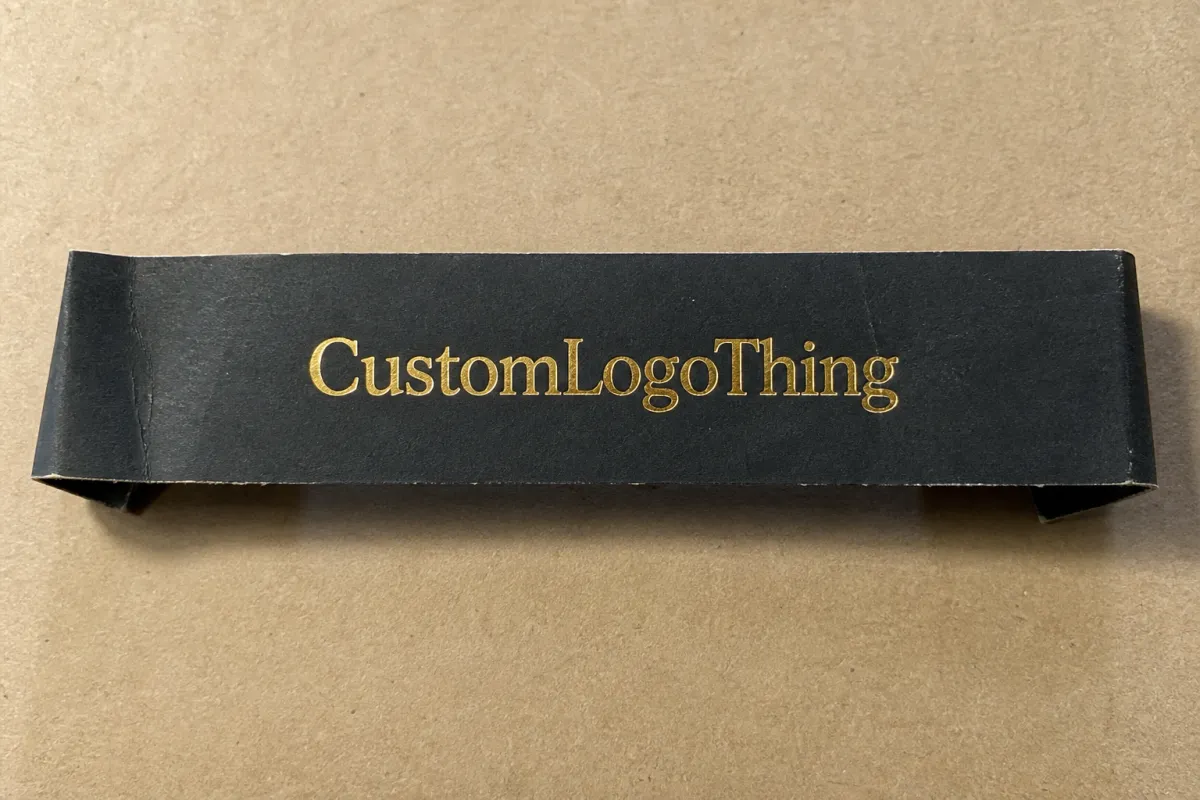
A plain carton can look custom once a foil belly band wraps it the right way. That is the appeal. The box itself may be a stock kraft mailer, an uncoated folding carton, or a simple tray, but the band gives the package a visual centerline and a premium finish right where the customer looks first. A bright foil logo, a metallic border, or a small stamped icon can change the entire read of the package in one pass.
From a packaging buyer's point of view, this format works especially well for short-run retail branding and seasonal promotions because the base carton can stay simple while the band changes by campaign. If a product line needs a winter design, a limited-edition release, or a holiday gift set, the belly band is far easier to update than a full printed carton program. That flexibility is one reason foil stamped belly bands bulk stay popular for brands that need speed and presentation in the same order.
The cost advantage is real. Printing and finishing an entire box gets expensive fast, especially if the carton needs coated board, complex artwork, or multiple print passes. A belly band concentrates the brand work on a smaller area, which means the foil effect is used where it will be seen most. For many products, that delivers a better visual return on each packaging dollar than trying to print every panel of the box.
There is also a production advantage. Belly bands are easier to adapt across multiple SKUs, and they can help one packaging program serve more than one size or assortment. A cosmetics set, for example, might use the same carton family with different sleeves for shade ranges, fragrance families, or campaign themes. The result is a cleaner shelf story without a full redesign for each item.
Foil adds reflectivity, so the artwork feels sharper and more deliberate, but the best results depend on the right substrate, the right artwork placement, and a band that folds and sits properly. A thin logo can look elegant on screen and fail in production if the stock is too soft or the foil area is too tight. Buyers who catch that early usually get better results and fewer surprises.
That is the buying case for foil stamped belly bands bulk: a premium look, a manageable budget, and a format that keeps production organized across many SKUs or seasonal versions without reworking the entire package structure.
One more practical benefit: if the base carton is already approved for shipping or retail handling, the belly band can improve presentation without creating new structural risks. That helps buyers who want a stronger perceived value while keeping the packaging system close to what already works.
Product Details: What a Foil Belly Band Includes
A belly band is a printed wrap or sleeve that cinches around a carton, box, tray, or multi-pack. Depending on the design, it may close with a seam, a tuck, a glue point, or simple friction from a scored wrap. In use, the band does two jobs at once: it holds Visual Branding on the outside and helps identify the package contents or campaign inside.
Material choice changes how the finished band behaves. Text-weight paper can be economical and easy to fold, but it may not feel as substantial on shelf. Cover stock gives more body and usually holds scoring better. Kraft stock creates a natural look that many brands like for food, wellness, and handmade product categories. Premium uncoated sheets can produce a refined feel and keep the foil detail crisp without adding gloss.
Foil stamping itself is a heat-and-pressure process. A die transfers metallic or pigmented foil to selected artwork areas, usually logos, borders, icons, or headline type. Gold and silver remain common because they read quickly from a distance, but black, copper, red, blue, and soft holographic effects also show up in retail packaging programs when the brand wants a more specific tone.
The surface finish matters just as much as the foil. Matte stock can make the foil look brighter. Soft-touch lamination creates a tactile feel, but it may change how the band folds and can increase production complexity. Embossing and debossing add depth, while spot varnish can create contrast on specific graphics. These effects can be used alone or together, but each added step raises the need for tighter proofing and cleaner setup.
In practical packaging work, the best belly bands are usually simple, well sized, and clear in their branding. Too many effects can distract from the logo and make the piece harder to produce at scale. For a bulk order, the most useful design is often the one that stamps cleanly, folds predictably, and presents the brand without forcing the press to fight the material.
Common use cases include:
- Subscription kits and curated bundles
- Cosmetics and beauty cartons
- Candles and home fragrance packaging
- Bakery and specialty food sleeves
- Apparel boxes and folded garment packs
- Event kits, welcome boxes, and promotional mailers
- Holiday sets and limited-edition retail runs
That range of applications is part of the appeal. A belly band can carry a brand message without forcing the rest of the package to do all the work. For teams that need a fast way to update presentation across several lines, it is a practical format rather than an ornamental one.
A belly band only works if it fits the carton you actually run, not the carton you wish you had. In packaging production, that difference decides whether the band lands cleanly, stays aligned, and looks premium on shelf.
For buyers comparing construction styles, the strongest programs usually start with a simple material, then add only the finishing steps that support the brand story. That is how the product stays economical without looking cheap. If a design needs a specific paper tone, a precise foil color, or a crisp folded edge, those decisions should be made before the quote is finalized.
If your packaging line also needs broader sourcing support, a planning conversation around custom packaging wholesale options can help align belly bands, cartons, and related accessories under one purchasing approach. That often makes reorder management easier for operations teams.
Specifications That Affect Fit, Print, and Foil Quality
Size is the first specification to get right. A belly band needs a flat width, a wrap length, and an overlap allowance if the seam will close in a certain way. Some bands are meant to slide on loosely after packing. Others are designed to hold tight enough to stay centered during shipping and handling. A half-inch mistake can make the band feel sloppy or stop assembly from working at all.
Artwork setup matters just as much. Buyers should request a dieline and place all graphics inside the safe zone, especially when foil is involved. Fine reversed type, hairline rules, and very small logo details can stamp poorly if the stock is too textured or the press setup is not friendly to micro-detail. In production, the cleanest foil often comes from solid shapes, moderate type sizes, and strong contrast.
The most useful production details to confirm early are straightforward:
- Paper weight and finish
- Grain direction
- Foil color
- Seam position
- Score lines or fold lines
- Whether the band ships flat or pre-folded
- Whether the band needs adhesive, a tuck, or a friction fit
Grain direction matters more than many first-time buyers expect. A band that folds against the grain may crack at the score or refuse to sit flat. The result is not always dramatic, but it shows up in the details: lifted corners, slight bowing, and a package that feels less composed than it should.
Tolerance control also deserves attention in bulk runs. If one batch of bands is slightly loose and another batch is tight, the presentation changes across the line. That can be a problem for product families that sit next to each other on a shelf or ship in mixed packs. A disciplined dieline and a repeatable setup reduce that risk.
Physical proofing is the safest way to verify fit and foil coverage. Digital proofs help with layout and placement, but they do not fully show how the stock folds, how the foil catches light, or whether the seam lands in an acceptable location. A press-ready approval or a real sample is the better check before a large run goes forward.
If the package will move through distribution or a warehouse, it is smart to think about handling and transit. The ISTA distribution testing standards are useful reference points for packaging teams that want to understand how cartons and wraps behave under vibration, drops, and compression. That does not mean every belly band needs formal test certification, but it does mean the design should make sense under real shipping conditions.
For brands that care about sourcing credentials, FSC-certified paper options can be part of the spec conversation. The Forest Stewardship Council offers a recognized framework for responsible fiber sourcing, which matters to retailers and procurement teams that track materials more closely than they used to.
A good rule in production is simple: the more precise the foil, the more precise the spec sheet needs to be. If the logo has thin strokes, the paper should be chosen for clean stampability. If the band will cross multiple cartons, the dieline should be checked against each size before the quote moves forward. That discipline saves time later.
Keep in mind that some finishes change how the band behaves after stamping. A soft-touch coating can feel excellent in hand, but it may introduce scuff sensitivity or reduce the crispness of very fine foil. Matte and uncoated stocks often give better foil contrast, while glossy stocks can create a different visual effect and require a different design approach.
| Stock / Finish | Best Use | Visual Effect | Typical Tradeoff |
|---|---|---|---|
| Uncoated cover stock | Natural, premium, or artisanal brands | Soft surface with strong foil contrast | Can show scuffs faster than coated stock |
| Matte coated stock | Retail packs and gift sets | Clean look with controlled sheen | May need careful scoring to avoid cracking |
| Kraft stock | Eco-focused or handmade products | Earthy background that suits metallic foil | Color variation is more noticeable batch to batch |
| Soft-touch laminated stock | Luxury presentation | Velvety feel with a premium hand | Higher cost and more finishing steps |
The right spec choice depends on the packaging job, not on a generic idea of "premium." A cosmetics line that ships through retail distribution may need different scuff resistance than a direct-to-consumer gift kit. A bakery sleeve may need a different paper feel than an apparel wrap. Good spec work reflects those differences plainly.
Pricing, MOQ, and Quote Basics
Pricing for foil stamped belly bands bulk depends on five main factors: size, paper stock, number of foil passes, imprint coverage, and quantity. Special finishing, multiple artwork versions, and complex assembly can push the unit cost up as well. That is normal. What matters is knowing which inputs are driving the number you are seeing.
MOQ stands for minimum order quantity, and it is usually tied to setup efficiency. Foil stamping requires dies, press setup, and press time, so smaller runs carry higher unit costs because those fixed expenses are spread across fewer pieces. That does not make small orders impossible, but it does mean the economics change quickly as the run size grows.
For planning purposes, the ranges below are directional only. Exact pricing shifts with geography, stock availability, press method, and how much finishing work the job needs.
| Quantity | Typical Unit Range | What Drives the Price |
|---|---|---|
| 500-999 | $0.48-$0.95 | Higher setup share, limited economies of scale |
| 1,000-2,499 | $0.28-$0.62 | Better spread of press and tooling costs |
| 2,500-4,999 | $0.18-$0.42 | Stronger efficiency on repeatable foil work |
| 5,000+ | $0.14-$0.30 | Lower unit cost if artwork and specs stay consistent |
Those numbers only help if the quote includes comparable assumptions. A buyer should always ask whether the estimate includes one foil color or more, whether the bands arrive flat or folded, whether proofing is included, and whether packaging or freight are separate. A quote that looks low can become expensive once those items are added back in.
A strong quote request should include:
- Finished band dimensions
- Quantity by tier
- Artwork count or SKU count
- Foil color and print coverage
- Paper stock preference
- Need for folding, scoring, or gluing
- Ship-to location
- Launch date or in-hand date
That list keeps pricing apples-to-apples. Without it, one supplier may quote a flat band, another may quote pre-folded pieces, and a third may include a different stock entirely. Those numbers are not comparable until the assumptions match.
There are also hidden costs that first-time buyers sometimes miss. Extra proof rounds can add time and money. Rush scheduling can affect press availability. Variable data, if each band needs a unique code or message, adds another layer of work. Assembly and kitting can matter too if the bands need to be packed with cartons or shipped to a co-packer instead of going straight to a warehouse.
A practical buyer knows that the cheapest unit price is not always the best value. If the band does not hold its shape, if the foil edges blur, or if the delivery misses the launch window, the low quote ends up costing more than the higher one would have. That is especially true for retail promotions, where timing and presentation both affect sell-through.
If your company buys packaging on repeat, it can help to align foil stamped belly bands bulk orders with a structured sourcing plan through wholesale packaging programs. That gives purchasing teams a cleaner way to compare annual needs, make reorders more predictable, and reduce the back-and-forth that tends to slow down packaging launches.
For buyers who need to justify budget internally, a useful way to frame the spend is simple: the band is not just decoration. It is the visible branding layer that can make a stock carton feel intentional, seasonal, and retail-ready. That makes it easier to defend than a generic print line item because the customer sees the result immediately.
Process, Timeline, and Lead Time From Proof to Ship
The production workflow is usually straightforward, but every step depends on the one before it. First comes the request for specs and artwork. Then the dieline review, proof approval, die or plate preparation, foil stamping, finishing, inspection, packing, and shipping. If one step changes late in the process, the whole timeline can move.
Lead time is shaped by artwork readiness, stock availability, foil complexity, and quantity. A clean file with clear dimensions moves faster than a concept file that still needs sizing decisions. The same is true for foil work. One foil color on a single stock is easier to schedule than several foil versions across multiple box sizes.
Buyers can speed production in a few concrete ways:
- Send final carton measurements, not estimates.
- Choose one foil color unless the design truly needs more.
- Approve the dieline before requesting the final proof.
- Avoid last-minute structural changes once the band size is confirmed.
- Reply quickly to proof questions about seam position, fold direction, or artwork scale.
Most delays happen for predictable reasons. Missing dielines force extra rounds of clarification. Low-resolution logos can look fine on screen and fail in prepress. Unclear fold orientation can shift the seam into the wrong area. A mismatch between box size and band dimensions can turn into a tooling correction that nobody wanted to budget for.
A realistic production mindset helps here. Custom foil work is a planned manufacturing process, not an instant print job. Even for a simple band, the shop still has to align the foil die, confirm stock behavior, and make sure the finish is clean across the full run. If a launch date is fixed, the packaging schedule needs to be fixed earlier than most teams think.
Typical timing depends on job complexity, but many bulk orders move through proofing and production in a measured window once approvals are complete. The fastest jobs are the ones with final artwork, confirmed dimensions, and a single well-chosen stock. The slowest are the ones where the format changes after the proof is approved.
One useful checkpoint is the sample stage. A physical sample can expose problems that digital files hide, such as weak fold memory, a foil field that is too close to a score line, or a seam that becomes obvious once the band is wrapped around the carton. That small investment often prevents larger waste later.
Shipping and receiving also matter. If the bands are going straight to a packing line, they may need to be bundled in a way that is easy to count and easy to store. If they are going to a distributor or contract packer, labeling and carton counts should be clear enough that no one has to guess. Packaging work is always easier when the assembly plan is agreed before freight moves.
From a schedule standpoint, it is smart to confirm the timing before launch dates are locked. That sounds basic, but many packaging delays come from teams setting a product launch first and asking about production second. Bulk foil stamping rewards the teams that plan ahead.
Why Choose Us for Custom Bulk Orders
For custom bulk orders, the real value comes from manufacturing discipline. Consistent registration, stable material sourcing, and a repeatable process matter more than glossy promises. Foil work in particular exposes weak production habits quickly, because the eye catches misalignment, broken type, and uneven coverage almost immediately.
Experienced packaging production helps protect the brand outcome. Fine logos, small borders, and restrained typography all demand clean setup. If the band is designed well but the tooling or material choice is off, the finished piece can lose the clarity that made it attractive in the first place. A good supplier knows how to match the artwork to the stock rather than forcing the stock to rescue a weak concept.
There is also value in working with a team that understands both branding and production realities. A beautiful file can still create problems if the fold direction pushes the seam into a visible front panel or if a soft stock scuffs too easily during assembly. That kind of packaging judgment saves time and reduces rework because the solution is built into the spec from the start.
In bulk manufacturing, quality checks are not a bonus; they are part of the service. Size consistency needs to be checked. Foil adhesion needs to be verified. The seam location should be reviewed so it does not interfere with shelf presentation. If the bands are pre-folded, the crease quality matters. If they are flat-packed, the bundle count and carton labeling should be clear.
Clients often ask for the lowest possible price and then discover that the easiest way to improve value is not by cutting corners, but by simplifying the build. A single foil color, a sensible stock, and a band size that fits the carton cleanly usually deliver a better result than a crowded spec sheet full of effects that do not help the package sell.
That is the kind of support buyers should expect from a packaging partner: transparent specs, practical recommendations, and no unnecessary upselling when a simpler construction will do the job. If a job does not need embossing, it should not be pushed into embossing. If a matte uncoated sheet will perform better than a laminated one, that should be said plainly.
For brands that want a packaging partner with real wholesale structure, the right approach is to connect the print format, the carton family, and the reorder plan. Packaging wholesale solutions make that easier to manage because quantities, version control, and recurring production can be organized around the actual business need instead of one-off guesses.
That matters whether the order is for candles, cosmetics, food sleeves, or curated gift sets. A belly band is a small component, but it carries a large amount of visual responsibility. In bulk, even small inconsistencies are visible, so the supplier's process matters a great deal.
Next Steps: Prepare a Quote-Ready Order
The cleanest path to a solid estimate starts with measurements. Measure the carton or product wrap area flat, then confirm the finished band size, including overlap and any scoring allowance. If the band needs to slide on after packing, leave enough room for that motion. If it needs to sit snug and centered, the dimensions should be tighter.
After that, pick the stock and foil color. The more specific that choice is, the easier it is to price the job accurately. A request for "premium paper" is too vague to quote well. A request for 14 pt uncoated cover with gold foil is much more useful, because the production team can see the likely behavior of the material and the finishing method right away.
Gathering artwork before the quote also helps. Print-ready files, logo placement, and any special instructions about seam position or fold direction should be sent together. The fewer separate emails the team has to reconcile, the faster the estimate can be turned around and the more reliable it will be.
A useful order checklist looks like this:
- Product type and carton dimensions
- Desired finished band size
- Quantity tiers
- Paper stock preference
- Foil color
- Need for folding or pre-assembly
- Shipping location
- Target launch date
Including a quantity breakdown is especially helpful. Bulk pricing often improves at specific thresholds, so a buyer may save money by moving from one tier to the next or by combining SKUs into a more efficient run. That is the sort of decision that becomes obvious once the numbers are laid out clearly.
If the packaging will be used across several box sizes, it is worth asking whether a common design can be adapted with more than one dieline. Sometimes that works well. Other times, separate band sizes create a cleaner result. The answer depends on the degree of size variation and how centered the branding needs to appear.
For teams working on a product launch, the best move is to request pricing early, compare the material options, and confirm timing before the calendar gets tight. That way, the packaging decision supports the launch instead of chasing it. For foil stamped belly bands bulk, the strongest quote-ready package is simple: final dimensions, print-ready artwork, stock choice, foil color, quantity tiers, and the date you need them in hand. Send those together, and the estimate will be tied to the real job instead of a rough placeholder.
Frequently Asked Questions
What size should foil stamped belly bands in bulk be?
Measure the carton or product wrap area flat, then add the overlap needed for closure and any scoring allowance. If the band must slide on after packing, allow a little more room than you would for a snug presentation band. A dieline is the safest way to confirm fit before full production.
What is the usual MOQ for foil stamped belly bands bulk orders?
MOQ depends on size, material, and foil setup, but bulk pricing usually starts when tooling and press costs can be spread across a meaningful quantity. Lower quantities are possible, but the unit cost is typically higher. Ask for tiered pricing so you can compare cost per band at each run size.
How long does production take for foil stamped belly bands bulk?
Lead time depends on proof approval, material availability, foil complexity, and order volume. Jobs move faster when artwork is final and dimensions are confirmed early. Rush timing may be possible, but it should be checked before you schedule a launch.
Which paper stock works best for foil stamped belly bands in bulk?
Smooth cover stock usually gives the cleanest foil detail and the sharpest logo edges. Uncoated and kraft papers can work well when the brand wants a softer, more natural look. The best choice depends on fold behavior, scuff resistance, and the visual style you want.
Can I use the same foil stamped belly band for different box sizes?
Sometimes, if the box family shares close dimensions and the visual placement can stay centered. If sizes vary widely, each carton may need its own dieline for proper fit and alignment. A small set of band sizes often creates the most consistent result.