Buyer Fit Snapshot
| Best fit | Foil Stamped Logo Boxes Quote projects where brand print, material claims, artwork control, MOQ, and repeat-order consistency need to be specified before quoting. |
|---|---|
| Quote inputs | Share finished size, material target, print colors, finish, packing count, annual reorder estimate, ship-to region, and any compliance wording. |
| Proofing check | Approve dieline scale, logo placement, barcode or warning zones, color tolerance, closure strength, and carton packing before bulk production. |
| Main risk | Vague material claims, crowded artwork, missing packing details, or unclear freight terms can make a low unit price expensive after revisions. |
Fast answer: Foil Stamped Logo Boxes Quote: Pricing and Process Details should be specified like a repeatable production item. The safest quote records material, print method, finish, artwork proof, packing count, and reorder notes in one written spec.
Production checks before approval
Compare the actual filled-product size with the drawing, then confirm tolerance on folds, seals, hang holes, label areas, and retail display edges. Reserve space for logos, QR codes, warning copy, and material claims before decorative graphics fill the panel.
Quote comparison points
Review material grade, print process, finish, sampling route, tooling charges, carton quantity, and freight assumptions side by side. A quote is only useful when the supplier can repeat the same color, closure quality, and packing count on the next order.
A foil stamped logo boxes quote looks straightforward until the spec sheet gets real. Box style, foil area, artwork detail, insert needs, surface finish, quantity, freight. Those details move the number faster than most buyers expect. That is not a bad thing. It just means foil stamping is not a decorative afterthought. It affects tooling, press setup, material choice, and sometimes the structure of the box itself.
From a packaging buyer's point of view, the job is simple enough: figure out what matters, trim the waste, and get a number that reflects the actual build. Vague requests produce vague pricing. Clean specs produce clean quotes. That is usually the whole story.
There is also a practical reason to slow down before you ask for pricing. Foil is not ink. It sits on top of the surface, and the press needs enough pressure, heat, and contact to transfer it cleanly. That means the board, wrap, and artwork all need to cooperate. If they do not, the quote may still look fine, but the finished box will not.
The Packaging Detail Buyers Notice Before They Read the Label
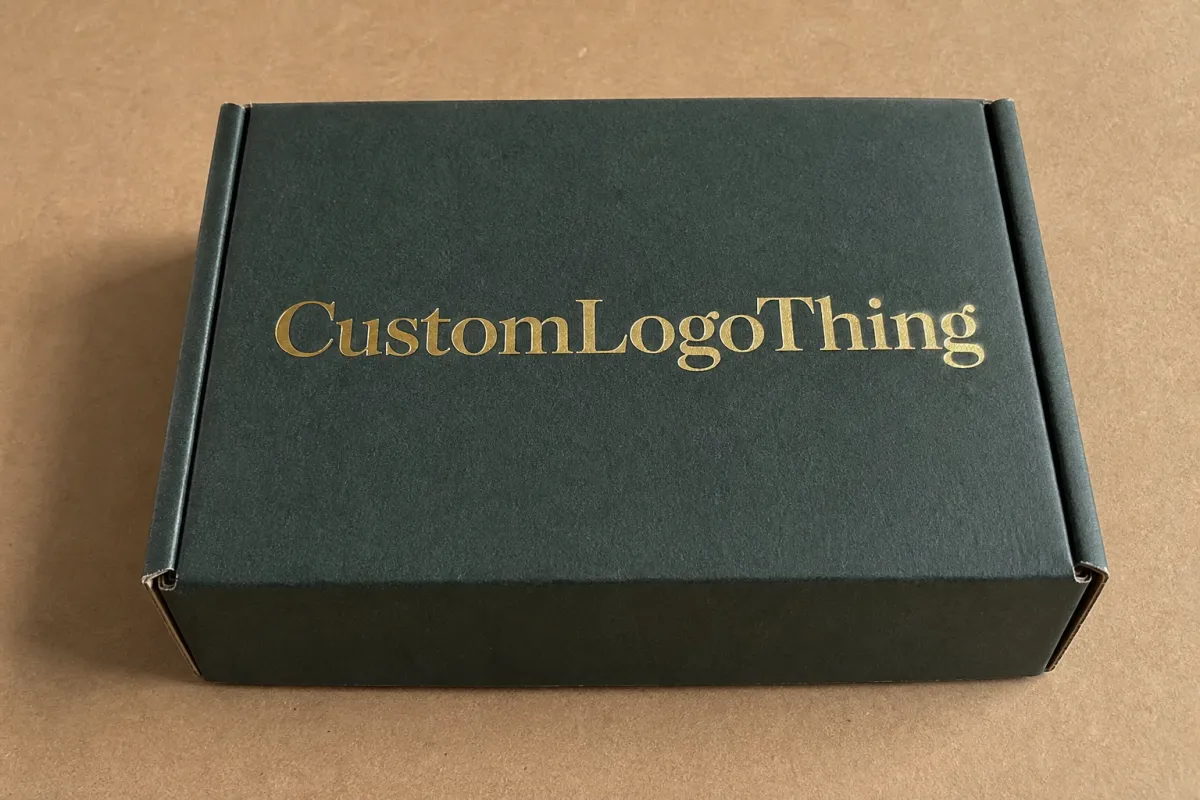
Foil catches the eye quickly. On a shelf, in a mailer tray, or during an unboxing, metallic reflection gets seen before the product story does. That is the point. A small stamped logo can make a carton feel more deliberate, more finished, and more expensive without turning the box into a costume.
This matters most in retail, gifting, cosmetics, and premium consumer goods. The box often does part of the selling before anyone opens it. A crisp foil mark can signal care, consistency, and quality the same way a heavier board or a tight closure does. The strongest result usually comes from restraint. A centered mark, a simple wordmark, or a small emblem often lands better than a front panel packed with decoration.
A common mistake is assuming a foil stamped logo boxes quote automatically means a high-end price tag. Sometimes it does. Often it does not. The real cost drivers are the structure, the number of foil locations, the size of the stamped area, and the setup needed to run the job cleanly. A tiny logo on a folding carton is one thing. A rigid box with multiple stamped panels, an insert, and custom wrap is something else entirely.
For a beauty brand, that might mean a matte rigid box with gold foil and a paperboard insert holding a serum bottle in place. For a corporate gift set, it could be a magnetic closure box with a single foil logo and a satin-lined tray. For a subscription brand, it might be a mailer box with a foil mark on the lid and a plain inside to keep the budget under control. The quote changes because the job changes.
A good foil box does not need to shout. It needs to hold registration, stay sharp at arm's length, and make the brand read instantly when the box is lifted or opened.
That is the real value. The box is not just a shipping object. It is a brand cue, a protection layer, and a first impression. A useful quote respects all three.
What a Foil Stamped Logo Box Actually Includes
A finished foil stamped logo box usually has four parts behind the scenes: structure, surface, foil impression, and any internal accessories. Each part can be simple or complicated. Each one affects the quote.
The structure might be a rigid setup box, folding carton, sleeve, mailer, drawer box, or magnetic closure box. Each style changes labor, board grade, shipping footprint, and how the package feels in the hand. A folding carton is often the most efficient option for high-volume retail. A rigid box costs more, but it holds its shape and delivers the heavier premium feel buyers expect for gift sets and luxury goods.
Foil stamping itself is a heat-and-pressure process. A metal die presses a foil film onto the surface and transfers the finish in the exact shape of the artwork. Because the process depends on pressure, dwell time, and surface contact, the substrate matters a lot. Smooth coated boards and wrapped papers usually hold a cleaner impression. Rough or fibrous stocks can soften fine detail fast.
There is also a difference between blind foil and registered foil. Blind foil stands alone. Registered foil lines up with printed graphics. Registered work takes more care because the foil has to match the artwork placement precisely. That adds risk, setup time, and often cost. If the logo needs to sit inside a printed frame or align with an edge detail, call that out before anyone quotes the project.
Common foil colors include gold, silver, black, copper, rose gold, and holographic finishes. Supply can vary by vendor and substrate, and the final appearance is never identical from one board to the next. Gold foil on a black wrap reads differently from gold foil on a white carton. Same foil. Different mood.
Some brands keep it quiet on purpose. A single logo may be enough. Others use a border, a repeated pattern, a line of text on the flap, or a subtle accent on the side panel. That flexibility is useful, but it needs discipline. More foil coverage means more setup, more die detail, and a higher chance of problems if the art is too fine for the chosen board and press conditions.
Vector artwork is the safest starting point. PDF, AI, or EPS files are ideal because they scale cleanly and make die prep easier. If the file is raster-only, the shop may need to rebuild it before production. Tiny type, hairline strokes, tight spacing, and dense pattern fills can all fail when they hit the press. The file may look perfect on a monitor and still stamp badly on stock.
If you are sorting formats, it helps to think in terms of use case:
- Rigid box for premium presentation, a heavier feel, and stronger shelf presence.
- Folding carton for efficient shipping, lower freight volume, and better print economy at scale.
- Mailer for subscription, direct-to-customer, or e-commerce packaging where unboxing matters.
- Drawer or magnetic closure box for luxury goods, gift sets, or reusable packaging.
The right structure depends on the product, the shipping method, and how polished you want the opening moment to feel. A solid quote should reflect all of that, not just the logo on the front panel.
Specifications That Change the Box, Finish, and Final Quote
The fastest way to get a quote that actually holds up is to define the box from the inside out. Dimensions first. Structure second. Finish third. Branding details last. Leave one of those blank and the estimate gets wider, because the production team has to price in uncertainty.
Start with internal and external dimensions. Internal dimensions control fit. External dimensions affect shelf presence, shipping cost, and board usage. If the product is dense, fragile, or awkwardly shaped, the board thickness and insert design may need to change so the item does not move around during transit or rattle inside the box.
Do not skip the insert conversation. A cosmetic bottle, a candle, a small electronics kit, and a glass jar all need different support. A foam cavity may protect better than paperboard in one case and look too industrial in another. A paper tray may be enough for light products but useless for heavier ones. That kind of detail changes both the finish and the final quote.
Artwork setup matters just as much. The cleaner the file, the fewer surprises. Fine lines, tiny type, tight spacing, and dense pattern fills can cause problems if the foil area is too detailed. Thin detail can fill in, break apart, or lose clarity at the edges. If the logo is tiny, the shop may recommend enlarging it or simplifying the art so the impression survives the press.
The substrate changes the result too. Smooth paper wraps, coated art paper, and laminated surfaces usually carry foil more crisply than rough or heavily textured stocks. Dark wraps make metallic foil pop harder by contrast. Light wraps feel cleaner and more restrained. Soft-touch lamination adds a velvety hand feel that pairs well with foil, but it also adds cost and can slightly soften how the metal reads under bright light.
Surface finish is not just a style decision. Matte, gloss, uncoated, embossed, debossed, soft-touch, and laminated surfaces all behave differently once heat and pressure are involved. A matte wrap may look elegant, but it can show scuffing more easily during handling. A gloss surface can make the foil look brighter. Soft-touch can look excellent in the hand and still need careful handling because it marks more easily than people expect.
Other add-ons can change both the look and the price:
- Embossing to raise the logo or shape above the surface.
- Debossing to press the mark inward for a quieter tactile effect.
- Spot UV to add gloss only in selected areas.
- Soft-touch lamination for a velvety feel that signals premium packaging.
- Paper inserts or die-cut compartments to keep the product centered and protected.
- Special closures such as magnets, ribbons, or sleeve fits that add opening drama.
Practical issues belong in the spec too. If the box has to stack on pallets, fit standard shipper dimensions, or survive mixed freight handling, that needs to be priced in. If the box will be assembled by hand, the design should be simple enough to run cleanly on the line. If a machine folds and fills the carton, the board choice and glue points need to be planned around that instead of guessed later.
For brands that care about sourcing, material selection matters. Ask whether the paper can come from FSC-certified sources, and review chain-of-custody documentation if that claim will appear on the package. The Forest Stewardship Council is a useful reference for that conversation. For transit performance, especially on e-commerce shipments, the package may also need to hold up to drop and vibration expectations similar to ISTA test methods.
If you want to compare how different structures, finishes, and insertion styles affect a branded project, it helps to review a broader set of Custom Packaging Products before you settle on one direction. Small construction changes can swing cost and presentation more than people expect.
How to Read a Foil Stamped Logo Boxes Quote
Good quoting separates one-time setup charges from recurring unit cost. That split matters. A quote that looks expensive at 500 units may look completely reasonable at 5,000 once the die, setup, and press preparation are spread across more pieces. Without that split, people compare numbers that do not mean the same thing.
A clear foil stamped logo boxes quote should usually account for these items:
- Box construction such as rigid, folding carton, sleeve, or mailer.
- Material grade including board thickness, wrap stock, and any coating or lamination.
- Foil coverage whether the logo is small and focused or extended across multiple panels.
- Imprint locations such as front only, front and top, or inside and outside.
- Artwork complexity including line weight, detail density, and whether the art needs cleanup.
- Quantity because larger runs dilute setup costs and usually lower the unit price.
- Insert requirements if the product needs trays, dividers, or specialty fitments.
- Shipping destination because freight, packaging, and palletization can change the landed total.
Here is a practical comparison of common options. These are planning ranges, not promises, because every project depends on dimensions, finish selection, artwork complexity, and current production conditions.
| Box Style | Typical MOQ | Typical Unit Range | Best Use | Notes |
|---|---|---|---|---|
| Folding carton with single-spot foil | 1,000-3,000 | $0.35-$0.95 | Retail goods, beauty, supplements, lightweight items | Efficient at scale; strong option for simple logos and high-volume programs. |
| Rigid setup box with one foil location | 250-1,000 | $1.20-$3.50 | Gift sets, premium electronics accessories, luxury presentation | Heavier board and manual assembly raise the cost, but the shelf feel is stronger. |
| Magnetic closure box with foil branding | 300-1,000 | $1.80-$4.80 | High-value retail, corporate gifts, special launches | Closure hardware and wrap labor add cost, but opening presentation is refined. |
| Mailer box with foil logo | 500-2,500 | $0.85-$2.40 | E-commerce, subscription, direct-to-consumer shipments | Good balance of shipping efficiency and unboxing appeal. |
The biggest pricing driver is not always the one buyers expect. Quantity often has the strongest influence on unit cost, but structure and setup matter just as much. A simple folding carton with a large run can price lower than a small rigid box with only a logo, because the rigid format needs more hand work and more material per piece. A modest foil mark on a tricky shape can cost more than a larger mark on an easy panel if the die needs extra precision.
Minimum order quantity follows that setup reality. Foil stamping needs a die, press prep, and press time, so low quantities are less efficient. Some jobs can be quoted at a few hundred units, especially for rigid boxes or premium presentation projects, but the per-unit cost usually improves as the run grows. Small runs are fine. They just need honest economics.
Premium finishes deserve a hard look. Soft-touch lamination, multi-pass stamping, embossing plus foil, and special inserts all improve the presentation, but they also add labor and schedule time. A clean, focused design usually gives better value than a crowded build with too many effects fighting for attention. I have seen plenty of projects spend money to make the packaging louder and end up with a weaker brand read.
For buyers comparing vendors, the best move is simple: request identical specifications from each supplier. Match the dimensions, foil color, board type, print coverage, closure style, quantity, and shipping location exactly. If one quote uses a different board or a less detailed die, it is not a fair comparison. That mismatch creates confusion fast, and it can make the cheaper quote look better than it really is.
From a purchasing standpoint, the most useful quote usually includes three layers: setup, unit price, and freight. A single lump sum hides too much. A visible breakdown makes it easier to decide whether to trim finish complexity, shift quantity, or adjust the structure before placing the order.
One more thing: ask whether the die is included, whether it is reusable, and whether a revision to the artwork would trigger a new tooling charge. Those questions are boring, and they save real money. Nobody enjoys discovering that the logo tweak was cheap but the new die was not.
Process, Timeline, and Production Steps from Proof to Delivery
The quoting process is usually quicker than production, but only if the starting information is complete. A clean project tends to follow the same path: inquiry, spec review, artwork check, quote approval, proofing, tooling, stamping, packing, and shipment. Each step sounds simple. Each step can slow down if the specs are vague or the artwork needs correction.
- Inquiry and spec review - The supplier checks box type, dimensions, foil area, finish, and quantity.
- Artwork check - The file is reviewed for vector quality, line thickness, spacing, and layout feasibility.
- Quote approval - Pricing is confirmed, including any setup or tooling charges.
- Proofing - Digital or physical proofs confirm placement, scale, and appearance.
- Die creation - The foil stamp die is made to match the approved artwork.
- Production - Boxes are printed, wrapped, stamped, assembled, and checked.
- Packing and shipment - Finished boxes are counted, packed, and prepared for freight or parcel delivery.
Where do delays usually happen? Artwork cleanup, missing dimensions, slow proof approvals, and last-minute finish changes. A file that looked fine on screen may need line simplification or spacing changes once the die maker reviews it. A product described too loosely can require a revised insert or a different depth. Even when the quote is approved quickly, the job cannot move until the proof is signed off.
Timeline planning should be broken into pieces, not treated like one vague number. Quote turnaround may be quick. Proof turnaround can take a day or two. Tooling may add several business days. Final production lead time often depends on the box style and the current press schedule. For many standard projects, a realistic planning window after proof approval can run about 12 to 20 business days. More elaborate rigid builds or larger quantities can take longer.
Rush jobs are possible, but they depend on capacity and complexity. A simple foil logo on a familiar format is easier to speed up than a custom magnetic rigid box with inserts and a textured wrap. If the launch date is fixed, work backward from the ship date and leave room for proof revisions or freight delays. That buffer is cheaper than a crisis.
Transit performance belongs in the same conversation as presentation. If the package ships to consumers individually, ask whether the design should be checked against common handling expectations or a relevant ISTA method. If the package goes into retail distribution, confirm whether pallet stacking, master carton counts, and storage conditions need to be built into the spec. A decorative box still has to survive the supply chain.
For packaging teams, the best schedules keep approval decisions near the front of the process. Once the structure, foil location, and quantity are locked, everything else tends to move more predictably. That is usually the difference between a smooth launch and a lot of unnecessary email.
Why Buyers Choose Custom Logo Things for Branded Boxes
Buyers usually do not need more decoration. They need packaging that looks polished, survives use, and stays inside budget. Experience matters there. A good packaging partner should translate brand goals into a build that can actually run, not just a concept that looks nice on screen.
That support matters most on foil projects, because the finish is unforgiving. The logo needs to sit in the right spot. The impression depth needs to be clean. The surface needs to suit the foil. The structure needs to support the artwork instead of fighting it. If any of those pieces are off, the box can look less premium than a simpler design done well.
Custom Logo Things focuses on helping buyers narrow the choices that affect appearance and cost. That means clarifying whether a rigid setup box is really needed, whether the foil should cover the full front panel or just the mark, and whether a soft-touch finish is worth the added expense for the product category. It also means being realistic about lead time, setup steps, and how quickly approvals need to move if the launch date is fixed.
In practice, the best packaging conversations are the ones that sound a little boring. Exact dimensions. Exact quantity. Exact finish. No mystery. That is how you get a quote that can actually be compared to another quote without squinting at the fine print.
Clear quoting makes a real difference. A buyer who can see setup charges, unit pricing, and freight separately is in a much better position to compare vendors or adjust the project before production starts. That kind of transparency cuts down on back-and-forth and helps teams make decisions without guessing.
There is value in treating packaging like a system instead of a single object. The box has to protect the product, present the brand, and support the shipping flow. When those pieces are considered together, the result usually feels more intentional. If you are still deciding between formats, finishes, or insert styles, reviewing Custom Packaging Products can help you compare structural options before you request pricing.
For brands that want polished presentation without losing cost control, the right packaging conversation is precise, practical, and tied to the real production steps. That is the kind of conversation that produces useful numbers, not vague promises.
If you already have a sample box you like, send that too. It gives the supplier something concrete to measure against. A good sample beats three paragraphs of "premium but not too premium" every time.
Actionable Next Steps Before You Request a Quote
The easiest way to get a useful quote is to gather the production details before you ask for pricing. A little prep up front saves several rounds of clarification later, and it usually leads to better numbers because the quote is based on a complete spec.
Start with the basics. Then add the details that change the build.
- Box dimensions - Internal size first, then outside size if you already know it.
- Quantity - A target run size and, if possible, a second quantity for comparison.
- Box style - Rigid, folding carton, mailer, drawer, or magnetic closure.
- Foil color - Gold, silver, black, copper, rose gold, or another finish.
- Artwork file - Vector logo, wordmark, or layout file if available.
- Finish preference - Matte, gloss, soft-touch, or uncoated.
- Insert needs - Tray, divider, foam, paperboard insert, or no insert.
- Ship-to location - So freight can be included in the total picture.
It also helps to send a simple reference pack. Product photos show size and placement. Brand guidelines show color and tone. A sample box from another project shows the level of finish you want to match or beat. If you have a competitor sample that feels close to the target look, share that too. It makes the design intent much easier to understand.
Before asking for a quote, decide what matters most. Some buyers want the lowest unit cost. Others care more about the opening experience. Some need the fastest lead time. Others care about a specific structural format because of the product shape. Once that priority is clear, the quote conversation gets easier and the tradeoffs become visible.
Ask for pricing in a format that separates setup, unit Cost, and Shipping. That makes comparison much easier. If the same logo appears in different sizes or on different structures, make sure the differences are intentional, not accidental. The best foil stamped logo boxes quote is built from complete facts, not assumptions.
Then move fast on approvals. Foil stamping likes clarity and punishes delay. The sooner the artwork, dimensions, and finish are locked in, the sooner production can begin with fewer revisions and fewer surprises.
The short version: lock the dimensions, choose the structure, confirm the foil area, and send a vector logo. That is the cleanest path to a usable quote and the fastest way to avoid pricing whiplash later.
Frequently Asked Questions
What do I need ready to request a foil stamped logo boxes quote?
Have your box dimensions, quantity, box style, foil color, and logo artwork ready before you ask for pricing. A vector file is ideal. It also helps to note whether the box needs inserts, a special closure, or a specific finish so the estimate reflects the full build instead of just the outer shell.
What is the usual MOQ for foil stamped logo boxes?
MOQ depends on the construction, the foil coverage, and whether the project needs a custom die. Folding cartons often support higher minimums with lower unit costs, while rigid boxes can sometimes start at lower quantities because the presentation value is higher. In either case, the unit price usually improves as quantity increases because setup costs are spread across more pieces. The exact number can vary a lot by factory, so treat any online estimate as a starting point, not a promise.
How long does production usually take after approval?
Timing depends on proof approval, material availability, tooling, and the current press schedule. A straightforward run may move faster than a box with complex inserts or multi-step finishing. Ask for a schedule that separates proof time, production lead time, and freight transit so delivery planning is based on realistic dates rather than a single broad estimate.
Can the foil color match our brand identity?
Common foil colors include gold, silver, black, copper, and rose gold, but the exact look can shift depending on the substrate and finish. If color accuracy matters, request samples or proof images before approving production. It is also worth checking whether the foil will be placed on a dark wrap, a light board, or a laminated surface, because that changes the final appearance. Foil is close to the brand color, not always identical to it.
What most affects the final price of foil stamped logo boxes?
The biggest cost drivers are quantity, box construction, foil coverage, artwork complexity, and any added finishing steps such as embossing or soft-touch lamination. Shipping also matters, especially for heavier rigid boxes. A complete specification sheet usually leads to the most accurate number and helps prevent pricing surprises later in the process.
Is a simple logo cheaper than a full-panel foil design?
Usually, yes. A small centered logo often needs less die area, less press time, and less risk of registration problems than a full-panel design. That said, a complicated small mark can still cost more than a larger simple shape if the art is too fine or the layout is difficult to stamp cleanly. Complexity beats size every time.
Should I ask for samples before placing the order?
If the packaging is tied to a launch, a premium gift program, or a brand refresh, yes. A sample or proof can catch problems with foil color, surface texture, or artwork scale before production starts. That is especially useful when the box needs to feel expensive, because cheap-looking foil is worse than no foil at all.
If you have your dimensions, artwork, and quantity ready, a foil stamped logo boxes quote can be turned into a clean comparison very quickly, with setup, unit pricing, and freight all visible from the start. That is the version worth asking for.


