Buyer Fit Snapshot
| Best fit | Folding Carton Inserts Manufacturer projects where brand print, material claims, artwork control, MOQ, and repeat-order consistency need to be specified before quoting. |
|---|---|
| Quote inputs | Share finished size, material target, print colors, finish, packing count, annual reorder estimate, ship-to region, and any compliance wording. |
| Proofing check | Approve dieline scale, logo placement, barcode or warning zones, color tolerance, closure strength, and carton packing before bulk production. |
| Main risk | Vague material claims, crowded artwork, missing packing details, or unclear freight terms can make a low unit price expensive after revisions. |
Fast answer: Folding Carton Inserts Manufacturer: Board, Finish, Dieline, and Unit Cost should be specified like a repeatable production item. The safest quote records material, print method, finish, artwork proof, packing count, and reorder notes in one written spec.
Production checks before approval
Compare the actual filled-product size with the drawing, then confirm tolerance on folds, seals, hang holes, label areas, and retail display edges. Reserve space for logos, QR codes, warning copy, and material claims before decorative graphics fill the panel.
Quote comparison points
Review material grade, print process, finish, sampling route, tooling charges, carton quantity, and freight assumptions side by side. A quote is only useful when the supplier can repeat the same color, closure quality, and packing count on the next order.
Folding Carton Inserts Manufacturer: Smart Buying Guide
If a product looks polished in the carton but rattles, tips, or rubs against the board on the way to the customer, the problem usually is not the outer box. It is the internal structure, and that is exactly where a folding carton inserts manufacturer earns its keep. A well-built insert does three jobs at once: it locks the product in place, shields it from shipping abuse, and gives the package a deliberate, finished feel instead of an improvised one.
That matters whether you are shipping a candle, a cosmetic kit, a supplement bottle, a wireless device, or a bundled retail set. In practice, the insert turns a standard folding carton into a controlled package. It keeps the product centered, reduces scuffing, cuts down on void fill, and gives the packout team a repeatable structure that is faster to assemble. If you are comparing suppliers, it helps to look past the carton graphics and study the internal engineering with the same care. If you want a sense of how we think through packaging support, you can also learn about Custom Logo Things and our packaging support process.
This article covers the materials, design logic, manufacturing steps, pricing factors, and supplier questions that matter most. I will keep it plain, since the best packaging decisions usually come from clear tradeoffs rather than jargon. A reliable folding carton inserts manufacturer should be able to explain those tradeoffs in terms you can use: fit, strength, speed, cost, and presentation.
The hidden packaging problem a folding carton inserts manufacturer solves
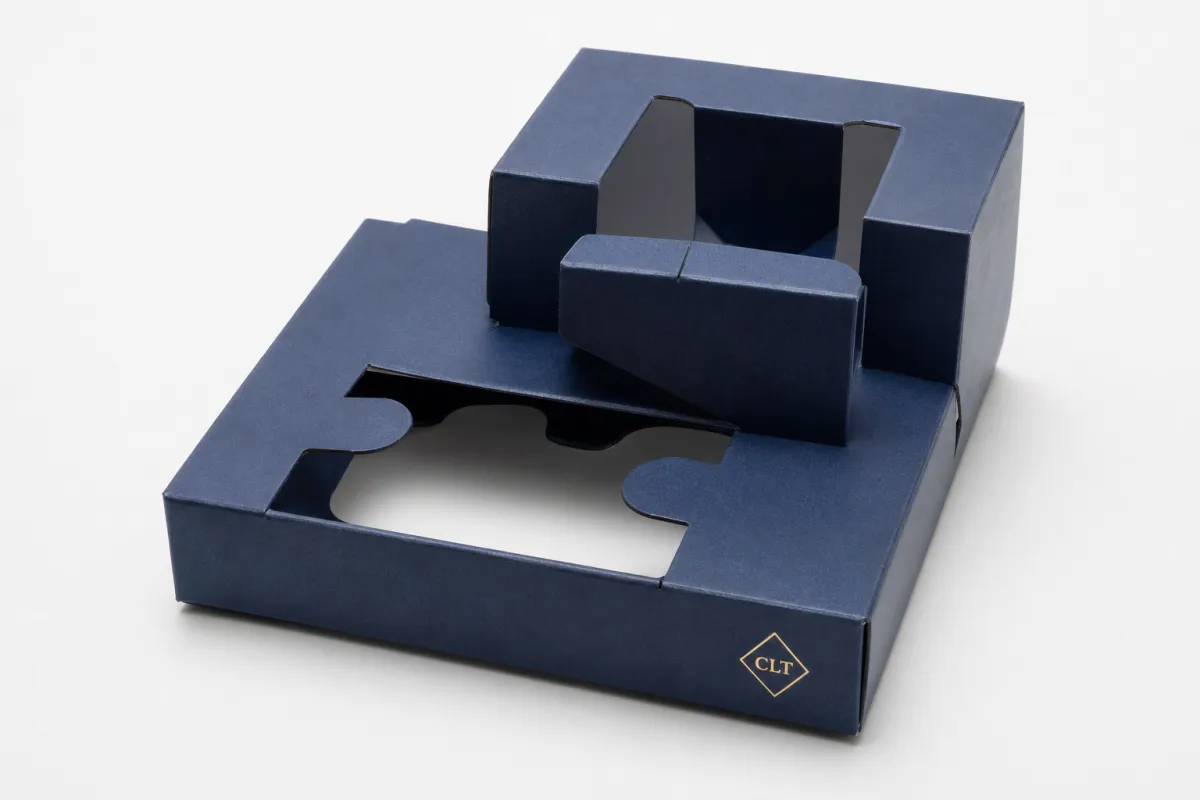
The carton may be printed beautifully, but if the product moves inside it, the whole package feels less expensive than it should. That is the hidden problem a folding carton inserts manufacturer solves. The outside can promise premium quality, yet the inside decides whether the product arrives with sharp corners, cracked edges, rubbed labels, or a sloppy first impression. I have opened enough cartons over the years to know that a little movement inside the box can undo a lot of good work on the outside.
Think of the insert as the package's internal traffic control. It directs where the product sits, how much clearance it has, and where pressure should or should not land during shipping. For e-commerce, that can mean keeping a bottle upright through vibration and drop events. For retail, it can mean presenting a lipstick set, electronic accessory, or sampler kit in a way that looks intentional when the carton is opened on the shelf or at home. For subscription kits, it often means making multiple pieces line up cleanly without needing foam or loose filler.
Different categories feel the impact in different ways. Cosmetics often need a clean, centered presentation and protection against scuffing. Supplements need bottle control and sometimes tamper-aware presentation. Electronics need tight retention, especially around chargers, cables, and small accessories that can tangle or scratch. Fragile items need insert geometry that absorbs normal handling abuse without crushing the carton walls. In each case, the folding carton inserts manufacturer is not just making a divider; they are shaping the relationship between the product, the carton, and the shipping route.
That is why inserts matter so much for unboxing. A well-made insert gives the package structure. It can lift the product, reveal it in layers, or create a clean reveal when the carton opens. A poorly made one does the opposite: loose fit, sagging board, and that slightly disappointing sound of product shifting around. Honestly, that sound says more about the package than many brands realize. It is kind of a tiny warning bell.
Packaging truth: a carton can look premium on the outside and still fail on the inside if the insert was never engineered around the real product dimensions, not just the nominal ones.
That is the real value proposition of a folding carton inserts manufacturer. They help a brand protect product integrity, control presentation, and reduce downstream headaches like returns, repacking, and customer complaints. If you are trying to launch a product with fewer surprises, the insert deserves the same attention as the artwork.
What a folding carton inserts manufacturer actually makes
A folding carton inserts manufacturer typically makes internal paperboard structures that are scored, cut, and folded to hold a product in a specific position inside the outer carton. That sounds simple, yet the variety is wide. Some inserts are little more than folded cradles. Others are multi-panel supports, partitions, sleeves, retention tabs, or product-specific shells designed around a bottle, jar, device, or set of components.
The most common materials are paperboard grades chosen for a balance of stiffness, printability, and cost. SBS paperboard is popular when the insert needs a clean appearance and accurate folding. Recycled board and chipboard often make sense when the project is more budget-sensitive or the insert will be hidden inside the carton. Heavier products may need thicker board or even corrugated components, depending on weight and transit risk. The right call depends on product mass, shipping mode, and how much resistance the insert has to provide once it is packed.
Design starts with the product footprint, not the carton art. A strong folding carton inserts manufacturer will look at the true product dimensions, the inside dimensions of the carton, the seam location, and the board thickness so the finished insert does not pinch, float, or buckle. Even a difference of a couple of millimeters can matter once board caliper, score depth, and glue joints are added into the stack.
Functional details matter more than most buyers expect. Score lines help the insert fold cleanly. Tuck tabs and locking points allow the structure to hold itself together. Glue points keep panels from opening under load. Apertures create product windows or retention points. Arms or wings can press gently on the product to limit motion without deforming the outer carton. If the design is meant to be assembled at a co-packer or on a manual line, those details need to support fast, repeatable packout, not just a good-looking sample.
There is also a sustainability angle worth taking seriously. A well-designed insert can reduce or remove plastic trays, foam cushions, and loose void fill. That can help a brand simplify recovery at end of life, especially if the board is recyclable and sourced responsibly. If your program needs certified fiber, ask whether the supplier can support FSC-aligned material selection and documentation. For broader packaging materials and recovery references, organizations like FSC and the ISTA test community are useful starting points.
In other words, a folding carton inserts manufacturer is making a functional internal structure, but the best ones think like package engineers. They balance board grade, geometry, assembly speed, and presentation in one design.
How a folding carton inserts manufacturer builds inserts: process and turnaround
The first stage is intake. A folding carton inserts manufacturer will ask for product dimensions, carton inside dimensions, product weight, shape details, and the conditions the package needs to survive. That includes shipping method, warehouse handling, whether the packout is manual or automated, and whether the insert has to support a single product or a multi-piece kit. If you skip any of that, the sample process can drift off target quickly.
Next comes dieline development. This is where the structure is drawn flat before it becomes a physical piece. The designer has to account for board thickness, score allowances, folding direction, and how the insert will behave after assembly. A good folding carton inserts manufacturer will not treat the dieline as a generic template. They will adjust it to your actual product and the realities of your carton. That is the difference between a structure that folds neatly and one that fights the packer every step of the way.
Prototypes and samples come after that. This stage is not a formality. It is where the team checks fit, insertion speed, product alignment, and whether the structure can hold up to the kind of handling the package will really see. If the product is delicate, the sample should be tested with the actual item inside, not with a dummy shape that only approximates the weight. A sample that looks perfect empty can behave very differently once a glass bottle, metal accessory, or filled jar is inside it.
Then production begins. The board is die cut, scored, and sometimes glued depending on the design. After that, it is folded, inspected, and packed flat for shipment to your line, your co-packer, or your fulfillment partner. A reliable folding carton inserts manufacturer will protect the stack during shipping so the pieces arrive clean, square, and easy to open at packout.
Timeline is shaped by a few things more than most buyers expect:
- How quickly the product and carton specs are finalized
- How many sample revisions are needed
- Whether the design needs special tooling or complex folding
- Material availability and board selection
- The supplier's current production schedule
In practical terms, simple projects can move in roughly 7 to 12 business days after proof approval, while more detailed inserts may take 12 to 18 business days or longer if revisions are needed. The faster path usually happens when the carton structure is already locked, artwork is approved, and the feedback on samples is specific. Saying "make it feel tighter" is not enough. It helps to say whether the issue is side-to-side movement, top bounce, or too much compression on the product label.
A capable folding carton inserts manufacturer should also be honest about what can and cannot be accelerated. If a design is new, tight-tolerance, or unusually heavy, rushing the process often costs more later than the time saved upfront. That is one reason experienced buyers keep a little buffer in their launch schedule. If the fit is off by even a few millimeters, you are gonna feel it on the line.
Cost, pricing, MOQ, and quote factors for folding carton inserts
Pricing from a folding carton inserts manufacturer depends on more than board size. Material grade, structural complexity, print coverage, finishing, and folding labor all affect the final number. A simple single-panel insert will not cost the same as a multi-lock structure with tabs, windows, and gluing points. If the insert has to look finished on the inside as well as hold the product securely, the price usually rises with the complexity.
MOQ matters because tooling and setup costs have to be spread across the run. That is why smaller quantities often carry a higher per-unit price. A manufacturer still has to create the die, set up the press or cutter, check registration, run samples, and verify folding performance. Whether you order 1,000 pieces or 50,000, those front-end steps still exist. A folding carton inserts manufacturer can usually show you how the unit price changes across quantity breaks so you can decide whether it makes sense to order extra inventory now or stage the purchase later.
The quote should be based on the same assumptions every time. If one supplier quotes a plain folded board insert and another quotes a glued, pre-assembled version, those numbers are not directly comparable. You want dimensions, quantity, board spec, print requirements, sample needs, freight, and lead time all lined up before you compare figures. Otherwise a cheap number can hide extra work later.
| Insert option | Best fit | Typical unit cost impact | Notes |
|---|---|---|---|
| Folded paperboard cradle | Light products, cosmetics, small retail items | $0.10-$0.18 at mid-sized runs | Fast to assemble and usually the simplest quote from a folding carton inserts manufacturer. |
| Multi-panel locking insert | Kits, bottles, premium presentation packs | $0.14-$0.28 | Better retention, but more folding steps and tighter tolerances. |
| Glued chipboard divider | Sets with multiple components | $0.16-$0.30 | Good for segmentation, though assembly time can increase. |
| Heavier corrugated support | Fragile or heavier items | $0.20-$0.40+ | Stronger structure, but not always needed for shelf-focused retail packs. |
Those figures are only reference points, not promises. Quantity, board cost, print coverage, and labor market conditions can shift them. A folding carton inserts manufacturer may also price differently if the insert has a complicated assembly sequence or requires a special delivery format such as flat-packed stacks with interleaving.
Compare total landed cost, not just the unit line. If one quote is slightly higher but includes sample revisions, careful packing, and better schedule control, it may save money overall. The lowest bid can become the expensive one if the insert needs rework, if the packout line slows down, or if product damage appears after launch. This is where a thoughtful buyer asks for clarity instead of chasing the lowest number on the page.
How to choose the right folding carton inserts manufacturer
Choosing a folding carton inserts manufacturer is really about judging how well they understand your product and how honestly they communicate. A polished quote is nice, but sample quality and practical problem-solving matter more. Ask to see real samples, especially if the supplier has worked on items similar in weight, fragility, and presentation style. A carton insert for a glass perfume bottle behaves differently than one for a dry supplement jar or an electronics accessory pack.
Design support is another major filter. Some suppliers only manufacture from a finished file, while others can help adjust the dieline, refine the lock points, and prototype a better fit. If your internal team is small, that support can save a lot of time. A strong folding carton inserts manufacturer should be able to explain why one structure is better for speed and another is better for retention, instead of just saying yes to everything.
Communication tells you a lot. Pay attention to how the supplier writes the quote. Do they specify board grade, caliper, fold style, and sample assumptions? Do they respond with actual answers when you ask about hold strength or packout time? Do they give a realistic lead time, or do they promise speed without any context? Clear, grounded communication usually reflects how the job will go once production starts.
Quality control matters because insert performance is visible in the finished pack. A good insert is not only neat; it has to fold consistently, sit flat, and hold the product without forcing the carton out of shape. Ask whether the supplier checks dimensions during production and whether they have a process for catching score or cut variation before it becomes a lot-level problem. A trustworthy folding carton inserts manufacturer will not be vague about those checks.
Ask about sourcing too. If you need recycled content, FSC-certified fiber, or a more efficient board layout, the supplier should be able to talk about it in practical terms. Reducing board usage by even a small amount can matter across a large run, but only if the structure still protects the product. In packaging, savings only count when they do not create damage later.
If you want a simple internal benchmark, a useful supplier usually checks five boxes:
- They understand your product category and handling risks
- They can prototype without a lot of handoffs
- They communicate lead times and limits clearly
- They control fit and folding consistency
- They help you reduce downstream packaging problems, not just place an order
That is also where company fit matters. A conversation with Custom Logo Things about your packaging goals should feel practical, not vague. If a supplier is thoughtful in the first round, they are more likely to be helpful when the schedule gets tight or the sample needs a second pass.
Common mistakes brands make with carton inserts
One common mistake is measuring the product and carton separately and assuming the insert will fit by default. It will not. The carton's inside dimensions, seam location, and board thickness all change the final internal space. A folding carton inserts manufacturer has to account for those details when building the structure, and brands sometimes miss them in the spec sheet. That is how you end up with a product that is too tight to pack or too loose to stay centered.
Another mistake is designing for appearance before performance. A beautiful insert that cannot hold the product steady in transit is still a weak insert. You need to think about drop events, vibration, compression, and humidity exposure, especially if the package spends time in a truck, warehouse, or fulfillment center. The carton may look fine on the bench while failing in the back of a delivery vehicle. A seasoned folding carton inserts manufacturer will ask about those conditions because they affect the structure choice.
Overcomplicating the structure is another trap. It is easy to add extra folds, windows, and locking details because the mockup looks impressive. But if the insert takes too long to assemble, the line slows down. If it requires too many orientation steps, packout errors rise. If the retention points are too stiff, the product surface can get marked or the carton can bow. Simpler designs often win because they perform consistently at scale.
Testing is where a lot of projects get underfunded. If you only review one dry sample and never test it with the real product, you can miss the exact issue that becomes expensive later. The fit may change once a bottle is filled, a cap is added, or a label slightly increases diameter. A strong folding carton inserts manufacturer will push for actual product samples and, where needed, a small shipping test rather than treating sample approval as the end of the conversation.
Buying only on price is another frequent mistake. A low quote can hide weak material, poor folding accuracy, or a supplier that cannot keep up with your launch date. I have seen brands save a few cents per unit, then lose far more in rework, delays, and damage claims. The cheapest insert is not the cheapest package if it causes customer complaints or warehouse downtime.
There is also a timing mistake that shows up often: approving artwork and structural files too late. Even if the insert itself is straightforward, a late signoff can push the whole schedule. The carton and insert may be designed together, but they rarely move through approval at exactly the same speed. The smartest buyers keep enough room in the timeline for one adjustment cycle.
If you want to reduce risk, compare the project against recognized test logic rather than gut feel alone. For shipping resilience, the ISTA framework is widely used to think through transit abuse, and that mindset helps even if you are not running a full certification program. It is not about overengineering every package. It is about building enough confidence that the product reaches the customer in the condition you intended.
Next steps before you request samples and quotes
Before you contact a folding carton inserts manufacturer, gather the basics. You will save time if you have the exact product dimensions, the carton inside dimensions, the product weight, and any photos or drawings that show the shape, closure style, or fragile areas. If the product has an unusual neck, cap, shoulder, or accessory bundle, mention that up front. Those details often matter more than the headline size.
It also helps to define the real goal of the insert. Are you trying to protect a glass component, create a premium reveal, speed up assembly, or do all three? If you do not say which one matters most, the supplier may optimize the wrong thing. A folding carton inserts manufacturer can build for presentation, retention, or efficiency, but rarely all at maximum intensity without tradeoffs.
I recommend asking for two or three sample directions if the project has room for it. One might prioritize speed of assembly, another might prioritize product lock, and a third might aim for the cleanest visual reveal. Comparing options side by side tells you more than a single concept does. If you are testing with a team, include the people who actually handle the packout or the co-packing step. They will notice friction that a design review might miss.
When the samples arrive, test them with the actual product and the actual carton. Check for side movement, vertical bounce, label scuffing, and the time it takes to assemble a finished unit. If the insert adds 15 seconds per pack and you are building 20,000 units, that is a real operational cost. A thoughtful folding carton inserts manufacturer should be willing to discuss that openly, because the best design is the one that works on the line, not just in a presentation.
Compare quotes only after you confirm that the specs match. Material, quantity, folding style, sample count, freight, and lead time should all be on the same basis. Then look at response quality. Did the supplier answer your questions clearly? Did they identify a risk before you asked? Did they suggest a cleaner structure or a more efficient board choice? Those are signs you are dealing with a partner, not just a vendor.
Here is the simplest action plan I can give:
- Collect product and carton measurements with real photos.
- Define the primary goal: protection, presentation, or assembly speed.
- Request sample options from a qualified folding carton inserts manufacturer.
- Test the sample with actual product and real packout conditions.
- Lock the approved structure before you release full production quantities.
Do that, and you remove a lot of avoidable risk from the launch. The best folding carton inserts manufacturer is the one that fits your product, timeline, and budget while keeping the package stable from the packout table to the customer's hands. That is the kind of decision that pays off long after the first shipment leaves the dock, because the insert does its job quietly every single time the box is opened.
FAQ
What information does a folding carton inserts manufacturer need for an accurate quote?
Provide product dimensions, carton inside dimensions, product weight, and any shape details that affect the fit. Share order quantity, material preference, print requirements, and whether you need assembly or flat-packed delivery. If the product is fragile, irregular, or sensitive to movement, include photos, drawings, or samples so the folding carton inserts manufacturer can quote against real conditions instead of guesses.
Which material is best for a folding carton insert?
Match the material to the product weight, the stiffness you need, and the amount of protection required during shipping. Paperboard works well for lighter items, while thicker board or corrugate may be better for heavier or more fragile products. The right choice is the one that fits the product and packout process correctly, so always test with actual samples before you lock the build.
How long does the process usually take with a folding carton inserts manufacturer?
Simple projects move faster when dimensions are final and the first sample fits well on the first or second round. Timeline depends on design revisions, tooling complexity, current production load, and how quickly approvals are returned. Clear specs and fast feedback usually shorten lead time more than any other single factor, especially when the folding carton inserts manufacturer can move from sample to production without delays.
Can one insert design work for multiple products?
Sometimes, but only when the products are close enough in size, weight, and shape to stay secure in the same structure. If variation is expected, ask whether a modular or adjustable insert is possible without creating a loose fit. The goal is to keep protection and presentation consistent rather than forcing one design to do too much.
How do I compare folding carton inserts manufacturer quotes fairly?
Make sure every quote is based on the same dimensions, quantity, material, and finishing requirements. Check what is included, such as tooling, samples, revisions, freight, and packing details. Compare sample quality, communication, and lead time alongside price so you are judging total value, not just the unit number from one folding carton inserts manufacturer against another.