Buyer Fit Snapshot
| Best fit | Kraft Paper Bags Manufacturer projects where brand print, material claims, artwork control, MOQ, and repeat-order consistency need to be specified before quoting. |
|---|---|
| Quote inputs | Share finished size, material target, print colors, finish, packing count, annual reorder estimate, ship-to region, and any compliance wording. |
| Proofing check | Approve dieline scale, logo placement, barcode or warning zones, color tolerance, closure strength, and carton packing before bulk production. |
| Main risk | Vague material claims, crowded artwork, missing packing details, or unclear freight terms can make a low unit price expensive after revisions. |
Fast answer: Kraft Paper Bags Manufacturer: Film, Print, MOQ, and Carton Packing should be specified like a repeatable production item. The safest quote records material, print method, finish, artwork proof, packing count, and reorder notes in one written spec.
Production checks before approval
Compare the actual filled-product size with the drawing, then confirm tolerance on folds, seals, hang holes, label areas, and retail display edges. Reserve space for logos, QR codes, warning copy, and material claims before decorative graphics fill the panel.
Quote comparison points
Review material grade, print process, finish, sampling route, tooling charges, carton quantity, and freight assumptions side by side. A quote is only useful when the supplier can repeat the same color, closure quality, and packing count on the next order.
A Kraft Paper Bags manufacturer can make a bag look straightforward and still miss the details that matter most. I have seen clean-looking samples come back with handle bonds that started lifting after a few carries, bottoms that opened up under weight, and paper stock that was simply too light for the product the bag was meant to hold. If you are buying for Custom Logo Things or comparing vendors for a private-label run, the logo is only one part of the decision. Paper grade, handle attachment, bag structure, and real-world durability decide whether the finished bag feels dependable or disposable.
People often treat Kraft Paper Bags as interchangeable because they all seem to start with the same raw material. They are not. A good kraft paper bags manufacturer takes your size, print, weight, and finish requirements and turns them into packaging that can survive checkout counters, delivery rides, and repeat handling without losing shape. A poor one sells a low quote that looks attractive until the first round of complaints starts coming in.
Kraft paper bags stay popular across retail, food service, and gifting for practical reasons. They have a cleaner look than thin plastic, they can use recycled content, and they scale well when the spec is written carefully. Kraft also handles print better than many buyers expect, especially on natural brown stock where simple graphics, bold logos, and restrained finishes can look polished without trying too hard. When the artwork is honest and the paper choice is right, the result feels considered instead of flashy.
Think about the buying process in three buckets: stock bags, semi-custom bags, and fully custom production. A stock bag is usually a warehouse item with no real control over size or structure. Semi-custom often gives you a limited set of choices for dimensions, handles, or print. Fully custom production gives you control over the dieline, paper weight, gusset depth, handle type, print coverage, and finishing. That is the real product a serious kraft paper bags manufacturer sells: control over the variables that determine performance.
If you want a practical starting point, review the product and brand basics on Custom Logo Things before you begin comparing quotes. A clear brief saves time, reduces guesswork, and keeps the order from drifting into expensive revisions.
What a kraft paper bags manufacturer really sells
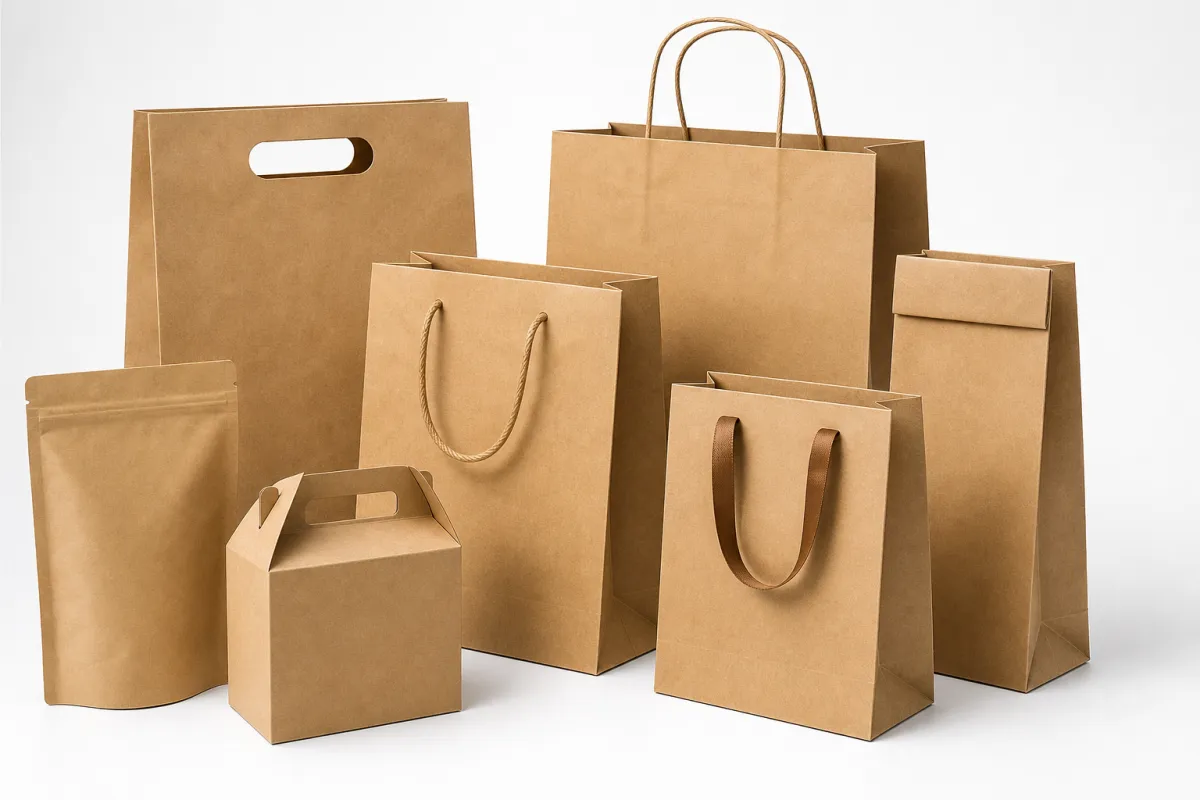
A kraft paper bags manufacturer is not just producing a container. The actual job is balancing load performance, shelf presence, print accuracy, and shipping efficiency in one item that seems inexpensive until it fails. A mockup can look clean on a screen, yet the real questions are about strength and consistency: Will the base hold weight without buckling? Will the handle stay attached after a customer lifts a heavy order? Will the print stay in register once the paper has been folded, glued, and stacked? That is where the work begins.
From a packaging buyer’s point of view, the costly mistake is not always material overspending. The real cost is getting the wrong material. Thin kraft paper may be fine for bakery items, light gifts, or event handouts. That same paper can collapse fast when it carries bottled drinks, boxed apparel, or takeaway meals that need a little extra support. A thoughtful kraft paper bags manufacturer should ask what goes inside, how the bag will be carried, and whether the customer will reuse it after the first trip. If they never ask those questions, that is a small warning sign right there.
Three common buying models:
- Stock bags: fastest and lowest cost, with fixed sizes and limited print options.
- Semi-custom bags: moderate flexibility, often a good fit for smaller brands that need a recognizable look without full tooling costs.
- Fully custom bags: best for repeat use, strong branding, and exact fit, though planning and setup costs are higher.
Retail buyers usually want a neat branded surface with a reasonable MOQ. Food brands care more about grease resistance, handle comfort, and whether the bag stays upright long enough to keep the counter clean. Gift brands focus on the visual finish: natural kraft stock, crisp print, perhaps a rope handle, perhaps matte lamination, and a shape that feels intentional rather than generic. In each case, a kraft paper bags manufacturer is solving a use case, not just printing a logo.
There is a blunt truth that saves time: a bag that looks simple can fail quickly if the paper grade, handle bond, or bottom fold is wrong. A good spec should always include expected load weight, product dimensions, and the handling environment. Leave those details out and the supplier has to guess. Guessing is not a manufacturing plan.
A cheap bag that folds, tears, or leaks is not cheap. It is just a replacement order with worse timing.
People also read too much into the word kraft by itself. Kraft paper is a material, not a performance promise. A brown uncoated bag may fit broad expectations for recyclable packaging, but coatings, inks, lamination, and adhesives all change how it behaves and how it should be described. If you need food contact confirmation or recycled-content claims, ask for documentation instead of trusting sales language. Standards and certifications matter more than a polished brochure, and I would never pretend otherwise.
How a kraft paper bags manufacturer turns specs into bags
The production process starts before any machine runs. A capable kraft paper bags manufacturer usually begins with a brief that covers dimensions, style, handle type, print coverage, target quantity, and the intended weight per bag. If the buyer already has artwork, the supplier checks bleed, safe areas, color count, and whether the design actually fits the dieline. If there is no dieline yet, the manufacturer creates one based on bag style and size.
That translation from brief to dieline is where a lot of problems appear. A bag that looks narrow on paper can fail in practice because the product bulges the gusset. A bag that is tall and elegant may look premium in a mockup, then waste material and create awkward handling at the counter. A reliable kraft paper bags manufacturer should recommend paper grade and structure that suit the job instead of simply accepting the order and hoping the numbers work out. That kind of hope is not a plan; it is just a headache waiting to happen.
Common bag styles include:
- Flat handle bags: practical for takeout and grocery use, usually cost-efficient.
- Twisted handle bags: a sturdier feel in hand, popular for retail and everyday shopping.
- SOS bags: self-opening square-bottom bags used heavily in food service.
- Square-bottom and gusseted bags: useful for products that need a wider base and more standing stability.
- Rope-handle bags: a stronger visual choice for premium retail and gifting.
Material choice shapes the result at every stage. Common specs range from around 80gsm to 150gsm kraft paper, depending on the size and load. A lightweight bakery bag may work at the lower end. A shopping bag carrying catalogs, boxed goods, or heavier retail items usually needs thicker stock and stronger handle attachment. Recycled-content paper can change stiffness and print appearance, so the sample matters more than the sales sheet. If a supplier insists the paper will “probably be fine” without testing the actual sample, I would slow the order down and ask for proof.
Quality control is not mysterious. A serious kraft paper bags manufacturer checks paper caliper, glue strength, handle attachment, print alignment, and bottom fold consistency. For custom orders, a pull test on the handles and a basic drop test can reveal more than a polished sample photo ever will. A supplier may not run a full laboratory package test for every job, but they should understand packaging standards and know how to compare performance against practical test methods. If that part is fuzzy, keep looking. Packaging is mechanics with paper, not magic.
There is also a real difference between standard manufacturing and custom production. Standard runs move faster because the structure is already established. Custom work adds cost because tooling, plates, setup, and proofing all take time. That cost is not a trick. It is the price of precision. If a kraft paper bags manufacturer gives an unusually low custom quote, ask what was left out. Something usually was, and it tends to surface later.
For brands that need recycled-content or FSC certified paper, the supplier should be able to show chain-of-custody information or explain which components are certified. You can also review general packaging guidance from FSC and material recovery information from the EPA before you approve a claim that sounds environmentally friendly but has no real support.
If the bags will ship in bulk, ask how they are packed. Good cartons matter. Corrugated master cartons protect edges, keep stacks square, and reduce crush damage during freight. A bag can be made correctly and still arrive damaged if the outer packaging is careless.
Kraft paper bags manufacturer pricing: what really drives cost
Pricing is where buyers get misled fastest. A kraft paper bags manufacturer quote can look cheap until you notice the bag is smaller than expected, the print is limited to one color, or freight removes most of the savings. The real number is the landed cost, not the factory price that looks good in an email.
The biggest cost drivers are ordinary, which is probably why people overlook them. Paper grade, size, bag style, handle type, print colors, coating, embossing, and finishing all affect the quote. A flat-handle SOS bag in plain kraft is usually cheaper than a twisted-handle retail bag with full-color print and a matte finish. Buyers still compare those as if they were the same product. They are not, and the quote sheet should make that obvious.
Typical pricing comparison for a modest custom run:
| Option | Typical MOQ | Unit price range | Lead time | Best for |
|---|---|---|---|---|
| Plain stock kraft bag | 1,000-5,000 | $0.05-$0.15 | Fastest | Basic retail, events, temporary use |
| Semi-custom printed bag | 3,000-10,000 | $0.14-$0.30 | Moderate | Small brands, seasonal campaigns, food service |
| Fully custom premium bag | 5,000-20,000+ | $0.22-$0.60+ | Longer | Retail branding, gifting, repeated customer handling |
Those numbers are only a guide. Real pricing depends on order quantity and design complexity. A 1,000-piece printed run can cost much more per unit than a 10,000-piece run because setup charges, print plates, and machine changeovers are spread over fewer bags. That is why MOQ matters. A higher MOQ usually lowers the unit price, but only if the inventory will be used before the design changes or the season passes.
Comparing plain bags with custom printed bags is not just a print decision. A plain bag may save setup cost, but if it does not support the product well or if it looks too generic for the brand, the savings disappear quickly. A custom run may increase the upfront bill, yet it can improve presentation, reduce reorders caused by poor fit, and make the packaging worth keeping. A good kraft paper bags manufacturer should help you compare total cost, not just a neat per-piece number.
Freight creates its own surprises. Bags are light, but they are bulky. That means you may pay more for space than for weight. Carton count, palletizing method, and box dimensions all affect shipping cost. Cross-border orders can bring duty and brokerage fees into the picture as well. I have seen buyers save five cents per bag and lose two hundred dollars in freight because nobody checked how the cartons would stack. Efficient packaging is not glamorous, yet it pays for itself.
One simple rule helps here: if two quotes are close, choose the supplier who explains the cost structure clearly. A kraft paper bags manufacturer that gives line-item detail is usually used to real orders. A vague quote can be cheaper, or it can be hiding the very parts that decide whether the job works. The difference shows up later.
Production process and timeline: what happens after approval
Once the order is approved, the clock starts. A practical kraft paper bags manufacturer follows a sequence: quote confirmation, artwork review, sample signoff, material booking, production, QC, packing, and shipment. That list looks neat on paper. In the real world, each stage can slip if the artwork changes or the paper grade is hard to source.
Stock bags move quickly because the structure already exists and the supplier may only need to print or pack them. Custom printed bags take longer. A realistic timeline for a custom run is often 12-25 business days after sample approval, depending on complexity, quantity, and the factory queue. Add extra time if you are waiting on revisions, color matching, or the final signoff from someone who is always almost ready. That happens more than people admit.
Where delays usually happen:
- Artwork revisions: the logo is too close to the edge or the bleed area was ignored.
- Color matching: brand colors on kraft paper shift when the stock is darker or more absorbent.
- Sample approvals: one person wants a change while another wants to keep the current version.
- Paper shortages: specific weights or certified stocks may need additional booking time.
- Packing and freight booking: the bags are finished, but shipping is not yet arranged.
Rush orders are possible. They usually happen because production is reshuffled, a finish option is removed, or the schedule gets compressed enough to make everyone move faster. Rush fees are normal. A shorter turnaround can add 10% to 20% or more, and it may limit special inks, lamination, or premium handles. If a supplier promises a rush with no tradeoff at all, ask what is being cut. The answer usually appears later, and it is rarely flattering.
A good kraft paper bags manufacturer should divide the schedule into stages so you can see where risk lives. Ask for separate dates for proof approval, sample approval, production start, packed goods ready, and shipment release. That lets you catch a delay early instead of hearing about a late truck after the shipping window is already gone. Timing is not only about speed. It is about visibility.
For brands that reorder often, repeat jobs become much easier when the exact spec is kept on file. Same dieline, same paper grade, same print method, same handle attachment, same carton packout. That level of consistency saves money over time. A good kraft paper bags manufacturer usually welcomes a clean repeat order because they do not need to rediscover the job from scratch.
Key factors to compare before choosing a supplier
Comparing suppliers by price alone is lazy and expensive. A strong kraft paper bags manufacturer should perform well on material quality, print capability, certifications, communication, sampling, and production consistency. If you only compare the quote, you are really comparing how much trouble you are willing to accept later.
Material quality: Look beyond paper weight. Fiber mix, stiffness, tear resistance, and how the bag behaves under load matter more than one GSM number. A heavier sheet is not automatically better if the folding quality is poor. For food and gifting, hand feel matters too. A recycled-content bag can still be strong, but the supplier should explain any variation in color or texture instead of pretending every sheet is identical.
Print capability: Ask whether the supplier can handle spot color, full-color artwork, metallic accents, and tight registration. On natural kraft paper, dark logos can look excellent, while light colors may disappear if contrast is weak. A competent kraft paper bags manufacturer should be able to tell you whether your brand color needs a white underbase or a different print approach. That kind of answer saves a lot of guessing.
Compliance: If the bags touch food or will be used around products with contact sensitivity, ask for the relevant paperwork. FSC certified paper matters when you are making sourcing claims. Food-contact rules matter when the bag sits near prepared items. Packaging guidance from organizations such as Packaging World / PMMI resources can help you think more clearly about process and performance before you place the order.
Communication quality: Fast answers are welcome. Clear answers are better. The best suppliers explain what they can do, where the limits are, and what changes the cost. Vague promises sound friendly until the order slips. A good kraft paper bags manufacturer is specific about lead times, tolerances, and the approvals needed before production starts.
Sampling policy: Ask how samples are handled and whether you can get a pre-production sample for important jobs. If the bag will carry heavy retail items, repeated customer handling, or gift-grade presentation, sample quality is not optional. One sample can reveal more than ten polished emails, and I would trust the sample before I trust the sales pitch every time.
Production consistency: You want repeatability. The first thousand bags should look like the second thousand. Ask how defects are handled, what the acceptable tolerance is, and whether the supplier documents issues with photos or batch notes. A serious kraft paper bags manufacturer should make problems measurable rather than vague.
If you are comparing multiple vendors, keep the spec identical: same dimensions, same paper weight, same handle style, same print count, same carton packout, same shipping terms. Otherwise you are not comparing suppliers. You are comparing different jobs.
Common mistakes buyers make with kraft paper bags
The most common mistake is chasing the lowest quote and ignoring load strength. A kraft paper bags manufacturer can build a low-cost bag that passes a mockup review and then fails in store because the handle bond is weak or the bottom seam separates. Once that happens, the brand does not look economical. It looks careless.
Common mistakes to avoid:
- Choosing by price only: if the bag tears or collapses, the savings disappear immediately.
- Ignoring internal space: outer dimensions are not the same as usable space, and products that barely fit will crease the bag.
- Skipping dieline review: artwork that looks fine on a PDF can fail once folds and bleeds are applied.
- Ordering too few samples: one sample is a start, not a full test plan.
- Assuming all suppliers are equal: material quality, print accuracy, and turnaround vary a lot.
Another common mistake is treating the bag like a flat sheet of decoration. It is a structure. The bag needs room for the product, room for the fold, room for the handle, and room for actual human behavior. A customer will grab it too hard, set it on a damp counter, or add one more item than the bag was meant to carry. A smart kraft paper bags manufacturer designs for that behavior instead of designing for an empty shelf display.
Artwork mistakes show up often as well. Buyers send a logo before the dieline is confirmed, then learn the safe area is smaller than expected or the print zone is interrupted by a fold. Some forget that dark natural kraft absorbs part of the color. Others approve a mockup that looks beautiful and never ask what it will look like after a few lifts and a delivery run. That is where packaging gets tested.
Testing is another place where people save money in the wrong direction. If the bag will be used for food service, ask for a simple stress test. If it will carry heavier retail items, ask for a handle pull test and a drop check. Match the test to the use case. As a rough benchmark, the sample should comfortably hold at least 1.5 times the expected load without the handles distorting or the bottom opening. That is not excessive. It is basic caution.
A kraft paper bags manufacturer should know these points without a lecture. The buyer still asks, though, because the buyer owns the result. Surprise failures are rarely a supplier problem alone. They usually come from a spec problem, a communication problem, or both.
Expert tips and next steps for a better order
The easiest way to improve your order is to stop making the supplier guess. Send a clean spec sheet with dimensions, bag style, paper grade, handle type, print area, color count, quantity, load weight, and target ship date. A good kraft paper bags manufacturer can move much faster when the brief is complete. The back-and-forth drops, proofing gets cleaner, and the sample is closer to what you actually need.
Ask for three things up front:
- A line-item quote that separates unit cost, setup, printing, freight, and any finish charges.
- A sample or pre-production proof if the order is high visibility or load sensitive.
- A stage-by-stage timeline so you know where the schedule can slip.
That approach sounds basic because it is basic. It also works. One of the cleanest ways to compare one kraft paper bags manufacturer against another is to make both suppliers quote the same spec in the same format. If one quote is vague and the other breaks everything down, the vague one is not easier to work with. It is just harder to audit.
If your bags will be used for food, boxed gifts, or repeated retail handling, start with a test run. Even 1,000 or 2,000 pieces can reveal whether the handle feels right, whether the print stays clean on kraft stock, and whether the bag still looks good after transport. That smaller trial can save you from ordering a larger run that looks good in the proof but awkward in real use.
There is also a branding lesson in packaging. Customers notice the bag more than many buyers expect. A bag made with decent kraft paper, correct structure, and clear print signals care. A flimsy one signals the opposite. That is why About Custom Logo Things matters when you are comparing a branded packaging supplier with a generic price-first vendor. Buying packaging is not only about holding a product. It is about controlling what the customer sees and feels before they ever use the product inside.
My practical advice is simple: choose the bag that fits the job, not the one that merely looks cheapest on a quote sheet. A kraft paper bags manufacturer with a fair process, honest lead times, and clear spec handling is usually worth more than a seller who throws out low numbers and hopes nobody opens the carton too hard. Keep the spec tight, insist on a real sample, and confirm the load requirement before production starts. That is the cleanest way to end up with packaging that does its job every single time.
Here are the questions buyers usually ask after they get the first quote.
What should I ask a kraft paper bags manufacturer before getting a quote?
Ask about material grade, bag style, handle type, print method, MOQ, sample policy, and lead time. Then request a line-item quote so you can see setup, unit cost, freight, and finishing charges separately. If a kraft paper bags manufacturer cannot answer those basics clearly, the order is probably going to be messy later.
How much does a kraft paper bags manufacturer usually charge per bag?
Unit cost depends on size, paper weight, print colors, handle type, and order quantity. Small orders usually cost much more per bag because setup and production overhead are spread across fewer units. For a clean comparison, ask each kraft paper bags manufacturer to quote the exact same spec and shipping terms.
What is a normal lead time from a kraft paper bags manufacturer?
Stock bags can move quickly, while custom printed orders often need extra time for artwork approval, sampling, and production. A realistic custom timeline is often 12-25 business days after approval, but that shifts with quantity and finish complexity. If the timeline feels vague, ask the kraft paper bags manufacturer to break it into stages.
How do I compare two kraft paper bags manufacturers fairly?
Compare the same bag specs, the same quantity, the same print requirements, and the same shipping terms. Then judge the sample quality, communication speed, and whether the supplier can explain tradeoffs clearly. A good kraft paper bags manufacturer should make it easy to see what you gain, what you lose, and what the real landed cost will be.
What is the biggest mistake when ordering from a kraft paper bags manufacturer?
The biggest mistake is chasing the lowest quote without checking bag strength, artwork limits, and the total landed cost. A cheap bag that fails in store is not cheap. It is just a future problem with better branding. If you want fewer headaches, Choose a Kraft Paper bags manufacturer that can prove the bag is right before production starts.
Choosing a kraft paper bags manufacturer comes down to five practical checks: the right paper, the right handle, the right print, the right test, and the right timeline. Keep the brief tight, compare like for like, and ask for proof before you approve the run. That is the most reliable way to get packaging that protects the product, supports the brand, and holds up in real use.

