Shop frosted zipper bags for Brand Inserts That Sell
Frosted zipper bags for brand inserts help a packet look organized, protected, and ready to hand over. They sit between fully clear and fully opaque packaging: enough visibility to show the contents, enough softness to reduce glare and visual clutter. For a buyer deciding on insert packaging, that middle ground matters because it can make a card set, brochure, or sample pack look intentionally assembled instead of loosely packed.
That is why this format shows up in retail promos, welcome kits, influencer mailers, event handouts, and e-commerce inserts. The bag is part presentation and part handling protection. If the stack sits cleanly inside the pouch, the whole package reads as more deliberate before the customer even looks at the printed insert.
Why frosted zipper bags for brand inserts feel premium
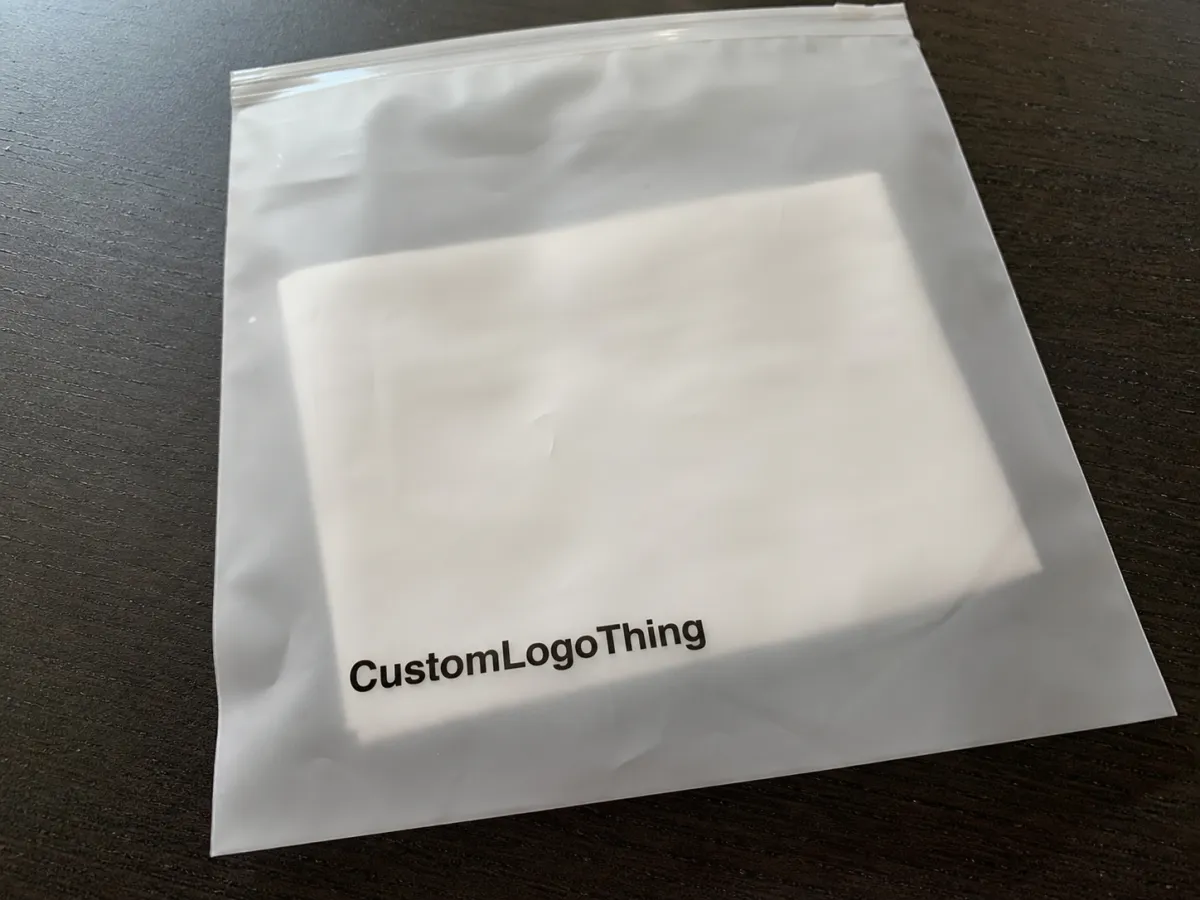
Consumers trust what they can preview, but only if the preview feels deliberate. Frosted film does that better than a fully clear bag in many insert applications because it cuts glare and softens contrast while still showing shape and color. That keeps attention on the packet as a whole instead of on every edge or reflection inside it.
The premium effect is partly visual and partly practical. A frosted sleeve suggests order, and order changes how a package is read. A coupon card looks more considered, a foldout guide feels more complete, and a sample packet feels like part of a system rather than spare collateral. That small shift can matter in retail handouts and mailers where first impressions are doing a lot of work.
Frosted film also hides minor variation better than clear packaging. Printed inserts are rarely identical in every run, and folded paper does not always sit perfectly flat after packing. The softer finish reduces the visibility of those small inconsistencies without making the bag look dull or heavy.
A good insert bag does not need to dominate the design. It just has to make the contents look planned, protected, and easy to understand.
That is one reason brands reuse the same style across campaigns. Once the customer recognizes the finish, the bag becomes part of the package memory instead of just a container.
How the zipper closure and frosted finish work together
The zipper does more than keep the packet closed. If the closure feels weak, sits crooked, or snags at the corners, the package feels temporary even when the print is strong. Buyers notice that mechanical quality quickly because it affects both handling and presentation.
For brand inserts, the closure should keep the stack in place, reopen cleanly if needed, and preserve the look of a finished packet. That means zipper type, film thickness, and bag size have to work together. A slim card set and a thicker packet with a sample are not the same spec, even if the artwork is identical.
Thickness often falls around 4-8 mil for insert packaging, depending on stack depth and weight. Lighter paper sets usually work in the lower end of that range. Thicker kits, folded brochures, or mixed-media packets usually need more body so the bag stays flat instead of collapsing around the contents. Too thin can scuff corners; too stiff can feel overbuilt for a simple insert set.
The frosted finish changes how the bag reads under light. Clear film reflects more and exposes every slight movement, while frosted film softens fingerprints, reflections, and uneven edges. It does not hide poor packing, but it is more forgiving and usually looks cleaner in hand.
Inspection matters here. The seal line should be even, the zipper track should run straight, and the closure should work without snagging. Those details seem small, but they affect how premium the packet feels once the customer opens it.
Cost, pricing, and MOQ
Pricing depends on the things buyers can control: size, thickness, zipper style, print coverage, and whether the bag is stock or custom. A simple unprinted stock bag can be inexpensive. A custom-sized, printed bag with heavier film and special finishing moves into a different cost range quickly.
MOQ is usually where first-time buyers get surprised. Small runs carry higher unit pricing because setup, proofing, and inspection costs are spread across fewer pieces. Larger runs lower the unit cost, but only make sense if the campaign really needs that volume. For recurring insert programs, a bigger order may be efficient; for a one-time launch, excess inventory can erase the savings.
| Option | Best for | Typical unit cost at 5,000 pcs | Notes |
|---|---|---|---|
| Stock frosted flat zipper bag | Single cards, slim insert sets | $0.08-$0.16 | Fast to source; limited print options |
| Stock frosted gusseted bag | Thicker packets, folded brochures | $0.12-$0.22 | More room for stacked inserts and small sample pieces |
| Custom printed frosted zipper bag | Brand launches, retail kits, mailers | $0.18-$0.45 | Depends on artwork coverage, zipper style, and spec complexity |
Those are planning ranges, not quotes. Freight, destination, and packaging configuration can change the final number more than expected. Sample costs may also be separate. If one quote includes freight and another does not, unit pricing is not comparable.
For a useful quote, send exact insert dimensions, quantity, and delivery location. If printing is involved, include artwork files and say whether the use case is retail, mailers, or event handouts. That context helps the supplier recommend the right build instead of defaulting to the wrong one.
Quick comparison points to ask before approving a quote:
- Is the price based on a flat bag or a gusseted build?
- Does the quote include print on one side or both sides?
- Is the MOQ fixed, or does it rise with custom sizing?
- Are samples and freight included, or billed separately?
Production steps and timeline
The production path usually starts with a spec request, moves to dimension confirmation, then proof review, sample approval, and full production. Most delays happen at the handoffs. If the insert size is unclear, artwork is revised late, or the sample is never tested against the real stack, the schedule slips before the run begins.
A common 2026 timeline is one to two business days for proof approval, about five to seven business days for a physical sample if needed, and roughly ten to fifteen business days for production after approval. Complex print work, custom dimensions, or material shortages can extend that. Larger runs can also take longer because inspection and handling increase with volume.
Buyers should also separate the order deadline from the internal deadline. “We need it by Friday” is not enough. “The kits must be in hand by Friday, leaving two days for assembly” gives the supplier a real target and helps protect the schedule.
If the bags will travel through parcel networks or distribution centers, transit testing becomes relevant. The International Safe Transit Association publishes references at ista.org. For broader packaging standards and trade information, packaging.org is another useful source. If sustainability claims are part of the brief, those claims should be supported with the right sourcing language.
Fast projects usually share the same traits: clean artwork, a confirmed stack, one approver, and a sample that is actually tested. That matters more than any rush promise.
Choosing the right size, thickness, and insert format
Measure the full insert stack, not just the largest sheet. A brochure, folded card, and sample piece may each fit individually, but together they can change the fit completely. The goal is a stack that loads easily and stays aligned without drifting around inside the bag.
Flat bags usually fit single postcards, short welcome notes, or slim card sets. Gusseted styles work better when the stack has depth: folded brochures, mini catalogs, or packets with sample pieces. The extra room helps the bag keep its shape after sealing and reduces corner stress.
Insert format matters too. Glossy paper slides differently from uncoated stock. Rounded corners sit differently than square ones. A band around cards can help keep the stack aligned, while a sample sachet adds both weight and movement. If the real combination is never tested, the finished pack may behave differently from the proof image.
A good size protects the insert, the branding, and the budget at once. Oversizing wastes material and weakens the presentation. Undersizing creates pressure on the zipper and the contents. The right spec is usually the one that fits the actual stack with a small margin for loading, not the one that looks safest on a spreadsheet.
Common mistakes that make insert packaging look off
The most common mistake is choosing a bag that is too large. Buyers often think extra room is safer, but it usually makes the packet look loose and unfinished. Instead of curated, it reads as spare packaging.
Another issue is ignoring how the contents behave together. A glossy card, folded brochure, and sample pouch do not sit the same way in a bag. If the stack was approved flat on screen but never tested in real form, the result can look awkward even when every dimension was technically correct.
Proofing also has limits. A digital proof can confirm color placement and layout, but it cannot show whether the zipper closes under load, whether the bag stands flat, or whether the stack shifts after handling. That is why a physical sample is important.
- Oversized bag: allows movement and makes the presentation feel loose.
- Weak zipper: undermines the sense of quality even when print is good.
- Skipping a sample fit test: hides loading and closure problems until production is done.
- Ignoring material behavior: glossy, matte, and mixed inserts do not sit the same way.
Useful rule of thumb: if the insert stack rattles in the bag, the package already looks less premium than it should.
Expert tips for retail kits, mailers, and event handouts
Build the stack with hierarchy. The first piece the recipient should notice needs to sit on top or face outward. That could be a cover card, a short note, or a product guide. The point is controlled reading: the package should explain itself quickly.
Frosted film is especially useful when the contents should be partially visible. Clear packaging reveals everything, which can be useful for simple sets but too busy for mixed inserts. Opaque packaging hides too much. Frosted zipper bags for brand inserts sit between those extremes, showing enough to signal quality without creating visual noise.
For retail kits and mailers, consistency matters as much as appearance. If the same bag is used across multiple campaigns, the same dimensions and closure behavior should follow whenever possible. Small differences in zipper feel, opacity, or stack height become noticeable once a customer has seen the package before.
In my packaging audits, the strongest feedback usually came from kits that were tested with the exact insert stack before launch. A sample that looks perfect on a flat art proof can still fail once a folded brochure, sample sachet, and card set are packed together. That kind of hands-on check saves rework and helps keep the shop frosted zipper bags for brand inserts that sell decision aligned with the actual user experience.
The best insert packaging feels calm. Nothing shifts, nothing flaps, and the contents seem to belong together the moment the bag is opened.
Sustainability and 2026 packaging trends
In 2026, more buyers are asking suppliers for lower-waste packaging options, clearer material disclosures, and specs that fit distribution without overbuilding. Frosted zipper bags for brand inserts can support that shift when the design uses only the film thickness needed for the insert stack and avoids unnecessary extras like oversized formats or excessive print coverage.
One noticeable trend is the move toward simpler, more modular insert systems. Brands are combining one outer pouch with fewer inner components so the packet feels cleaner and is easier to assemble. Another trend is more selective printing: logos, a single message, or a small brand mark instead of full-coverage graphics. That can reduce ink usage while keeping the packet recognizable.
Updated sourcing conversations in 2026 also include recycled-content options, reusable pouch positioning, and packaging designed to pass through fulfillment with fewer damages. Buyers often compare the cost of the bag against the cost of rework, returns, or replacements. In many cases, a slightly better bag spec is cheaper than fixing a wrinkled or torn insert set after packing.
If you are evaluating options now, ask suppliers whether they offer stock and custom frosted zipper bags in multiple thicknesses, gusset profiles, and print methods. Some programs need a lightweight flat pouch for cards; others need a sturdier bag that can handle layered inserts and samples. Matching the build to the use case usually delivers the best balance of price and presentation.
Next steps to sample, approve, and order with confidence
Start with the numbers that control the outcome: insert dimensions, quantity, and delivery date. If the bags need printing, include the artwork files and note the use case. Retail kits, event handouts, and mailers often need different balances of visibility, durability, and cost.
Then ask for a sample or proof and test it against the real insert stack. Check whether the zipper closes cleanly, whether the bag sits flat after loading, and whether the contents drift when handled. If the bag will ship, do a quick pressure and abrasion check before approving full production.
The strongest result usually comes from the same formula: correct fit, clean closure, and a frosted finish that supports the insert instead of competing with it. That is why this format keeps working across different campaign types, and why teams still shop frosted zipper bags for brand inserts that sell when presentation and protection both matter.
What size frosted zipper bags for brand inserts should I choose?
Measure the full insert stack, not just the largest piece, then allow enough room for loading without excess movement. Flat bags suit slim paper sets, while gusseted styles work better for thicker stacks, folded brochures, or packets that include samples.
Are frosted zipper bags better than clear bags for brand inserts?
Frosted bags reduce glare and create a softer, more premium presentation while still showing the contents. Clear bags maximize visibility, but they can look more utilitarian when the goal is a polished branded packet.
What affects the price of frosted zipper bags for brand inserts?
Size, film thickness, zipper style, print coverage, and quantity are the main pricing drivers. Short runs, custom dimensions, and special print requirements usually cost more per unit than standard stock specs.
How long is the production timeline for custom frosted zipper bags in 2026?
Timeline depends on proof approval speed, sample requirements, order size, and material availability. Simple projects move faster; custom print, special sizing, or complex inserts usually add time.
What should I send before requesting a quote for brand insert bags?
Send insert dimensions, quantity, artwork files if needed, and the shipping destination. It also helps to mention whether the bags are for retail kits, mailers, or event handouts so the supplier can recommend the right construction.


