Buyer Fit Snapshot
| Best fit | freight packaging practices for packaging buyers comparing material specs, print proof, MOQ, unit cost, freight, and repeat-order risk where brand print, material, artwork control, and repeat-order consistency matter. |
|---|---|
| Quote inputs | Share finished size, material target, print colors, finish, packing count, annual reorder estimate, and delivery region. |
| Proofing check | Approve dieline scale, logo placement, barcode or warning zones, color tolerance, and any recyclable or compostable wording before bulk production. |
| Main risk | Vague material claims, crowded artwork, or missing packing details can create delays even when the unit price looks attractive. |
Fast answer: Freight Packaging Practices: Cost, MOQ, Proof, and Reorder Checks should be specified like a repeatable production item. The safest quote includes material, print method, finish, artwork proof, carton packing, and reorder notes in one written spec.
What to confirm before approving the packaging proof
Check the product dimensions against the actual filled item, not only the sales mockup. Ask for tolerance on folds, seals, hang holes, label areas, and retail display edges. If the package carries a logo, QR code, warning copy, or legal claim, reserve that space before decorative graphics fill the panel.
How to compare quotes without losing quality
Compare board or film grade, print process, finish, sampling route, tooling charges, carton quantity, and freight assumptions side by side. A lower quote is only useful if the supplier can repeat the same color, closure quality, and packing count on the next order.
What Are Freight Packaging Best Practices for Real-World Shipping?
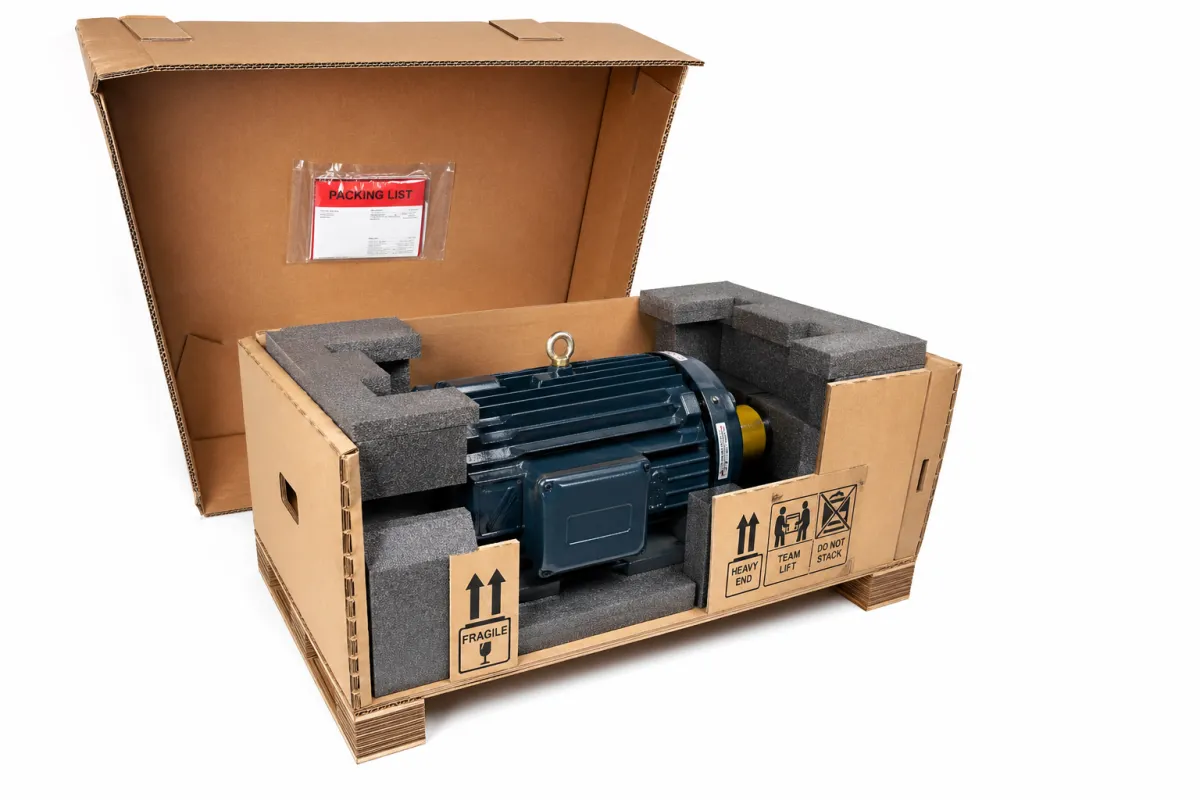
One bad edge crush can turn a shipment from "fine" to scrap in under half an hour. I’ve seen that happen more than once, and it usually starts at packout, not somewhere out on the road. Freight Packaging Best Practices have to be practical before they are pretty: protect the product, protect the value inside the carton, and protect the margin that makes the shipment worth moving.
There is no magic material that wins every lane. Freight Packaging Best Practices depend on weight, pallet density, lane roughness, dock handling, and the way cartons stack after they leave your floor. A light consumer item on a calm route can survive a very different structure than a heavy industrial part that gets transferred twice and rides in mixed freight all night. Same product family. Totally different answer.
The most common mistake is buying packaging to please a spec sheet instead of solving the real stress points. A box can look clean, branded, and expensive, then collapse at the corners or slide in the trailer like it has somewhere better to be. Good freight Packaging Best Practices are a chain of small decisions that keep the load upright, dry, readable, and easy to handle.
The short version is simple enough: match the carton or crate to the lane, lock the product in place, keep the pallet square, and test the system before you buy at scale. Do that and you get fewer claims, fewer dock-side damages, faster handling, and freight spend that stays predictable instead of wandering off every time a shipment breaks.
Success in buyer terms means three things: lower claims, less rework, and fewer unpleasant surprises from carriers or warehouse teams. Freight Packaging Best Practices are not only about surviving transit. They also make sure the package can be packed, stacked, scanned, and moved without drama. If the design fails at any one of those steps, the cost shows up somewhere else. Usually in a place nobody budgeted for.
"The cheapest carton on the purchase order can become the most expensive one in the building if it collapses after the first transfer."
If your operation also sells retail-ready goods, separate product packaging from freight protection. A shelf-facing carton or a polished branded packaging program may be perfect for the customer, but freight still demands corner strength, consistent void-fill, and pallet discipline. For teams building out Custom Packaging Products, that split between presentation and transit performance is usually where freight packaging best practices start paying off.
I’m also going to be blunt about one thing: not every shipment needs the same level of armor. Sometimes a simple corrugated setup is enough. Sometimes it is not. If the lane is ugly, pretending otherwise just burns money later.
Freight Packaging Best Practices: Materials, Configurations, and Protection Layers
Freight packaging best practices start with structure, not with appearance. The material has to match the pressure, vibration, and stacking behavior of the lane. Single-wall corrugated can work for compact, light loads. Once point loads, pallet overhang, or repeated transfers show up, double-wall or reinforced options usually earn their keep faster than buyers expect.
For carton-based freight, the practical comparison usually comes down to four families. Single-wall and double-wall corrugated are the baseline. Molded inserts, foam dunnage, and air cushions manage movement inside the case. Stretch wrap, strapping, and corner boards stabilize the pallet outside the case. Reusable containers, tote bins, and in some industries returnable carriers can beat one-way materials after enough cycles if the route is controlled and reverse logistics are actually organized instead of "planned" on a whiteboard.
Freight packaging best practices also mean choosing based on failure mode. If the risk is compression, the answer is usually stronger board, a better pallet footprint, and tighter stacking. If the risk is puncture or vibration, internal restraint matters more. If the risk is moisture, film choice, liners, and warehouse dwell matter more than a prettier print surface. That part is boring. It also saves the most money.
For teams evaluating custom printed boxes alongside freight-ready structures, the right question is not "which box looks best?" It is "which combination survives the route with the least labor, least damage, and least waste?" That is the lens I use when comparing materials, because freight packaging best practices have to work with real labor and real time pressure, not a fantasy lab run with unlimited patience.
| Option | Typical Unit Cost | Strength Profile | Best Fit | Main Watch-Out |
|---|---|---|---|---|
| Single-wall RSC | $0.90-$2.25 | Good for light compression, limited edge protection | Small, stable, low-risk freight lots | Fails fast on point loads and rough stacking |
| Double-wall RSC | $1.35-$3.80 | Better BCT and better pallet point-load resistance | Mixed freight, heavier cartons, longer lanes | Can be overused for small light SKUs |
| Custom die-cut corrugated | $1.60-$4.50 | Excellent fit control and internal restraint | Irregular shapes and premium product packaging | Tooling and setup time are higher |
| Wood-reinforced crate | $18-$65 | Strong against puncture, load shifts, and heavy mass | Heavy industrial, abrasive, or non-rectangular loads | Higher labor, handling, and compliance burden |
| Flexible air cushion or film system | $0.12-$0.45 per protected cavity | Fast packing, light weight, basic vibration control | Uniform loads with low puncture risk | Weak on sharp edges and compression stacking |
That table is the starting point, not the finish line. Freight packaging best practices depend on how the layers work together. A strong carton with loose internal fill can still scuff, settle, or crush. A light carton with excellent interior dunnage can still fail if the pallet film is thin and the load shifts in transit. The package has to behave as one system.
Premium materials do not automatically improve results. If the packout sequence is sloppy, the void-fill is inconsistent, or the pallet is wrapped with too much tension, the load can fail even with a better board grade. Freight packaging best practices reward consistency more than flash. They also punish shortcuts pretty fast.
One more reality: no material choice fixes bad handling forever. If your dock crew is tossing cartons, the answer is not always "buy thicker board." Sometimes it is training, sometimes it is layout, and sometimes it is just admitting the shipping process is doing the damage. Honest answer. Less glamorous. More useful.
Detailed Reviews: Corrugated, Wooden, and Flexible Freight Packaging Systems
Corrugated is still the workhorse because it is familiar, printable, and easy to process. For high-impact routes, double-wall RSCs often hit the best balance between cost and durability, especially when edge crush is decent and the pallet pattern is tight. Fiber-reinforced corrugated constructions and custom die-cut designs go further by reducing product movement and improving face-to-face contact, which matters in mixed-lot drops where cartons do not all weigh the same.
Freight packaging best practices for corrugated should be measured in ECT, BCT, and puncture resistance, not in "thicker is better" slogans that sound useful and usually aren't. A 44 ECT carton with solid case fill can outwork a heavier-looking structure if the lane is stable and the load is square. Still, if the carton is tall, the product is heavy, or the route has repeated transfer points, the better choice is often double-wall with corner reinforcement and a clearer stacking plan.
Wood-reinforced systems enter the picture when the product is abrasive, exceptionally heavy, or oddly shaped. Crates and skids can protect against fork damage and side impact far better than plain corrugated, but they bring pest inspection considerations, wood treatment requirements, and more labor at packout. FSC-certified fiber components can help with sourcing, while ISPM 15 and heat-treatment rules matter for export lanes. For reference on fiber stewardship, see the FSC site, and for test method guidance, the ISTA library is a useful starting point.
Flexible systems can work very well when speed matters and the load geometry is predictable. Air cushions, bubble film with laminated barrier layers, pallet liners, and stretch film all have a place. The problem is that flexible packaging cannot hide poor loading discipline for long. If a carton has sharp corners, or if a product can settle during vibration, thin film and soft fill get overwhelmed quickly.
Freight packaging best practices are easiest to judge with small, honest tests. A carton that survives three handled drops onto concrete may still fail after 90 minutes of vibration on a trailer deck. A pallet that looks good in the warehouse may still tip once the center of gravity moves a few inches off center. A good review has to include compression at temperature extremes, not just room-temperature handling.
I like to compare each structure against three realities: durability, automation compatibility, and damage return on packaging spend. Durability asks whether the structure survives rough handling. Automation compatibility asks whether the pack line can run it without constant adjustment. Return on spend asks whether claims, rework, and labor savings are large enough to justify the upgrade. Freight packaging best practices are strongest when all three move in the same direction.
A practical buyer should also look at label durability. If dust, rain, or scuffing makes a barcode unreadable, the whole package becomes harder to process, and that creates delays that feel small until they stack up across a shipping week. Freight packaging best practices include readable labeling, clean panel placement, and enough print contrast to stay visible after handling.
And yes, print finishes matter more than some teams want to admit. A glossy surface that looks great on a mockup can become a scratched mess after one warehouse cycle. If the package has to do double duty as freight and presentation, the finish needs to survive abuse instead of just the approval meeting.
Process and Timeline: How to Validate Freight Packaging Best Practices
Freight packaging best practices should never be rolled out on guesswork alone. A simple three-stage process works well: design audit, pilot lot test, and scale-up SOP. That sequence keeps the team from locking in a packaging format that looks good during sampling but fails once full-volume handling begins.
Stage one starts with a vulnerability map. Look at product weight, center of gravity, breakage points, moisture exposure, and surface finish. Sketch the carton or case pattern, then lock orientation so packers know what must face up, what must not flex, and which edges need extra support. If the load has fragile panels or protrusions, add corner boards, edge pads, or internal brace points before you think about print aesthetics.
Stage two is the pilot matrix. I would rather see thirty units per SKU group tested properly than three units tested perfectly on a bench. Run vibration and drop simulation, then track claims by root cause, not just by "damaged" or "not damaged." Freight packaging best practices get sharper when the team can say whether the failure came from crush, puncture, shifting, moisture, or handling abuse.
Stage three is where many projects fail or succeed. Train packers, pallet builders, and forklift teams on visual tolerances, torque targets for straps where relevant, and wrap standards for the pallet profile. Then freeze the specification. If the spec keeps changing every week, the team never learns what good looks like, and freight packaging best practices turn into moving targets instead of repeatable work.
A realistic timeline is 7 days for setup, 14 days for pilot and vendor tuning, and 30 days for post-implementation review. That final review matters because route variation and shift changes can expose problems that did not appear during the first week. Freight packaging best practices improve when the data is measured after the system has had time to settle into normal operations.
Exceptions happen, so the SOP has to allow them. Product line changes, seasonal spikes, and different carrier loading patterns should trigger a controlled review, not a full restart. The right response is usually a quick deviation form, a fresh sample check, and a limited test on the changed lane. That is much cheaper than relearning the same lesson after a claim surge.
For buyers building out package branding alongside freight protection, the practical move is to separate cosmetic changes from structural changes. Keep the outer look stable where you can, but document every board grade, insert type, wrap pattern, and seal method. Freight packaging best practices only stay useful if the spec sheet is precise enough for the floor team to follow without interpretation.
If you want this to hold up in the real world, document who owns the change. Not "the team." Not "operations." One name. One checkpoint. Otherwise the process drifts, and suddenly nobody knows why the old pallet pattern worked better. Classic, right?
Price Comparison: True Cost of Freight Packaging
The cheapest freight packaging quote is rarely the cheapest freight package. The true cost has to include the unit packaging price, labor per fill, material waste, claims, rework, and reverse logistics from returns or re-shipping. Freight packaging best practices make more sense once you stop comparing carton price alone and start comparing landed cost per shipped unit.
A simple formula works well: total cost = (packaging + labor + rejects + claims + expedited recoveries) / units shipped. That formula sounds basic, but it exposes how often a low-cost material loses once damage and recovery are included. If a carton saves $0.22 but adds even a small claim rate on a high-volume lane, the savings disappear quickly. Sometimes they disappear immediately.
Price bands also need to be looked at by product class. Light panel goods often sit in the $0.45-$1.20 total packaging range per shipped unit. Medium loads usually land around $1.10-$2.60. Heavy industrial freight often jumps to $4-$12 or more once dunnage, reinforcement, and labor are counted. Fragile premium goods can sit anywhere from $2.25-$7.50 depending on the insert design and pallet method. Freight packaging best practices are about fit, not forcing every SKU into the same cost bucket.
Carrier-side costs deserve attention too. Oversized cartons may trigger cubic penalties. Loose-lift risk can lead to re-handling. Unstable pallets may be pulled for manual correction, and that often creates chargebacks or disputes. Freight packaging best practices lower those hidden costs because the load is easier to move the first time.
For procurement, a few tactics help keep pricing honest. Annual blanket-rate commitments can stabilize supply. Consignment inventory of dunnage can reduce rush orders. Bulk film discounts matter for high-volume operations, but only if the wrap pattern stays controlled. If not, the film savings are trivial next to the damage cost. That is a classic freight packaging best practices trap.
Package buyers sometimes focus so much on unit price that they forget labor. A structure that packs in 18 seconds instead of 32 seconds can be worth far more than a material that is a few cents cheaper. That is especially true in mixed-SKU operations where warehouse time is already tight. Cheap material that slows the line is not cheap. It is just wearing a discount tag.
I also tell teams to budget for the weird stuff: relabeling after a scuffed barcode, rewrap after a pallet topples in staging, and the extra hour when a carrier rejects a load for instability. Those costs are annoying because they show up as "exceptions," which is corporate speak for "we didn't model this, but we will pay it anyway."
How to Choose When Freight Packaging Best Practices Are Not Enough
Sometimes freight packaging best practices still need a scorecard because the shipment is too variable for a simple yes-or-no answer. A weighted model works well: risk severity at 40 percent, handling complexity at 20 percent, transport profile at 20 percent, and total landed cost at 20 percent. That keeps the team from overreacting to one weak point while ignoring the others.
Durability should outrank weight in rough lanes, especially if the product is fragile, stack-sensitive, or expensive to recover. On stable routes with low dwell and controlled handling, a lighter structure can win because it reduces freight cost and is easier to pack. Freight packaging best practices should support the lane, not fight it.
Warehouse integration matters more than people admit. Check scanner access, aisle width, forklift height, rack clearances, and stacking limits before changing the package. A box that works beautifully in a lab may be a nuisance on a dock if the label panel is hidden or the pallet height pushes past safe lift limits. Freight packaging best practices are much easier to maintain when the package fits the building as well as the truck.
Before choosing a vendor, ask for test certificates, humidity resistance data, lot traceability, and a clear response time for design changes. Ask how they handle board grade substitutions and whether they will notify you before a spec change. That level of control is especially important for retail packaging programs that also travel as freight, because the print finish and the structure must stay aligned.
Here are the buying mistakes I see most often:
- Overengineering for a single fragile SKU while ignoring the rest of the product mix.
- Choosing a material without checking the lane vibration profile or transfer count.
- Comparing carton price without including claims, relabeling, or rework costs.
- Assuming branded packaging and freight packaging best practices are the same job.
- Skipping pilot testing because the sample looked strong enough by hand.
That list sounds blunt, but it saves money. Freight packaging best practices fail most often when a team treats them as a purchasing decision only, instead of a packing, handling, and transport system. The packaging is part of the process. Not a decorative afterthought with a purchase order attached.
One honest disclaimer: there are lanes where the data is messy and the best answer is a controlled trial, not a perfect forecast. That is fine. A good packaging program can handle uncertainty. A bad one pretends uncertainty does not exist until the claims start rolling in.
Our Recommendation: Freight Packaging Best Practices to Implement Next Week
For low-volume builders, the smartest path is a standardized kit approach: one or two carton sizes, a small set of inserts, and a wrap standard that everyone can follow. For medium-volume operations, a semi-custom blend works better because it keeps tooling manageable while still tuning the structure to the product. For high-volume exporters, the best freight packaging best practices are usually automation-first specs with tight material tolerances and clear pallet rules.
If you want a simple action plan, start with your top two freight formats and run a 30-pack pilot on each. Set acceptance criteria before you order volume. That means defining what counts as passing for compression, movement, label readability, and load stability. Without that step, freight packaging best practices can turn into opinions instead of measurable outcomes.
Use a 14-day execution checklist:
- Inspect at least five failed shipments and identify the actual failure mode.
- Correct weak edges with board, corner, or brace changes.
- Set void-fill targets by SKU family instead of by guesswork.
- Retrain sealing, strapping, and pallet wrap crews on the revised spec.
- Freeze the packaging version and document the change-control owner.
Then put a small dashboard on the wall or in your weekly review. Track claim rate, carton damage rate, pick-pack speed, and transport surcharge incidents. Freight packaging best practices work best when the team can see movement week by week instead of waiting for a quarterly report.
For a lot of operations, the right next step is not a completely new packaging line. It is a better-balanced package architecture: cleaner structure, clearer loading rules, and fewer assumptions. That is where Custom Packaging Products can support the shift, especially if you are aligning structural freight protection with branded presentation and repeatable packout.
My practical verdict is simple: choose the least complicated structure that consistently survives the lane, then build discipline around it. Freight packaging best practices are not about making every shipment heavy or expensive; they are about making the right parts of the package strong enough, the weak points visible, and the total cost easy to defend. Start with one SKU family, one lane, and one failure mode. Fix that first, document it, and freeze it before the next volume run. That is the part that actually sticks.
What are the most important freight packaging best practices for fragile freight?
Use rigid corner protection and cavity control, choose double-wall corrugated for vibration-prone lanes, and enforce a no-overfill rule so the carton does not telescope under pressure. Keep the center of gravity low, keep the load centered, and secure it with straps or wrap that restrain movement without crushing the product. If the item has a weird shape, test it under vibration before you trust the first pilot.
How can I estimate freight packaging cost before scaling freight packaging best practices?
Build a pilot cost model using true landed cost: packaging unit cost, labor, expected damage under your lane profile, and recovery or remediation cost. Run at least one full-cycle pilot with 30 units and apply the result to monthly volume before you place a bulk order. That gets you a lot closer to reality than a carton quote ever will.
Which freight packaging method is better for pallets: rigid dunnage or flexible packaging?
Rigid systems win on sharp point loads and heavy SKUs, while flexible systems win when speed and labor cost matter and the load geometry is uniform. Choose based on drop history, stack height, and handling method, because vibration without rigid reinforcement usually hurts flexible methods first. If the pallet has any chance of side impact or overhang, rigid support usually earns its keep.
How long does a freight packaging optimization project usually take?
A practical timeline is 30 days: 5-7 days for audit, 7-10 days for pilot setup and testing, and 14 days for supplier tuning plus staff training. Keep claims tracking active through the first 30 days after launch because route variation and shift changes are often where the hidden failures show up. You will not catch everything in the first week, and pretending otherwise is kinda how teams get burned.
What should I check first when reviewing freight packaging best practices with a new carrier?
Ask for handling profile history, accepted maximum dimensions, and surcharge triggers, then verify the packaging design against the carrier’s pallet standards and return procedures before shipment release. If the carrier’s handling pattern is rough or inconsistent, the packaging spec should be adjusted before the first production run. A clean lane is nice. A realistic lane is better.


