Buyer Fit Snapshot
| Best fit | recyclable packaging practices for for packaging buyers comparing material specs, print proof, MOQ, unit cost, freight, and repeat-order risk where brand print, material, artwork control, and repeat-order consistency matter. |
|---|---|
| Quote inputs | Share finished size, material target, print colors, finish, packing count, annual reorder estimate, and delivery region. |
| Proofing check | Approve dieline scale, logo placement, barcode or warning zones, color tolerance, and any recyclable or compostable wording before bulk production. |
| Main risk | Vague material claims, crowded artwork, or missing packing details can create delays even when the unit price looks attractive. |
Fast answer: Recyclable Packaging Practices for: Claims, Protection, MOQ, and Cost should be specified like a repeatable production item. The safest quote includes material, print method, finish, artwork proof, carton packing, and reorder notes in one written spec.
What to confirm before approving the packaging proof
Check the product dimensions against the actual filled item, not only the sales mockup. Ask for tolerance on folds, seals, hang holes, label areas, and retail display edges. If the package carries a logo, QR code, warning copy, or legal claim, reserve that space before decorative graphics fill the panel.
How to compare quotes without losing quality
Compare board or film grade, print process, finish, sampling route, tooling charges, carton quantity, and freight assumptions side by side. A lower quote is only useful if the supplier can repeat the same color, closure quality, and packing count on the next order.
Recyclable Packaging Best Practices for Smart Buyers
The phrase recyclable Packaging Best Practices gets thrown around so often it can start to sound like a sticker someone slapped on a carton after a 90-second brainstorm. I’ve watched brands celebrate a “green” launch while the carton, label, and insert all failed the recovery stream in places like Portland, Oregon, and Manchester, UK. One cosmetics run still stays with me: 8,000 units, a glossy film window, metallic ink, and a pressure-sensitive label that would not release cleanly from the outer box. The sample looked polished in the boardroom, then went straight to the trash because the sorting line in Dongguan would have rejected it in under 15 seconds. I remember staring at that box and thinking, “That is a lot of money spent to make one very expensive landfill contribution.” That gap - between what looks responsible and what actually recycles - is the whole reason this piece exists. The best recyclable packaging best practices need to survive the line, the warehouse, and the customer’s kitchen table, not just a pitch deck in Chicago.
What Are the Recyclable Packaging Best Practices That Actually Work?
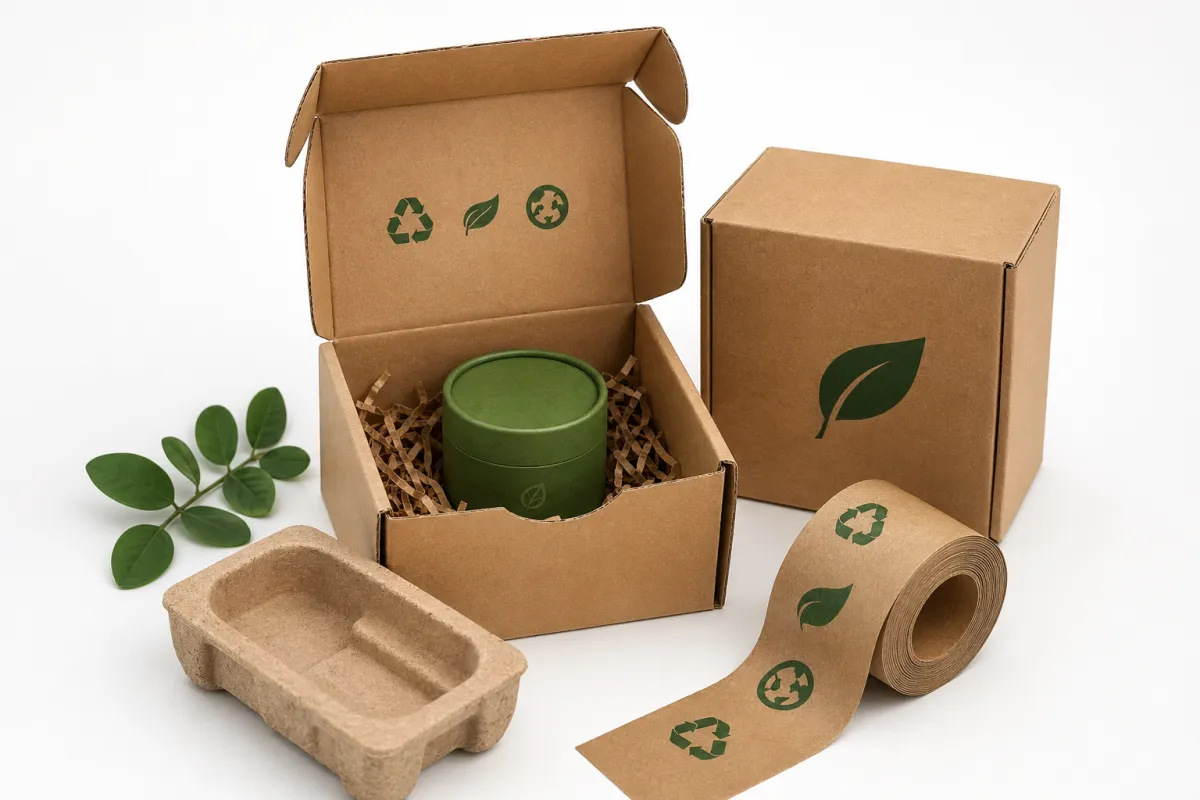
If you need the short version, recyclable packaging best practices begin with one practical rule: use the simplest structure that protects the product, sorts cleanly, and fits the recovery system where the customer actually lives. A brand shipping from Nashville to suburban Atlanta may get a very different result from one sending to rural Alberta, even if both boxes say “recyclable” in 18-point type. Companies often spend heavily on recycled-content claims, then discover the package still fails because of mixed materials, foil accents, or a liner no facility wants. A package that cannot be recovered is not a sustainability win. It is a marketing line with a recycling symbol attached, which gets awkward fast when the damage rate is 3.2% and every replacement costs another freight leg.
The strongest recyclable packaging best practices are plainspoken. Favor mono-material structures. Keep labels readable. Use components with a documented recovery path. Accept a blunt reality too: a package can be technically recyclable and still end up in landfill if customers have no access to the right stream, or if the pack is coated in food residue, heavy ink coverage, or a closure nobody can separate. In a plant outside Columbus, Ohio, I watched a team reject a batch of “eco” mailers because the adhesive strip tore the paper fibers during a quick tear test after only 12 cycles. The material looked clean on a mood board in Brooklyn. It failed in the dock area, where packaging either earns its keep or gets exposed.
Need a decision this week? Choose a structure that stays in one family of materials, verify the recovery route in the destination market, and run the package through real shipping stress before printing 50,000 units. That is the core of recyclable packaging best practices, whether the order is retail packaging, e-commerce cartons, or branded packaging for a subscription line. If you are comparing suppliers, ask for proof approval to delivery timing in writing; a good baseline is 12-15 business days from proof approval for stock print work and 4-8 weeks for a fully custom carton from Shenzhen or Ho Chi Minh City.
- Mono-material first: one dominant substrate usually recycles more predictably than a layered composite with a polished story.
- Use less material: the lightest pack that survives drop, compression, and moisture tends to win on cost and waste.
- Check local access: a technically recyclable pack helps little if the customer cannot recover it curbside or through a realistic drop-off route.
- Test before rollout: run ISTA-style transit checks and rough warehouse abuse tests before sign-off.
I think many teams overcomplicate this because they are trying to solve product protection, brand presentation, and compliance in one pass. Those goals overlap, but they are not identical. If the box crushes in a 36-inch drop, the sustainability claim does not matter. If the customer cannot sort it, the claim does not matter. If the print smears after a humid freight leg through Houston in August, the claim does not matter. Recyclable packaging best practices are about building something that survives the journey and still makes sense at end of life, preferably without requiring a 14-step instruction card.
“A carton doesn’t get a second chance after a wet dock door.”
That line came from an operations manager at a Midwest fulfillment center in Indianapolis, and it stuck because it is painfully accurate. A pretty sample can pass a desk review and still fail once it hits corrugate dust, forklift vibration, and a customer who opens the box with one hand while standing in a parking lot. Keep that image in mind while the main formats get compared, because the warehouse in Ontario or the fulfillment line in Phoenix will not care about your Pantone match.
Recyclable Packaging Best Practices: Top Options Compared
The smartest recyclable packaging best practices compare formats by performance, access, and cost, not by labels alone. Five options show up over and over: corrugated boxes, paper mailers, mono-material poly mailers, molded fiber inserts, and recyclable padded mailers. Each can be the right answer. Each can also be the wrong answer if the product, route, or claim language is off by even a small margin. Packaging refuses to stay in a neat spreadsheet column, which is inconvenient for anyone who wants the decision to feel like buying printer paper.
Corrugated boxes remain the safest default for many brands because they are familiar, easy to print, and widely accepted in curbside recovery. A 32 ECT single-wall box handles apparel, cosmetics, and accessories with little drama, while a 200# test box gives more cushion for heavier sets or cross-country shipments from Dallas to New Jersey. Add paper void fill and the package usually behaves well in transit. Corrugated is not magic, though. Oversized boxes raise freight, add filler, and can look wasteful when the product is light and stable. A box that is 20% too large can add a full pound of dimensional weight, which is enough to erase a good unit-cost quote.
Paper mailers work well for soft goods, folded apparel, printed collateral, and low-fragility product packaging. They score well on shelf perception, which matters in retail packaging and in subscription unboxings. Moisture is the weakness. A paper mailer that gets damp in a conveyor yard in New Jersey or on a rainy last-mile route in Seattle can lose strength quickly, and I have seen a stack of returns turn into wrinkled pulp after one 45-minute transfer. Paper often wins on brand story and loses on weather. The weather, annoyingly, never cares about your launch calendar or your quarterly deck.
Mono-material poly mailers are the most misunderstood option. In the right market, they can be a strong answer for lightweight shipments because they use less material, resist tearing, and survive rough handling better than many paper alternatives. A 2.5 mil PE mailer with a clean tear strip can outperform a 60 gsm paper sleeve on long-haul routes from Los Angeles to Miami. The catch is collection access. A mono-material PE mailer can fit recyclable packaging best practices only if the customer has a recovery path for flexible plastics and the structure avoids problem features like laminations, mixed films, or heavy paper labels. Functional does not always mean easy to recover, and that distinction matters more than people think, especially in regions where flexible-plastic drop-off is limited to big-box stores.
Molded fiber inserts are the quiet workhorse for fragile shipments. They protect glass, electronics, and premium cosmetics better than many loose-fill solutions, and they are usually cleaner than foam. For brands building Custom Printed Boxes or premium kits, molded fiber can make the unboxing feel intentional instead of padded for the sake of padding. The tradeoff is consistency. Tooling quality matters, and rough edges or density variation can create fit issues on tight assemblies. I have seen one millimeter become a three-person problem in less than a day, especially when a 350gsm C1S artboard carton was paired with an insert that had not been measured against the final dieline.
Recyclable padded mailers sit between paper and plastic. They are handy for books, small accessories, and returns. The word “recyclable” needs scrutiny here. If the outer layer is paper and the padding is mixed fiber with plastic film, the recovery path may be weaker than the sales sheet suggests. That is where recyclable packaging best practices protect you from greenwashing. Ask what the material actually is, not what the callout says. A 2024 spec sheet from one supplier in Guangdong called a blended mailer recyclable, then buried the polyethylene liner in a footnote. That is not confidence. That is a footnote with a marketing budget.
Here is the practical decision framework I use:
- Light, non-fragile, high-volume: mono-material mailer or light corrugated carton.
- Medium weight, moderate fragility: corrugated box with paper void fill or molded fiber inserts.
- Heavy, fragile, or high-return: stronger corrugated structure, internal inserts, and a design that survives a second shipment.
- Moisture exposure risk: favor plastic-based mono-material solutions or reinforced corrugated with careful coating decisions.
Verdict: if the product is stable and shipping efficiency matters, mono-material options often deliver the best value. If the product is fragile or premium, corrugated plus molded fiber usually gives the most dependable result. For brands focused on package branding and shelf presence, paper-based structures can look beautiful, but they still need a moisture and durability check before anyone signs off. I have seen a beautiful 350gsm C1S artboard set collapse after a 48-hour humidity cycle in Miami, and nobody enjoyed explaining that to finance.
Detailed Reviews: What We'd Actually Buy and Why
This is the part where recyclable packaging best practices stop being theoretical. I am not interested in perfect-sounding material descriptions that fail in a warehouse. I want the pack that gets through compression, puncture, scuffing, moisture, and a possible return shipment without creating a mess for operations or customer service. If you have ever seen a claims team get dragged into a packaging issue at 4:45 p.m. on a Friday in Atlanta, you know exactly why I get a little intense about this. One broken insert can turn into 200 replacement orders by Monday morning.
Corrugated boxes: I would buy these for most mixed-product programs, especially if the brand ships at scale and needs predictable production. A 200# test or 32 ECT single-wall box covers a lot of ground, and a kraft outer with 1-color water-based print usually keeps costs sensible. Print quality can be excellent with water-based inks and a restrained design. The downside is cost creep when teams oversize the carton, add unnecessary inserts, or specify a fancy coating that does very little for performance. In a client meeting for a home goods line, we cut freight by 11% by moving from three oversized SKUs to two right-sized ones, all produced in a facility in Wisconsin. That move aligned with recyclable packaging best practices because it reduced both material use and damage risk. It also made the pallet plan less ridiculous, which the warehouse team appreciated far more than the deck did.
Paper mailers: I like them for soft goods and lighter apparel, especially if the brand wants a clean unboxing without extra void fill. I would not use them for items that can bend, shift, or absorb moisture. The biggest hidden issue is seal strength. A weak closure turns a recyclable concept into a return liability. For branded packaging, paper mailers offer a large print area and a premium feel, which is ideal if the design team keeps ink coverage restrained and avoids heavy lamination. A matte-finish paper mailer with a peel-and-seal strip can look more expensive than its $0.22 to $0.35 unit price, which is useful when the CFO and the creative director are both in the room and staring at the same quote.
Mono-material poly mailers: These are usually my pick for small, light, non-fragile shipments. They are low in weight, tough under abrasion, and often cheaper to ship than paper. I negotiated one run where the cost dropped from $0.24/unit to $0.17/unit at 10,000 pieces after we removed a mixed-material flap and simplified the print to two spot colors. The supplier, based in Shenzhen, gave us a 13-business-day timeline from proof approval to dock-ready cartons. That kind of change matters. It is also one of the cleaner examples of recyclable packaging best practices because the performance gain reduced replacement shipments, which is the hidden cost many teams miss. I remember one brand refusing to drop the decorative flap because it “felt premium.” It also felt premium to the sorting facility, apparently, because they did not want it.
Molded fiber inserts: Buy these if the product needs restraint, not just padding. They are strong for premium cosmetics, glass bottles, and electronics accessories. They also send a useful brand message because they feel purposeful inside the box. The challenge is dimensional tolerance. If the manufacturing line varies by even a few millimeters, it shows up here. I have seen a molded fiber tray force a change in the carton closure style, which delayed launch by nine business days. The tray was still the right choice, but only after the carton spec tightened and the packout sequence got checked. For a launch in Toronto, that meant changing a tray wall from 2.8 mm to 3.4 mm and moving the inner shoulder by 1.5 mm. That kind of frustration is normal. It is also why better specs save more money than “faster approvals” ever do.
Recyclable padded mailers: I would use these for books, flat goods, and return-friendly e-commerce programs. I would skip them for anything glass-heavy or oddly shaped. The value is speed and simplicity. The risk is false confidence. Many teams assume “paper outside” automatically means good recycling behavior. It does not. The liner, adhesive, and padding all matter, and recyclable packaging best practices require inspection of every layer, not just the top sheet. One supplier in Mexico City quoted a padded mailer at $0.31/unit, then added a $275 art adjustment fee after we asked for a cleaner liner spec. That is exactly the kind of detail that can change a decision in one meeting.
One real-world detail rarely makes it into brochures: production headaches can erase a good environmental story. A premium matte coating might look excellent on a retail box, but if it causes print scuffing, glue problems, or slower die cutting, the line loses time. One supplier I reviewed claimed “simple recyclable retail packaging” while quietly specifying a coating stack that needed a slower 36-hour cure window and an extra QC step. That is not simple. That is a change order waiting to happen, dressed up in nice typography. I have seen that same issue trigger a 7-day delay on a 25,000-unit run from Ho Chi Minh City.
So what would I actually buy? For most e-commerce brands, a right-sized corrugated shipper or a mono-material mailer. For fragile or high-value goods, corrugated plus molded fiber. For a high-aesthetic launch where the customer touchpoint matters, a paper-based structure only after moisture and transit testing. That combination covers the majority of recyclable packaging best practices I have seen hold up in the field, from Austin to Amsterdam. It is also the least likely to create a late-night Slack thread about crushed corners.
Another honest point: the pack that looks less impressive in a presentation is often the one that performs better on the line. I have watched teams fall in love with a soft-touch sample that cost more, took longer to manufacture, and failed a basic corner-drop test after 5 drops from 30 inches. Beauty matters. Survival matters more. Packaging can be charming, but it cannot be fragile and smug at the same time, especially when the shipment is crossing two distribution centers and a return window of 14 days.
Price Comparison: What Recyclable Packaging Actually Costs
Good recyclable packaging best practices always include price truth. Unit cost is only one line on the invoice, and often not the biggest one. The real number is landed cost: unit price, setup, tooling, freight, storage, damage rate, and the cost of time when production slips. I have watched a team celebrate a $0.03/unit savings only to lose it all in extra freight because the lighter pack needed more protective overpack. That is why price comparisons must include the whole chain. Otherwise, the math is just theater with a spreadsheet and a highlighter.
| Format | Typical Unit Price | Setup / Tooling | Best Use Case | Key Cost Risk |
|---|---|---|---|---|
| Corrugated box, stock size | $0.42 - $1.10 | $0 - $250 for print plates | General e-commerce, retail packaging, mixed SKUs | Oversizing and extra void fill |
| Paper mailer | $0.16 - $0.38 | $150 - $500 for custom print | Apparel, flat goods, light product packaging | Moisture damage and seal failure |
| Mono-material poly mailer | $0.09 - $0.24 | $120 - $450 for print setup | Light, non-fragile shipments at scale | Weak recovery access in some markets |
| Molded fiber insert | $0.21 - $0.65 | $500 - $2,500 for tooling | Fragile goods, premium kits, branded packaging | Tooling lead time and fit variation |
| Recyclable padded mailer | $0.22 - $0.54 | $150 - $400 for print | Books, accessories, returns | Mixed-material construction and claims risk |
Those ranges are not fantasy numbers. They are the kind of quotes I see when buyers request 5,000 to 25,000 units, depending on print complexity and supplier region. A 5,000-piece order from a plant in Dongguan can land at the higher end of the range if the carton needs a Custom Die Cut and a water-based coating, while a 20,000-piece stock run in Ohio may come in lower because the plates are already set. If tighter pricing matters, stock formats usually beat custom. A stock corrugated mailer with a custom label might land faster and cheaper than a fully custom die-cut box. In many programs, that is the smartest path for recyclable packaging best practices because it keeps the project moving without overengineering the first launch.
The hidden costs are where people get surprised. Custom dies can add $500 to $3,000. Premium coatings can raise the unit price by 8% to 20%. Low-volume runs may trigger minimum order quantities that force excess inventory. Every extra component, from foam tape to foil labels, can also make claims validation more expensive. I once saw a brand redesign a carton twice because marketing wanted a more “natural” finish, then procurement discovered the finish delayed glue cure by 24 hours in a 72-degree, 50% humidity room. The packaging cost was fine. The time cost was not. I still remember the silence in the room after that discovery - the kind of silence that tells you the spreadsheet just lost a fight with chemistry.
There is a useful rule of thumb. If annual volume sits under 10,000 units, start with stock recyclable packaging and use custom print only where the customer sees it. If the damage rate is above 2% or replacement shipments are expensive, a more protective custom structure can pay for itself quickly. That is especially true for heavy or fragile goods. Good recyclable packaging best practices do not treat price as a sticker. They treat it as a system with freight from Louisville, QC in Shenzhen, and returns in Minneapolis all sitting in the same column.
Process and Timeline: From Sample to Shipment
Strong recyclable packaging best practices depend on process discipline. I have seen smart packaging design stall for two weeks because operations and marketing approved different versions of the same dieline. I have also seen a great material choice fail because nobody checked lead times on the adhesive supply. The rollout has to be sequenced, or the packaging project turns into a scheduling problem. One brand in Denver lost 11 business days because the spec called for a label stock that only one vendor in Oregon could source in time.
The cleanest path usually looks like this: audit the current pack, choose a target structure, request samples, run transit and fit tests, approve artwork, and then move into production. For a stock format with light customization, that can take 10 to 18 business days. A fully custom build with new tooling often needs 4 to 8 weeks, sometimes longer if print proofing or structural changes are involved. A realistic custom sequence from proof approval to shipment is typically 12-15 business days for simple print work and 28-42 days for new tooling. That timeline is normal. What slows things down is rarely the packaging itself. It is the handoff between procurement, design, and operations, which can feel a bit like a relay race where nobody agrees on the baton.
One supplier negotiation still stands out to me. We were discussing a mono-material mailer with custom print, and the vendor kept pushing a heavier film because it would reduce claims on paper. I pushed back and asked for actual transit data and local recovery details. The result was a better spec, a lower freight bill, and fewer replacement shipments later. That conversation reinforced a basic truth: recyclable packaging best practices are rarely won in a pitch deck. They are won by asking one more question than the supplier expects, especially when that supplier is quoting from Shenzhen or Ningbo and your end customer is in Philadelphia.
These approvals matter most:
- Material composition: exact substrate, coating, adhesive, and ink system.
- Testing: compression, drop, vibration, puncture, and moisture checks that reflect actual shipping conditions.
- Claims language: whether “recyclable,” “recycled content,” and “curbside recyclable” are accurate in the target market.
- Supply availability: lead times, minimum order quantity, and backup stock.
If you need to move quickly, a stock recyclable base with custom print or labels is often the best bridge. That approach preserves speed while still improving package branding. For many buyers, it is also easier to fit into a broader packaging design refresh without stopping the line. If you are building out a full line, it can help to start with Custom Packaging Products as the base catalog, then narrow the choices to the one format that survives both operations and customer scrutiny. In practice, that often means moving from an off-the-shelf mailer to a custom-printed shipper in one quarter, not one week.
One thing most teams forget: packaging changeovers do not happen in a vacuum. Warehouse staff need to know how to fold, fill, seal, and verify the new pack. Customer service needs the claims script. Marketing needs the approved language. Skip that step and the pack may be right, but the rollout will still feel messy. Good recyclable packaging best practices include training, not just sourcing, and a 30-minute dock walkthrough in a facility near Reno can save 30 days of back-and-forth later.
How to Choose Recyclable Packaging Best Practices for Your Product
The most useful recyclable packaging best practices start with the product, not the trend. That sounds obvious, yet the industry still gets it wrong. A 9-ounce candle, a 3-pound glass jar, and a folded t-shirt should not share the same packaging logic just because the brand wants a consistent visual system. Weight, fragility, moisture sensitivity, and shipping distance decide the structure first. Branding comes after protection is solved, and that is why a 300-mile regional shipment behaves differently from a coast-to-coast order.
Start with four questions. How heavy is the item? How fragile is it? Does it absorb moisture or scratch easily? How many hands will touch it before the customer opens it? A product going from a nearby DC to a local customer needs less abuse resistance than one crossing zones with two sortation hubs and a return window. That is why recyclable packaging best practices must fit the route, not just the catalog. If your pack is headed to Miami in July, add humidity to the decision matrix and not just “nice to have” at the end.
Then check local recycling access. Here the claims get fuzzy pretty quickly. A material can be technically recyclable and still be poorly recovered in the customer’s region. Before you label a mailer or box as recyclable, ask what stream handles it, what contamination risk exists, and whether the adhesive or coating creates a problem. For a solid reference point, I often send teams to the EPA recycling guidance and the ISTA test method library before final approval. Those are not marketing pages. They are a useful reality check, especially when the claim will land on shelves in California, Ontario, or the UK.
Use a simple scorecard and rank each option from 1 to 5 on four factors:
- Protection: does it survive compression, puncture, and return shipping?
- Recyclability credibility: can the customer realistically recover it?
- Cost: does landed cost stay within target after freight and storage?
- Speed: can the supplier produce it within your launch window?
If a material scores high on look and low on protection, I would pass. If it scores high on protection but weak on recovery access, I would think twice and maybe modify the format. If it scores reasonably well across all four, you probably have a winner. That is the heart of recyclable packaging best practices: enough discipline to reject the glamorous wrong answer, especially when the glamorous wrong answer comes with a 24-page rendering and a soft-touch finish.
Compliance language matters too. Do not say a package is “fully recyclable” unless every major component has a defensible recovery path in the market where it is sold. Do not claim “eco-friendly” as a substitute for specifics. Use precise language: recycled content percentage, substrate type, and recovery notes. This is especially important for retail packaging and custom printed boxes, where the visual system can outrun the facts if nobody reviews the copy. A carton with 70% post-consumer recycled content, for example, is far more defensible than a vague “earth-first” slogan printed in green ink.
I also recommend a supplier checklist with five items: substrate spec, testing evidence, recovery stream, minimum order quantity, and changeover time. Ask those questions before you ask for a quote revision. Suppliers who answer them cleanly usually understand recyclable packaging best practices better than suppliers who only talk in adjectives. The adjective-heavy ones tend to disappear when you ask for the data sheet, which is funny in a way that usually costs money.
Our Recommendation: The Safest Buy for Most Brands
If I had to choose one answer for most brands, I would start with a right-sized corrugated box or a mono-material mailer, then refine from there based on product risk and return volume. That is the most reliable path through recyclable packaging best practices because it blends protection, recovery realism, and production predictability. For apparel and light accessories, a mono-material mailer usually wins. For fragile goods, corrugated with molded fiber inserts is the safer buy. For premium retail packaging, a well-designed paper structure can work, but only after transit and moisture testing in a controlled trial of 250 to 500 units.
What I would not do is build the whole launch around a claim first and a structure second. That is how teams end up with attractive packaging that costs more, ships worse, and confuses customers. A better rollout plan is simple: test one hero SKU, watch damage rates for 30 to 60 days, check customer feedback, then expand to the next product line. That is not glamorous. It is effective. And in my experience, recyclable packaging best practices work best when they are treated as an operating system, not a campaign slogan, especially when the first production run is only 7,500 units and every mistake is visible.
For Custom Logo Things, that usually means aligning product packaging, package branding, and production reality before placing the order. A clean design is useful. A durable structure is useful. A claim that survives scrutiny is useful. Put those three together and you have something that can move through a warehouse without becoming a problem. If the carton uses a 350gsm C1S artboard sleeve, for example, it should be because the structure needs that stiffness, not because someone liked the render.
My final take: audit your current pack this week, request samples of two viable structures, and verify the actual recovery path before you approve artwork. If you do those three things, you will already be ahead of most buyers chasing recyclable packaging best practices as a slogan instead of a system. The right pack is the one that protects the product, fits the line, and still makes sense after the customer opens it, whether it came from Milwaukee, Shenzhen, or a regional converter in Texas.
Frequently Asked Questions
What are the most practical recyclable packaging best practices for e-commerce brands?
Start with mono-material structures that sort cleanly and do not rely on mixed layers, foil, or heavy lamination. Then choose the lightest package that still protects the product in transit, whether that is a 2.2 mil mailer or a 32 ECT corrugated carton. The strongest recyclable packaging best practices also verify labels, inks, and adhesives so a small component does not break the whole recovery path.
How do I know if recyclable packaging is really recyclable?
Check whether the material is accepted in the customer’s local recycling system, not just whether it can be recycled in theory. Ask the supplier for material composition, testing evidence, and any third-party support documents. Watch closely for mixed films, coatings, magnets, foil, and thick laminations, because those details can undermine recyclable packaging best practices fast, especially across markets like California, Ontario, and the UK where recovery rules differ by city.
Is paper or plastic better under recyclable packaging best practices?
Paper usually wins on customer perception and curbside familiarity, but it can lose on moisture resistance and tear strength. Plastic can be the better functional choice for lightweight protection or high-damage products, especially in a mono-material design with a 1-color print and a clear recovery route. The right answer depends on the product, the route, and what actually gets recovered in the target market, which is why recyclable packaging best practices always start with context, not ideology.
How long does it take to switch to recyclable packaging?
A stock recyclable option can sometimes move from sampling to rollout in 10 to 18 business days if the approvals are simple and inventory is available. Custom structures, new tooling, or major print changes usually add time because artwork, testing, and production scheduling all need sign-off; a fully custom run often takes 4 to 8 weeks. The fastest path is often a stock base with custom print, labels, or inserts rather than a full redesign, and that fits recyclable packaging best practices for brands that need speed.
What hidden costs should I watch for in recyclable packaging best practices?
Look beyond unit price and include freight, storage, tooling, minimum order quantities, and artwork changes. Factor in damage rates and returns too, because the cheapest-looking option can become expensive if it fails in transit. Ask whether the supplier charges extra for recycled content, special inks, or claim verification before you commit, since those items often decide whether recyclable packaging best practices actually save money. A $0.17 mailer that triggers a 4% return rate is not cheap; it is just numerically tidy.


