A Frosted Zipper Bags logo print quote for bulk orders is only useful when it reflects the real job: how the bag looks, how it performs, and what it costs at your quantity. Frosted film reduces glare, gives logos better contrast, and makes even simple artwork feel more intentional than the same mark on a plain clear bag. In 2026, that visual lift matters even more because buyers are comparing packaging that has to work for shelf display, kitting, and ecommerce at the same time.
That is why buyers usually care about more than decoration. Retail sample kits, cosmetic refills, apparel accessories, ecommerce inserts, and promo packs need packaging that hides clutter, protects contents, and still looks ready for display. A frosted zipper bags logo print quote for bulk orders should account for those details instead of listing a single price with no context. If you are comparing vendors, keep the specs consistent and use the same assumptions every time so the numbers stay meaningful.
A useful quote compares the same bag size, film finish, logo placement, zipper style, and shipping terms across vendors.
Frosted zipper bags logo print quote for bulk orders
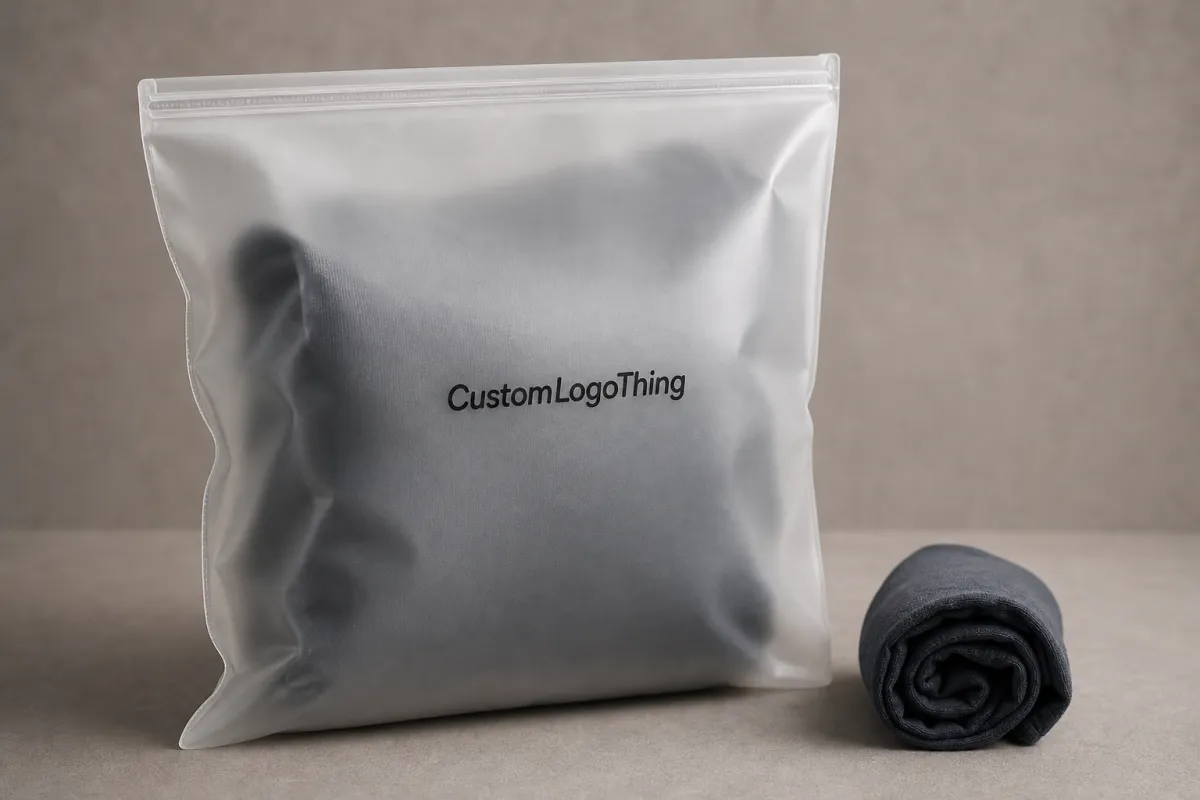
Frosted film does practical work. It softens reflections under warehouse lights, in retail trays, and inside subscription boxes, so the package reads more like branded packaging and less like a commodity sleeve. For a frosted zipper bags logo print quote for bulk orders, that visual shift can matter even when the bag is used for plain logistics.
Most buyers are balancing three needs at once: product protection, clean presentation, and a unit cost that works at scale. The first order may be for launch kits, but the next may be for replenishment or seasonal bundles. A frosted zipper bags logo print quote for bulk orders should reflect the same assumptions every time so the comparison is fair. In recent 2026 quote reviews, the most common mistake I see is not pricing itself, but inconsistent specs between vendors, especially around print area, zipper style, and delivery terms.
Frosted film, zipper style, and print area options
The finish sets the visual tone. Fully frosted film gives the strongest privacy and the cleanest background for branding. Partial transparency keeps product visibility, which can help with apparel accessories, skincare sachets, or kit components. Some projects use a frosted body with a clear window when both branding and product view matter. For a frosted zipper bags logo print quote for bulk orders, that finish choice should be called out early because it changes both the look and the price.
Logo placement changes the result more than many buyers expect. Front-only printing is usually the simplest and most cost-efficient. Back-only printing can work if the front needs a barcode or ingredient panel. Dual-sided printing gives more shelf presence, but it adds setup and ink coverage. If you are building a frosted zipper bags logo print quote for bulk orders, ask the supplier to show the printable panel in millimeters so you are not estimating from a mockup.
Zipper choice matters too. A standard zip is often enough for one-time kitting and light reuse. Reinforced zips are better when the bag will be opened often. Slider closures are easier for some users, but they can raise cost and slightly change the bag profile. If the bag will be handled repeatedly, ask how the closure behaves after multiple cycles.
Print area should be stated in millimeters or inches, not guessed from a mockup. A logo that looks modest on screen can dominate a narrow panel once the bag is filled. Leaving a border unprinted helps keep the logo away from the seal line and zipper track, where distortion is more likely. That single detail often separates a clean frosted zipper bags logo print quote for bulk orders from one that needs revision after proofing.
Material specs, thickness, and closure performance
Before approving a run, ask for the details that affect performance: film thickness, bag dimensions, seal strength, usable print area, and zipper construction. Lightweight inserts may work at 40 to 60 microns. Heavier retail kits usually need more body to resist scuffing and collapse. Thicker is not always better, though; very stiff film can make filling awkward. For a frosted zipper bags logo print quote for bulk orders, the material line should be clear enough that a second buyer could compare it without guessing.
Closure performance deserves equal attention. A zipper that looks fine in a sample can behave differently once the bag is filled. Check whether the track aligns after loading, whether it opens cleanly with one hand, and whether the seal holds after repeated use. For shipping applications, simple drop or compression checks catch many problems before production is released. If you are buying across multiple SKUs, use the same test method every time so the results stay comparable.
Useful references include the ISTA test methods for transit-related packaging and the Institute of Packaging Professionals for background on materials and design. Those sources do not replace a supplier quote, but they help buyers ask better questions about handling and durability. If you want a quick preflight before requesting a frosted zipper bags logo print quote for bulk orders, our quality control checklist is a practical place to start.
For a practical review, check five things before release:
- Thickness: match gauge to product weight and handling frequency.
- Seal quality: look for straight, even sealing at the top edge and sides.
- Zipper alignment: confirm the track meets cleanly after filling.
- Print durability: rub the logo lightly and see whether it stays readable.
- Scuff resistance: inspect the surface after a simple transit simulation.
2026 pricing trends and new options
In 2026, the most requested upgrades in a frosted zipper bags logo print quote for bulk orders are recycled-content film, lower-odor inks, and better artwork proofing. Buyers are also asking for hybrid runs more often: digital printing for launch quantities, then flexographic printing once demand stabilizes. That approach reduces risk when a product is still proving itself, and it avoids overcommitting to inventory before the artwork is locked.
Another change I have seen in 2026 quote sets is more interest in QR codes and simple secondary marks on the bag itself. That lets the packaging support reorders, authenticity checks, or campaign tracking without adding a separate insert. The cost impact is usually modest if the print area is already being used efficiently, but it should still be called out in the quote. If your order is small, our minimum order quantity guide explains where the setup cost starts to matter most.
Pricing has also become more transparent. Suppliers that quote a frosted zipper bags logo print quote for bulk orders well in 2026 usually separate the bag cost, print setup, zipper upgrade, packaging format, and freight. That is useful because buyers can now see where recycled resin premiums, custom slider hardware, or multi-panel printing affect the total. In short-run RFQs, those extras can add a noticeable percentage, while in larger runs they often compress into a smaller per-unit impact.
Frosted zipper bag pricing, MOQ, and unit cost drivers
Pricing usually changes with five variables: bag size, quantity, number of print colors, print coverage, and packaging format. Shipping adds another layer. A frosted zipper bags logo print quote for bulk orders that includes delivery to one warehouse is not the same as a quote that assumes export freight, split drops, or palletized packing.
MOQ is where the unit price often jumps. Smaller runs carry a higher cost because setup, proofing, and production time are spread across fewer bags. A 500-piece order can look expensive next to a 5,000-piece order, but the gap is usually a function of setup, not a hidden surcharge. For 2026 planning, it helps to ask whether the supplier can hold tooling or art files for a repeat run, since that can lower the next frosted zipper bags logo print quote for bulk orders more than a one-time discount.
For comparison, separate quote types by scale and print method. Digital printing can make sense for short runs or variable artwork. Flexographic printing becomes more attractive as volume rises and artwork stabilizes. CMYK works better for gradients or photos; spot color is often cleaner for simple logos and can be more consistent across batches.
| Order size | Typical print method | Best fit | Indicative 2026 unit cost |
|---|---|---|---|
| 500 to 1,000 pcs | Digital printing or short-run flexo | Pilot launches, samples, small retail tests | $0.35-$0.85 each |
| 2,000 to 5,000 pcs | Flexographic printing | Seasonal programs, ecommerce kits, repeated replenishment | $0.18-$0.40 each |
| 10,000+ pcs | Flexographic printing with optimized setup | Stable SKUs, multi-location supply, lower landed cost | $0.10-$0.24 each |
Those numbers are directional, not fixed. A wide logo with heavy ink coverage costs more than a small one-color mark. A custom zipper slider adds cost compared with a standard zip. Bulk-packed cartons usually cost less than individually wrapped packs, but some retail channels require the extra finish. The best frosted zipper bags logo print quote for bulk orders shows where the money goes instead of hiding it in a single headline number. If a supplier will not break that down, the comparison is incomplete.
Artwork proofing, production steps, and lead time
Production usually follows a simple path: artwork review, digital proof, approval, printing, sealing, inspection, packing, and freight booking. Clean art moves faster. Missing dielines, low-resolution files, and late color changes are the most common reasons schedules slip. For a frosted zipper bags logo print quote for bulk orders, the proof stage is where most timeline risk gets exposed.
A good proof should show bag size, logo position, print dimensions, and color callouts. If the artwork uses CMYK, ask how the supplier controls color on frosted film. If the job uses spot color, ask how the ink matches the brand reference. For a simple logo, one spot color is often more predictable than a complex full-color build. When a buyer sends a complete file package, the final frosted zipper bags logo print quote for bulk orders is usually more accurate and the schedule is easier to hold.
From a timing standpoint, the fastest projects usually have one decision-maker, a clean file package, and quick proof approval. If several people need to sign off separately, the schedule becomes fragile. The lead time quoted by the supplier may still be correct; it just assumes the buyer responds quickly.
As a practical benchmark, many custom bag programs land in the 12 to 15 business day range after proof approval, but that depends on quantity, complexity, and current factory load. Small one-color runs can move faster. Larger orders with special packaging or multiple SKUs need more time.
For paper inserts or cartons that travel with the bags, FSC-certified material may matter, and the FSC site is a useful reference if your brand has sourcing targets.
Where frosted zipper bags fit in retail, ecommerce, and kits
Frosted bags solve a visibility problem without making the package feel sealed off. Retail shelves can look crowded, and subscription boxes often look messier once the contents are stacked together. A frosted surface hides clutter while still leaving room for the brand to stand out. That is why a frosted zipper bags logo print quote for bulk orders often gets approved faster when the product will be seen in more than one channel.
In ecommerce, the bag can do part of the presentation work before the customer opens the mailer. That can help low-cost items, accessories, and branded add-ons feel more deliberate. The same product in a cleaner pack often earns a better first read. For recurring promotions, a stable frosted zipper bags logo print quote for bulk orders also makes replenishment easier because the packaging can stay consistent across campaign cycles.
Common categories include cosmetics, apparel accessories, travel kits, promotional inserts, and sample sets. These are the kinds of orders where presentation, sorting, and shipping efficiency intersect. A compact bag with a clean logo can also reduce internal handling errors, which matters more than it sounds when orders are moving in volume.
Think about the full route, not just the shelf moment. If the bag will be handled by fulfillment staff, repacked by retail teams, and then opened by end users, it needs to look good three times, not once. That is a better way to judge whether the quote matches the job and whether the frosted zipper bags logo print quote for bulk orders is actually aligned to the use case.
What separates a reliable supplier from a cheap quote
The lowest number is often the most expensive choice later. A weak supplier usually shows the issue early: vague specs, no clear proofing step, inconsistent zipper behavior, or a quote that leaves out setup until the end. Sometimes the sample looks acceptable, but batch-to-batch consistency falls apart. In practice, a reliable frosted zipper bags logo print quote for bulk orders should make those assumptions visible before production starts.
Reliable suppliers talk in specifics. They can explain film thickness, print method, dimension tolerance, and expected color behavior. They can also say what they are not promising. That honesty is useful. If a bag may scuff in heavy transit, it is better to hear that before approval than after launch. A supplier that can explain the tradeoff behind a frosted zipper bags logo print quote for bulk orders is usually easier to work with over repeat orders.
Repeatability is the real test. One order is not enough. The better supplier delivers the same seal strength, print sharpness, and finish across every batch, not just the first run. That consistency matters more than a bargain price on a one-off order.
Three questions usually expose the difference quickly:
- What exactly is included in the quote?
- What proof will I approve before production starts?
- What changes would alter the price or lead time?
What to send for an accurate custom bag quote
To get an accurate quote, send the basics first: bag size, quantity, artwork file, logo placement, number of print colors, finish preference, and shipping destination. With that information, a supplier can build a real estimate instead of a placeholder number. A complete frosted zipper bags logo print quote for bulk orders starts with exact dimensions and a clear destination, not with a rough product idea.
Then add the details that tighten the quote. Share the target deadline, product weight, filling method, and whether the bag must work for retail display, warehouse fulfillment, or both. If there is a packaging standard you need to meet, say so early. A display-only bag has different constraints than one that will move through a fulfillment center and then to consumers.
For artwork, a vector file is usually best because it preserves edge quality. If the logo has gradients or multiple colors, mention whether you expect CMYK or spot color. If you only have a draft, send it anyway. Good suppliers can usually quote from a draft as long as the dimensions and print area are clear.
Ask each vendor to quote the same assumptions: same bag dimensions, same zipper style, same ink coverage, and same delivery terms. That is how a Frosted Zipper Bags logo print quote becomes comparable instead of turning into a stack of mismatched numbers. If you already have a short list of suppliers, request the same proof format from each one so the frosted zipper bags logo print quote for bulk orders is easier to compare line by line.
Frequently asked questions
What details do I need for a frosted zipper bags logo print quote for bulk orders?
Provide bag dimensions, quantity, logo artwork, print location, finish preference, shipping destination, and deadline. Those basics let the supplier include freight and lead time instead of guessing.
How does quantity change frosted zipper bag pricing?
Higher quantities usually lower the unit cost because setup and proofing are spread across more bags. Small runs cost more per bag, especially when custom printing or specialty finishes are involved.
What is the usual MOQ for custom frosted zipper bags?
MOQ varies by size, print method, and factory setup. For pilot runs, ask for the smallest quantity available for your exact specs rather than relying on a generic minimum.
How long does production take after proof approval?
Lead time depends on order size, print complexity, and current factory schedule, but proof approval is the main starting point. Clean artwork and quick responses usually shorten the total timeline more than any other factor.
Can I get a quote before final artwork is ready?
Yes. If you have the approximate size, quantity, and logo placement, a supplier can usually return a working estimate. A draft file or simple mockup helps narrow the print area and setup assumptions.
What should I inspect in a production sample?
Check zipper alignment, seal straightness, print clarity, surface scuffing, and whether the bag opens and closes cleanly after filling. Those five checks catch more problems than a visual review alone.
For bulk buyers, the best frosted zipper bags logo print quote for bulk orders is the one that is specific about materials, printing, closure, cost, and lead time. Get those pieces aligned, and the decision gets much simpler. If you are still narrowing specs, compare the quote against a quality checklist and a minimum-order guide before you approve the run.


