For wineries comparing Frosted Zipper Bags for club packaging, the real question is whether the bag supports the ship date, fits the contents, and presents well without forcing a large inventory commitment. That is where a Low MOQ Order becomes useful: it lets the buyer test the format before volume or seasonality lock the team into a spec that might not scale.
A frosted finish sits between clear and opaque. It softens glare, hides handling marks better than glossy film, and gives simple branding a cleaner read under warehouse lights, tasting room lighting, and phone cameras. For wine clubs, that matters because the package is judged in unboxing photos, in member deliveries, and in the few seconds when the box first comes off the shelf.
Low minimums are also practical when club tiers change, holiday runs are short, or a new gift format has not been proven yet. The first order should validate the dimensions, closure, and pack-out process, not just occupy storage space. For quick ordering basics, the FAQ page covers common questions, and the Wholesale Programs page is the better reference if the order will repeat across club cycles.
Why frosted zipper bags low MOQ orders fit wine clubs
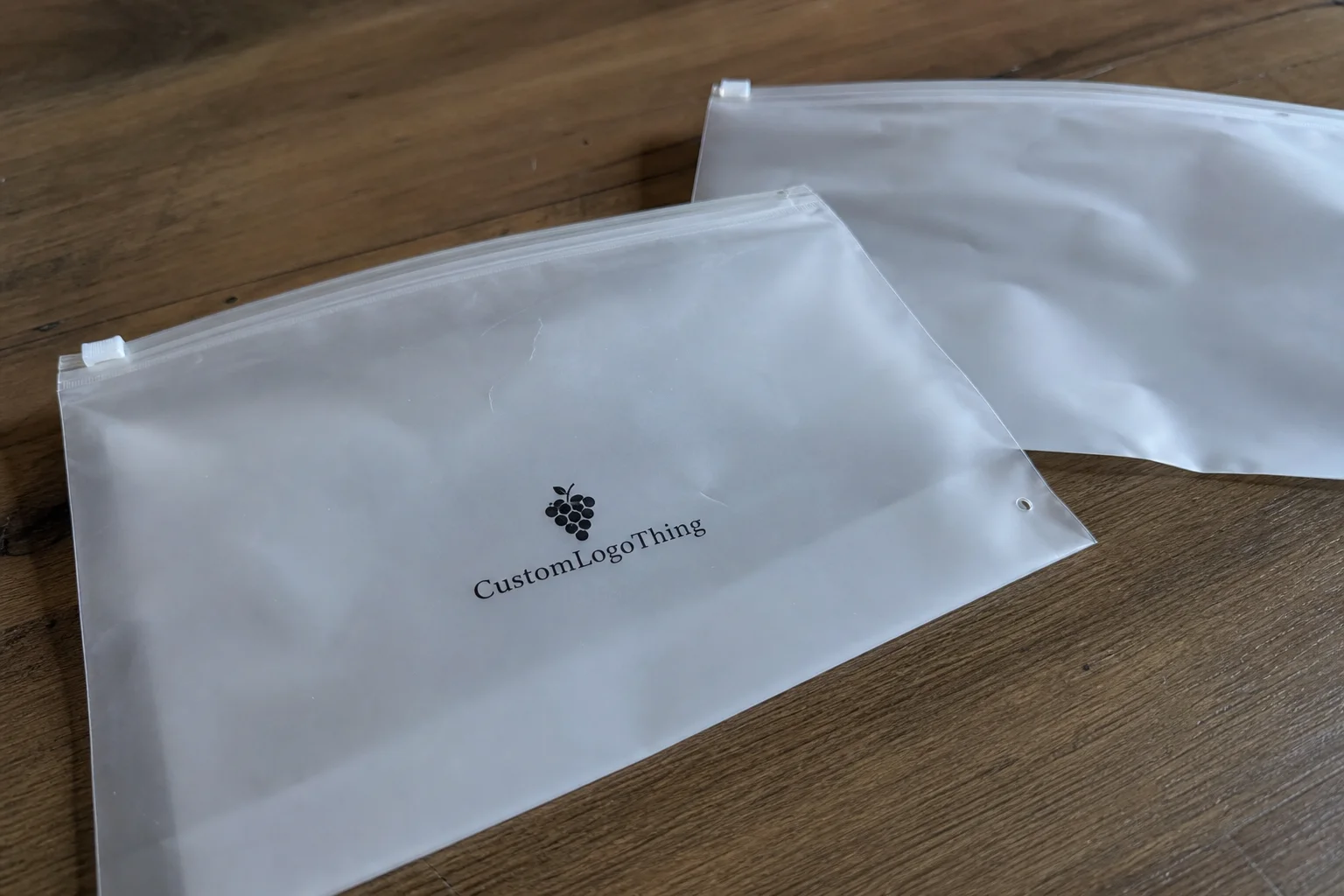
Wine club packaging has to protect the contents and still look intentional. A frosted zipper bag does both without trying to be flashy. That restraint is useful in wine, where packaging can lose credibility if it starts to resemble a cosmetic pouch or a novelty giveaway.
Low MOQ is not just a cost concession. It is a way to control risk. Clubs often ship by season, tier, or member segment, and those variables change the packaging requirement. A holiday shipment may need a stronger presentation than a spring release. A reserve tier may need a heavier construction. A small test run keeps the buyer flexible.
The value shows up quickly in production. A run of 1,000 to 3,000 pieces is often enough to confirm dimensions, zipper feel, and logo visibility against the frost. If the bag looks good in a proof but wrinkles the contents or slows pack-out, a small order exposes the issue before it turns into a larger problem.
Buyer rule: if the sample looks good but the zipper snags, the seal bows, or the kit sits crooked in the pouch, the order is not ready for a club launch. Presentation only counts if the bag also works in production.
That is the practical appeal of a low MOQ order: it turns the first purchase into a controlled test of design, fit, and logistics rather than a long-term inventory gamble.
Finish, closure, and branding details that change the look
The frosted finish changes the tone immediately. It diffuses light, hides fingerprints better than clear film, and feels less clinical than plain plastic. The tradeoff is that fine detail gets muted, so tight lettering and crowded artwork can disappear if the design is not adjusted for the surface.
Simple branding usually performs best. A centered logo, a short line of text, or a restrained mark tends to read better than full-coverage art. Negative space matters here because it lets the package look premium instead of busy.
The closure should match the actual use case. A standard zipper is usually the most practical choice for wine club mailers because it opens easily and can be reused. A slider feels more premium, but it adds cost and may slow packing. Reinforced seals improve durability, though they also change the landed cost. If the bag is meant to become a reusable member accessory, that pushes the spec in a different direction than a one-time protective pouch.
Small construction details can change the result more than buyers expect. A hang hole may help if the bag is ever displayed. A gusset changes capacity and silhouette. A tear notch improves opening. An insert pocket can make the presentation feel finished, but it also adds a step. Each feature should solve a real need, not just sound premium in a quote.
Specifications wine club buyers should lock down first
Start with dimensions. It is the most common source of delay and the most common reason a bag fails in the line. A pouch that is too short can crease the contents; one that is too large can look underfilled. The right size should come from the packed kit, not from the bottle or insert alone.
Next, settle the material construction. Thickness, usually listed in mils or microns, affects structure, hand feel, and seal quality. For wine club presentation bags, buyers usually want enough body to hold shape without becoming rigid or noisy. A midweight construction is often a practical starting point, but the final answer depends on the load and whether the bag needs to be reused.
Packaging format matters as much as the bag. Flat-packed cartons reduce freight and storage needs. Pre-kitted units save labor but require tighter inspection. Single-color print is usually the safest choice for a low MOQ launch because it keeps setup cleaner and reduces registration risk. Multi-color printing can look strong on a mockup and still miss the mark in production if the supplier is not built for it.
- Dimensions: base them on the loaded kit, not the empty insert size.
- Material thickness: enough stiffness to hold shape, not so much that it feels bulky.
- Closure type: standard zipper, slider, or reinforced seal depending on the reuse goal.
- Pack format: flat-packed, prefilled, or assembled with inserts.
- Branding method: one-color logo, limited art, or more complex print only if the run supports it.
If the kit includes inserts or printed collateral, check the paper spec too. Some wineries prefer FSC-certified paper because it simplifies the sourcing story. For shipments that are sensitive to handling, some teams also use ISTA test standards as a reference point for transit performance.
Pricing, MOQ, and quote variables to compare
Price moves first with size, print complexity, and quantity. The quieter costs come next: setup, tooling, proofing, cartonization, and freight. Those line items are easy to miss on a quote, but they usually determine whether the program actually works.
For low MOQ purchasing, ask for pricing at several breakpoints. A single number does not show whether the order scales well. A quote that includes 1,000, 3,000, and 5,000-piece tiers gives a better view of how the unit price changes if the club grows or if a seasonal run becomes recurring.
Typical ranges help buyers sanity-check a quote. They are not fixed offers, but they are useful for separating a real market number from an optimistic one.
| Option | Typical MOQ | Cost per piece | Lead time | Best for | Tradeoff |
|---|---|---|---|---|---|
| Stock frosted zipper bag, no custom print | 500-1,000 pcs | $0.28-$0.48 | 7-12 business days | Fast tests, internal launches, seasonal trials | Limited size choices and minimal branding |
| Custom-printed frosted zipper bag | 1,000-5,000 pcs | $0.42-$0.86 | 12-18 business days | Club mailers, member gifts, controlled rollout | Setup charges and proof approvals add time |
| Custom bag with upgraded zipper or slider | 2,000-10,000 pcs | $0.55-$1.05 | 14-20 business days | Premium tiers and reusable presentation kits | Higher tooling fees and a higher landed cost |
The number that matters most is the landed cost. Freight, receiving, and any repacking at the winery or fulfillment center can erase the difference between two similar quotes. Ask whether setup fees recur on reorder. If the supplier can reuse the approved artwork and spec, the second run should be easier to justify. If setup repeats every time, treat the order as a test rather than the base case.
Production steps, lead time, and reorder timing
A clean order starts with a specification sheet that is specific enough to be used without interpretation. Include dimensions, material thickness, zipper type, print area, quantity, delivery address, and the contents that will go inside the pouch. If the supplier has to reverse-engineer the request from a logo file and a short email, the proof cycle gets slower and the quote gets less reliable.
After the spec comes proofing. A virtual proof is useful, but it is not enough if the bag has to feel premium in hand. A physical sample can catch problems that a screen will hide: the film may be too glossy, the logo may fade into the frost, or the closure may feel stiffer than expected. For a straightforward run, production often moves from approval to shipment in roughly 12 to 15 business days. More complex work takes longer.
Reorder timing deserves attention because wine clubs rarely stay fixed. A quarterly cycle is common, and holiday shipments compress everything. If the supplier knows a repeat run is likely, they can keep the approved artwork, repeat the dimensions, and reduce the risk of a new setup charge or avoidable delay. Low MOQ ordering is useful beyond the first shipment because it creates a tested template for the next one.
Build in more buffer than the calendar appears to need. Freight slips, receiving docks get busy, and carton labels need to match the warehouse process. If the bag goes into a kit with bottles, the pack-out sequence has to work without slowing the line. A realistic schedule accounts for the factory, the truck, and the fulfillment team, not just the proof approval date.
Why a supplier's QA matters for club shipments
Wine club packaging is repetitive, which is exactly why quality control matters. A defect that might be overlooked in a one-off promo item becomes obvious when every member receives the same pouch. Color drift, zipper misalignment, weak seals, and size variation all stand out quickly in a recurring shipment.
Good suppliers define tolerances for size, print placement, and closure performance. Without those baselines, the buyer has no way to decide whether the lot is acceptable. That is a serious issue in club fulfillment because the first shipment sets the standard for the ones that follow.
Ask how defects are handled. Do they photograph the issue before replacing stock? Can they rerun a small lot if the production sample misses the approved proof? How quickly can they respond if the zipper track is inconsistent? Those questions determine whether a launch date holds or slips.
QA also has to extend beyond the factory floor. If the bags are being inserted into kits, stacked in cartons, or packed alongside bottles, the full pack-out should be checked before release. A pouch that looks polished on its own but jams the line is a bad pouch in practical terms. Fulfillment is part of the product.
For broader packaging context, the general resources at Packaging.org are useful. Neither reference replaces a supplier specification, but both help define what acceptable performance looks like after the shipment leaves the factory.
What to send for a fast quote and first order
The fastest quote comes from a clear request. Send the dimensions, target quantity, artwork file, and use case in one message. If the supplier has to chase basic details, the reply will be slower and the numbers will be less useful. Precision also makes it easier to compare vendors on the same basis.
Include what goes inside the bag. A pouch holding tasting notes only is not the same as a pouch holding inserts, accessories, or a small box. The internal load changes the size, and it may change the closure choice as well. A close fit works if the contents are flat; it becomes a problem if the pack includes a rigid item or a folded brochure that needs room.
Ask for sample photos or a pre-production proof before you commit. That is especially useful when the bag will be shown in member announcements or photographed under winery lighting. A mockup can reveal whether the frosted surface makes the logo too faint, whether the print area is large enough, and whether the color remains readable at arm's length.
When comparing vendors, ask for the same information from each one:
- Unit price at multiple volume levels
- Setup charges and whether they recur on reorder
- Tooling fees if a special closure or new die is required
- Lead time from proof approval to dispatch
- Shipping method and destination terms
- Reorder terms for repeat club shipments
If the order has a firm ship date, include it up front. That allows the quote to reflect the actual fulfillment window instead of a generic estimate and reduces the chance of a surprise when the cartons are ready but the receiving dock is not. For repeat programs, the best sourcing decision is the one that makes the second order simpler than the first.
What size frosted zipper bags work best for wine club kits?
Choose the size from the packed kit, not the empty insert or the bottle alone. Allow room for tasting notes, collateral, and any accessory item so the pouch closes cleanly without bulging. If the club has multiple tiers, ask for separate size options rather than forcing one format to cover every shipment.
Can I place a low MOQ order for seasonal wine club promotions?
Yes. Low MOQ is often the most practical way to test a holiday or limited-run package. It gives the team a way to judge fit, appearance, and member response before scaling volume. Ask for several quantity breakpoints so you can compare the test run with a larger reorder.
What affects pricing on frosted zipper bags for wine clubs?
Size, print complexity, and order quantity are the main price drivers. Setup charges, sampling, and freight can change the landed cost enough to alter the decision. A unit price only matters if the delivered total still works.
How long does production take after artwork approval?
Timing depends on stock availability, print method, and order volume. A straightforward run moves faster than a custom version with multiple colors or special features. Leave room for proof approval, final inspection, and inbound freight before the club ship date.
Are frosted zipper bags reusable for wine club members?
Yes, if the closure and film construction support repeated opening. Reusability depends on the thickness of the material, the seal quality, and how the bag is handled after delivery. If reuse matters, state that requirement before quoting so the right construction is selected.


