Frosted Zipper Bags Packaging Costs for Bulk Orders
Frosted Zipper Bags packaging cost breakdown starts with one awkward truth: two bags that look nearly identical can land in very different price bands once the material, zipper, and print details are actually fixed. A buyer asking for 5,000 cosmetic sample bags can receive three quotes that are all technically correct and still not comparable. The differences usually sit in the parts that are easiest to miss on first review.
Frosted finishes sell because they look clean, feel a little more premium than plain clear film, and hide contents just enough to soften the shelf presentation. The cost only makes sense once the build is pinned down. A bag with a light frosted surface, standard zipper, and simple logo mark is one thing. A heavier gauge pouch with a slider, side gussets, and full-panel print is something else entirely.
The job here is to separate appearance from structure. That is where most pricing confusion starts, and where most buying mistakes are made.
Why frosted zipper bags look simple but quote differently
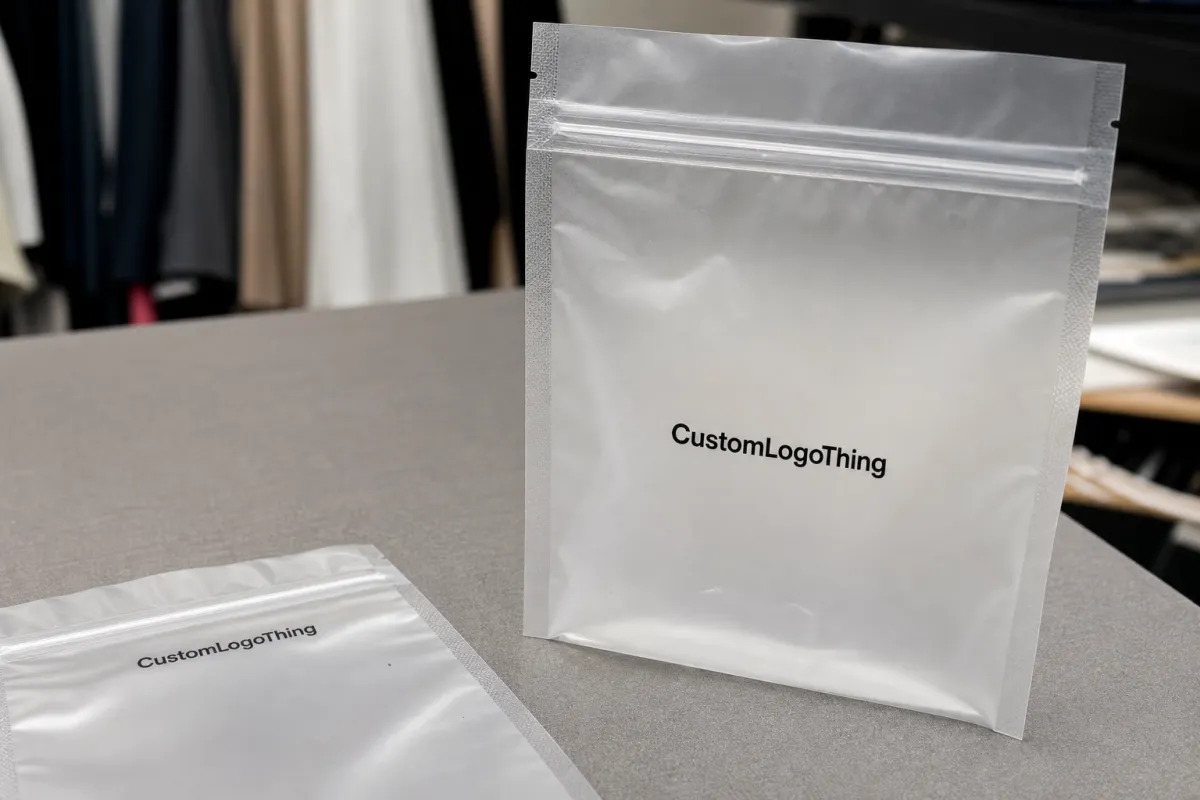
From a packaging buyer’s point of view, frosted bags are tricky because the visual effect hides the engineering. The surface looks soft and upscale, but the quote is driven by what sits underneath that finish: resin type, thickness, zipper style, print coverage, and bag shape. Two bags can share the same width and height, yet one ends up 25% to 40% higher in unit cost because it uses a heavier film, a stronger closure, or more ink coverage.
The frosted effect itself is not a single material standard. Some bags are lightly matte and semi-translucent, while others are more opaque and have a stronger satin look. That changes how much the contents show through, how the bag resists scratching, and how rigid it feels when stacked or filled. A bag that looks good flat on a sample sheet may not behave the same way once it is packed, sealed, and moved through a warehouse.
That is why I treat Frosted Zipper Bags as product packaging, not as disposable storage. If they are part of broader branded packaging, they should be quoted with the same discipline you would use for cartons, inserts, and other retail packaging components. Otherwise the first quote looks attractive, the second quote looks “off,” and both may still be accurate because they were built from different assumptions.
A frosted bag looks simple until the zipper, gauge, and artwork are locked. That is usually where the quote changes.
The buying question is usually practical: do you want the bag to protect, present, and reseal well enough to support the product, or do you only need a low-cost pouch for short-term use? That answer should shape the spec before anyone starts pricing.
Material and zipper choices that change daily use
Material choice affects more than durability. It affects how the frosted texture feels in hand, how the bag sits in a carton, and how premium the package looks when a customer opens it. Most Frosted Zipper Bags are built from polyethylene-based film, sometimes with a blended structure depending on the desired stiffness and clarity. For lighter storage or sample use, a thinner film can work. For retail packaging or repeated opening and closing, a heavier gauge usually feels better and holds shape more reliably.
Thickness matters in a way that is easy to underestimate. A thin bag may look acceptable in photos, but once it is filled, the zipper can feel loose, the body can wrinkle excessively, and the side seams can lose their clean profile. A thicker bag adds material cost, but it also improves the tactile impression and reduces the chance that the pouch feels flimsy in a customer’s hands.
Think about the closure first. A standard press-to-close zipper is usually the lowest-cost option. A double-track zipper improves seal confidence and gives a more substantial feel, which matters for cosmetics, supplements, and small accessories. A slider adds convenience, but it also raises cost and adds another point to check during production. If the bag will be handled by shoppers rather than just warehouse staff, the closure is worth paying attention to. Nobody wants a nice-looking bag that opens too easily or fails after a few uses.
Other build choices matter too:
- Thickness: commonly 80-120 microns for lighter use, 120-160 microns for heavier or more premium applications.
- Gusset: side gussets or bottom gussets improve fill volume and shelf presence.
- Hang hole: useful for peg display and retail packaging.
- Bag body structure: flat bags are cheaper; structured shapes cost more but look cleaner in display.
- Print coverage: small logo marks cost less than full-panel or full-bleed graphics.
Print quality depends on the artwork setup as much as the printing method. A simple one-color logo can usually be handled with less setup than a design with gradients, multiple spot colors, or large flood areas. If the frosted surface is busy with heavy print, the final look can become more opaque than intended, which is fine if that was planned and disappointing if it was not.
If the bag is part of a bundle, match the finish to the rest of the kit. A frosted zipper bag sitting next to a gloss carton or a high-density insert can feel mismatched, even if each component is technically well made. A packaging system works best when the finish, print density, and structure all support the same visual language. If you are building a set, review custom packaging products with the same presentation target so the whole pack feels intentional.
For buyers comparing options, a little structure helps. Here is a simple way to think about common builds:
| Build option | Typical use | Cost effect | Buyer note |
|---|---|---|---|
| Plain frosted bag, standard zipper | Samples, storage, light retail packaging | Lowest | Best when appearance matters more than heavy-duty reuse |
| Frosted bag with 1-2 color logo print | Brand merchandise, cosmetics, accessories | Moderate | Good balance of visibility and unit cost |
| Frosted bag with full-panel print | Strong package branding, promotional sets | Higher | Artwork coverage drives ink and setup cost |
| Heavier gauge with double zipper or slider | Repeated use, premium resale kits | Higher | Pay for function, not just the look |
Packaging.org has useful packaging basics, but the better move is still to lock your specs before you ask for price.
Specs buyers must lock before asking for a price
A clean quote starts with a clean spec sheet. That sounds basic, but it is where most delays begin. If you leave out one measurement or say “around this size,” the supplier has to guess, and guesswork turns into revisions. Revisions slow the response, and slower responses usually turn into higher unit costs because nobody planned the run properly.
Before asking for pricing, lock these inputs:
- Size: finished width, height, and gusset if one is included.
- Thickness: microns or mils, stated clearly.
- Quantity: total order size and any tiered volume targets.
- Print colors: one-color logo, spot colors, or full artwork.
- Finish: frosted only, frosted plus matte print, or any special surface treatment.
- Zipper style: standard, double-track, or slider.
- Use case: retail packaging, storage, sample distribution, or shipping inside a kit.
- Compliance needs: food contact, resale packaging, or destination-specific requirements.
That last point matters more than many teams expect. If the bags are used for food, cosmetics, or regulated product packaging, ask for the material declaration and confirm whether inks, closures, or additives are appropriate for the market. For transit inside mailed kits, it is smart to ask whether the overall pack should follow an ISTA test method; ISTA is a useful starting point if shipping damage is part of the risk. If paper cartons or inserts are part of the job, FSC-certified paper can matter too, but only if it fits the brand and the budget.
The biggest shortcut is to send one simple sheet with dimensions, artwork, quantity, and delivery destination. That is enough to get a useful starting quote. If the bag is going into a retail display, a subscription kit, or a storage program, mention that as well. Different use cases pull the spec in different directions, and a supplier can usually price more accurately when the application is clear.
A final practical detail: include acceptable tolerance if the bag size is critical. Even a small variation in width or gusset depth can affect fill behavior, zipper alignment, and carton packing efficiency. If the bag has to fit a tray, insert, or shipper box exactly, say so early. That avoids later arguments over whether the dimensions were “close enough.”
Frosted zipper bags packaging cost breakdown: the main quote drivers
The main quote drivers are easy to name and easy to ignore. Quantity is the biggest one. After that come bag size, film gauge, zipper type, and print complexity. The frosted zipper bags packaging cost breakdown usually looks straightforward on paper, but once you stack these variables together, the quote bands separate quickly.
MOQ has a real impact on unit cost. A 1,000-piece order often carries a noticeably higher per-unit price because setup, waste, and handling are spread over fewer bags. At 3,000 pieces, the math starts to soften. At 5,000 or 10,000, the unit cost usually drops more cleanly because the production run becomes easier to justify. That does not mean bigger is always better. It means the economics begin to work more efficiently.
Printing and tooling can also shift the numbers more than buyers expect. If the design needs plates, color matching, or multiple print passes, the first run may carry a setup charge that does not appear in later reorder pricing. A simple logo on one side is a different job from a full-panel graphic with tight registration. Full coverage also makes color consistency more noticeable, which means the quality check has to be stricter.
Here is a rough bulk pricing view for common frosted zipper bag specs. These are illustrative ranges, not a promise, because artwork, zipper type, and freight can move them:
| Quantity | Plain frosted bag | Printed bag | Higher-spec bag |
|---|---|---|---|
| 1,000 pcs | $0.18-$0.32 | $0.28-$0.48 | $0.35-$0.60 |
| 3,000 pcs | $0.12-$0.22 | $0.20-$0.34 | $0.26-$0.45 |
| 5,000 pcs | $0.09-$0.18 | $0.16-$0.28 | $0.22-$0.38 |
| 10,000 pcs | $0.07-$0.14 | $0.12-$0.22 | $0.18-$0.32 |
The spread is not random. A thicker film, a better zipper, and more print passes each add cost. A side gusset, hang hole, or special closure can do the same. If the order uses a more rigid build so the pouch stands better in a display tray, that added structure should be visible in the price. A bag that has to look polished on shelf is usually not priced like a plain storage pouch.
Another thing buyers miss: ex-factory price is not landed cost. A low factory quote can still lose once freight, duties, and destination fees are added. A supplier should separate those numbers clearly so you can compare apples to apples instead of buying the cheapest headline and the most expensive final bill.
If two suppliers quote the same bag, ask them to confirm size, thickness, zipper type, print coverage, MOQ, packing method, and shipping terms. Half the price disputes disappear right there.
One more detail that matters in real buying: carton packing density. A bag that nests efficiently in transit can lower shipping cost, while a bulk-packed pouch with excess void space may look inexpensive on paper but ship poorly. That is one reason some very cheap quotes stop being cheap once the cartons are loaded and weighed.
Production steps, lead time, and approval checkpoints
Frosted zipper bags do not appear by magic. The production flow is usually simple, but every checkpoint matters because a small error in print size or zipper placement can affect the whole batch. The normal sequence looks like this:
- Inquiry and spec review.
- Artwork check and file cleanup.
- Quote confirmation and sample approval.
- Proof or pre-production sample sign-off.
- Manufacturing and in-line QC.
- Final inspection, packing, and shipment.
For stock-style bags or repeat orders, lead time can be fairly quick once the specs are already approved. A custom first run usually needs more time because the supplier has to confirm the print, the zipper, and the packing method before the bulk run starts. As a practical range, I would expect about 7-10 business days for simple repeat production and 12-18 business days for a new custom run after proof approval. Complex print or zipper changes can add several more days.
Artwork delays are the silent problem here. If the logo is low resolution, the dieline is missing, or the colors need revision, the schedule slips before the machine even starts. That is why proof approval should be treated as a hard gate. No proof, no production. It is not strict for the sake of being strict. It is cheaper than scrapping a bad run.
Quality control should not be limited to a quick visual glance. A useful check list includes zipper engagement, seal consistency, print registration, surface scratches, bag symmetry, and basic dimensional accuracy. For bags that will be opened and closed repeatedly, a small cycle test tells you more than a pretty sample photo. If the bag is supposed to hold powders, cosmetics, or delicate accessories, the closure should feel secure without being so stiff that the user fights it every time.
For buyers with a launch date, the difference between a rush order and a normal order is simple: rush work compresses review time, which raises the risk of mistakes. Repeat orders are easier because the proof already exists. Fully custom first runs are the slowest because every spec has to be checked from scratch. That is normal, and pretending otherwise does not help anybody.
Landed-cost extras that shift the final order total
The final order total often changes because of items nobody included in the first email. Sample charges are one. Some suppliers send stock samples for free, while custom pre-production samples can cost anywhere from $30 to $120 or more, depending on complexity. Tooling or plate fees are another common add-on, especially if the print method needs plates. Those charges are not always large, but they belong in the math.
Freight is the one that surprises people most often. A small order moved by air courier can cost more to ship than the bags themselves. A larger order sent by sea may lower freight per unit, but only if the timeline can tolerate it. If the order is time-sensitive, air freight can still make sense. It is just not cheap, and pretending it is “fine” because the unit price looked good is how budgets get wrecked.
Destination fees also matter. Duties, taxes, brokerage, and local delivery can all change the landed number. If the bags are going into multiple warehouses, split shipments add even more cost. Storage requests, extra carton labeling, and special packing instructions also show up on the invoice sooner or later. The quote should say whether the bags are packed in bulk cartons, retail inner packs, or individually bagged for display use.
There is also the cost of rework, which buyers often ignore because it does not appear in the first quotation. If the print color misses the target, the zipper fails inspection, or the bag size runs out of tolerance, the replacement process may cost time as well as money. That is why a cheaper quote with weaker QC can end up more expensive than a steadier one with cleaner approval steps.
For a buyer comparing domestic and imported options, the real question is not just “what is the unit price?” It is “what does the order cost after freight, delay risk, and rework risk?” That is the number that protects margin. Everything else is just a headline.
Why our frosted zipper bag quotes stay predictable
The best quotes are boring. Boring quotes are usually accurate quotes. A disciplined quoting process starts with clear specs, one point of contact, and no guessing on materials. If the size is locked, the artwork is clean, and the zipper type is named, the pricing stays stable enough to compare across suppliers without playing detective.
Tiered pricing helps too. Buyers need to see where the unit cost sits at 1,000, 3,000, 5,000, and 10,000 pieces. That lets you decide whether it is worth pushing volume to get a better rate or whether a smaller run is the smarter move. A quote without tiers is usually a quote with hidden wiggle room.
Quality control also protects the budget. A frosted bag should not come out with uneven texture, off-center printing, weak zipper engagement, or a seam that wanders out of alignment. Those problems are not just cosmetic. They can trigger rework, delay shipment, or force a partial remake. Good QC is not a luxury. It is how the order stays on the planned cost line.
Consistency in packing matters too. If a buyer wants inner bags stacked a certain way, or wants cartons labeled for a warehouse receiving team, those instructions should be documented before production begins. Small packing decisions have a habit of becoming big problems when they are left until the end. The more ordinary the process looks on paper, the less likely it is to surprise you later.
If you are building a broader retail program, keep the packaging logic consistent across every piece. A bag, an insert, and a box should not look like they were designed in different galaxies. Package branding works best when the finish, print density, and structure all point in the same direction. If you need related items beyond the bag itself, review retail packaging options that match the same budget and presentation target.
That approach lines up with the basics you will see from trade resources like packaging.org: clear specs, clear use case, clear expectations. Fancy talk is cheap. Spec discipline is what keeps the invoice sane.
What to send for a fast, accurate next-step quote
If you want a clean next-step quote, send the basics in one message:
- Finished size: width, height, and gusset if used.
- Thickness: target gauge or micron range.
- Material preference: frosted PE, blended film, or another approved structure.
- Zipper style: standard, double-track, or slider.
- Print file: vector artwork or a high-resolution logo file.
- Quantity tiers: actual order size plus any comparison volumes.
- Delivery location: so freight and landed cost can be estimated correctly.
- Use case: retail packaging, samples, storage, or branded kits.
Ask for a tiered quote if you are still deciding on quantity. That gives you a clearer view of unit cost at different volumes, which is usually where the better buying decision lives. If the finish, zipper feel, or print alignment matters, request a sample or proof before mass production. A small sample charge is cheaper than a batch you cannot use.
For buyers who want the shortest path to a usable price, the order should be simple: spec sheet, artwork, quantity, destination, then sample approval if needed. That sequence avoids the back-and-forth that slows down most custom packaging jobs. If your team has internal approval steps, line them up before quoting starts so the project does not stall while everyone waits on a missing file or a revised color call.
Send those details and you will get a much cleaner frosted zipper bags packaging cost breakdown, with fewer surprises and a quote you can actually compare.
What drives the frosted zipper bags packaging cost the most?
Quantity is the biggest lever because setup costs get spread across more units. After that, size, thickness, zipper type, and print coverage usually move the quote more than small cosmetic changes. If you want a fair comparison, ask every supplier to quote the exact same spec set and shipping terms.
What MOQ should I expect for custom frosted zipper bags?
MOQ depends on the bag size, material, and whether the order is plain or printed. Simple unprinted bags usually have lower minimums than multi-color branded runs. Ask for tiered pricing so you can see where the unit cost drops at higher volumes.
How long does production usually take?
Simple repeat orders move faster than custom first runs because proofing takes less time. Plan for extra days if artwork needs revisions, samples are required, or the order uses special print finishes. Shipping time is separate from production time, so always ask for both.
Can I get a sample before placing a bulk order?
Yes, ask for a stock sample or a pre-production sample if finish or zipper feel matters. Use the sample to confirm size, clarity, seal strength, and print placement before mass production. Some suppliers credit sample cost back on larger orders, but that should be confirmed upfront.
How do I compare quotes from different suppliers fairly?
Match the exact spec set first: size, gauge, zipper, print, quantity, and packaging. Check whether the quote includes tooling, freight, duties, and carton costs, not just the unit price. Compare landed cost, not headline price, or you will end up comparing apples to expensive oranges.

