Frosted Zipper Bags Sample Checklist for Pet Treat Brands
The Frosted Zipper Bags sample checklist for pet treat brands should do one job: separate a nice-looking pouch from one that will actually work after filling, shipping, opening, and resealing. A frosted finish can make the pack look more premium, but it also changes contrast, reveals defects differently, and can affect how the zipper and seals behave in real use.
That matters in pet treats because the bags are handled often and opened repeatedly. A pouch that stands well on a table may slump after fill. A zipper that feels fine once may become frustrating after crumbs or oil reach the track. If the sample does not reflect the real product and use case, approval is premature.
Use the sample to test structure, not just branding. If the bag cannot hold the fill, close reliably, and keep the label readable, the spec still needs work.
What a Sample Needs to Prove Before You Approve It
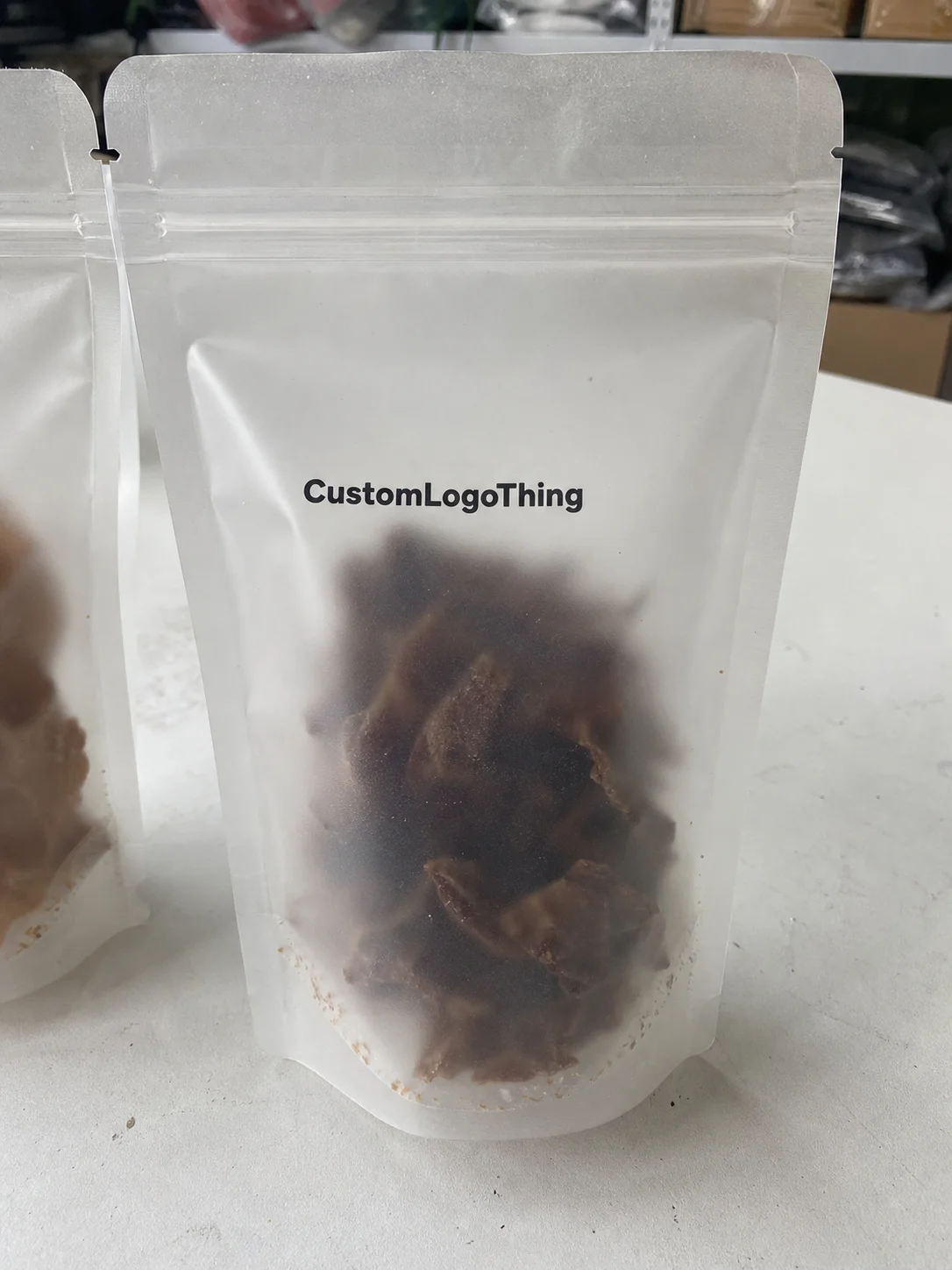
A sample should answer four questions: does it fit the product, protect the product, support the brand, and fit the budget. If one of those fails, the packaging is not ready, even if the mockup looks polished.
Fit comes first. A soft chew, a jerky strip, and a biscuit place different demands on the pouch. Fill weight, product shape, and oil content all affect how the bag stands and how the zipper area performs. A sample built around the wrong product behavior can pass a photo review and still fail in production.
Protection is the next filter. For pet treats, moisture control, aroma retention, and seal reliability matter. Common laminate structures include PET/PE and BOPP/CPP, but the key is not the brand name of the film. It is whether the supplier can state the full structure, thickness, and seal layer clearly enough for the buyer to compare options.
Branding matters, but the frosted surface changes the rules. Contrast drops, pale logos can look weak, and small compliance copy can become harder to read. The sample is the only reliable way to see whether the artwork still works at shelf distance.
A good sample should not need explanation. It should close cleanly, stand predictably, and protect the treats without creating extra handling problems.
- Size: confirm width, height, gusset depth, and usable fill volume.
- Zipper: verify the closure style, first-close feel, and repeated reseal performance.
- Seal quality: check top and side seals for weak points, waviness, or uneven bonding.
- Readability: inspect logo edges, ingredient copy, and compliance text on the frosted surface.
- Surface quality: look for haze consistency, scuffs, pinholes, and print registration issues.
If the sample is only a design proof, label it that way. Do not treat it as a production candidate until the construction matches the final spec.
Fit, Fill, Zipper, and Shelf Behavior
Review the sample with the actual product inside. Empty bags hide problems. Once filled, the pouch shows whether the gusset opens evenly, whether the front panel stays presentable, and whether the zipper still lines up after the weight is added.
Use the same test conditions every time. Same product. Same fill weight. Same room temperature. Same delay after filling. If one sample is judged immediately and another after sitting overnight, the comparison is not reliable.
For pet treats, reseal behavior matters as much as barrier performance. Consumers may open the bag many times before it is empty. If the zipper is stiff, dusty, or misaligned, freshness protection becomes theoretical. The best closure is the one that closes without effort and does not degrade after repeated use.
Shelf behavior matters too. A frosted pouch can look balanced alone but lean once it is packed with other units or displayed under retail lighting. That can hide graphics and weaken the perceived quality of the line. Test the filled pouch in a store-like setup, not just on a bench.
For distribution channels that involve e-commerce, club retail, or long transit, a tabletop review is not enough. Standards from ISTA give buyers and suppliers a common reference for drops, vibration, and handling tests. They do not replace product-specific validation, but they keep the review grounded.
Practical checks to run during sample review:
- Open and close the zipper at least five times with the actual fill inside.
- Press along the top seal and inspect the edges for inconsistent bonding.
- Let the filled pouch stand and watch whether the gusset settles evenly.
- Rub the surface lightly to see whether the frosted finish scuffs too easily.
- Check front-panel readability from shelf distance, not only at arm’s length.
Material, Barrier, and Print Variables That Change the Result
Material choice drives more of the outcome than many buyers expect. Frosted film is not only a visual treatment. It changes stiffness, opacity, print behavior, and sometimes the way the pouch folds at the seal edge. Ask the supplier for the film stack, thickness, and seal layer performance instead of accepting a vague “premium” description.
Barrier performance is not optional in pet treats. Moisture control, aroma retention, and seal reliability influence shelf life and customer experience. Dry treats can lose crunch. Oily treats can affect the zipper track. A pouch that works for one SKU may be wrong for another, even when the outer dimensions are identical.
Print needs the same scrutiny. Frosted surfaces soften contrast, which can make light colors and fine type harder to reproduce cleanly. Inspect the sample under neutral light and again under brighter retail-style light. Artwork that looks precise on a screen can appear muted or crowded on the actual pouch.
Minor defects are also easier to see on semi-transparent materials. Haze inconsistency, scuffs, zipper misalignment, and pinholes Stand Out Faster than on opaque packaging. That is why the sample should be checked more than once, and from more than one angle.
If the packaging includes paper components or cartons, sourcing can extend beyond the pouch itself. In that case, FSC-certified paper supports traceability for paper-based materials, but it does not replace a sound pouch structure.
Compliance still matters. Label content, ingredient statements, and claims for pet treats vary by market and channel. The FDA animal food and feeds guidance is a practical reference before artwork is locked.
Pricing, MOQ, and Unit Economics
Sample reviews often stall because pricing looks simple until the extras are added. Unit cost is only part of the decision. Setup fees, artwork prep, sample charges, freight, and MOQ tiers can change the economics quickly.
For frosted zipper pouches, the biggest cost drivers are size, film structure, zipper type, print coverage, and quantity. Larger formats use more material. Full-coverage graphics add print complexity. Tighter tolerance requests can also increase manufacturing burden.
A realistic ballpark for a 5,000-piece run is often around $0.18 to $0.35 per unit, with plain versions on the lower end and custom-printed versions higher. Fully printed premium pouches can move beyond that range if the bag is large, the coverage is dense, or the registration tolerance is tight. The range is only useful as a quote check, not a universal price.
| Option | Typical MOQ | Main Cost Drivers | Ballpark Unit Cost |
|---|---|---|---|
| Plain frosted zipper bag | 3,000 to 5,000 pcs | Bag size, zipper style, film thickness | $0.14 to $0.24 |
| Frosted bag with custom print | 5,000 to 10,000 pcs | Ink coverage, color count, setup, prepress work | $0.18 to $0.35 |
| Fully printed premium pouch | 8,000 to 20,000 pcs | Higher coverage, tighter registration, finish upgrades | $0.26 to $0.48 |
Ask for at least two quotes: the smallest workable run and a higher-volume scenario. That shows whether the price improves with scale or stays high because of the structure itself. It also makes MOQ tradeoffs visible. For a launch SKU, the lowest unit price is not always the best choice if it forces inventory the channel cannot absorb.
Freight should be listed separately. For smaller runs or split shipments, shipping can change landed cost more than the pouch price does. A pricing review that ignores freight is incomplete.
Timeline and Approval Workflow
Most delays start with unclear input, not with the factory. A clean workflow is simple: confirm the spec, review the artwork, build the sample, test it, revise if needed, then approve the final version.
A realistic timeline often looks like this: one to three business days for spec confirmation, three to seven business days for sample production, and a few more days for internal review. If the artwork is already locked and the structure is fixed, the process moves faster. If the dieline is still changing or the compliance text is under review, the schedule stretches quickly.
Common delays are avoidable. Approving dimensions before fill weight is tested causes rework. Sending artwork without bleed or safe-zone checks creates corrections. Waiting too long to decide on zipper style adds another round. Relying on photos instead of requesting a physical sample also slows decisions.
Lock the structure before polishing the design. A pouch with unstable dimensions creates downstream problems because the artwork has to be reworked around the final bag shape. The cleanest approvals usually happen in stages: first format, then print, then the final packing specification.
When a revised sample arrives, compare it line by line against the approved notes. Check dimensions, finish, zipper profile, print placement, and allowed color variance. If the written record is vague, approval becomes a memory exercise, and memory is a poor quality-control tool.
Mistakes That Make Sample Reviews Unreliable
The first mistake is judging an empty pouch. A frosted zipper bag can look stiff and polished when empty, then slump once product is added. The gusset can settle unevenly, the top edge can curl, and the shelf presence that looked strong in the first photo can disappear.
The second mistake is inconsistent testing. If one sample is filled with dry treats and another with oily chews, the comparison is incomplete. If one bag is handled repeatedly and another is left untouched, surface wear tells you more about the test than the material.
The third mistake is treating first-close feel as proof of long-term zipper performance. Pet treat bags are opened and resealed many times, often with residue on the closure line. A zipper that works once may still be weak after real use.
The fourth mistake is ignoring shipping behavior. Corner stress, compression, and temperature changes can expose weak seals and poor film memory after the pouch has already passed a desk review. The bag should be handled the way it will be handled in market, not the way a sales sample is usually displayed.
If a sample only looks strong under ideal conditions, it is not ready for production. Packaging has to survive use, handling, and transit, not just sign-off.
- Score the sample: appearance, seal integrity, usability, and cost fit should be rated separately.
- Document the spec: dimensions, film structure, zipper style, and allowed variance belong in writing.
- Test with the real product: do not swap in a different treat shape or weight and expect the same result.
- Check the pack twice: one review catches obvious defects, a second review catches details after handling.
The cleanest approval process is methodical. Start with the product data, request matched samples, test them with the real treats, compare the numbers and the feel side by side, and only then move ahead. Used that way, the Frosted Zipper Bags sample checklist for pet treat brands becomes a decision tool instead of paperwork.
What should a frosted zipper bags sample checklist for pet treat brands include?
It should cover size, fill capacity, zipper performance, seal strength, film structure, print clarity, surface quality, MOQ, sample cost, and freight. For pet treats, it should also reflect the actual SKU so the pouch is tested with the product it will hold.
How do I compare frosted zipper bags with clear bags?
Compare them under the same fill weight, lighting, and handling conditions. Then judge freshness protection, shelf visibility, label readability, and scuff resistance. Frosted film can improve appearance, but it can also reduce contrast, so the test has to be physical rather than theoretical.
Why does the zipper matter so much for pet treat packaging?
Pet treat bags are opened repeatedly, so the zipper directly affects convenience and freshness. A closure that feels fine on the first use may still fail once dust, crumbs, or oil reach the track. Repeated close testing is more useful than a single demo.
What pricing details should I request with sample quotes?
Ask for unit price, setup fees, sample fees, freight, and the MOQ tier that changes pricing most sharply. If the supplier offers a second quote at a higher volume, request that as well. It helps reveal whether the packaging gets more economical as the order grows.
How long does the sample and approval process usually take?
In many cases, spec confirmation takes one to three business days, sample production takes three to seven business days, and internal review adds a few more days. Delays usually come from unclear artwork, changing dimensions, or late zipper decisions rather than from the sample itself.


