Custom Frosted Zipper Bags for corporate gifting solve a narrow but common packaging problem: how to make a kit look polished, protected, and easy to pack without moving into rigid boxes or expensive custom printed cartons. A semi-opaque zipper bag gives enough reveal to make the contents feel intentional while keeping labels, folds, and odd-shaped items from dominating the presentation. That balance matters more than it first appears. In corporate gifting, the package is not just carrying the gift; it is carrying the first impression.
For buyers, these bags sit in a practical middle ground. They are lighter than boxes, faster to pack, and less sensitive to small variations in the contents. A notebook that shifts a few millimeters does not ruin the structure. A sample set with mixed items still reads as curated. If the program needs to travel through fulfillment, conference handoff, or direct mail, that flexibility saves time and reduces packing mistakes. The same logic often applies across Custom Packaging Products: the right format is the one that matches the contents, the shipping method, and the budget at the same time.
What custom frosted zipper bags for corporate gifting solve
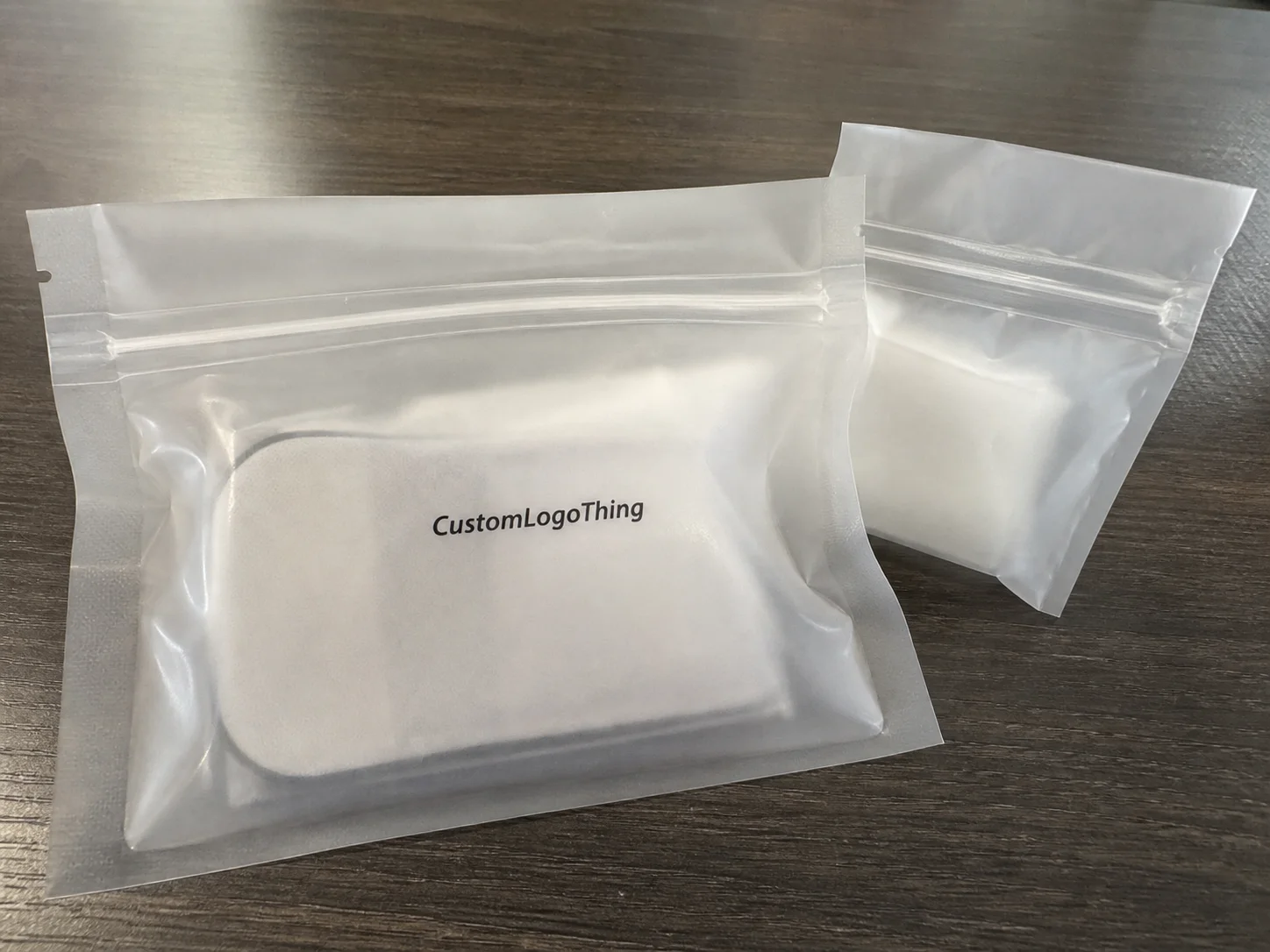
These are semi-opaque plastic bags with a zipper closure, usually printed with a logo, event name, short message, or simple graphic. The frosted finish matters because it softens whatever is inside instead of showing every edge. Clear bags can expose too much. Opaque bags hide everything. Frosted material sits between those two extremes and gives the package a cleaner, more controlled look.
That visual control is useful in several types of gifting. An onboarding kit should feel organized. A client thank-you set should feel considered rather than improvised. A conference handout bag should survive a crowded floor without looking like spare inventory from another department. The material is doing quiet work here. It does not need to dominate the design to improve it.
Common uses include:
- Employee onboarding kits with notebooks, cards, and apparel.
- Conference or trade show handouts that need to stack and distribute quickly.
- Client appreciation sets with samples, stationery, or product inserts.
- Seasonal mailers that need to travel flat and arrive clean.
That last point is easy to underestimate. A frosted zipper bag packs efficiently in cartons, nests well in storage, and usually consumes less warehouse space than rigid packaging. When a team is filling 100, 500, or 2,000 units, differences in packout speed matter. Folding cartons, gluing inserts, or assembling rigid sleeves all add labor. A zipper bag reduces some of that friction. It also lowers the chance of misalignment, because the structure tolerates slight variation in item placement.
There is a tradeoff. A bag does not protect like a corrugated shipper. If the contents are fragile, heavy, or point-loaded, the bag should be treated as presentation packaging, not the only line of defense. That is a design decision, not a flaw in the format.
For lighter kits, though, the bag often does the job better than a box. It looks cleaner on the table, packs faster, and still feels deliberate when it reaches the recipient.
How the frosted zipper design changes presentation and protection
The frost finish is not just a style choice. It reduces visual noise. A clear pouch can show barcodes, folds, and whatever happens to sit nearest the front panel. That works for some product categories, but it can make a corporate gift look unfinished. A fully opaque bag hides the contents but removes anticipation. Frosted film makes the silhouette visible without revealing every detail. That softness matters because the eye reads it as more composed.
The zipper closure adds function and a little more perceived value. It supports reuse, makes the bag easier to reopen, and helps the contents stay organized if the recipient keeps the packaging after opening. That reuse is not guaranteed, of course, but it is common enough to matter. People keep zipper bags for paperwork, cables, small samples, travel items, and even spare accessories. A bag that remains useful after the gift is opened gives the brand a longer life without needing a second impression.
Material choice changes how the bag performs. Thickness affects puncture resistance and hand feel. A typical frosted PE or LDPE film used in gift packaging often falls somewhere around 120 to 200 microns, though the exact gauge depends on the structure and supplier. Thinner films are cheaper and lighter. Thicker films hold shape better and feel more substantial. For apparel or mixed-item kits, the heavier range usually makes more sense. For flat inserts and light paper goods, a lighter film may be enough.
Closure style matters too. Some zipper tracks close more firmly than others, and that difference shows up fast during packout. If the zipper catches, leaves a gap, or needs repeated pressure to seal, the bag feels temporary. Buyers notice this, even if they do not describe it in technical terms. They just say the package feels cheap. Usually, the problem is not the print. It is the closure.
Print behavior also changes on frosted surfaces. White ink is common because it stays visible against the diffused background, but it needs enough density to avoid looking thin. Dark inks can work well for logos with clear outlines. Metallic ink can look strong on a sample and uneven in production if the artwork is too fine. A design that prints cleanly on paper may not translate cleanly to frosted film. The substrate changes contrast, edge sharpness, and perceived weight.
For shipping-sensitive projects, the outer package still matters. If the gift travels inside a mailer or carton, the team should think about transit abuse, not only shelf appearance. Many buyers never test the whole system, which is where surprises start. A bag can look elegant and still fail if the outer mailer crushes the contents. For that reason, some programs reference parcel distribution testing standards such as those discussed by ISTA testing standards. The point is simple: presentation and protection need to be planned together.
Cost, MOQ, and quote drivers for frosted zipper bags
Pricing is shaped by a few predictable variables: size, film thickness, zipper style, print coverage, number of colors, and whether the run includes extras like inserts or accessory pockets. Quantity matters as much as any of those. Setup costs are spread over the whole order, so the per-unit price usually falls as the run grows. Small custom orders can feel expensive because the factory is still handling the same design, proofing, and setup work with fewer bags to absorb the cost.
Buyers often ask for a target price before the structure is defined. That usually leads to muddy quotes. A better brief names the actual bag size, what needs to fit inside, and how the print should appear. Then the supplier can price the real job instead of guessing at a placeholder version of it.
Indicative ranges for standard programs often look like this:
| Order type | Typical use | Indicative unit price | Cost drivers |
|---|---|---|---|
| Simple frosted bag, unprinted | Internal kits, low-visual-impact storage | $0.18-$0.28 | Size, thickness, zipper style |
| One-color logo print | Client gifts, onboarding packs | $0.24-$0.38 | Artwork coverage, ink count, setup |
| Multi-color or larger print area | Event swag, visible package branding | $0.32-$0.55 | Registration, print passes, proofing time |
| Custom size plus inserts or extras | Premium gifting, mixed-item kits | $0.45-$0.75 | Structural changes, internal components, packaging labor |
MOQ depends on the factory and the amount of customization. A standard bag with a simple logo may begin around 500 units. More specialized work often moves toward 1,000 or more. Custom sizes, unusual zipper placements, and special print effects narrow the pool of suppliers willing to take the order. That affects both price and schedule. A buyer who wants flexibility on quantity usually has to give up some structural uniqueness, at least on the first run.
To get a cleaner quote, send a one-page brief with the following information:
- Exact bag size, or the largest item that must fit inside.
- Target quantity and any backup quantity.
- Artwork file format and number of colors.
- Delivery city and delivery date.
- Any insert cards, tissue, hang tags, or internal packaging needs.
The last line matters more than many teams expect. A bag might be only one piece of the package system. Insert cards, tissue, and labels can change labor time, carton counts, and the final look. If the full kit is not defined up front, the quote can drift later. The broader product range under Custom Packaging Products is useful here because it shows how structure, print complexity, and finishing choices affect the final number.
Production steps and timeline: from artwork to delivery
The cleanest projects follow a predictable sequence. First, the supplier confirms size, material, zipper style, and print method. Then the buyer submits artwork. A digital proof follows, showing placement, scale, and spacing. After approval, the project moves into sampling or pre-production confirmation if needed, then full production, carton packing, and freight booking.
That sounds orderly because it is. The delays usually appear in the handoff between artwork and proof. Low-resolution files, color corrections, or text changes can add several days. If the bag dimensions shift after proofing, the schedule can slip further because the print area and fold positions may need to be reset. Clean files and a clear spec sheet reduce that risk.
For a simple one-color order using stock material, production often lands around 12-15 business days after proof approval. More complex jobs take longer. A custom size, multi-color print, or special accessory can push the run into the 18-25 business day range before freight. That estimate still leaves room for variation, since factory load, seasonality, and carton configuration all affect throughput.
Freight choice can matter as much as the factory schedule. Air freight raises landed cost quickly but can save a deadline. Ocean freight reduces transport cost but adds lead time and more planning. For event-based gifting, buyers sometimes discover that the cheapest factory quote is not the cheapest delivered solution. A slower freight mode can erase any savings if the kits arrive after the event.
A premium-looking bag is usually a spec decision, not a decoration decision. The closer the structure matches the contents, the better the package reads.
Quality control should sit inside the timeline, not after shipment. A decent supplier checks zipper function, print alignment, seal integrity, and carton packing before release. For higher-value kits, ask whether the packs are counted, weighed, or spot-checked after cartonization. That sounds basic, but it catches miscounts and print defects before they turn into receiving problems. If the program includes paper inserts or cards, sourcing details such as FSC-certified materials may also matter, especially when the brand wants the package story to stay consistent across all components.
Choosing the right specs for different gift types
The most common mistake is sizing the bag to inventory instead of sizing it to the gift. That is backwards. Oversized packaging makes a premium kit look loose. Undersized packaging can crease the contents, distort the zipper line, or force the packer to fight the structure. The bag should fit the largest item first, then leave room for tissue, inserts, or a card.
Flat welcome kits and stationery sets usually need less depth and less aggressive structure. Apparel needs more room, especially if the garment is folded around a card or paired with a second item. Drinkware, small tech items, and mixed-object bundles need more attention because their edges can create pressure points. If the contents are fragile, a bag alone is not enough. Use an insert or outer shipper that absorbs impact instead of letting the item press against the film.
Audience changes the spec too. Executive gifts tend to work best with restraint: one strong logo, more negative space, and a palette that stays quiet. Event swag can carry larger artwork because the bag is part of the visual noise of the room. Internal HR kits sit somewhere between those two. They need to feel deliberate, but not theatrical. A design that is too elaborate often looks out of place in a simple onboarding package.
There is no universal best spec. There is only a better fit for the task.
Flat kits
Choose a slimmer profile, minimal print coverage, and a clean logo treatment. The bag should sit flat on the table and still look finished once closed.
Apparel and mixed sets
Move up in thickness and size. A gusseted structure can help if the kit includes multiple items, but only if the zipper line still closes without strain. A bag that bulges unevenly usually looks less premium than a slightly larger bag with more disciplined packing.
Mailers and distributed gifts
Prioritize durability and packout efficiency. If the bag goes inside a shipping mailer, the internal fit matters more than a glossy print effect. A lower-friction packing process often saves more money than a fancier design.
For teams that care about sourcing, ask whether paper inserts, cards, and tissue can be specified with FSC-certified content. That keeps the sustainability story consistent instead of asking one component to carry the entire narrative.
Common mistakes that make branded gift bags look cheap
The first trap is overcomplicated artwork. Fine lines, tiny text, and dense gradients often lose clarity on frosted film. The result is not subtle; it usually looks muddy. A strong logo with a simple layout prints better almost every time. If the goal is to make the bag feel premium, restraint usually beats decoration.
The second trap is bad sizing. Buyers see a low price on a standard bag and assume the contents will fit. Then the bag has too much slack or too little depth, and the closure has to fight the contents. That mismatch hurts the presentation and slows packout. The structure should serve the kit, not force the team to work around it.
Weak closures are another problem. A zipper that feels flimsy, catches at one side, or does not align cleanly makes the whole package feel temporary. In corporate gifting, the closure is part of the user experience. If the zipper feels like an afterthought, the bag does too.
Under-ordering is the last common mistake. Teams often cut the quantity too tightly because they are focused on one campaign. Then a reprint becomes more expensive than adding a small buffer on the first run. Color drift can also show up between batches if the second order is rushed or handled by a different print line. A 5-10 percent cushion is often cheaper than emergency production.
The same principle applies across branded packaging more broadly. Whether the format is a bag, a mailer, or one of the more traditional custom printed boxes, the package only reads as premium if the structural and visual choices support each other. Decoration cannot rescue a mismatched spec.
Expert tips and next steps for a cleaner order
Order a sample or pre-production proof whenever color accuracy matters. That is especially true for off-white logos, muted neutrals, metallic ink, and designs that depend on precise contrast. A digital proof can confirm placement, but it cannot fully predict how a frosted surface will shift visual weight. A physical sample closes that gap and usually prevents a round of avoidable revisions.
Build a one-page spec sheet before requesting pricing. Include size, quantity, artwork, contents, delivery date, and any special handling notes. Suppliers quote faster when the brief is specific. Buyers also get fewer revisions because the decisions are visible in one place. Simple practice, real time savings.
Do not compare suppliers on price alone. Response speed matters. Proof accuracy matters. Print consistency matters. So does how the bags are carton-packed and labeled for receiving. In corporate gifting, the package may be judged in the room, but the project is judged in transit, on schedule, and at the packing table. Those are different tests, and the cheaper option does not always pass all three.
If the gift is being mailed, displayed, or handed out in bulk, the bag spec should support that exact use case first.
The order of operations is simple: choose the contents first, choose the bag size second, then lock the print layout and request a proof. That sequence keeps the project grounded in the actual job instead of the sample library. For teams that want a narrow, low-friction starting point, Custom Packaging Products is where the structure can be sorted before the artwork starts chasing the format.
Used well, custom Frosted Zipper Bags for corporate gifting give you a cleaner presentation, manageable cost, and a package that can move through packing, shipping, and handoff without much drama. That is why they keep showing up in well-run branded packaging programs: they solve practical problems and still look intentional.
FAQs
What size custom frosted zipper bags work best for corporate gifting kits?
Choose the bag around the largest item first, then leave room for tissue, inserts, or a product card so the kit does not feel cramped. Flat welcome kits usually need less depth, while apparel, drinkware, and mixed-item bundles need a wider or gusseted structure.
How much do custom frosted zipper bags for corporate gifting usually cost?
Pricing depends on size, thickness, print complexity, quantity, and whether the order includes extras like inserts or multiple print passes. Per-unit cost usually drops as the run gets larger because setup costs are spread across more bags.
How long does production take after approving the artwork?
Simple orders can move in roughly 12-15 business days after proof approval, while more complex programs may take longer. The exact timeline depends on proof revisions, print method, quantity, and freight method.
Can frosted zipper bags be reused after the gift is opened?
Yes. The zipper closure makes them more reusable than many single-use wraps or mailers. Reuse depends on how the bag is opened and whether the contents leave residue or create creasing.
What artwork works best on custom frosted zipper bags for corporate gifting?
Bold logos, simple lines, and strong contrast print more cleanly than fine details or tiny text. If the gift should feel executive or understated, use a restrained layout with more negative space and fewer competing elements.


