The Frosted Zipper Bags sample Checklist for Retail launches is where packaging moves from concept to decision. A pouch can look clean in a mockup and still fail once it is filled, handled, hung, or scanned under store lighting. The sample has to prove that it works as a retail package, not just that it looks acceptable on a desk.
Frosted film changes how the product reads. It softens glare, but it also reduces contrast, alters visibility, and can exaggerate wrinkles or distortion once the bag is filled. That is why the sample must be reviewed in the same condition the customer will see it: filled, sealed, and presented the way it will ship or sit on shelf.
The useful review questions are practical: does it fit, does it close cleanly, does it display well, and does it hold up through handling. If the sample cannot answer those questions, it is not ready for approval.
Practical rule: if the bag only works when empty, it is not approved.
A good checklist should cover:
- Product fit with clearance at the zipper line
- Filled appearance and overall shape retention
- Zipper opening force, closure feedback, and reseal reliability
- Film finish, haze level, and product visibility
- Artwork placement, barcode readability, and label contrast
- Display method, including peg, tray, bin, or carton presentation
- Basic handling durability after repeated touch points
Frosted Zipper Bags Sample Checklist for Retail Launches
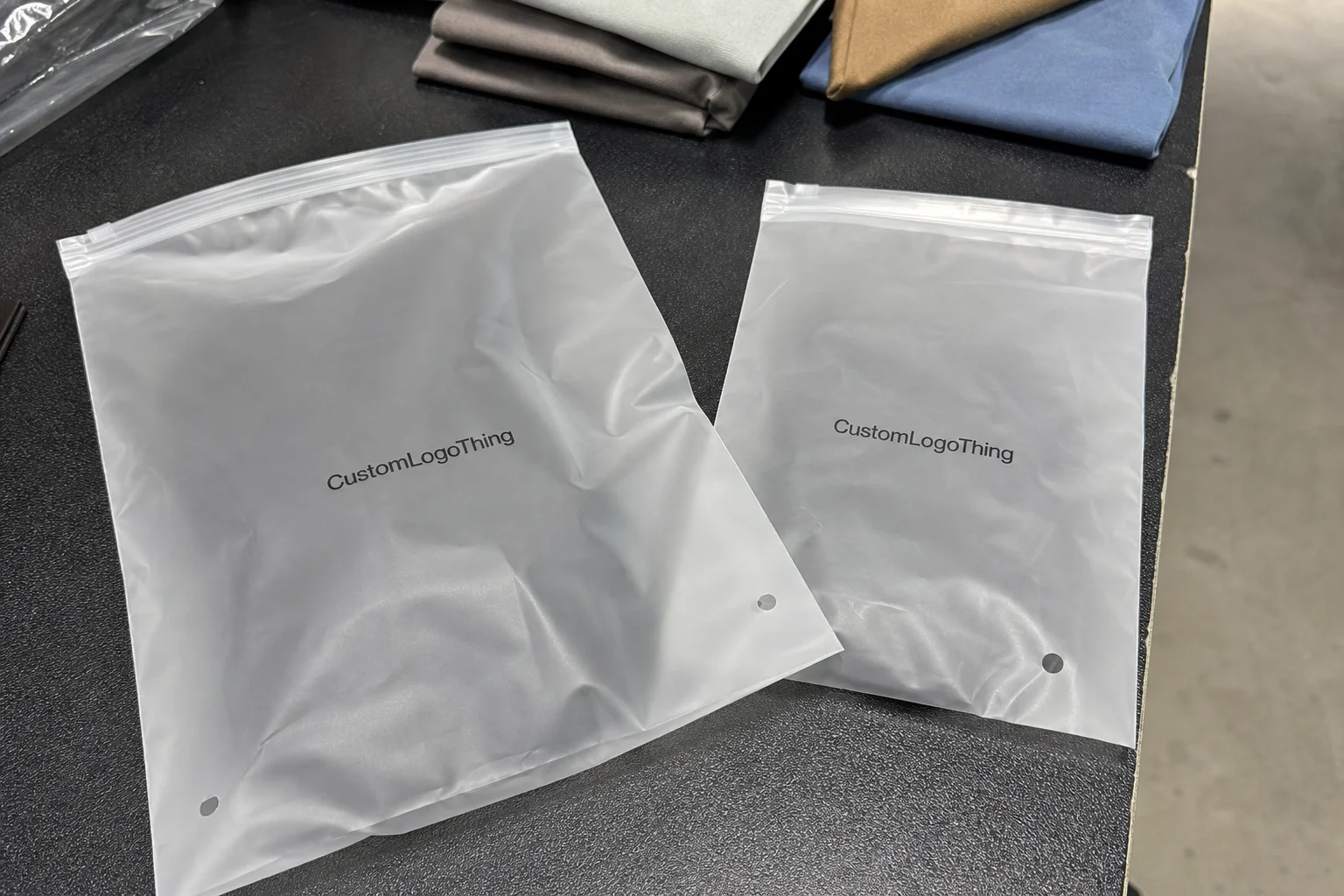
Start with the actual product inside the bag. Empty samples hide the issues that matter most: a zipper that binds once the pouch is full, a top seal that sits too close to the contents, or a size that looks generous until the product weight collapses the shape. A retail sample should be reviewed under filled conditions, not as a flat prototype.
Review the sample under realistic light and viewing distance. Store shelves rarely offer a perfect straight-on view, so check the pouch from an angle, at arm’s length, and under bright lighting. If the graphics remain readable, the closure feels reliable, and the silhouette still looks intentional, the sample is doing its job.
Also check the package as a system. If the pouch ships in a carton, sleeve, or insert, those components affect the final appearance and sometimes the packout speed. The bag may be the main component, but the launch succeeds or fails on the whole assembly.
How Frosted Zipper Bags Should Perform on Shelf
On shelf, the bag has three jobs: present the product clearly, protect it from handling, and make the shopper believe it can be opened and closed again. That last part is easy to underestimate. A zipper that feels weak or sticky changes the whole read of the package.
The frosted finish helps when the brand wants a cleaner, more controlled look. It cuts glare under LED lighting and often feels more premium than a fully clear pouch in categories like personal care, accessories, stationery, and small gift items. The product still shows through, but the package does not overpower it.
Shape matters as much as finish. Mouth width, seal height, gusset depth, and the way the product sits inside the bag all affect shelf behavior. A sample that stands well on a table may slouch when the actual contents are inserted. A bag that hangs neatly on one peg can twist or stress the seam on another display.
If the item will move through distribution before reaching store shelves, check abrasion, corner wear, and zipper fatigue. Retail packaging gets handled, stacked, and sometimes dropped. A sample that looks fine after one open-close cycle can still fail after ordinary transit abuse.
A simple physical test set is usually enough to catch obvious problems early: open and close the zipper several times, rub two units together, simulate a short drop, and inspect the corners and seal lines. For broader shipping validation, established guidance from groups such as Packaging School and ISTA is useful when launch volume is high or the product is fragile.
Key Specs That Control Appearance and Protection
Most problems trace back to a short list of specs. Film thickness is the most obvious. Too light, and the bag wrinkles excessively, collapses easily, and can look cheap even with good print. Too heavy, and cost rises without much visible benefit. The right gauge depends on product weight, shelf expectations, and how much structure the package needs.
Dimensions should be checked against the filled product, not just the flat size on a quote sheet. Flat dimensions do not show how much room the product needs after insertion. Seal clearance matters, and so does the relationship between the bag height and the top of the item. A pouch can technically fit and still be awkward to close, which slows packing and creates rework.
Artwork and labeling need the same scrutiny. Frosted film changes contrast, so logos, copy, and barcodes should be checked in the actual printed condition, not only in a digital proof. If the pouch carries a barcode, care instructions, compliance text, or a write-on area, confirm that each element stays readable at normal shopper distance.
Protection is broader than puncture resistance. It also includes scuffing, dust intrusion, zipper wear, and corner abrasion. For some launches, the right answer is a slightly heavier film and a more reliable closure. For others, the lighter option is fine because the product is not sensitive. The point is to match the material to the use case.
The comparison matrix below keeps the review focused.
| Feature | What to Check | Why It Matters | Typical Risk if Missed |
|---|---|---|---|
| Film thickness | Stiffness, crinkle, surface feel | Controls perceived quality and protection | Bag looks flimsy or overbuilt |
| Zipper style | Opening force, closing feedback, reseal reliability | Shapes shopper confidence and packing speed | Complaints, returns, or line slowdown |
| Dimensions | Fit with the actual filled product | Prevents seal interference and distortion | Loose look, packing friction, or rework |
| Print placement | Logo visibility, barcode readability, copy spacing | Supports retail presentation and compliance | Artwork revision after approval |
| Display compatibility | Peg, bin, tray, or carton fit | Ensures shelf readiness | Poor merchandising or weak seams |
Process and Timeline: From Spec Sheet to Approved Sample
A clean sampling process starts with complete information. Send the product dimensions, target fill weight, artwork files, closure style, shipping destination, and any display or compliance requirements together. If the bag needs a hang hole, tear notch, or reinforced seam, include that too. A supplier cannot build a useful sample from partial instructions.
The sample cycle usually follows a simple path: request, sample build, physical review, written comments, revision if needed, then final approval. The first round often exposes the real issue, whether that is zipper feel, bag size, or artwork contrast. A revision round is normal. The goal is to approve the version that will run in production without creating avoidable problems.
Timelines are often compressed more than they should be. Sample turnaround can be quick if the specs are complete, but production scheduling, artwork corrections, and freight still have to fit into the launch calendar. A sample that arrives in a few days does not mean the order is ready in a few days. Most retail launches need time for review, internal signoff, and a final pre-production check.
For planning, many buyers treat 5 to 15 business days as a normal sample window and roughly 15 to 35 days as a common production range for custom packaging, depending on quantity, decoration, and factory workload. Freight is separate and can become the largest variable if the launch depends on ocean transit. These are planning ranges, not promises, so ask for step-by-step timing rather than a single broad estimate.
Cost, Pricing, MOQ, and Quote Variables to Compare
Pricing is driven by a few predictable factors: size, film gauge, zipper type, print coverage, special finishes, and order quantity. A larger bag with heavier film and full-color print will cost more than a simple unprinted pouch. The part that surprises buyers is how quickly price rises once custom dimensions, hang holes, write-on panels, or unusual zipper profiles are added.
MOQ matters because setup cost gets spread across fewer units. At lower quantities, the unit price can climb sharply, especially if the bag needs custom print or a nonstandard closure. That is not automatically a problem. A higher unit cost can still make sense if the package improves shelf presentation, reduces labor, or supports a premium retail price.
For rough planning, stock-style Frosted Zipper Bags can sit in the low-cent range at scale, while custom printed versions at lower quantities often move into the several-tenths-of-a-dollar range or higher, depending on size and complexity. Larger or heavily customized pouches can reach the low-dollar range per unit before freight. That spread reflects setup, material consumption, and decoration, not just markup.
Compare quotes by line item, not by headline price. Setup charges, artwork handling, freight, revision rounds, and any tooling or plate fees can change the real number significantly. A quote that looks cheap at first glance can become expensive once the bags are in the warehouse and the packing team starts fighting the format.
| Quote Element | Ask For | Watch For |
|---|---|---|
| Unit price | Price by quantity break | Assumptions about size or print coverage |
| Setup | Tooling, plate, or prep fees | One-time costs buried in other lines |
| Freight | Shipping terms and destination | Air versus ocean differences |
| Revisions | Included sample rounds | Extra charges after the first change |
| Total landed cost | All-in delivered number | A quote that only looks inexpensive |
Common Mistakes That Delay Launch Approval
The biggest mistake is approving an empty bag because it looks clean in hand. Empty samples hide fit problems: zipper drag, overfill, collapsing structure, and artwork distortion. If the final unit will ship, hang, and be opened by shoppers, the review has to mirror that reality.
Another avoidable issue is inconsistent review conditions. A sample judged in dim office light and a sample judged under retail-style fixtures are not being evaluated the same way. The same is true when different teams approve against different expectations. Subjective approvals create production problems later because the target was never clear.
Late changes are expensive. Adjusting dimensions, changing zipper style, or revising artwork after approval can affect lead time, freight, inventory, and launch scheduling at the same time. The sample checklist should act as a gate, not paperwork. It should stop weak decisions before they become inventory.
Next Steps Before You Place the Retail Order
Build a short approval packet and keep it tight. Include product dimensions, target fill weight, artwork, required bag finish, and sample notes so every reviewer sees the same version of the spec. If the launch includes multiple SKUs, identify the master reference and make clear which variation is acceptable and which is not.
Whenever possible, compare at least two physical samples side by side. Differences in zipper feel, opacity, stiffness, and shelf presence are easier to judge that way. Side-by-side review also helps separate performance from preference. A softer bag may look better, but if it crushes more easily or slows packing, that matters more than taste.
Document the pass-fail items before signoff. Fit, closure, print placement, shelf appearance, and shipping durability should each have a clear outcome. If a revision is needed, record exactly what changed and why. Keep one approved reference sample with the final notes attached to the order file so the buyer, warehouse team, and supplier all work from the same standard.
For a retail launch, that is the real test. The bag has to look right, close right, survive the trip, and still make sense to the shopper once it lands on shelf. If it passes those conditions in hand, then it is ready for production.
What should be on a frosted zipper bags sample checklist before a retail launch?
Include bag size, film thickness, zipper feel, fit with the actual product, shelf appearance, print placement, and shipping durability. Test the bag filled, not empty, so closure and proportion issues show up early. Record who approved the sample and what changes were requested so the signoff trail stays clear.
How many samples should I request before approving a frosted zipper bag order?
Start with at least one physical sample per major version you are considering, such as different sizes, film gauges, or zipper styles. If the bag is going into a new retail program, compare more than one option side by side so the team can judge visual and functional differences. Ask for a revised sample if the first version shows fit, closure, or branding issues.
What affects frosted zipper bag pricing the most at low MOQ?
The main drivers are size, film thickness, zipper type, print coverage, and custom features like hang holes or special finishes. Low MOQ usually raises the unit price because setup and material costs are spread over fewer bags. Freight and revision rounds can matter more than buyers expect, so compare total landed cost instead of unit price alone.
How long does the sample and production timeline usually take?
A practical planning range is often 5 to 15 business days for sampling and roughly 15 to 35 days for production on custom programs, with freight added on top. Exact lead times vary by quantity, decoration method, and factory workload, so ask for step-by-step timing instead of one broad promise.
What should I test in-store before signing off on frosted zipper bags?
Check how the bag looks under store lighting, how it stands or hangs, and whether the frosted finish still lets the product read clearly. Test opening and resealing several times to confirm the zipper stays smooth and secure. Verify that the branding, barcode, and compliance details remain legible from normal shopper distance.


