Frosted Zipper Bags unit cost for retail launches is rarely a simple price-per-bag exercise. A buyer is usually comparing the bag against cartons, labels, inserts, packing labor, and freight constraints at the same time. That is why a frosted zipper bag can look more expensive than a plain poly pouch and still lower the total launch budget.
The real number depends on size, film thickness, zipper construction, print coverage, and quantity. A small first run can land around $0.18-$0.40 per piece before freight, while a larger run with a restrained spec often moves lower. The useful question is not “What does the bag cost?” It is “What does the finished retail package cost once it is ready to ship, display, and sell?”
"A low unit price that ignores freight, setup, and rework is not a quote. It is a placeholder with better formatting."
Why frosted zipper bags often beat cartons at launch
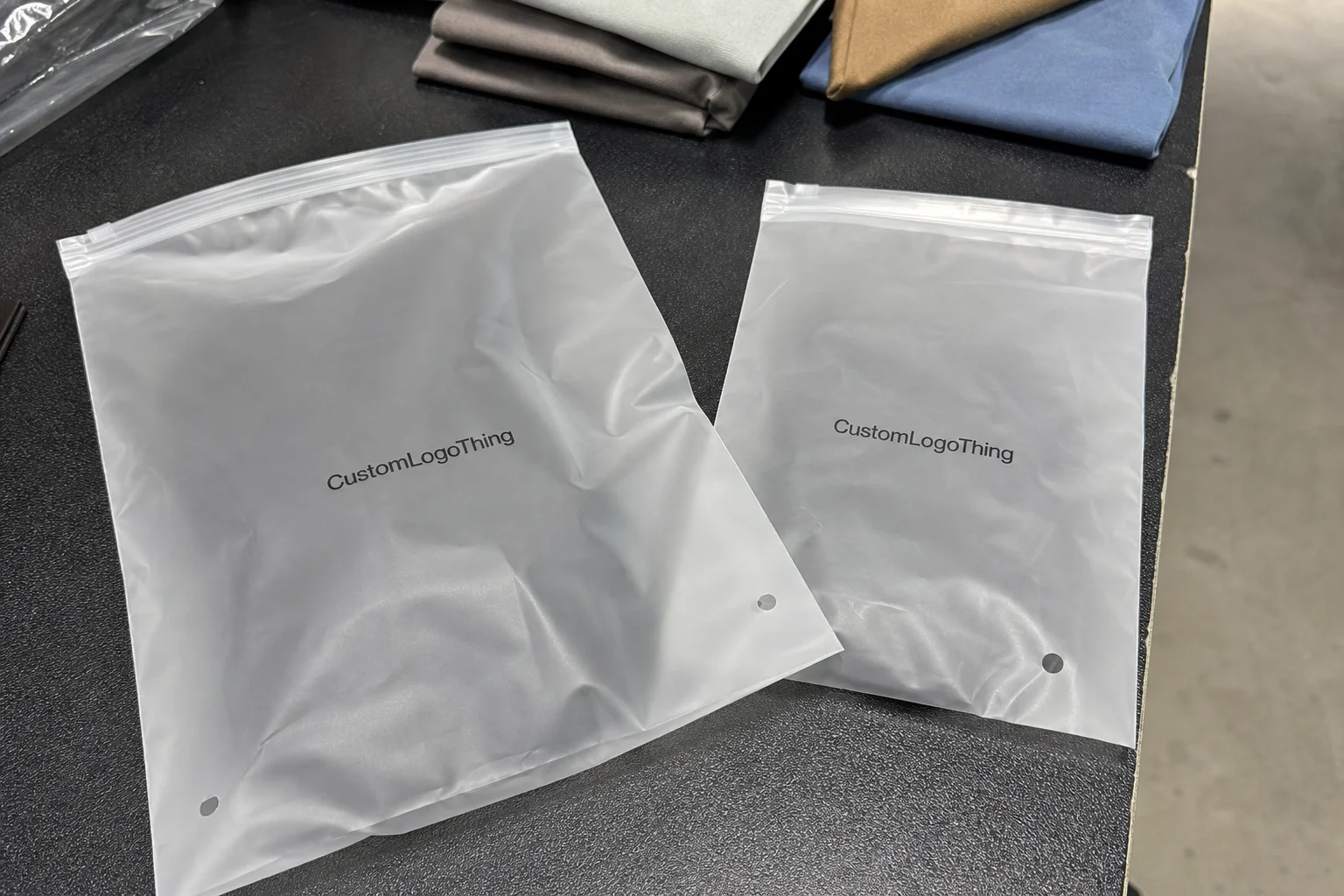
Retail launches are usually constrained by speed, cash flow, and the need to look finished on day one. A frosted zipper bag can cover several jobs at once: it holds the product, protects it from dust and handling, and gives the brand a clean visual field. That combination matters most for items that do not need rigid crush protection.
The cost comparison is not as obvious as it first appears. A carton may start with a lower material price, but the package often needs folding, glue, print setup, an inner bag, and more labor at packing. A frosted zipper bag can remove at least one or two steps from that chain. In a launch environment, every step is money and time.
This format is especially useful for apparel, socks, small accessories, beauty refills, wellness kits, samples, and compact gift sets. These categories benefit from a package that feels intentional without asking the brand to pay for rigid board, lamination, or full carton assembly. If the item is small, stable, and visually improved by a semi-opaque finish, the format makes sense quickly.
There is another advantage that gets overlooked: the bag can make a product feel like a retail SKU rather than a sample. That matters on shelf, in mailers, and in bundled promotions. If the packaging is doing the work of a branded container, the bag may be the cheaper way to reach the same result.
Buyers sometimes fixate on bag price and ignore the cost of getting the product to the retailer in a usable form. That is the wrong unit of analysis. A more useful lens is landed cost per launch-ready unit, because that includes the bag, the setup, the packing format, and the shipment path.
What you are actually buying: film, zipper, and finish
A frosted zipper bag is usually made from PE film or a comparable flexible plastic, combined with a resealable zipper. The frosted finish softens the visual contrast inside the package, which helps the product read cleaner and less utilitarian than a glossy clear bag. It also hides fingerprints, minor scuffs, and some internal clutter better than clear material does.
The zipper construction is a bigger cost and quality variable than many teams expect. A standard press-to-close zipper is usually the most economical option and is appropriate for most retail launches. A slider zipper adds convenience and a more premium feel, but it increases material and assembly cost. If the bag needs to hang on display, a euro slot or hang hole should be planned into the dieline from the start.
Thickness matters because it affects stiffness, durability, and the way the bag sits on shelf. Very thin film can reduce unit cost, but it also wrinkles more easily and can feel underbuilt. Heavier film can improve the presentation, but only if the product truly needs it. Adding thickness to compensate for weak sizing is a poor trade. The bag should fit the product cleanly instead of forcing the material to do structural work it was not designed to do.
Print is another lever. A simple one-color logo on a frosted surface usually costs less than multi-color coverage or full flood printing. Heavy ink coverage can obscure the clean, soft look that makes frosted material useful in the first place. If the logo only needs to be seen from a few feet away, full-coverage print is often unnecessary.
Small structural details can change the entire quote. Reinforced seams help with heavier contents. Tear notches make opening easier. Custom zipper colors and hardware may improve shelf appeal but add lead time and cost. These are not cosmetic extras; they are production decisions that should be made with the product weight, retail format, and shipping path in mind.
One practical warning: bag size should not be selected from the product dimensions alone. There needs to be room for insertion, zipper closure, and a little movement without compressing the contents. A bag that is too tight can distort the seal line and make the package look strained before it reaches the shelf.
Specifications that change the quote the fastest
Good quotes come from good specs. If the request is vague, the answer will be vague too. The fastest pricing changes come from bag width, bag height, gusset depth, film thickness, print area, zipper type, and whether the artwork is printed on one side or both. A supplier cannot price around missing details without padding the estimate.
Fit drives cost more often than buyers expect. If the bag is undersized, the supplier may have to adjust dimensions or film gauge to avoid a poor retail presentation. If the bag is oversized, the waste in film adds up fast. Both problems increase unit cost, and neither one improves the package.
Printing complexity also matters. A single-color logo usually keeps setup simpler than multi-color artwork or a full background print. More coverage means more proofing, more registration risk, and more chances for the print to drift from the approved design. If branding can be limited to a clean mark or a restrained panel, pricing is usually better.
There are a few extras that should always be called out separately because they often appear as hidden charges later:
- Euro slots for peg display
- Reinforced seams for heavier contents
- Tear notches for easier opening
- Custom zipper colors or slider hardware
- Retail packing or special bundle counts
Shipping standards can matter if the package is being sold through a retailer with strict handling requirements. For products that move through long transit chains, it helps to ask whether the bag has been evaluated against common transit test logic such as ISTA methods. If the broader launch package includes cartons or paper inserts, FSC sourcing may also be relevant, which is why many brands keep FSC in scope for the overall materials plan.
Another hidden variable is the format of the artwork file. Clean dielines, correct bleed, and clearly marked print areas reduce proof revisions. Missing layers and unclear edge marks slow production. That time has a cost even if it does not show up as a separate line on the quote.
Unit cost, MOQ, and quote bands
MOQ is the point where setup costs stop looking absurd on a per-piece basis. It is not just a factory preference. The lower the quantity, the more every fixed cost is forced onto each bag. That is why first-run pricing often looks worse than repeat-run pricing, even when the materials are identical.
For a launch order, it helps to think in bands rather than one precise number. A plain frosted stock-style bag with no print can sit around $0.10-$0.18 at lower quantities. A custom printed bag with a defined size and standard zipper may land closer to $0.16-$0.30 depending on the spec. At 5,000 pieces, many launches fall into a more usable $0.14-$0.28 zone if the artwork is simple and the closure is standard. At 10,000 pieces, the pricing usually becomes steadier, assuming the design does not keep changing.
The useful quote is the one that shows the complete cost structure. At minimum, it should include:
- Bag dimensions and thickness
- Print method and number of colors
- Tooling fees or plate charges
- Sample or proof cost
- Freight assumption and destination
- Packaging format, such as bulk packed or retail packed
That last item is where many buyers get surprised. A low unit price can hide labor for bundling, repacking, carton assembly, customs handling, or rush transport. If the warehouse expects a specific bundle count and the quote only covers loose bulk bags, the real cost will be higher than the number you budgeted.
| Option | Typical MOQ | Typical cost per piece | Setup charges | Best use |
|---|---|---|---|---|
| Stock frosted zipper bag, no print | 500-1,000 | $0.10-$0.18 | Low or none | Fast launch testing and simple packaging |
| Custom frosted zipper bag, 1-color logo | 1,000-3,000 | $0.16-$0.30 | $75-$250 | Retail-ready branding without heavy print coverage |
| Custom frosted zipper bag, multi-color or full coverage | 3,000-10,000 | $0.22-$0.45 | $150-$400+ | Premium launch programs with stronger shelf presence |
These bands are useful only if the spec stays stable. A change in zipper style, thickness, or print coverage can move the number quickly. Freight can move it too, especially on small orders where the shipping cost is spread over fewer units. A quote that looks attractive in isolation may become less competitive once it is landed in the warehouse.
Practical rule: compare total landed cost, not just the bag price. A slightly higher quote with cleaner proofing, predictable transit, and fewer rework risks can be cheaper in the end.
"If a supplier cannot explain freight, proofs, and plate charges in plain language, the quote is not ready for a budget decision."
Process, timeline, and production steps from art to ship
The ordering process usually starts with a request for quote, but the schedule does not really begin until artwork is approved. A controlled run follows a simple path: confirm the spec, align on dimensions, review artwork, approve the proof, produce samples if needed, and then move into production. The work is straightforward. The friction comes from changing details after the quote has already been issued.
Simple stock-style jobs move faster than custom-print runs. First-time artwork, special closures, or nonstandard dimensions add time. A clean order can often ship in 10-15 business days after proof approval. More complex orders may need 15-25 business days or longer, especially if sampling is required or the production queue is heavy. If a supplier promises a much shorter schedule before seeing the spec, the claim deserves skepticism.
The usual delays are familiar. Missing dielines slow layout. Unclear artwork causes proof revisions. Color changes restart checks. Shipping instructions that are vague or contradictory hold the order at dispatch. None of this is unusual, and all of it is avoidable with a tighter brief.
Quality control should be mechanical and repeatable. Check zipper alignment, seal strength, bag dimensions, print registration, and carton counts before the shipment leaves the floor. If a bag is off by a few millimeters, the package can look uneven on shelf or fail to close properly around the product. Small measurement errors tend to create outsized problems once the package is in retail use.
Proofing is worth the time. A pre-production sample or proof gives you a chance to catch the wrong zipper, the wrong dimension, or a logo placement that looks fine on screen and awkward in hand. Skipping that step to save a day usually costs more later. In packaging, speed only helps if the result is still usable.
How to compare suppliers without paying for avoidable extras
Price is only one filter. The more useful question is whether the supplier actually produces Custom Retail Packaging or simply resells stock bags with a logo added. Those are different businesses. The difference shows up in how they handle dielines, proofing, revisions, and repeat-run consistency.
A competent supplier should be able to describe the production flow clearly: how artwork is prepared, how proofs are approved, what the sample process looks like, and which checks happen before shipping. If they keep changing the spec while quoting, the number is not dependable. If they cannot explain the print method or zipper construction without slipping into vague language, that is another warning sign.
It also helps to ask for line-item clarity. A supplier should be able to separate bag cost, tooling, sampling, freight assumptions, and packaging format. If all of that is compressed into one number, you cannot tell which part is competitive and which part is being padded. Transparent pricing is not a favor. It is basic purchase hygiene.
Some buyers choose the cheapest offer and hope the order will correct itself in production. That approach rarely works. A low-cost supplier who misses the size, ships late, or produces inconsistent print can erase the savings quickly. For a launch order, the missed retail window is often more expensive than the bag itself.
There is also the matter of repeatability. If the package will be reordered, the supplier needs a process that can hold size, color, and closure quality across runs. The first shipment is only half the test. The reorder is where weak systems tend to show up.
Next steps to lock the right spec and order size
Before requesting quotes, prepare the actual production inputs: product dimensions, target quantity, print count, zipper style, finish preference, and shipping destination. The more complete the spec sheet, the more stable the pricing. A vague request tends to produce a wide range, and wide ranges are not useful for budgeting.
It is smart to ask for two scenarios. One should reflect the smallest viable launch order. The other should show the quantity where the Frosted Zipper Bags unit cost for retail launches begins to improve in a meaningful way. That comparison makes the tradeoff visible: lower cash outlay now versus better unit economics later.
Approve the proof only after checking the practical details: dimensions, logo placement, zipper type, hang features, and print count. These are the points that cause production misses. Once the proof is approved, changes usually trigger extra time or extra cost. That is not a supplier problem. It is a consequence of locking the spec too late.
The cleanest path is to request a landed-price quote from the start. That means asking for the bag, the setup, the packing format, and the shipping assumptions together. A partial number is not enough for a launch budget. Retail packaging should be priced as a system, not as a loose component.
FAQs
What drives frosted zipper bags unit cost for retail launches the most?
Quantity is the biggest lever because fixed setup costs spread out as the run gets larger. After that, bag dimensions, film thickness, zipper style, and print coverage move pricing the fastest. Freight and special packing requirements can also raise the landed number more than buyers expect.
What MOQ makes sense for a first retail launch order?
The right MOQ is the smallest quantity that still gives you a usable retail package without overcommitting cash. Lower minimums work for testing, but the unit cost will usually be higher than on a larger run. If the product is already proven, stepping up quantity often improves the price enough to justify the extra inventory.
Can I get a useful quote before final artwork is finished?
Yes. A reliable budget quote can be built from size, quantity, zipper style, print count, and finish. Final artwork is still needed to confirm placement and print details before production starts. The more complete the spec sheet, the less likely the number is to move later.
How long does a custom frosted zipper bag order usually take?
Timing begins after proof approval, so slow artwork review pushes the entire schedule back. Simple orders move faster than custom print jobs with special closures or sample approval steps. Rush service may be available, but it usually raises cost and reduces flexibility.
How do I lower cost without making the bag look cheap?
Keep the bag dimensions efficient and avoid oversizing the package. Use a standard frosted finish and limit unnecessary print coverage or add-ons. Choose the simplest closure and feature set that still supports the retail presentation, and the Frosted Zipper Bags unit cost for retail launches will usually stay under control without stripping out the brand value.


