For registration kits, speaker gifts, and sponsor handouts, Frosted Zipper Poly Bags for conference planners moq planning solve a very practical problem: you need packaging that looks polished on a table, survives handling, and still makes it easy to count, inspect, and distribute contents without a mess. Event packaging does not forgive sloppiness. Once the print is approved and the ship date is set, there is not much room to improvise.
Frosted Zipper Bags sit between plain disposable poly bags and rigid presentation packaging. They look cleaner than an open-top sleeve, reseal better than a tuck flap, and give planners a reusable-looking package without jumping to boxes or molded cases. That mix is why buyers keep asking about Frosted Zipper Poly Bags for conference planners moq planning while trying to hold the line on budget and still make the kit feel intentional.
There is also a practical advantage that gets overlooked. These bags are easy to sort, stack, and recheck during assembly. That matters more than it sounds when you are building hundreds or thousands of kits and every minute on the table costs money.
Why frosted zipper bags work so well at conferences
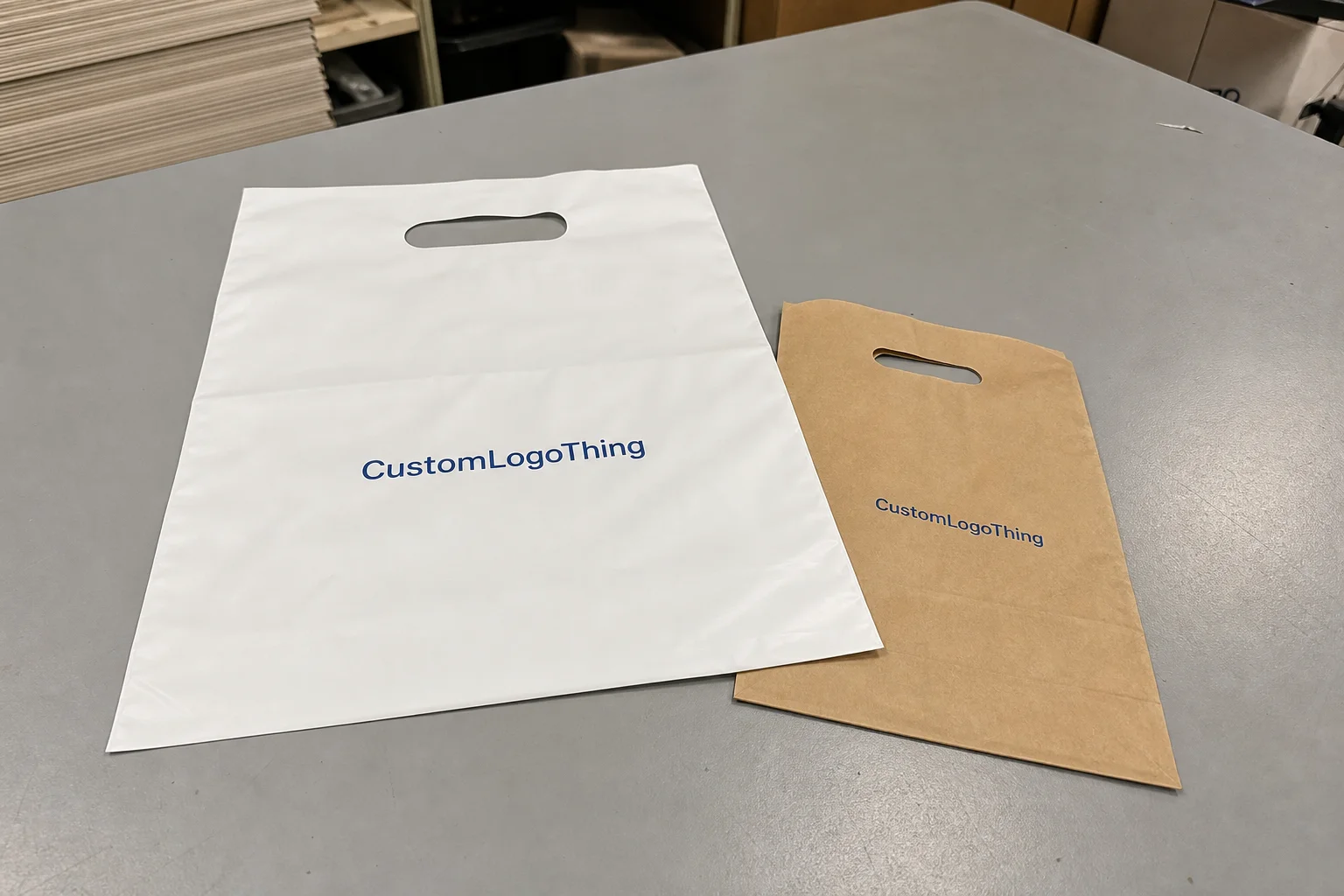
Conference kits move through a lot of hands. A bag may be filled in one room, stacked on a cart, moved to a ballroom, picked up at registration, and then reused for notes, cables, badges, or sponsor inserts throughout the event. A frosted zipper bag handles that flow better than an open poly sleeve because the zipper keeps contents contained while the semi-transparent finish still lets staff verify what is inside at a glance.
The frosted surface does more than soften the look. Under bright expo hall lighting, it cuts glare and helps logos, agenda cards, and inserts read more cleanly. On clear film, fingerprints and reflections show immediately. Frosted film hides a little of the abuse. That is not glamorous, but it is useful.
Branding looks calmer too. A logo printed on frosted polyethylene usually feels more deliberate than the same artwork on glossy film, especially when the design is simple and centered. Planners often use these bags for badge sleeves, welcome packets, speaker gifts, or sponsor handouts because the bag becomes part of the presentation instead of just a container.
Practical rule: if the bag will be opened and closed more than once, or if it will travel through several checkpoints, a zipper closure usually earns its keep.
There is an operational upside as well. The semi-opacity makes it easier to confirm whether a VIP kit, room drop, or exhibitor packet is complete without opening every bag. That saves time, and time is usually the thing the event team is shortest on.
Material, finish, and print details that affect presentation
Most event-grade frosted zipper bags are made from LDPE or LLDPE film, with the frosted effect created by the film structure or surface treatment. The zipper is added during conversion, and the final bag may be side-seal or bottom-seal depending on construction. That sounds like boring factory language. It is still worth asking about, because construction affects how the bag holds up and how it feels in hand.
Print results change on frosted film. Dark colors usually stand out well, but very fine text can lose sharpness if the artwork is too busy or too small. In practice, one-color logos, bold typography, and simple sponsor marks usually perform better than tiny gradients or hairline details. If the bag holds a printed agenda, name badge, or insert card, the frosted background can help those pieces Stand Out Without competing with them.
Screen printing is common for simple branding, especially when the design is one or two colors and the quantity supports the setup. Flexible branding zones, if available, help keep the logo away from the zipper track and structural seams. For conference kits, that spacing matters. A design that is technically printed but visually crowded still reads as rushed.
Size and gusset choices affect presentation just as much as print. A flat bag can work for a thin welcome packet. A gusseted bag is better for thicker kits with notebooks, charger cords, brochures, and sponsor samples. Overfilling is one of the fastest ways to make a good bag look cheap. If the film is stretched tight, the zipper looks strained and the contents stop sitting neatly.
Common presentation choices
- Centered logo print: best for clean, straightforward branding.
- Lower-corner branding: useful when inserts need visual priority.
- Gusseted format: better for thicker kits and mixed collateral.
- Simple one-color artwork: usually the safest choice for clarity and cost control.
If the event includes sponsor inserts or multiple printed pieces, keep the critical information easy to read and leave clear zones near the zipper and side seals. Crowded layouts make even good artwork feel cheap. That is avoidable, which is nice for once.
Sizing, thickness, and performance specifications to review
Before asking for a quote, confirm the basics: width, height, usable opening, seal type, film thickness, and the intended print area. Those details determine not just the price, but whether the bag actually works for the kit you are building. A bag that is slightly too small may still fit the contents on paper, but once you add a lanyard, notebook, or branded pen, the whole kit becomes awkward.
Thickness is usually discussed in mils, and the difference is not just technical jargon. A lighter gauge can work for flat literature or a simple insert pack, while a heavier gauge creates a sturdier feel for attendee gifts and reusable-looking kits. Thicker film generally improves hand feel and puncture resistance, but it also raises unit cost. Not every project needs it.
For conference work, the right thickness usually depends on the load. If the contents are flat and light, stay lean. If the kit includes hard edges, chargers, or multiple inserts, move up. That approach protects both presentation and durability. The bag should close cleanly without forcing the zipper or bowing at the seams.
| Bag style | Typical use | Relative cost | Best fit |
|---|---|---|---|
| Thin flat frosted zipper bag | Agenda sheets, badges, small inserts | Lower | High-count registration packets |
| Medium-gauge frosted zipper bag | Speaker gifts, sponsor handouts | Mid-range | Standard conference kits |
| Heavier gusseted frosted zipper bag | Notebooks, chargers, mixed swag | Higher | Premium attendee kits |
Performance checks matter too. Ask about zipper alignment, resealability, scuff resistance, and whether the frosted film has any odor that could affect enclosed items. If the bag will hold food-safe inserts, samples, or regulated contents, the supplier should confirm compliance requirements rather than guessing.
For broader packaging programs, buyers often ask for material references such as International Safe Transit Association guidance for transit expectations and FSC references when sustainability claims are part of the brief. Those do not replace product-specific testing, but they do give procurement teams a better frame for comparing options.
One practical rule helps a lot: match the size to the real kit load first, then adjust artwork and finish. A bag that fits correctly and looks calm on a registration table will outperform a bag that is beautifully printed but obviously overstuffed.
Pricing, MOQ, and unit cost planning for event orders
Pricing on Frosted Zipper Poly Bags for conference planners moq planning is driven by a handful of predictable variables: size, film thickness, print coverage, number of colors, artwork complexity, and how the bags are packed for shipment. If the bag has a simple one-color logo on a standard size, pricing is usually easier to control than a large custom format with multiple print locations and heavier material.
The MOQ exists because setup charges, conversion time, and print registration have to be spread across the run. That is why minimums are often higher for custom sizes or specialty printing than for stock-style items. A supplier may quote a lower MOQ on a standard format, but a fully custom dimension or nonstandard zipper structure can push the floor upward.
Unit cost drops as quantity rises, but not in a perfect straight line. The first jump in volume often gives the biggest improvement, then savings taper off. Oversized bags, thick film, and multi-color printing can pull the cost back up, so planners should compare bulk pricing against the actual kit use case rather than chasing the lowest piece price alone.
Here is a practical way to budget:
- Estimate total attendee count.
- Add speaker, staff, VIP, and replacement kits.
- Build a buffer for 3% to 10% extra, depending on event size and how many final changes are still possible.
- Compare cost per piece and total landed cost, not just base manufacturing price.
For many conference buyers, the real question is not, “What is the cheapest bag?” It is, “What is the total spend for a bag that looks right, arrives on time, and does not create assembly problems?” That is where setup charges and any tooling fees matter. If the art is simple and the size is standard, those costs may be modest; if the project needs custom tooling or unusual dimensions, they need to be built into the budget early.
A quote request should always include the dimensions, quantity, print details, artwork file, shipping location, and the in-hands date. If you can also describe the kit contents, the supplier can recommend whether a flat bag or gusseted bag makes more sense. That saves a revision cycle, and revision cycles are usually where a clean project starts getting expensive.
For related packaging needs, some planners also compare broader options in Custom Packaging Products or review Custom Poly Mailers when the shipment needs different handling or a less presentation-focused format.
Production steps, proofing, and lead time expectations
The production path is straightforward if the details are clear. It usually starts with inquiry and spec confirmation, then artwork review, then a digital proof, then approval, production, packing, and shipment. Each step sounds simple. The delays usually come from the details that were left vague at the start.
Artwork is one of the most common stumbling blocks. A logo file that looks fine on screen may still need cleanup for print-safe placement, correct spacing, or better contrast on frosted film. The proof should be checked for spelling, logo size, color placement, and distance from the zipper and edges. A proof is not just paperwork. It is the last good chance to catch an expensive mistake.
Timing changes with order complexity. Standard runs with simple print and stable specs may move on a normal schedule, while larger or more customized runs can take longer because print setup and packing are more involved. If the event team needs the bags for kit assembly, do not plan the arrival date for the same day the kits are being built. That is a risk you only need to take once.
Shipping details matter too. Event-site delivery, hotel receiving, and split shipments all need to be spelled out early. A solid order can still go sideways if the receiving window is unclear or the dock requires an appointment. Event packaging benefits from early planning and from a supplier that asks the boring questions before production begins.
Best practice: build a time buffer between proof approval and kit assembly, then add shipping time on top of that. It protects the event schedule if the carrier is delayed or a final artwork change is needed.
If you want to review common ordering questions before requesting a quote, the FAQ page is a useful starting point because it narrows down the spec questions before the back-and-forth starts.
Why conference buyers choose a packaging supplier with factory-level oversight
Conference buyers do not need flashy promises. They need the bag to arrive with the right dimensions, the right print placement, and a zipper that works the same way from the first carton to the last. Factory-level oversight matters because small variations in film thickness, seal alignment, and print registration show up quickly when the order is being assembled at scale.
Consistency is the real value. If one hundred bags are slightly tighter than the rest, or if the logo drifts a few millimeters from run to run, the whole kit starts to look less polished. That may not sound dramatic, but planners notice it immediately when the bags are laid out on a registration table.
Quality control should cover a few basic checks: dimensions against spec, zipper function, seal integrity, print placement, color consistency, and carton count accuracy. None of those are fancy. All of them matter. A bag that looks fine in a mockup but arrives with weak seals or inconsistent print becomes a problem for the event team, not the supplier.
Clear communication helps just as much as production control. A supplier should confirm specifications in writing, review artwork carefully, and say plainly when a requested timeline is too tight for the amount of customization involved. That kind of honesty saves time and keeps procurement simple. It also reduces rework, which is usually where project budgets get hurt.
Useful support on these orders often includes sample review, sizing advice, quantity planning, and shipment coordination for multiple destinations. Buyers who manage conference kits, VIP gifts, or sponsor boxes usually care less about buzzwords and more about whether the order can be repeated reliably next time. That is a fair standard, and it should be the standard.
Next steps for getting an accurate quote and clean delivery plan
Start with four inputs: bag size, approximate quantity, artwork, and event date. With those in hand, a supplier can usually tell you whether the project fits a standard structure or whether it needs a custom recommendation. If the bag is meant for a flat insert set, a thicker swag bundle, or a reusable attendee kit, say that upfront because it changes the sizing conversation immediately.
Then ask for proof review before approval, and verify the shipping destination, receiving hours, and whether split shipments are needed. That is especially helpful when the event has speaker kits, VIP packets, and attendee packs that may not all go to the same place. If there is any chance of a reprint or a second allocation, plan it now rather than after the first shipment is already in transit.
For larger events, keep a small buffer for last-minute additions. Speaker gifts get upgraded. Staff counts change. Sponsors add inserts. It happens constantly. A slight overage is much easier to handle than a shortage when registration opens and the team is already busy.
Used well, frosted zipper poly bags for conference planners moq planning give you a clean presentation, manageable budgeting, and a practical package that holds up through registration, distribution, and reuse. Finalize the spec early, check the proof carefully, and leave enough lead time for production plus shipping. That is how the order stays boring in the best possible way.
FAQ
What is the typical MOQ for frosted zipper poly bags for conference planners?
MOQ usually depends on size, print method, and whether the bag is a standard format or a custom build. Larger or more customized bags often require higher minimums because setup charges and conversion time have to be spread across the run. The quickest way to confirm MOQ is to provide size, artwork, and quantity target together.
How do I choose the right size for conference swag and registration kits?
Start with the thickest item in the kit, then add room for inserts, cards, or small giveaways. Do not size only to the flat pieces, because overstuffed bags can stress the zipper and make the kit look crowded. If the contents are uncertain, ask for a recommendation based on the full kit load.
Can frosted zipper poly bags be printed with a logo?
Yes, logo printing is common on the frosted panel for a clean branded look. Simple artwork usually reads best on frosted film, especially when contrast and spacing are planned carefully. The artwork should be checked for safe margins near the zipper and edges before approval.
How long does production usually take after proof approval?
Production time depends on quantity, print complexity, and current schedule load. Once the proof is approved, the timeline becomes more predictable, but shipping and receiving time still need to be added. For event orders, build extra buffer time before kit assembly.
What should I include when requesting a quote for event packaging?
Include the bag dimensions, quantity, print details, artwork file, and the delivery date you must hit. If the bags are for conference kits, mention the contents so the size recommendation fits the full load. The more complete the request, the faster the quote and proof process usually moves.

