For bridal buyers, Garment Bags for Wedding dresses wholesale are not a minor accessory. They are part of the handling system that keeps a gown clean, supported, and presentable from receiving through alterations, storage, transport, and final handoff. A wedding dress may be feather-light, heavily beaded, or built with structured layers that hold a dramatic silhouette, but each version has the same vulnerability: the wrong bag can crease fabric, catch trim, or trap moisture where satin and lace react badly.
If you buy for a boutique, a manufacturer, a preservation service, or a cleaning operation, the real decision is not whether to use a bag. The decision is which construction fits the gown, the workflow, and the budget without creating avoidable damage. Wholesale buying makes sense because the need is recurring and the specs must stay consistent from order to order. One-off packaging often looks fine on the first shipment and becomes frustrating the moment the dresses change shape or the bag dimensions drift.
What follows is a practical buying guide focused on materials, sizing, pricing, production details, and order confirmation. The aim is to help you compare options using the same kind of checks packaging teams use in real purchasing decisions.
Why Bridal Garments Need More Than a Basic Poly Bag
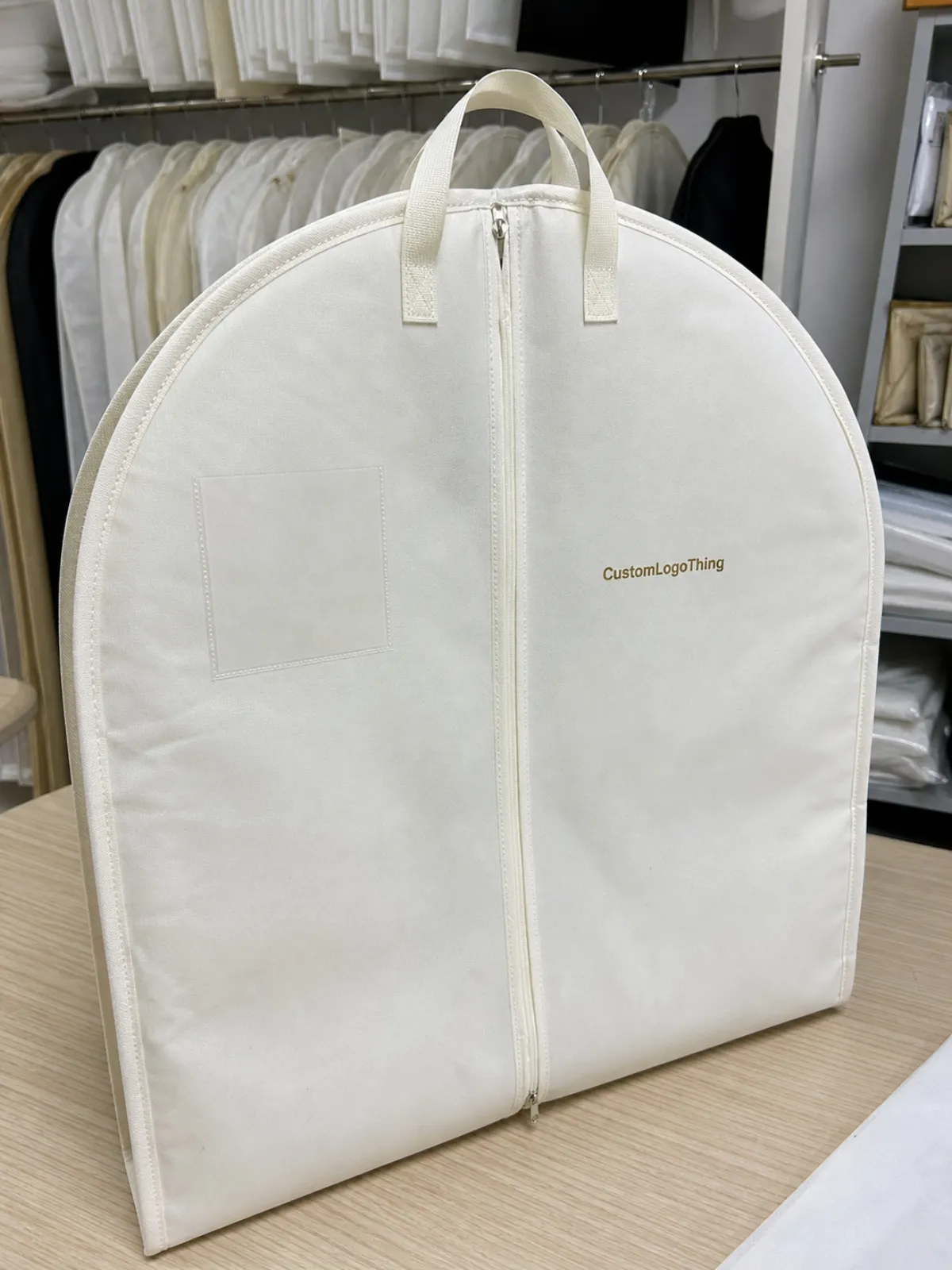
A wedding dress is usually the most delicate and expensive garment in a bridal operation. It may carry layered tulle, lace appliqué, beadwork, corsetry, a long train, or an oversized skirt that spreads far wider than a standard apparel item. A basic poly bag can cover the dress, but coverage alone is not protection. If the film is too thin, the hem can snag. If the bag is too narrow, the skirt gets compressed. If there is no closure at the bottom or no room for airflow, the bag can create problems during storage rather than solve them.
Bridal inventory also moves more than many buyers expect. A dress might be unpacked for receiving, rehung for alterations, taken to a display area, moved for steaming or finishing, then bagged again for pickup or shipping. Each touchpoint introduces risk, especially when staff are working quickly during peak season. A purpose-built garment bag reduces that risk by keeping the gown enclosed, visible when needed, and protected from dust, fingerprints, and incidental abrasion.
The presentation side matters too. A boutique that hands over a gown in a clean, well-fitted bag looks organized and intentional. A shop that uses taped plastic, torn covers, or oversized bags with the dress collapsing inside sends the opposite message. Customers may not know the difference between PE, PP, or nonwoven, but they do notice whether the packaging looks fresh, aligned, and worthy of the dress inside.
Buyer reality: bridal packaging is judged by the dress it protects. If the gown arrives wrinkled, dusty, or crushed at the hem, the packaging failed even if the bag itself was inexpensive.
This is why boutiques, bridal manufacturers, rental businesses, and cleaning or preservation companies tend to prefer repeatable wholesale supply. They want the same fit, the same look, and the same performance across multiple orders. If the program needs recurring supply, our Wholesale Programs are set up for that kind of buying behavior.
Material and Construction Options for Bridal Protection
There is no single best material for every bridal bag. The right choice depends on whether the bag will be used for display, storage, shipping, or final customer handoff. For garment bags for wedding dresses wholesale, the most common material families are PE, PP, PVC, and nonwoven, with clear film options used when visibility matters most.
PE and PP are popular because they are economical, lightweight, and straightforward to produce in custom sizes. Clear PE works well for inventory checks and back-of-house handling because staff can identify the gown without removing it from the bag. PP tends to feel a little crisper and can look cleaner in retail use depending on thickness and finish. PVC still appears in some transparent garment bag applications, although many buyers now ask more questions about odor, flexibility, and compliance preferences before choosing it. Nonwoven is often selected for a softer hand and a more premium presentation, especially in boutiques or preservation settings where the bag itself becomes part of the customer experience.
Construction details matter as much as the base material. Bridal gowns often need:
- Full-length zippers for easy hanging and removal.
- Center or side zippers depending on how the garment is inserted and handled.
- Gussets for layered skirts, tulle volume, and train clearance.
- Reinforced seams to reduce tearing at stress points.
- Hanger openings sized for standard boutique hardware.
- Bottom closures for dust protection during longer storage cycles.
A clear bag can be very useful in retail because staff can inspect labels, verify the silhouette, and check the dress without opening the package. Still, clear does not always equal premium. If the brand wants a more elevated look, an opaque or nonwoven style may support that image better while still protecting the garment from dust and casual handling.
The hem area deserves special attention. Standard apparel covers are often too short or too narrow for bridal use, especially when the gown includes a train or multiple underskirts. If the fabric is forced to bunch at the bottom, it develops hard fold lines that can take time to steam out. For longer storage, ventilation and moisture control also need to be considered. Not every bag needs vent holes, but the storage environment should influence the spec instead of being ignored.
| Material | Best Use | Typical Strength | Buyer Notes |
|---|---|---|---|
| Clear PE | Retail visibility, inventory checks | Light to medium | Budget-friendly and easy to inspect |
| PP | Retail handoff, storage, cleaner use | Light to medium | Often chosen for a cleaner, crisper look |
| PVC | Transparent display and storage | Medium | Review odor, feel, and compliance preferences first |
| Nonwoven | Premium boutiques, preservation, long-term storage | Medium to heavier-duty | Better presentation, less plastic appearance |
Shipping bags and display bags should not be treated as the same product. A lightweight retail cover may be fine for closet storage or hand delivery, while a transport bag needs stronger seams, more dependable zipper hardware, and enough material weight to survive repeated movement. That distinction is easy to miss, and it is one of the most common reasons buyers end up unhappy with a first order.
Size, Thickness, and Custom Spec Checklist
Size gets specific fast in bridal packaging. A wedding dress is not measured the way a shirt or suit is measured. The correct garment bag depends on dress length, train length, sleeve volume, embellishment bulk, and skirt shape. A slim sheath gown may fit a fairly standard profile, while a ball gown with layered tulle may need extra width, more depth, and a gusset that allows the skirt to hang naturally instead of pressing flat against the sides.
Before requesting a quote for garment bags for wedding dresses wholesale, confirm the details below:
- Bag length from hanger opening to bottom hem.
- Shoulder width so the gown hangs without crowding.
- Gusset depth for volume and skirt movement.
- Material thickness or weight, depending on film or nonwoven construction.
- Zipper style and placement.
- Hanger hole dimensions for boutique hardware.
- Optional logo print area and window placement.
Thickness is more than a marketing number. For film bags, buyers usually compare microns or mils; for nonwoven, they look at GSM. A thinner bag can work for light retail use, but it generally offers less body and less resistance to puncture from beads, hooks, or sharp hanger edges. In bridal work, a slightly heavier material often pays for itself through fewer damaged bags and fewer complaints from the sales floor.
Sample approval is worth the time. Bridal gowns can carry beadwork, lace appliqué, horsehair trim, layered tulle, and structured bodices that behave very differently inside a bag. On paper, a size may seem adequate. In the sample, the hem may sit too tightly or the shoulder area may leave too much slack. A prototype reveals those issues before they turn into a full-order problem.
For buyers comparing suppliers, a clear spec sheet is the fastest path to a useful quote. If one supplier is pricing a 60-inch bag with a 6-inch gusset and another is pricing a 66-inch bag with a 10-inch gusset, the numbers are not comparable even if the product photos look similar.
Wholesale Cost, Pricing, MOQ, and Quote Factors
Wholesale pricing for bridal garment bags depends on more than size. The main cost drivers are material, dimensions, thickness, zipper hardware, print coverage, custom finishing, and order quantity. For garment bags for wedding dresses wholesale, buyers usually see a wider price spread than they do with standard apparel covers because bridal specs are larger and more customized.
As a working reference, simple clear PE or PP styles in bulk can land in a lower cost band, while nonwoven, printed, gusseted, or extra-long styles rise from there. A basic unprinted bag in a larger run may fall around $0.25-$0.60 per unit depending on size and material. Custom-printed or premium nonwoven styles can move well above that, especially when the order is small or the bag uses special construction. Those are broad planning ranges rather than firm quotes, because freight, destination, and supplier structure all affect the final number.
MOQ changes unit cost directly. Larger runs usually lower the per-piece price because setup labor and production time are spread across more units. Special colors, logos, window cuts, and unusual dimensions can raise the setup threshold. When you compare suppliers, ask them to separate product cost, customization cost, sample cost, and shipping. That makes it much easier to compare landed cost instead of getting distracted by a low headline unit price that climbs after freight and artwork charges are added.
A quote usually breaks down into a few practical parts:
- Base bag price: material, size, and closure.
- Customization: logo printing, color matching, special windows, venting.
- Sampling: prototype or test sample before production.
- Freight: air, sea, courier, or domestic truck service.
- Packaging format: folded, bulk packed, carton counts, palletization.
Freight can alter the economics more than many buyers expect. A lower unit price does not automatically win if the cartons are oversized or the shipping method is inefficient. For bulky bridal bags, packed volume matters a great deal. A lighter bag that folds compactly may ship more efficiently than a thicker one that takes up extra space. Even so, compression should never be so aggressive that the material keeps a hard crease or the zipper track deforms.
Budget for a small sampling phase. It is much cheaper to discover that the hem area needs another few inches on a prototype than it is to reorder thousands of bags that fit poorly on the actual gowns. That small step often separates a smooth rollout from an expensive correction.
| Quote Factor | Lower-Cost Choice | Higher-Cost Choice | Effect on Budget |
|---|---|---|---|
| Material | Clear PE | Nonwoven or heavier PP | Material selection can shift unit cost substantially |
| Size | Standard-length gown bag | Extra-long or wide gusseted bag | More material and larger cartons increase cost |
| No print | Full logo coverage | Setup and print passes add cost | |
| MOQ | Higher quantity | Small order | Larger runs usually lower unit price |
Process and Lead Time From Spec Sheet to Shipment
The buying process is usually straightforward once the spec is clear. It begins with an inquiry, then the supplier confirms material, dimensions, closure style, print needs, and quantity. After that comes a drawing, a sample, or both. Once the buyer approves the sample and artwork, production begins, followed by inspection, packing, and shipment.
Speed depends heavily on how complete the request is. A full inquiry with target quantity, dress measurements, artwork files, preferred material, and the destination ZIP code or port can save several rounds of back-and-forth. If the supplier has to guess the gown size or the print placement, the schedule slows down and mistakes become more likely.
Typical production timing depends on the order details. Standard specs often move faster, while custom printing, nonstandard sizes, or specialty materials take longer. Many wholesale packaging runs fall into a 12-15 business day production window after proof approval, although larger orders or more complex specs can run longer. Shipping time is separate and depends on the route and carrier.
Quality checks matter in bridal packaging because a small defect can become a major headache later. The main checkpoints are straightforward:
- Zipper function opens and closes smoothly.
- Seams are straight and secure.
- Print is aligned and legible.
- Dimensions stay consistent across the batch.
- Hanger opening matches the intended hook style.
For shipments that will be stacked, transferred, or palletized, testing references from organizations like ISTA can help frame handling risk. If the bag is part of a broader packaging program, EPA packaging guidance is a practical place to review material and waste considerations.
Communication during production should be planned, not improvised. Confirm the purchase order, approve the sample, settle artwork early, and make sure someone is ready to receive the shipment when it lands. A few days of poor coordination can create a costly delay at the warehouse, especially if the bags are tied to a seasonal dress rollout or a preservation deadline.
Wholesale Advantages for Bridal Retailers, Manufacturers, and Cleaners
Wholesale purchasing makes sense because bridal operations need consistency. A boutique may receive gowns from multiple designers, but the customer still expects a clean, organized handoff. Manufacturers need packaging that stays predictable across production lots. Cleaners and preservation businesses need bags that protect the gown after service, not just during a short transfer.
Uniform packaging also helps in the back room. When dresses are stored on rails, moved in delivery vans, or prepared for pickup, mixed bag styles create confusion. A repeated spec makes staff faster because they know exactly how the gown hangs, where the closure sits, and how much room the skirt needs. That kind of efficiency may not be flashy, but it matters every day.
Another practical benefit is brand presentation without overspending. A printed logo on a well-made bag can make the handoff feel more polished, yet it does not require the expense of a rigid presentation box or premium hard case. For many bridal buyers, that is the right balance: strong visual identity, reasonable cost, and a bag that actually protects the garment.
For cleaning and preservation businesses, the value is a little different. Their customers expect clean, dust-resistant, handling-safe packaging for long-term storage or return. A bag with the right closure and material weight helps support that expectation. For these buyers, repeatability is often more important than decorative graphics.
If you are sourcing garment bags for wedding dresses wholesale, supplier reliability is part of the product. The bag is only useful if it arrives on spec, on time, and in repeatable form from one order to the next. That is the real advantage of wholesale supply over random retail packaging in small batches.
How to Place an Order and Confirm the Right Spec
Start with the dress itself. Measure the longest gown in the lineup, note whether there is a train, and estimate hem volume. Then decide whether the bag should be clear or opaque, whether the closure should be a zipper or another format, and whether the packaging will be used mainly for storage, display, shipping, or customer handoff. That one decision tree saves a lot of wasted quoting.
Send the supplier one message with the essentials: quantity, target delivery timing, garment dimensions, artwork files if needed, preferred material, and any special details such as gusset depth or bottom closure. If the design is unusual, heavily beaded, or intended for long storage, request a sample or prototype before full production. That is standard practice in good packaging buying, and it is the easiest way to avoid fit problems later.
Keep the order on track with a short checklist:
- Confirm MOQ.
- Approve sample or drawing.
- Check print placement and color.
- Lock lead time and shipping method.
- Prepare receiving space and carton counts.
A clear spec sheet is better than a long email thread. Buyers who document the bag length, gusset, closure, and print needs usually get faster and more accurate quotes. They also avoid the common problem of comparing different products as if they were the same.
For teams building a repeat program, Wholesale Programs can help standardize supply across seasons, locations, or production batches. And if your brand is evaluating material options for a broader packaging line, it can be useful to review general sourcing expectations through references such as FSC when sustainability claims or fiber sourcing matter to the program.
In practice, the strongest garment bags for wedding dresses wholesale order starts with the right spec, not a guess. Measure the gown, match the material to the handling conditions, and confirm production details before committing to volume. That protects the dress, protects the customer experience, and keeps the packaging program working the way it should.
FAQ
What size garment bags for wedding dresses wholesale should I order?
Choose the size based on gown length, train length, and skirt volume, not just hanger height. Ball gowns, layered tulle, beadwork, and long sleeves usually need extra width or gusset depth. When in doubt, send the dress measurements before placing a bulk order.
What is the best material for wholesale bridal garment bags?
Clear PE or PP works well when visibility and inventory checks matter. Nonwoven is often preferred for a more premium look and better long-term storage presentation. The best choice depends on whether the bags are for retail handoff, storage, shipping, or preservation.
What MOQ should I expect for wedding dress garment bag wholesale orders?
MOQ depends on material, size, and customization level. Standard unprinted styles usually have lower minimums than custom-printed or special-size bags. Larger orders typically lower unit cost, but buyers should confirm setup details before comparing quotes.
How long does production usually take for custom bridal garment bags?
Lead time depends on sample approval, customization, and order volume. Standard specifications are usually faster than special sizes, printed bags, or unique closures. A complete spec sheet and approved artwork help keep the schedule moving.
Can I add my brand logo to garment bags for wedding dresses wholesale?
Yes, many wholesale garment bags can be printed with a logo or brand name. Print method and coverage affect Pricing, MOQ, and Lead Time. For the cleanest result, provide vector artwork and confirm placement before production.


