Buyer Fit Snapshot
| Best fit | Glossy Poly Mailers with Logo projects where brand print, material claims, artwork control, MOQ, and repeat-order consistency need to be specified before quoting. |
|---|---|
| Quote inputs | Share finished size, material target, print colors, finish, packing count, annual reorder estimate, ship-to region, and any compliance wording. |
| Proofing check | Approve dieline scale, logo placement, barcode or warning zones, color tolerance, closure strength, and carton packing before bulk production. |
| Main risk | Vague material claims, crowded artwork, missing packing details, or unclear freight terms can make a low unit price expensive after revisions. |
Fast answer: Glossy Poly Mailers with Logo: Film, Print, MOQ, and Carton Packing should be specified like a repeatable production item. The safest quote records material, print method, finish, artwork proof, packing count, and reorder notes in one written spec.
Production checks before approval
Compare the actual filled-product size with the drawing, then confirm tolerance on folds, seals, hang holes, label areas, and retail display edges. Reserve space for logos, QR codes, warning copy, and material claims before decorative graphics fill the panel.
Quote comparison points
Review material grade, print process, finish, sampling route, tooling charges, carton quantity, and freight assumptions side by side. A quote is only useful when the supplier can repeat the same color, closure quality, and packing count on the next order.
People remember the shipping bag long before they remember the box, and that simple truth is a big part of why Glossy Poly Mailers with logo matter. A plain poly bag does the job and quietly disappears into the background. A branded glossy mailer does the same job while signaling that someone paid attention to the order, the presentation, and the brand behind it. That little bit of polish can change how a shipment feels before the customer even opens it.
For apparel, accessories, subscription goods, and other soft products, glossy poly mailers with logo can make fulfillment look deliberate without adding much weight or complexity. They are light, moisture resistant, simple to store, and usually easier on shipping costs than rigid packaging. The glossy surface changes the equation a bit. It can make color look crisper and artwork appear sharper, though it can also reveal scuffs, fingerprints, and print imperfections more readily than a matte finish would. That is not a dealbreaker, just a surface behavior worth understanding before you place an order.
This guide stays practical. It focuses on the choices that change Cost, Lead Time, appearance, and how a package feels when it reaches a customer’s hands. If you are comparing glossy poly mailers with logo, start with the packed product size and your order volume, then work backward from there. In my experience, that approach surfaces the real answers faster than any sales pitch ever does.
Why Glossy Poly Mailers With Logo Stand Out
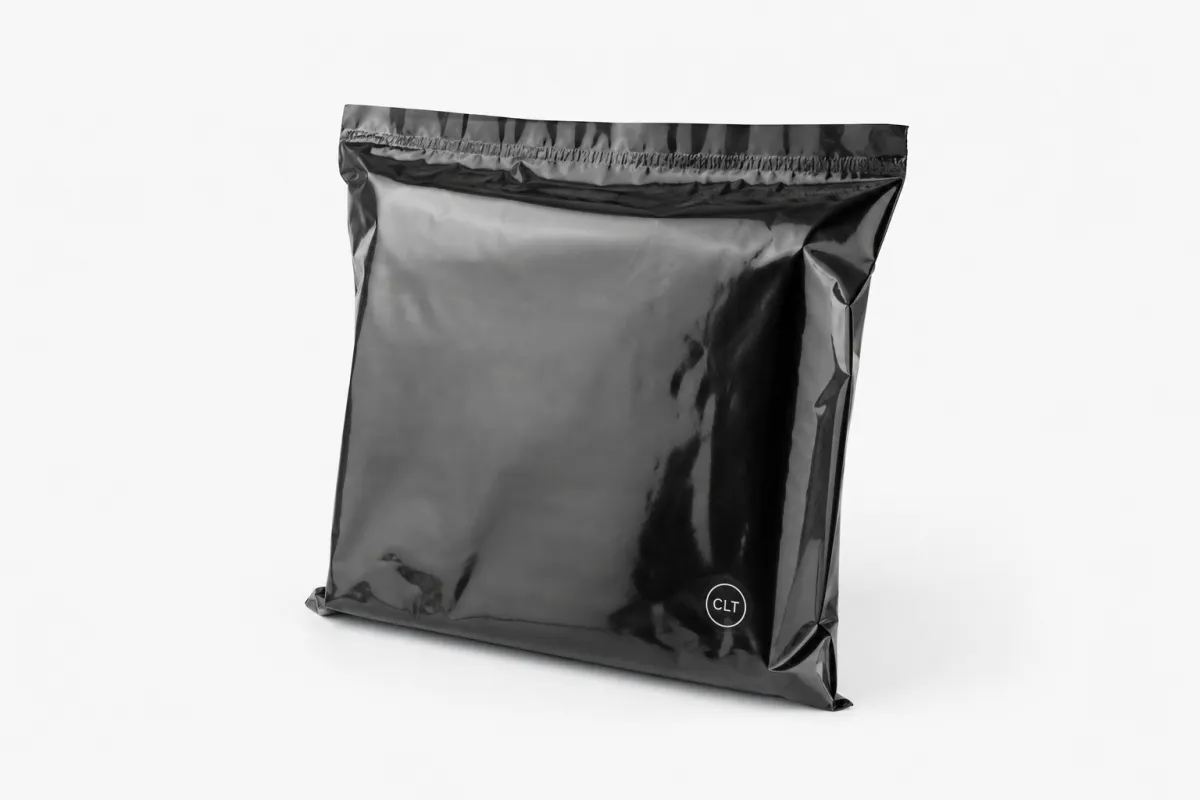
Glossy poly mailers with logo are lightweight plastic shipping bags with a reflective outer surface and a printed brand mark. They are a common choice for folded clothing, socks, cosmetics, soft accessories, and other non-fragile items that do not need crush protection. The point is not to imitate a carton. The point is to move product efficiently while making the shipment look purposeful.
The reflective finish gives the bag a cleaner visual read than a flat, dull mailer. Colors feel brighter. Logos appear sooner. Even a simple one-color print can look more premium than buyers expect when the film is decent and the artwork is clean. That is one reason glossy poly mailers with logo are popular with brands that want a strong first impression without committing to a custom box for every order. For some product lines, they are the sweet spot between cost control and brand presence.
There is a functional side too. Poly mailers stand up better to rain, snow, and the general roughness of sorting facilities than paper-based alternatives. A customer may never think about moisture resistance, but they will notice if an order arrives damp, wrinkled, or worn down by transit. From a packaging buyer’s point of view, glossy poly mailers with logo are one of the better places where presentation and performance can align.
The glossy finish does ask for a little more care. It can show handling marks faster than matte film, and stacked bags can pick up rub marks if they are dragged or compressed during transit. That is not a flaw so much as a property of the surface itself, and it is worth understanding before placing a large order. A glossy mailer that looks striking in a proof can still pick up visible wear once it moves through a warehouse and a carrier network.
Used well, glossy poly mailers with logo help a brand look organized without adding much weight, labor, or storage pressure. Used carelessly, they become a costly reminder that size, artwork, and material thickness should have been measured instead of guessed. Most of the difference lives in the specification, not the pitch.
How Glossy Poly Mailers With Logo Are Made
Most glossy poly mailers with logo begin with polyethylene film. Depending on the job, manufacturers may use one or more layers to balance strength, flexibility, and seal performance. Thickness is usually listed in mils, and in this category you will often see films from about 2.5 mil to 4.0 mil or higher for heavier use. A thicker film usually resists stretching and puncture better, though it costs more and uses more material.
The glossy look comes from the outer layer of film and the way that layer is finished. The surface reflects light rather than absorbing it, which gives glossy poly mailers with logo their crisp, bright appearance. Solid colors often look richer, and simple graphics can stand out with less ink coverage than a more muted finish might require.
Printing methods vary by volume and artwork. Flexographic printing is common for larger runs because the setup cost is spread across more units. Gravure often appears in very high-volume work where consistency and color control matter a great deal, though the tooling can be more expensive. Digital printing works well for smaller orders and faster artwork changes, but the per-unit cost is usually higher. The right method depends on quantity, print complexity, and how much inventory you want to keep on hand in a single design.
The process usually follows a predictable path:
- Artwork is prepared in a print-ready format, usually vector-based for logos and text.
- The printer reviews line weight, bleed, color placement, and overall fit to the bag size.
- A proof is created so the buyer can verify layout, spelling, and general appearance.
- The film is printed, cut, folded, and sealed into finished mailers.
- Each bag is checked for print clarity, seal quality, and basic consistency before shipment.
That sequence sounds simple until one of the usual problems shows up: a logo stroke that is too thin, a color that shifts on glossy film, or artwork that stretches because the bag size was estimated instead of measured. Glossy poly mailers with logo reward clean setup. They also make sloppy setup easy to spot, which is fair and mildly irritating in equal measure.
Printing on a glossy surface changes the way color reads. Bright whites and strong contrast usually look sharp. Deep backgrounds can feel rich, although they also make scuffs easier to notice. Metallic accents can look excellent, though they are not always the most economical route. If brand consistency matters, ask for a sample or printed proof instead of relying on a screen mockup. Screens are only suggestions. Packaging is the real thing.
Packaging rule of thumb: the cleaner the artwork and the more exact the specification, the less likely glossy poly mailers with logo are to surprise you once production begins.
If you want to compare the wider packaging mix, Custom Packaging Products is a useful starting point, especially if you are deciding whether mailers, bags, boxes, or inserts fit the job better. For poly-specific options, Custom Poly Mailers can help narrow the format before you commit.
Key Factors That Change the Look and Performance
Size is where many buyers create avoidable problems. A mailer that is too small gets overstuffed, which stresses the seal and can split seams. A mailer that is too large looks sloppy, wastes material, and can raise shipping dimensions more than expected. For glossy poly mailers with logo, the best size is usually the smallest bag that fits the packed product without forcing the closure.
Measure the item as it ships, not as it sits on a table. Folded garments, tissue, inserts, thank-you cards, and hang tags all affect the final packed thickness. If you sell several SKUs, standardizing on one or two mailer sizes is usually smarter than custom-sizing every order. It cuts down on confusion, reduces ordering mistakes, and keeps inventory from turning into a shelf full of almost-right packaging.
Thickness matters just as much. A lighter film can work for soft, low-profile items and may save a little per unit. A thicker gauge is the better choice when contents have edges, weight, or enough friction to stretch the bag during transit. For glossy poly mailers with logo, many buyers settle somewhere in the middle of the range unless they are shipping very light goods or heavier apparel bundles.
Closure style deserves attention too. Self-seal adhesive strips are common because they are fast and economical. Tamper-evident seals add a bit more security and make it obvious if a bag was opened in transit. The goal is a seal that holds under real handling, not one that looks fine in a sample and peels back after a long trip through a warehouse and carrier network. If the contents are sensitive to heat or pressure, ask how the adhesive performs under those conditions.
Brand artwork behaves differently on a glossy surface. Dark inks, metallic effects, and high-contrast graphics read differently than they do on paper. Bold white artwork often gives the cleanest result. Thin lines can disappear or soften more than expected. If your logo relies on delicate typography, ask the printer how small those elements can be before they lose clarity. That question can save money and prevent a frustrating reprint.
Sustainability claims need a careful read as well. Some glossy poly mailers with logo may include recycled content, and some may be recyclable in certain systems, but those claims are not interchangeable. Buyers should confirm the material mix, local recycling rules, and whether the mailer includes adhesives or additives that affect end-of-life handling. If your audience pays close attention to environmental claims, use plain language and support it with real details. Vague promises usually create more skepticism than goodwill.
For general packaging terminology and industry context, the resources at packaging.org are a solid reference point. For transit performance and shipping test context, ISTA testing resources are useful if you want to evaluate how a package behaves through distribution rather than only on a desk. That difference matters more than people think, because a bag that looks great in a photo can still fail once it is stacked, tossed, and compressed on the road.
Here is a practical comparison of common spec choices:
| Spec Choice | Best For | Typical Tradeoff | Buyer Notes |
|---|---|---|---|
| 2.5-3.0 mil film | Light apparel, flat accessories | Lower cost, less puncture resistance | Works well if contents are soft and compact |
| 3.0-3.5 mil film | Most standard branded shipping needs | Balanced cost and durability | Common starting point for glossy poly mailers with logo |
| 4.0 mil+ film | Heavier or sharper-edged products | Higher price and bulkier storage | Good when split seams would be expensive |
| Single-sided print | Simple branding | Lower print cost, less coverage | Enough for many DTC shipments |
| Double-sided print | Brand-heavy presentation | More setup and print cost | Use when both sides are visible in fulfillment or unboxing |
The practical takeaway is straightforward: glossy finish, film thickness, seal performance, and print method all shape how glossy poly mailers with logo look and behave. Change one of those inputs and you often change several outcomes at once. That is why the lowest quote is not always the smartest choice.
Cost, Pricing, and MOQ for Glossy Poly Mailers With Logo
Pricing for glossy poly mailers with logo depends on a handful of main drivers: size, thickness, number of print colors, number of printed sides, and whether the design needs special tooling or setup. Freight, proofing, and rush charges can also show up if the timeline is tight, because packaging vendors are not in the business of absorbing every deadline shift for free.
Minimum order quantity, or MOQ, has a strong effect on the price curve. Small runs cost more per unit because setup costs still exist even when the order is tiny. Larger runs reduce unit cost, but they also tie up more cash in inventory. That is the basic tradeoff. Order too little and you pay more per bag while risking shortages. Order too much and the unit price looks better while boxes of unused mailers start collecting dust.
For planning purposes, here are realistic pricing bands buyers often encounter. These are not promises, because actual quotes depend on the final specification, but they are close enough to help you think like a buyer instead of a hopeful guesser.
| Order Scale | Typical Unit Range | Setup / Added Costs | What Usually Happens |
|---|---|---|---|
| 500-1,000 pieces | $0.35-$0.75 each | Higher setup amortized over fewer units | Best for testing a design or limited launch volume |
| 2,500-5,000 pieces | $0.18-$0.35 each | More balanced setup economics | Common range for growing brands ordering glossy poly mailers with logo |
| 10,000+ pieces | $0.10-$0.22 each | Lower unit pricing, higher cash commitment | Works well when sell-through is predictable |
Those numbers move when the artwork becomes more complex. One-color prints are usually cheaper than multi-color graphics. Full-coverage print can cost more than a small corner logo because the press has more work to do and the quality-control standard gets tighter. If the design wraps around the bag or includes gradients, expect the quote to climb.
Hidden costs are where buyers tend to get annoyed. Freight can be significant if the order is large and the bags are bulky. Plate charges or setup fees may appear on flexographic or gravure jobs. Proofing may be included, or it may be charged separately. Rush production often adds a premium too. None of that is mysterious; it is just packaging math that people ignore until the quote lands in their inbox.
Are glossy poly mailers with logo worth the spend? Usually yes if brand presentation matters, if you ship regularly, and if the mailers are part of the visible customer experience. If you sell low-margin goods where packaging is invisible to the buyer, plain mailers can make more sense. That is the honest version. Branding only pays back when somebody actually sees it.
A useful way to think about the cost is to ask whether the branded mailer reduces the need for other packaging pieces or improves the unboxing moment enough to support repeat business. If it does, glossy poly mailers with logo can earn their place. If they are only a prettier way to over-order inventory, the value drops fast.
Process, Timeline, and Production Steps for Glossy Poly Mailers With Logo
The production flow usually follows a clear path: quote, artwork review, proof approval, production, quality check, packing, and shipping. The slow part in real life is usually the human part. Someone has to approve the artwork. Someone has to answer a question about bleed. Someone has to decide whether the logo should be larger or shifted a little. That is where most timelines stretch.
Stock mailers with simple print are usually faster than fully custom sizes or specialty ink work. If the manufacturer already has a standard bag size and a standard film spec, the job can move quickly after artwork approval. Glossy poly mailers with logo that require a custom size, extra color passes, or unusual print placement often need more lead time.
A realistic timeline often looks like this:
- Proofing: 1-3 business days if the file is clean and the buyer responds quickly.
- Standard production: often 10-15 business days after proof approval for many custom runs.
- Larger or more complex runs: 15-25 business days, sometimes longer if tooling or color matching takes extra time.
- Rush jobs: possible in some cases, but they usually carry a premium and narrower options.
The common bottlenecks are easy to predict. Slow artwork approval. Unclear dielines. Low-resolution logos. Color corrections that should have been addressed before production. Freight delays that everyone hopes to avoid and ends up discussing anyway. If timing matters, do not place an order and assume the calendar will stay generous. Confirm the lead time first, especially for glossy poly mailers with logo tied to a launch, event, or seasonal spike.
Quality control matters more than many buyers realize. A proper check should look at print registration, seal integrity, bag dimensions, and visible defects in the film. If a batch has weak seals or off-center print, the cost is not just the replacement order. The real loss is the time spent scrambling to repackage orders. That gets expensive quickly.
One habit that pays off is ordering before you absolutely need the mailers. It sounds obvious, yet people regularly wait until the first shipment wave is already booked, then act surprised when production takes longer than three days. Glossy poly mailers with logo should be ordered with enough buffer to absorb proof changes, freight variance, and the occasional paperwork hiccup. Packaging rarely rewards last-minute optimism, no matter how tidy the spreadsheet looks.
Common Mistakes When Ordering Glossy Poly Mailers With Logo
The first mistake is sizing by guesswork. Buyers often assume one mailer will fit the whole product line because it works for one item. That assumption falls apart fast. A small tee, a hoodie, and a bundle with inserts are three different packing problems. If you want glossy poly mailers with logo to perform well, size them around the packed item rather than the product category.
The second mistake is uploading artwork that looks fine on a laptop and mediocre in print. Low-resolution files, unoutlined fonts, and tiny design elements can produce fuzzy output. A logo that looked perfect on screen can turn into a muddy shape once it reaches film. Clean vector files are usually the safer path.
The third mistake is ignoring the finish. Glossy looks polished, but it reflects more light and can expose handling marks more easily. If your brand depends heavily on product photography or unboxing content, that matters. Some glossy poly mailers with logo will photograph beautifully. Others will glare under studio lights and make the surface look busier than it really is. A sample photo is worth asking for if the visual presentation matters a great deal.
The fourth mistake is assuming the seal only needs to work in a controlled sample. Packages get compressed, dropped, stacked, slid, and occasionally treated roughly by the shipping system. If the closure is weak, the first problem may be a returned order instead of a neat production note. That is a frustrating way to discover you saved a few cents per bag and paid for it later in service time.
The fifth mistake is over-ordering before the design has proven itself. Plenty of buyers jump straight to a large run because the unit price looks appealing. Then the logo needs adjusting, the size feels wrong, or the packing process needs a different bag style. A modest test quantity is often the smarter move, especially for new SKUs or a new fulfillment workflow. Glossy poly mailers with logo are not hard to order, but they are easy to over-order.
One more mistake deserves a mention: forgetting the shipping system around the bag. A mailer can be strong enough on paper and still fail the real workflow if it does not fit how your warehouse packs, labels, and sorts orders. If you use automated labeling, manual inserts, or multiple packing stations, test the mailer in the actual process. Packaging is part of operations, not decoration.
Expert Tips and Next Steps for Glossy Poly Mailers With Logo
Start with the product dimensions and the packed form. Not the retail size. Not the marketing size. The packed form. That includes folds, inserts, and any small extras that go into the bag. Once that is clear, glossy poly mailers with logo become much easier to specify correctly.
Ask for a physical sample or a printed proof before approving a full run, especially if the design uses bright colors, dark blocks, metallic accents, or fine typography. A sample reveals things a mockup will never show: glare, color punch, seal feel, and whether the bag reads as premium or just shiny. The difference matters.
Compare at least two quotes using the exact same spec. Same size. Same thickness. Same print count. Same closure style. Otherwise you are comparing one vendor’s standard bag to another vendor’s premium spec and pretending the numbers mean the same thing. They do not. A fair price comparison only works when the quotes line up on purpose.
Think about inventory turnover. If you ship steadily every week, a larger run of glossy poly mailers with logo can make sense because the bags move fast enough to justify the lower unit cost. If your volume swings from month to month, smaller runs can protect cash and reduce storage strain. It is usually better to reorder more often than to sit on a mountain of packaging you do not need anymore.
Brand fit matters too. A glossy finish says clean, bright, retail-friendly, and easy to spot. That works well for fashion, accessories, and lifestyle brands. If your brand voice leans more utilitarian or eco-minimal, glossy may feel too loud unless the design is very restrained. The bag is part of the message, whether the brand says so or not.
If shipping durability is part of the decision, ask whether the supplier references transit testing such as ISTA-type distribution checks or internal drop and compression testing. Not every order needs formal lab validation, but a supplier who can speak clearly about performance usually knows more than one who only says the package should be fine. Confidence helps. Evidence helps more.
Here is the practical close: measure the packed product, confirm the film thickness, approve the proof, and order glossy poly mailers with logo before the shipping calendar forces a rushed decision. That gives you the branding lift without the waste, rework, or last-minute scramble.
If the mailer is gonna be part of the customer experience, treat it like a product choice rather than an afterthought. Choose the smallest workable size, the right gauge for the contents, and artwork that stays clear on a reflective surface. That is the difference between a polished shipment and a pretty mistake.
FAQ
Are glossy poly mailers with logo durable enough for apparel?
Yes, as long as the gauge matches the product weight and the seams are strong enough for folded garments or soft goods. Glossy poly mailers with logo work well for lightweight, non-fragile items that do not need rigid crush protection. For heavier or sharper-edged products, ask for thicker film or a reinforced mailer spec.
What file format should I send for glossy poly mailers with logo?
Vector files such as AI, EPS, or a high-resolution PDF are usually the safest starting point. Keep logos clean, fonts outlined, and colors clearly labeled so the printer can proof the job correctly. If the design includes gradients or photos, ask for a print-ready checklist before submitting artwork for glossy poly mailers with logo.
How long do glossy poly mailers with logo usually take to produce?
Stock sizes with simple printing can move faster than fully custom sizes or multi-color designs. Artwork approval, proofing, and shipping often affect the schedule more than the actual press time. If timing matters, confirm lead time before approving the quote instead of hoping for the best.
Do glossy poly mailers with logo cost more than plain mailers?
Usually yes, because printing adds setup, production, and quality-control steps. The per-unit premium drops as quantity rises, so larger orders are more efficient. The real question is whether the branding lift is worth the extra spend for your order volume, especially with glossy poly mailers with logo that will be seen by the end customer.
What size is best for glossy poly mailers with logo?
Choose the smallest size that fits the product without forcing the closure or crushing the contents. Measure the packed item, not the product alone, because folds, inserts, and accessories change the final size. If you sell multiple SKUs, pick one or two standard sizes instead of custom-sizing every order of glossy poly mailers with logo.


