Buyer Fit Snapshot
| Best fit | golf packaging boxes custom design for packaging buyers comparing material specs, print proof, MOQ, unit cost, freight, and repeat-order risk where brand print, material, artwork control, and repeat-order consistency matter. |
|---|---|
| Quote inputs | Share finished size, material target, print colors, finish, packing count, annual reorder estimate, and delivery region. |
| Proofing check | Approve dieline scale, logo placement, barcode or warning zones, color tolerance, and any recyclable or compostable wording before bulk production. |
| Main risk | Vague material claims, crowded artwork, or missing packing details can create delays even when the unit price looks attractive. |
Fast answer: Golf Packaging Boxes Custom Design: Dieline, Finish, Proof, and Buyer Review should be specified like a repeatable production item. The safest quote includes material, print method, finish, artwork proof, carton packing, and reorder notes in one written spec.
What to confirm before approving the packaging proof
Check the product dimensions against the actual filled item, not only the sales mockup. Ask for tolerance on folds, seals, hang holes, label areas, and retail display edges. If the package carries a logo, QR code, warning copy, or legal claim, reserve that space before decorative graphics fill the panel.
How to compare quotes without losing quality
Compare board or film grade, print process, finish, sampling route, tooling charges, carton quantity, and freight assumptions side by side. A lower quote is only useful if the supplier can repeat the same color, closure quality, and packing count on the next order.
Golf Packaging Boxes Custom often shape a buyer's first judgment before the clubs, bags, tees, or accessories are even touched. A box that feels clean, firm, and intentional can lift perceived value in seconds; a weak one can reduce it just as fast.
That first impression is not only a branding story. It affects how people evaluate quality, especially in crowded e-commerce categories where shoppers scan quickly and compare even faster. In practice, package quality, structural fit, and clear graphics can influence confidence almost as much as product photography. Golf Packaging Boxes Custom deliver that edge only when structure, branding, and production choices are planned together from the start.
Print, cost, and supplier conversations also become more predictable once the use case is clear. Gift programs, tournament giveaways, and fulfillment workflows each place different stress on the package. The right build depends on those pressures more than decorative ambition alone. That is why this conversation is really supply-chain logic with a visual layer, not just design talk.
In many projects, the winning formula is not the most expensive treatment. It is the most appropriate treatment for the route from warehouse to handoff to return. That distinction matters, because the box has to behave well across channels where handling is uneven and expectations are very explicit.
What Golf Packaging Boxes Custom Really Mean
Why golf packaging boxes custom matter before a buyer opens anything
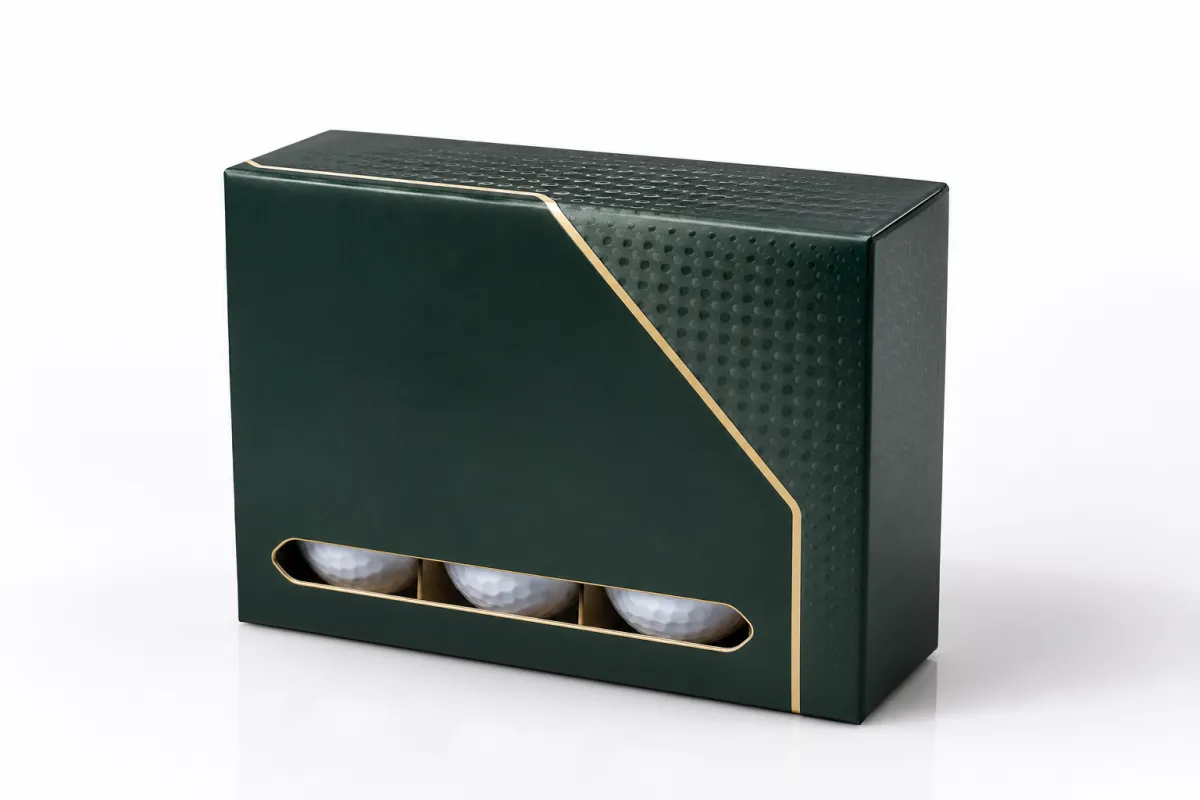
Golf packaging boxes custom are carriers, yes, but that definition is too thin. They are also a credibility test. Buyers read fit, closure confidence, print clarity, and corner strength in seconds. Attention is limited. On digital listings, that first impression can shape dwell time; in person, it influences whether someone thinks, "This is premium" or "Why am I paying this price?"
That matters at trade stands, in sponsor kits, on store shelves, and inside delivery cartons. The package has to protect the product, communicate the story, and make storage and handling easier. Weakness usually shows up in three recurring places:
- Damage from transit handling or stacking load.
- Awkward unpacking that frustrates buyers and staff.
- Dimension drift that creates inefficient fulfillment and inaccurate replenishment.
There is a pattern across these failures that comes up again and again: they are planning problems dressed up as manufacturing problems. In other words, most quality issues are decided before press time.
Main box types in this category
The common structural families are:
- Rigid setup boxes for premium retail, launch drops, and gift-led programs.
- Folding cartons made from C1S or C2S board for lower-cost shelf programs.
- Mailer plus tray formats for parcel shipping and smaller-volume fulfillment.
- Magnetic sleeves and sleeve-and-tray systems for controlled reveal and a cleaner unboxing path.
- Insert-driven presentation boxes for multi-item sets where orientation and cushioning matter.
Golf packaging boxes custom programs often mix these categories instead of treating each format as fixed. A rigid sleeve may make sense for one premium accessory kit, while a folding carton can be the smarter route for lightweight headcovers, tees, or travel items. The strongest solution matches the function, not the showroom mood. If you need a wider set of formats to compare, the broader Custom Packaging Products page is a practical starting point.
A counterintuitive but common finding: the format that looks less expensive can improve conversion if it removes friction. If the box can be opened quickly, scanned reliably, and repacked for return shipments, shoppers and staff reward that reliability. The result is kind of boring on paper and very effective in the field.
Where this packaging actually matters
Most buyers use golf packaging boxes custom in one or more of these channels:
- Retail packaging for stores and online product pages.
- Tournament giveaways or hospitality kits distributed in bulk.
- Gift kits with tees, gloves, towels, and branded tools.
- Replacement bundles shipped directly to consumers.
- Corporate gifting for hospitality programs and client-facing events.
Each channel assigns a different role to the same structure. Retail turns the box into a sales surface. Shipping turns it into a shock absorber and anti-failure shell. Events turn it into a physical brand souvenir people hold onto and post about. That is the practical value of golf packaging boxes custom.
Container versus packaging: the practical difference
A plain container only holds things. Finished packaging does more work. It protects, organizes, brands, and raises perceived value. A thin sleeve can lower cost, but it can also fail under stacking and repeated handling. A luxury shell can look expensive, yet still fail if the insert lets movement continue during transport.
That tradeoff appears again and again. A simple fold-over carton for a metal headcover may be cheaper than a rigid format, but the wrong choice becomes obvious once the packaging enters a parcel stream or pallet movement. Golf packaging boxes custom should be designed from the route backward: shelf, handoff, warehouse, and only then the visual layer.
That sequence mirrors a less obvious truth in packaging design: the best-looking box can still be expensive in hidden costs if it causes rework. A slightly different structure with better logistics behavior is often cheaper over six months because it avoids returns, scan delays, and manual touches.
"A package that survives one retail cycle, one shipping cycle, and one event handoff has already earned trust. The next step is making that cycle look deliberate."
That is why this belongs in retail packaging planning, not just design review. If options are compared only by appearance, teams may choose the wrong structure. Warehouse staff, event volunteers, and direct-to-consumer pickers each stress the package in different ways.
How Golf Packaging Boxes Custom Are Designed and Built
Start with dimensions, then build the structure
Every solid build starts with measurement: length, width, height, weight, corner radius, and any protrusions such as caps, clips, logo plates, or cord loops. For clubs and rigid accessories, use the largest realistic dimension, not a tidy average. If one accessory includes a long shaft insert or a thick protective tube, that outlier should drive the structure more than the median size.
Golf packaging boxes custom design usually comes down to two numbers: interior clear space and closure clearance. A cavity 2 mm too narrow creates friction at insertion and feels cheap at opening. Too much slack and the item shifts, rubs, or bruises during transit. For small items, 2 to 4 mm of movement allowance is common; for layered kits, 5 to 8 mm may be safer depending on insert geometry.
In many pilots, teams test five samples per SKU and still discover one outlier after production starts. Increasing that to 3 to 5 calibrated samples with the real heaviest variant reduces late corrections. That approach can save a full rework cycle on tournament kits, and the extra testing time is usually minor compared with fixing a weak fit later.
Dielines, board, and insert planning
Once dimensions are final, the dieline comes next. A dieline is geometry, not decoration. It defines folds, glue flaps, score lines, and lock edges. Weak geometry weakens corners and opens seams, often in the exact places that should absorb the most load.
Board choice follows function. Typical ranges in this category include:
- 250–300gsm for lighter accessory kits.
- 350–450gsm for stronger rigidity and a more stable shelf feel.
- 650–700gsm for high-end rigid-style formats.
For golf packaging boxes custom, 350gsm is often the minimum practical threshold for rigid accessories and elongated components. Once parcel carriers enter the chain, 450gsm plus stronger scoring logic can be smarter than retrofitting extra corner protectors and labor-heavy touch-ups.
Insert options include die-cut paper, corrugated inserts, molded pulp, and structural foam. A 1.2 to 1.5 mm EPP or EVA cavity can hold premium kits neatly, but it increases tooling and assembly effort. Paperboard inserts reduce cost and speed, but only if movement testing shows the product remains stable.
Unexpected but useful comparison: teams often over-invest in high-ticket coatings and under-invest in insert geometry. A simple change in cavity contour can remove more movement than a 0.15 mm thicker stock upgrade.
How protection is engineered
Protection is not just padding. It is the management of crush, impact, and friction together.
- Crush: Wall strength needs enough compression resistance for expected stack heights. A stack target of 30 cartons high should be designed with conservative assumptions, not decorative assumptions.
- Impact: Corners and edges take the worst blows during courier handling. Interior bracing and rounded supports lower point loads.
- Friction: Sliding causes scuffs and orientation drift. A package that appears clean on a desk can fail in transit if internal movement is not controlled.
Channels for shafts, protected zones for polished surfaces, and paper-faced anti-scratch pads are practical fixes. A golf packaging boxes custom build that feels premium but scuffs contents still fails in the eyes of users and returns reviewers.
For custom printed boxes tied to golf gifting, friction control inside the cavity often protects the image more than outer finish choice. One good insert can prevent dozens of field failures.
Common structures and what they mean in practice
Design teams return to the same formats because each solves a different operational problem:
- Top-opening rigid boxes: high perceived value, slower in large hand-pack runs.
- Tuck-end cartons: fast and economical, but less luxurious unless finishes are upgraded.
- Magnetic closures: easy opening and strong brand feel, with tighter quality tolerances.
- Sleeve-and-tray: strong reveal effect, especially useful for accessory sets.
- Compartmented kits: best for multi-item builds where orientation and spacing are part of the story.
These choices sit inside a broader golf accessory packaging strategy. Structure must settle first, then print. If insert and panel geometry are still fluid when artwork is finalized, registration drift and edge misalignment become more likely.
Golf packaging boxes custom often succeed or fail at the opening moment. A magnetic closure, soft-touch finish, and clean pull tab can make a box feel premium in seconds. A plain glued flap can make the same brand feel bargain-priced even with sharp graphics.
Branding without weakening performance
Finish options include UV varnish, silk lamination, clear film, matte lamination, foil, embossing, and spot gloss. These are not only visual effects. They alter scratch resistance, moisture behavior, and handling durability.
Gloss can appear rich and still mark up quickly. Spot UV can preserve readability while keeping cost under control. Full UV can hide minor print defects if the substrate is stable. Foil creates strong visual contrast, but fold areas must be engineered so the foil does not split or peel. If the package is handled outdoors or in damp conditions, high-gloss and high-friction surfaces need extra caution.
Coatings should also preserve barcode visibility, text contrast, and scan behavior. A polished golf packaging boxes custom package with unreadable UPC data creates delays in checkout and fulfillment. That mistake is expensive because it lands where speed and error tolerance are both low.
For golf-specific branding, the best programs pair visual hierarchy with practical hierarchy. High-contrast logo placement often performs better than adding more textures, especially under scanner lighting at distribution centers.
How Much Do Golf Packaging Boxes Custom Really Cost in Real-World Runs?
What moves the base price up and down
Golf packaging boxes custom pricing usually moves along five major drivers:
- Box style: rigid, folding, or mailer-first builds.
- Board and board grade: gsm, caliper, and core structure.
- Print coverage: color count, substrate behavior, and edge printing.
- Finishes: laminates, foils, embossing, soft-touch, and spot varnish.
- Insert complexity: cavity count, geometry, material, and assembly.
Rigid formats usually cost more than folding cartons because they consume more material and require longer conversion cycles. In many programs, labor on rigid builds runs 1.5x to 2.5x higher per unit before inserts or specialty coatings are added. The premium still makes sense when the item is sold as a gift or upscale accessory, where presentation changes what buyers are willing to pay.
Insert, magnets, and finish upgrades: where costs jump
Insert design is where budgets quietly slip. A plain die-cut insert can add modestly at 1,000 units. A split-cavity insert with foam, labels, or layered materials can raise tooling and labor much more than expected. Magnet closures can add substantial cost, often between US$0.30 and US$1.20 per unit depending on grade and supply timing.
Specialty finishes are not decorative only. Soft-touch lamination may add US$0.12 to US$0.35 at 1,000 units for paperboard formats, while tighter adhesion checks increase setup cost. Foil stamping can range from US$0.20 to US$0.80 per carton at low volumes if logo detail is fine. At 5,000 pieces or more, the spread narrows, but the incremental cost still belongs in the landed-cost model for golf packaging boxes custom.
One useful comparison: teams often underestimate barcode-safe coating and overestimate foil. If scans fail, the operational penalty can exceed any finish upgrade in under 48 hours of volume spikes.
Volume effects and setup realities
Every run includes setup overhead: artwork prepress, dieline proofing, print file approval, and tooling charges. Startup can sit between US$120 and US$500 depending on structure and print method, before the first finished panel comes off the line. That is why unit cost is not linear.
At 500 pieces, setup dominates. At 5,000, those same charges spread across enough units to become less visible. The curve often looks like this:
- 500 units: setup-heavy and expensive per piece.
- 1,000 to 2,500 units: stronger balance for test runs and early demand capture.
- 5,000+ units: lower unit cost through material leverage and production efficiency.
In uncertain demand cycles, a staged run is often safer: 1,000 for pilot, then 2,000 or 4,000 after first sales readout. This reduces product packaging lock risk in golf packaging boxes custom programs.
Cost comparison by build format
| Build Type | Typical Materials | Common Finishes | Insert Type | Indicative Cost per Unit |
|---|---|---|---|---|
| Simple folding carton | 300–350gsm C1S/C2S | 1/2–1 print color pass | Die-cut paper insert | $0.40–$0.75 (500), $0.28–$0.50 (1,000), $0.22–$0.38 (5,000) |
| Rigid style box | 400–600gsm wrapped board | 4/4 or selective UV | Corrugated insert or fitted tray | $1.20–$2.30 (500), $0.95–$1.60 (1,000), $0.70–$1.10 (5,000) |
| Mailer + tray | 250–350gsm carton + corrugated sleeve | Matte varnish or full-color print | Foam or molded pulp cavities | $0.90–$1.70 (500), $0.65–$1.20 (1,000), $0.48–$0.90 (5,000) |
| Premium custom printed sleeve | 450gsm board + magnetic shell | Foil, emboss, soft-touch | Multi-cavity fitted insert | $2.30–$4.20 (500), $1.65–$2.90 (1,000), $1.10–$2.10 (5,000) |
These ranges vary by supplier, region, and finish stack, but they allow practical first comparisons. Ask for quotes split into design, material, print, and logistics instead of accepting one headline figure. If you are still comparing formats, it can help to review the broader Custom Packaging Products options alongside the golf-specific brief.
Where hidden costs hide
Freight and warehousing can outrun board cost when dimensions are oversized. A golf packaging boxes custom box that is 8 mm wider than needed can increase cubic volume enough to alter shipping cost in dense lanes. If cartons do not stack cleanly, line-haul handling takes longer and labor rises. Weak packages also trigger replacement freight and customer-service overhead.
Assembly labor is the other quiet gap. If each unit needs a manual insert step, the real cost is not just the carton. It is extra handling time and lower throughput. At $18/hour labor, 30 additional seconds adds roughly $0.15 per unit before overhead, which can erase cheap unit price assumptions.
If a quote leaves those elements out, a branded packaging program can climb after launch. Compare golf packaging boxes custom options by total landed cost, especially at high fulfillment volume.
For better material transparency, ask for source standards such as FSC-certified paper where appropriate, plus local recycling compliance. Reviewing FSC certification details early avoids substitutions that appear only in late-stage procurement.
Environmental claims need scrutiny as well. If a package is labeled eco-friendly, the printed spec should match the actual board and adhesive system. A mismatch here hurts trust and can trigger returns during campaign season.
Process and Timeline for Golf Packaging Boxes Custom
How a project moves from brief to truck
Most teams keep momentum when the sequence remains consistent:
- Specs intake: dimensions, quantity, delivery window, and channel definition.
- Structure concept: box style, opening direction, and closure type.
- Dieline and sample approval: physical prototype or fully signed digital proof.
- Art and print confirmation: production-ready files with verified registration.
- Manufacturing and finishing: print, coating, lamination, die cutting.
- Final packing and shipment prep: QC and destination bundling.
Speed improves only up to a point. Golf packaging boxes custom quality improves more when the sequence is controlled than when it is rushed. A hurried proof can produce redesign cycles that cost more than the early approval saved.
One practical comparison: one extra day spent before tooling can prevent a week of corrective action after trial production. Teams who skip that day often pay for it in expedited labor later.
Where delays happen in real life
Most delays are avoidable:
- Missing full product dimensions, especially diameter and protrusions.
- Low-resolution artwork or files not prepared for production color management.
- Insert changes after board specification is locked.
- Barcode placement clashing with foil or coated fields.
- Late revisions after first proof review.
The most common stall appears late. If measurements shift by only 20 mm, structural work and insert design stop. If artwork moves after tooling, trim and rework follow, and tolerances degrade under time pressure.
For golf packaging boxes custom runs, set review checkpoints early. A 24- to 48-hour review window on each proof keeps schedules readable and lowers the chance of rushed corrections.
Different timelines by project type
Timeline shifts with complexity:
- Simple builds: often 12–15 business days after final approved files and confirmed dimensions.
- Prototype-heavy runs with multiple insert tests and closure trials: often 18–25 business days.
- Premium packaging with multiple finishes and full QC cycles: often 22–30 business days.
These ranges reflect typical assumptions in North America and parts of Europe. Import routes can add customs and transport time, so buffers matter. Multi-region shipping adds handling checkpoints, and that clock does not shrink just because the marketing calendar is tight.
Event-driven launch planning is especially unforgiving. If a spring reset lands in week 22 and the box includes thicker board, magnets, and coatings, the approved design should be frozen at least 35 business days earlier. That usually preserves shipment reliability and avoids weekend bottlenecks.
Planning against launches and tournaments
Retail resets and tournament dates behave like hard deadlines. They set the moment cartons must clear customs, enter stock, and reach stores or event teams. Miss that gate and even a strong design can land in a delayed campaign.
For golf packaging boxes custom teams, a backward plan is still the safest route: define launch date, then move backward through proofing, conversion, and buffer time. Place QC and assembly on the calendar, not in margin notes. A realistic schedule includes one revision cushion and one disruption buffer for customs or carrier incidents.
If your team uses packaging design guidance from ISTA or similar logistics standards, damage risks decrease because stack and handling validation happens before full production rather than after it.
A practical internal check also helps: compare proof-to-manufacturing, manufacturing-to-finishing, and finishing-to-staging. If one segment repeatedly exceeds 20% of the total schedule, process logic likely needs redesign.
Common Mistakes in Golf Packaging Boxes Custom Projects
Mistake one: art-first, structure-later
The most frequent failure starts with artwork before dimensions are confirmed. This is common in kit packaging. Colors and logos are approved, then dimensions are measured properly and a mismatch appears. A 6 mm gap can become a cavity too shallow or a sleeve that splits after first loading.
In golf packaging boxes custom work, the structure should lead the artwork, not follow it. A structural prototype should be reviewed before final sign-off. If the budget is tight, use a light proof with actual goods and verify fit at least once in a real shipping simulation.
Mistake two: premium finish, poor performance
Foil and metallic accents can look excellent in a mockup, which is why teams approve them too quickly. Gloss may look rich in controlled lighting and still create difficult handling in humid conditions. A box that cracks at folds after shipping cannot be saved by print quality.
Common weak points include:
- Board too light for the transit distance and handling frequency.
- Insert depth that allows contact rub during impact.
- Closures that release under side load and spill contents.
Golf packaging boxes custom should be evaluated under movement testing, not only shelf display or render output. A handful of controlled drills can reveal structural weakness faster than repeated visual approvals: drops, corner turns, and inversion checks tell the real story.
Mistake three: style obsession without logistics discipline
Some programs spend heavily on embossing, two-tone print, or decorative windows and then forget stackability, scan access, and handling routes. The carton can look premium yet fail in storage and packing flow. A 4 mm change in depth can alter pallet density and raise freight volume. If the shipping quote used old dimensions, costs increase later.
Barcode placement matters as much as artwork. If it sits on a coated edge or across a fold, scan rates drop. One failed scan in fast fulfillment becomes a manual touchpoint. Manual interventions cost labor and reduce throughput, especially in pre-event schedules.
Mistake four: weak execution planning
Teams often underestimate packing speed. A plan may assume 1,000 units a day while the structure supports only 600. When demand jumps, teams burn overtime and margin collapses.
Skipping handling tests creates the familiar second-order problem: deliveries leave with good visuals but poor performance. Products shift, finishes rub, inserts collapse, and margin drains quietly. A controlled fit test with actual product weight and orientation is one of the most practical checks in golf packaging boxes custom programs.
Good package branding should look right and behave right. If logistics fail, both goals fail in the same shipment.
Expert Tips for Better Golf Packaging Boxes Custom Results
Design the opening sequence on purpose
The first touch carries the first promise. Decide opening flow before final visual direction. A top-open format and a front-open format create distinct behavior patterns. For premium accessory kits, top-reveal often works well because it sets an intentional order: brand signal, product first look, then key details.
The strongest golf packaging boxes custom projects often define a three-step reveal: brand statement, category statement, and value statement. Outer panels establish the line. Inner flaps communicate set identity, and the final panel gives concise feature copy. That sequencing improves readability and lowers overload risk in real handling.
A comparison from field use: retailers tend to process less visually dense packages faster. If every face contains too many messages, staff and buyers spend extra seconds on interpretation, and those extra seconds accumulate across a shipping day.
Use visual hierarchy to guide attention
Branded packaging is not just more ink. It is contrast, spacing, and order. A practical structure is three zones: one brand anchor, one product identity zone, and one actionable callout zone. A workable ratio is about 35% brand, 25% key details, and 40% visual breathing room.
Selective finishing can improve quality feel without raising cost too sharply. A narrow foil line on matte stock often reads richer than full metallic coverage. If there are multiple SKUs, keep the central brand treatment constant and vary one design element only, like edge stripe, foil shade, or icon position. This strengthens recognition while controlling reprint variance.
For custom printed boxes in golf accessory packaging lines, that consistency also helps quality control because color and profile targets repeat across runs.
Choose structure by function first
Do not start by asking, "What looks premium?" Start by asking, "Where will this carry, stack, and open?"
- One-piece rigid: strong shelf presence and fewer seams.
- Two-piece with insert: useful for kits and mixed shipping environments.
- Flat-to-assemble: useful for large campaigns and lower logistics cost.
Courier routes with unpredictable handling often favor two-piece builds with stronger inserts. Upscale store displays can favor one-piece boxes if launch goals are image-first and hand-opening dominates interaction. The right answer is use-case-driven, not mood-board-driven.
A golf packaging boxes custom build that looks expensive but crushes under load is not premium. It is a fragile version of branding.
Cost-control habits that work
Good cost control lowers variation, not quality:
- Standardize interior heights across multiple SKUs where possible.
- Limit interior print on areas that do not support merchandising.
- Use one coating family across a batch to reduce waste and color drift.
- Request a weighted functional sample before full build approval.
Many teams assume exact customization means one box for each SKU. Shared platform sizes often reduce cost by 10 to 25% while preserving brand consistency. If differences are mainly label text, accessory count, or insert detail, shared structure usually beats full SKU-by-SKU engineering.
This approach also supports stronger Custom Packaging Boxes consistency across channels and makes procurement planning less fragile.
Performance check before scaling
Before full production, test 10 to 20 final units using the heaviest realistic load. Place real clubs, tees, and accessories inside and run a practical handling simulation:
- Drop and corner tap sequence.
- Manual 1.2 m vibration and shake simulation.
- Short humidity and temperature swing exposure.
- Barcode scan at the exact fulfillment position.
If samples pass and still look right, production can proceed. If not, adjust insert geometry or wall reinforcement before mass commitment. That adjustment often saves money and protects reputation in golf packaging boxes custom programs.
Teams that source multiple options successfully tend to run one pilot comparison, then hold one stable structure each quarter. Fewer structural revisions reduce friction in both print and finishing queues.
Next Steps for Ordering Golf Packaging Boxes Custom
Audit the fundamentals first
Start with an operational checklist before design. Procurement delays frequently stem from missing facts that should have been captured at the start.
- Exact dimensions, weight, and quantity of each item.
- Whether the priority is protection, presentation, or both.
- Expected storage environment: dry room, vehicle transport, or mixed event handling.
- Target launch date and fixed dependencies such as sale windows or event milestones.
If the catalog includes gifts and replenishment in the same channel, define two requirement levels. Gift packaging may demand stronger visual expression and a cleaner reveal. Replenishment may prioritize efficiency and material stability.
Gather complete inputs before requesting quotes
Incomplete requests usually produce weaker quotes. Strong briefs include:
- Order quantity and expected ramp volume.
- Preferred board range and sustainability target.
- Insert depth and retention requirements.
- Print goals: full color or spot, one-sided or wraparound.
- Delivery date and method: factory batch or staged warehouse shipment.
Suppliers respond faster and more accurately when inputs are complete. Without them, pricing takes longer and becomes less reliable. For golf packaging boxes custom with strict timing, a full spec sheet is usually the least expensive planning artifact you can invest in.
Ask for the right proof and pilot
Do not skip structural sampling. Request a structural sample before the full run, especially when inserts and closures are involved. Confirm:
- Actual fit with product and accessory stack.
- Opening reliability after repeated cycles.
- Compression resistance for the handling route.
- Print legibility and barcode readability in real lighting and distance.
If budget permits, request two samples: one prototype and one corrected pilot. This is often cheaper than reprinting 2,000 units after one late correction. Seasonal event programs benefit most because one delay can quickly become a peak-day logistics problem.
Compare total landed cost, not only unit price
A low unit price can mislead. Freight, setup, assembly, storage, and return risk all shape the true cost. A cheaper carton can still be more expensive overall if it is heavier, slower to pack, or more failure-prone. Compare the complete value chain:
- Board and printing costs.
- Freight to warehouse.
- Assembly and pick-pack labor.
- Storage footprint per pallet.
- Scrap from rework and failed scans.
Golf packaging boxes custom should be selected the way mature product packaging teams choose anything strategic: by landed outcome, not by sticker price alone.
That mindset turns quotes into a risk model. The result is a package that performs in the actual chain while staying aligned with margin targets.
Put together a practical action path
Once evaluation is complete, decision-making becomes cleaner:
- Finalize one primary format for the core volume.
- Keep a secondary format for premium future drops.
- Lock barcode and compliance placement early.
- Run one pilot with real weight and handling checks.
Need more package format options? Start with the practical catalog first: Custom Packaging Products. If your team already has a target, a focused structural brief is the fastest path to stable cost and predictable timing.
Golf packaging boxes custom is not only a design decision. It is a systems decision with direct effects on launch confidence, fulfillment speed, and long-term brand loyalty. Measurement, structure, print, assembly, and shipment all matter because one weak link can undo the rest.
That is what teams remember after launch: not the mockup itself, but the way the package held up through retail handling, event deadlines, and repeat orders. The cleanest takeaway is simple: define the route first, then build the box to survive it.
Frequently Asked Questions
What are golf packaging boxes custom used for?
They are used for retail accessories, premium gift sets, tournament giveaways, and protected e-commerce shipping. These formats keep multiple golf items organized inside one branded structure and improve both shelf influence and unboxing impact. They also support message consistency across channels that rarely share the same handling pattern.
Which material is best for golf packaging boxes custom?
Material depends on the use case. Rigid board performs well for premium presentation and repeated handling. Corrugated board is often better where stacking and crush resistance are critical, especially in shipping. Folding carton stock can be a cost-conscious choice for lighter retail accessories and moderate handling conditions.
How much do golf packaging boxes custom usually cost?
Cost depends on style, quantity, board weight, print complexity, and insert system. Higher volume usually reduces per-unit pricing, while foils, embossing, magnetic closures, and special inserts increase it. Real comparisons should include freight and fulfillment labor, because those costs can alter the final result more than the box price itself.
How long does a custom golf box project take?
Simple programs may move in 12 to 15 business days after approvals. Projects with prototypes, insert testing, or premium finishing usually need more time, often around 18 to 30 business days. Early planning and early sample review reduce schedule pressure, especially before trade shows or campaign peaks.
Can golf packaging boxes custom include foam or molded inserts?
Yes. Foam, molded pulp, corrugated inserts, and custom cavities can all be used. Each option has a different cost and handling profile. A practical test is physical fit and impact simulation using real product weight; if the insert holds the item securely and is easy to open and reclose, the build is usually on the right track.