Buyer Fit Snapshot
| Best fit | Green Packaging with Logo projects where brand print, material claims, artwork control, MOQ, and repeat-order consistency need to be specified before quoting. |
|---|---|
| Quote inputs | Share finished size, material target, print colors, finish, packing count, annual reorder estimate, ship-to region, and any compliance wording. |
| Proofing check | Approve dieline scale, logo placement, barcode or warning zones, color tolerance, closure strength, and carton packing before bulk production. |
| Main risk | Vague material claims, crowded artwork, missing packing details, or unclear freight terms can make a low unit price expensive after revisions. |
Fast answer: Green Packaging with Logo: What It Costs, How It Performs should be specified like a repeatable production item. The safest quote records material, print method, finish, artwork proof, packing count, and reorder notes in one written spec.
Production checks before approval
Compare the actual filled-product size with the drawing, then confirm tolerance on folds, seals, hang holes, label areas, and retail display edges. Reserve space for logos, QR codes, warning copy, and material claims before decorative graphics fill the panel.
Quote comparison points
Review material grade, print process, finish, sampling route, tooling charges, carton quantity, and freight assumptions side by side. A quote is only useful when the supplier can repeat the same color, closure quality, and packing count on the next order.
A buyer picks up a box, feels the board, glances at the print, and makes a call in about three seconds. That is the whole game. Green packaging with logo has to earn trust before the product even comes out of the carton, mailer, or sleeve.
Sustainability is never one decision. That sounds tidy, which is probably why people keep saying it. Real packaging is messier. Green packaging with logo sits at the intersection of material choice, print quality, shipping protection, and brand expectations. Miss one piece and the whole thing starts looking cheap, failing in transit, or pretending to be eco-friendly while doing very little useful work.
People shopping for eco-friendly packaging, branded packaging, or custom printed boxes usually ask the same blunt questions: what does it cost, how does it print, how long will it take, and what happens after delivery? Good questions. Better than the usual leaf-on-a-box theater. That is the real job of package branding. Not decoration for its own sake. Not wishful thinking with a recycled badge.
Green Packaging with Logo: Why Your Package Talks Before You Do
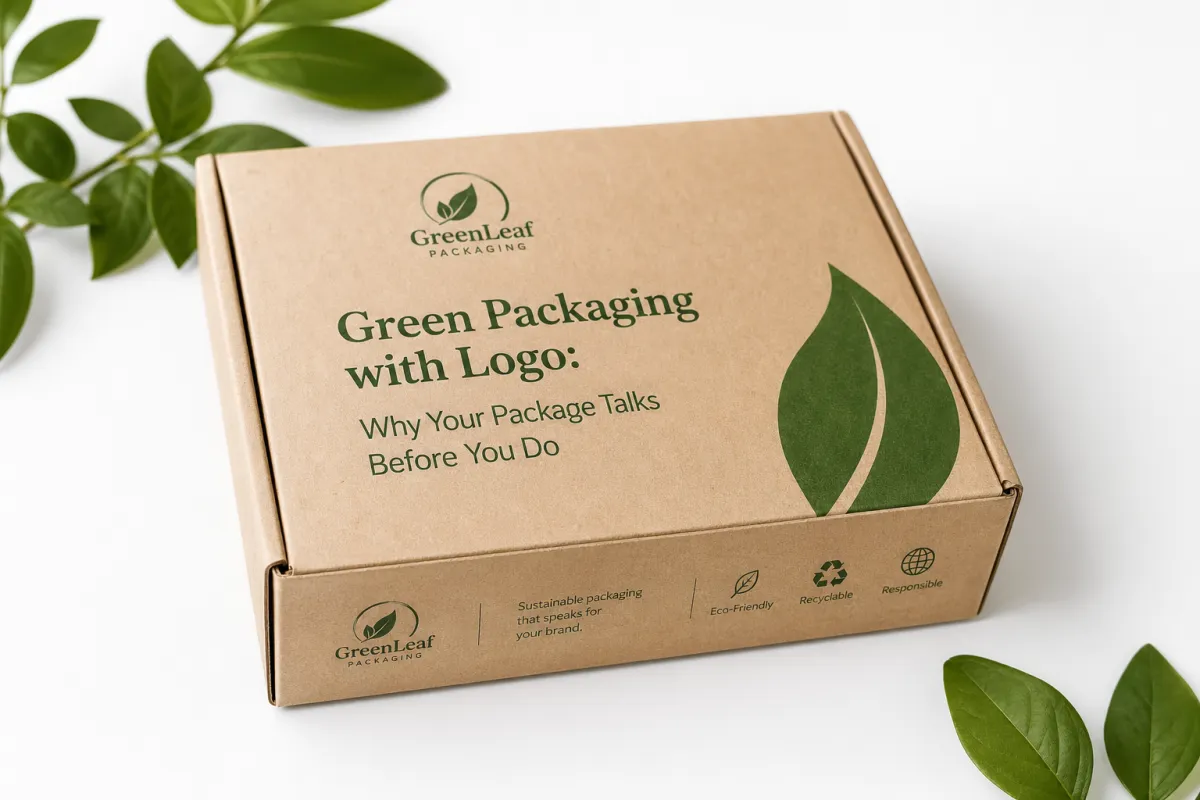
The package speaks first. Before the spec sheet. Before the thank-you card. Before customer support ever gets dragged into the conversation. With green packaging with logo, the feel of the board, the sharpness of the print, and the way the box opens shape the buyer's judgment before they read a single claim.
The phrase "green packaging" gets stretched pretty hard. A package can look green, be sort of green, or actually be green in a way that can be measured and explained. Those are not the same thing. Green packaging with logo should be judged across four layers: the visible look, the raw material source, the manufacturing inputs, and the end-of-life path. If those layers do not line up, the branding is carrying more weight than the packaging.
A logo changes the whole equation. A plain recycled mailer can fade into the background. Add a logo and the package turns into a trust marker. It signals attention. It signals intention. It can also signal cheap if the substrate is flimsy, the print bleeds, or the contrast is weak. That is not only a design issue. It is a materials issue wearing a design hat.
Buyers usually juggle three things at once: sustainability goals, brand fit, and budget. Most mistakes show up when one of those gets treated like an optional extra. Green packaging with logo works best when the packaging design starts with function, then moves into material and finish choices. Pretty helps. Surviving transit matters more.
Practical rule: if a lighter package saves a few cents but increases damage, returns, or re-ships, the environmental math gets worse, not better.
Think of green packaging with logo as Product Packaging That has to do two jobs at once: protect the product and carry the brand message. That includes warehouse stacking, courier handling, humidity, shelf exposure, and the occasional customer who opens boxes like they are settling a score.
I've sat through enough print proofs to know the same lesson keeps showing up: if the substrate is wrong, no amount of clever copy can save it. For brands comparing Custom Packaging Products, the goal is not the greenest-sounding claim. The goal is a package that performs well enough to protect the product, prints clearly enough to build recognition, and uses materials you can defend if anyone asks for proof. That is the difference between branded Packaging That Works and branded packaging that just talks.
What Makes Green Packaging with Logo Worth the Effort?
Short answer: it turns packaging into evidence. A good package proves the brand is paying attention without shouting about it. Green packaging with logo should help the product survive shipping, keep print crisp on recycled paperboard or kraft stock, and make the material story easy to understand.
The payoff is practical. Better-branded eco-friendly packaging can reduce damage, improve shelf presence, and create a cleaner unboxing experience. It can also support the kind of sustainability claims buyers now expect to be backed by FSC certification, recycled content, or a clear recycling path. That is the difference between a nice-looking box and a package system that actually earns its keep.
If the logo looks clean, the board feels right, and the disposal instructions make sense, customers notice. If the package feels flimsy or the eco story sounds vague, they notice that too. Fast.
I once watched a brand spend a small fortune on a gorgeous mailer that looked great on camera and fell apart after a rainy delivery route. The product arrived fine, but the customer experience was already sour by the time the lid opened. That is the kind of thing people think is a packaging problem. It is. But it is also a brand problem.
How Green Packaging with Logo is Manufactured: From Resin to Finish
The production chain is simple once the buzzwords get out of the way. Green packaging with logo usually starts with fiber selection or resin selection, then moves into forming, printing, drying, finishing, and quality control. Each stage changes the final feel, print accuracy, and environmental profile.
Material selection and forming
Paper-based packaging often uses recycled paperboard, FSC-verified board, or kraft stocks with different levels of post-consumer content. Flexible formats bring a different set of choices: mono-material films, bio-based plastics, or compostable films where the product and the local waste system actually support them. That last bit matters. Compostable does not automatically mean useful. A package can be technically impressive and still be useless in the real world. Packaging loves that trick.
Board thickness and fiber quality affect everything. A 14 pt recycled carton prints differently from a 24 pt rigid board. A lightweight mailer can reduce freight weight, but if it crushes under load, you just bought yourself returns with the money you thought you saved. A good green packaging with logo supplier should be able to show board caliper, compression behavior, and finish options before the quote gets too far along.
That is also where the material story gets real. Recycled content is useful, but recycled content alone does not make a package good. The board still has to fold cleanly, keep its shape, and survive the route. If the fiber quality is inconsistent, the print can look muddy, the creases can crack, and the whole thing starts to feel a little half-baked.
Printing, coating, and finish
Water-based inks and lower-VOC systems show up often in eco-friendly packaging because they reduce solvent load. They do not behave like the old heavy solvent systems, though. Drying time, color density, and registration tolerance can shift. On recycled stocks, the fiber texture can make ink look softer too. That is not a defect by itself. It just means the artwork needs to be built for the substrate instead of fighting it.
Aqueous coating is usually a sensible choice for green packaging with logo because it adds scuff resistance without turning the box into a plastic sandwich. Soft-touch lamination feels premium, but it can complicate recyclability depending on the structure and local sorting rules. Gloss lamination protects well, yet it can clash with a package that is supposed to feel easy to recycle. There is no universal answer. There is only the better fit for your product and channel.
Closures and adhesives get ignored way too often. A solid recycled carton can still fail the sustainability test if it uses a mixed-material window, a hard-to-remove foil, or an adhesive layer that breaks recyclability. Inserts, labels, tape, and barrier layers need to be reviewed as one system. One bad layer can wreck the claim. Packaging punishes shortcuts. Fairly.
For brands shipping fragile goods, compare package performance against standards such as ISTA transit tests or relevant ASTM methods. Those standards do not make a package eco-friendly on their own, but they do help confirm whether a greener material choice can still survive the route from warehouse to customer.
Green packaging with logo works best when the print system and structure are matched. A premium logo on a weak wrapper feels expensive for a minute, then it starts tearing. A modest finish on a well-built carton can feel considered and credible. Buyers notice structure first, then decoration. Usually in that order.
Key Factors Behind a Strong Green Packaging with Logo Program
If you want green packaging with logo to hold up outside a sales deck, judge it in four buckets: durability, printability, compliance, and brand storytelling. That framework keeps the conversation from drifting into vague opinions about whether something feels "nicer." Nicer is not a spec. It is a mood.
Durability is about what happens in transit and storage. A mailer may look fine on a desk and fail badly after a humid freight run. A folding carton may look elegant and still crush if the board grade is too thin. The real question is not "Does it feel sturdy?" The real question is "Will it survive the worst part of my distribution route?"
Printability is where eco projects tend to get messy. Recycled and uncoated substrates can mute color, which means a dark logo may lose sharpness or a light logo may disappear into the fiber tone. On matte stocks, high-contrast marks usually perform better than delicate gradients. With green packaging with logo, the logo should be readable at a glance from arm's length and still look clean up close. If it cannot do both, the design needs work.
Compliance is not just legal disclaimers. It also covers whether the environmental claim is actually supportable. Recycled content, FSC chain-of-custody, and carbon reporting are all useful, but vague language is how brands get into trouble. If you cannot verify a claim, do not print it. Customers are skeptical for a reason. They have seen enough greenwashing to fill a landfill.
For sourcing, the FSC system is one of the clearest references for responsibly managed fiber. That does not mean every FSC-certified package is automatically the best choice. It does mean the chain is documented. In packaging, documentation is half the battle.
Brand storytelling matters too, but it should be built on substance. A logo on compostable mailers means very little if the product is packed in mixed-material inserts that customers cannot separate. If your customer has to guess how to dispose of it, the end-of-life experience is broken. Good green packaging with logo makes the disposal path obvious, not mysterious.
- Logo size: large enough to read fast, not so large that it crowds the structure.
- Color count: fewer spot colors usually means simpler production and fewer registration problems.
- Finish selection: choose coating or lamination based on scuff risk, not habit.
- Construction: box strength should match weight, stacking, and transit distance.
Supplier capability matters more than most people want to admit. If a vendor cannot turn samples quickly, cannot explain material differences clearly, or cannot switch between runs without drama, the project slows down. Green packaging with logo is easier to execute when the supplier can handle short proof cycles, color checks, and structural tweaks without treating every change like a personal attack.
And yes, lighter is not always better. A package that saves twelve grams but doubles damage rates is a bad trade. So is a fancy eco message wrapped around a product that arrives dented. That is not sustainability. That is expensive theater.
Cost and Pricing of Green Packaging with Logo: What to Budget First
Green packaging with logo pricing makes a lot more sense once you break it into pieces instead of asking for one magical number. The quote usually includes material premium, printing complexity, finishing, tooling, proofing, artwork revisions, and freight. If a supplier only gives you a unit price without explaining what sits inside it, you are not getting a quote. You are getting a guess with a logo on top.
What drives the quote
Material choice is usually the biggest driver, but not the only one. Recycled board may cost slightly more than plain stock in some markets, while FSC-verified material can add a modest premium depending on source and volume. Water-based or specialty eco-inks can change press time and drying time, which affects labor. The more print coverage you have, the more likely the price climbs. Heavy black coverage, white ink on kraft, and multiple spot colors all add complexity.
For common commercial runs, a simple recycled folding carton with one- to two-color print might land around $0.18-$0.35 per unit at 5,000 pieces. A more finished rigid style or specialty mailer can move into the $0.70-$1.80 range depending on board grade, insert count, and finishing. Those are not rules. They are realistic starting points. The product shape, print area, and structure can move the number quickly. Green packaging with logo stays affordable when the design stays simple.
Here is a practical comparison that buyers can actually use.
| Option | Typical Use | Relative Cost | Performance Notes |
|---|---|---|---|
| Recycled paperboard folding carton | Retail packaging, light consumer goods | $0.18-$0.35/unit at 5,000 | Good print clarity, moderate strength, easy to brand |
| FSC-verified kraft mailer | E-commerce, subscription, shipping sleeves | $0.22-$0.48/unit at 5,000 | Strong eco story, solid print contrast, variable crush resistance |
| Mono-material flexible pouch | Dry food, supplements, sample packs | $0.12-$0.40/unit depending on barrier | Good shelf appeal, lighter weight, barrier spec is critical |
| Rigid paper-based gift box | Premium sets, cosmetics, small electronics | $0.80-$1.80/unit or higher | Premium feel, strong branding, more labor and setup |
Those numbers can move up or down based on order size, print coverage, and freight lane. Small runs tend to cost more per unit because setup cost has to be spread across fewer pieces. That is why a 500-piece pilot can look expensive on paper and still be the smartest way to test green packaging with logo before a full rollout.
Where hidden costs show up
Artwork revisions are one. Die-line setup is another. Proof cycles can add time and cost, especially if the logo needs color correction on a recycled substrate. Special features such as tamper evidence, anti-theft seals, magnetic closures, windows, or custom inserts increase both material and labor. Even shipping the samples costs money. The package does not care that your budget is tight.
Another hidden cost is carrying inventory too early. If the project slips and you rush the order, freight gets more expensive and flexibility disappears. A smarter move is to standardize structure and artwork where possible, then use a smaller seasonal variant for promotions. That keeps green packaging with logo from turning into a moving target every quarter.
There is also value thinking, which buyers skip because it feels less concrete than unit cost. The total landed cost should include lower damage rates, fewer returns, better shelf presence, and a stronger unboxing moment. A package that costs 8 cents more but reduces breakage by 2% may be the cheaper choice over a full sales cycle. That is not optimism. That is arithmetic with receipts.
One more thing: compare like with like. A recycled carton with no finish is not the same product as a laminated premium box with embossing. If two suppliers quote wildly different numbers, check whether the structures, ink systems, and shipping assumptions are actually identical. Otherwise, you are comparing a bicycle to a van and pretending the price gap tells you something useful.
For buyers ordering through Custom Packaging Products, the easiest way to control spend is to standardize dimensions, reduce color counts, and limit variant artwork. One strong structure, one logo system, and one or two finish options are easier to scale than a different box for every SKU. Green does not need to mean complicated.
Step-by-Step Guide and Timeline for Green Packaging with Logo
If you want green packaging with logo to move without chaos, treat it like a production project, not a design mood board. The fastest jobs are the ones where performance requirements get locked early and everyone stops improvising halfway through.
Week 1: define the job
Start with function. What does the package need to protect? How far does it ship? Does it sit on a shelf, travel in a mailer, or go through warehouse stacking? What does "green" mean for this specific project: recycled content, FSC verification, lower weight, reduced ink coverage, or better end-of-life instructions? Once those answers are clear, the logo treatment becomes easier. This is the point where you decide whether your green packaging with logo needs a stronger board, a lighter mailer, or a more durable coating.
Week 2: sample the real materials
Ask for physical samples, not just renders. Screens lie. Paper texture, fold memory, crease cracking, and ink holdout do not show up properly in a PDF. Compare at least two or three material options with the same artwork and the same structure. If you are choosing between recycled board and a mono-material alternative, test both under the same handling conditions. A package that looks good and folds badly is just a future complaint with branding.
Use a short, clean list. One recycled board grade. One FSC-verified board. One moisture-resistant option if the product needs it. Then get mockups with your logo in the intended size and color count. For green packaging with logo, the whole point is to see whether the brand still reads clearly when the substrate has texture or a more natural tone.
Week 3: proof the details
At proof stage, check the dieline, barcode placement, recycling symbols, legal text, and color tolerance. If the package needs sustainability claims, make sure the wording is supportable and that the disposal guidance is simple enough for a customer to follow without decoding a scavenger hunt. Test readability at arm's length and on a low-light desk, because that is where packaging gets judged in the real world.
This is also the time to check registration and edge alignment. A logo that is 2 mm off-center might look acceptable on a screen and sloppy on the shelf. Small error. Big visual effect. For green packaging with logo, precision signals competence. Sloppiness signals apology.
Week 4: pilot and verify
Run a pilot lot with acceptance criteria. Good ones include drop resistance, corner crush resistance, humidity response, print consistency, and a basic open-close cycle test. For e-commerce packaging, ISTA-style transit testing is a sensible reference point. For retail packaging, shelf resilience and first-touch presentation matter more. Approval should happen after testing, not before. That sounds obvious. Somehow it still gets skipped.
Keep a buffer for freight, dieline corrections, and sample revisions. Simple runs can move in about 2-3 weeks from final proof if the supplier is responsive and the structure is uncomplicated. Complex campaigns, new materials, or custom finishes often take 4-6 weeks, sometimes a bit longer if the queue is backed up. Green packaging with logo is not slow because it is green. It is slow because people change things after approval.
A clean rollout usually looks like this: finalize the performance spec, sample two or three material paths, approve one pilot, then place a larger order after the pilot proves both durability and customer appeal. That sequence keeps risk under control and lets you learn before scale makes mistakes expensive.
If you want the shortest version, here it is: define function first, sample the real material second, verify print and structure third, then scale only after the pilot proves the package can survive shipping and still look good. That is how green packaging with logo stops being a concept and starts behaving like a product.
Common Mistakes That Sink Green Packaging with Logo Projects
The first mistake is the obvious one: buying on appearance alone. A box can photograph beautifully and fail badly in transit. If corners crush, seams split, or the logo distorts when folded, the package hurts the brand instead of helping it. Green packaging with logo should be judged as a system, not a mood board with good lighting.
The second mistake is assuming a material labeled "eco" will work with any ink or finish. Not true. Some substrates absorb ink differently, some coatings mute color, and some films are terrible partners for certain adhesives. That is how fading logos, smudges, or peeling finishes show up. The sustainable option is not the one with the nicest label. It is the one that works without reprints.
The third mistake is overpromising. If the package is only recyclable in some areas, say that carefully. If a component needs separation, explain that clearly. If a compostable claim depends on industrial facilities, be honest about that. A weak claim can trigger customer complaints, retailer pushback, or return issues. Green packaging with logo has to build trust, not test it.
The fourth mistake is ignoring production minimums. Short runs can be excellent for testing, but they are usually less efficient. Buyers who discover the MOQ too late lose time and end up redesigning under pressure. Confirm sampling, proofing, and minimums before artwork is final. That avoids the classic panic move: "Can we just make it smaller?" Sure. If you enjoy chaos.
There is also the end-of-life mistake. If customers cannot tell which layer goes where, or if they need a decoder ring to figure out recycling instructions, the environmental benefit gets diluted fast. Clear icons, simple disposal language, and fewer mixed materials help. A well-made green packaging with logo package should make the responsible choice easy.
One more practical miss: choosing a weak structure for a rough shipping lane. The package may pass a desk test and fail a courier test. That means more damage, more replacement units, more labor, and more freight. In other words, more waste. Not exactly the win people had in mind.
Expert Tips and Action Steps for Green Packaging with Logo
The easiest way to keep green packaging with logo projects sane is to make decisions with a scoring sheet. Weight the things that matter most: cost, durability, print quality, and confidence in the environmental claim. Then score each supplier and material option against the same criteria. If one choice is cheaper but fails transit testing, the score should reflect reality instead of wishful thinking.
For a pilot, keep it lean. One design. Two materials. One finishing option. One sales channel. That setup tells you whether the problem is the board, the print, or the structure. If you test too many variables at once, you learn nothing except that everybody has opinions. A controlled pilot for green packaging with logo is far more useful than a vague "let's see what happens" order.
Write the execution checklist before the order goes out. Include logo file version, color tolerance, barcode placement, recycling symbol, legal copy, approved board grade, coating choice, and sign-off date. It sounds tedious because it is. It also prevents costly mistakes. Missing one file can delay an entire production slot, and a delay usually costs more than the checklist took to make.
Work in stages. Internal approval first. Pilot lot second. Scale order third. That sequence protects budget and gives you room to adjust if customer response is weaker than expected or the material behaves differently than the sample. Green packaging with logo is easier to improve when you are looking at a small, controlled batch instead of a warehouse full of regret.
For teams building branded packaging across several SKUs, a smart move is to standardize the core structure and swap only the graphic panel or insert where needed. That lowers tooling complexity and makes future replenishment faster. It also keeps your eco story cleaner, because fewer variations usually mean less waste and simpler inventory management.
Here is the shortest practical checklist I can give you:
- Lock the performance requirements before you pick the finish.
- Compare at least three supplier quotes using identical specs.
- Run a pilot lot that tests both product use cases and shipping conditions.
Do those three things and you are already ahead of most projects. Seriously. A surprising amount of packaging pain comes from skipping the boring part and jumping straight to artwork approval.
If you want to move fast without wasting money, start with Custom Packaging Products, gather comparable quotes, and choose the structure that protects the product with the fewest material layers possible. That is usually the best balance of cost, printability, and actual environmental value for green packaging with logo.
How much more does green packaging with logo usually cost than standard packaging?
Expect a modest premium at scale and a more noticeable gap on short runs. In many projects, the extra spend comes from setup, print complexity, and certification rather than raw board cost alone. If the structure is simple and standardized, green packaging with logo often lands closer to standard packaging pricing than people assume.
What green packaging with logo material should a startup pick first?
Start with recycled paperboard or a mono-material option unless the product needs a special barrier. Then test two or three prototypes with the same logo treatment. For most early-stage brands, the best first choice is the one that passes shipping tests and still looks clean after handling, not the one that sounds most impressive in a pitch deck.
How long does a green packaging with logo project normally take from brief to ship?
Simple jobs with final artwork ready can move in about 2-3 weeks. More complex runs, especially with new materials or specialty finishes, often need 4-6 weeks. Sampling and proof approval are usually the slowest steps, so build in one buffer round before final production if you want green packaging with logo to stay on schedule.
Can green packaging with logo stay durable and still look premium?
Yes, but the structure and print system have to match. A recycled matte stock can look premium when the logo contrast is strong and the board grade is right. Avoid over-finishing a weak substrate. A balanced finish usually beats a heavy glossy treatment that fights recyclability and still does not survive shipping well.
Is there a cheaper way to test green packaging with logo before committing?
Yes. Run a small pilot with one SKU, one structure, and one logo version so you can isolate what works. Use digital proofs plus a physical sample batch to check color, fit, and transit performance. That kind of test often saves more money than squeezing a tiny discount out of a full first order, especially when green packaging with logo needs to perform in two very different use cases.
Green packaging with logo is not about looking responsible for a photo shoot. It is about making a package that protects the product, prints cleanly, supports the brand, and makes a real recycling or disposal path possible. Get the structure right, keep the claims honest, and choose the material based on how the package will actually travel. Do that, and your green packaging with logo project has a much better chance of working in the warehouse, on the shelf, and in the customer's hands.
The cleanest next move is simple: pick one structure, one logo treatment, and one pilot run, then prove the package under real shipping conditions before you scale it. That is the part most teams skip, and it is usually the part that saves them from a pile of avoidable problems later.


