A Hang Tag Printing factory china low moq order makes sense when you need packaging that supports a real launch, not a speculative warehouse fill. Brands rarely need tens of thousands of tags for one new SKU, one color refresh, or one short seasonal run. They need a factory that can print cleanly, quote transparently, and keep the order small enough to protect cash flow.
That is the main appeal of working with a hang tag printing factory china low moq supplier. You can test a design, correct the copy, and avoid being stuck with boxes of outdated tags if the product details change. Hang tags are small, but they behave like any other packaging component: once setup, finishing, and packing are added, the unit cost can climb faster than first-time buyers expect.
For brands comparing local print shops, overseas suppliers, and packaging vendors, the useful question is not “Who is cheapest?” It is “Who can produce the right tag at the right quantity without adding risk?” If the line is still evolving, low MOQ gives flexibility. If sales stabilize later, reordering at a higher volume becomes a straightforward efficiency play.
Why low MOQ hang tags from China make sense for real launches
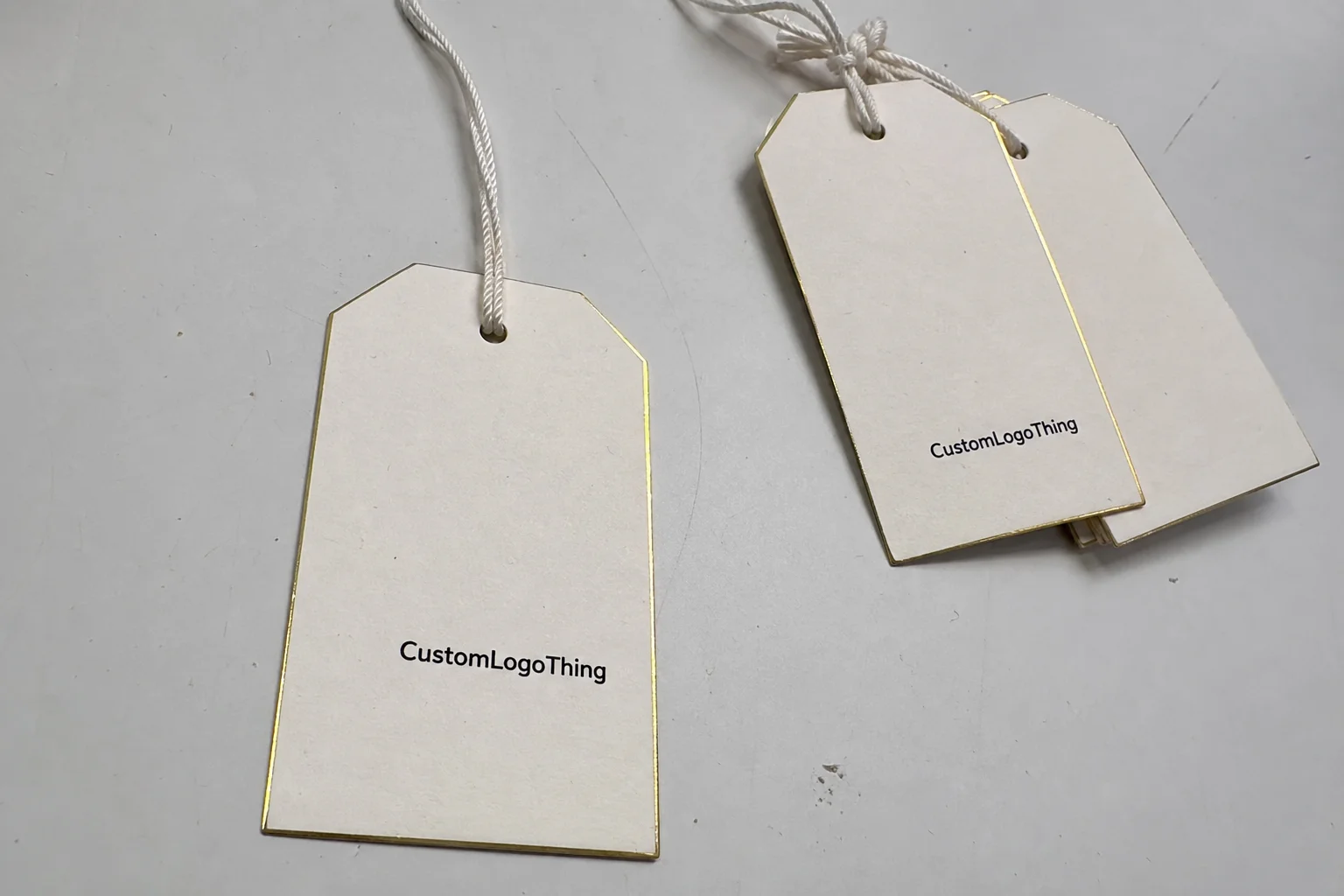
Most buyers do not start with perfect forecasts. They have a product sample, a target launch date, and a rough sales estimate. In that situation, a hang tag printing factory china low moq setup is usually the practical route because it keeps the order small while still leaving room for custom work that many quick-print shops cannot handle well.
China-based factories often have broader material options and more finishing combinations than local rush printers. That matters more than it sounds. If a factory can do offset printing, digital printing, die cutting, lamination, foil stamping, and string attachment in one production flow, the job has fewer handoffs. Fewer handoffs usually mean fewer opportunities for the barcode to shift, the hole to punch off-center, or the final pack count to drift.
The real value is not only unit price. It is inventory control. A small tag run reduces the chance of dead stock if the product name changes, a compliance line is updated, or the sizing table needs revision. Dead stock on packaging is especially frustrating because it does not feel like inventory in the normal sense; it feels like a mistake you have to keep storing.
Low MOQ is also a sane fit for capsule collections, pop-up drops, test markets, private label launches, and products that need a quick branding check before a larger rollout. If the first batch performs well, the second order can be improved with actual sales feedback instead of guesswork.
If the product is still being tested, keep the tag run small and spend the effort on clean artwork, correct sizing, and a finish that matches the product’s price point. A sloppy tag can make a good garment feel cheaper than it is.
Materials, finishes, and add-ons that change how a tag reads
A hang tag does not need a complicated structure to work. It needs the right paper, the right finish, and enough durability to survive handling. The most common stocks are coated paper, kraft paper, black card, textured art paper, and specialty board. Each one sends a different signal. Coated paper prints crisply and suits most retail brands. Kraft feels more natural. Black card can look premium, but only if the print contrast and finish are carefully handled. Otherwise it just reads as dark stock with weak visibility.
Finish choices shape how the tag is perceived. Matte lamination gives a restrained retail look. Gloss adds shine and contrast. Soft-touch lamination feels more premium, though it adds cost and can show scuffing depending on handling. Foil stamping, embossing, debossing, spot UV, and rounded corners are all useful, but not all at once. Overloading a small tag with several effects often makes it look busy rather than polished. One well-placed detail usually works better than four competing ones.
Common add-ons include drilled holes, eyelets, cotton cord, elastic loops, and variable data such as SKU, barcode, or size information. For apparel, those details are not decorative extras. They are part of the retail system. A tag that cannot carry scannable data or clear product information becomes a problem at packing, receiving, or checkout.
Practical style choices that change perception
- Size: small swing tag, medium brand tag, or oversized storytelling tag.
- Shape: rectangle, square, rounded corners, or custom die cut.
- Thickness: lighter board for volume, heavier stock for a firmer premium feel.
- Print side: single-side for lower cost, double-side for compliance or brand copy.
- String choice: cotton cord feels natural; elastic loop is quick and functional.
For price-sensitive lines, keep the tag structure simple. A kraft tag with clean black print and a neat eyelet can look more credible than a crowded premium spec that fights the garment. If the product already carries the value, the tag should support it, not compete with it.
For a broader look at packaging formats, review Custom Labels & Tags and compare how different substrates behave across retail uses. If you need to check factory capability beyond hang tags, the Manufacturing Capabilities page is the better place to evaluate print and finishing limits.
Specs that control quality: size, thickness, color, and file setup
Size changes more than appearance. It affects legibility, hole placement, packaging efficiency, and how comfortably the tag hangs beside the garment. Common apparel sizes often fall into three ranges: small tags around 50 x 90 mm for minimal branding, medium tags around 60 x 120 mm for standard retail use, and larger tags around 70 x 140 mm or more for storytelling, care details, or promotional copy. Bigger is not automatically better. It only gives you more room to misuse.
Thickness matters in a more practical way than buyers expect. Thin stock can work well for lightweight or budget-led products. Medium board, often around 300gsm to 400gsm, is a common choice for general retail because it balances stiffness and cost. Heavier stock, 500gsm and above, feels more premium and holds shape better, but it raises cost and can make scoring or folding more demanding. If the product sits in a premium category, thicker board may be worth the added expense. If the product competes on volume, it may not be.
Color is one of the easiest places to create unnecessary surprises. CMYK printing handles most designs well, but kraft and textured papers naturally shift the look of color toward warmer or more muted tones. That is not a defect; it is a substrate characteristic. Spot color is helpful when brand accuracy matters, especially if a logo must match packaging used across multiple product lines. If a PMS match is required, specify it early. A factory cannot infer brand standards from a screen image, and laptop colors are notoriously unreliable for print decisions.
File setup that avoids avoidable delays
- Dieline: provide the cut shape so the factory knows where to trim and crease.
- Bleed: 3 mm is a practical standard for most jobs.
- Safe area: keep text and logos away from the edge.
- Vector artwork: AI, PDF, or EPS formats are best for logos and shapes.
- Barcode placement: leave enough white space and size for reliable scanning.
Retail tags often need more than branding. SKU, size, origin, barcode, care icons, and price space all need to remain readable. If the layout feels crowded, use a double-sided design rather than compressing everything onto one face. That is usually cheaper than reprinting a batch because the barcode was too small or too close to a fold.
For brands thinking about sourcing and sustainability, paper selection can align with FSC-certified material options. For general paper recycling guidance, the EPA’s packaging resource at epa.gov is a practical reference point. It helps keep material claims grounded in what is actually recyclable rather than what sounds best in sales copy.
Cost, pricing, and MOQ: what actually changes the quote
Pricing for a hang tag printing factory china low moq order usually comes down to a limited set of variables: material, size, print sides, finishing, string or eyelet choice, quantity, and shipping method. The quote is not mysterious. It just becomes difficult when buyers ask for “something premium” without defining any of the components that create cost.
MOQ exists because setup cost, waste allowance, and production efficiency have to be spread somewhere. A simple paper tag may start at a few hundred pieces. More complex jobs with foil stamping, embossing, custom die cutting, or specialty cords usually need a higher minimum because tooling and setup take real time. Machines do not care how small the order feels from the buyer side.
| Option | Typical MOQ | Best for | Cost behavior |
|---|---|---|---|
| Simple coated paper tag, single-side print | 300-500 pcs | Testing a new SKU | Lowest setup burden; strongest unit cost improvement at higher volume |
| Kraft or textured board, double-side print | 500-1,000 pcs | Retail branding with basic detail | Moderate unit cost; material choice has more impact than print count |
| Foil, embossing, die-cut, custom cord | 1,000-3,000 pcs | Premium product lines | Higher unit cost; finishing and tooling drive the quote |
Small orders always carry a higher unit cost because setup is spread across fewer pieces. A plain tag can look inexpensive at 5,000 pieces, then climb sharply once foil, a custom shape, and specialty string are added. In many jobs, premium finishing can push the cost well above a basic tag, sometimes close to double, depending on tooling and how much manual handling the job requires.
The best way to control cost without damaging the design is usually boring, not clever: use standard sizes, limit the number of finishes, print on one side if possible, and choose paper the factory already stocks. A smart low-MOQ buyer is not hunting for the cheapest tag. They are trying to find the cheapest tag that still looks deliberate and fits the product.
To get a quote that means something, send the basics in one round: artwork, size, quantity, paper type, finish list, hole position, and string type. Missing details force the factory to guess, and guessing is where timelines drift and pricing becomes vague.
Production steps, proofing, and turnaround from order to shipment
The production flow is usually simple: inquiry, specification review, quote, artwork check, digital proof, sample if needed, production, inspection, packing, and shipment. Delays are usually caused by missing files, unclear specs, or a buyer changing the design after approval. The process is not complicated; it just depends on clean inputs.
Digital proofing is useful for layout, spelling, barcode position, and cut lines. It is fast and catches obvious mistakes early. Physical samples take longer, but they are worth it when paper texture, color accuracy, or special finishes matter. If the tag uses foil, embossing, soft-touch lamination, or a carefully matched brand color, a sample can prevent an expensive reprint. A screen preview cannot show you how a logo will look on kraft paper or how a matte coating changes contrast.
Turnaround depends on the build. Straightforward tags move faster once artwork is approved. A Low MOQ Order still needs setup time, but it should not drag endlessly if the specs are clear. More complex jobs take longer because foil plates, custom cutting, string attachment, and inspection add steps. That is normal. What should raise concern is a supplier that says every job takes the same time regardless of complexity.
- Simple tags: usually the quickest to produce.
- Special finishes: add setup and inspection time.
- Custom shape cutting: usually slows the schedule.
- Rush orders: possible, but typically cost more.
Shipping method affects the real landed cost. Express works for urgent small runs. Air freight is common when speed matters and the order is still relatively light. Sea freight lowers cost for larger quantities, but the schedule is slower. Compare the full landed number, not only the factory unit price. A low print quote can become the most expensive option once freight, duties, and rework are added.
For packaging that has to survive transit pressure, the ISTA standards at ista.org are a useful reference point. They are especially relevant if the tags are packed with inserts, bundled in retail kits, or shipped alongside other packaging components that can crush corners or scuff edges.
What separates a dependable hang tag supplier from a cheap quote
The cheapest quote is often cheap because it leaves something out. A dependable supplier talks about material consistency, print clarity, cutting accuracy, finishing quality, and barcode readability before production begins. That sounds basic because it is basic. Still, plenty of low-cost vendors skip the basics and hope nobody notices until the cartons arrive.
Communication is a quality signal. Fast replies help, but the more useful habit is catching problems before they become production waste. A good factory will flag unclear dielines, missing bleed, missing barcode space, or an unrealistic finish combination. If a supplier never questions anything, that is not convenience. That is risk hiding behind politeness.
Cheap becomes expensive quickly when the tags come back with off-center holes, weak string attachment, blurry text, or a color mismatch that makes the product line look inconsistent. If the finish is wrong, the whole presentation looks careless. Retail buyers notice that. Consumers notice it too, even if they do not know why the item feels less polished.
A dependable hang tag printing factory china low moq supplier should also be able to manage repeat orders and mixed SKUs without confusion. Sorting, counting, packing, and edge protection matter more than they seem to during the quote stage. If the tags arrive bundled neatly, with consistent trim and stable color, the factory is running a real production system rather than improvising batch by batch.
A real factory can explain tooling, print method, and finishing limits in plain terms. If the answer is always “yes” without any detail, expect problems later.
One practical check is asking which printing method fits the order. Offset printing is usually the best choice for consistent color on most paper tags. Digital printing is useful for shorter runs and variable data. Flexographic printing can be useful in other packaging categories, but for hang tags the more relevant discussion is usually paper stock, finish quality, and die cutting rather than the process name alone.
How to order without wasting your first batch
Clean orders begin with clean information. Before requesting quotes, prepare the tag size, quantity, paper type, finish, hole position, string type, and artwork file. That list is not glamorous. It is what keeps a print order from turning into a week of clarification emails and version confusion.
Send one reference image and one specification sheet. That combination usually gives the factory enough context to quote accurately. If the request only includes a logo and a vague instruction such as “make it premium,” the reply will be vague too. The factory cannot read your brand positioning from a single file attachment.
Ask for two pricing versions if possible: a budget build and a premium build. That makes internal approval easier and shows where the cost jumps happen. In many cases, the difference between acceptable and impressive is a single finish choice, not a completely different construction.
Request a digital proof first, then a physical sample if color accuracy or surface feel matters. For a low MOQ job, that small extra step is usually worth it. It is cheaper to correct a sample than to discover that 1,000 tags were printed in the wrong shade of black or with a barcode that scans poorly.
Finally, compare total landed cost. Not only the factory price. Not only freight. The full number, including any duties, rework risk, and the cost of ordering more than you need. That is how buyers avoid false bargains and end up with packaging that actually fits the product cycle.
If you are ordering from a hang tag printing factory china low moq supplier, start with a clear spec sheet, a realistic quantity, and a finish list that matches the product’s price point. That approach keeps the first run lean, reduces waste, and gives the tag a better chance of looking intentional on shelf instead of merely inexpensive in a quote.
What is the typical MOQ for hang tag printing factory China low MOQ orders?
Simple Paper Hang Tags can often start at a few hundred pieces. Premium finishes usually need a higher minimum. The MOQ depends on size, paper stock, printing method, and whether the order needs foil, embossing, or custom strings.
How much does custom hang tag printing cost for small orders?
Price depends on quantity, material, print sides, finishing, and packing details. Small orders usually have a higher unit cost because setup and proofing are spread across fewer pieces.
Can I get a sample before placing a low MOQ order?
Yes. Most factories can provide a digital proof first and a physical sample if needed. Physical samples are recommended when color accuracy, paper texture, or special finishes matter.
What artwork files do I need for custom hang tags?
Vector files are best for logos and dielines, usually AI, PDF, or EPS formats. Include bleed, safe area, barcode placement, and any variable information before sending files.
How long does production usually take after approval?
Straightforward hang tag orders are faster than jobs with special finishes or custom cutting. Lead time also depends on proof approval speed, quantity, and shipping method.