A Hang Tags Supplier Quote for restaurant groups should do more than list a price. It should tell you whether the tags will hold up across locations, reorders, and real-world handling from staff, guests, and distribution teams. For a multi-unit operator, the cheapest number is often the least useful one.
Restaurant groups use hang tags for bottle programs, seasonal retail, gift bundles, loyalty offers, private-label products, and branded merchandise. Those tags need to look consistent from the first carton to the last. If the finish shifts, the hole tears, or the colors drift between reorders, the campaign starts to look improvised. Guests notice faster than buyers expect.
The right quote is built around repeatability. That means a clean spec, realistic production assumptions, and enough detail to prevent surprises when the order is split across stores or shipped in phases. It also means understanding that a tag is doing a different job in a dining room than it would on a trade-show table or in a general retail setting.
Why restaurant groups need hang tags that work across multiple locations
Multi-location brands live or die by consistency. One run of tags might support 8 locations, 18, or 80. If one store receives a slightly different trim size, a different hole position, or a weaker stock, the whole program looks uneven. That is why a Hang Tags Supplier Quote for restaurant groups should start with the operational problem, not the promotional copy.
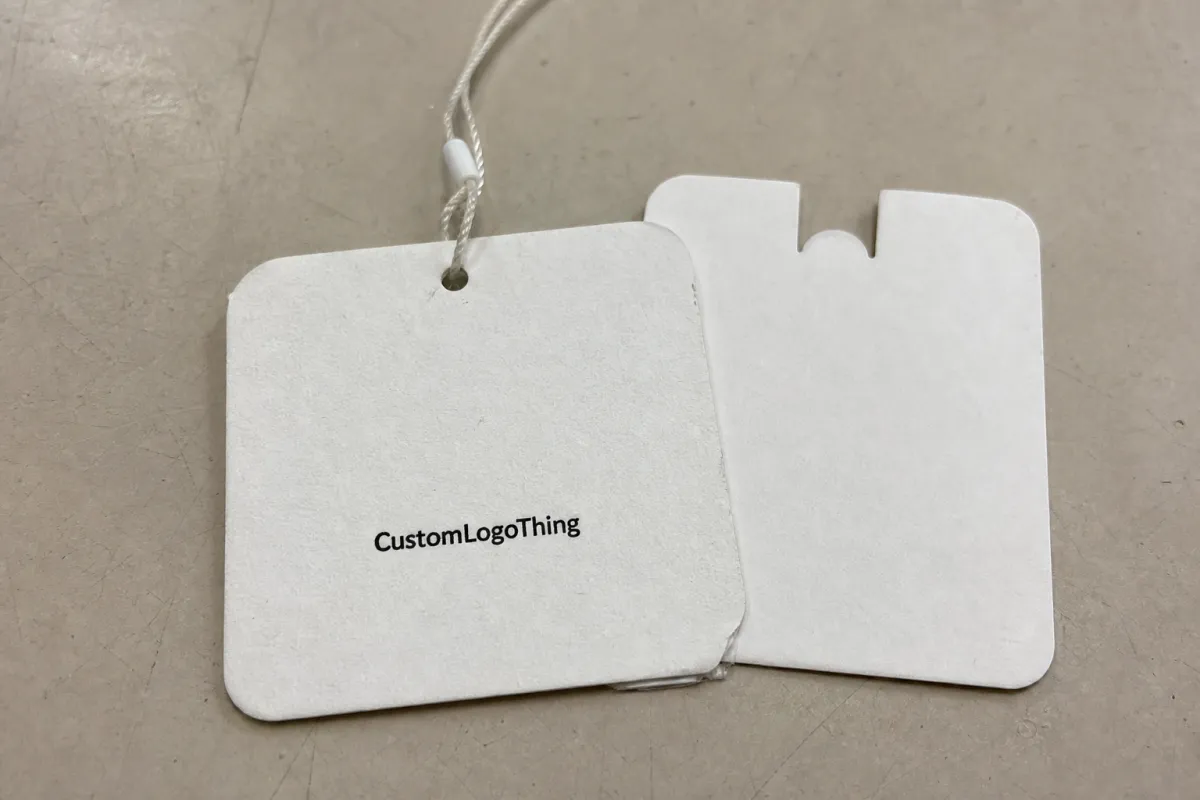
There are a few recurring failure points. Thin stock curls at the corners after a few shifts of handling. Gloss that looked polished in the proof becomes reflective under warm interior lighting. A hole punch that seemed adequate in samples can tear once tags are attached to bottles, boxes, or retail packaging. None of these issues are dramatic in isolation. Together, they make the brand look less controlled.
Groups also need a cleaner reorder path than a single-store operator. The approved file should be stored once, with the same stock, finish, size, and attachment method carried forward unless someone intentionally changes the spec. That reduces version drift, which is a polite way of saying “three slightly different tags with the same logo.”
In practice, the best quote is the one that protects repeatability. It should account for reorders, split shipments, and the kind of handling that happens in hospitality: quick hands, tight deadlines, and storage conditions that are rarely ideal.
- Upsells: bottle pairings, chef specials, dessert add-ons, merch bundles
- Promotions: seasonal menus, limited-time offers, holiday gifts
- Retail: sauces, packaged goods, coffee bags, jars, apparel
- Branding: table-side storytelling, loyalty messaging, event signage
For restaurant groups, the supplier should also understand the difference between a one-time campaign and an ongoing program. The first order is only part of the story. The second and third orders are where the real test begins.
Hang tag formats, materials, and finishes that hold up in hospitality
Hang tags are not interchangeable. A bottle tag for retail shelves, a folded promo tag for a gift box, and a card attached to a seasonal special each face different wear conditions. The format should match how the tag is used, not just how it looks in a mockup.
Common formats that make sense for restaurants
Single-sided tags suit simple pricing, product names, and short offers. Double-sided tags leave room for ingredients, QR codes, messaging, or bilingual content. Folded tags add more room without increasing the footprint much. Die-cut tags can elevate presentation, but they usually cost more because the cutting setup is less standard and the waste rate may be higher.
Attachment matters almost as much as the shape. String is flexible and familiar. Elastic loops work well for bottles and packaged goods. Slot punches or reinforced holes can look cleaner, but they need the product shape to cooperate. If the hole sits too close to the edge, or the attachment point is too narrow, tearing becomes a realistic risk rather than a hypothetical one.
Paper stocks and durability
Most restaurant buyers start with 14pt, 16pt, or 18pt cardstock. 14pt works for short-lived campaigns and lower-contact applications. 16pt gives more stiffness and tends to feel more substantial without getting heavy. 18pt or thicker stock is better for premium retail items, repeated handling, or tags that need to survive through distribution and shelf display.
Coated stock prints sharply and helps preserve color. Uncoated stock is better if staff need to write on it or stamp it. That choice sounds small until a manager tries to mark pricing or date information on a glossy surface and ends up with a smudged note. For hospitality, practical use usually matters more than visual theory.
| Format / finish | Best use | Typical buyer tradeoff |
|---|---|---|
| 14pt matte | Short promo runs, price tags, temporary offers | Lower cost, less stiffness |
| 16pt gloss | Retail add-ons, bottle tags, seasonal campaigns | Better color pop, more glare under lights |
| 18pt soft-touch | Premium gift programs, branded merchandise | Higher unit price, stronger presentation |
| Uncoated writable stock | Staff notes, handwritten specials, customization | Practical, but less vivid print |
Finish choices should support the job. Matte is readable and understated. Gloss gives brighter color, though it can reflect light in dining areas. Soft-touch feels premium, but it adds cost and can show scuffing if the tag is handled a lot. Spot UV highlights logos or headlines. Foil signals premium shelf presence. Embossing adds texture, but it makes the most sense for higher-margin programs where presentation justifies the spend.
If sustainability claims matter to the brand, ask for recycled stock or FSC-certified paper where appropriate. FSC certification is a real standard, not a decorative label. The basic reference is available at fsc.org. Buyers should not guess their way through environmental language if the packaging is going to support a public claim.
For general packaging standards and material context, the Packaging Association is a useful reference. It will not make the quote cheaper, but it can help separate marketing language from production reality.
Print specifications that affect quality, readability, and brand consistency
Size influences cost more than many buyers expect. Standard dimensions often reduce waste and simplify setup, while custom sizes can improve shelf impact or fit a specific bottle neck, box flap, or display hook. Common restaurant tag sizes tend to fall around 2 x 3.5 inches, 2.5 x 4 inches, and 3 x 5 inches, but the right size depends on the message, the attachment method, and how far away the tag needs to be read.
Artwork has to be prepared correctly or the proof cycle will slow everything down. Most print files should be set up in CMYK unless the supplier gives different instructions. Bleed should be at least 0.125 inches where required. Text should stay inside a safe zone so it does not get clipped during trim. Logos should be vector whenever possible. Raster images should be 300 dpi at final size if you want clean edges instead of fuzz.
Typography deserves more attention than it usually gets. A font that looks elegant on a screen can become cramped or blurry on a small tag. High contrast between background and text improves legibility, especially for prices, offer dates, and QR codes. If the tags are going into dining rooms with warm lighting, read the proof under similar conditions before approving it. Color accuracy is useful, but readability pays the bills.
Variable data printing can be useful for chain-wide promotions that need different location names, region codes, or promo identifiers. It also cuts down on manual edits, which is where a lot of avoidable mistakes happen. One wrong store name in a 30-location rollout can turn a neat campaign into a correction job that nobody planned for.
“The approved master file should be boring. That is a compliment. Boring specs are what keep multi-location orders consistent.”
Proofing standards should stay strict. Every location should receive the same approved version unless a specific variation is required. Watch for accidental text reflow, the wrong color profile, or a silent finish change. Digital proofs are the minimum. For higher-volume campaigns or premium retail programs, a physical sample is often worth the extra time because finish and paper feel are difficult to judge from a screen.
If the tag includes a QR code, test it on the actual stock. Gloss, scaling, and print contrast can affect scan performance. A code that scans perfectly in a PDF preview may fail in a restaurant dining area with reflective surfaces and dimmer lighting.
Cost, pricing, MOQ, and quote factors for multi-location orders
A Hang Tags Supplier Quote for restaurant groups should never be judged only by the unit rate. Total landed cost matters more, especially when the order is split across multiple sites or has to arrive on a fixed date. Setup fees, proofing, packaging, and freight can all change the picture. A low quote with weak stock and a limited finish option may simply be a future reprint in disguise.
Pricing usually improves as quantities rise. A 1,000-piece order tends to carry a higher per-unit rate because setup costs are spread across fewer pieces. A 5,000-piece order usually lowers the cost per tag, assuming the size, stock, and finish stay stable. Larger runs can offer better value, but only if the specification stays consistent. Change the shape or finish and the economics change with it.
General pricing ranges for restaurant buyers often look something like this:
| Order type | Typical MOQ | Common unit range | Notes |
|---|---|---|---|
| Simple digital run, 1-color or 4-color | 250-500 pcs | $0.22-$0.60 each | Good for testing or short promos |
| Standard restaurant chain order | 1,000-5,000 pcs | $0.10-$0.28 each | Better pricing with standard size and finish |
| Premium custom shape or specialty finish | 2,500+ pcs | $0.18-$0.45 each | Foil, emboss, spot UV, or unusual die-cuts raise cost |
What changes the quote?
- Stock choice: 14pt vs. 18pt, coated vs. uncoated, recycled stock
- Print colors: one-side black, full color, white ink, metallics
- Finish: matte, gloss, soft-touch, spot UV, foil
- Shape: standard rectangle or custom die-cut
- Attachment: string, elastic loop, slot punch, reinforced hole
- Speed: standard production vs. rush
- Shipping: one destination or split to multiple stores
Minimum order quantities depend on the print method and finishing requirements. Digital runs can stay relatively low, which is useful for testing a new retail item or a limited seasonal campaign. Specialty finishes and custom dies usually require higher quantities because the setup cost needs to be spread out. For restaurant groups, it helps to ask for two quote levels: one for a pilot run and one for the full rollout price. That gives procurement a real comparison instead of a theoretical one.
Setup fees may apply, especially if the project needs custom die-cutting, specialty coating, or a nonstandard attachment point. Some methods also carry plate fees. Repeat orders are usually easier because the approved file already exists, which reduces prepress work and the chance of error. Keeping the master spec clean matters more than many teams realize.
Production steps, proof approval, and turnaround for restaurant rollouts
A reliable order usually moves through the same sequence: quote request, spec review, artwork check, proof approval, production, quality control, and shipping. Nothing glamorous, but each stage protects the next one. If any step gets compressed too hard, the schedule tends to absorb the pain later.
Standard turnaround for simple hang tag jobs is often around 7-12 business days after proof approval. Custom shapes, specialty finishes, and split-ship programs often extend that to 12-18 business days, sometimes longer if the artwork needs revisions. Rush options exist, but they cost more and leave less room for error. That tradeoff is reasonable for launch dates, less so for projects that are still being debated internally.
Approval speed matters more than most teams expect. If the brand is rolling out to multiple restaurants, production cannot wait for the last round of punctuation changes. Before the job starts, confirm the exact quantity, size, stock, finish, and delivery schedule. Those are the decisions that affect cost and timing.
Fulfillment should be discussed early. Some groups want bulk cartons sent to one warehouse. Others need store-specific cartons with exact counts and clear labeling. Direct-to-store shipping can reduce internal handling, but only if the supplier can manage the address list accurately and pack each shipment in a way that prevents confusion at receiving.
“The slowest part of a restaurant rollout is often the approval cycle, not the printing press.”
Before production begins, verify these items:
- Final size and shape
- Exact quantity by location
- Stock and finish
- Attachment method
- Artwork version and file format
- Shipping addresses and delivery windows
If the order has a hard launch date, say so early. Suppliers can plan around a fixed window, but they cannot recover lost time after the pallets are already moving.
What a reliable restaurant packaging supplier should prove before you order
A reliable supplier does not need loud promises. It needs clear specs, transparent pricing, sample access, and straightforward communication. For a hang tags supplier quote for restaurant groups, the supplier should be able to explain the price drivers and show how the quote changes when quantity, finish, or material changes.
Ask for samples before approving a large run. Paper weight, coating feel, and color output are difficult to judge from photos. If the supplier has handled similar restaurant or retail tags, ask for sample images or physical references that show the actual cut quality and finish. Stock artwork tells you very little. Real output tells you whether the supplier can hold a standard.
Multi-location support matters. The supplier should be able to keep artwork consistent, handle reorders quickly, and split shipments when stores need cartons individually. A brand with 20 locations does not need 20 slightly different versions of the same tag. It needs one controlled master file and a production process that can repeat it accurately.
Quality checks should cover color consistency, trimming, hole punching, and finish durability. Soft-touch stock should still resist scuffing after handling. Gloss should not distort fine type. Hole punches should not weaken the tag edge. If a tag is going to fail, the weak point is usually obvious once you know where to look.
Reliability is about fewer surprises. If a supplier cannot identify the stock, finish, MOQ, and Lead Time without hedging, that is a warning sign. You want answers that can survive procurement review, not vague assurances that sound good until the first reorder.
For internal planning, it may also help to compare the tag program with Custom Labels & Tags. In many restaurant setups, labels and hang tags work together, so material and finish alignment can reduce inconsistencies.
If you need help confirming artwork requirements or shipping details with a team member, Contact Us early rather than after the proof stage. Rework is usually more expensive than a short clarification call.
Next steps to request a fast, accurate quote for your tag order
Useful quotes start with useful information. “Need tags, please advise” guarantees a longer email thread. A better request includes size, quantity, stock preference, finish, artwork file, shipping schedule, and delivery locations. If the order is for multiple restaurants, include the quantity split by location and note whether you want centralized delivery or direct-to-store shipping.
Ask for two quote versions if you are comparing options: one optimized for cost and one with stronger presentation value. That gives operations a practical option and gives marketing a better sense of what a higher finish actually costs. Sometimes the difference is just a few cents per unit. Sometimes it is enough to change the perceived value of the entire program.
Request a proof before final approval. Ask whether the proof will be digital or physical. For a new campaign, a physical sample is often worth the time. For repeat orders with no spec changes, a digital proof may be enough. Skipping proofing entirely is usually a good way to spend more time fixing avoidable problems under deadline.
For restaurant groups, order details should be organized by location, region, or rollout phase. That keeps fulfillment cleaner and reduces confusion in the warehouse. One master spec. One approved artwork file. One shipping plan. The process is not complicated, but it has to stay disciplined.
If you need a hang tags supplier quote for restaurant groups that reflects the actual job rather than a rough guess, send complete specs upfront. Accurate pricing starts with accurate information, and a well-built quote is usually the result of clear inputs rather than lucky assumptions.
What details do I need for a hang tag supplier quote for restaurant groups?
Provide size, quantity, stock, finish, artwork file, and shipping address. If the order is going to multiple locations, list each destination and quantity split. Mention any rush timing or special attachment requirements upfront so the quote reflects the real job.
What is the usual MOQ for restaurant hang tags?
MOQ depends on print method, size, and finish. Standard digital runs can be relatively low, while custom shapes and specialty finishes usually need higher quantities. Ask for two tiers: a test-run MOQ and the best-price MOQ for a full rollout.
How much do custom hang tags cost for a restaurant chain?
Price changes with material, print coverage, finish, shape, and total quantity. Larger runs usually reduce the unit cost. Split shipments and specialty finishes can add to the final quote, especially when the job includes custom cutting or a premium coating.
What is the typical turnaround time for custom hang tags?
Standard jobs are usually faster than heavily finished or custom-cut runs. Most timing depends on proof approval as much as production capacity. Rush orders are possible, but they generally cost more and reduce the margin for correction.
Can I reorder the same hang tags for multiple restaurant locations?
Yes, if the artwork and specs stay consistent. Keep one approved master file to avoid version drift. Ask for location-split shipping if you want direct fulfillment to each store, and confirm that the supplier can repeat the same spec without changes.