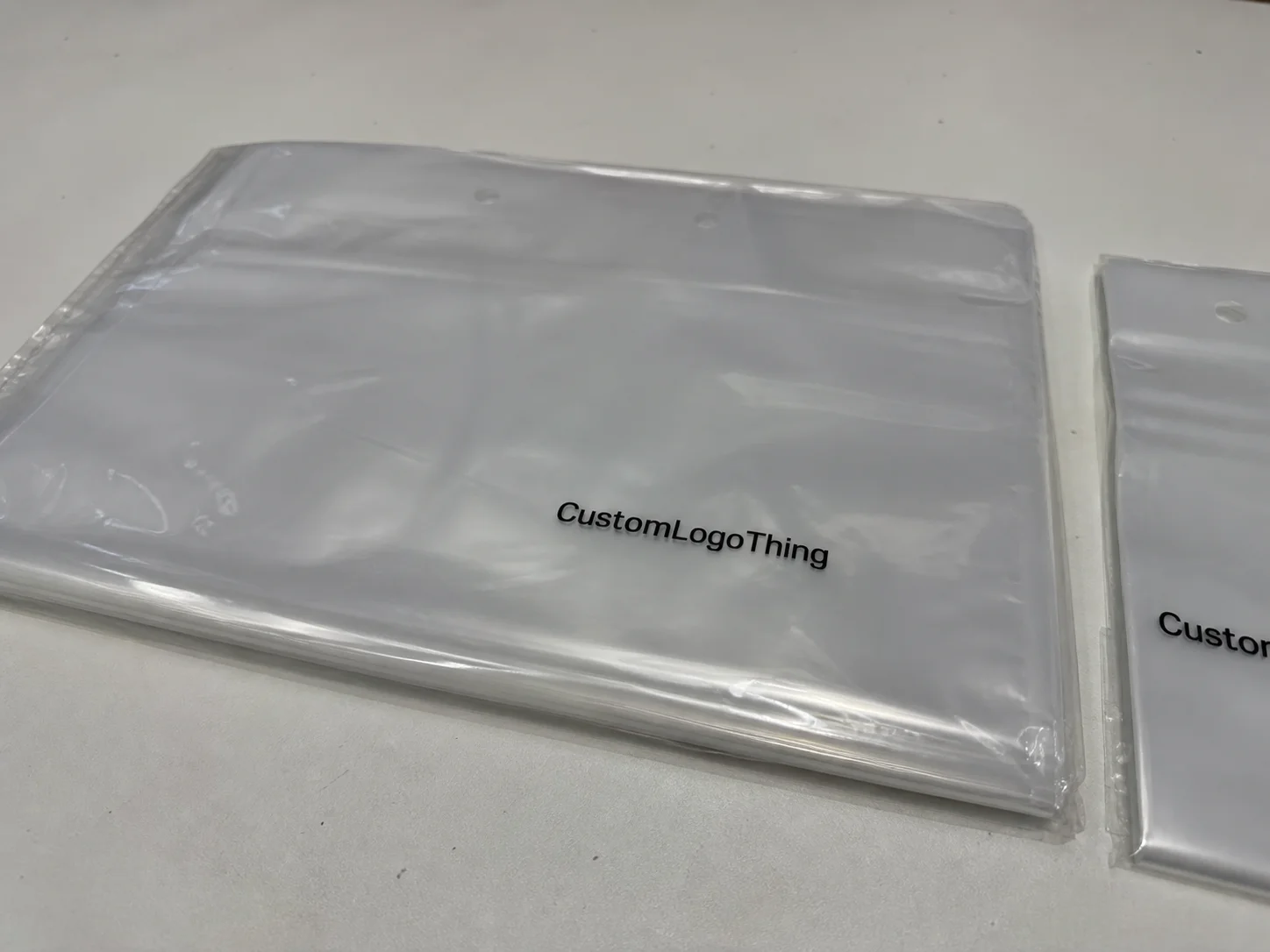
Buyer Fit Snapshot
| Best fit | heat sealable poly mailers for packaging buyers comparing material specs, print proof, MOQ, unit cost, freight, and repeat-order risk where brand print, material, artwork control, and repeat-order consistency matter. |
|---|---|
| Quote inputs | Share finished size, material target, print colors, finish, packing count, annual reorder estimate, and delivery region. |
| Proofing check | Approve dieline scale, logo placement, barcode or warning zones, color tolerance, and any recyclable or compostable wording before bulk production. |
| Main risk | Vague material claims, crowded artwork, or missing packing details can create delays even when the unit price looks attractive. |
Fast answer: Heat Sealable Poly Mailers: Film, Closure, Print, and Fulfillment should be specified like a repeatable production item. The safest quote includes material, print method, finish, artwork proof, carton packing, and reorder notes in one written spec.
What to confirm before approving the packaging proof
Check the product dimensions against the actual filled item, not only the sales mockup. Ask for tolerance on folds, seals, hang holes, label areas, and retail display edges. If the package carries a logo, QR code, warning copy, or legal claim, reserve that space before decorative graphics fill the panel.
How to compare quotes without losing quality
Compare board or film grade, print process, finish, sampling route, tooling charges, carton quantity, and freight assumptions side by side. A lower quote is only useful if the supplier can repeat the same color, closure quality, and packing count on the next order.
The Packaging Mistake Costing Brands Thousands Every Year
I walked into a fulfillment center in Commerce, California back in 2019 and found 2,400 poly mailers piled on a shipping dock. Every single one had failed seals. The brand was losing roughly $14,000 per month in product claims and re-shipments. The operations manager showed me his heat sealer—a decent impulse sealer from a major manufacturer—and the temperature was set wrong. Not dramatically wrong, just enough to create what he called "kissing seals," where the polyethylene looked fused but had no actual bonding strength.
That scenario plays out across the country every single week. I've visited over 40 fulfillment operations in my career, and the single biggest issue I see with Heat Sealable Poly Mailers isn't the mailer itself—it's the sealing process. Brands spend months perfecting their custom printing, debating thickness gauges, and negotiating pricing tiers. Then they hand the operation off to warehouse staff with a generic "set the heat sealer to medium" and wonder why packages arrive with the bag flap hanging open like a fish mouth.
Getting the heat sealing process right isn't complicated, but it requires understanding the material science, the equipment settings, and the quality checkpoints that most suppliers don't bother explaining. This guide to heat sealable poly mailers will walk you through everything You Need to Know to eliminate seal failures, reduce packaging costs, and deliver products that reach your customers intact.
What Are Heat Sealable Poly Mailers?
Heat sealable poly mailers are flexible shipping bags manufactured from polyethylene film with a specialized closure strip coated in ethylene-vinyl acetate (EVA) or similar heat-activated adhesive. Unlike their adhesive-strip cousins, which use pressure-sensitive tape that sticks at room temperature, heat sealable mailers require application of heat and pressure to permanently fuse the closure. The result is a tamper-evident seal that's significantly stronger than adhesive alternatives.
The distinction matters more than most people realize. I've had clients insist they wanted "the cheap self-sealing option" to save money on equipment, then call me three months later frustrated because their return rate on damaged shipments had spiked. When I asked what they were shipping, they said fragile cosmetics in lightweight containers. That's precisely the scenario where heat sealable poly mailers earn their keep. The activated seal holds even when the bag gets jostled, dropped, or compressed during transit.
Poly mailers have become the workhorse of e-commerce fulfillment. If you've ordered anything from an online retailer in the past five years, you've almost certainly received something in a poly mailer. The applications span industries: clothing brands, subscription box services, health and beauty products, small electronics, art supplies, and food items that don't require full moisture barrier. The flexibility comes from polyethylene's properties—lightweight, water-resistant, relatively inexpensive, and formable into a range of sizes and thicknesses.
I've worked with mailers ranging from 6" x 9" for small jewelry shipments up to 24" x 36" for home goods. The standard construction remains consistent regardless of size: an outer layer of polyethylene film (usually linear low-density polyethylene or LLDPE), a metalized barrier layer on some premium options, and the heat seal strip along the opening edge. The seal strip is typically 1.5" to 2" wide and positioned to create a clean, consistent closure when heat and pressure are applied.
How Heat Sealing Works: The Science Behind the Seal
The heat sealing mechanism relies on controlled thermal energy to activate the EVA coating embedded in the mailer's closure strip. When you apply heat above the coating's activation temperature—typically between 250°F and 350°F depending on the specific formulation—while simultaneously applying pressure, the EVA becomes viscous and bonds with the opposing surface of the polyethylene film. As the material cools under pressure, the bond solidifies into a permanent fusion.
Why does temperature matter so much? I like to explain it with a cooking analogy. Think of sealing polyethylene like searing a steak. Too cold, and you don't get the Maillard reaction—the surface just sits there without bonding. Too hot, and you burn the outside while leaving the inside raw. With poly mailers, temperatures below 250°F create incomplete fusion where only the surface melts. Temperatures above 375°F begin degrading the polyethylene, causing holes, char marks, or weakened film structure around the seal.
Pressure is equally critical. A heat sealer that applies inconsistent pressure across the seal bar will create weak spots at the edges and center. I've seen factories try to solve this by running packages through the sealer twice, which creates its own problems—overheating and material distortion. The better solution is a properly maintained sealer with even pressure distribution. Most quality impulse sealers operate at 40-60 PSI with a dwell time of 1-3 seconds for standard 2-mil polyethylene.
Comparing heat seal to adhesive closure systems reveals distinct trade-offs. Adhesive strips offer speed and simplicity—no equipment required beyond the mailer itself—but they degrade in humidity, lose tack in cold temperatures, and provide lower pull strength. Heat seal requires equipment investment (sealers range from $150 for basic impulse units to $2,500 for automated shuttle systems) but delivers superior tamper evidence, consistent performance across environmental conditions, and higher bond strength. For brands shipping high-value items or operating in varied climates, heat seal wins every time.
Choosing the Right Heat Sealable Poly Mailer for Your Product
Thickness gauge selection determines how much protection your mailer provides and directly impacts cost. The gauge system uses mils (one-thousandth of an inch), and common options include 2.0 mil, 2.5 mil, and 4.0 mil. In my experience, most e-commerce applications land in the 2.0-2.5 mil range, which provides adequate protection for clothing, soft goods, and non-fragile items while keeping material costs reasonable. I quote these thickness options to clients shipping hard goods like small electronics or cosmetics with glass components, and I always recommend stepping up to 4.0 mil for items with any significant weight or sharp edges.
Size selection requires measuring your products at their largest dimensions and adding room for void fill if needed. A common mistake I see is choosing a mailer that fits the product when it's flat, then discovering the bag won't close when the item adds bulk. My rule of thumb: measure your tallest, widest, and thickest product dimensions, then add 1-2 inches to each dimension for clearance. For clothing bundles that compress, you can get tighter. For rigid products with any height, build in the extra space.
"We switched from 2.0 mil to 2.5 mil mailers after a month of reports about corner tears on our ceramic mug shipments. The price increase was 11% per unit, but our damage claim costs dropped by 67%. Simple math that nobody had done before I got involved." — Operations Director, Subscription Box Company (Pacific Northwest)
Specialty features expand the standard mailer into application-specific solutions. Matte finish mailers reduce the glossy appearance and provide better surface for handwritten labels or stamps. Recyclable options using mono-material construction (all polyethylene, no mixed laminates) have gained significant market share since major retailers announced sustainability commitments. UV protection additive blocks sunlight degradation for items stored or shipped in high-exposure conditions. Some manufacturers offer anti-static treatments for electronics, antimicrobial coatings for healthcare products, and custom color matches for branding consistency.
When I'm consulting with new clients on mailer selection, I walk through a decision matrix: product weight, product fragility, shipping environment (temperature range, humidity), branding requirements, and budget constraints. Those five factors narrow the options pretty quick. The wrong combination creates problems downstream—torn bags, water damage, customer complaints, or cost structures that undercut margins on low-priced items.
Heat Sealable Poly Mailer Costs and Pricing Factors
Understanding poly mailer pricing requires breaking down multiple cost components. For stock (unprinted) mailers in standard sizes, quantity tier pricing follows predictable patterns. At 1,000 units, expect to pay $0.18-$0.28 per mailer depending on size and thickness. Bump that to 10,000 units, and pricing drops to $0.12-$0.18 per unit. At 50,000 units, you're looking at $0.08-$0.12 per mailer for most standard constructions. Those figures assume standard colors (black, white, gray) and stock sizes.
Material composition shifts the numbers noticeably. Virgin polyethylene resin commands a premium—roughly 15-25% higher than equivalent recycled content mailers. However, recycled content mailers have seen price volatility tied to resin markets. When oil prices spike, virgin and recycled prices converge. The sustainability angle appeals to end customers but requires calculation: does the marketing value justify the per-unit cost increase for your brand positioning?
| Quantity Tier | 2.0 mil Stock (per unit) | 2.5 mil Stock (per unit) | 4.0 mil Stock (per unit) |
|---|---|---|---|
| 1,000 - 2,999 | $0.22 - $0.28 | $0.26 - $0.32 | $0.38 - $0.48 |
| 3,000 - 9,999 | $0.16 - $0.22 | $0.19 - $0.26 | $0.28 - $0.38 |
| 10,000 - 24,999 | $0.12 - $0.18 | $0.14 - $0.22 | $0.22 - $0.32 |
| 25,000 - 49,999 | $0.09 - $0.14 | $0.11 - $0.17 | $0.18 - $0.26 |
| 50,000+ | $0.07 - $0.11 | $0.08 - $0.14 | $0.14 - $0.22 |
Custom printing transforms pricing dynamics significantly. A single-color print adds $0.04-$0.08 per unit at standard quantities, with setup fees typically running $500-$1,500 depending on printing method (flexographic vs. rotogravure). Full-color process printing (photographs, complex graphics) requires rotogravure with setups starting at $2,500 and running to $8,000 for intricate designs. The trade-off: at 25,000+ units, Custom Printed Mailers often cost only 20-30% more than stock colors but deliver substantial brand impact and marketing value.
Hidden costs catch many buyers off guard. Dimensional weight pricing from carriers means a bulky mailer costs more to ship than its actual weight indicates. If you're using 14" x 18" mailers that weigh 0.5 ounces each, shipping 10,000 units monthly adds dimensional weight charges that can exceed the mailer purchase price. Also consider: most suppliers quote FOB (freight on board) origin, meaning you pay shipping. At 50,000 units, that's substantial weight—factor in $0.03-$0.06 per unit for ground freight to most US destinations.
The Production and Order Process: From Design to Delivery
Lead times vary dramatically between stock and custom printed options. Stock mailers in standard sizes typically ship within 5-7 business days from order confirmation. I'm seeing longer lead times in the current market due to resin supply constraints and manufacturing capacity constraints, so I always recommend buffering at least three extra days for stock items. Custom printed orders require longer timelines: 3-4 weeks for simple single-color designs, 5-7 weeks for multi-color process printing including artwork refinement, proof approval cycles, and print run scheduling.
Artwork requirements for custom mailers demand attention to detail. Most manufacturers require vector artwork in Adobe Illustrator (.ai) or .eps format with fonts converted to outlines. Line thickness for text must meet minimums (typically 0.25 point for positive text, 0.5 point for knockout/negative text). Color matching uses Pantone Solid Coated references—the printer needs a specific target to achieve, not just "make it navy blue." CMYK process colors can vary significantly between proof and production runs due to substrate interaction with the polyethylene film.
Quality control at manufacturing facilities involves several checkpoints. Raw material inspection verifies film thickness uniformity and absence of defects. Print registration checks ensure colors align correctly across the printed area. Seal strip inspection confirms proper coating weight and even distribution. I recommend requesting pre-production samples before any run over 10,000 units—a small investment ($50-$150 typically) that catches issues before you're committed to the full quantity.
Shipping options and delivery timelines depend on weight, destination, and urgency. For a client in Chicago shipping 20,000 mailers, ground freight arrives in 3-5 days at standard rates. Express options (2-day air) cost roughly 3x ground but may make sense for urgent restocks. International production (printing in China, for example) requires 4-6 weeks of ocean freight plus customs clearance—factor that into your inventory planning if you're going overseas for pricing advantages.
Heat Sealing Best Practices and Common Mistakes to Avoid
Temperature and dwell time settings vary by mailer construction, but I can offer general guidelines based on thousands of machines I've calibrated. For standard 2.0-2.5 mil polyethylene with EVA heat seal coating, start at 300°F with a 2-second dwell time. Evaluate the seal: if it separates cleanly without tearing the film, the temperature is too low. If you see burn marks, melting, or film distortion, it's too high. The ideal seal shows a slight glass-like sheen on the closure strip and separates by tearing the film itself (cohesive failure) rather than delaminating at the seal interface.
Common sealing failures break into several categories. Cold seals—where the flap looks fused but separates easily—result from insufficient temperature, pressure, or dwell time. Wrinkled seals indicate moisture in the material (common with humidity exposure) or uneven pressure distribution from a worn seal bar. Incomplete seals where one side fuses but the other doesn't typically point to pressure alignment issues or contaminated seal strips. Tackiness that never fully cures suggests incompatible coating formulations or degraded material from improper storage.
Storage requirements protect your inventory investment. Polyethylene mailers should remain in original packaging until use, stored in a climate-controlled environment (50-90°F, below 70% relative humidity). UV exposure degrades the material and can affect seal performance. I advise clients to implement FIFO (first in, first out) inventory rotation, especially for orders stored longer than 3 months. Heat seal strips can lose some activation efficiency if stored beyond recommended shelf life (typically 12-18 months from manufacture date).
Equipment maintenance prevents most sealing failures. Clean the seal bars weekly with isopropyl alcohol to remove polyethylene residue. Inspect replaceable components (bars, felts, springs) monthly for wear. Calibrate temperature controllers against a calibrated thermometer quarterly—thermal sensors drift over time. A $50 calibration might save thousands in damaged goods. Simple stuff, but you'd be amazed how many operations skip these steps until something goes wrong.
Your Next Steps: Getting Started with Heat Sealable Poly Mailers
Ready to implement what you've learned? Start with a simple calculation: measure your largest product in all three dimensions, add 1.5 inches to height and width, add 2 inches to depth, and use those numbers to identify the smallest standard mailer size that accommodates your item. Many manufacturers offer sizing guides that translate measurements to standard product dimensions. At Custom Logo Things, we provide free sample kits with multiple sizes so you can physically test the fit before committing to a production run.
Request samples from three manufacturers minimum before deciding. I've been in this industry long enough to tell you: quality varies significantly between suppliers. One supplier's 2.5 mil feels like 2.0 mil; another's feels like 3.0 mil. Thickness tolerances and coating consistency differ across factories. Order a 50-unit sample from each candidate and run them through your actual sealing equipment. Look at the seals under magnification if possible. The difference between a 0.85 seal strength and a 1.2 seal strength might only be visible at 10x magnification, but that difference determines whether a package survives transit or fails at the customer's doorstep.
Test seal strength before any production run. I recommend a simple methodology: seal 20 samples, then attempt to separate them by pulling at the seal with gradual force. Rate the failures: clean film tear indicates excellent bond, partial delamination indicates acceptable bond, complete delamination indicates the seal is insufficient. Your acceptance threshold should match your product's value and shipping conditions—a $15 t-shirt can tolerate different seal requirements than a $150 electronic device.
For brands launching new operations, start with a stock size and stock color to validate your fulfillment process without the complexity of custom branding. Once you've confirmed your sealing process works consistently, bring in Custom Printed Mailers as a separate project. That staged approach reduces risk and lets you focus on one variable at a time. Our Custom Packaging Products include standard options suitable for this validation phase alongside full custom capabilities for later rollout.
Frequently Asked Questions
What temperature do you set a heat sealer for poly mailers?
Most heat sealers work optimally between 250°F and 350°F (121°C - 177°C). The specific temperature depends on your mailer's coating formulation, material thickness, and sealer design. Lower temperatures risk incomplete seals where the closure appears fused but lacks structural integrity. Higher temperatures may melt through the polyethylene or create burn marks. Always test with sample materials before running full production, and check seals with a pull test to confirm proper bonding.
Are heat sealable poly mailers waterproof?
Yes, polyethylene construction provides inherent water resistance. When properly sealed using the heat activation method, the closure creates a watertight barrier against rain, splashing, and humidity exposure. However, these mailers are not rated for full water submersion. If your products face potential immersion conditions (heavy rainfall during extended outdoor storage, for example), consider upgraded options with additional barrier layers or switch to rigid packaging for those specific applications.
What is the minimum order quantity for custom heat sealable poly mailers?
Stock mailers typically require 1,000-2,000 unit minimums depending on supplier. Custom printed heat sealable poly mailers usually demand 5,000-10,000 unit minimums due to printing plate/setup costs that must be amortized across the run. Some manufacturers offer lower MOQs (starting around 2,500 units) with longer lead times and higher per-unit pricing. If your quantities are below standard minimums, working with a converter who stocks generic mailers and applies custom labels via digital printing can bridge the gap.
Can you use a home iron or hair straightener to seal poly mailers?
Not recommended for production-scale operations due to inconsistent results and safety concerns. Consumer tools like irons and hair straighteners lack the temperature consistency, even pressure distribution, and repeatable dwell times that professional impulse sealers and heat bars provide. A home iron might work in a pinch for one or two packages, but the variability leads to weak spots that fail in transit. Impulse sealers (starting around $150) provide the controlled heat and pressure necessary for reliable production sealing.
What is the difference between self-sealing and heat sealable poly mailers?
Self-sealing mailers use pressure-sensitive adhesive strips applied to the closure flap. These strips peel and stick at room temperature without any equipment required—the familiar "peel and stick" motion. Heat sealable mailers require heat and pressure application to activate the closure coating, creating a molecular bond between the sealing surfaces. Heat seal provides approximately 40-60% stronger pull strength than adhesive strips and offers better tamper evidence, but requires equipment investment and calibrated operation.