Buyer Fit Snapshot
| Best fit | Heavy Duty Edge Protectors Bulk projects where brand print, material claims, artwork control, MOQ, and repeat-order consistency need to be specified before quoting. |
|---|---|
| Quote inputs | Share finished size, material target, print colors, finish, packing count, annual reorder estimate, ship-to region, and any compliance wording. |
| Proofing check | Approve dieline scale, logo placement, barcode or warning zones, color tolerance, closure strength, and carton packing before bulk production. |
| Main risk | Vague material claims, crowded artwork, missing packing details, or unclear freight terms can make a low unit price expensive after revisions. |
Fast answer: Heavy Duty Edge Protectors Bulk: Specs, Pricing & Lead Time should be specified like a repeatable production item. The safest quote records material, print method, finish, artwork proof, packing count, and reorder notes in one written spec.
Production checks before approval
Compare the actual filled-product size with the drawing, then confirm tolerance on folds, seals, hang holes, label areas, and retail display edges. Reserve space for logos, QR codes, warning copy, and material claims before decorative graphics fill the panel.
Quote comparison points
Review material grade, print process, finish, sampling route, tooling charges, carton quantity, and freight assumptions side by side. A quote is only useful when the supplier can repeat the same color, closure quality, and packing count on the next order.
Heavy Duty Edge Protectors Bulk: Specs, Pricing & Lead Time matters because heavy duty Edge Protectors Bulk can stop a cheap carton corner from turning into a freight claim, a pallet rejection, or a dock-side argument nobody wants. One crushed edge can trigger extra inspection, repacking labor, or a chargeback that costs more than the protection ever did. I have seen buyers treat corner protection as a minor add-on and then spend three times the savings cleaning up the damage. Packaging is full of those little traps.
From a buyer's point of view, the appeal is straightforward. Bulk edge protectors help standardize the load, spread strap pressure, and make stacked freight look cleaner at receiving. That matters across palletized cartons, export shipments, bundled product, and lanes where a single weak corner creates friction downstream. A shipment with squared corners reads as controlled inventory. A shipment with smashed corners reads as risk, and the dock team notices that in about five seconds.
Custom Logo Things focuses on practical packaging decisions, and that is the right lens here. If you are buying heavy duty edge protectors bulk for more than one SKU or one shipping lane, the real win is not just a lower unit price. It is fewer surprises, less repacking, and tighter control over how freight behaves once it leaves your dock. Buyers do not need more drama in the packaging stream. They need fewer variables, fewer excuses, and fewer "we thought it would hold" conversations.
There is also a math problem that packaging teams often underestimate. A small up-front cost on heavy duty edge protectors bulk can avoid claim handling, reduced cube efficiency from crushed cartons, or labor spent rebuilding loads that should have held together in the first place. In one warehouse review I worked through, a single avoided rejection offset a meaningful slice of the quarter's packaging spend. Multiply that across a quarter, and the savings stop looking theoretical. They start looking like the difference between a smooth month and a messy one.
Why Heavy Duty Edge Protectors Bulk Pays Off Fast
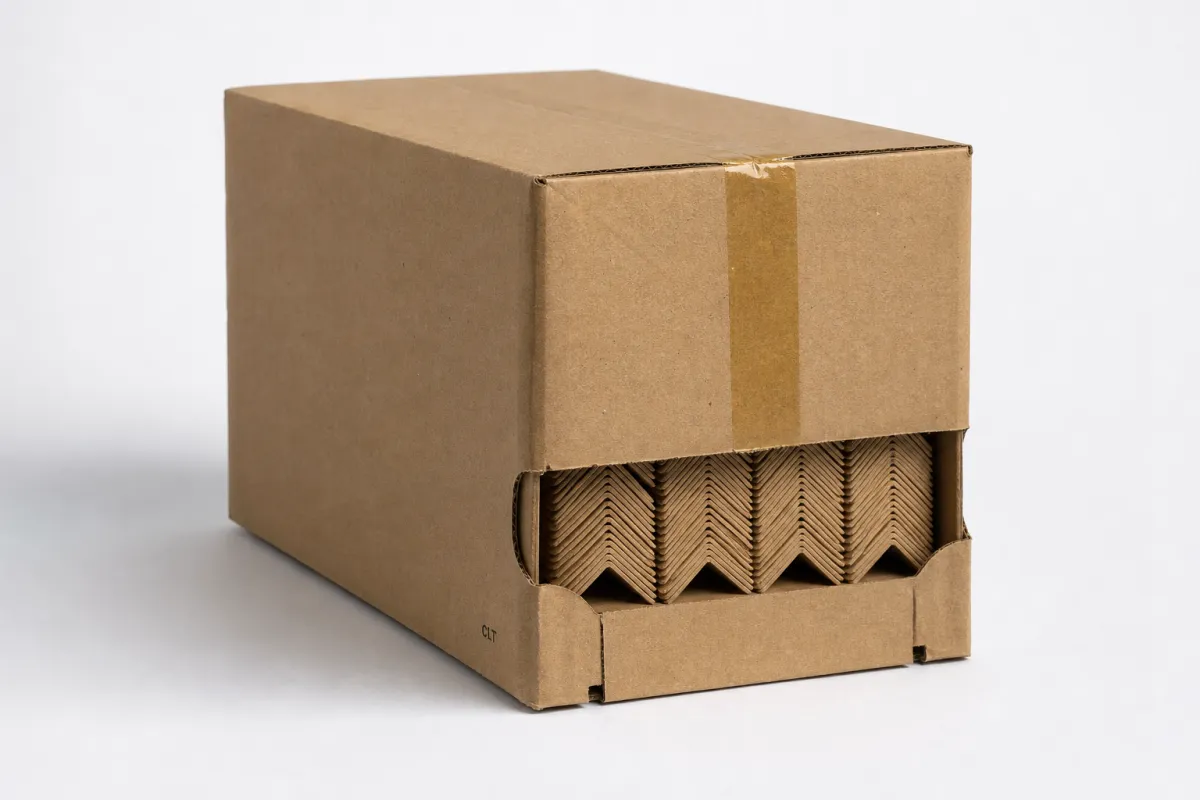
The fastest way to understand heavy duty edge protectors bulk is to look at the failure points they prevent. A pallet does not usually fail in the center; it fails at the edges, where straps bite, stretch wrap shifts, and corners take the first hit during transit. Cartons can look fine from ten feet away and still arrive with crushed edges, scuffed panels, or split seams. That is why buyers who ship high-value cartons, stacked product, or export freight often treat edge protection as a control item rather than a side accessory.
Heavy duty edge protectors bulk improve load stability in three specific ways. First, they distribute strap force across a wider surface, which reduces cut-through and keeps the strap from crushing the carton edge. Second, they help keep columns of cartons aligned during stacking, so the load behaves more like a single unit. Third, they make the pallet easier to handle because forklift contact, stretch wrap tension, and corner abrasion have a better chance of being absorbed before they damage product. A board strip at the corner can do work that a layer of tape never will.
The business case is not abstract. Fewer damaged corners mean fewer claims, fewer chargebacks, and less repacking labor. For a distributor shipping hundreds of pallets a week, even a small reduction in claims can matter more than the line-item cost of heavy duty edge protectors bulk. If damage falls by only 1% on a lane that moves 10,000 pallets a year, the avoided cost can outrun the packaging spend quickly. That is the kind of number that gets attention in a review meeting, even from someone who usually rolls their eyes at packaging talk.
Bulk purchasing adds another layer of savings. Buying heavy duty edge protectors bulk usually lowers unit cost, reduces reordering time, and helps procurement standardize packaging across multiple SKUs or lanes. Standardization is underrated. Once a buyer locks a reliable angle board profile, the operations team does not have to re-evaluate protection for every order cycle. That saves time in sourcing, quality review, and warehouse training. It also cuts down on the small but expensive habit of approving exceptions every time a new order comes through.
A pallet that arrives with a damaged corner often becomes a chain reaction: extra inspection, delayed receiving, claims paperwork, and customer frustration. The cheapest packaging line item is not always the cheapest shipment.
There is another detail worth watching. Heavy duty edge protectors bulk can also help with freight presentation. Clean edges make loads easier to count, easier to inspect, and easier to accept. Receiving teams notice that. So do customers who equate visible damage with hidden damage. A freight lane that looks orderly tends to get less scrutiny than one that arrives dented and loose. That sounds simple, but it is kinda important when a receiver has a line of trucks waiting.
For shipments that are sensitive to handling, it helps to compare the edge protector against the actual shipping lane, not a generic spec sheet. If your program has to survive rough transfer points, seasonal humidity, or multiple touchpoints, then heavy duty edge protectors bulk should be treated as part of the load-engineering process, not just a carton accessory. That is where the savings show up: fewer rework events, more stable pallets, and less time spent explaining why the freight arrived damaged. The packaging should match the route, not the wishful version of the route.
Heavy Duty Edge Protectors Bulk Product Details
Heavy duty edge protectors bulk are built from a few core constructions, and the right choice depends on how much pressure the load will see. Recycled paperboard is common for general carton reinforcement. Laminated board adds stiffness and improves compression resistance. Pressed board is often chosen where tighter corners and more consistent form are needed. For heavier lanes, buyers may specify reinforced profiles that hold shape better under strap tension and stacking pressure. The difference can be subtle on a sample bench and obvious on a packed pallet.
The main use cases are straightforward, but the performance expectations are not. Buyers use heavy duty edge protectors bulk for pallet corners, carton reinforcement, box stacking, export shipments, and bundled products that need edge control during banding or stretch wrapping. The protector has to do more than sit in place. It has to resist pressure, stay square, and keep the load from being nicked or crushed during the part of the journey that gets roughest. A protector that buckles under tension is just extra cardboard.
In actual purchasing behavior, the most common product forms are equal-leg angles, inside corner supports, longer pallet-length profiles, and custom-cut pieces. Equal-leg angles are the clean default for cartons and palletized cases. Inside corner supports matter when the product needs reinforcement from within the stack. Longer profiles are useful on tall pallets or long items that need edge continuity from top to bottom. Custom-cut pieces show up when one lane or one SKU has a unique geometry that stock sizes cannot handle well. That kind of variation is common in mixed-SKU distribution and export packing, where one size never fits all.
What makes a protector "heavy duty" is not just marketing language. It is a combination of thicker walls, stronger compression resistance, cleaner cuts, and better performance under strapping tension. If a protector folds too easily, the strap stops loading the board and starts loading the carton. That is where the trouble begins. Heavy duty edge protectors bulk are supposed to move that force away from the product and into a structural member built for the job. In effect, they turn a fragile corner into a load-bearing edge.
Where the load pressure really shows up
Pressure usually concentrates at the top corners of the pallet, the points where straps cinch down, and the areas where stretch wrap pulls during transit. Heavy duty edge protectors bulk work best when they cover those stress points with enough length and thickness to bridge the weak zone. In many packaging specs, that means choosing a profile that reaches beyond the visible corner damage area rather than stopping at the exact edge of the carton. Short coverage is cheaper on paper and weaker in the real world.
That is also why buyers should think about the route, not just the load. A short-haul shipper with controlled handling can sometimes use a lighter board profile. Export freight, mixed-carrier networks, and repeated warehouse touches usually need a stronger construction. If the shipment is going through a validation program, compare the protector against the shipment profile and test it under real handling conditions. For reference, the International Safe Transit Association explains common test methods at ISTA. A lane with three handoffs behaves differently from a lane with ten, and the real world is rarely as tidy as the route map makes it look.
Material selection also matters on the sustainability side. Some buyers need recycled fiber content, and some want an FSC-certified source path for procurement documentation. If that is part of your program, it is worth checking whether the board source aligns with your internal requirements and customer promises. The FSC framework is published at FSC. Procurement teams often learn that sustainability documentation is easiest to manage when it is built into the spec from day one, not added after the first run.
Heavy duty edge protectors bulk are not one-size-fits-all, and that is a good thing. The better the product is matched to the lane, the less overpacking you do and the less underprotection you risk. That balance is where the real value sits. A well-matched profile protects freight without wasting board, space, or labor. It also keeps the packaging line from turning into a guessing game every time a new shipment hits the schedule.
Specifications That Matter: Size, Strength, and Finish
Before asking for a quote on heavy duty edge protectors bulk, procurement teams should gather the spec sheet basics. Start with leg length, thickness, overall length per piece, board grade, and any moisture resistance requirement. If one of those fields is missing, the quote may look fine but fail in production because the protector does not match the load. Vague specs tend to produce vague results, and packaging is not forgiving about guesswork.
Common leg lengths range from about 1.5 x 1.5 in to 4 x 4 in, or roughly 38 x 38 mm to 102 x 102 mm, depending on the application. Thickness often runs from 0.08 in to 0.25 in, or about 2 mm to 6 mm, though heavier profiles can go beyond that. Length per piece can be short for carton reinforcement or much longer for tall pallets and freight bundles. The point is not to memorize one number. The point is to match the protector to the real pressure on the load. A five-foot pallet and a 12-inch retail shipper are solving different problems, and the board should reflect that difference.
If a shipment is light but tall, the corners may need stiffness more than mass. If a shipment is dense and tightly strapped, the board needs enough compression resistance to prevent strap cut-through. That is why heavy duty edge protectors bulk should be selected by load behavior, not just by carton size. A light retail carton, a unitized industrial part, and a pallet of export cases do not need the same geometry. The lane tells the truth faster than the spec sheet does, which is why a sample is worth more than a polished product description.
Consistency across a bulk run matters just as much as the nominal size. Buyers should ask about dimensional tolerance, cut accuracy, and run-to-run uniformity. A difference of a few millimeters might not sound dramatic, but in production packaging those small deviations can stack up. If the corner board is too loose, it shifts. If it is too tight, line workers slow down or stop using it the way it was intended. Heavy duty edge protectors bulk should arrive ready for repeatable use, not constant adjustment. The best boards disappear into the workflow because they fit the workflow.
Finish options also affect performance. Plain kraft is common where the goal is simple protection. Printed marks can help with handling instructions or internal identification. Custom lengths reduce waste. Die-cut ends can improve fit. Treated surfaces can help on humid routes, especially where cartons may sit in a damp warehouse or travel through climate swings. None of these features are decorative. They affect how well the protector behaves under actual shipping conditions. A finish that resists moisture for two extra days can be the difference between clean corners and soft corners. That is not theory; it shows up in the first bad weather week.
One practical rule: if the route has more than one handling touch, ask for the stronger spec. Heavy duty edge protectors bulk are cheap insurance only if the board grade, thickness, and length are aligned with the worst part of the trip, not the easiest part. Buyers who spec for the hardest mile usually avoid the most expensive surprise.
In procurement terms, the spec sheet should answer four questions before the order is placed:
- How much compression does the load create at the corners?
- How long does the protector need to stay square under strap tension?
- Will humidity, cold storage, or export transit change board behavior?
- Does the current packaging line need a standard angle board or a custom cut?
Heavy duty edge protectors bulk work best when those questions are answered early. That is how buyers avoid ordering a product that looks correct on paper but underperforms in the dock. Clear specs protect the budget as much as they protect the freight.
Heavy Duty Edge Protectors Bulk Cost, Pricing, and MOQ
Pricing for heavy duty edge protectors bulk is driven by a handful of variables that buyers can actually control. Board thickness matters. Length matters. Custom dimensions matter. Print requirements matter. Volume matters. So does the packaging configuration, because a product packed efficiently on a pallet costs less to ship than one that needs extra handling or special protection during transit. A quote that ignores the shipping method is only half a quote, and that is where a lot of surprise spend sneaks in.
For a practical market reference, standard heavy duty edge protectors bulk often fall around $0.12-$0.22 per piece at higher volumes for simpler profiles, while reinforced or custom-sized versions can move into the $0.22-$0.60 range depending on length, thickness, and finish. That is not a fixed price sheet. It is the kind of range buyers should expect to see once the spec becomes real and the order size is known. Very short runs and unusual dimensions can push the economics higher fast. A supplier can quote a low piece price all day; the landed number is what actually hits the budget.
MOQ usually changes with the level of customization. Standard sizes may start around 2,500 to 5,000 pieces, while custom-cut or printed runs may require 10,000 pieces or more to hit efficient production. The mistake I see most often is comparing MOQ against a unit price in isolation. A buyer may save a few cents per piece and then carry excess inventory for months, or worse, reorder too late and pay premium freight to avoid a line stop. Heavy duty edge protectors bulk should be evaluated against forecasted consumption, not just the headline quote. Inventory turns matter here as much as price, and the warehouse never forgets the order that arrived too early.
| Option | Typical use | Common spec | Indicative price at 5,000+ pcs | Typical lead time |
|---|---|---|---|---|
| Standard angle board | Cartons, pallet corners, general freight | 38 x 38 mm to 50 x 50 mm legs, 2-3 mm thickness | $0.12-$0.22 | 5-8 business days |
| Reinforced pressed board | Strapped loads, stacked cartons, export lanes | 50 x 50 mm to 75 x 75 mm legs, 3-5 mm thickness | $0.18-$0.32 | 7-12 business days |
| Laminated heavy profile | Tall pallets, heavier freight, repeated handling | 75 x 75 mm to 102 x 102 mm legs, 4-6 mm thickness | $0.22-$0.42 | 10-15 business days |
| Custom long profile | Export bundles, odd dimensions, branded programs | Custom length, cut, or finish | $0.30-$0.60 | 12-20 business days |
Those ranges only tell part of the story. To calculate true landed cost, compare freight, palletization, storage, and any setup charges for custom sizes. A quote that looks lower on paper can become more expensive after freight and packaging are added. That is especially true for large, lightweight products where cube, not weight, drives the shipping bill. One extra pallet or an awkward pallet pattern can erase a nice-looking unit price.
There is also a quality-risk premium that does not show up in the spreadsheet at first glance. If a cheaper protector bends under strap pressure, the hidden cost is rework, damaged freight, and a second round of packing labor. A low quote on heavy duty edge protectors bulk is only a real bargain if the product performs consistently across the whole run. A four-cent savings that creates a six-dollar problem is not a savings. It is just a future headache with better branding.
One useful habit is to compare at least three variables together: unit price, minimum order quantity, and freight method. Buyers who do that usually find that the best value sits in the middle, not at the bottom of the quoted range. They also avoid the trap of ordering a smaller batch that forces frequent reorders and higher administrative cost later. Procurement teams that score the offer on total impact, not just piece price, usually make better calls. The spreadsheet has to tell the truth, not just the lowest number.
Wholesale Programs can be the right fit for teams that buy recurring packaging supplies on a schedule, especially if the spec is already approved and the lanes are stable. In that scenario, heavy duty edge protectors bulk become a repeatable cost center rather than a new sourcing project every time. Repeatability is a financial advantage, even when it never shows up as a line item.
Heavy Duty Edge Protectors Bulk Process and Timeline
The buying process for heavy duty edge protectors bulk is usually straightforward, but the order of operations matters. Start with the request for quote. Include dimensions, target volume, load type, monthly or quarterly usage, and the delivery zip code. If the product will be used on export freight, note that early. If the application is strap-heavy, note that too. The better the input, the less back-and-forth later. Clear inputs reduce the chance of a quote that has to be reworked twice.
From there, the supplier should confirm the construction, propose the spec, and provide either a sample or a drawing for approval. That step is worth slowing down for. A quick approval today can become a packaging problem next month if the board grade or cut tolerances are off by too much. For heavy duty edge protectors bulk, the sample is not just a courtesy. It is a quality checkpoint and, in many cases, the only real preview of how the product will behave on the line.
Standard sizes usually move faster than custom profiles. Printed versions, moisture-treated versions, and unusually large volume orders typically add time. A realistic window for standard heavy duty edge protectors bulk is often 5-8 business days after approval, while custom or printed work can run 12-20 business days depending on complexity and order size. That range is more honest than promising speed without seeing the spec. Packaging lead times are rarely generous, and a little realism beats a rushed promise.
What speeds turnaround
Three things move the timeline faster: complete specs, a forecasted quantity, and a clear shipping destination. A fourth helps more than buyers realize - a final decision on packaging format. If you know whether the product should be palletized, bundled, or carton-packed, production and logistics can plan around that choice immediately. Heavy duty edge protectors bulk often ship more efficiently when the receiving team knows how the order will be staged before it arrives. Unclear receiving instructions create avoidable delays on both ends.
Buyers should also ask about labeling and pallet build before they approve the lead time. If the dock needs SKU labels, lot traceability, or a specific pallet height, that should be included in the schedule. There is nothing more frustrating than getting a good unit price and then losing time because the shipment was packed in a way that slows receiving. That is a solvable problem, but only if it is discussed upfront. A few minutes of planning can save a day of dock confusion.
Another practical point: ask whether the production run will be held to a strict cut schedule or whether it can be sequenced with similar board grades. The answer affects consistency and, in some cases, cost. For heavy duty edge protectors bulk, consistency is more valuable than a tiny variation in quoted lead time. If the line is already set around one profile, keeping that profile stable often saves more than it costs. Consistent cuts also reduce line adjustments and reinspection.
From a planning standpoint, the best lead time is the one that matches the production cycle, not the fastest number on a quote. Buyers who coordinate heavy duty edge protectors bulk with their reorder point avoid emergency freight, last-minute substitutions, and the kind of line interruption that turns a packaging item into a plant issue. A steady reorder rhythm is usually cheaper than a frantic rescue shipment. Nobody enjoys the 4:30 p.m. scramble when a receiving clerk discovers the corner boards are gone.
Why Buy From Us for Heavy Duty Edge Protectors Bulk
What matters most in heavy duty edge protectors bulk is consistency. A buyer does not want a dramatic sales pitch. They want stable dimensions, repeatable strength, and fulfillment that lands on time. Packaging teams notice quickly when a supplier gives them the same cut quality, the same board behavior, and the same response time from one reorder to the next. That kind of reliability reduces internal friction faster than any slogan ever will. It also makes planning easier for operations, purchasing, and receiving at the same time.
At Custom Logo Things, the practical value is in the buying experience itself. Fast quoting matters because procurement cycles move quickly. Spec review matters because one overlooked measurement can stall production. Experience with freight-sensitive shipments matters because not every packaging product can tolerate the same handling conditions. Heavy duty edge protectors bulk should come with a clear read on board grade, cut quality, corner integrity, and run-to-run uniformity. If those details are vague, the risk usually shows up later as a dock problem.
Quality control should be plain and testable. Ask about thickness checks, length verification, squareness of the cut, and how the supplier handles variation inside a bulk run. If the answer is vague, the product may be vague too. Buyers should expect proof that the order will match the approved spec from first carton to last pallet. That is especially true for heavy duty edge protectors bulk that will support expensive or export-bound freight. A few millimeters off at the corner can become a much larger issue after a carrier touches the load three or four times. The dock does not care about sales language; it only cares whether the board holds.
Documentation also matters more than many people admit. Procurement teams often need samples, spec sheets, reorder records, and simple confirmation that a previous build can be repeated without starting over. The best supplier relationship is one where reordering is boring. Boring is efficient. Boring is valuable. Heavy duty edge protectors bulk should fit into a repeat process, not create a new task every time inventory dips. Reliable paperwork saves time just as surely as reliable product does.
There is a second reason buyers stick with a dependable supplier: it protects their own credibility. If operations promises a shipment will arrive in a certain condition, the packaging has to support that promise. A supplier that understands this makes the buyer look better inside their own organization. That is not a small thing. It can influence everything from internal approvals to freight carrier confidence. A packaging vendor can become part of the buyer's risk-management story, not just the order list.
For teams already working through Wholesale Programs, the advantage is even clearer. Reorders can stay tied to an approved spec, which reduces re-qualification time and makes cost control easier across multiple lanes. In practice, that is where heavy duty edge protectors bulk stop being a commodity and start becoming part of a predictable packaging system. Predictable systems are easier to budget, easier to train, and easier to defend when someone asks why the packaging line changed.
Next Steps to Order Heavy Duty Edge Protectors Bulk
The shortest path to a clean quote on heavy duty edge protectors bulk is to gather the right inputs first. At minimum, send the protector dimensions, expected monthly or quarterly volume, shipment weight range, and delivery zip code. If you know the pallet height, strap count, carton count, or export destination, include that too. Every extra detail reduces the chance of a mismatch later. Good quoting starts with good measurements, not with guessing and hoping.
Next, compare at least two options. Standard size versus custom size. Printed versus unprinted. Lightweight versus reinforced. That comparison is where the real trade-offs appear. A standard profile may be cheaper and faster, while a custom profile may save waste and improve performance. The wrong choice is often not the more expensive one. It is the one that creates avoidable cost after the order ships. A lower quote that forces repacking is just deferred expense.
Ask for a sample or spec confirmation before you place a large order, especially if the product will touch expensive, fragile, or export-bound freight. A sample tells you more than a sales line ever will. It shows whether the corners stay square, whether the board feels stiff enough under pressure, and whether the dimensions fit the load the way the drawing suggests. Heavy duty edge protectors bulk should be approved by how they perform, not how they sound in a quote. Real product beats polished language every time.
It also helps to decide how the order will be received before production starts. Do you need pallet labels? Are there dock height restrictions? Is the receiving team expecting unit counts, layered bundles, or a specific pallet pattern? Those details do not just help logistics. They can shorten the timeline and reduce confusion at delivery. That is a useful habit for any buyer managing packaging spend. The smoother the handoff, the fewer calls after the truck arrives, and the fewer calls, the better everybody sleeps.
If your team is ready to lock the next purchase, move from estimate to spec approval quickly. The faster the spec is confirmed, the faster the lead time becomes real. The goal is simple: get the right heavy duty edge protectors bulk into the right lane before the next shipment cycle starts pulling on the corners. A timely order beats a corrective scramble, and a tight spec beats a hopeful one.
What size heavy duty edge protectors bulk order should I choose?
Match the leg length and thickness to the carton or pallet height, strap tension, and stacking pressure. A heavier profile is usually the better choice for export freight, tall pallets, or any load that needs extra corner resistance during transit. If the load shifts during a test wrap, move up a grade rather than hoping the lighter board will hold. That small decision can save a lot of cleanup later.
What is the MOQ for heavy duty edge protectors bulk purchases?
MOQ depends on whether the order is a standard size or a custom cut. In most bulk programs, the minimum falls lower for stock specs and rises for custom profiles, so buyers should balance MOQ against forecasted use instead of chasing the lowest unit price alone. A lower MOQ can look friendly and still be the wrong call if the annual volume is much higher. The warehouse bill has a way of reminding people of that later.
How is heavy duty edge protectors bulk pricing calculated?
Pricing usually reflects board grade, thickness, length, print requirements, and total volume. Freight, pallet configuration, and setup charges can materially affect the final landed cost, which is why a clean quote should show more than just a per-piece number. The best comparison includes the whole shipment, not just the board itself. Otherwise, the cheapest quote can turn into the most expensive one by the time it reaches the dock.
Can heavy duty edge protectors bulk be custom printed or branded?
Yes, many buyers add internal marks, logos, or handling instructions. Printed runs can add cost and lead time, so artwork approval and proof review should happen early if the product is part of a branded or controlled packaging program. That extra step avoids delays and keeps the first production run from becoming the proofing run. It also keeps the floor from having to interpret hand-scribbled instructions on a busy day.
How long does heavy duty edge protectors bulk production usually take?
Standard sizes often move faster than custom dimensions or printed orders. A complete spec, fast approval, and clear shipping details can shorten turnaround time. For most programs, the practical takeaway is simple: confirm the dimensions, the board grade, and the receiving plan before you place the order, because those three choices drive the schedule more than anything else. Once those are set, the rest is mostly execution.
Clear takeaway: if the shipment is heavy, tall, strapped, or likely to get handled more than once, specify heavy duty edge protectors bulk with enough board strength to survive the worst mile, not the easiest one. Lock the dimensions, verify a sample, and align the MOQ with actual consumption so the protection works on the dock instead of just on paper.