Buyer Fit Snapshot
| Best fit | Heavy Duty Pallet Boxes Wholesale projects where brand print, material claims, artwork control, MOQ, and repeat-order consistency need to be specified before quoting. |
|---|---|
| Quote inputs | Share finished size, material target, print colors, finish, packing count, annual reorder estimate, ship-to region, and any compliance wording. |
| Proofing check | Approve dieline scale, logo placement, barcode or warning zones, color tolerance, closure strength, and carton packing before bulk production. |
| Main risk | Vague material claims, crowded artwork, missing packing details, or unclear freight terms can make a low unit price expensive after revisions. |
Fast answer: Heavy Duty Pallet Boxes Wholesale: Specs, Pricing & Supply should be specified like a repeatable production item. The safest quote records material, print method, finish, artwork proof, packing count, and reorder notes in one written spec.
Production checks before approval
Compare the actual filled-product size with the drawing, then confirm tolerance on folds, seals, hang holes, label areas, and retail display edges. Reserve space for logos, QR codes, warning copy, and material claims before decorative graphics fill the panel.
Quote comparison points
Review material grade, print process, finish, sampling route, tooling charges, carton quantity, and freight assumptions side by side. A quote is only useful when the supplier can repeat the same color, closure quality, and packing count on the next order.
Heavy Duty Pallet Boxes Wholesale: Specs, Pricing & Supply
If your freight is dense, irregular, or too valuable to trust to a standard carton, heavy duty Pallet Boxes Wholesale is usually the place to start. The common mistake is treating heavy duty pallet boxes wholesale like a simple box purchase instead of a packaging decision that affects shipping, storage, handling, and claims. A spec that is a little too light can lead to crushed corners, shifting product, extra labor, and damage that wipes out any savings from the lower unit price.
From a packaging buyer's point of view, the math is pretty straightforward. A stronger box that stays square on the pallet, holds up under stack pressure, and keeps the load from moving can cost less overall than a cheaper format that needs extra void fill, more rework, or a replacement shipment. That is why heavy duty pallet boxes wholesale matters: it protects product, labor, and delivery performance at the same time, instead of asking one weak carton to do all the work.
The buying conversation changes once the shipment gets real. Instead of asking only for a box price, experienced buyers ask about board grade, load rating, pallet fit, closure style, lead time, and the structure of the quote. Those details show whether heavy duty pallet boxes wholesale will work on the line, in the warehouse, and across the freight lane without ugly surprises later on.
Heavy Duty Pallet Boxes Wholesale: What Buyers Miss First
Picture a shipment that looks fine on paper but turns unstable once it is loaded. The pallet footprint is a little off, the board grade is too light for the stack height, and the product shifts every time the truck brakes. I have seen that kind of failure happen because someone compared a handful of box prices and never really asked how the load was gonna behave in transit. That is exactly why heavy duty pallet boxes wholesale should be reviewed with a technical eye, not only a price sheet.
The real cost sits outside the box itself. Rework, damaged units, missed receiving windows, and freight claims often cost far more than the difference between one box and another. In many operations, a stronger box outperforms two cheaper packout steps because it cuts handling time and lowers the chance of human error. Dense parts, bottled goods, multi-SKU shipments, and premium finished products tend to show that difference very quickly.
Heavy duty pallet boxes wholesale is built for goods that standard corrugated shippers cannot handle safely. Awkward product shapes, high unit weights, long transit lanes, and storage conditions where pallets sit stacked for days all push packaging harder than many teams expect. The box has to do more than contain the product. It has to keep its geometry under load, keep the corners from collapsing, and keep the stack stable enough that the load arrives the way it left.
The best buying lens is practical: size, load rating, closure style, lead time, and quote structure matter more than a generic catalog description. If a supplier cannot explain those five points clearly, the order is not ready. For many procurement teams, that is the difference between a smooth rollout and a string of avoidable problems that show up only after production starts.
"A quote that does not state board grade, pallet footprint, and load rating is not a quote; it is an estimate with missing variables."
The strongest buying decisions usually start with one simple question: what is the box protecting, and what does failure cost? Once that answer is clear, heavy duty pallet boxes wholesale becomes easier to spec and much easier to compare across vendors without getting distracted by a low number that does not tell the full story.
Heavy Duty Pallet Boxes Wholesale Product Details
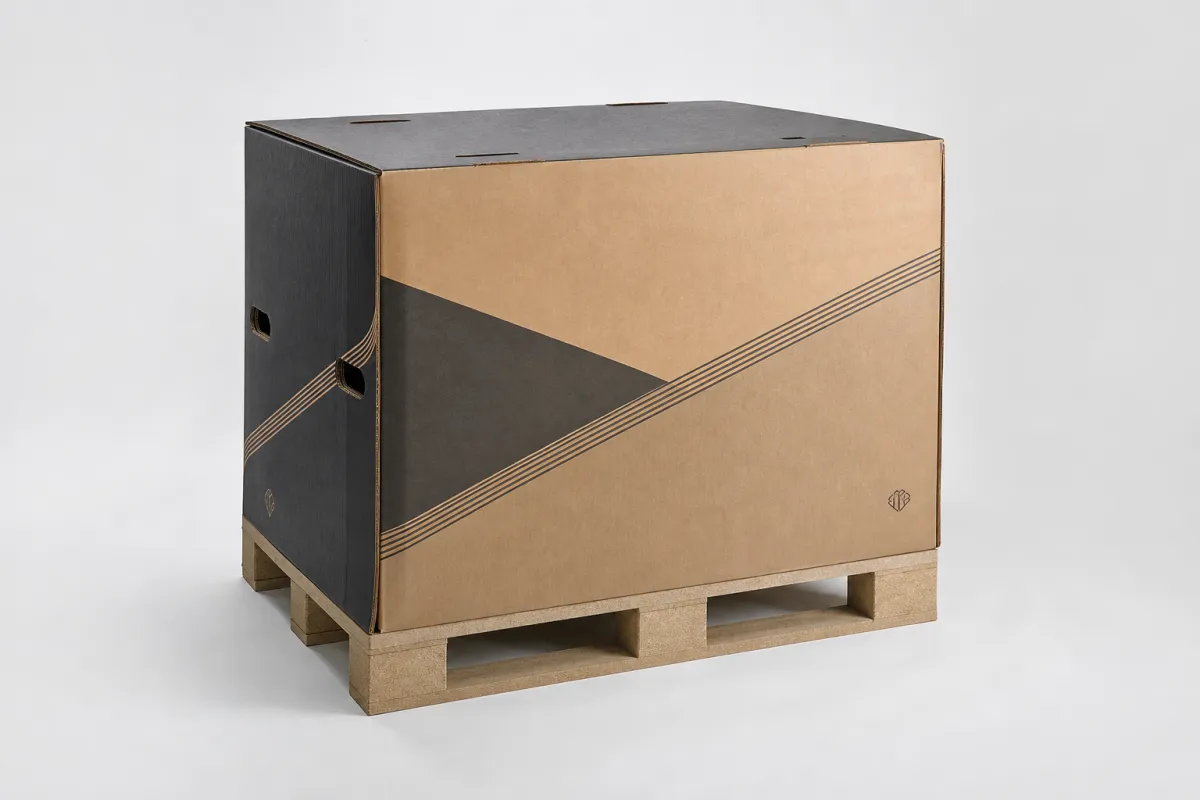
A pallet box is an oversized corrugated container designed to ship directly on a pallet base. Most heavy duty pallet boxes wholesale formats use reinforced walls, a lid or top closure, and a footprint matched to a standard or custom pallet. The aim is simple enough: keep the product contained, protect corners, and make the unit stable enough for warehouse and freight handling.
Build styles vary more than many buyers expect. Some pallet boxes use one-piece construction with integrated walls and bottom panels. Others rely on telescoping lids, stitched seams, glued constructions, or separate bases. If the shipment is heavy or the warehouse team needs faster packing, the closure style can matter as much as the board grade. That is one reason heavy duty pallet boxes wholesale should be discussed alongside the loading workflow, not after it. A nice spec on paper can still be a pain in the neck on the line if the closure takes too long or the fit is awkward.
Common use cases include industrial components, beverages, packaged food, automotive parts, e-commerce replenishment, and mixed-SKU shipments that need rigid containment. A box that works well for lightweight apparel will usually fail here. Dense goods build pressure fast, and that pressure exposes weak seams, thin liners, and poor pallet fit. A solid heavy duty pallet boxes wholesale spec should account for those realities instead of assuming all corrugated behaves the same.
Customization changes the value equation quickly. Buyers can often specify internal dividers, die-cut hand holes, moisture resistance, print, and compatibility with full or half pallets. Those choices are not cosmetic. A divider can reduce product motion. A hand hole can speed manual handling. A moisture-resistant treatment can make the difference between a box that survives a humid warehouse and one that sags before pickup. For that reason, the most useful heavy duty pallet boxes wholesale order is the one that matches the route, the storage environment, and the way the team actually packs the load.
If you are building a broader packaging program, the box should also fit with your other formats. Our Custom Packaging Products page is a good place to compare inserts, secondary packaging, and related components that can support the same supply chain.
Consistency matters more than flashy features. The more your goods move, stack, or travel long distances, the more value you get from reinforced construction. The best heavy duty pallet boxes wholesale options do not try to do everything. They do the hard part well: hold shape, protect product, and survive the route.
Heavy Duty Pallet Boxes Wholesale Specifications That Hold Up
The spec sheet is where good buying decisions happen. For heavy duty pallet boxes wholesale, ask for interior dimensions, board grade, flute combination, bursting strength, edge crush test, and total load rating. Those numbers should be written clearly enough that production, quality, and receiving teams can all read the same document without guessing or filling in gaps from memory.
Static load, dynamic load, and stacking strength are not interchangeable. Static load usually refers to what the box can hold at rest. Dynamic load relates to movement and handling. Stacking strength tells you how much compression the unit can tolerate in storage or during transport. Buyers often focus on the largest number and miss the one that matters most. In a heavy duty pallet boxes wholesale order, that mistake gets expensive very quickly.
Dimensional fit is another trap. Too much slack and the contents shift during transit. Too tight, and the packout process slows down while product gets scuffed or crushed. A few millimeters can change the outcome, especially when the box is loaded by hand and then wrapped, banded, or top-capped on a pallet. That is why heavy duty pallet boxes wholesale should be tied to the actual product sample, not just a dimension estimate scribbled into a spreadsheet.
Pallet interface details deserve more attention than they usually get. Ask whether the box is designed for a standard pallet, Euro pallet, or a custom base. Confirm footprint, overhang tolerance, fork access, and whether the design allows stable stacking. If the box hangs over the edge, the corners become weak points. If the fork openings are too tight, handling slows down and damage risk rises. Good heavy duty pallet boxes wholesale specs make those relationships obvious instead of hiding them inside vague language.
Environmental conditions matter too. Moisture exposure, cold-chain storage, and long warehouse dwell times can all change what board construction is appropriate. A box that performs well in a dry distribution center may not survive a humid dock or a chilled lane. If the shipment needs distribution testing, ask whether the supplier is working to a recognized method such as ISTA test standards. The test plan should be part of the quote, not a verbal afterthought that gets forgotten once production starts.
For buyers who need compliance signals, sustainability claims should also be specific. FSC sourcing is a real documentable standard, not a vague label, and the paper recovery guidance published by the FSC and the EPA recycling resources is more useful than marketing language. In a well-run heavy duty pallet boxes wholesale program, material choice, recovery, and shipping performance should all be visible on the spec sheet, because that is the only way to compare suppliers honestly.
If you want to screen suppliers fast, ask for these six items in writing:
- Interior dimensions with tolerance bands
- Board grade and flute combination
- Compression or stacking guidance
- Pallet footprint and overhang limits
- Closure method and seam construction
- Moisture or environmental performance notes
That checklist cuts through vague sales language. It also reveals whether the supplier truly understands heavy duty pallet boxes wholesale or is just reselling a size list with a few technical words attached.
Cost, Pricing, MOQ, and Quote Basics for Heavy Duty Pallet Boxes Wholesale
Pricing starts with structure, not with the invoice total. For heavy duty pallet boxes wholesale, the biggest price drivers are size, board strength, print coverage, insert complexity, pallet type, and order volume. A larger footprint uses more fiber. Thicker board costs more. Custom tooling changes the setup. Special closures or moisture resistance add further cost. None of that is surprising, but it is easy to underestimate how quickly those variables stack up once the job is defined properly.
MOQ usually shifts with complexity. A plain unprinted build can sometimes be ordered in a lower quantity than a fully Custom Printed Box with inserts or a special dieline. For heavy duty pallet boxes wholesale, the key is to ask for MOQ by SKU, not a generic range. That keeps the comparison honest and avoids false savings on a spec you cannot actually buy in the quantity you need.
Compare quotes by landed cost, not factory price. Freight, accessorial charges, palletization, and any handling fees can move the delivered number far more than buyers expect. For oversized corrugated packs, freight can easily change total spend by 10% to 30% depending on region, pallet count, and delivery constraints. A heavy duty pallet boxes wholesale quote that hides delivery assumptions is not helping procurement, even if the headline number looks attractive.
Volume breaks should be treated with discipline. Higher runs often lower unit price, but storage space, cash flow, and usage rate determine whether the larger order is actually wise. A case where you consume 500 boxes a month is very different from a program that uses 5,000 across several sites. In heavy duty pallet boxes wholesale, the best volume is the one that balances unit economics with inventory risk instead of chasing the lowest possible sticker price.
Ask for quote lines that separate sample cost, production cost, freight estimate, and setup fees. That structure makes internal approval far easier. It also lets finance see where the money is going. If the supplier bundles everything into one number, you lose the ability to judge which lever is driving the price. With heavy duty pallet boxes wholesale, visibility is worth as much as a discount because it helps the whole team make a real decision.
| Option | Typical MOQ | Typical Unit Cost | Best Fit | Notes |
|---|---|---|---|---|
| Stock heavy-duty pallet box | 250-500 units | $8-$16 | Fast replenishment, limited customization | Lowest setup burden, but size and print options are limited |
| Semi-custom pallet box | 500-2,000 units | $11-$24 | Branding, inserts, and better fit | Usually the best balance for many heavy duty pallet boxes wholesale buyers |
| Fully custom pallet box | 1,000-5,000+ units | $18-$38 | Exact dimensions, specific handling needs | Highest fit precision, but tooling and sample approval matter more |
Those ranges are broad on purpose. A full pallet-sized box, thick board, and heavy print coverage can move the number quickly. What matters is comparing like for like. If two suppliers are not quoting the same footprint, board grade, and delivery terms, the heavy duty pallet boxes wholesale price comparison is not real, even if the numbers are close on the screen.
Process, Lead Time, and Production Steps
The cleanest orders usually follow the same path: inquiry, requirements brief, structure recommendation, artwork or dieline review, sample approval, production release, and shipment. For heavy duty pallet boxes wholesale, that sequence matters because each stage removes a different risk. Skip one stage and the job may still run, but the odds of a fit issue rise sharply.
Typical lead time depends on tooling approval, raw material availability, print complexity, and whether the order is stock or custom. A simple unprinted run may move faster than a printed build with inserts and special closures. The supplier should explain the schedule in business days and show where the time is spent. Clear specs speed up heavy duty pallet boxes wholesale orders more than any shortcut in manufacturing, and they do it without creating cleanup work later.
At each stage, you should receive something useful. A dieline confirms geometry. A spec sheet confirms board and load targets. A proof confirms artwork placement. A sample confirms actual fit. Pre-production approval confirms that everyone signed off before the run starts. If any of those documents are missing, the process is less controlled than it should be for heavy duty pallet boxes wholesale.
Risk controls are worth asking about directly. Compression checks, moisture tests, pallet fit verification, and transit-ready packaging can all expose weaknesses before bulk release. The idea is not to slow the job down. It is to prevent expensive corrections later. A supplier that understands heavy duty pallet boxes wholesale will be comfortable talking through those checks in detail, because they know that good packaging is built by removing uncertainty step by step.
Faster turnaround usually comes from clarity, not from cutting corners. If the product dimensions are exact, the pallet size is fixed, and the artwork is final, the schedule can move with far fewer revisions. That is one reason experienced buyers tend to send samples or photos of the current shipper before asking for a price. It reduces ambiguity. In heavy duty pallet boxes wholesale, ambiguity is the enemy of speed.
One more point: approvals should leave a paper trail. If the box will support a launch, seasonal push, or replenishment run, keep the approval chain tight. A well-documented heavy duty pallet boxes wholesale project is much easier to reorder later because the previous spec, proof, and signoff are already on file. That kind of recordkeeping may feel slow in the moment, but it saves a lot of headaches when the next buy comes around.
Why Choose Us for Heavy Duty Pallet Boxes Wholesale
Custom Logo Things should be treated as a technical packaging partner, not just a seller. That matters because the right recommendation depends on product weight, route length, warehouse conditions, and how the pallet will be handled after packing. In a heavy duty pallet boxes wholesale program, advice without context usually leads to overbuying on some specs and underbuying on others.
Consistency is the real service advantage. Buyers need repeatable dimensions, predictable board performance, and the same fit from the first pallet to the last. Small corrugated errors do not stay small when they are multiplied across thousands of shipments. A one-millimeter fit issue can turn into a labor problem, a claims problem, and a reorder problem. That is why disciplined heavy duty pallet boxes wholesale support is more valuable than a low quote with unclear assumptions.
Response time matters too. Procurement teams are often working under launch dates, replenishment gaps, or seasonal deadlines. Fast specification review and practical load guidance can save days. The best suppliers do not just hand over a price. They ask the right questions, challenge weak assumptions, and help narrow the box to something That Actually Works. That is the kind of help buyers should expect from heavy duty pallet boxes wholesale.
Documentation is part of the value. Spec sheets, approval records, reorder references, and sample notes simplify repeat purchasing. The second order should be easier than the first, not more confusing. A strong heavy duty pallet boxes wholesale relationship creates that kind of continuity because the evidence is already organized and the details are not getting recreated from scratch every time.
For teams that need more than one packaging format, our Wholesale Programs can help structure volume planning and ordering around recurring demand. That matters when heavy duty pallet boxes wholesale is only one piece of a larger packaging mix and the rest of the system has to line up with it.
There is also a practical difference between selling and advising. Selling pushes inventory. Advising checks load behavior, handling steps, and the actual route. That distinction sounds small, but in packaging it is decisive. The right heavy duty pallet boxes wholesale program protects margin because it reduces failure downstream, where the costs are highest.
Next Steps to Order Heavy Duty Pallet Boxes Wholesale
Start with the essentials: product dimensions, product weight, pallet size, target load rating, storage conditions, and estimated monthly volume. If you have that information ready, a heavy duty pallet boxes wholesale quote becomes far more accurate. If you do not, the supplier is forced to guess, and guessing is expensive.
Send a sample pack or at least a photo of the current shipper. That single step often exposes fit issues that would not appear in a spreadsheet. A supplier can spot overhang, weak stack behavior, or wasted headspace much faster when they can see the package in context. That is one of the simplest ways to improve heavy duty pallet boxes wholesale results before production starts.
Request two quote options if possible: one tuned for lowest unit cost and one tuned for maximum durability. Procurement can then compare the trade-off instead of assuming the cheapest option is good enough. In many cases, the stronger build saves money once damage, labor, and freight claims are counted. That comparison is exactly why heavy duty pallet boxes wholesale should be reviewed as a total-cost decision rather than a box-by-box price hunt.
Before placing the order, confirm the timeline, freight method, and approval milestones. If the boxes support a launch, holiday push, or seasonal replenishment window, build in a cushion for sample review and signoff. A delay in the approval stage is easier to fix than a delay after production has started. A disciplined heavy duty pallet boxes wholesale schedule keeps the project under control and makes the rest of the supply chain easier to manage.
Finally, verify the final spec against the real shipping route. Warehouses, carriers, and destinations can all introduce different stress points. The box that passes in a dry backroom may not be the box you want on a long, humid lane with repeated forklift handling. That is why the smartest heavy duty pallet boxes wholesale buyers close the loop between design, testing, and transit conditions before they commit to volume.
If you are ready to move, the best next step is a clean brief and a short list of priorities. Share the product, the pallet, and the target budget, then let the structure work backward from that. A well-built heavy duty pallet boxes wholesale order should feel deliberate, not improvised.
What is the minimum order for heavy duty pallet boxes wholesale?
MOQ depends on size, board grade, print, and whether the box needs custom tooling or a stock dieline. Larger or fully customized builds usually have a higher minimum than standard unprinted configurations. Ask for MOQ by SKU so you can compare the exact spec you plan to buy, not a generic estimate. That is the only fair way to evaluate heavy duty pallet boxes wholesale.
How do I choose the right load rating for pallet box wholesale orders?
Match the rating to the real use case: static storage, stacked warehouse use, or moving freight on trucks. Ask for both compression and stacking guidance because those numbers are not interchangeable. If the shipment will be handled repeatedly, build in a safety margin above the minimum product weight. That approach is safer for heavy duty pallet boxes wholesale than relying on a single number from a catalog.
Are heavy duty pallet boxes wholesale options reusable?
Yes, if the board grade, closure style, and handling conditions are designed for multiple cycles. Reuse depends on moisture exposure, fork handling, and whether the box is opened destructively at destination. If reuse matters, request reinforced corners and closures that can survive repeated packing and unpacking. Those details extend the useful life of heavy duty pallet boxes wholesale packaging.
What affects the quote for heavy duty pallet boxes wholesale the most?
The biggest drivers are dimensions, board strength, print coverage, inserts, and annual or batch volume. Freight can change the landed cost significantly, especially for oversized pallet boxes. A quote is only comparable when every supplier is pricing the same spec, same pallet footprint, and same delivery terms. Without that, heavy duty pallet boxes wholesale pricing comparisons are not meaningful.
How long does production usually take for pallet box wholesale orders?
Timing depends on sample approval, raw material availability, and whether the box is stock or custom. Clear specs and fast proof approval shorten the schedule more than any shortcut in manufacturing. For launch dates, ask for a production calendar with sample, approval, build, and ship milestones. That keeps heavy duty pallet boxes wholesale orders on schedule and reduces avoidable delays.