Buyer Fit Snapshot
| Best fit | Heavy Duty Telescoping Cartons Bulk projects where brand print, material claims, artwork control, MOQ, and repeat-order consistency need to be specified before quoting. |
|---|---|
| Quote inputs | Share finished size, material target, print colors, finish, packing count, annual reorder estimate, ship-to region, and any compliance wording. |
| Proofing check | Approve dieline scale, logo placement, barcode or warning zones, color tolerance, closure strength, and carton packing before bulk production. |
| Main risk | Vague material claims, crowded artwork, missing packing details, or unclear freight terms can make a low unit price expensive after revisions. |
Fast answer: Heavy Duty Telescoping Cartons Bulk: Specs & Pricing should be specified like a repeatable production item. The safest quote records material, print method, finish, artwork proof, packing count, and reorder notes in one written spec.
Production checks before approval
Compare the actual filled-product size with the drawing, then confirm tolerance on folds, seals, hang holes, label areas, and retail display edges. Reserve space for logos, QR codes, warning copy, and material claims before decorative graphics fill the panel.
Quote comparison points
Review material grade, print process, finish, sampling route, tooling charges, carton quantity, and freight assumptions side by side. A quote is only useful when the supplier can repeat the same color, closure quality, and packing count on the next order.
Custom Logo Things
heavy duty telescoping cartons Bulk: Specs & pricing
Compare heavy duty telescoping cartons bulk options, Specs, Pricing, MOQ, and lead times so you can order the right shipper and avoid freight surprises.
Ship products with variable heights, awkward profiles, or a real risk of freight damage, and heavy duty telescoping cartons bulk move from “nice option” to practical requirement. The two-piece design gives you height control that a one-piece box simply cannot match. That matters the moment a carton is supposed to protect product instead of acting like a cardboard suggestion.
Buying teams usually run into telescoping cartons after they have already seen the cost of poor fit. Too much empty space invites movement, extra filler, and labor that never shows up in the headline carton price. Too little room crushes corners, scrapes finishes, and sends claims back through the system. Heavy duty telescoping cartons bulk sit in the middle, where the box follows the product instead of forcing the product to adapt to a fixed internal size.
If you are comparing packaging across several SKUs, our Wholesale Programs page is a practical starting point. For a quote based on your own dimensions and freight lane, use our contact form for packaging support. Clear specs tend to get clear answers, which is refreshing in a category that can get fuzzy fast.
Why heavy duty telescoping cartons bulk orders save freight
A poor carton fit has a way of multiplying costs. The extra dunnage alone is annoying, but the bigger problem is what happens when a shipment shifts inside the case or stacks badly on a pallet. A carton that is too loose can make a package look overpacked, yet still fail to protect the product. A carton that is too tight can create pressure points that show up as edge crush, panel bowing, and split seams. Heavy duty telescoping cartons bulk reduce that gamble because the height adjusts to the packed product rather than forcing the product into one fixed dimension.
Damage investigations tell a boring truth. A lot of claims are not dramatic carrier disasters. They come from compression, flex, and internal movement that build quietly until the carton gives up under stack load. A pallet can sit fine for hours, then fail when the weight above it settles. That is why heavy duty telescoping cartons bulk often outperform lighter shipper styles for freight-sensitive goods. The structure holds shape better, and the overlap between top and bottom sections gives the carton more resistance where it matters.
Bulk purchasing makes the economics even cleaner. Most businesses do not ship one product in one height. They ship a family of items with the same footprint, or they manage seasonal changes that alter the final packed size. Buying three or four separate carton styles for those variations adds receiving headaches, more inventory counts, and a lot of part-number clutter. Heavy duty telescoping cartons bulk cover that height range with one carton family, which keeps purchasing and warehouse work simpler.
There is another quiet advantage. Buyers often add void fill because the carton looks roomy on paper. That approach turns a packaging decision into a labor decision. More filler means more handling, more material, and often more shipping weight than necessary. A better-fit telescoping style trims that waste. It also helps keep freight under control because the box itself is doing more of the work instead of relying on foam or paper to stop movement.
A carton that passes a spreadsheet test and fails on the dock is a bad spec. A carton that fits with a modest margin, stacks cleanly, and packs quickly is the one that pays back its cost.
Warehouse consistency matters too. Once a team learns how the base and cover overlap, the pack process becomes more predictable. That kind of repeatability cuts errors faster than a fancy printed finish ever could. For many industrial and e-commerce freight applications, heavy duty telescoping cartons bulk are less about appearance and more about discipline: the same pack, the same fit, the same result.
Heavy duty telescoping cartons bulk: product details
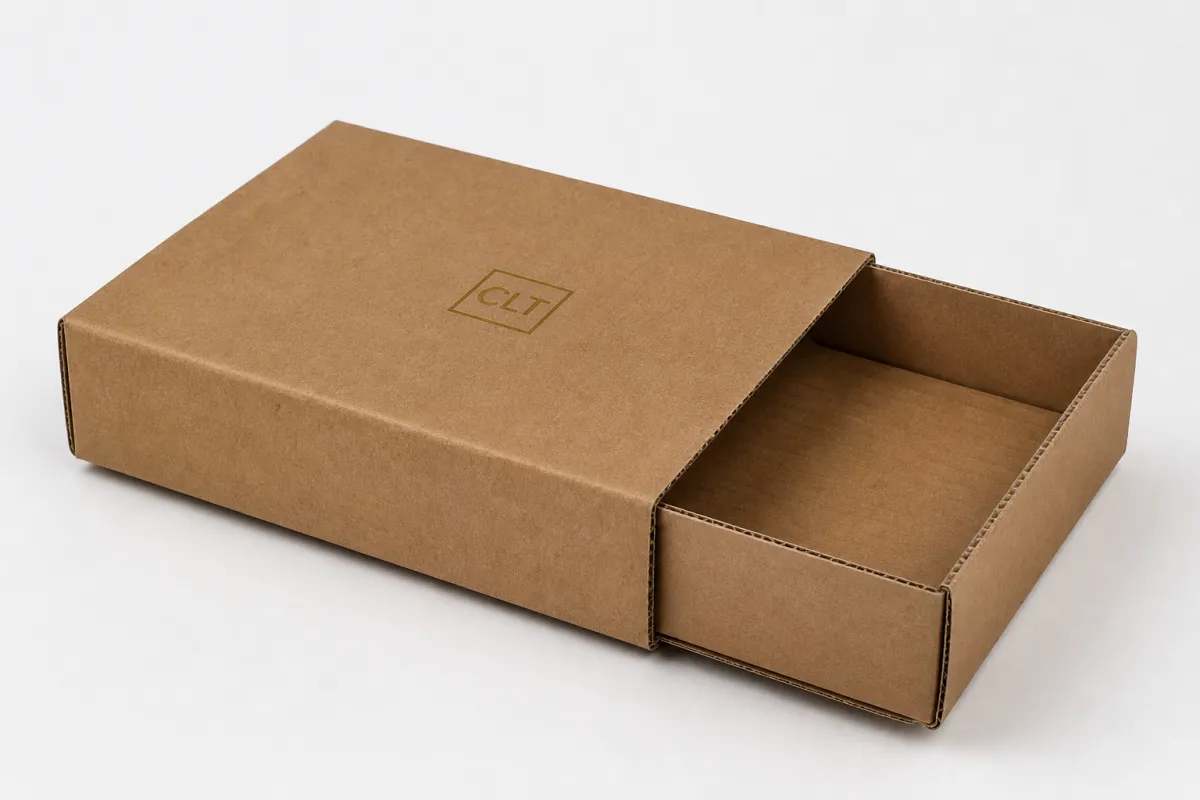
The construction is simple, which is part of the appeal. A telescoping carton uses two pieces: a bottom section and an overlapping top that slides over it. That overlap creates a variable-height shipper. For products that do not share a single consistent packed height, heavy duty telescoping cartons bulk create a workable middle ground between one-size-fits-all shipping and fully custom packaging for every SKU.
Board selection has the biggest effect on performance. A lighter shipment with strong internal cushioning may do fine in a single-wall build. Heavier goods, longer freight lanes, and palletized orders usually call for more strength, which is where heavy duty telescoping cartons bulk often shift into double-wall construction. BC flute and EB flute are common choices, though the right build depends on stiffness, print needs, and the way the carton will move through your operation. Thicker is not automatically better if it makes closing difficult or wastes pallet space.
Heavy duty telescoping cartons bulk fit long parts, bundled items, framed products, hardware kits, replacement components, and anything with a shape that dislikes side pressure. They work well where the outer shell must be rigid but the height still needs to flex a little. Sharp corners, fragile surfaces, and uneven profiles usually need inserts, edge protectors, or dividers. Corrugated board can do a lot, but it should not be asked to solve every packaging problem by itself.
There is a limit buyers sometimes overlook. Telescoping cartons solve height variation. They do not correct a poor pallet pattern. They do not fix unstable stacking. They do not replace cushioning when the product needs protection from impact. Heavy duty telescoping cartons bulk are a packaging format, not a shield that makes bad handling disappear. If the load shifts inside the carton or the board is too light for the freight profile, the damage still happens. I have seen a carton look almost overbuilt on paper and still fail because the product inside had room to skate around.
For teams that prefer measurable standards over guesswork, ISTA transport testing and ASTM compression methods such as D642 offer a clearer picture than a carton that merely looks substantial. Fiber sourcing also matters for some programs, and FSC certification can be part of the buying decision. Reference points are available at ISTA and FSC.
The best results come from matching product, route, and warehouse process. That means internal protection, overlap depth, crush resistance, and whether the order is hand-packed or handled by equipment all belong in the same conversation. Ignore one of those pieces and the carton spec gets weaker, even if the sheet looks polished.
Heavy duty telescoping cartons bulk specifications that matter
Buyers usually ask for dimensions first, and that is a fair place to begin. Still, dimensions alone do not tell the whole story. With heavy duty telescoping cartons bulk, the spec needs to reflect what happens on the packing floor, not just what looks tidy in a drawing. Internal dimensions, overlap range, board grade, and wall construction are the four details that separate a useful carton from one that slows the line down.
A good request is specific. Give the inside length, width, and height range. State whether the carton is single-wall or double-wall. Name the flute profile. Confirm the minimum and maximum overlap depth. Say whether the carton must carry inserts or dividers. That level of detail turns heavy duty telescoping cartons bulk from an assumption into a controlled purchase.
- Internal dimensions: measure the packed product, not the bare product.
- Overlap depth: make sure the top section locks securely at both the shortest and tallest SKU heights.
- ECT or burst rating: check compression performance, not just board thickness.
- Tolerance: ask for realistic manufacturing tolerance, usually around +/- 1/8 inch to +/- 1/4 inch depending on the build.
- Finish: kraft, white, moisture resistance, or a printable surface.
- Compatibility: inserts, dividers, corner pads, or other internal supports.
Edge crush test, burst rating, and compression resistance are different things, and the carton can score well on one while still underperforming in stacking. That is why I like to look at the whole package. For heavier heavy duty telescoping cartons bulk, 44 ECT or 200# burst is a common starting point for stronger single-wall work, with double-wall builds stepping in when pallet stacking and freight abuse are part of the route. The exact spec depends on load, stack height, and how the shipment travels.
Tolerance deserves more attention than it usually gets. A carton that fits on paper but lands a quarter inch off in production creates noise on the floor and slows packing crews down. If product height changes across SKUs, build the range into the spec and mark which dimension can float. That keeps heavy duty telescoping cartons bulk from becoming a daily adjustment exercise. No one wants a line crew shimming every unit because the drawing read like a wish list.
Finish options can matter more than people expect. Kraft is standard and practical. White gives stronger print contrast. Moisture-resistant treatments can help in humid warehouses or on tough routes, though they are not a cure for water exposure. Printable surfaces support handling marks, barcodes, and branding. If the carton needs inserts or dividers, say so early. A telescoping carton designed without that detail may fit the product and still fail the workflow.
Pricing, MOQ, and unit cost for bulk orders
Pricing for heavy duty telescoping cartons bulk follows the same pressures that shape performance: board grade, wall count, carton size, print coverage, and order volume. Larger cartons use more fiber. Double-wall costs more than single-wall. Custom die-cut work costs more than standard production-friendly dimensions. Print raises the price again. That is not a trick; it is just corrugated manufacturing arithmetic.
For planning purposes, the ranges below are useful. They are not a quote, and they are not a substitute for pricing tied to your own dimensions. They do help buyers avoid budgeting with wishful thinking.
| Carton option | Typical MOQ | Typical unit price range | Best use case |
|---|---|---|---|
| Single-wall telescoping, unprinted | 250 to 500 units | $1.10 to $2.20 | Moderate-weight products, lower stack load, simpler freight |
| Custom single-wall with exact sizing | 500 to 1,000 units | $1.40 to $2.85 | Mixed-height SKUs with a tighter fit requirement |
| Double-wall telescoping, unprinted | 1,000 to 2,500 units | $2.10 to $4.75 | Heavier goods, palletized freight, stack-sensitive shipments |
| Printed bulk run with handling marks or branding | 2,500 units and up | $2.35 to $5.50 | Transit cartons that still need brand visibility or instructions |
Those ranges are normal enough to be useful, but the final number can move quickly if the carton is oversized, unusually tall, heavily printed, or built from stronger liner and medium grades. Heavy duty telescoping cartons bulk tend to become more efficient once quantity rises into the low thousands because setup and run efficiency improve. Unit cost starts to flatten, then freight and storage begin to matter more than the carton itself.
That tradeoff matters. A lower unit price can still be the wrong buy if the carton ships poorly or needs extra filler to function. I would rather see a slightly higher carton price paired with lower labor and fewer damages than a cheap box that forces repacks. For heavy duty telescoping cartons bulk, the landed cost tells the real story: carton price, pallet count, freight, tooling or setup charges, and the labor needed to use the box.
Ask for a quote that includes all of it. If a supplier gives only the carton price, half the picture is missing. A real bulk quote for heavy duty telescoping cartons bulk should show unit pricing, MOQ, lead time, freight assumptions, pallet counts, and whether print or board upgrades change the cost. Anything less is only a teaser.
Process and lead time for heavy duty telescoping cartons bulk
The ordering flow should feel plain, and if it does not, some uncertainty is hiding in the process. For heavy duty telescoping cartons bulk, the clean sequence is spec check, sample or proof approval, production, packing, and shipping. Better starting information means faster movement. Missing dimensions and vague stack requirements slow everything down.
Lead time depends on complexity. A stock-style build with no print can move faster than a fully custom order with artwork, revised overlap, and a new board spec. As a practical range, simple heavy duty telescoping cartons bulk runs may ship in about 10 to 15 business days after approval, while printed or highly customized builds often take 15 to 25 business days. Freight comes after that. Long lanes, pallet shipments, and regional delivery windows can add several more days.
Three things slow jobs down most: incomplete dimensions, unclear stacking requirements, and artwork approval that arrives late. If the product height changes across SKUs, say so. If the cartons will be palletized three high, say so. If the print must match an established brand color, provide that before the proof stage. Heavy duty telescoping cartons bulk move fastest when the buyer treats the spec as a production document rather than a rough idea.
Here is a quick checklist that shortens the path:
- Send the product length, width, height, and weight.
- State the shortest and tallest packed height you need to cover.
- Confirm whether the carton will ship parcel or freight.
- Tell us if the load will be palletized and stacked.
- Include any insert, divider, or corner protection needs.
- Share the destination zip code for a freight estimate.
- Specify whether print is required, and if so, provide the artwork format.
If you are working across several SKUs, compare the height range before ordering. One carton spec often covers more products than buyers expect, which is a big reason heavy duty telescoping cartons bulk appeal to operations teams. Fewer carton styles means less SKU sprawl, fewer changeovers, and more predictable inventory planning.
There is also a production reality to keep in mind. A carton that looks perfect in a mockup may need a small adjustment once it is formed, folded, and handled on the line. That is normal. The buyer who gets the best outcome usually leaves room for a sample stage, checks the actual overlap, and signs off without dragging the process out. Slow approvals are where schedules go to waste, and nobody on the dock likes waiting on a file that should have been approved yesterday.
Why choose us for heavy duty telescoping cartons bulk
Most buyers are not looking for poetry. They need a carton that fits, ships, and repeats. That is the value behind heavy duty telescoping cartons bulk at Custom Logo Things. The focus stays on clear specs, direct quoting, and production support that keeps the order grounded in shipping reality rather than brochure language.
Consistency matters more than drama. If the first run works and the repeat order matches it, the packaging team wins twice. Quality control on heavy duty telescoping cartons bulk matters because board verification, dimension control, and repeat order consistency all affect whether the carton still works six months later when the buyer reorders under the same part number. If the spec drifts, the savings disappear.
Buyers also save time when one vendor handles sizing guidance, quote support, and production coordination. Passing the job between multiple vendors is how small errors become expensive mistakes. With heavy duty telescoping cartons bulk, a direct process works better. Less jargon. Fewer surprises. Faster answers when the carton needs a small adjustment.
Not every shipment needs the same treatment. Some need plain kraft. Some need print. Some need stronger board because the freight lane is rough or the pallet stack is high. Heavy duty telescoping cartons bulk should be built around the actual use case, not a generic spec sheet copied from somewhere else.
If you are buying across several product lines, our Wholesale Programs page can help you compare bulk options quickly. For orders that need a custom quote, a clear spec sheet and a destination zip code usually get the fastest response. Ask for landed cost, not just carton price. That is the number that tells the truth.
Next steps for ordering heavy duty telescoping cartons bulk
Start with the product, not the box. Measure the packed length, width, and height. Confirm the weight. Then decide how much height variation the carton needs to absorb. That is the foundation for ordering heavy duty telescoping cartons bulk without paying for the wrong build.
Next, estimate volume. If the order repeats, monthly usage matters more than a one-time need. A small test run can make sense for a new product, but bulk pricing starts to matter once the order size supports efficient production. For many buyers, heavy duty telescoping cartons bulk become practical somewhere in the 500 to 2,500 unit range, with better pricing as quantities rise beyond that.
Then decide whether print belongs on the carton. If the box is mainly a transit shipper, keep the print functional: handling marks, barcodes, or simple identification. Full branding is possible, but it changes price and lead time. If you need printed heavy duty telescoping cartons bulk, supply artwork early and keep the design simple enough to reproduce cleanly on corrugated stock. Fancy artwork on corrugated can get muddy faster than most people expect, so a clean one-color layout often wins.
Send these details for a fast quote:
- Size range or exact dimensions
- Product weight and fragility level
- Preferred board grade or any existing spec
- Quantity needed and repeat volume
- Destination zip code or freight lane
- Print requirements, if any
- Pallet or stacking expectations
If the product height varies across SKUs, request one sample size before you commit to a large run. That small step can prevent a lot of frustration. Once the fit is confirmed, move ahead with the full order and compare the total landed cost, not just the carton price. That is how heavy duty telescoping cartons bulk turn into a smart purchase instead of a guess.
heavy duty telescoping cartons bulk work best when the spec is honest, the board matches the load, and the buying team cares about freight reality. Get those three things right, and the cartons do their job without drama. That is usually the whole point.
Frequently asked questions
What is the minimum order for heavy duty telescoping cartons bulk?
MOQ depends on board grade, size, and whether the carton is stock-style or custom-cut. Smaller runs are possible, but bulk pricing usually starts when the order is large enough to run efficiently on production equipment. For heavy duty telescoping cartons bulk, ask for the MOQ with and without print so you can compare the real unit cost instead of guessing.
How do I choose the right size for telescoping cartons in bulk?
Measure the product's longest, widest, and tallest packed dimensions, then add only the clearance needed for protection. Check the overlap range so the top and bottom sections still lock securely at the shortest and tallest SKU heights. If you have multiple heights, choose a size range that covers them without creating too much void space. That is the practical way to spec heavy duty telescoping cartons bulk.
Are heavy duty telescoping cartons bulk orders good for heavy products?
Yes, if the board grade and compression strength match the product weight and stacking load. Double-wall or stronger board is usually the safer choice when cartons will be palletized or stacked in transit. The carton still needs proper internal packing, because strong walls do not fix bad load distribution. That rule holds true across most heavy duty telescoping cartons bulk programs.
What lead time should I expect for telescoping cartons bulk orders?
Lead time usually depends on size, quantity, custom printing, and whether artwork is already approved. Standard builds move faster than custom specs, especially when the order needs test samples or revised dimensions. The fastest way to shorten turnaround is to send complete specs and approve proofs quickly. That keeps heavy duty telescoping cartons bulk moving instead of sitting in revision limbo.
Can I get printed heavy duty telescoping cartons bulk for branding?
Yes, but print options can change MOQ, cost, and lead time. Simple one-color marks or handling instructions are usually easier and cheaper than full coverage branding. If the cartons are mostly for transit, keep the print functional and readable instead of decorative. That approach usually works better for heavy duty telescoping cartons bulk than trying to turn a freight shipper into a billboard.


