Buyer Fit Snapshot
| Best fit | Custom Corrugated Edge Protectors Bulk projects where brand print, material claims, artwork control, MOQ, and repeat-order consistency need to be specified before quoting. |
|---|---|
| Quote inputs | Share finished size, material target, print colors, finish, packing count, annual reorder estimate, ship-to region, and any compliance wording. |
| Proofing check | Approve dieline scale, logo placement, barcode or warning zones, color tolerance, closure strength, and carton packing before bulk production. |
| Main risk | Vague material claims, crowded artwork, missing packing details, or unclear freight terms can make a low unit price expensive after revisions. |
Fast answer: Custom Corrugated Edge Protectors Bulk: Specs & Pricing should be specified like a repeatable production item. The safest quote records material, print method, finish, artwork proof, packing count, and reorder notes in one written spec.
Production checks before approval
Compare the actual filled-product size with the drawing, then confirm tolerance on folds, seals, hang holes, label areas, and retail display edges. Reserve space for logos, QR codes, warning copy, and material claims before decorative graphics fill the panel.
Quote comparison points
Review material grade, print process, finish, sampling route, tooling charges, carton quantity, and freight assumptions side by side. A quote is only useful when the supplier can repeat the same color, closure quality, and packing count on the next order.
Custom Corrugated Edge Protectors Bulk: Specs & Pricing
Custom corrugated Edge Protectors Bulk orders make the most sense when a single damaged pallet corner can turn into a rejected shipment, a claim, or a long afternoon at the dock. A paperboard part does not sound dramatic, and that is exactly why people underestimate it. In practice, custom corrugated edge protectors bulk can shield the exact contact points that drive the highest freight costs, especially on stacked pallets, mixed loads, and recurring outbound programs where consistency matters more than improvisation.
The math is pretty simple. Buying in bulk lowers the unit cost, cuts down on emergency replenishment, and gives operations teams a predictable part they can use on every load. That matters whether the shipment carries branded packaging, retail packaging, or product packaging that has to arrive square, stable, and presentable. Extra stretch wrap can help, and foam can cushion, but neither one replaces a properly sized edge protector when compression strength and clean recyclability both matter. For a buyer comparing custom corrugated edge protectors bulk against stopgap fixes, the real question is not whether the part is inexpensive. It is whether the part prevents costs that are five, ten, or twenty times higher than the protection itself.
At Custom Logo Things, the most practical programs are usually the least flashy ones. They are the ones that fit the load, land at the right price break, and stay consistent across reorder cycles. That is why custom corrugated edge protectors bulk often outperforms ad hoc packing fixes: the part is repeatable, easy to stack, and simpler for a warehouse to train around than a patchwork of one-off decisions.
Custom corrugated edge protectors bulk: why the math works
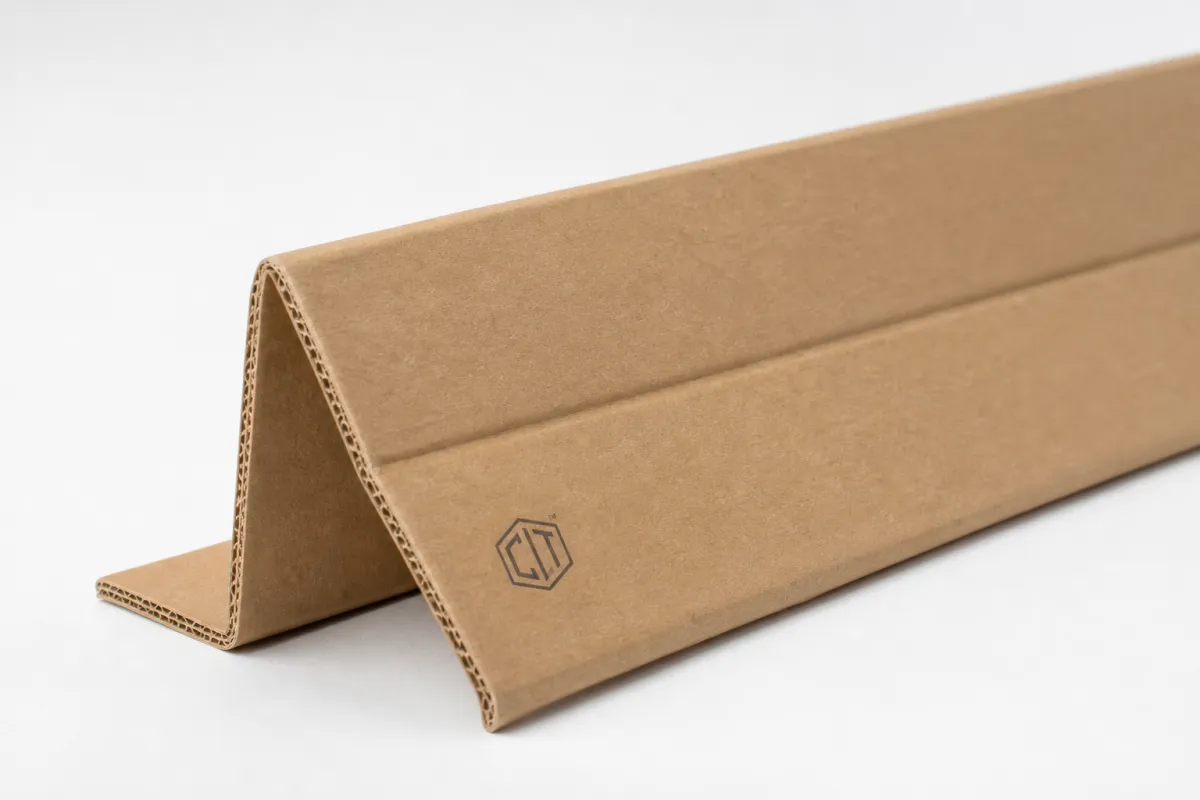
One crushed corner can cause more trouble than a dozen intact cartons can offset. Freight claims do not care how many units survived the trip if the pallet looks compromised on arrival. Custom corrugated edge protectors bulk helps prevent that kind of failure at the exact pressure points where stretch film and case compression alone often fall short. Edge reinforcement is not glamorous. It is practical. Practical packaging usually wins on the balance sheet.
Think about the cost structure. If a buyer orders custom corrugated edge protectors bulk in a run of 5,000 pieces instead of 500, setup, cutting, and fulfillment costs are spread across more units. That is why unit pricing tends to improve as volume rises. There is another benefit that does not show up in the first quote: fewer emergency buys. Emergency replenishment usually means higher freight, rushed approvals, and more dock-side rework. Those soft costs can erase the apparent savings of a small quantity of generic stock parts.
A useful comparison for packaging teams looks like this. Extra stretch wrap is fast, but it does not add much edge compression resistance. Foam inserts can cushion sensitive surfaces, but they may be unnecessary on commodity loads and can create disposal questions. Corrugated corner protection, by contrast, gives predictable structure. It is a better fit for programs where the load needs to stay square from the wrap station to final delivery. For custom corrugated edge protectors bulk, that repeatability is often the real value.
The branding angle should not be ignored either. Cleanly specified corrugated protection supports package branding because the pallet itself arrives looking intentional rather than improvised. In some operations, that matters as much as the product inside. A load that looks engineered tends to receive better handling, both in the warehouse and at the receiving dock. That is not a marketing slogan. It is a working assumption based on how people respond to shipments that appear stable and organized.
From a packaging buyer's point of view, the strongest argument for custom corrugated edge protectors bulk is simple: the part costs far less than the claim it can prevent. Even small reductions in damage rates can justify the program. If edge damage is happening on one in 100 loads, and the protector costs only a few cents per corner in volume, the economics usually favor protection long before the first claim is filed. The exact numbers depend on load weight, route conditions, and handling frequency, but the direction is usually clear.
I have seen teams chase a cheaper board spec only to spend more later on repacks, credits, and rushed replacements. That part of the math tends to get brushed aside in the first meeting, then suddenly it is all anyone wants to talk about. The fix is not complicated: measure the damage, price the protection, and compare both on the same sheet.
For buyers building a larger packaging design system, edge protection also fits neatly with Custom Packaging Products and, where the outer shipper is part of the same program, Custom Shipping Boxes. The protector is not a random add-on. It is a structural part of the load architecture.
When a team orders custom corrugated edge protectors bulk, it is usually because the load is worth protecting at scale. That scale changes the economics. It also changes the risk. Once the product ships weekly or monthly, the cost of inconsistency rises quickly. A small savings on a weak part can become a larger loss through returns, repacking, and customer friction.
For buyers comparing vendors, the cleanest benchmark is not just price per piece. It is price per protected load, with a realistic allowance for freight, handling, and failure risk. Custom corrugated edge protectors bulk tends to shine in that comparison because it is sized to the load, not forced onto it.
Product details: what custom corrugated edge protectors bulk can be built to do
Custom corrugated edge protectors bulk is not one product so much as a family of structural options. That distinction matters. A single-wall L-profile for light cartons performs very differently from a heavy-duty, double-wall corner board built for stacked pallets or export handling. Board grade, flute structure, and score placement all affect how the protector behaves under compression, vibration, and moisture exposure. Buyers who define the shape first and the load requirement second usually end up with a product that looks right but performs poorly.
Common constructions include single-wall, double-wall, and heavy-duty reinforced builds. Recycled-content board is widely used, and moisture-resistant treatments can be considered when loads pass through humid distribution lanes or sit in refrigerated environments. For custom corrugated edge protectors bulk, recycled fiber content can be a useful talking point for sustainability programs, but it should never be the only selection criterion. A greener part that fails under compression is not a better part.
Shape choices matter just as much. L-profiles are familiar and economical. U-profiles can grip an edge more closely. Full-length edge boards provide linear protection across long carton runs or appliance panels. Pre-scored pieces can fold cleanly around product edges, while cut-to-size sets help when a buyer needs multiple lengths in one shipment. In mixed-load shipping, standardizing a small number of protector formats can simplify packing stations and reduce training errors.
Printing and identification are often underestimated. A simple part number, SKU code, color bar, or logo can help operations teams identify the right size without opening bundles. That helps in multi-line environments where the packaging design must support speed as much as protection. Custom corrugated edge protectors bulk can carry subtle branding or warehouse identifiers without turning the component into a high-cost printed display item. The print should stay functional. If it adds confusion, it defeats the purpose.
Applications are broad. Appliances, furniture, bundled goods, metal parts, cartons on a pallet, and mixed product runs all benefit from edge stabilization. The protector helps resist strap cut-through, corner crush, and surface abrasion. It is also common in export packaging, where loads face longer transit cycles and more touchpoints. In those cases, buyers often pair edge protection with stretch wrap, corner blocking, or straps to form a complete load-restraint strategy.
There is a useful comparison for teams thinking in terms of product packaging rather than pallet packaging alone. A strong inner pack and a stable outer pack are only as effective as the load edges that connect them. If those edges crush, the rest of the system becomes less reliable. Custom corrugated edge protectors bulk closes that weak point with a material that is familiar to most warehouses and easy to recycle in many regions.
For companies also sourcing Wholesale Programs, the advantage of a standard corrugated protector is operational simplicity. It can be nested, stacked, bundled, and repeated across multiple SKUs without turning the warehouse into a custom fabrication shop. That predictability is what buyers often pay for, even if they do not say it out loud.
From a standards perspective, edge protection is often evaluated alongside transit testing and distribution design. If a program needs formal qualification, many teams look to methods associated with ISTA testing, which is documented at ista.org. For sustainability claims tied to fiber sourcing, FSC certification at fsc.org can also matter when the supply chain requires traceability. Those references do not dictate the design, but they do help anchor decisions in recognized frameworks.
"If the load is unstable, the dock crew will fix it for you whether you asked for help or not. The better move is to design the protector so the load arrives ready."
Specifications that matter for custom corrugated edge protectors bulk
The most expensive mistakes in custom corrugated edge protectors bulk usually start with vague specs. A buyer says "make it stronger," and the quote comes back with a heavier board that still does not match the load. Better to specify the actual variables. That means leg length, thickness, flute direction, inside dimensions, outside dimensions, and score placement. Those details decide whether the protector slips on cleanly, grips securely, and supports the right amount of compression.
Leg length determines how much surface area is protected. Thickness influences rigidity and crush resistance. Flute direction affects the way the board resists bending, which can change performance under strap pressure or stacking load. Inside and outside dimensions matter when the corner board must clear a product edge without rubbing against labels, film, or carton seams. Score placement becomes critical for folding parts that need to wrap a corner at a precise angle. For custom corrugated edge protectors bulk, these dimensions are not minor adjustments. They are the difference between a part that fits and one that frustrates the line.
Load conditions should drive the board grade. A 35-pound retail carton is not the same as a 900-pound mixed pallet. Humidity changes the equation. So does dwell time in a container, trailer, or yard. A load moving locally on dry routes can sometimes use a lighter build than export freight or cross-country shipments. Stacking height matters too. Once loads are going two, three, or four pallets high, compression resistance becomes much more important than surface appearance.
There are also tolerance expectations to define up front. Buyers should ask about acceptable variance in length, angle, thickness, and bundle count. If the protector is being run through automated packing or a fast manual line, too much variation can create stoppages. Pack count per bundle and pallet configuration also affect the quote. A bundle of 50 pieces may be easier to stage than a bundle of 100, but the pallet footprint and freight efficiency may change. In custom corrugated edge protectors bulk, the cheapest manufacturing spec is not always the cheapest delivered spec.
Die-cut or length-specific requirements can also alter pricing. Straight cut lengths are usually simpler. Pre-scored angles, notches, or special ends often need extra setup. If the order includes multiple protector lengths in one program, ask whether the pieces can share the same board grade and converting method. If they can, the ordering process gets cleaner. If they cannot, pricing should be separated by size so no one subsidizes a more complex part with a simple one.
A practical quoting checklist for custom corrugated edge protectors bulk includes these items:
- Pallet size and load pattern
- Product dimensions and overhang risk
- Load weight and maximum stack height
- Transit method, including parcel, LTL, FTL, or export
- Photos of the packed goods and problem areas
- Target protection level and acceptable board grade
- Monthly or quarterly usage forecast
If the buyer can supply those details, the quote is usually far more useful. If not, the first round often prices the wrong board. That creates delays and makes the procurement process look more expensive than it really is.
One subtle point deserves attention: flute direction and score placement should be discussed together. A protector can look correct on paper but fold awkwardly if the flute orientation fights the score. Warehouse teams notice that immediately, even if purchasing does not.
For teams that already buy Custom Printed Boxes or related shipping materials, this is the same discipline applied to a different component. The goal is not decoration. The goal is fit, repeatability, and clean handling. Custom corrugated edge protectors bulk should be specified like any other structural packaging part.
When buyers skip these details, they often end up overbuying safety margin. That raises cost without necessarily improving performance. A better spec can often reduce material consumption while still protecting the load. That is why detailed quoting is not bureaucracy. It is cost control.
Custom corrugated edge protectors bulk pricing and MOQ
Pricing for custom corrugated edge protectors bulk usually comes down to five variables: board grade, dimensions, print coverage, custom tooling, and freight. Those factors interact. A larger protector uses more fiber, but a better nesting pattern might offset some of the cost. A printed part can support package branding, but a full-color treatment is rarely necessary for a warehouse component. Buyers who compare quotes only by unit price often miss the real story.
MOQ matters because setup costs need to be recovered somewhere. A small run of a simple protector can still be efficient if the dimensions are standard and the converting is straightforward. Heavier profiles, unusual angles, or multiple SKUs can push the minimum upward. As a practical range, simple bulk orders may price best at a few thousand pieces or more, while complex or oversized builds often need higher quantities to reach an efficient run length. The exact threshold depends on the board grade and finishing method.
A useful comparison structure for buyers evaluating custom corrugated edge protectors bulk quotes is to make every quote use the same thickness, the same dimensions, the same pack-out, and the same delivery terms. Otherwise the numbers are not actually comparable.
| Option | Typical Use | Relative Cost | Operational Benefit |
|---|---|---|---|
| Single-wall L-profile | Light cartons, standard pallet corners | Lowest | Easy to stage and recycle |
| Double-wall corner board | Heavier pallets, longer transit cycles | Moderate | Better compression resistance |
| Heavy-duty pre-scored protector | Export loads, high-value freight, unstable stacks | Higher | Stronger fit and more precise placement |
| Printed or color-coded protector | Multi-SKU operations, branded packaging systems | Moderate to higher | Faster identification on the line |
That table hides an important point: the cheapest option is not always the best one for total landed cost. If a lighter board fails and causes rework, the real cost is much higher than the line-item quote. Buyers in wholesale programs often understand this quickly because they see the labor impact every day. The same logic applies to custom corrugated edge protectors bulk.
Hidden variables can distort the budget if they are not flagged early. Sample charges may apply if the part needs a prototype. Rush fees are common when the order has to be inserted into the production schedule. Special palletizing can add cost if the product must be banded or wrapped in a specific way. Freight zones matter too. A low unit price can disappear if the shipment travels across multiple zones or requires liftgate delivery.
From a pricing strategy standpoint, it helps to ask for tiered pricing. A quote that shows 1,000, 5,000, and 10,000 units reveals where the real break points are. That is much more useful than a single number. It also helps planners map current usage against future growth. If the second order will likely be twice the size of the first, it may be smarter to price the program around the repeat run rather than the pilot run.
Custom corrugated edge protectors bulk also interacts with freight in a way many buyers underestimate. Heavier board increases package weight, which can affect LTL pricing and pallet efficiency. A slightly heavier part that prevents damage can still save money overall. That is where the decision becomes more analytical than intuitive. Packaging procurement is not just about buying a material. It is about buying a lower failure rate.
If the program is tied to seasonal volume, ask whether the quote can support reorders with the same die and board spec. Reusability of setup is one of the quiet reasons bulk pricing improves over time. The more repeatable the part, the more predictable the price.
For buyers needing a broader packaging source base, it can help to align edge protectors with other Custom Packaging Products or structured shipping components from Custom Shipping Boxes. Coordination usually reduces total procurement noise, which is worth real money in a busy warehouse.
Process and timeline: from quote to production steps
The production path for custom corrugated edge protectors bulk is more predictable than many buyers expect, but only if the specs are locked early. A typical workflow starts with inquiry and ends with shipment, yet the most time is often spent before production begins. That is because the first round of questions determines whether the part can be made cleanly, efficiently, and at the right cost.
The process usually looks like this: inquiry, quote, dieline or dimension confirmation, sample or prototype approval, production, quality check, bundling, palletizing, and dispatch. Each step can move quickly when the information is complete. Each step can stall when the dimensions are vague or the load description is incomplete. For custom corrugated edge protectors bulk, the approval stage matters almost as much as the converting stage.
Converting is the practical core of the work. Sheets are cut, scored, and shaped to the agreed dimensions. Then the parts are bundled, counted, and checked. Good QC does not mean overcomplicated testing on every bundle. It means verifying that the dimensions match the approved spec, the cut is clean, the scores fold correctly, and the bundles are packed in a way that stays stable in transit. That is the minimum buyers should expect from any bulk run.
Timeline depends on order complexity, material availability, and artwork approval. Straightforward repeat orders can move faster because the die and board grade are already known. First-time custom runs usually take longer because the sizing needs validation. Rush turnaround is possible in some cases, but it should not be assumed. If the job requires a special board, color coding, or a print adjustment, the schedule can extend. That is not a failure. It is simply how custom production works.
A realistic planning rule is simple: the earlier the specs are locked, the fewer delays happen later. That sounds obvious, yet it is where many shipments go off track. Buyers often finalize the load plan after the quote, which leads to last-minute changes. Those changes can force the vendor to adjust die settings, board ordering, or bundle counts. None of those changes are free.
Typical production phases for custom corrugated edge protectors bulk often include:
- Gather dimensions, load photos, and shipping assumptions.
- Confirm protector shape, board grade, and score positions.
- Approve sample, mock-up, or prototype if needed.
- Run production, inspect dimensions, and bundle by count.
- Palletize for the most efficient freight configuration.
- Ship with reorder notes for the next batch.
That last step is important. Reorder notes reduce future friction. A good purchasing file should state the exact spec, the approved quantity, and any production constraints that mattered the first time. The next buyer, planner, or account manager should not need to rediscover the same details.
In larger organizations, shipping and packaging are rarely isolated decisions. A protector might need to coordinate with cartons, labels, inserts, or secondary packaging. That is where packaging design becomes a systems issue rather than a single SKU issue. If the protector is too large, it may interfere with the pack pattern. If it is too small, it may not support the edge at all. The best programs are the ones where the component sizes work together instead of competing for space.
Buyers working through Custom Logo Things often ask whether a prototype is worth the time. The answer depends on the load value and the handling risk. For fragile, high-value, or exported goods, a prototype is usually cheap insurance. For a standard, repeatable pallet with known dimensions, a full sample cycle may not be necessary. The key is not to overdo the process. It is to use enough verification to avoid preventable mistakes.
"A clean approval process is cheaper than a rushed correction. Most delays I see are spec delays, not production delays."
Freight planning should also be part of the timeline conversation. If the bundle count or pallet pattern changes, the shipping date may change too. That is not just logistics. It affects warehouse labor, outbound scheduling, and customer commitments. In bulk packaging, the production date and the ship date are connected by more than a calendar.
Why choose us for bulk corrugated edge protectors
Buyers do not need more packaging jargon. They need consistent dimensions, dependable bulk fulfillment, and a supplier that understands how warehouse reality works. That is where a focused program for custom corrugated edge protectors bulk earns its keep. The value is not in a flashy promise. It is in the repeatable result.
Consistency matters because one shipment should look and perform like the next. If the corner board varies too much, line workers waste time adjusting fit. If bundle counts drift, inventory control gets messy. If the same spec does not reorder cleanly, the whole program loses credibility. For recurring packaging supply, reliability is not a nice extra. It is the product.
Support on specs and sampling is also essential. A good supplier should help confirm fit before a buyer commits to a full run. That includes checking dimensions, recommending board grades, and identifying whether the protector should be single-wall or heavier. In a commercial setting, a few minutes of spec review can prevent a lot of rework. That is especially true when the load is unstable, heavy, or moving across multiple distribution centers.
Sourcing and sustainability also matter, but they should be handled honestly. Recycled-content options are often available, and corrugated fiber can support efficient end-of-life handling in many systems. At the same time, sustainability should not be treated as a substitute for performance. A protector that fails in transit is not a sustainable choice. It just creates waste elsewhere. Buyers should ask for the best balance of fiber use, compression resistance, and shipping efficiency.
For multi-warehouse buyers, account-level service can be the difference between smooth operations and recurring headaches. Seasonal spikes, regional demand shifts, and reorder planning all affect how custom corrugated edge protectors bulk should be managed. A supplier that understands those patterns can help keep inventory balanced across locations instead of forcing each warehouse to solve the same problem separately.
That same logic applies to broader Wholesale Programs. When procurement and operations are aligned, the bulk buy does more than reduce unit cost. It simplifies the entire supply chain. That is a measurable advantage, not a soft benefit.
Another reason buyers choose a bulk corrugated protector program is the ability to standardize across product families. A company shipping several cartons or palletized assemblies can often use a small set of protector sizes rather than dozens of one-off parts. That reduces complexity and makes training easier. It also supports better forecasting because the usage pattern is clearer.
From a commercial standpoint, custom corrugated edge protectors bulk fits neatly into a larger branded packaging strategy. It does not replace custom printed boxes or premium retail packaging, but it does extend the brand experience by helping shipments arrive orderly and intact. The receiving team may not praise the protector, but they will notice when the load is stable and easy to handle.
The buyer's real question is whether the supplier can convert a practical requirement into a repeatable part. When that answer is yes, the program tends to run quietly in the background, which is exactly what good packaging should do.
Next steps: order custom corrugated edge protectors bulk with confidence
If you are ready to quote custom corrugated edge protectors bulk, start with the facts, not the guesswork. Gather edge lengths, product dimensions, pallet pattern details, load photos, total ship weight, target ship date, and monthly usage. Those inputs let the quote reflect the actual program instead of a rough assumption. The more precise the brief, the more useful the pricing.
Next, decide the protection level before requesting the quote. That sounds obvious, but many teams ask for pricing before deciding whether they need a light-duty L-profile or a heavy-duty corner board. The result is a quote that is technically valid and commercially unhelpful. Choosing the right board grade first makes the comparison meaningful.
For high-value loads, unstable stacks, or export shipments, ask for a sample or prototype. A small validation run can confirm fit, folding behavior, and bundle handling before the full order is placed. That is especially helpful when the protector is being introduced into a new warehouse process or tied to a new carton size.
Then request a tiered quote. Ask for MOQ, unit price at multiple volumes, lead time, and freight assumptions. That structure shows how the economics change as volume rises. It also helps planning teams decide whether to place one larger order or two smaller ones. In many cases, custom corrugated edge protectors bulk becomes most efficient once the recurring volume is visible, not just the first purchase.
If your operation already uses a broader mix of packaging design elements, the same discipline should apply here. Keep the spec sheet clear, the reorder notes visible, and the approval trail simple. That reduces friction for everyone who touches the part after the initial purchase.
Custom corrugated edge protectors bulk is not complicated once the basics are defined. The right dimensions, the right board, the right pack-out, and the right lead time turn a small corrugated component into a useful control point for damage reduction and cost stability. That is why buyers keep coming back to it. It is not glamorous. It is dependable. And in bulk packaging, dependable usually wins.
Set the part up before the next shipping cycle, not after the next claim. Gather the measurements, ask for tiered pricing, and lock the reorder spec while the load is still fresh in everyone's head. That is the cleanest way to turn custom corrugated edge protectors bulk into a steady, low-drama part of the program.
FAQ
What information do you need to quote custom corrugated edge protectors bulk?
Provide edge length, board thickness, pallet dimensions, load weight, and whether the product ships on full pallets or mixed loads. Include photos of the packed goods and any special constraints like humidity, export handling, or stacking height. Share the target quantity so the quote can reflect MOQ, unit cost, and freight assumptions accurately.
What is the typical MOQ for custom corrugated edge protectors bulk?
MOQ depends on size, material grade, and whether the order needs custom cutting or printing. Larger or heavier profiles usually need a higher run to reach efficient pricing, while simpler sizes can qualify for smaller batches. Ask for tiered pricing so you can compare the cost break between first order volume and repeat orders.
How do custom corrugated edge protectors bulk compare with angle boards or foam?
Corrugated edge protectors are strong where pallet corners need compression resistance, but they stay lighter and easier to recycle than many foam options. Angle boards are often better for load reinforcement, while corrugated protectors can be more economical for repeat shipping programs. The best choice depends on product weight, handling frequency, and how much edge damage the shipment currently sees.
How long does production usually take for custom corrugated edge protectors bulk orders?
Timeline depends on spec complexity, sample approval, and material availability. Straightforward repeat orders often move faster than first-time custom runs because the dieline and board grade are already confirmed. If you need a rush turnaround, ask early so the quote can show what can be accelerated and what cannot.
Can custom corrugated edge protectors bulk be printed or color-coded?
Yes, many programs can add logos, part numbers, or warehouse-friendly color cues. Printing is often best kept simple so it supports operations without raising unit cost more than necessary. Confirm artwork requirements and any color limitations before approving the quote.

