Beer PVC garment bags Unit Cost Review is usually where buyers discover that a “simple clear bag” is not actually simple. Two quotes can look close on paper and still be miles apart in real value because one uses thicker film, a better zipper, tighter seams, or less waste in packing. That gap is not a mystery. It is what happens when the build is only half-defined.
For brewery merch, promo apparel, and retail garments, the bag is not just a sleeve. It is part of the presentation. It has to show the garment clearly, hold its shape, keep dust off the fabric, and survive enough handling to reach the customer without cracking, clouding, or splitting at the seam. Once the bag fails one of those jobs, the product looks cheaper than it is.
The fastest way to waste money is to compare prices before comparing specs. A low number can be real, but it can also hide a smaller size, thinner film, a weaker closure, or a packing format that is cheaper to make but harder to use. A proper quote review starts with the build, not the headline price.
Beer PVC Garment Bags: Why Buyers Notice the Cost Gap
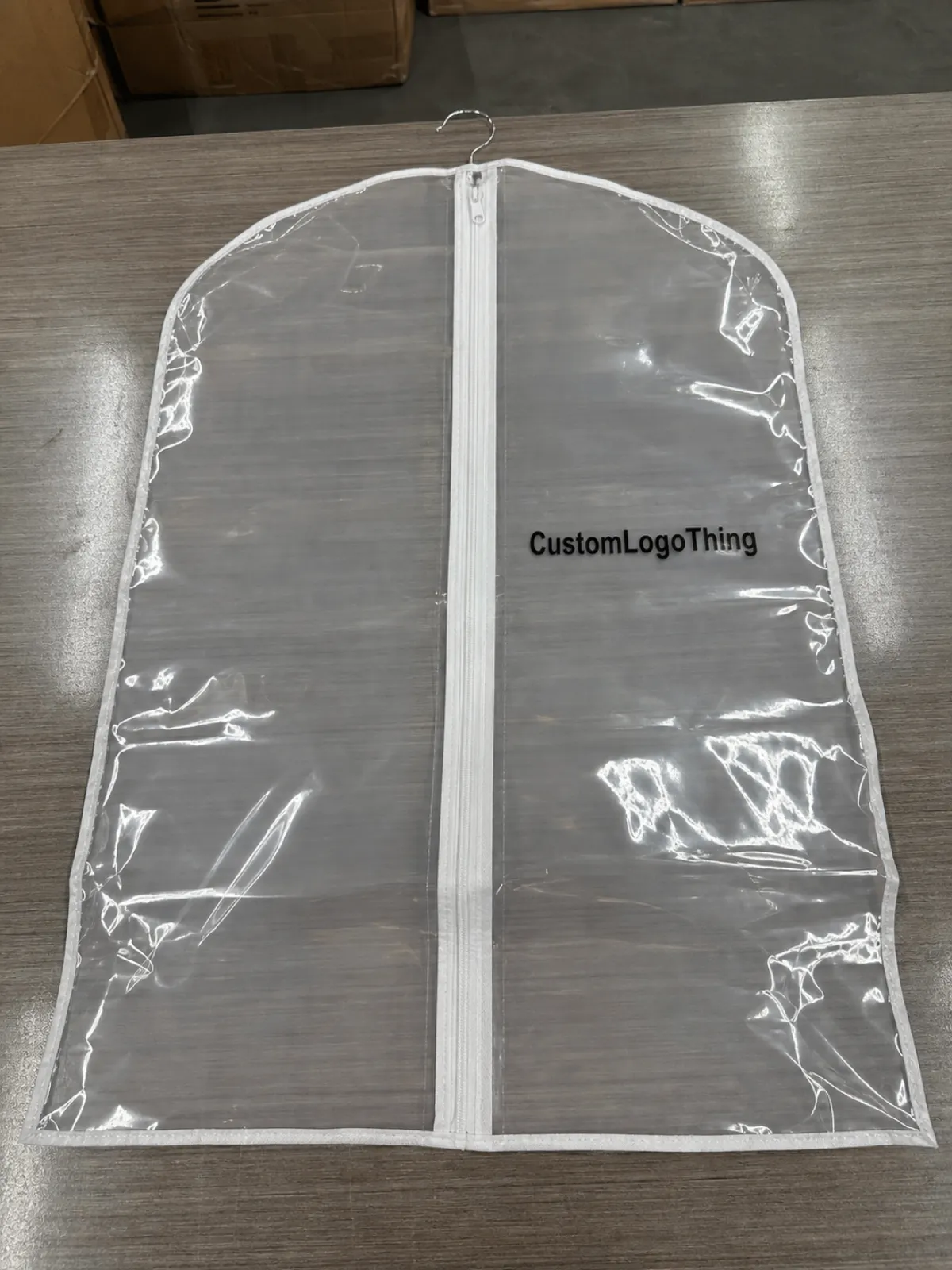
The cost gap shows up most clearly when the order moves from idea to purchase order. A 0.18 mm clear PVC bag with a basic zipper and no print sits in one price band. A 0.25 mm bag with reinforced seams, custom artwork, and retail packing belongs in another. On a product page those bags can look nearly identical. In production, they are not even close.
Buyers in brewery apparel tend to care about a few things right away: clarity, stiffness, closure quality, and how the bag feels in the hand. If the film is too soft, the bag collapses and wrinkles on the shelf. If it is too rigid, it can crack in cold conditions or during folding. If the zipper feels flimsy, the merch looks bargain-bin even when the garment itself is premium.
The biggest mistake is comparing quotes without matching the full spec. Thickness, dimensions, print coverage, closure type, and carton count all affect unit cost. So does the number of pieces ordered. A quote that seems cheaper can easily become more expensive once you add print setup, special packing, or higher freight due to poor carton efficiency.
Useful rule: compare the same film thickness, same size, same closure, same artwork, and same packing method. Anything less is not a real comparison.
If you want a cleaner benchmark, ask for both ex-factory and landed numbers. The bag cost is only part of the story. Cartons, packing density, and shipping can change the true cost per piece enough to reshape the whole buying decision, especially on smaller runs.
Material, Closure, and Branding Options That Change the Bag
Clear PVC is not one uniform material. Buyers usually deal with a few practical variants: a lighter presentation film, a heavier stock for repeated handling, and a softer grade that bends more easily around bulky folded garments. Which one makes sense depends on how the bag will be used. Shelf display and short-term promo use do not need the same build as storage or retail resale.
Thickness is the first variable that changes behavior. Lighter film can be fine for simple display and low-touch packaging. Heavier film improves stiffness and puncture resistance, but it also raises cost and can make the bag less forgiving in cold transport. There is a point where “more material” stops being an improvement and starts creating handling issues.
Closure style changes the price faster than many buyers expect. Standard zipper closures are common and keep the build straightforward. Slider closures are easier for end users but usually add cost. Hook-and-loop can work for storage, but it does not always suit retail presentation because the look is more utilitarian. A sealed top is cheaper to make closed, but it gives up flexibility if the bag needs to be reused.
Branding is another cost driver. A single-color logo is simpler than multi-color print. Placement matters too. Centered print is easier to control than artwork that must avoid a hanger opening, zipper track, or fold line. If the buyer wants seasonal branding, label insertion can be cleaner than direct print because the artwork can change without redesigning the bag itself.
Small details add up. Hang holes, bottom gussets, reinforced seams, and carton inserts all change labor content or material use. A gusset helps when the garment is thick, especially hoodies, sweatshirts, and layered apparel. Reinforced seams matter when the bag will be opened and closed often. Those extras are not decorative. They are functional, and functional usually costs more.
Here is a practical look at common build options buyers request:
| Build option | Typical MOQ | Indicative unit cost | Best for | Main tradeoff |
|---|---|---|---|---|
| Clear PVC, basic zipper, no print | 1,000-2,000 pcs | $0.38-$0.62 | Simple promo apparel and storage | Limited presentation value |
| Clear PVC, 1-color print, standard retail pack | 3,000-5,000 pcs | $0.55-$0.95 | Retail merch and brewery branding | Print setup and alignment must be controlled |
| Heavier PVC, reinforced seams, slider closure | 5,000+ pcs | $0.72-$1.30 | Heavier garments and repeated handling | Higher material and assembly cost |
| Custom size, multi-color print, upgraded packing | 5,000+ pcs | $0.90-$1.60 | Premium retail presentation | More setup time and tighter QC requirements |
Specs Buyers Should Lock Before Requesting Samples
Before asking for samples, lock the actual garment and fold profile. A T-shirt, hoodie, crewneck, jacket, apron, or uniform set all behave differently inside the same package. Then define bag width, length, and gusset depth if the item needs extra room. A bag that fits a tee neatly can be useless for a fleece hoodie. That mistake happens more often than it should.
Thickness needs a decision too. For light retail use, buyers often start around 0.15-0.20 mm. For more frequent handling, 0.20-0.25 mm is usually a better working range. Above that, seam strength, zipper quality, and fold memory start to matter more because the film is no longer the only thing carrying the load. Cold weather is another issue. PVC can get brittle in transit, so buyers shipping through colder routes should ask about anti-crack requirements.
A sample should match the actual order, not a random “close enough” piece pulled from stock. Ask for the real dimensions, real closure, real print position, and realistic carton count if possible. The goal is not just visual approval. It is fit, opening speed, closure feel, and shelf appearance. If the sample misses those points, it is useful precisely because it failed early.
Use this checklist before requesting pricing or a prototype:
- Garment type: T-shirt, hoodie, jacket, uniform, or mixed pack.
- Bag size: width, length, and gusset depth if needed.
- Film target: clear PVC thickness and any anti-crack request.
- Closure: zipper, slider, hook-and-loop, or sealed top.
- Artwork: logo file format, print coverage, and placement.
- Compliance notes: barcode, hang tag, or retail display rules.
If outer packaging needs a paperboard sourcing note, ask whether the cartons can be made from FSC-certified board. For transport testing and abuse resistance, ISTA programs are a useful reference point. They do not lower the unit price, but they do help buyers ask better questions before a shipment gets rough treatment.
Beer PVC Garment Bags Unit Cost Review: What Drives Price
The cleanest beer pvc garment bags Unit Cost Review breaks the quote into parts instead of hiding everything inside one number. Start with material cost, then print setup, labor, tooling if a custom puller or cutout is needed, inner packing, outer carton packing, and freight. That sounds dull because it is. Dull pricing is usually the most useful pricing.
Material is usually the first lever. Thicker PVC, better clarity, and improved cold-crack performance all raise the number. Setup charges are next, especially on print jobs. Screen setup, plate preparation, and artwork corrections need to be spread across the run. MOQ matters just as much. A small order carries almost the same planning burden as a larger one, so the per-piece cost rises fast when quantity is low.
The pattern is predictable: a brand wants 500 pieces, wants a custom size, wants print, and wants the lowest possible unit cost. Those requests do not naturally belong together. Small runs are possible, but the unit cost usually climbs because setup work does not disappear just because the order is modest. That is not a supplier trick. That is the math of short production runs.
Compare quotes using the same structure:
- Ex-factory unit cost: the bag price before freight.
- Landed cost: unit cost plus shipping, cartons, and destination charges.
- Setup charges: artwork, print prep, or file correction fees.
- Tooling fees: only if a custom part or special cut is required.
- Bulk pricing: the lower unit cost that appears at higher quantities.
A fair comparison needs one spec sheet. If one supplier quotes 0.18 mm film and another quotes 0.25 mm, the lower number is not useful. If one quote includes inner bags and another excludes them, the buyer is not comparing the same product. Cheap can become expensive very quickly when the quote is missing part of the build.
A few extras deserve a close look. Reinforced seams add labor. Better zipper tracks add material cost. Extra dividers, retail inserts, or folded presentation packing add handling time. Some upgrades are worth paying for because they reduce rejects and improve the customer’s first impression. Others are just decoration. Decorative extras with no functional value rarely earn their keep.
In practical terms, a standard clear bag at 3,000 to 5,000 units often lands around $0.45-$0.85 per piece ex-factory, while a heavier retail-ready build with printing and an upgraded closure can move into the $0.85-$1.50 range. Those are working ranges, not promises. Size, artwork coverage, and packing format can push the number up or down quickly. If someone offers a dramatically lower price without matching the spec, something is missing.
Production Steps and Lead Time From Proof to Shipment
The process looks simple on paper: inquiry, spec confirmation, artwork check, quotation, sample approval, bulk production, QC, packing, and shipment booking. In real production, the job only moves if the buyer answers the right questions early. If the size is vague or the logo file is wrong, everything stalls while the project gets rebuilt from the beginning.
The main delays are predictable. Late artwork changes slow things down. Unclear dimensions create sample revisions. Changes to closure type or print placement can add several days. Missing approval on carton markings, inner pack counts, or barcode placement also causes delays. A clear brief saves more time than a long back-and-forth thread filled with half-answers.
Sample work usually takes longer because it is a one-off build with more handwork and more checking. Bulk production moves faster once the spec is frozen. Simple custom orders can often move through quote, sample, and production in a tight window, but complex printing and special packing need more time. If the delivery date matters, ask for proof time, production time, and shipping time as separate items. One fuzzy promise is not a schedule.
Quality control should not be an afterthought. The useful checks are basic: dimension accuracy, film clarity, zipper smoothness, seal strength, print position, carton count, and folded pack consistency. If the order is going into retail, ask for photo approval at the pre-pack stage. That catches the easy mistakes before they become expensive ones. It is much cheaper to fix a print shift in a photo than on a finished pallet.
Why a Factory-Direct Supplier Lowers Reorder Friction
Factory-direct sourcing matters most on the second order. The first order is about getting the product right. The reorder is where missing records become a problem. If the supplier kept the dieline, film thickness, seam notes, zipper spec, packing format, and approved artwork, the next run is faster and less risky. If not, the project starts over in pieces.
A good supplier saves the things that actually matter: spec sheets, artwork files, packing notes, and approved samples. That sounds basic because it is basic. Yet a surprising amount of reorder friction comes from missing records rather than bad intent. Fewer middle layers also means fewer chances for a small change to get lost between sales, sampling, and production.
Communication matters more than polished promises. A supplier who can explain where a quote is sensitive and where it is stable is worth more than one who only repeats “best price.” If they can tell you which spec change moves the number and which one barely changes it, you can make better decisions on the next order. If they cannot, expect surprises.
For ongoing beer merch or seasonal apparel drops, consistency is the real payoff. The bag should not feel like a new project every time the brand restocks. The target is repeatable packaging that holds the garment, protects the surface, and prints the same way from one run to the next. That keeps procurement from turning into a fire drill.
If the outer cartons or display packs need documented paperboard sourcing, FSC certification may matter. It does not change the PVC bag itself, but it can matter to retail buyers who care about paperwork across the full pack-out.
Actionable Next Steps for a Cleaner Quote Comparison
Start with one complete request. Include bag size, material target, closure style, print count, quantity, destination, and required ship date. Fragmented requests make fragmented quotes, and fragmented quotes are how buyers end up comparing the wrong thing. A full brief gets a cleaner answer and a more honest unit cost.
Ask for two options if the order allows it. A standard build shows the baseline. An upgraded build shows what the extra money buys. That is the easiest way to judge whether thicker film, a better zipper, or different packing is worth the added cost. It also shows whether the price difference reflects value or just padding.
For retail-facing orders, request a digital proof before bulk approval. A proof will not tell you everything, but it can catch logo placement, copy errors, and size confusion. A physical sample is better when fit, clarity, or closure feel needs verification. If the schedule is tight, start with the proof and reserve the sample for the specs that truly need it.
The phrase beer PVC Garment Bags unit cost review should mean one thing: compare the full build, not the teaser price. Once the spec sheet is complete, the quote usually makes sense. Without that, even a low number can be a bad deal in disguise.
FAQ
What is the typical unit cost for beer PVC garment bags?
There is no honest single price because thickness, size, closure type, Artwork, and MOQ all shift the number. Small runs usually cost more per bag because setup and packing labor are spread across fewer pieces. A useful quote should show the same spec from each supplier so the numbers can actually be compared.
How does MOQ affect beer PVC garment bag pricing?
A higher MOQ usually lowers the per-bag cost because setup work is divided across more units. Very low MOQs often raise the price fast, especially when the bag needs custom sizing or printing. For test orders, many buyers ask for a pilot lot or sample run before committing to the full quantity.
Which specs have the biggest impact on beer PVC garment bag cost?
Film thickness, bag size, zipper style, and print complexity move price the fastest. Reinforced seams, hanger openings, and special packing also add labor or material cost. A cleaner spec sheet usually saves more money than haggling over a random discount.
How long is the production lead time for custom PVC garment bags?
Lead time depends on artwork approval, sample signoff, and order quantity. Simple jobs move faster; custom printing and complex packing take longer. If timing matters, ask for a schedule that separates proof time, production time, and shipping time instead of one broad estimate.
Can I get a sample before placing a bulk order?
Yes, and you should if the bag needs a specific fit, closure feel, or print placement. A sample helps confirm the size, clarity, and finish before mass production begins. If time is tight, start with a digital proof and move to a physical sample only if the build needs verification.
The real value in a beer pvc garment bags Unit Cost Review is not finding the lowest number. It is finding the right combination of Film, Closure, Print, and packing that makes sense for the garment and the order size. Once those variables are matched, the quote stops being noise and starts becoming a useful buying decision.

