Buyer Fit Snapshot
| Best fit | Holiday Gift Box Branding Launch Strategy for Strong Sales projects where brand print, material claims, artwork control, MOQ, and repeat-order consistency need to be specified before quoting. |
|---|---|
| Quote inputs | Share finished size, material target, print colors, finish, packing count, annual reorder estimate, ship-to region, and any compliance wording. |
| Proofing check | Approve dieline scale, logo placement, barcode or warning zones, color tolerance, closure strength, and carton packing before bulk production. |
| Main risk | Vague material claims, crowded artwork, missing packing details, or unclear freight terms can make a low unit price expensive after revisions. |
Fast answer: Holiday Gift Box Branding Launch Strategy for Strong Sales should be specified like a repeatable production item. The safest quote records material, print method, finish, artwork proof, packing count, and reorder notes in one written spec.
Production checks before approval
Compare the actual filled-product size with the drawing, then confirm tolerance on folds, seals, hang holes, label areas, and retail display edges. Reserve space for logos, QR codes, warning copy, and material claims before decorative graphics fill the panel.
Quote comparison points
Review material grade, print process, finish, sampling route, tooling charges, carton quantity, and freight assumptions side by side. A quote is only useful when the supplier can repeat the same color, closure quality, and packing count on the next order.
Holiday Gift Box Branding Launch Strategy for Strong Sales
Holiday packaging gets expensive fast when a holiday gift box branding launch strategy is treated like a last-minute design exercise instead of a coordinated production plan. The box structure gets approved, the print method gets locked, and only then does someone ask whether the brand story actually shows up in the unboxing experience. That sequence is common. It is also where budgets start leaking.
A thoughtful holiday gift box branding launch strategy ties together format, graphics, messaging, inserts, and release timing so the package feels intentional from the first glance at the shelf to the final lift of the lid. Seasonal packaging has a short selling window, customer judgment happens quickly, and the box itself often carries as much weight as the product inside. A weak package can make a good gift feel forgettable. A strong one can make a modest gift feel more valuable than the price tag suggests.
For Custom Logo Things, the practical question is not whether holiday packaging can look festive. It is whether the package can support brand identity, survive handling, and move through production without surprises. Done well, a holiday gift box branding launch strategy improves brand recognition, reduces rework, and gives sales and operations a cleaner path from concept to delivery. The payoff is not abstract. Fewer revisions mean fewer headaches, and fewer headaches mean the packaging lands on time with its integrity intact.
What Is a Holiday Gift Box Branding Launch Strategy?
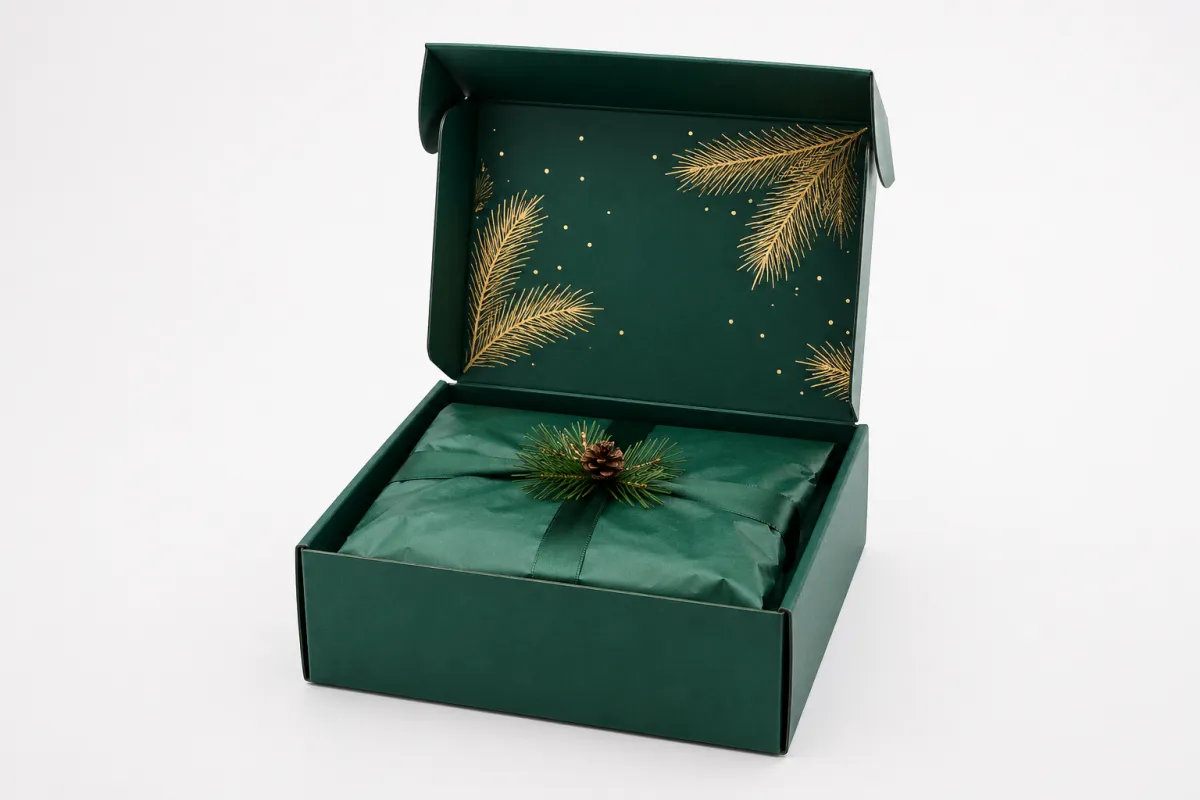
A holiday gift box branding launch strategy is the plan that connects the box format, print direction, insert design, gift reveal, and launch timing into one practical package. Plenty of holiday boxes fail not because the artwork is weak, but because branding decisions happen after the structure and print method are already locked. Once that happens, the team starts forcing a story onto a box that was never built to tell it. The result can look decorated rather than designed.
In plain terms, the strategy answers a simple question: what should the customer feel before the box is opened, and what should they remember after it is empty? That is where visual branding matters. The exterior has to carry the first impression, but the interior print, tissue, insert, and any message card need to extend the same brand identity rather than drifting into a generic holiday look. The best holiday gift box branding launch strategy keeps those pieces connected so the reveal feels like a continuation of the brand, not a costume change.
Holiday packaging deserves its own strategy because the timing is compressed and the expectations are higher. A spring promo mailer can sit in inventory for weeks while teams adjust artwork. A seasonal gift box usually cannot. Retail buyers want shelf impact, e-commerce teams want ship-ready packaging, and corporate gifting teams want something polished enough to reflect well on the sender. In all three channels, the package becomes part of the offer itself, which means the packaging choices affect the sale before the product is even touched.
From a packaging buyer’s point of view, the launch strategy also protects the budget. When the box is designed around the right structure and finish level from day one, the team avoids costly changes later. That helps with brand consistency, but it also helps with production sanity. Fewer revisions mean cleaner proofs, steadier timelines, and less risk of a December bottleneck. A package that arrives on schedule is not a small thing during peak season; it can be the difference between a profitable launch and a scramble to patch together substitutes.
One useful way to think about a holiday gift box branding launch strategy is as the bridge between creative intent and manufacturing reality. The creative side asks how the package should look and feel. The manufacturing side asks what board stock, coating, insert method, and assembly process can deliver that look without causing damaged units or painful labor costs. When those answers are developed together, the result feels deliberate instead of decorated. It also tends to photograph better, because the structure supports the design rather than fighting it.
That is also why the strategy affects more than aesthetics. It shapes shelf impact, protects the product, supports e-commerce shipping, and keeps the box aligned with the rest of the launch plan. A strong holiday gift box branding launch strategy does not just make a seasonal package prettier. It makes the rollout easier to manage and more convincing to the customer. For brands that sell across channels, that practical consistency can be more valuable than a clever seasonal flourish.
What Should a Holiday Gift Box Branding Launch Strategy Include?
A useful holiday gift box branding launch strategy should include the audience, channel, structure, insert plan, finish level, launch date, and budget guardrails. Those choices are not separate boxes to check; they are the set of decisions that determines whether the packaging supports the sale or merely decorates it. If the product ships directly to consumers, the strategy should also account for transit testing and secondary packaging. If the package sits on a retail shelf, the priorities shift toward visual arrest and quick brand recognition.
The plan should also cover the story the box needs to tell. A holiday gift can feel luxurious, playful, warm, or quietly premium, but the emotional note needs to match the product and the brand. That is where a holiday gift box branding launch strategy becomes more than a production document. It becomes a translation layer between brand intent and packaging execution. Without that layer, a box can look festive and still fail to feel like the company that sent it.
Most teams also benefit from a simple approval map. Who signs off on structural changes? Who approves the artwork? Who checks the sample against the product? Which team owns freight timing? The answers are not glamorous, yet they prevent the small mistakes that often cost the most in seasonal packaging. A clear holiday gift box branding launch strategy does not just define what the box should be. It defines who keeps the launch from drifting off course.
How a Holiday Gift Box Branding Launch Strategy Works
The process starts with the brand goal, not with a color palette. A focused holiday gift box branding launch strategy begins by asking who the box is for, what product it carries, how it will be sold, and what the brand wants the recipient to remember. If the audience is corporate buyers, the emphasis may be on premium restraint and repeatable assembly. If the audience is direct-to-consumer, the strategy may lean harder into storytelling, social sharing, and a more dramatic unboxing experience. The same box format can feel entirely different depending on those answers.
From there, the team translates the brand system into packaging decisions. Logo placement, typographic hierarchy, seasonal artwork, and foil or embossing choices should all reinforce the same message. A box does not need to shout holiday to feel seasonal. In practice, the best holiday gift box branding launch strategy often uses restrained graphics, stronger texture, and a clear logo lockup so the package still reads as the brand after the seasonal moment passes. That matters because the holiday theme is temporary, but the brand memory should last longer than December.
The unboxing sequence matters as much as the exterior. The outside box creates the first impression. The inside panel, insert, tissue, and product cradle create the reveal. If the gift slides around in the box or arrives in a muddled pile of components, the emotional value drops quickly. That is why a holiday gift box branding launch strategy should always include the interior layout, not just the printed outer shell. A package can look polished in a mockup and still feel careless in hand if the contents shift during transit.
Cross-functional coordination keeps the launch from drifting. Marketing needs to know when the design freezes. Operations needs to know when inventory has to be on hand. Purchasing needs supplier lead times. Production needs final art, dielines, and quantity confirmation. If one team assumes the others are done, the schedule slips. A disciplined holiday gift box branding launch strategy puts those handoffs on paper and treats them like deadlines, not suggestions. That kind of clarity sounds ordinary until a holiday deadline starts slipping by the hour.
There is also a difference between a box that looks good in a mockup and one that performs in real life. A printed render may show rich black coverage and a perfect foil hit, but actual production can reveal ink shift, scuffing, or a subtle bow in a heavy lid. I have watched an otherwise strong seasonal launch stall because the sample looked lovely on a monitor and a little off on the bench. That is why proofing and sample review are part of the strategy. A smart holiday gift box branding launch strategy makes room for structural testing, print approval, and assembly checks before the full run begins. The sample stage is not a formality; it is the point where expensive mistakes become visible.
“The box should not feel like a costume put on for December. It should feel like the brand dressed with purpose for the season.”
That idea holds up across channels. In retail, the package has to stop a shopper from walking past. In e-commerce, it has to survive transit and still feel premium when opened. In corporate gifting, it has to look worthy of the recipient while staying efficient enough to assemble at scale. The same holiday gift box branding launch strategy can support all three, but only if the team defines the channel first and designs around the real use case. A box built for a boutique shelf should not be forced into a warehouse route without adjustment.
Key Factors That Shape the Box, Insert, and Finish Choices
The structural choice comes first because it controls almost everything else. Folding cartons, rigid boxes, mailer boxes, sleeve systems, and custom inserts all serve different products and different price points. A folding carton can be efficient for lighter products or multi-pack retail sets. A rigid box creates a more premium feel and a sturdier presentation. Mailer boxes work well for direct-to-consumer shipping because they combine brand visibility with practical protection. Any holiday gift box branding launch strategy should choose structure based on function, not just appearance. A package that looks beautiful but fails the route is not a success.
Material selection shapes both cost and feel. A 16pt or 18pt paperboard carton with aqueous coating can be a good fit when the goal is clean branding and reasonable unit cost. A rigid setup using wrapped chipboard and specialty paper changes the tactile experience immediately, but the price goes up with material weight, wrap complexity, and labor. Soft-touch lamination, foil stamping, embossing, spot UV, and specialty inks can add polish, but they should serve the brand story rather than stacking up for their own sake. A thoughtful holiday gift box branding launch strategy uses finish level like seasoning, not like decoration by the handful.
Insert design is another major decision. Paperboard inserts are often efficient for lighter items and can be custom-cut to hold product tightly. Molded pulp may fit brands that want a more recyclable profile and a natural texture. Foam can provide excellent protection for fragile products, although it is not always the best fit for sustainability goals or premium gifting aesthetics. The insert needs to protect the product, present it cleanly, and keep assembly manageable. That is why a holiday gift box branding launch strategy has to include fit testing early, especially if there are multiple SKUs in one set. A set with five components can become a pack-out problem fast if one tray depth is off by a few millimeters.
Audience expectations also change the package spec. A luxury client gift may call for a deeper lid reveal, heavier board, and elegant interior printing. A high-volume promotional set may need a simpler build with strong branding and fast pack-out. A DTC holiday set may prioritize shipping performance, so the box must handle carrier abuse and still arrive looking clean. In each case, the holiday gift box branding launch strategy should reflect how the box will actually be touched, stored, and opened. A beautiful package that frustrates the fulfillment team tends to cost more than it earns.
Durability is not a side issue. If the package travels through a warehouse, gets stacked in pallets, or moves through retail back rooms, crush resistance and edge strength matter. Freight damage can erase the value of a beautiful package very quickly. For mail-ready formats, many teams reference transport testing standards such as those published by the International Safe Transit Association so the packaging does more than photograph well. A serious holiday gift box branding launch strategy treats protection as part of brand experience. The box has to earn its keep after it leaves the studio.
Brand clarity is the final filter. Every line, pattern, ribbon, insert, and message card should support recognition. If the holiday graphics hide the logo or the seasonal theme overwhelms the identity, the package may look nice in isolation and still fail at brand recall. The strongest holiday gift box branding launch strategy keeps the core logo hierarchy visible, uses seasonal elements with restraint, and makes sure the box still feels connected to the wider brand system. That balance is harder than it sounds, which is exactly why it deserves planning.
Holiday Gift Box Branding Launch Strategy Costs and Pricing
Budget planning is where many teams get caught. The main cost drivers are easy to name but easy to underestimate: box style, custom size, print coverage, finish level, insert complexity, order volume, and the number of SKUs. A holiday gift box branding launch strategy should deal with those variables early, because the same concept can swing from manageable to expensive depending on a few production choices. Small changes in spec can push a project into an entirely different pricing tier.
Here is the basic pattern. A standard mailer with limited print coverage and a simple insert will usually cost far less than a rigid box with multi-level nesting, foil, embossing, and custom foam. That is not a surprise. What does surprise teams is how quickly the totals move when they add specialty paper, hand assembly, extra proof rounds, or a rush schedule. A holiday gift box branding launch strategy that ignores those line items is not really a strategy; it is a guess. And guesses have a way of showing up on the invoice.
Costs also show up in places that are not obvious at first glance. Tooling, dies, plates, sampling, freight, storage, and assembly labor can all shape the final landed cost. If the packaging will sit in inventory, warehousing matters. If the launch window is narrow, rush charges matter. If the box has to be assembled by hand, labor matters a lot. A practical holiday gift box branding launch strategy makes room for all of it. The team that budgets only for print often ends up paying for logistics later.
For buyers who need a simple benchmark, it helps to compare options side by side. The numbers below are broad planning ranges, not quotes, because actual pricing depends on size, art coverage, quantity, and material availability. Even so, a table like this gives teams a useful starting point for a holiday gift box branding launch strategy conversation.
| Packaging Option | Typical Use | Approximate Unit Range at 5,000 Units | Brand Impact | Notes |
|---|---|---|---|---|
| Printed Mailer Box | DTC shipping, promo sets | $0.85-$1.60 | Strong | Efficient for shipping and simpler assembly |
| Folding Carton with Insert | Retail gifts, light products | $0.45-$1.20 | Moderate to strong | Good for lower board weight and high-volume runs |
| Rigid Box | Premium gifting, luxury sets | $2.50-$6.50 | Very strong | Higher labor and material cost, high perceived value |
| Rigid Box with Specialty Finish | Executive gifts, premium retail | $4.50-$10.00+ | High-end | Foil, embossing, and complex inserts raise cost quickly |
Those ranges are only useful if the team compares them against value. A box that protects the product, reduces returns, and raises perceived value can outperform a cheaper package that looks plain or arrives damaged. That is why a holiday gift box branding launch strategy should think in terms of total launch performance, not unit price alone. In packaging, the cheapest box is not always the least expensive decision. A modest upgrade in board strength or insert fit can save money downstream in replacements and customer service.
One practical way to manage the budget is to build good, better, and best versions before lock-in. The good version covers core branding and functional protection. The better version adds one or two tactile upgrades. The best version includes premium finishes and custom inserts. That comparison helps the team decide where the holiday gift box branding launch strategy should spend money for the biggest visual payoff. For some brands, a strong logo treatment and quality board stock deliver more value than layered decorative effects. The money should go where the customer can actually feel it.
If sustainability or material traceability matters to the buyer, the cost discussion should include recycled content, certification, and end-of-life considerations. For fiber-based materials, chain-of-custody certification through the Forest Stewardship Council can support sourcing claims where appropriate. The point is not to add paperwork for its own sake. The point is to make sure the holiday gift box branding launch strategy matches the brand’s stated values and the customer’s expectations. A package that claims responsibility should look and feel like it belongs to that claim.
Process and Timeline: From Brief to Production to Delivery
A realistic schedule is one of the most valuable parts of a holiday gift box branding launch strategy. The sequence usually starts with the strategy brief, followed by dieline review, concept design, structural sampling, print proofing, production approval, manufacturing, packing, and freight planning. Every one of those steps has a reason to exist. Skip one, and the risk tends to appear later as rework, delay, or higher freight cost. Holiday packaging is rarely forgiving.
Holiday timelines compress quickly because seasonal capacity fills up. Suppliers that can handle custom packaging often have limited room once the year gets busy, and specialty materials can be slower to secure. Late decisions on finish type, insert style, or order quantity can force the team to simplify the design or miss the launch window altogether. A disciplined holiday gift box branding launch strategy builds in enough time for revisions and holds a buffer for the parts of production nobody fully controls. It is easier to remove a contingency than to invent time that was never there.
The most common delay points are usually predictable. Unclear dielines create back-and-forth. Late copy changes force proof updates. Artwork files that do not match the production spec create technical fixes. Unapproved samples can stop the schedule cold. Quantity increases, especially near the end of the process, can also shift printing and freight plans. In practice, the holiday gift box branding launch strategy works best when the team freezes decisions before they feel urgent. That sounds strict, but the holiday calendar rewards discipline.
For planning, a typical custom packaging project may need several weeks from brief to final delivery, and more if the box uses specialty finishes, complex inserts, or multiple SKUs. If the launch is tied to retail merchandising or a coordinated product release, the packaging timeline should start alongside the product timeline, not after it. That is one of the simplest ways to keep a holiday gift box branding launch strategy from turning into a scramble. The packaging should travel with the product, not chase it.
It helps to think in terms of handoffs. Marketing owns the message and the visual direction. Design owns the artwork and structural alignment. Operations owns the inventory and packing flow. Purchasing owns supplier follow-up. Production owns the manufacturing sequence. The launch works when each team knows when its decisions are due. A holiday gift box branding launch strategy gives those deadlines a shared map. That shared map matters even more when several vendors are involved, because one missed approval can ripple through the rest of the chain.
Shipping should be planned before the box is approved, not after. If the product is going to multiple fulfillment centers or retail locations, freight timing may drive the whole schedule. If the gift set is fragile, the team may need transit testing or at least a sturdier mailer configuration. Packaging engineers often reference distribution testing methods such as those from ISTA because the box has to hold up in the real transit chain, not just on a design comp. A smart holiday gift box branding launch strategy accounts for that early. A box that survives a table mockup but fails a sorting hub is not ready.
Step-by-Step Guide to Launching Holiday Gift Box Branding
The cleanest way to launch is to start with a packaging brief. Define the product, audience, channel, budget, launch date, and order quantity before design begins. If the brief is vague, every later decision becomes harder. A good holiday gift box branding launch strategy uses the brief as the anchor point, because a seasonal packaging project can drift fast when too many opinions enter too late. The brief does not need to be long, but it does need to be specific.
Next, audit the brand assets. Confirm logo files, color values, typography rules, photography needs, and any mandatory legal text. If the package needs recycling language, product warnings, or certification marks, those details belong in the plan from the start. This is also the time to check whether the holiday look should feel elegant, playful, rustic, or highly premium. The best holiday gift box branding launch strategy keeps the season in the design without losing the core brand identity. Holiday cues work best when they feel like part of the brand family, not a borrowed language.
Then Choose the Box construction and insert method based on actual use. If the product is heavy, the package needs better structural support. If the box ships direct to consumer, the outer structure may need more crush resistance. If the set includes multiple pieces, the insert has to hold them in place without making pack-out miserable. A practical holiday gift box branding launch strategy never separates visual decisions from functional ones. Presentation and performance should be decided in the same room.
After that, review the structural sample and the print proof. This is the stage where small changes matter more than people expect. A few millimeters of extra depth can affect the insert. A heavier ink coverage can alter the surface feel. A foil line that looks elegant in a file may look crowded on the actual board if the design is too tight. The team should treat this stage as a decision point, not a formality. That habit strengthens the entire holiday gift box branding launch strategy. Sample review is where polish becomes real.
Before full production, create a launch checklist that includes inventory count, packing method, storage location, freight schedule, and replacement quantities. Holiday launches rarely go exactly as planned, so a modest overage is often wise. How much overage is needed depends on damage risk, channel mix, and expected promotional activity, but some buffer is usually smarter than running short during peak demand. A holiday gift box branding launch strategy that includes spares is usually easier to manage. Running out by a few hundred units can undo a careful build in one afternoon.
Here is a simple sequence many teams can follow:
- Write the brief and lock the launch goal.
- Gather the dieline, product specs, and brand assets.
- Select the box structure, insert type, and finish level.
- Review concept comps and approve one direction.
- Order a structural sample or prototype.
- Check print proof, fold performance, and insert fit.
- Approve production and confirm freight timing.
- Verify receiving, storage, and fulfillment plans.
That process may sound basic, but it is exactly where strong launches are won. Teams that rush past these steps often end up paying for corrections later. Teams that respect them usually get better brand consistency, fewer damaged boxes, and a more polished customer experience. That is the practical value of a holiday gift box branding launch strategy. The work looks procedural on paper and dramatic in the marketplace.
Common Mistakes, Expert Tips, and Next Steps
The biggest mistake is starting too late. Holiday packaging is not the place to improvise after everything else is finished. If the design begins after product launch decisions are already final, the team has less room to Choose the Right structure, finish, and print method. A delayed holiday gift box branding launch strategy often leads to compromises that could have been avoided with earlier planning. The calendar punishes hesitation.
Another common problem is hiding the brand under too much seasonal decoration. A little holiday energy helps. Too much can make the box feel generic, or worse, make it look disconnected from the product family. The safest approach is to protect brand recognition first and seasonal novelty second. That way the box still feels like the company’s packaging long after the holiday window closes. The strongest holiday gift box branding launch strategy usually keeps the logo easy to find, the typography readable, and the color palette grounded in the existing brand system. Recognition should survive the season.
Insert fit is also frequently underestimated. A beautiful outer box means very little if the contents rattle, tilt, or arrive damaged. It is worth checking the insert with actual samples, not just drawings. If a product has sharp edges, fragile components, or multiple accessories, the insert may need extra retention points or a different material altogether. A realistic holiday gift box branding launch strategy treats this as a protection and presentation issue at the same time. The best insert feels invisible until it fails, which is exactly why it deserves attention.
Freight damage can undermine everything. A box that feels excellent in hand may still fail if it is too soft for the shipping route or if the secondary carton offers weak edge protection. That is why transit planning matters. If the launch depends on direct shipment, the team should ask how the packaging will behave under stacking, vibration, and impact. The holiday gift box branding launch strategy should support the box from manufacturing all the way to the recipient’s desk. That line between warehouse and customer is where many beautiful packages break down.
Here are a few expert tips that come up often in production work:
- Use premium finishes where the customer actually touches or sees the box first.
- Keep the exterior design simpler if the package has to move through crowded retail or fulfillment workflows.
- Reserve foil, embossing, and specialty paper for the elements that carry the brand story most clearly.
- Compare two or three structure options before choosing the final one.
- Ask for sample builds early, especially if the set includes multiple components.
It also helps to connect packaging decisions to broader brand assets. If the holiday box includes labels, hang tags, or product identifiers, consider how those elements work with the rest of the package. Sometimes a coordinated set of finishing details does more for brand consistency than a heavier decorative print. For that kind of supporting work, many teams also look at Custom Labels & Tags so the packaging system feels unified rather than pieced together. A complete holiday gift box branding launch strategy should account for those smaller touchpoints.
For a deeper look at how packaging projects get handled across different industries, the Case Studies section can be useful because it shows how structure, branding, and timeline decisions come together in real production scenarios. That kind of reference often helps teams see why one holiday gift box branding launch strategy works better than another. Patterns become much easier to spot when they are tied to actual outcomes.
The final step is to measure the launch after the season. Track damage rates, fulfillment speed, customer feedback, and any changes in perceived value. Review whether the packaging stayed within budget and whether the schedule held up. If the box performed well but assembly was slow, that is useful. If the design looked great but the freight damage rate was too high, that matters too. A good holiday gift box branding launch strategy leaves behind lessons that make the next seasonal run easier and more profitable. Packaging programs improve when someone is willing to study the weak points, not just the nice photos.
For brands that want to keep the package environmentally credible, it is also worth checking paper sourcing and end-of-life claims against recognized standards and supplier documentation. The EPA offers practical material and waste guidance at EPA sustainable materials resources, which can help teams think more clearly about packaging choices, recovery, and disposal. That kind of research does not replace design judgment, but it strengthens the trust side of a holiday gift box branding launch strategy. When the packaging story and the sourcing story line up, the brand sounds more believable.
Put simply, a strong launch is never just about looking festive. It is about building a package that supports the product, fits the channel, protects the shipment, and gives the customer a reason to remember the brand. That is the real payoff of a holiday gift box branding launch strategy: less waste, fewer delays, better customer perception, and a seasonal presentation that feels deliberate from the first glance to the final unboxing moment. If you are mapping one out now, lock the structure, insert, and freight plan before the artwork gets sentimental; that is usually where the launch either gets easier or starts getting kinda expensive.
FAQ
What should be included in a holiday gift box branding launch strategy?
It should include the packaging goal, target audience, box structure, print finishes, insert plan, budget range, and launch timeline. For the strongest results, add channel-specific notes for retail, e-commerce, or corporate gifting so the box performs correctly in each setting. A clear approval path is also part of the plan, because a holiday gift box branding launch strategy works best when design, production, and fulfillment know who signs off and when. If the team skips that part, decisions tend to drift until the schedule starts slipping.
How far in advance should I plan a holiday gift box branding launch strategy?
Start as early as possible, because holiday packaging usually needs time for design, sampling, revisions, and production. If you want specialty finishes or custom inserts, add extra buffer. Do not wait until the product is finished before starting packaging work; the packaging timeline should run alongside product planning. A well-timed holiday gift box branding launch strategy gives the team more options and fewer rushed compromises. Late starts usually narrow the design choices and raise the odds of expensive shortcuts.
What drives holiday gift box branding costs the most?
The biggest cost drivers are box construction, order quantity, specialty finishes, insert complexity, and freight. Rush timing, multiple SKUs, and custom tooling can add meaningful expense if they are not planned early. In many cases, a simpler structure with smart branding delivers a better result than a more decorated box that eats too much of the budget. That is why a holiday gift box branding launch strategy should always compare value, not just unit price. A box that looks expensive and performs cheaply is a poor trade.
How do I keep holiday packaging on brand without making it feel generic?
Use the brand’s core colors, typography, and logo hierarchy, then layer in seasonal accents with restraint. Design for recognition first, novelty second, so the package still feels like your brand after the holidays are over. Choose finishes and unboxing details that support the product story instead of covering the box with decoration. A steady holiday gift box branding launch strategy keeps the seasonal look connected to the larger brand identity. That connection is what keeps the package from feeling like a one-month experiment.
What should I measure after the holiday gift box launch?
Track damage rates, fulfillment speed, customer feedback, and any lift in perceived value or repeat orders. Review whether the packaging matched the planned budget and timeline, not just how it looked in photos. Capture lessons on structure, finishes, and inventory planning so the next seasonal launch is easier to manage. That feedback loop is part of a practical holiday gift box branding launch strategy, because the best packaging programs improve with every run. Each season leaves data behind, and that data is worth more than guesswork.