Buyer Fit Snapshot
| Best fit | holiday shipping boxes for ecommerce what for packaging buyers comparing material specs, print proof, MOQ, unit cost, freight, and repeat-order risk where brand print, material, artwork control, and repeat-order consistency matter. |
|---|---|
| Quote inputs | Share finished size, material target, print colors, finish, packing count, annual reorder estimate, and delivery region. |
| Proofing check | Approve dieline scale, logo placement, barcode or warning zones, color tolerance, and any recyclable or compostable wording before bulk production. |
| Main risk | Vague material claims, crowded artwork, or missing packing details can create delays even when the unit price looks attractive. |
Fast answer: Holiday Shipping Boxes for Ecommerce What: Claims, Protection, MOQ, and Cost should be specified like a repeatable production item. The safest quote includes material, print method, finish, artwork proof, carton packing, and reorder notes in one written spec.
What to confirm before approving the packaging proof
Check the product dimensions against the actual filled item, not only the sales mockup. Ask for tolerance on folds, seals, hang holes, label areas, and retail display edges. If the package carries a logo, QR code, warning copy, or legal claim, reserve that space before decorative graphics fill the panel.
How to compare quotes without losing quality
Compare board or film grade, print process, finish, sampling route, tooling charges, carton quantity, and freight assumptions side by side. A lower quote is only useful if the supplier can repeat the same color, closure quality, and packing count on the next order.
Holiday Shipping Boxes for Ecommerce: What Works Best
Holiday shipping boxes for ecommerce are the small detail that keeps December from turning into a trail of damage claims. One inch too much empty space, one board grade too light, or one insert that slips during transit can undo package protection, inflate dimensional weight, and make a perfectly good customer experience feel careless the second the carton lands on the porch.
The box is rarely the only culprit. Peak season changes the whole rhythm of the warehouse. Order fulfillment speeds up, temp labor increases, carriers get less forgiving, and tiny mistakes start multiplying. Holiday shipping boxes for ecommerce sit in the middle of that chaos, which is why they deserve more than a quick reorder of whatever carton was used last year. They shape cost, labor, transit packaging performance, and brand perception before the customer even opens the flaps.
What Makes Holiday Shipping Boxes for Ecommerce Worth the Extra Attention?
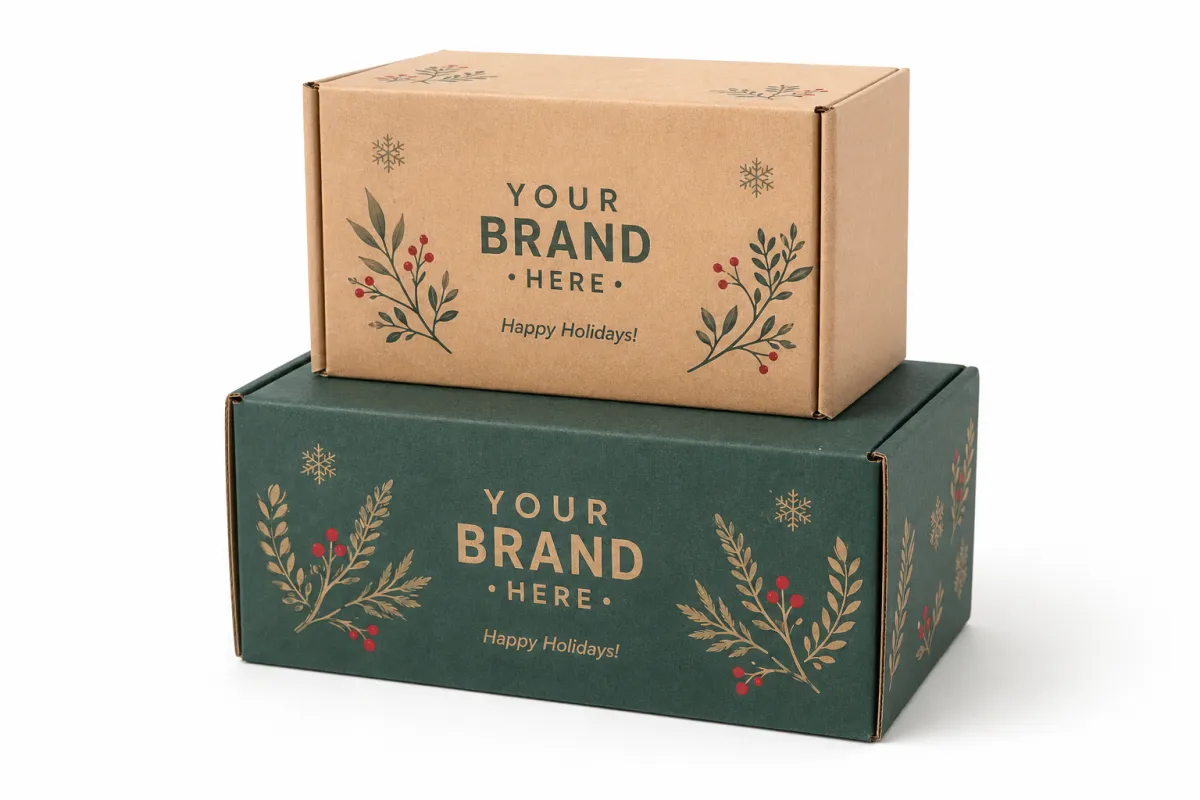
Holiday shipping boxes for ecommerce matter because the holiday rush exposes weak packaging quickly. A box that is too large lets products shift. A carton with board that is too light crushes at the corners. A sloppy closure gives tape a chance to fail at the worst possible moment. Holiday shipping boxes for ecommerce sit at the center of all three failures, which is why they deserve more scrutiny than a routine stock carton pulled from the shelf.
From the packaging buyer’s seat, the box is doing four jobs at once: protecting the product, controlling shipping materials cost, keeping packout time predictable, and making the unboxing feel deliberate. That last one often gets ignored until a customer posts a photo of a dented box with a collapsed lid. Holiday shipping boxes for ecommerce have to survive carrier handling in the real world, not just pass a tabletop mockup.
The money side is easy to overlook until the invoices arrive. Even half an inch of extra space can nudge a parcel into the next dimensional weight band, depending on the carrier and the lane. In plain terms, the shipper pays for air. That is a bad habit for any ecommerce business, and it becomes expensive fast during peak season. Across thousands of orders, a tighter spec on holiday shipping boxes for ecommerce can save more than a dozen discount campaigns.
There is also the perception problem. Customers rarely compliment a box for being adequate, but they notice flimsy transit packaging right away. A branded carton, a right-sized mailer, or a crisp retail-style package says someone paid attention. If a broader packaging mix is in play, Custom Packaging Products can help compare formats before locking one box style for every SKU. In the same way a good store layout guides the eye, the right box guides the product through the carrier network.
The working distinction is simple:
- Shipping box: built first for protection and carrier handling, usually corrugated and practical.
- Mailer: better for flatter, lighter goods and a cleaner presentation, often with less void space.
- Retail-style package: stronger on branding and shelf appeal, though usually slower and more expensive to produce.
Holiday shipping boxes for ecommerce should fit the actual job, not the imagined one. A scarf does not need the same structure as a glass candle set. A hoodie does not need the same board grade as a ceramic gift bundle. Plenty of teams still order one generic carton and hope the warehouse can somehow make it behave. That is how corners crush, filler gets ugly, and returns become part of the holiday forecast. Corrugated Shipping Boxes, right-sized mailers, and product inserts solve different problems; mixing them up creates costly drag.
How Holiday Shipping Boxes for Ecommerce Move Through Fulfillment
Good holiday shipping boxes for ecommerce are not selected in a vacuum. They move through a process that starts with product measurement and ends with the carrier dock. That process matters because a box that looks fine in procurement can still fail in packout if the warehouse has to fold, stuff, or fight with it on every order.
Measurement comes first, and it needs to be real measurement. Record the longest, widest, tallest, and most fragile versions of each SKU, including inserts, tissue, chipboard, molded pulp, bubble wrap, or other protective layers. Then add the gap needed for package protection. If the product rattles inside the box, the box is wrong. Holiday shipping boxes for ecommerce should fit the packed product, not the empty item by itself. Void fill should be the exception, not the default.
The next stage is approval and sampling. A supplier should send dielines, sample blanks, or a small prototype run before production is locked. That matters because a quarter inch can change the packing experience enough to slow the line. Holiday shipping boxes for ecommerce often need at least one physical sample round, especially when a stock RSC is being compared with a custom mailer or a branded fold-and-lock style. I have watched a team lose a full hour of packing time in a single afternoon because the “almost right” carton needed one more tuck and one more tug every time.
Then the warehouse reality arrives. Packers need a box that opens cleanly, builds fast, and accepts the product without a wrestling match. If a team is filling 1,500 orders a day, even five extra seconds per pack turns into labor pain. Holiday shipping boxes for ecommerce should remove motion, not create it. Fast packing and tight fit usually pull in opposite directions, so the packaging decision has to be made SKU by SKU, not by intuition.
A typical fulfillment flow looks like this:
- Pull the SKU from inventory and verify the order type.
- Select the matching box size or shipper style.
- Add inserts, dunnage, or product sleeves if needed.
- Seal, label, and stage for carrier pickup.
- Audit a sample carton for crush, tape, and label placement.
If multiple shipment profiles are in play, a box matrix is usually smarter than one giant catchall carton. A small matrix can cover most orders with three to five box sizes, which keeps holiday shipping boxes for ecommerce manageable without forcing the warehouse to overfill or underfill every parcel. Flatter products may work better in a custom mailer; bulkier sets usually perform better in a dedicated Custom Shipping Boxes solution that supports protection and packing speed.
Inventory staging matters just as much as spec selection. Holiday shipping boxes for ecommerce should be pre-counted, labeled, and stored where pickers can reach them without digging through mixed pallets. A strong design still fails if the right carton takes a minute to find during peak. Speed here is not a luxury; it is part of the packaging system.
Sizing, Protection, and Cost: The Key Box Decisions
If one idea deserves to stick, it is this: holiday shipping boxes for ecommerce are a three-way trade between internal dimensions, board strength, and cost per shipped order. Not per box. Per shipped order. That is where the actual math lives.
Internal dimensions matter more than outside dimensions because the product lives inside the box, not on the outside of it. A carton that measures correctly on paper may still be too tight once paper, molded pulp, foam, or air pillows are added. A carton that is too loose usually needs extra shipping materials, which adds labor and bulk. The sweet spot is a snug packout with enough room for the product to survive carrier handling without rubbing the walls.
Board strength is the next call. Single-wall corrugated works for plenty of light ecommerce orders, but heavier products, higher drop risk, or long transit lanes often need a stronger board or a double-wall structure. In packaging shorthand, many teams look at edge crush test and flute profile, because that tells them more about real-world performance than a glossy sales sheet ever will. There is no prize for overbuilding every box. There is no medal for sending fragile glass in a carton that folds under mild pressure. Holiday shipping boxes for ecommerce should match the actual abuse level.
Closure method matters too. Regular slotted cartons with tape remain common because they are cheap and flexible. Auto-lock bottoms and roll-end mailers speed assembly and can improve presentation, but they usually cost more. Inserts earn their keep when products shift, nest, or arrive with delicate edges. Apparel and small accessories sometimes fit better in Custom Poly Mailers than in a box that drags on margin and adds unnecessary air.
Common options for holiday shipping boxes for ecommerce compare like this:
| Option | Typical Use | Ballpark Unit Cost | Protection | Brand Impact |
|---|---|---|---|---|
| Plain corrugated RSC | General shipping, mixed SKU orders, warehouse efficiency | $0.35-$0.80 at mid-volume | Good when sized well | Low unless labeled or stamped |
| Printed mailer box | Apparel, cosmetics, gifts, influencer orders | $0.95-$2.40 at mid-volume | Very good for lighter goods | High, especially on unboxing |
| Premium retail-style carton | Gift sets, premium accessories, subscription bundles | $1.75-$4.50 at mid-volume | Excellent with proper inserts | Very high |
Those figures are not fixed. Print coverage, board grade, quantity, and tooling all move the number. Still, the comparison shows the real tradeoff: holiday shipping boxes for ecommerce may look cheap up front and then become expensive in the wrong lane once freight, damage, and rework are added. A low-cost carton that creates 3 percent more damage is not low-cost. It is a postponed bill.
Sustainability belongs in the same conversation, because extra void fill and oversized cartons both create waste. The EPA’s packaging guidance is a useful reminder that source reduction beats cleanup later, and shipping waste is not getting easier to ignore. A smaller box, fewer filler materials, and right-sized transit packaging usually accomplish more than a broad environmental claim on the side panel. For a neutral reference point, the EPA recycling and waste reduction resources are a solid place to sanity-check material choices.
Storage space is another hidden cost. A warehouse that stocks twelve oversized carton sizes pays twice: once in inventory and again in square footage. If three sizes can collapse into one smarter matrix, handling cost usually drops and replenishment becomes simpler. That kind of decision looks boring on a spreadsheet and feels excellent during the fourth week of December. Holiday shipping boxes for ecommerce reward that sort of dull discipline, especially when pallet space is tight and the inbound schedule is already crowded.
Step-by-Step: Choosing the Right Holiday Box Spec
The clean way to spec holiday shipping boxes for ecommerce starts with the product catalog, not a supplier brochure. Gather the largest, smallest, and most fragile items, then group SKUs by shape, weight, and vulnerability. A glass candle, a knit beanie, and a boxed gadget do not belong in the same packaging bucket just because they all fit into a spreadsheet row.
Priority setting comes next. I would rank it this way: product protection first, carrier efficiency second, branding third. Pretty packaging is nice. A damaged gift is not. Holiday shipping boxes for ecommerce need to survive the route before they impress anyone on the porch. That sounds blunt because the damage report is blunt.
The next step is box style selection. A wraparound mailer may work for flat items. A straight tuck or roll-end tuck top may work for apparel bundles. A standard shipping carton may still be the best answer for awkward or heavy products. If a mix of shipping materials is already in play, compare options with the supplier and keep the list tight. This is a good point to review Custom Packaging Products if a wider look at formats would help before locking one spec.
Prototyping should follow, and it should not be skipped because the catalog photo looked tidy. Build a small set of samples, pack real products, close the box, shake it, and see whether anything moves. Holiday shipping boxes for ecommerce should be tested with real tape, real inserts, and the same hands that will use them during peak. If a carton needs a ritual to close, the spec is wrong. A good prototype feels ordinary in the warehouse and impressive only after it has done its job.
"A box that saves twenty cents but creates a return is not saving money. It is renting trouble."
Performance testing comes after the mockup stage. Use drop tests, corner checks, and shake tests that resemble actual transit abuse. For fragile or high-value products, look at common test protocols such as ISTA methods for distribution testing; they are not decorative paperwork, they are a way to stop guessing. The International Safe Transit Association keeps the standards accessible at ISTA. For heavier or more custom programs, ASTM-based test plans are also widely used.
Packout SOP is the final operating layer. Write the exact sequence for each SKU group: what goes in first, where the insert sits, how much tape is used, what label zone stays clear, and what counts as an exception. Holiday shipping boxes for ecommerce fail just as often from inconsistent packout as from weak structure. A spec without a packing SOP is really a guess wearing a label.
Once the SOP is set, run a controlled pilot with ten to fifty real orders. Check for corner crush, label adhesion, void fill usage, and actual pack time per order. If the line slows by even a few seconds, that cost shows up during holiday volume. Holiday shipping boxes for ecommerce should make the warehouse calmer, not louder. The best carton is the one packers stop talking about because it simply works.
One last filter helps prevent expensive mistakes: decide whether the spec is for one SKU, one family of SKUs, or the entire holiday assortment. That choice changes everything. A box built for a single premium gift set can be finely tuned. A box meant for mixed ecommerce orders needs more tolerance and a broader fit range. Either way, holiday shipping boxes for ecommerce should be locked before the holiday rush turns a small mismatch into a daily warehouse headache.
Holiday Shipping Boxes for Ecommerce Pricing and Timeline
Price is where many buyers get careless. They compare a unit quote, pick the lowest number, and then act surprised when freight, inserts, rush fees, and rework blow up the budget. Holiday shipping boxes for ecommerce should be judged on landed cost, not just the number printed on the quote.
The cost stack is more layered than it first appears. Material cost is the obvious piece: board grade, print coverage, and structural style all influence it. Setup or tooling comes next, especially for custom print or specialty cuts. Sampling follows. Freight matters. Storage matters. Labor matters every day the box is packed. Holiday shipping boxes for ecommerce can look inexpensive until someone totals every line instead of stopping at the first one.
Lead time needs the same discipline. For plain stock cartons, fast turnaround may be realistic if inventory exists. For printed cartons or custom inserts, the schedule often looks more like this: sample and approval in about 5-10 business days, production in 10-20 business days depending on quantity, and freight after that. Anyone building a custom holiday box program should allow more runway than feels comfortable. Peak season punishes optimism.
Rush fees are where budgets get ugly. A two-week delay can trigger air freight, split shipments, or a more expensive carton substitution. A box that costs ten cents more per unit but arrives on time is often the cheaper choice. That is annoying, and it is still true. Holiday shipping boxes for ecommerce usually reward the buyer who locks specs early and keeps a buffer for reorder spikes.
A practical planning rule helps keep the project from drifting:
- Finalize product measurements before you request quotes.
- Order samples first, not after the schedule is already broken.
- Keep safety stock for your top three box sizes.
- Build a reorder trigger before inventory gets thin.
- Protect at least one alternate format for emergency overflow orders.
For a rough planning example, a mid-volume plain corrugated run might fall in the $0.35-$0.80 range, while a printed retail-style carton can rise above $1.50 depending on coverage and structure. Add custom inserts and freight, and the total shifts again. That is why holiday shipping boxes for ecommerce should be compared against the cost of damage, not against an imaginary zero-risk carton that does not exist. The cheapest quote is often the most expensive decision once returns enter the picture.
Inventory storage is another hidden expense. A large box program can consume pallet positions quickly, and pallet positions are never free. If a supplier can reduce the carton mix from eight sizes to four without hurting fit, the savings in internal handling often outweigh the added print or board upgrade. Holiday shipping boxes for ecommerce are a logistics decision as much as a branding decision, and the warehouse usually notices first.
Common Mistakes That Turn Into Damage and Delays
The first mistake is choosing by outside dimension instead of usable inside space. That sounds small until a product fits almost correctly and then needs three more pieces of void fill. Holiday shipping boxes for ecommerce should be judged on packed product volume, not on the number printed on the carton flap.
The second mistake is underestimating peak volume. A box program that works at 400 orders a day can collapse at 2,000 if the line has to stop and search for the right format. The fix is not heroics. It is better planning, more staging, and a smaller, smarter box matrix. Holiday shipping boxes for ecommerce should speed the line, not turn each order into a small engineering project.
The third mistake is weak internal protection. Sloppy void fill, flimsy inserts, and loose-fit cartons create movement. Movement creates scuffs, corner crush, and broken contents. If the product is fragile or premium, use the right inserts and do not pretend that crumpled kraft paper can solve every problem. It cannot. Holiday shipping boxes for ecommerce need structure inside the carton, not just on the outside panel.
The fourth mistake is overcomplicating the build. Fancy finishes, clever openings, or rigid structures can look good in a mockup and still be a disaster in the warehouse. If packers need two extra motions and three extra seconds per order, the box has become part of the labor problem. Holiday shipping boxes for ecommerce should fit the team’s pace and skill level. A beautiful box that slows fulfillment is still a bad box.
The fifth mistake is ignoring carrier realities. Boxes get stacked, dropped, slid, and sometimes treated in ways no brand team wants to picture. That is why testing must go beyond a basic table check. Use real tape, real labels, and real pack materials. A sample that “passed” on a desk does not mean much if the same design fails after a corner drop. Holiday shipping boxes for ecommerce need to survive transit packaging stress, not just buyer approval meetings.
The failure patterns repeat more than they should:
- Choosing a box that is too large and then filling the gap with too much dunnage.
- Using a light board grade for heavy or fragile goods.
- Changing print finishes without checking drying time or folding behavior.
- Ordering one box size for ten very different SKUs.
- Skipping warehouse feedback until after production is already printed.
Holiday shipping boxes for ecommerce do not fail because packaging teams forgot to make them pretty. They fail because the operational details were treated like background noise. Packaging stops being background noise the moment thousands of orders are moving through peak season. Once the clock gets loud, every small weakness becomes visible.
Next Steps for Holiday Shipping Boxes for Ecommerce
If a practical next move is needed, start with a SKU audit. List the top-selling holiday items, their weights, their dimensions, and their damage risk. Rank them by volume and fragility. That one spreadsheet will tell you more about holiday shipping boxes for ecommerce than a stack of mood boards ever will.
The next step is to request dielines and samples from the supplier. Ask for the actual internal dimensions, board grade, closure style, and print method. If the supplier cannot explain how the box performs in real order fulfillment, that tells you something useful. It means they are selling a carton, not solving a packaging problem. Holiday shipping boxes for ecommerce should come with clear specs, not vague reassurance.
Then run a short ship test. Send a small batch through normal carriers, not hand delivery. Check what happens after label application, sortation, stacking, and doorstep arrival. Measure actual postage instead of relying on guesswork. A box that saves three cents in material but adds a dollar in postage is not a win. Holiday shipping boxes for ecommerce should lower total landed cost and improve package protection at the same time.
If format comparisons are still open, a structured look at Custom Shipping Boxes versus mailers versus inserts is a sensible place to start. Sometimes the answer is a stronger carton. Sometimes it is a smaller mailer. Sometimes the real answer is to stop forcing one box to do everything. That comparison often reveals that the packaging problem is really a product-mix problem in disguise.
The final rule is plain and unglamorous. Choose the Box that protects the product, fits the budget, and keeps fulfillment moving. That is the job. Holiday shipping boxes for ecommerce are not a branding trophy or a box-size popularity contest. They are transit packaging that has to work under pressure during the loudest shipping window of the year.
If the spec is built early, the fit is tested, and dimensional weight is watched carefully, holiday shipping boxes for ecommerce can make peak season easier instead of harder. Ignore those details, and the warehouse will answer in the least polite way possible. If you do one thing this week, audit your top five SKUs, order samples in the right board grade, and set a reorder point before the first holiday promo hits. That is the kind of boring move that keeps December from getting expensive.
FAQ
How do I choose the right size for holiday shipping boxes for ecommerce?
Measure the product plus inserts and padding, not the naked product alone. Pick the smallest box that protects the item without slowing packing, then test it with real shipping materials before ordering volume. Holiday shipping boxes for ecommerce work best when the packed item fits snugly and still survives normal carrier handling.
Are custom holiday shipping boxes for ecommerce worth it?
Yes, if the box cuts damage, reduces void fill, or improves the customer experience enough to justify the higher unit cost. No, if a stock carton already performs well and the product margin is thin. The smartest way to judge holiday shipping boxes for ecommerce is landed cost, not just the box price on a quote.
How far in advance should I order holiday shipping boxes for ecommerce?
Earlier than you think. Build time for samples, approvals, production, and freight into the schedule, especially if printed cartons or custom inserts are part of the plan. Holiday shipping boxes for ecommerce get more expensive and harder to source once the holiday rush starts pushing on lead times.
What affects the price of holiday shipping boxes for ecommerce the most?
Box size, board grade, print complexity, and quantity drive most of the cost. Freight and storage can matter just as much, and rush production usually adds a premium. Holiday shipping boxes for ecommerce are cheapest when the spec is locked early and the order is large enough to avoid tiny-run penalties.
How can I reduce damage with holiday shipping boxes for ecommerce?
Use the right board strength, a snug fit, and enough internal protection for the product. Run drop and shake tests with actual orders, not sample parts on a desk, and standardize the packing instructions so the team packs the same way every time. Holiday shipping boxes for ecommerce should be treated like a system, not a single box choice.

