Buyer Fit Snapshot
| Best fit | Holiday Sleeve Packaging for Ecommerce projects where brand print, material claims, artwork control, MOQ, and repeat-order consistency need to be specified before quoting. |
|---|---|
| Quote inputs | Share finished size, material target, print colors, finish, packing count, annual reorder estimate, ship-to region, and any compliance wording. |
| Proofing check | Approve dieline scale, logo placement, barcode or warning zones, color tolerance, closure strength, and carton packing before bulk production. |
| Main risk | Vague material claims, crowded artwork, missing packing details, or unclear freight terms can make a low unit price expensive after revisions. |
Fast answer: Holiday Sleeve Packaging for Ecommerce: Quote Scope, Sample Proof, MOQ, and Lead Time should be specified like a repeatable production item. The safest quote records material, print method, finish, artwork proof, packing count, and reorder notes in one written spec.
Production checks before approval
Compare the actual filled-product size with the drawing, then confirm tolerance on folds, seals, hang holes, label areas, and retail display edges. Reserve space for logos, QR codes, warning copy, and material claims before decorative graphics fill the panel.
Quote comparison points
Review material grade, print process, finish, sampling route, tooling charges, carton quantity, and freight assumptions side by side. A quote is only useful when the supplier can repeat the same color, closure quality, and packing count on the next order.
Holiday Sleeve Packaging for Ecommerce: Design Tips
Holiday sleeve Packaging for Ecommerce gives a plain shipper a seasonal identity without forcing a full carton redesign. That is the appeal, and it is practical rather than decorative fluff. Keep the base package, add a printed wrap or band, and the order starts reading like a gift instead of a commodity box. It is a small move on paper. In the customer’s hands, it can change the whole read of the package.
From a packaging buyer’s standpoint, Holiday Sleeve Packaging for ecommerce does a lot of work for a comparatively modest spend. It can refresh product packaging, test seasonal messaging, and support peak-season sales without locking a brand into a new box SKU that only makes sense for six weeks. The comparison is stark: a full custom box program can require new tooling, new inventory, and more warehouse space, while a sleeve often slips into the system already in motion. For brands balancing margin, speed, and storage, that difference is hard to ignore.
"A sleeve is a branding layer, not a rescue mission. If the base box is wrong, the holiday graphic will not save it."
That distinction matters more than most teams expect. Holiday sleeve packaging for ecommerce is not structural packaging. It is a printed wrap, band, or cover that sits over mailers, boxes, or product cartons. It needs the right dimensions, the right board or paper stock, and a design that respects the actual package underneath it. Mockups are persuasive. The tape measure is less glamorous and far more useful.
I have watched more than one good-looking seasonal concept fall apart in a press check because someone guessed the carton size from a photo. The artwork looked clean in the deck and awkward in reality. That is usually where the conversation gets honest, kinda fast.
What Holiday Sleeve Packaging for Ecommerce Is and Why It Works
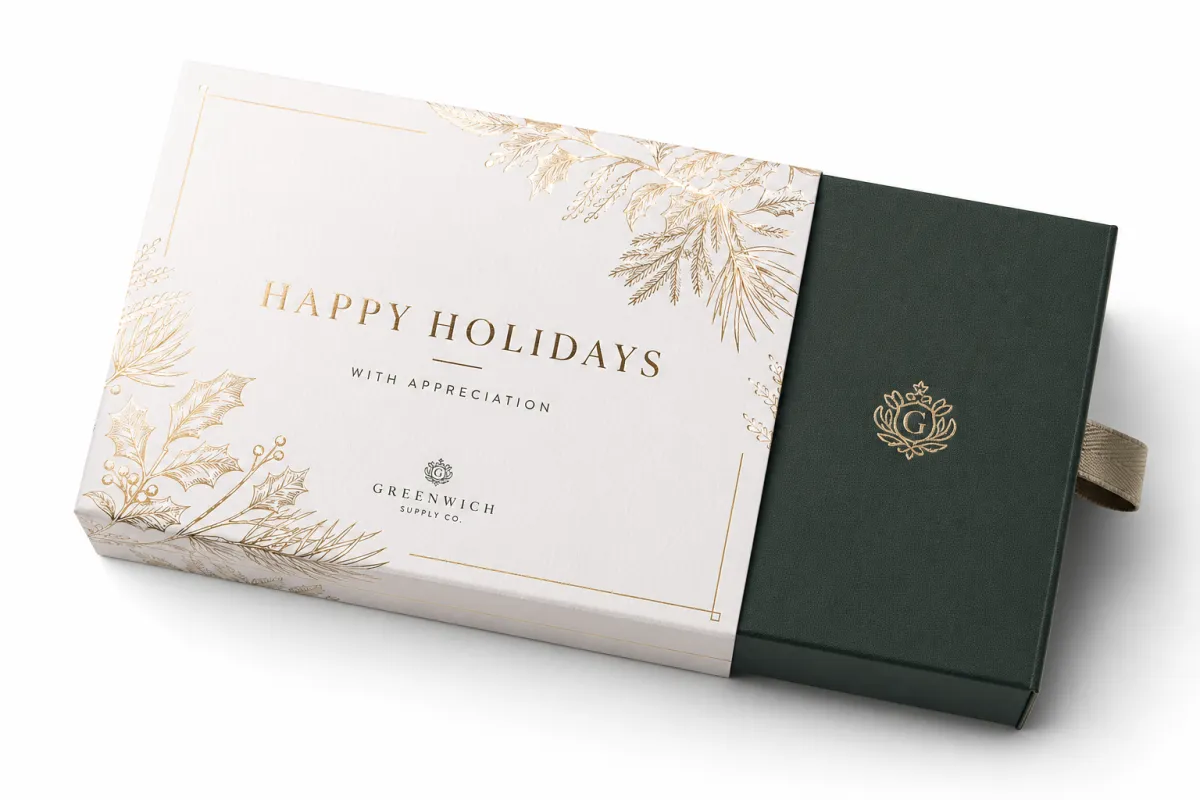
Think of a plain kraft mailer. Functional, forgettable, cheap to ship. Add holiday sleeve packaging for ecommerce in a rich color, a crisp message, and a strong logo lockup, and the same box starts behaving differently in the customer’s hands. The contents may not change at all. The perceived value does. That is why sleeves keep showing up in ecommerce launches, gift sets, subscription boxes, and limited seasonal runs. They let seasonal packaging do its job without forcing a structural overhaul.
Holiday sleeve packaging for ecommerce works because it changes appearance without changing structure. That matters when the base carton is already approved, the fulfillment team already knows the dimensions, and inventory planning cannot afford a second box size for a short seasonal push. The operational math is clean: one base package, one seasonal overlay, fewer variables. One line item, fewer surprises.
Most brands reach for holiday sleeve packaging for ecommerce in five situations:
- Limited seasonal runs that need a fast visual refresh.
- Gift sets that need stronger shelf or inbox appeal.
- Subscription boxes where the seasonal moment matters as much as the contents.
- Promotions tied to shipping windows, bundles, or launch campaigns.
- Peak-season packaging when the brand wants a festive look without overcommitting on inventory.
The appeal is not just aesthetic. Sleeves create package branding with a lower barrier than custom printed boxes, and approval cycles are usually shorter because the structure stays fixed. The brand is decorating the canvas, not rebuilding it. In a season where lead times can stretch by days or weeks, that difference can decide whether a campaign ships on time. Holiday sleeve packaging for ecommerce also gives teams a cleaner way to test design direction before they commit to a larger print run.
There is a hard limit, though. Holiday sleeve packaging for ecommerce depends on a stable base package. A sleeve built for a 9 x 6 x 2 inch box will look sloppy on a mailer that runs a few millimeters wide or tall. Those millimeters matter at the folds, especially if the design uses borders, icons, or centered copy that has to land cleanly on the front panel. A small measurement error can pull the whole composition off balance. The more graphic precision the sleeve has, the less room there is for guesswork.
In practice, sleeves work best when the brand already understands the customer journey. If the goal is a polished unboxing moment, holiday sleeve packaging for ecommerce can deliver that through a printed wrap, a tuck closure, or a friction-fit band. If the goal is transit protection, the sleeve is not the answer. Let the mailer or carton handle the structural work, then use the sleeve as the visible layer. That division of labor is what makes the format efficient.
If your current carton is close but not quite right, it can help to review Custom Packaging Products before you lock the seasonal graphics. A well-sized base package makes the sleeve easier to design, easier to assemble, and less likely to look improvised. It also reduces the odds that holiday sleeve packaging for ecommerce will need last-minute adjustments after proofing.
How Holiday Sleeve Packaging for Ecommerce Works From File to Final Pack
Holiday sleeve packaging for ecommerce follows a straightforward path, but the details decide whether it looks polished or patched together. First comes the base box, mailer, or product carton. Then comes accurate measurement. Only after that should the sleeve be built around the real dimension, not the one someone guessed from a product photo or a spec sheet that was last updated six months ago. A sleeve designed from a photo is usually a sleeve designed for rework.
The workflow usually looks like this:
- Confirm the exact outer dimensions of the base package.
- Identify the display panel, seam location, and closure style.
- Build the dieline for the sleeve with bleed, score lines, and glue zones.
- Design artwork around the structure, including safe zones and copy placement.
- Approve a proof or sample.
- Print, cut, finish, and either ship flat or pre-assemble.
Attachment methods vary, and each one changes the look, cost, and assembly speed of holiday sleeve packaging for ecommerce. A friction-fit sleeve wraps snugly over the package and stays put through precise sizing. A tuck-end sleeve uses folds or tabs to lock the wrap in place. Adhesive points or small glue zones work well when the sleeve needs to stay fixed during fulfillment or retail handling. Friction fit feels clean but leaves less room for error. Adhesive points add security but can slow assembly. Tuck ends are practical if the artwork and fold layout are mapped correctly from the start.
Holiday sleeve packaging for ecommerce can be delivered flat to the fulfillment team or pre-applied at the printer or co-packer. Flat delivery is cheaper to ship and easier to store, though it adds labor in-house. Pre-applied sleeves can save time during peak season, but they often require tighter coordination and sometimes a higher minimum quantity. For small teams, the labor tradeoff is not abstract. Ten extra seconds per unit becomes a line item once the volume climbs into the thousands. That is why seasonal packaging should be judged as an operations choice, not just a design choice.
Fit problems usually show up in the same places: the seam drifts off center, the front panel rides too low, or the sleeve rubs a corner and scuffs the print. The usual culprits are inaccurate measurements, unaccounted board thickness, or a dieline that was approved too quickly. Holiday sleeve packaging for ecommerce should always go through a sample check, even when the render looks flawless on screen. A screen cannot tell you how paperboard behaves at a fold. The carton can. So can the person folding fifty samples at speed.
In production terms, a few millimeters can make a sleeve feel either tailored or improvised. Most converters will tell you to plan for tolerances, not perfection. That is not a cop-out; it is how paper behaves. Stock caliper, humidity, and fold memory all change the final fit a bit.
Packaging standards matter here too. If your brand ships fragile or premium goods, it helps to think beyond the visual wrap and test the full package system. Useful reference material exists through ISTA test standards and broader packaging guidance from packaging.org. Those references are not glamorous, but they are the difference between a thoughtful seasonal program and a pile of avoidable returns.
One more practical point: holiday sleeve packaging for ecommerce should feel deliberate. If the sleeve appears taped on or oversized, it reads as an afterthought. If it is measured correctly, the seam disappears, the artwork lands where it should, and the finished pack feels integrated rather than patched together.
Holiday Sleeve Packaging for Ecommerce Cost and Pricing Factors
Holiday sleeve packaging for ecommerce usually costs less than replacing the whole box program, though that does not make it inexpensive. Pricing shifts with size, quantity, material, finish, and whether the sleeve needs unusual cuts or assembly steps. The biggest mistake is asking for a single price without defining the sleeve. That is like asking what a car costs without saying whether you want a compact hatchback or a truck built to haul lumber. The right quote starts with the right spec.
The main price drivers are easy to spot. Bigger sleeves use more board. More print coverage uses more ink and more press time. Special finishes require extra passes or extra setup. Low quantities are expensive because setup costs are spread over fewer units. Holiday sleeve packaging for ecommerce at 500 units can look wildly different from the same sleeve at 5,000 units, and the spread is usually wider than buyers expect. For seasonal packaging, quantity often matters as much as aesthetics.
Material choice matters too. A plain SBS or C1S paperboard sleeve is usually the most economical option for crisp seasonal graphics. A premium coated stock increases opacity and tends to print richer solids, especially on darker holiday artwork. Recycled or uncoated options can work well for a more natural branded packaging look, but they may need smarter artwork because heavy ink coverage can make the stock feel flat or muddy. If sustainability is part of the story, FSC-certified materials are worth asking about, though the finish and print approach still need to match the design.
Here is a practical pricing comparison for holiday sleeve packaging for ecommerce. These are rough production ranges, not promises, because the numbers change with spec, vendor, region, and the kind of finishing the press can actually hold.
| Option | Typical Run Size | Common Material / Finish | Approx. Unit Cost | Best For |
|---|---|---|---|---|
| Simple printed sleeve | 2,500-5,000 | 14 pt C1S or SBS, 4-color print, no special finish | $0.18-$0.38 | Fast seasonal refreshes and promotions |
| Recycled sleeve | 2,500-5,000 | Uncoated or kraft stock, minimal ink coverage | $0.22-$0.45 | Eco-minded holiday packaging with a natural look |
| Premium holiday sleeve | 1,000-3,000 | Coated stock, foil, spot gloss, or soft-touch lamination | $0.45-$1.10 | Gift sets, subscription boxes, and premium product packaging |
| Complex custom sleeve | 500-1,500 | Custom die cuts, adhesive zones, multi-step finishing | $0.85-$2.00+ | High-touch launches and display-driven retail packaging |
The table helps, but it still leaves out the hidden costs. Holiday sleeve packaging for ecommerce also needs design time, proofing rounds, and sometimes assembly labor if sleeves are applied by hand. A team can save on the print quote and then lose that savings in fulfillment labor because the sleeve takes too long to fold or insert. That is why the structure should be designed with assembly speed in mind from the first round, not tacked on after approval. The cheapest sleeve on paper is not always the cheapest sleeve on the packing line.
Finishing choices can drive unit cost up faster than people expect. Foil stamping, embossing, debossing, matte lamination, and spot gloss each add steps. They also add risk if the sleeve will be handled heavily in a warehouse. A soft-touch surface may look elegant, but if it rubs against other cartons during packing, it can scuff. Holiday sleeve packaging for ecommerce does not live in a display case. It lives in carts, bins, trays, and shipping lanes.
My blunt advice: budget for the sleeve, the proof, and at least one correction round. If the team is rushing, the first quote almost never survives the final spec. That is not a surprise; it is the normal shape of print production. Pretending otherwise is how small projects become expensive ones.
Step-by-Step Process and Timeline for Holiday Sleeve Packaging for Ecommerce
Holiday sleeve packaging for ecommerce should be planned like a mini launch, not a design side quest. The most efficient projects start with a clear goal: sell more giftable units, make the box feel seasonal, reduce the need for a new carton, or create a limited-edition package branding moment. Once that goal is clear, the rest of the process becomes easier to manage and a lot less reactive. Clear intent also helps the creative team avoid scope drift.
A realistic timeline often runs like this:
- Week 1: confirm package dimensions, run quantity, and budget.
- Week 1-2: build the dieline and first artwork draft.
- Week 2-3: review proof, revise copy, and confirm finishes.
- Week 3-4: produce a sample or short run for fit and color review.
- Week 4-6: final production, finishing, and shipping.
That timeline works for holiday sleeve packaging for ecommerce, but it tightens quickly when printers are already buried in seasonal queues. Digital print is often the better fit for smaller runs because it moves faster and avoids the setup burden of offset. Offset or longer-run production makes more sense when the volume is high enough to justify the setup and the artwork needs very consistent color across thousands of sleeves. The best format is the one that matches the run, not the one that sounds most impressive in a meeting.
Delays usually come from the same places: artwork arrives late, the dieline is wrong, the barcode is missing, legal copy is incomplete, or the proof gets approved too quickly because everyone is tired. That last one causes more trouble than teams admit. A rushed proof saves two days and can cost two weeks later when the sleeve misses the shipping window. The calendar is unforgiving, especially once carriers and warehouse schedules start narrowing the margin.
If the sleeve needs to pass transit or distribution testing, the timeline should include time for verification. That is where standards like ISTA matter, especially for ecommerce brands that ship direct to consumer and want to reduce damage claims. A seasonal sleeve may not need full certification every time, but the package still has to survive reality. Warehouse handling does not care about the campaign deck.
Holiday sleeve packaging for ecommerce also needs a hard internal deadline. Not a hopeful one. A real one. The closer the holiday window gets, the less room there is for creative detours, alternate concepts, or one more round of copy changes. By the time production is close, the best move is to keep the structure tight and the approvals clean.
If you are sourcing the whole system, it helps to line up your base carton or mailer first, then build the sleeve to fit it. That is where Custom Packaging Products can keep the project from drifting into measurement chaos. Good sleeve work starts with a package that is already predictable.
Key Design Factors That Make Holiday Sleeve Packaging for Ecommerce Feel Worth Keeping
The best holiday sleeve packaging for ecommerce does not shout holiday from every inch of the surface. It gives the customer a clear seasonal cue, then leaves room for the brand to breathe. If everything is decorated, nothing feels important. Strong packaging design starts with hierarchy, and hierarchy is often what separates a polished wrap from a loud one.
Three things should be readable first: the brand mark, the seasonal message, and the product promise. If a buyer cannot parse those quickly, the design is carrying too much. Holiday sleeve packaging for ecommerce works best when the graphics support the message rather than compete with it. The same rule applies whether the sleeve covers a mailer, a subscription box, or a premium gift carton.
Color is doing more work than most teams realize. Traditional red and green can look fine, but they are not the only seasonal signals. Winter neutrals, deep navy, warm copper, black with metallic accents, cream with one bold color, or a restrained kraft palette can all feel holiday-ready without looking generic. The goal is not to appear festive in the most obvious way. The goal is to match the brand while still feeling timely. That is where holiday sleeve packaging for ecommerce can feel current without becoming dated by January.
Good holiday sleeve packaging for ecommerce also respects the base package. A matte black sleeve over a white mailer sends a different signal than a bright foil pattern over recycled kraft. One feels sleek and premium. The other feels loud and high-energy. Neither is automatically correct. The right choice depends on the product category, the order value, and whether the sleeve is supporting retail packaging, direct-to-consumer orders, or gift sets.
Copy matters more than most teams think. A short holiday note can make the sleeve feel warmer without cluttering the layout. Limited-edition language, gift-ready messaging, a simple thank-you line, or a QR code that links to a seasonal landing page can all add value. Restraint matters here. Too much text and the sleeve turns into a flyer. Too little and it feels generic enough to be forgotten before the tape is off. Holiday sleeve packaging for ecommerce should feel like a message, not a memo.
Sustainability cues belong in the design conversation now, whether the team planned for them or not. Holiday sleeve packaging for ecommerce that uses recyclable stocks, FSC-certified paper, or lighter ink coverage tends to read as more considered. That does not mean every sleeve must be bare kraft and one-color ink. It means the design should not waste material or ignore what the customer can see with their own eyes. Packaging that looks thoughtful often feels thoughtful, and customers notice that faster than most brands expect.
Honestly, the sleeves that keep getting a second life are the ones that feel like they belong with the product. Customers keep them because they look good, not because someone told them what to recycle later. That is the sweet spot for holiday sleeve Packaging for Ecommerce: enough seasonal energy to feel special, enough brand discipline to still look like your package in January.
For teams building a wider seasonal line, this is where custom printed boxes can still play a role. The sleeve can carry the seasonal layer while the base package stays stable, which keeps product packaging simpler to manage across multiple SKUs and fewer box changes. It also keeps holiday sleeve packaging for ecommerce focused on the one surface that can change quickly.
Common Mistakes That Hurt Holiday Sleeve Packaging for Ecommerce Performance
Holiday sleeve packaging for ecommerce falls apart fastest when the design team works from a perfect mockup instead of the real box. That sounds obvious. It still happens. A sleeve that looks centered on screen can shift once board thickness, fold memory, or adhesive zones are added. Then the front panel sits too high, the seam lands in the wrong place, and the whole piece reads as slightly off, which is often enough to make it feel cheaper than it is.
The second mistake is overdesign. Holiday sleeves are printed on a limited surface area. That is not a license to cram every festive idea onto the front. Dense patterns, small copy, multiple foil hits, and tiny icons can work in a digital comp and become muddy in print. Holiday sleeve packaging for ecommerce needs contrast and breathing room, especially if the package will be seen quickly in a warehouse, on a porch, or in a short unboxing clip.
Finish selection can also hurt performance. Gloss coatings can show fingerprints. Soft-touch lamination can scuff. Heavy foil can crack if the sleeve folds too tightly. Recycled stocks can look beautiful but may need cleaner artwork because they do not always hold ultra-fine detail as well as coated stocks. The finish should match the handling environment, not just the mood board. A sleeve that survives the warehouse is better than a sleeve that only survives the presentation deck.
Another common problem is ordering too late. Seasonal packaging has a calendar, and it does not care that the campaign team just got inspired. Holiday sleeve packaging for ecommerce should move early enough that proofs, revisions, and production all have room to breathe. Once the shipping window is close, the project turns from creative to logistical very quickly.
And yes, the fulfillment side matters. A sleeve that takes an extra 12 seconds to apply sounds trivial until a line is packing 2,000 units a day. At scale, that becomes a real cost. Holiday sleeve packaging for ecommerce has to survive the speed of actual packing operations, not the polished pace of a marketing demo.
Here are the mistakes I see most often:
- Using the wrong base dimensions or ignoring board thickness.
- Placing critical copy too close to the seam or fold.
- Choosing finishes that scuff during handling.
- Designing for one sample and never checking the full run.
- Leaving no time for a sample, then acting surprised when the fit is off.
Packaging teams often forget that holiday sleeve packaging for ecommerce is a system. The art, the carton, the print method, the finish, and the fulfillment step all have to work together. When one of those parts slips, the sleeve stops looking like a branding move and starts looking like an apology. That is a hard result to recover from once the boxes are already in motion.
What to Do Next Before Ordering Holiday Sleeve Packaging for Ecommerce
Before you place the order, lock the basics. Holiday sleeve packaging for ecommerce goes smoother when the team has already answered five questions: what is the base package, how many units are needed, what is the target budget, what finish level is acceptable, and will the sleeves ship flat or arrive pre-applied? If those answers are fuzzy, the quote will be fuzzy too.
Then gather the right files. You will usually need accurate dimensions, a dieline, vector artwork, final copy, barcode files if they are part of the sleeve, and any legal or promotional text that must appear on pack. Holiday sleeve packaging for ecommerce moves faster when the printer is not waiting for missing assets. Nothing slows production like discovering the back-panel copy was still in an email thread someone forgot to forward.
Get one sample early. Not after the whole run. Early. A sample lets you check fit, color, seam placement, fold behavior, and the speed of assembly. It also tells you whether the sleeve feels like branded packaging or like a seasonal patch. The difference shows up the moment you handle it. With holiday sleeve packaging for ecommerce, the sample is usually where the project becomes real.
There is a planning rule that saves people a lot of pain: set an internal approval deadline before the vendor deadline. That gives your team a buffer for revisions and stops the project from drifting. Holiday sleeve packaging for ecommerce does not forgive indecision, and the calendar is never sentimental about delays.
If the sleeve is going over an existing mailer or carton, make sure the base format is stable before you design around it. A tidy, repeatable package makes the sleeve easier to produce and easier to apply. If you still need to compare options, start with Custom Packaging Products that match the package dimensions you plan to use. The cleaner the starting point, the better the seasonal result.
Here is the practical sequence I would follow:
- Measure the base package and confirm the display panel.
- Set the run quantity and budget range.
- Pick the stock and finish level.
- Build the sleeve dieline and artwork together.
- Approve a sample or proof before volume production.
- Place the order while the holiday schedule still has room.
That sequence is not glamorous. Good packaging rarely is. It does keep holiday sleeve packaging for ecommerce from turning into a rushed, expensive scramble in the middle of peak season. And if you want the seasonal wrapper to feel worth keeping, not just worth shipping, that is where the work pays off.
Holiday sleeve packaging for ecommerce is one of the smarter ways to upgrade the unboxing experience without blowing up the entire carton program. Get the measurements right, keep the design disciplined, and respect the timeline. Do that, and holiday sleeve packaging for ecommerce can carry a brand through peak season with less waste and more polish.
How much does holiday sleeve packaging for ecommerce usually cost per unit?
Pricing depends on size, quantity, print coverage, material, and finish. Small runs usually cost more per unit because setup is spread over fewer pieces. Simple holiday sleeve packaging for ecommerce on standard paperboard can stay in the lower cents range at volume, while foil, embossing, and Custom Die Cuts push pricing up fast. Ask for quotes at multiple quantities so you can see the break point instead of guessing. A second quote at a different run size often reveals more than a long email thread.
How long does holiday sleeve packaging for ecommerce take to produce?
Most projects take several weeks from file to delivery, with the exact timing driven by proof rounds, material sourcing, and the printer's queue. Digital print can move faster for shorter runs, but holiday demand adds delay if you start late. Build in room for a sample, because fixing a bad dieline after approval is a foolish way to lose a launch window. Holiday sleeve packaging for ecommerce is fastest when the art, spec, and schedule are all ready at the same time.
Can holiday sleeve packaging for ecommerce fit existing boxes or mailers?
Yes, as long as the sleeve is built from accurate measurements of the base package. The fit has to account for board thickness, folds, seam placement, and any closure points. Holiday sleeve packaging for ecommerce works best when the sleeve is designed around the real outer dimensions, not a guess from the product spec sheet. The closer the measurements are to reality, the less troubleshooting shows up later.
What materials work best for holiday sleeve packaging for ecommerce?
Paperboard, C1S, SBS, coated stocks, and recycled kraft-style materials are all common choices. Each one behaves differently in print and handling. Simple artwork usually looks great on recycled or uncoated stock, while richer seasonal graphics often benefit from a coated surface. Choose the material based on print quality, durability, sustainability goals, and how the sleeve will be assembled. Holiday sleeve packaging for ecommerce should suit both the visual idea and the fulfillment process.
What artwork files do I need for holiday sleeve packaging for ecommerce?
You will usually need a dieline, vector logos, final copy, and high-resolution imagery if photography is part of the design. Text should be checked for legal language, seasonal claims, and barcodes before approval. Clean files speed up proofing and reduce the odds of expensive back-and-forth during production. If the artwork is organized well, holiday sleeve packaging for ecommerce can move from concept to press far faster.


