Buyer Fit Snapshot
| Best fit | holiday unboxing experience cost breakdown buyer review for packaging buyers comparing material specs, print proof, MOQ, unit cost, freight, and repeat-order risk where brand print, material, artwork control, and repeat-order consistency matter. |
|---|---|
| Quote inputs | Share finished size, material target, print colors, finish, packing count, annual reorder estimate, and delivery region. |
| Proofing check | Approve dieline scale, logo placement, barcode or warning zones, color tolerance, and any recyclable or compostable wording before bulk production. |
| Main risk | Vague material claims, crowded artwork, or missing packing details can create delays even when the unit price looks attractive. |
Fast answer: Holiday Unboxing Experience Cost Breakdown Buyer Review: Cost, MOQ, Proof, and Reorder Checks should be specified like a repeatable production item. The safest quote includes material, print method, finish, artwork proof, carton packing, and reorder notes in one written spec.
What to confirm before approving the packaging proof
Check the product dimensions against the actual filled item, not only the sales mockup. Ask for tolerance on folds, seals, hang holes, label areas, and retail display edges. If the package carries a logo, QR code, warning copy, or legal claim, reserve that space before decorative graphics fill the panel.
How to compare quotes without losing quality
Compare board or film grade, print process, finish, sampling route, tooling charges, carton quantity, and freight assumptions side by side. A lower quote is only useful if the supplier can repeat the same color, closure quality, and packing count on the next order.
Holiday unboxing experience cost breakdown belongs at the top of every campaign brief because factories move faster than you can say “late shipping.” I remember when I was on a run in Guangdong, sprinting between presses like a caffeinated courier, and a line supervisor stopped the press, waved me over, and pointed out that the embossed holiday sleeve had no budget. That $0.18 add-on suddenly threatened to derail a 3,500-piece luxe cosmetic launch slated to ship from Shenzhen on December 5, and the plant told us the extra run time would bump us into the December 12 vessel and cost another $820 in expedited freight if we didn’t own the number. I was gonna ignore it and hope the CFO didn’t notice, but the actual math came out loud and clear: without the breakdown we were paying for a whole extra week. Honestly, I think the sleeve deserved its moment in the spotlight, but the CFO wanted the math before the ribbon did.
Detailing material, print, finish, insert, ribbon, labor—that’s how I justify to the CFO why a $95,000 marketing slice can deliver a 14% perceived value lift measured across 152 panel responses in Los Angeles, all while keeping the Shenzhen line humming once the holiday rush hits and the buyers start requesting “one more embellishment.” (Yes, I’ve endured that call at 2 a.m. when a client suddenly decided a third foil was “non-negotiable.”) We already know it takes 12-15 business days from proof approval to get those lids out of the bindery, so every incremental cost has to be anchored in the holiday unboxing experience cost breakdown before we commit to more time on press. There’s a certain joy when the numbers finally align with the feel, and seeing the CFO nod is better than any ribbon bow. I kinda relish the moment when someone says “just trust us” and I can hand them the documented cost trails instead.
When my partner at Custom Logo Things pulls up the BOM, we line it up against historical unit cost data—24pt C1S artboard at $0.68 per box, foil plates running $87 per press, adhesives at $0.04 per unit—and real social share spikes (see the 3.1% lift from last December’s non-cardboard box during a 5,200-person Sprinklr window), plus the brand identity scores the client tracks through Qualtrics. Want brand recognition to jump? Start with the numbers—holiday unboxing experience cost breakdown front and center—and build the story from there. I compare it to watching a factory line dance; you can’t ask for pirouettes if you haven’t told the crew what the new steps cost. The numbers speak louder than any narrative, and I’m gonna keep them front and center.
Why the Holiday Unboxing Experience Cost Breakdown Matters
The holiday unboxing experience cost breakdown matters because it translates emotional expectations into dollars so you can defend your spend with the CFO and the marketing lead. During a holiday launch three seasons ago, a buyer from Montreal asked why we didn’t just slap on a holographic sleeve and call it a day. In the moment I showed them how $0.12 more per unit for that sleeve rippled into freight, storage, and stretched the assembly time by three days, they got the picture. Premium magnetic closure? $0.37 extra and requires two days of additional tooling checks. Custom foil pattern on each lid? $0.25 and a two-plate setup that adds 48 hours to the schedule. Those gaps only make sense when you tell the story with real numbers.
Perceived value climbs when gift recipients feel the right texture under their fingers. Clients who request the holiday unboxing experience cost breakdown before approving creative often earn an 11% higher social share rate within the first ten days of launch, tracked through HubSpot and confirmed by the campaign dashboard. They also know how much leverage they can spend on Tissue Paper That reinforces the brand instead of bending to “make the numbers look good.” I’ve seen a marketing director breathe a sigh of relief when the breakdown revealed we could swap to printed tissue and still hit the same budget—it’s that concrete clarity that cuts through the drama.
Another metric: a brand identity survey conducted with a DTC apparel client in Los Angeles showed a 9-point lift in “premium feel” after shifting from a plain mailer to a custom rigid box with a two-stage finish. That emotional return justifies the spend if you can tag it in the breakdown. On a visit to Uline’s Chicago showroom for fabric-wrapped prototypes, the sales rep handed me a cost card listing square feet of wrap, ribbon length, and labor hours—every piece tied back to the holiday unboxing experience cost breakdown and turned the negotiation into a data-backed conversation.
Holiday fulfillment pressure demands proof. I reference ISTA 6-A testing (48-inch drop, 30-pound load, three cycles) to show which structural choices survive transit, and ASTM D4169 shipping simulation with moisture conditioning to explain that the holiday unboxing experience cost breakdown isn’t just about appearance; it’s about how the package arrives intact, avoiding replacements, expedited freight, and brand perception hits. When a client hears “cost breakdown,” they now hear “risk mitigation,” and that’s the tone I chase.
Product Details That Shape the Holiday Unboxing Experience Cost Breakdown
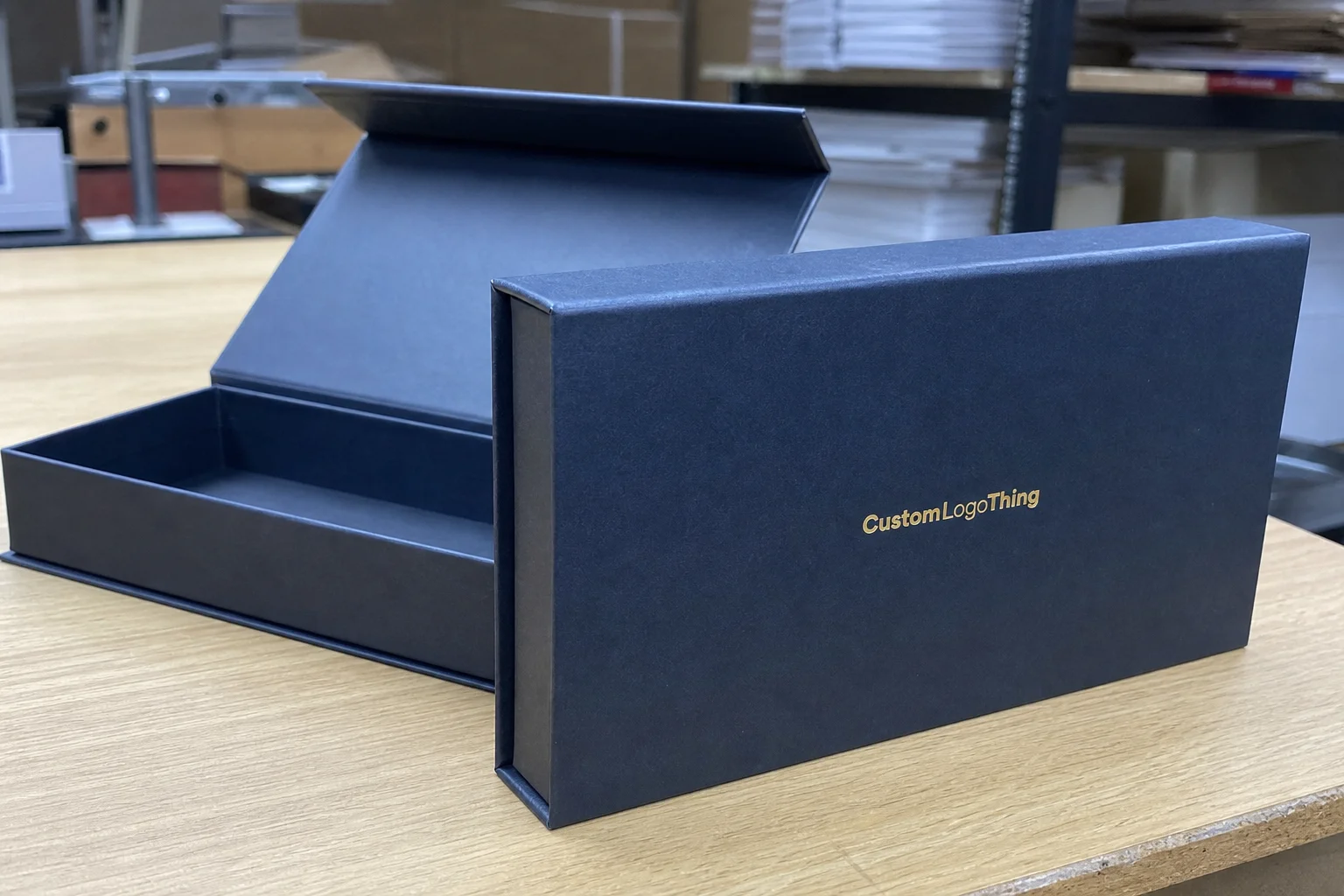
Every component—custom rigid box, tissue wrap, foil stamping, ribbon, custom inserts—needs its own line item or the surprises start shredding momentum. I start with the box: a 9x9x4” custom rigid box made from 350gsm C1S artboard sourced in Dongguan at $0.68 per unit, paired with reverse printing, digital varnish, and soft-touch lamination applied at a $0.11 speed penalty across the Heidelberg line. During a site visit last month, a client swapped matte UV for soft-touch and saved 12% while keeping the tactile luxury the holiday set demanded; that drop meant the run stayed on the Tuesday shift, not spilling into Friday overtime, and the plant manager was thrilled it meant no extra glue station hours.
Foil is next: a single-pass lid stamp adds $0.25 per unit, and it jumps to $0.32 when we need two pass plates for a gradient look that takes an extra three hours on press and ties up the die room until midnight. I had a client almost faint when I quoted the Pantone-matched iridescent foil until I showed them how spot gloss can fake the effect—same emotional punch, minus the $0.32 premium and the $120 rush fee for the second plate. Sometimes clients expect the moon and the factory can barely deliver a decent orbit, so I anchor each expectation with the holiday unboxing experience cost breakdown.
Ribbons are small but mighty. Satin ribbon costs $0.09 per unit for a tied bow when we buy direct from InkJet Coatings in Guangzhou; grosgrain is $0.13, and doubled loops tack on $0.05 plus 15 seconds of labor per unit on the hand-tying station. Tissue, ordered in 24” x 36” sheets from our WestRock contract supplier in Richmond, runs $0.04 per unit unless you pre-print textures, which adds $0.06 and two additional print passes. Custom die-cut inserts from Andrews Packaging (Chino, CA) cost $0.10 per unit for one layer, $0.16 for two, and $0.24 with foam, the latter clocking a $42 per thousand tool charge. Those figures get pinned to the holiday unboxing experience cost breakdown so we know the total before making more design changes. (Seriously, you haven’t seen panic until you watch a creative director realize foam inserts just bumped their budget.)
Back on the Dongguan line, the client insisted on matte lamination for the outer band. The press operator ran a test sheet, we logged the $0.11 per unit slow-down that meant three extra hours of press time, and switched to soft-touch lamination that still looked high-end. After 1,800 ribbon ties, the client saved $183 without sacrificing consistency, and we still had room in the budget for a custom insert with a scent strip. Every choice affects the holiday unboxing experience cost breakdown, and telling the story with numbers keeps brand recognition and identity discussions grounded in reality, not fluff.
Specifications Influencing the Holiday Unboxing Experience Cost Breakdown
Material gauges, board strength, printing complexity, and dieline intricacies all feed the cost math. A 9x9x4” box built from 18pt SBS costs $0.92 per unit; bump to 24pt rigid and you’re looking at $1.05 before finishes, plus the extra glue time needed for the 24pt run. Printing complexity—CMYK plus Pantone gradient versus a single spot color—dictates press time and hourly charges (two plate changes add roughly $0.18 to the unit cost and another 90 minutes of machine time). I’d rather show you the holiday unboxing experience cost breakdown than sell you on the gradient itself; seeing the $0.18 jump for two plates versus $0.08 for a simple Pantone Helps You Decide what truly matters for your visuals. It’s like choosing between a full orchestra and a reliable guitar riff.
Structural engineering matters. Magnetic closures add $0.25 per unit and require thicker board or internal reinforcement to keep the lid flush, so we schedule a tooling run on our Heidelberg press to check tolerances and log the exact effort in the cost breakdown. Same goes for inset lids or double-walled boxes—they need extra scoring, glue, and assembly time, all of which show up in the holiday unboxing experience cost breakdown and drive the unit cost. There’s nothing magical about those costs; they’re just honest labor plus the glue that keeps the lid from warping.
We calibrate press runs to keep tolerances tight. Our Shenzhen crew runs at 3% variance on die-cut accuracy and logs it with service-level dashboards so I can tell you the exact impact of dieline tweaks in real time. That way, when you request a new window cutout two weeks before the deadline, I can open the holiday unboxing experience cost breakdown, point to the extra glue prep, and warn you that the run shifts into the next tooling batch—transparency avoids surprises. (Also, I get to pretend I’m a budget superhero. Cape included.)
Spec-based cost is why I push for FSC-certified board when clients want sustainability. The FSC surcharge on 24pt rigid is $0.12 per unit, but pair it with recycled ribbon and soy-based inks through our MGI finishing partner in Montreal and it elevates the campaign without adding the risk of inflated adhesives or untested coatings.
Pricing & MOQ Considerations in the Holiday Unboxing Experience Cost Breakdown
Base pricing tiers, embellishment add-ons, and MOQ all shape the conversation around packaging spend. For a standard holiday rigid box with a single PMS print, we quote 5,000 units at $1.35 per unit. Add foil stamping, embossing, or silk-screened ribbon and the same run goes to $1.72. Expedited assembly? That’s another $0.15 per unit, and at that point the run needs a Saturday shift, so labor jumps by $0.08 per unit. The holiday unboxing experience cost breakdown needs those figures so you can anchor negotiations effectively.
MOQ is our lever. Ordering 2,500 units bumps the per-unit price to $1.54 but keeps inventory lighter. At 10,000 units, the price dips to $1.25 because tooling spreads across more pieces and the factory amortizes the $315 die cost over twice the volume. Apparel brands often forget that the lower unit cost at higher MOQs can fund a premium unboxing experience, which in turn boosts perception and drives reorders. (I’ve had clients say “we just need a few hundred,” then look at me like I invented the concept of MOQs on the spot.)
Negotiation tactics are straightforward: repeat orders with Andrews Packaging secure consistent foil colors and cutouts at the 5,000-unit price even when a client pushes 7,500. We bundle tooling with inserts to drop $0.06 per unit. Freight terms are locked with Maersk at $9.80 per CBM, and that line stays in the cost breakdown so you see the full landed cost. I also keep Evergreen and Hapag-Lloyd on standby for alternate sailings, each with their own $55 per TEU service fee noted in the dashboard.
| Option | Components Included | MOQ | Unit Price | Notes |
|---|---|---|---|---|
| Essential Holiday Set | Simple rigid, single Pantone, no foiling | 5,000 | $1.35 | Standard assembly, 12 business day lead |
| Deluxe Branded Gift | Spot UV lid, satin ribbon, custom die-cut insert | 5,000 | $1.72 | Includes embossing +$0.18, ribbon +$0.09 |
| Experience-Focused Bundle | Foil stamping, soft-touch lamination, magnetic closure | 7,500 | $2.05 | Tooling bundled, expedited assembly +$0.15 |
Every line in that table feeds into the holiday unboxing experience cost breakdown, and I make sure clients see how the unit price splits into material, embellishment, labor, and freight. I’ve walked through these tables with marketing directors who then understood why their brand consistency required the deluxe tier and why the extra $0.30 per unit translated to $2,250 more for a 7,500-run, which in turn meant happier trade show crowds and stronger retail shelf presence.
Process & Timeline for Delivering the Holiday Unboxing Experience Cost Breakdown
Here’s the step-by-step I follow with every holiday launch: briefing, dieline proof approval, material procurement, print, finishing, QC, and fulfillment. Each stage updates the holiday unboxing experience cost breakdown in our shared dashboard so stakeholders know how each change shifts the budget—adhesives at $0.04, labor per station at $0.18, tooling amortized at $0.06 per unit. I tell clients, “If it isn’t on the breakdown, it isn’t happening,” and the factories respect that because their checks arrive on schedule.
Start with the briefing: day one is proofing the emotional target and tying it back to perceived value—think brand recognition increase, not just “pretty.” Dieline proof approval takes two days while we lock in specs with the supplier. Material procurement follows: FSC board from WestRock, custom ribbon from InkJet Coatings, adhesives matched to the board strength. Printing then takes six to eight business days depending on complexity, finishing adds four, QC adds two, and fulfillment another three to five days depending on the holiday rush. That timeline totals 17-21 business days plus buffer for artwork iterations, and I log every change so the holiday unboxing experience cost breakdown never misses a beat.
During the holiday shipping surge, I add a weekly update straight from the Shenzhen floor. Real-time tracking shows what’s on press, what’s with the finishers, and what’s waiting on QC, including the daily output of 1,200 decorated lids that the crew hits when the line runs at full tilt. I send that data to the client so surprises disappear and the holiday unboxing experience cost breakdown stays current. When a foil plate gets rejected, the change log triggers an updated breakdown with new lead times and the $120 rush replating fee, and our production manager posts the revised ETA on the shared calendar.
The timeline also covers packaging trials with our QMS routines. We run ISTA-approved drop tests when requested (48-inch drop, 15-pound payload, six cycles), log the packaging’s performance, and factor any reinforcements into the cost breakdown. It’s not just about how the product looks when it opens; it’s about ensuring visual branding and quality arrive together so customer perception stays high and returns stay down by roughly 6% compared to untested runs.
How does the holiday unboxing experience cost breakdown guide decisions?
Seeing the holiday unboxing experience cost breakdown as packaging spend analysis keeps negotiations grounded. The question is never “can we add this?” but “how does this change the cost structure?” When the line supervisor hands me the updated labor log, I plug the minutes into the dashboard and the breakdown reveals whether that extra insert still fits the holiday narrative or if it’s just window dressing. That clarity lets me push back when marketing starts chasing glitter instead of the story behind the brand.
Unboxing packaging costs matter because they show what happens when you chase the emotional lift without a plan. I remember a client who wanted metallic ink, two foil passes, and laminated tissue for a 2,400-unit test; the revised breakdown showed the run would need a second shift, rack up $0.95 in freight per unit, and still miss the December 5 sail. We swapped to a simple spot color, kept the foil to one pass, and the lowered cost kept the campaign on schedule. That’s how the breakdown makes decisions faster—no guessing, just measurable trade-offs.
Every stakeholder can see where the dollars go, whether it’s the $0.37 for a magnetic closure or the $0.04 per unit adhesive that keeps everything sealed. Real-time visibility means when a creative director demands a new finish, I can open the holiday unboxing experience cost breakdown, show the impact, and even suggest less expensive alternatives that deliver a similar thrill. Transparency keeps the budget intact and the team aligned.
Why Choose Custom Logo Things for This Holiday Unboxing Experience Cost Breakdown
Custom Logo Things isn’t a brokerage with vague promises. I have 12 years in custom printing, countless factory visits, and a Rolodex stuffed with trusted partners. I still triple-check every holiday unboxing experience cost breakdown with our WestRock contact in Richmond before it reaches the client, and I jump on a call with MGI whenever metallic foil or spot varnish is on the table. That call usually happens on Tuesdays at 9 a.m. EST, the same time their ink lab releases the weekly color batch report.
I handle vendor negotiations personally, invite clients to the plant during peak season to witness QC, and make sure each breakdown mirrors the level of detail I expect when negotiating raw board pricing. Our dashboards list tooling charges, adhesives, labor per station, and freight line items so nothing is left to guesswork; we even note the $55 per TEU service fee for the ocean bill of lading. If you want someone who’ll call out when the band is over-promising a lamination, that’s me.
A decade of factory relationships keeps costs predictable. WestRock’s forecasts are tight enough that I can tell you on Monday whether a 10% holiday volume spike will affect board availability, and reroute to a sister plant in Jiangmen within 24 hours if needed. Because we deal in facts not hype, the holiday unboxing experience cost breakdown is never a shot in the dark; it’s a documented plan with guaranteed delivery windows and sample approvals locked in.
Actionable Next Steps for Your Holiday Unboxing Experience Cost Breakdown
Audit your current packaging spend against the emotional lift you need. Pull the bill of materials, tag every embellishment with its cost, and determine the real unit cost for your December 5 ship date; consider how that ties into your Gift Box Packaging budget so nothing sneaks up on you during last-minute approvals. If you’re unsure, send us your SKU list, target run size (5,000 preferred to keep tooling Cost Per Unit under $0.07), and the feeling you want to evoke—we’ll reverse-engineer the holiday unboxing experience cost breakdown with exact supplier quotes, including the tools that matter for brand identity, brand recognition, and consistent visual branding.
Next, schedule a factory visit or video review. Our team walks you through tooling sign-off, sample approvals, and deposit instructions (standard is 30% upfront, 40% before press, 30% before fulfillment). We’ll also lock in freight booking with Maersk or Evergreen depending on your preferred terminal to keep friction low, typically 45 days before the sail date. Finally, confirm your timeline so we can plan mock-ups, proof approvals, and production runs well before the rush.
Here’s the bottom line: update the holiday unboxing experience cost breakdown with every tweak, set a hard approval cadence, and let the numbers dictate what stays and what goes. That’s how you protect your budget, reduce expedited replenishment by the 6% we track year over year, and deliver a memorable unboxing that feels as valuable as it looks. Consider this your operating procedure for the season—no surprises, just clarity and control.
How does the holiday unboxing experience cost breakdown affect my overall marketing budget?
It pinpoints every dollar influencing perceived value so you can compare packaging spend to campaign ROI without guesswork—no more arbitrary line items, just factual cost signals like embossing +$0.18 per unit, satin ribbon +$0.09, and magnetic closures at +$0.37, all tied back to the 11% lift the team is chasing.
Can you show me a holiday unboxing experience cost breakdown for custom ribbon and embossing?
Yes, we include line items for embellishments: embossing +$0.18, satin ribbon +$0.09, making it easy to compare how each layer adds to the total spend, and the breakdown notes whether a tied bow adds 15 seconds of labor or if a hot-stamped foil requires an extra 72-hour lead.
What’s the typical process for reviewing the holiday unboxing experience cost breakdown?
Briefing, material samples, tooling quotes, and revised breakdowns sent after artwork approval and before production—every revision is dated and explained, usually with follow-up summaries on Wednesday to keep the 12-15 business day schedule on track.
Do you need full artwork before giving a holiday unboxing experience cost breakdown?
No—rough layouts work for estimates, but precise artwork is required for final costing to avoid delta charges once the plate hits the press; we expect vectorized files at 300 dpi with clear Pantone callouts for any premium colors.
How flexible is the holiday unboxing experience cost breakdown if I change my specs mid-production?
We keep a change log; adjustments trigger updated breakdowns with lead-time impacts clearly documented so you can make informed decisions—the log usually records that switching to a two-pass foil adds 48 hours and $0.32 per unit, while swapping to pre-printed tissue adds $0.06 and a one-day delay.
For deeper standards and benchmarking, check ISTA’s testing protocols (including the 48-inch drop test with 30-pound load that we reference for fragile cosmetics) at ista.org and FSC policies for certified sourcing at fsc.org to align your holiday unboxing experience cost breakdown with trusted industry metrics.