Home fragrance PVC garment bags packaging insert checklist: what it actually covers
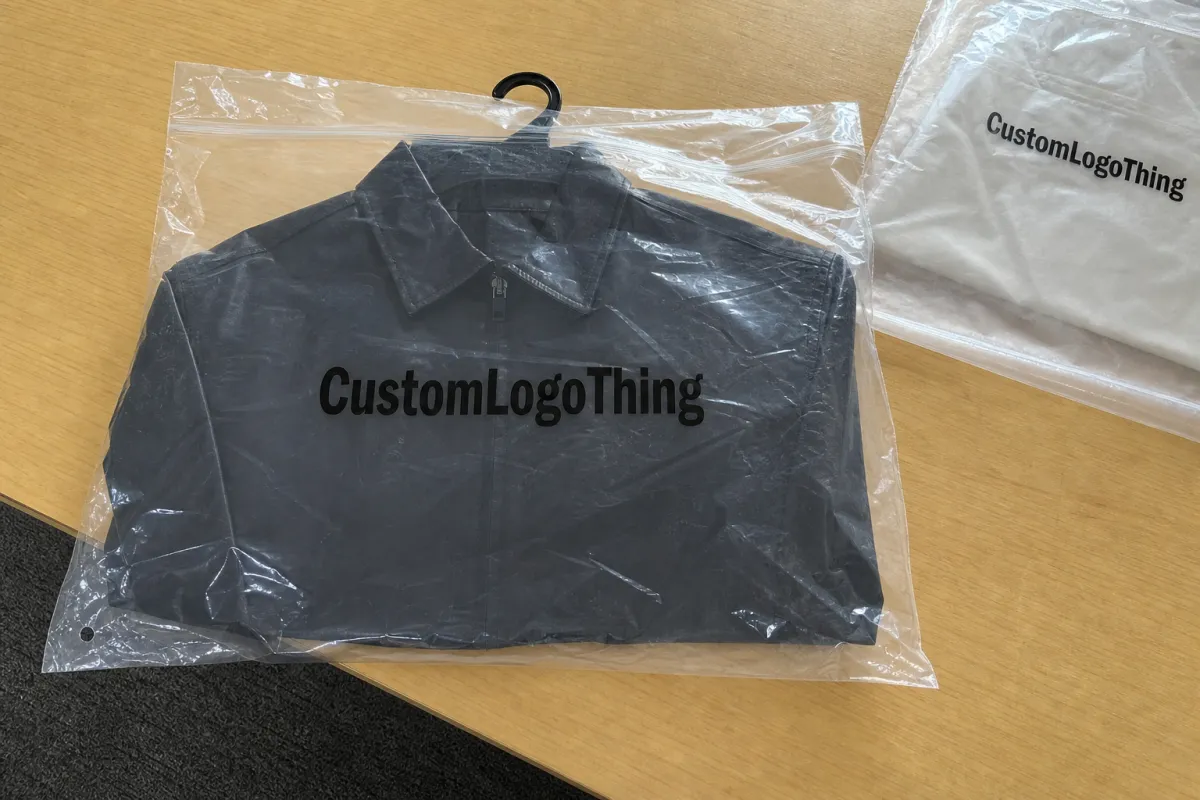
The bag usually fails before the product does. A carefully poured candle, reed diffuser, linen spray, sachet set, or wax melt bundle can lose its retail polish quickly if the PVC fogs, smells plasticky, wrinkles at the seam, or traps fragrance residue against the insert. That is why a home fragrance PVC Garment Bags Packaging Insert checklist belongs in the quote stage, not in a nervous email after the first sample arrives wrong.
Think of the checklist as three things at once: a spec sheet, an approval tool, and a production sanity check. It tells the supplier what to quote. It tells the designer how much space exists after seams, gussets, zippers, hang holes, and product bulge steal their share. It tells the packing team how the finished set should sit in the bag.
Not glamorous. Extremely useful.
The phrase “garment bag” matters because this format borrows from apparel packaging. You may see a zipper, hanger hole, snap closure, gusset, stitched handle, heat-welded seam, soft loop handle, reinforced header, or folded bottom. Home fragrance adds problems apparel rarely creates: scent migration, oil contact, alcohol-based sprays, glass weight, insert staining, retail glare, and the odd little pressure marks that appear after products sit packed for a week.
A serious checklist should cover bag dimensions, PVC thickness, closure style, handle or hanger placement, insert material, print method, warning copy, barcode space, ventilation, carton packing, and approval samples. If the product sells through boutiques, spas, hotel gift shops, subscription boxes, or ecommerce, the checklist should also define whether the bag must hang, stand, ship, or survive customer reuse.
Practical rule: if the supplier cannot quote the same bag twice from your email, your checklist is not specific enough.
This is not about making packaging complicated for sport. Packaging has enough moving parts already. The checklist keeps the quote comparable, the insert readable, and the first production run from becoming a costly guessing exercise.
How PVC garment-style bags work for candles, diffusers, sachets, and gift sets
PVC garment-style bags start with flexible PVC film, usually cut and heat-sealed, stitched, or welded into a pouch or carrier shape. The supplier then adds the functional piece: zipper, snap, drawstring, adhesive flap, handle, hanger opening, or reinforced header. Structure depends on product weight, display method, packing speed, and how often the customer is expected to open it.
Common home fragrance uses include mini candle sets, room spray kits, reed diffuser bundles, wax melt samplers, sachet collections, seasonal gift sets, hotel amenity packs, closet fragrance kits, and boutique bundles that need clear presentation without a full rigid box. A simple clear PVC pouch can work for three sachets. A diffuser bottle with reeds, refill oil, and a dense insert needs more support. Glass does not care about the brand’s minimalist mood board.
Visibility is the main selling point. Clear PVC shows the product and the printed insert. Frosted PVC hides minor scuffs, fingerprints, and dust. Tinted PVC can push a collection toward spa, holiday, apothecary, coastal, or premium gifting. Opaque back panels help when the assortment looks messy from one side, which happens more often than brand teams like to admit. Clear is honest. Sometimes too honest.
The insert is not only decoration. It stabilizes the products, carries use instructions and warnings, frames the scent story, protects items from sliding, and gives the bag enough structure to stand or hang properly. For retail packaging, the best inserts usually perform at least two jobs: communication and support. A pretty card that buckles under a 180 g candle jar is not a support system. It is a postcard with ambition.
Compatibility matters more for fragrance than for dry apparel or accessories. Fragrance oils, solvents, and alcohol-based sprays should not sit directly against PVC, printed ink, adhesive, or uncoated paper without testing. Use inner cartons, coated inserts, trays, barrier sleeves, shrink bands, or separate compartments when liquids are involved. If the brand makes claims about responsible sourcing or paper materials, confirm whether the supplier can document standards such as FSC certification for paperboard options.
Retail handling changes the spec. A bag hanging on a peg needs a reinforced hole and enough stiffness to avoid curling. A bag sitting in a gift display needs a flat base, gusset, or rigid insert. Ecommerce packs need scuff protection and carton planning. Reusable customer bags need smoother closures, heavier film, and cleaner seam finishing. The Packaging Insert Checklist should name the job before sampling begins.
Key specs to confirm before artwork, sampling, or production
Start with measurements. Not vibes. Measure product width, height, depth, total packed bundle weight, and any protective wrapping. If the set includes a rigid insert, divider, blister tray, hang card, or small inner carton, measure that too. Add tolerance because candle jars, diffuser caps, spray triggers, reed bundles, and shrink-wrapped components do not always land at the exact same dimension from batch to batch.
For many home fragrance sets, a practical clearance range is 3-6 mm around snug single items and 8-15 mm around multi-item bundles, depending on how the bag is loaded. Too tight and the seams strain. Too loose and the products slide around like they are looking for the exit.
PVC thickness may be quoted in gauge, micron, or millimeters. Light promotional pouches often use film around 0.12-0.18 mm. Many retail gift sets sit closer to 0.20-0.30 mm. Heavier handled bags, reusable carriers, or glass-heavy kits may need 0.35-0.50 mm. Thicker film feels better, but it costs more, can be stiffer during packing, and may require stronger seams or reinforcement.
Closure choice affects cost, labor, and customer perception. Zippers work well for reuse and protection. Snaps are clean and simple. Adhesive flaps reduce cost but feel tired after the first opening. Drawstrings suit soft bundles such as sachets or textile-based fragrance accessories. Handles and hanger features improve retail display but add material, labor, and sometimes higher minimum order quantities.
The insert spec deserves the same attention as the bag. Common options include 300-400 gsm C1S or C2S artboard, 350 gsm folding box board, or laminated cardstock for better scuff and moisture resistance. If the insert needs to hold products in position, consider die-cut slots, folded feet, glue points, or a tray-style fold. For dense information, print both sides, but keep the front-facing panel clean.
- Insert coating: aqueous coating, varnish, matte lamination, gloss lamination, or soft-touch lamination, selected against oil exposure and budget.
- Print method: screen print for bold PVC logos, heat transfer for cleaner detail, offset or digital print for inserts, and labels for frequent SKU changes.
- Barcode area: preserve quiet space and avoid folds, seams, glare-heavy corners, and curved surfaces that make scanning unreliable.
- Safety copy: include candle warnings, diffuser directions, spray cautions, choking hazards, country-of-origin details, and retailer-required marks.
Compliance is not the interesting part, but it protects the launch. Confirm country-of-origin labeling, recycling claims, small-part warnings, ingredient or scent notes, and retailer barcode rules before artwork approval. For shipping validation, ISTA test procedures are a useful reference point if fragrance sets move through parcel networks or retailer distribution.
One more practical detail: ask how the finished bags will be packed before they ever reach your product line. PVC bags compressed too tightly in export cartons can arrive creased. Inserts shipped loose can warp in humidity. Zippers can leave pressure marks on neighboring bags. Small issues at this stage become visible on the shelf, where customers do not care which part of the supply chain caused them.
Pricing, MOQ, and quote details that change your unit cost
Unit cost moves quickly with PVC thickness, bag size, gusset depth, closure type, handle style, print colors, insert complexity, die-cutting, sampling, packing method, and order quantity. A stock clear pouch with a one-color logo and flat insert is a different animal from a thick handled gift bag with a custom zipper pull, full-color insert, divider, and retail-ready carton packing.
For rough planning, simple stock-size PVC pouches with printed inserts may land around $0.35-$0.90 per unit at moderate quantities, depending on size and print. Custom retail gift bags with thicker film, zipper, handle, and structured insert often run closer to $0.90-$2.80 per unit. Premium builds with custom tinted film, die-cut inserts, specialty hardware, heavier board, or multi-part packing can push beyond that. These are planning ranges, not a universal price list. Anyone promising universal pricing without specs is selling confidence, not packaging.
| Packaging option | Typical best use | Common cost drivers | Practical tradeoff |
|---|---|---|---|
| Stock clear PVC pouch plus printed insert | Sachets, wax melts, small spray kits | Insert print, label count, packing labor | Lower MOQ, but limited size control |
| Custom zipper PVC gift bag | Candle sets, diffuser bundles, seasonal gifts | Film thickness, zipper color, gusset, print colors | Better fit and branding, higher setup cost |
| Handled PVC retail bag with rigid insert | Glass-heavy kits and boutique displays | Handle reinforcement, insert board, carton packing | Stronger shelf presence, more labor |
| Custom printed box with inner PVC window bag | Premium gifting and ecommerce protection | Box board, window, insert tray, assembly | Better protection, less product visibility through the outer pack |
MOQ realities are not always friendly. Stock-size bags with printed inserts may start lower, sometimes in the 500-1,000 unit range depending on the supplier. Fully custom PVC dimensions, custom tinted film, molded zipper pulls, specialty hardware, or complex insert tooling may move MOQ to 2,000-5,000 units or more. If the line has six scents, that matters. Splitting every scent into its own bag size is how budgets go to a quiet place and die.
Quotes vary because suppliers include different things. Some include setup, dielines, insert printing, one sample revision, inner cartons, and export packing. Others quote the bare bag and let the surprise fees crawl out later. Charming, in the worst way.
Send the supplier product dimensions, total packed weight, target quantity, artwork files, number of SKUs, insert requirements, closure preference, retail channel, and deadline. If you are comparing Custom Packaging Products, ask for line-item pricing so the bag, insert, label, tooling, sampling, and cartons are visible instead of bundled into one convenient mystery number.
To control cost, reduce print colors, use standard zipper colors, keep one bag size across several scents, print variable fragrance names on stickers, and avoid overbuilt film for lightweight items. The goal is not to make the cheapest possible pack. The goal is to pay only for features the product, retailer, and customer can actually feel.
Process and timeline from checklist to approved production sample
The production path is predictable if the inputs are settled. Confirm actual product measurements. Choose the bag structure. Create dielines. Design the insert artwork. Review the quote. Produce a pre-production sample. Revise details. Approve the sample with real products inside. Then move into bulk production.
Physical samples matter because PVC clarity, zipper smoothness, insert fit, seam strength, print opacity, and scent interaction are hard to judge from a mockup. A render will lie politely. A sample will show whether the insert buckles, whether the bag fogs, whether the zipper catches, and whether the barcode sits behind a fold line like a tiny act of sabotage.
Typical sample timing can run 5-12 business days for simpler stock or semi-custom builds and 12-20 business days for custom dimensions, tinted film, special hardware, or die-cut inserts. Bulk production often takes 15-35 business days after proof approval, depending on quantity, material availability, print schedule, and packing complexity. Freight, customs clearance, warehouse receiving, and final delivery add time. Larger cartons add more than people expect.
Delays usually come from buyer-side loose ends: missing artwork, late barcode approval, warning copy still being debated, product dimensions changing after the bag has already been sampled, or a new scent added after the dieline is approved. Nobody enjoys hearing it, but packaging timelines often break because the product set was not actually final.
Work in parallel. While the bag sample is being made, finalize fragrance safety copy, product photos, barcode data, carton labels, and packing instructions. If the item is sold through a retailer, request packaging and barcode requirements early. If it ships direct-to-consumer, test the bag inside the shipper, not only on a clean table under flattering lights.
Approval checkpoints should include size confirmation, insert position, hang performance, closure function, print color, carton packing, and final sign-off with actual filled products. Store a sample for at least 7-14 days if oils, alcohol sprays, or heavily scented components are involved. Longer is better for higher-risk formulas. Not every issue appears on day one.
Keep one signed production sample and one packed reference sample. Photograph the correct packing arrangement from the front, back, top, and side. Those photos help the factory, the co-packer, the warehouse, and anyone handling a reorder six months later when nobody remembers why the insert notch was moved 4 mm to the left.
Common packaging insert mistakes that make fragrance bags look cheap
The most common mistake is using a flat insert that is too thin for the product weight. It bends. The product slumps. The whole package looks like it gave up halfway through shelf presentation. For small sachets, 300 gsm cardstock may be fine. For glass jars or diffuser bottles, move toward heavier board, folded support, a tray insert, or a separate inner carton.
Bad sizing is next. Bags that are too tight scuff the insert, stress the seams, and slow packing. Bags that are too loose let candles, sprays, or sachets slide around and damage the retail look. A 5 mm difference can matter on a rigid glass item. Get the sample in hand before approving bulk.
Copy overload also ruins inserts. Brands try to squeeze scent story, ingredients, warnings, barcode, social handles, QR code, usage instructions, sustainability copy, and three romance lines into one small rectangle. Prioritize what the shopper needs first: what it is, what scent it is, how to use it, what is inside, and how to stay safe. Brand poetry can wait its turn.
Print and material mismatches are sneaky. Uncoated inserts can absorb oil spots. Dark ink can rub against clear PVC. Glossy inserts can glare under retail lighting. Matte finishes look softer, but they can scuff if the bag is tight. Soft-touch lamination feels premium, yet it may show fingerprints and costs more. Ask for drawdowns or printed insert samples if color matching matters.
Scent and PVC interaction deserves real testing. Strong fragrance components may affect film odor, ink, adhesive, or insert coatings. Alcohol sprays are especially worth checking because leakage or residue can create staining and odor transfer. Keep filled products in the sample bag under realistic storage conditions, then inspect clarity, smell, seam stress, and paper staining.
Packing labor gets ignored until it becomes expensive. A beautiful insert that takes two minutes per unit to fold, slot, align, and smooth out can wreck the packing budget. For 5,000 units, one extra minute per pack is more than 83 labor hours. Clever packaging is only clever if people can pack it repeatedly without swearing at the table.
Another common miss: approving the insert flat, not packed. A card may look elegant on screen and still disappear behind the bottle shoulder once loaded. Warning copy may be technically present but hidden under the zipper track. A QR code may scan perfectly on the proof and fail through curved, glossy PVC. Test it as the customer and retailer will see it, not as the designer exports it.
If the assortment needs more protection than a PVC carrier can give, compare it against custom printed boxes, paperboard sleeves, molded pulp trays, or hybrid product packaging through Custom Packaging Products. Sometimes the answer is not thicker PVC. Sometimes it is a better internal structure.
Build your checklist, test samples, and lock specs
Start with real products. Gather filled candles, sprays, diffusers, sachets, wax melts, caps, reeds, cards, and protective wrapping. Measure the packed bundle, not only the largest item. Decide whether the bag must hang, stand, ship, or be reused. Then define the insert’s job: support, instruction, branding, warning copy, barcode placement, or all of those at once.
Create a one-page checklist before asking for quotes. Include bag size, PVC thickness, closure, handle or hanger, insert stock, print method, safety wording, barcode placement, carton packing, target quantity, and delivery deadline. Add a photo or sketch of the packed arrangement. Suppliers do better work when they are not forced to decode a mood board.
- Measure the full bundle with clearance for packing and product tolerance.
- Select PVC thickness based on weight, reuse expectations, and display method.
- Choose the closure and hanger or handle style based on retail handling.
- Specify insert board, coating, folds, die-cuts, print sides, and safety copy.
- Test the sample with actual filled products for fit, odor, scuffing, and staining.
- Compare quotes line by line before approving the supplier.
Testing should be practical. Place filled candles, room sprays, diffuser bottles, sachets, or wax melts into the sample bag and check fit, odor, scuffing, seam stress, zipper function, insert readability, and hang performance after storage. If the product contains oils or alcohol, do not approve bulk after a five-minute desk inspection. That is optimism wearing a lab coat.
Compare quotes carefully. Confirm whether tooling, sampling, insert printing, artwork setup, cartons, freight-ready packing, and revision rounds are included. Ask whether the supplier can provide retail carton labels, barcode placement checks, and packing photos before shipment. If broader package branding must align across bags, sleeves, and boxes, review related Custom Packaging Products at the same time so the look does not drift across SKUs.
A home fragrance PVC Garment Bags Packaging Insert checklist is not paperwork for the sake of paperwork. It is how a fragrance set moves through quoting, sampling, retail handling, and customer unboxing without looking improvised. The best packaging decisions often feel boring at the spec stage. That is usually the point. Boring specs prevent expensive surprises.
FAQs
What should a home fragrance PVC garment bag insert include?
A good insert should include the brand name, scent name, product contents, use instructions, safety warnings, barcode, batch or SKU space, and any retailer-required labeling. Leave enough white space so the insert is readable through the PVC. Tiny gray text behind shiny plastic is not premium. It is just annoying. If the product contains oils, alcohol, or strong fragrance components, use coated or protected insert stock to reduce staining risk.
Are PVC garment bags safe for home fragrance packaging?
They can work well when the fragrance product is sealed properly and tested with the PVC, ink, adhesive, and insert material. Avoid direct contact between fragrance oils or leaking liquids and the PVC bag. Use inner bottles, cartons, trays, or barrier layers when needed. Request sample testing before bulk production, especially for alcohol-based sprays, reed diffuser oils, and heavily scented sachets.
How do I choose the right size PVC bag for fragrance gift sets?
Measure the full packed arrangement, not just the largest item. Include product depth, insert thickness, dividers, caps, reeds, and protective wrapping. Add practical clearance so the bag can be packed without stressing seams or warping the insert. Ask for a sample using actual products before locking the final dieline, because a drawing will not reveal every fit issue.
What affects the cost of custom PVC garment bags with inserts?
Major cost factors include PVC thickness, bag dimensions, zipper or closure type, handle style, print colors, insert paper stock, die-cuts, MOQ, and packing requirements. Using standard sizes, fewer print colors, shared bag specs across multiple scents, and variable labels for scent names can reduce unit cost. Always confirm whether the quote includes sampling, setup, insert printing, export cartons, and final packing.
How long does production take for PVC fragrance bags and packaging inserts?
Timing depends on custom structure, material availability, artwork approval, sample revisions, insert complexity, and order quantity. Sampling may take about 5-20 business days depending on complexity, while bulk production often takes 15-35 business days after approval. The biggest delays usually come from late artwork, barcode changes, unclear safety copy, or product dimensions changing after sampling. Build revision time into the schedule before promising a launch date to retailers.

