Restaurant PVC Garment Bags Packaging Insert Checklist: What It Covers
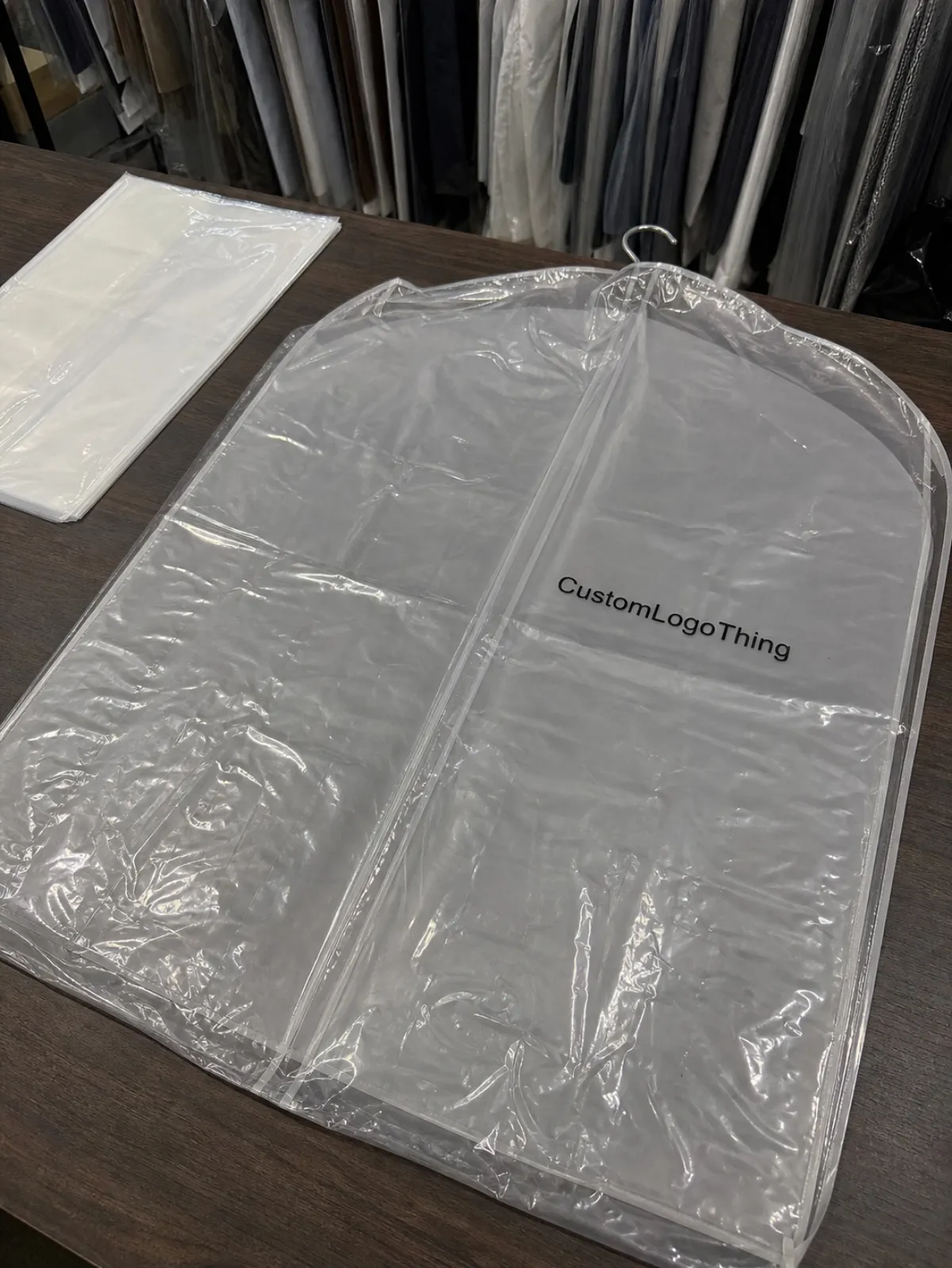
Most garment bag problems are not caused by the PVC bag itself. They start with the small insert nobody checked: the card that slides out of view, the barcode that will not scan, the return instruction that contradicts the laundry policy. A restaurant PVC Garment Bags Packaging Insert checklist prevents those quiet failures before they become replacement orders.
Restaurant garment bags do more than keep uniforms tidy. They protect chef coats, server jackets, catering uniforms, dry-cleaned staff apparel, hotel-restaurant wardrobe pieces, and branded hospitality garments that need to move quickly through storage, issue, laundry, and return.
A useful checklist works like a pre-order control sheet. It records bag size, PVC thickness, zipper style, hanger opening, print placement, warning labels, insert format, packing method, carton labeling, and delivery timing. Leave those details open and the supplier starts guessing. Supplier guessing is expensive.
The insert has an operational job. It may carry use instructions, uniform issue notes, wash guidance, barcode labels, department names, return rules, employee name fields, location codes, or brand messaging. For a restaurant group, one visible card can tell a manager which jacket belongs to pastry, which coat goes to catering, and which uniform must be returned after a seasonal contract ends.
Restaurants need tighter specs than many apparel buyers because the handling environment is rougher. Grease, moisture, back-of-house storage, staff turnover, rushed onboarding, and laundry returns all punish weak packaging. A garment bag that survives a quiet retail stockroom may look tired after two weeks near a dish pit, uniform cage, or banquet staging area.
The goal is not decoration. The goal is a bag-and-insert system that makes uniforms easier to store, issue, identify, protect, and reorder. Less confusion. Fewer missing garments. Cleaner handoffs between procurement, managers, laundry teams, and staff.
How PVC Garment Bags and Printed Inserts Work Together
A PVC garment bag usually starts with clear, frosted, tinted, or partially opaque PVC film. The film is cut to size, heat-sealed at the edges, and finished with a hanger slit near the top. Common additions include a zipper, snap closure, hook-and-loop strip, gusseted side panel, reinforced hanger opening, document pocket, and printed logo.
Clear PVC is common for restaurants because managers can see coat size, color, name label, and department without opening every bag like a raccoon in a dumpster. Frosted PVC looks more polished, but it reduces visibility. Tinted PVC can support brand color, although darker films may need a white ink underbase for logos or readable insert windows.
The insert can sit inside the bag, in a front document pocket, attached by hangtag, tucked behind the garment, or packed separately as an instruction card. A visible pocket is often best for uniform management because the manager can scan the card without opening the bag. If the insert floats loose inside a long coat bag, gravity will do its job. The card drops to the bottom and looks forgotten.
Common insert formats include a paper card, folded instruction sheet, coated card, synthetic waterproof card, barcode label sheet, or printed poly sleeve insert. Paper is fine for short-term handout. Coated stock is better for reusable programs. Synthetic cards cost more, but they survive humid storage rooms and repeated handling.
Typical restaurant use cases include onboarding uniform kits, chef coat storage, catering staff garment issue, hotel-restaurant wardrobe programs, laundry return systems, and event team apparel. The insert prevents mix-ups by listing employee name, size, issue date, wash rules, return policy, location code, reorder SKU, or department.
PVC has limits. It protects against dust, light moisture, and routine handling, but it is not a shield against crushing, high heat, prolonged sunlight, or outdoor storage. For broader packaging planning, Custom Logo Things also offers Custom Packaging Products that can support uniform kits, branded sleeves, labels, and related packaging components.
Key Bag Specs Restaurants Should Confirm Before Ordering
Start with measurements. Confirm flat width, finished length, gusset depth, zipper length, hanger opening position, and pocket size if the insert must stay visible. A chef coat may need a shorter bag than a banquet jacket. A suit jacket, long catering coat, or formalwear piece may need extra length. Measure the longest real garment, not the one someone remembers from last season.
For PVC thickness, buyers usually compare films across light-duty, medium-duty, and heavier reusable ranges. Lighter films work for one-time issue, seasonal events, or short storage. Thicker films feel sturdier and hold up better when staff open, close, transport, and reuse bags. If the bag will be handled weekly, shaving pennies on film thickness often shows up later as split corners and zipper complaints.
| Spec Choice | Typical Use | Practical Tradeoff |
|---|---|---|
| Light PVC film | One-time uniform handout, short event storage | Lower unit cost, less durable under repeated handling |
| Medium PVC film | Chef coats, server jackets, reusable staff bags | Better feel and durability, moderate price increase |
| Thicker PVC film | Laundry return programs, hotel wardrobe rooms | Higher cost, stronger presentation, bulkier cartons |
| Front insert pocket | Visible name, department, barcode, or issue date | Adds labor and cost, reduces confusion during distribution |
Closure choice matters. Zippers suit reusable staff garment bags. Snaps work for lighter-duty use. Hook-and-loop is fast but can catch lint and threads. Open-bottom styles are cheaper and useful for basic storage, though they offer less protection from dust and splashes.
Finish choices affect both function and branding. Clear PVC is best for quick identification. Frosted PVC gives a cleaner presentation. Tinted PVC can match restaurant colors. Opaque panels help when privacy matters, such as named employee garments, executive uniforms, or pieces issued to specific departments.
Print specs should include logo size, ink color, exact print position, one-sided or two-sided printing, and whether artwork needs a white underbase. Send vector artwork, not a tiny screenshot pulled from an email. A 60 mm logo printed near the zipper feels very different from a 140 mm logo centered on the garment front.
Restaurant-specific details deserve their own line on the spec sheet: ventilation holes for recently laundered garments, reinforced hanger openings, wipe-clean surfaces, strong zipper pulls, and enough length for chef coats or suit jackets. If the insert must be visible, add a pocket or fixed placement method so the card does not slide to the bottom.
Also decide how the bag will be read. A card designed for a front desk handoff may need brand copy and polish. A card designed for a uniform cage needs large type, high contrast, and scannable information. Those are not the same design problem.
Cost, MOQ, and Quote Details That Change Unit Cost
The main cost drivers are PVC thickness, bag size, zipper quality, gusset depth, printing method, number of ink colors, insert material, packing style, order quantity, and freight. Larger bags use more film. Thicker PVC costs more. Custom printing adds setup cost. None of that is mysterious, yet buyers still compare quotes as if every bag is identical. Nice theory. Bad purchasing.
For broad planning, a simple custom PVC garment bag may land around $0.80-$2.50 per unit at moderate quantities. More durable printed versions with pockets, better zippers, gussets, and inserts can move higher. Smaller orders often cost more per piece because setup, proofing, printing, and packing labor are spread across fewer units. Freight can also sting because garment bags are bulky even when packed flat.
MOQ tradeoffs are real. A 300-piece run may be useful for testing a new uniform program, but a 1,000- or 3,000-piece order often reduces unit cost. That does not mean every restaurant should overbuy. If uniform sizes change often or locations use different insert text, dead inventory becomes a very organized waste of money.
Insert cost should be quoted separately. A black-and-white paper insert may be only a few cents per piece. A coated color card costs more. Synthetic waterproof cards, barcode printing, variable employee data, or multiple location versions increase cost and handling time. Variable data is useful, but it needs clean files. Messy spreadsheets create messy bags.
Ask suppliers for two or three quote tiers, such as 500, 1,000, and 3,000 pieces. That reveals the real price breaks. Also ask for carton count, carton weight, inner polybag packing, barcode application, freight terms, sample cost, and proofing fees. If you need sustainability documentation or fiber-based inserts, check credible sources such as the Forest Stewardship Council for FSC paper concepts and the International Safe Transit Association for transit testing context.
Practical rule: If the zipper fails after three uses, congratulations, you bought a tiny plastic complaint generator. Review zipper quality before celebrating a low quote.
Price comparisons should include the whole use cycle, not just the invoice line. A lower-cost bag that tears during laundry return may cost more than a sturdier option once replacements, staff time, and delayed uniform issue are counted. Restaurants are already paying for labor in small leaks. Packaging should not add another one.
Process, Timeline, and Production Steps From Art to Delivery
The typical process is straightforward: confirm specs, send artwork, approve a dieline or mockup, approve insert copy, produce a pre-production sample if needed, run bulk production, inspect, pack, and ship. Simple on paper. Slower in real life if five people need to approve one sentence about uniform returns.
Artwork requirements should include vector logo files, Pantone or CMYK targets, final insert text, barcode files if used, and clear placement instructions. For printed logos on clear or tinted PVC, specify whether the print needs one ink color, two colors, or a white underbase. For insert cards, confirm finished size, bleed, paper weight, coating, fold pattern, and version count.
Digital mockups are faster and usually enough for basic bag layout. Physical samples take longer, but they help confirm zipper feel, PVC clarity, insert fit, hanger opening position, and actual bag size. For reusable programs, staff issue systems, or new restaurant launches, a sample is cheap insurance. A mockup costs less than a pallet of regrets.
Lead time depends on order quantity, custom film color, print complexity, insert versions, factory schedule, quality checks, and shipping method. A basic repeat order may move faster. A new custom bag with several inserts, barcode versions, and branded packing requirements needs more breathing room. Build in buffer time before openings, seasonal hiring, catering contracts, or uniform refreshes.
Approve the insert copy early. Care instructions, department names, employee issue rules, return deadlines, and location codes sound small until they freeze production. If the bag is ready but the card still says “TBD,” the order is not ready. That is not a production problem. That is an approval problem wearing a production costume.
Freight planning matters too. Garment bags take more carton space than flat labels, hangtags, or small custom printed boxes. Carton dimensions and shipping mode affect cost and delivery timing. Ask whether the supplier packs 25, 50, or 100 bags per inner bundle, and whether inserts are placed inside each bag or shipped separately for your team to load later.
Quality control should cover more than a quick visual check. Confirm finished size tolerance, zipper operation, seal strength, print position, ink adhesion, insert count, pocket alignment, barcode readability, and carton labeling. Pull samples from different cartons, not only the top bundle. Defects like weak side seals and shifted print often appear unevenly across a run.
Common Mistakes That Make Garment Bag Inserts Useless
The biggest mistake is designing the insert like a brochure instead of an operational tool. Restaurant staff need clear instructions, not a tiny novel in six-point type. If the card cannot be read under back-of-house lighting in under five seconds, it is decoration.
Wrong sizing causes chaos. Inserts can cover the garment label, slide around inside the bag, bend at the corners, block the uniform size, or disappear behind the garment. A card around 4 x 6 inches or 5 x 7 inches often works for visible information, but the best size depends on bag width, pocket placement, and how much data must be scanned.
Weak copy is another problem. “Handle with care” does almost nothing. Better copy says: return to laundry cage by Friday, wash cold, do not bleach, issued to Location 12, size medium, catering team, reorder SKU CT-JKT-M. Specific beats polite fluff every time.
Material matching also matters. Thin uncoated paper may curl in humid kitchens, laundry rooms, or storage closets. Coated card holds up better. Synthetic waterproof material is better for reusable programs where staff may read the card dozens of times. Not always necessary, but useful when the insert is part of the workflow instead of a throwaway note.
Print contrast gets ignored because everyone reviews artwork on a glowing screen. Gray text on frosted PVC may look classy on a PDF, then become nearly unreadable in a dim uniform room. Use strong contrast, larger type for the top three details, and clear hierarchy. Packaging design should help people move faster, not win a secret award for subtlety.
Compliance details need review before production. Depending on bag size, market, and use, you may need suffocation warnings, recycling marks, material labeling, or restaurant chain-specific packaging rules. Confirm requirements instead of assuming the supplier knows your internal policy.
Version control can become the quiet disaster. If every location edits its own insert, the brand ends up with five versions of the truth and one very tired procurement person. Keep a master file, lock the approved language, and mark versions by date or location code.
Build a Purchase-Ready Spec Sheet
Build the spec before asking for the quote. Confirm the garment type, measure the longest item, choose PVC thickness, pick closure style, decide whether the insert must be visible, and define packing quantity per carton. Those six decisions eliminate most of the back-and-forth.
Prepare files before requesting pricing: logo artwork, insert copy, barcode or SKU data, brand colors, bag dimensions, target order quantity, delivery deadline, and any carton labeling requirements. If your restaurant group already buys retail packaging, product packaging, or other branded packaging, keep the visual system consistent so the uniform program does not look like it came from a separate planet.
Create a simple approval checklist with columns for bag size, material, print, insert, packing, sample approval, production approval, and ship date. Add owner names next to each column. A checklist without an owner is just a wish list wearing office clothes.
- Measure the longest chef coat, jacket, or uniform piece.
- Choose clear, frosted, tinted, or opaque PVC based on visibility needs.
- Select zipper, snap, hook-and-loop, or open-bottom closure.
- Confirm insert size, material, copy, barcode, and pocket placement.
- Request pricing at 500, 1,000, and 3,000 pieces if inventory risk allows.
- Approve a sample if the bag will be reused or tied to a launch.
Compare suppliers on more than unit cost. Ask about PVC thickness tolerance, zipper quality, print durability, insert handling, inspection process, carton labeling, and photo proof options. If you need matching sleeves, labels, or boxes for uniform kits, review Custom Packaging Products so the full package branding system feels intentional.
A good spec turns a vague custom bag order into a purchase-ready production brief. That means fewer delays, cleaner storage, easier uniform issue, better reorders, and fewer mix-ups during the rush. Not glamorous. Very useful.
FAQ
What should be included in a restaurant PVC garment bag insert checklist?
Include bag dimensions, PVC thickness, closure type, hanger opening, logo placement, insert size, insert copy, barcode or SKU needs, packing method, carton labeling, sample approval, and delivery deadline. For restaurants, also include uniform size, department, issue date, care instructions, return instructions, and location code if the bags support staff uniform management.
What PVC thickness is best for restaurant garment bags?
Light-duty bags work for short-term uniform handout or one-time events. Thicker PVC is better for reusable chef coat, catering jacket, or staff wardrobe storage. If bags will be opened weekly, transported between laundry and restaurant locations, or reused by employees, choose a sturdier film and better zipper instead of shaving pennies.
How much do custom restaurant PVC garment bags with inserts cost?
Cost depends on size, PVC thickness, zipper style, print colors, insert material, insert versions, order quantity, packing requirements, and freight. As a planning range, simple custom PVC Garment Bags may fall around $0.80-$2.50 per unit at moderate quantities, while heavier reusable bags with pockets, branded printing, and coated or waterproof inserts can cost more.
How long is the lead time for PVC garment bags and packaging inserts?
Lead time depends on sample approval, artwork readiness, order quantity, print complexity, insert production, inspection, and shipping method. Build in extra time before restaurant openings, uniform rollouts, seasonal staffing, or catering launches because insert copy changes can delay production.
Should restaurant garment bag inserts be paper, coated card, or waterproof material?
Plain paper is fine for low-cost, short-term use. Coated card or synthetic waterproof material is better for humid storage rooms, laundry handling, and reusable uniform programs. Choose the insert material based on how long it needs to last, how often the bag is handled, and whether staff need to read it more than once.
Why does a restaurant PVC garment bags packaging insert checklist matter before ordering?
It forces the buyer, designer, and supplier to agree on size, material, print, insert content, packing, and timing before production starts. That keeps the order practical instead of vague, which is exactly what restaurant uniform programs need.

