A spa robe arrives in a glossy PVC garment bag. The logo looks polished for half a second. Then the insert slides down like a loose bookmark, the fold line cuts across the brand mark, and the package suddenly feels cheaper than the garment inside it.
That is why a beauty PVC Garment Bags Packaging Insert checklist matters. Not as paperwork. As a control tool for presentation, protection, compliance details, barcode placement, carton efficiency, and perceived value before a customer even touches the fabric.
Beauty textile packaging is a narrow, slightly awkward category. The bag is transparent, so buyers assume the garment will do the selling. Often, it does not. The insert may be doing more visual work than the PVC shell because it frames the robe, blocks visual noise, supports folded fabric, carries care information, and gives the brand one controlled surface for QR codes, retail labels, campaign copy, or gift-set cues.
Beauty PVC Garment Bags Packaging Insert Checklist: What Buyers Often Miss
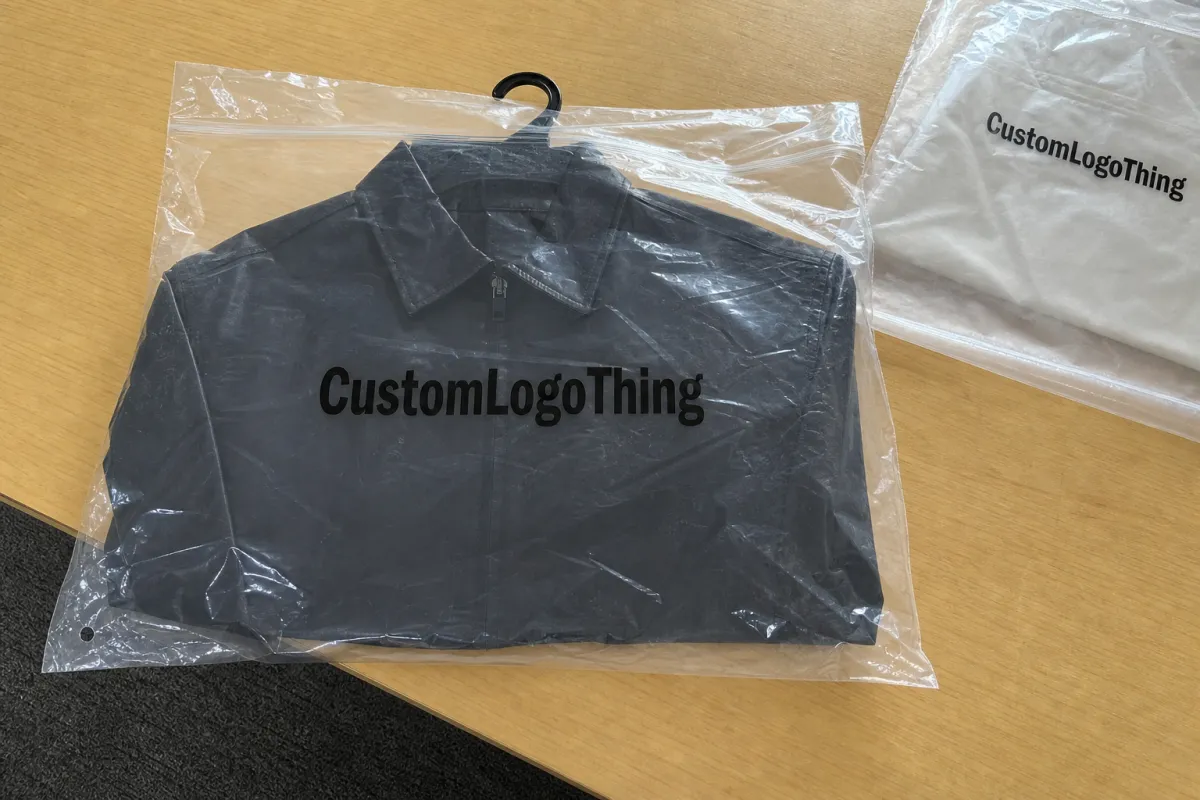
PVC Garment Bags for beauty products sit somewhere between apparel packaging and promotional packaging. They are used for spa robes, salon uniforms, cosmetic staff apparel, influencer textile kits, branded wraps, lightweight gowns, and giftable beauty sets. Add a printed paper, card, or board insert, and the pack stops behaving like a sleeve. It becomes a small display system.
The common mistake is approving the bag and the insert separately. The bag looks fine in a supplier photo. The insert looks clean as a PDF. Then the filled sample arrives, and the zipper path cuts through the logo area, the hanger opening exposes a rough garment fold, or the card buckles because the robe is thicker than expected.
Small error. Big visual penalty.
A practical checklist should verify the full system before a quote is approved: finished bag size, PVC thickness, hanger opening, zipper or snap type, insert dimensions, print method, packing sequence, barcode location, warning text, carton count, and freight assumptions. If that feels excessive for a simple bag, compare it with custom printed boxes. Nobody should approve a folding carton without checking the dieline, substrate, closure, print position, and packing method. Clear Garment Bags deserve the same discipline because they hide almost nothing.
Buyer reality check: if the package is clear or frosted, the customer can see every internal compromise. Wrinkles, sliding inserts, trapped air, crooked folds, and low-contrast printing are not hidden defects. They are the first impression.
Many beauty brands underestimate the insert because it is treated as “extra.” It is not. It is part of the product packaging architecture, and in some cases it carries more brand weight than the bag itself.
How PVC Garment Bags and Packaging Inserts Work Together
A PVC garment bag and its insert should be treated as one structure, not two purchased components. The PVC shell protects, displays, and gives the package its tactile feel. The insert creates shape, information hierarchy, contrast, and brand control. If one part is wrong by only a few millimeters, the whole pack can look careless.
Common PVC finishes change the brief dramatically. Clear PVC maximizes visibility but magnifies wrinkles, garment color variation, and uneven folds. Frosted PVC gives a softer beauty retail look and can reduce the visual harshness of folded fabric. Tinted PVC works well for campaign colors, limited drops, or salon staff kits, although it may shift the perceived garment shade. Matte-textured PVC can feel more premium, but buyers should test whether it dulls logo clarity or scuffs during packing.
Insert formats vary just as much. A full-back card supports the garment and creates a strong branded background. A belly card wraps the visual center and can reduce paper cost. A top header card is useful for hanging display. Folded care cards carry washing instructions without dominating the front. Rigid board backers help satin robes and lightweight garments avoid sagging. Loose promotional inserts can handle coupons, QR activations, care tips, or campaign storytelling.
Weight changes everything. A 90 gsm satin robe behaves differently from a heavier salon jacket or a uniform set with pockets, seams, and embroidery. Lightweight garments may need a 350 gsm to 500 gsm board insert to avoid slumping inside the bag. Heavier apparel may only need a printed header, a care card, and a properly sized PVC sleeve because the garment itself creates enough structure.
The buyer-friendly rule is simple: judge the insert inside the filled bag, not flat on a desk. PVC reflections, garment bulk, zipper tension, seam placement, and gusset depth all change readability. For broader packaging comparisons, Custom Logo Things’ Custom Packaging Products page is a useful reference point because the same basic logic applies across bags, boxes, and printed retail components: structure first, graphics second.
Key Specs to Confirm Before Artwork or Sampling
Before packaging design begins, lock the measurable specs. Start with finished bag width, finished height, gusset depth, hanger opening, handle style, zipper length, seam allowance, closure direction, and garment fold size. Then add insert width, insert height, insert stock, corner radius if needed, and safe zones around every obstruction.
PVC thickness is a major cost and presentation driver. Thin PVC can reduce unit cost and carton weight, which helps for giveaways, temporary storage, or short-term promotional use. Thicker PVC improves shape retention, durability, and perceived value, which matters for beauty gifting, salon retail, and direct-to-customer robe kits. Many projects land in a middle range rather than choosing the thinnest possible film, but the right answer depends on garment weight, reuse expectations, shipping exposure, and how polished the bag must look in photography.
Insert sizing needs caution. Leave clearance around seams and zippers. Allow for garment volume. Avoid tiny text near curved PVC edges or crinkled corners. One millimeter of mismatch may look harmless on a dieline, yet it becomes obvious when 300 transparent bags are stacked in a retail display and every insert tilts in the same direction.
Printing choices also need to match the job. Silk screen printing suits bold one- or two-color logos on PVC. Heat transfer can handle more detailed color on the bag, although adhesion and flexibility should be tested before bulk approval. Digital or offset printing works well for inserts with care instructions, brand story, QR codes, and campaign imagery. Foil, spot UV, soft-touch lamination, or pearlescent effects can shift the luxury signal to the insert rather than the bag.
- Compliance marks: suffocation warnings, recycling marks where applicable, and retail labels should be placed before sampling.
- Care copy: washing, drying, and storage instructions should remain readable after the garment is folded.
- Barcode zones: leave quiet zones and avoid high-glare PVC areas if scanning happens through the bag.
- Production tolerances: allow small movement in heat-sealed seams, zipper placement, and insert position instead of designing to the exact edge.
- Standards thinking: shipping tests may reference ISTA procedures, while paper sourcing may involve FSC certified board if that supports the brand’s sourcing policy.
A strong checklist connects these details early, before the first sample reveals a preventable problem.
Process, Timeline, and Lead Time From Brief to Delivery
The workflow is usually straightforward, but it has plenty of failure points: inquiry, spec confirmation, artwork review, quote, sample approval, deposit, production, quality control, packing, freight booking, and delivery. The tidy version fits on one line. The real version lives in email threads with missing dimensions and artwork files named “final-final-approved.”
Simple stock-like PVC bags with printed inserts can move faster because the structure already exists. Custom sizing, tinted PVC, special zipper pulls, reinforced handles, rigid inserts, or unusual board finishes add sampling time and may extend production. A realistic planning range for many custom projects is several business days for quote alignment, about one to two weeks for sampling depending on complexity, and roughly two to five weeks for bulk production after proof approval. Freight sits outside that range and can change the schedule sharply.
What slows projects down? Missing garment dimensions. Artwork without bleed. An unclear insert position. Changing PVC thickness after sampling. Approving a bag sample without the real garment inside. Even a small shift, such as moving from a loose care card to a full board insert, can change carton size and freight cost.
Sample testing is non-negotiable for buyer-grade packaging. Approve a filled sample that includes the garment, insert, hanger, retail label, zipper, and any outer carton packing requirement. Photograph it under lighting that resembles the final use: salon lighting, retail spotlights, ecommerce photography, or trade show lighting. Glossy PVC can turn a clean cream insert into a glare panel under harsh light.
Freight deserves more attention than it gets. PVC Garment Bags are light but bulky. Rigid inserts can increase carton volume, and carton volume can make air freight surprisingly expensive. Ocean freight may lower cost on larger runs, but it demands more schedule buffer. The cheapest unit price may not be the cheapest landed packaging price once dimensional weight and rejection risk are included.
Build a deadline buffer for beauty launches, spa openings, influencer drops, trade shows, and seasonal retail programs. Packaging delays rarely announce themselves early. They usually appear after a sample looks good in isolation but fails during assembly.
Cost, MOQ, and Unit Pricing Drivers Buyers Should Check
The cheapest PVC garment bag is not always the cheapest delivered packaging. If a bag wrinkles, tears, slows packing, or makes a premium robe look flat, the real cost moves into returns, repacking labor, photography fixes, and weaker brand perception.
Unit pricing is shaped by PVC thickness, bag size, gusset depth, zipper type, handle construction, print colors, insert material, insert size, finishing, order quantity, and packing method. For a clear PVC bag with a basic printed insert, a buyer might see a broad unit range such as $0.45-$1.40 depending on size, volume, and finishing. Premium structures with thicker PVC, tinted film, reinforced handles, metallic details, or rigid board inserts can move higher. These ranges are directional, not universal. Material markets, freight, exchange rates, and supplier setup all matter.
MOQ pressure usually comes from customization. A simple clear bag with a printed card may have a lower minimum than custom PVC colors, custom zipper pulls, metallic inks, special molded components, or rigid insert boards. Custom printed boxes behave similarly: plain structures are easier to source at lower quantities, while special substrates and finishes raise minimums.
| Insert Option | Typical Use | Cost Impact | Buyer Watchout |
|---|---|---|---|
| Header card | Basic branding, hanging display, low-weight garments | Lower material and freight impact | Does little to support the garment body |
| Folded care card | Instructions, QR code, product identification | Low to moderate depending on print coverage | Can slide unless packed in a controlled position |
| Full-back card | Premium retail packaging and photo-ready presentation | Moderate because of larger paper area | Must be sized carefully around seams and garment bulk |
| Rigid board backer | Gift sets, satin robes, influencer kits, high-end salon apparel | Higher material and carton volume impact | Can increase dimensional freight cost |
Hidden charges deserve a separate line in the quote. Ask about artwork setup, plate or screen fees, sample fees, revised sample rounds, inner poly packing, carton upgrades, barcode labeling, inspection requirements, and freight assumptions. A practical quote comparison should separate bag cost, insert cost, setup charges, sample cost, carton dimensions, estimated gross weight, and shipping method.
If a supplier gives one bundled price and no carton data, push for the breakdown. From a packaging buyer’s point of view, that is not being difficult. It is how you compare quotes fairly.
Step-by-Step Checklist for Preparing a Factory-Ready Insert Brief
A factory-ready brief should remove guesswork. Not all of it; packaging still has tolerances. But enough that the supplier can quote, sample, and produce without interpreting your brand intent from a mood board.
- Measure the actual garment folded and hanging. Record width, height, and the thickest point. Do not rely only on garment size labels because fabric thickness, embroidery, belts, hoods, and fold method change the bag fit.
- Choose the bag structure by use case. Retail display, gifting, salon storage, shipping protection, and promotional handouts all need different strength, finish, and insert logic.
- Define the insert purpose before design. Is it carrying brand story, care instructions, a campaign QR code, product identification, visual backing, structural support, or all of those? Too many jobs on one card usually creates clutter.
- Create a dieline with real clearances. Include safe zones, bleed, zipper clearance, hanger slot clearance, seam offsets, barcode quiet zones, and any area hidden by garment folds.
- Specify materials clearly. List PVC thickness, finish, insert stock weight, coating, lamination, ink coverage, and whether the insert must resist moisture, scuffing, or bending.
- Request a filled pre-production sample. Photograph it under retail-like lighting and check glare, garment color, insert contrast, zipper path, and logo position.
- Document the packing order. Garment first or insert first? Insert behind or in front? Hanger facing left or right? Zipper direction? Label placement? Carton count? These details affect consistency.
Discipline pays off here: the pack should be designed around the filled object, not the empty bag. A beauty PVC Garment Bags Packaging Insert checklist gives the buyer a repeatable way to brief that filled object, especially when several people are reviewing artwork, sourcing, logistics, and product merchandising.
For teams comparing several packaging formats at once, it can help to map garment bags beside other Custom Packaging Products. A rigid mailer, a paperboard sleeve, a PVC garment bag, and a printed insert all solve different problems. The right answer depends on display, shipping, reuse, and budget.
Common Mistakes That Make Beauty Garment Packaging Look Cheap
Oversized bags are the fastest way to drain value from beauty apparel. Too much empty PVC creates wrinkles, trapped air, and loose corners. Even a premium robe can start to look like mass-market stock if it floats inside the bag.
Undersized inserts create a different failure. Cards that float, curl, or slide weaken brand control and can cover the garment unevenly. If the insert is meant to sit behind a logo, test whether it stays there after the bag is handled, stacked, opened, and rehung.
Glare is another quiet culprit. Glossy PVC plus pale insert artwork can reduce legibility under salon lighting, retail spotlights, or ecommerce photography setups. Higher contrast, matte insert coatings, bolder typography, and fewer tiny icons can help. Not always, though. Some highly glossy PVC will still throw reflections, which is why photography testing matters.
Designing only for the front is risky. Garment bags are turned over, packed into cartons, pulled from shelves, hung on racks, and opened by staff. Back-side care information, side visibility, hanger orientation, and label placement all matter. Packaging design that ignores handling usually fails during fulfillment, not during the presentation meeting.
Then there is the crowded insert. Beauty buyers often want brand story, care copy, QR code, icons, claims, social handle, ingredient-adjacent language, washing symbols, sustainability statement, and campaign line on one small card. More copy can feel less premium. It can also invite compliance review if claims sound too close to product performance promises.
The operational mistake is the most expensive: approving a beautiful mockup without testing the real fold, hanger, zipper, and carton packing. A mockup shows intent. A filled sample shows behavior.
Build a Spec Sheet Before You Request Samples
Before contacting suppliers, build a one-page spec sheet. It does not need to be elegant. It needs to be measurable. Gather garment dimensions, target order quantity, launch deadline, desired PVC finish, insert goal, artwork files, required warnings, retail requirements, shipping requirements, and inspection criteria.
Order one prototype with the actual garment inside and compare it against three tests: shelf appearance, opening experience, and carton packing efficiency. Can the logo be read from 1 meter away? Does the customer understand how to open the bag without damaging the insert? How many filled bags fit in a carton without bending the board or crushing the zipper?
Ask for photos or video of the sample being packed. That small request often reveals whether the insert slides, bends, catches on the zipper, or forces staff to repack the garment. A supplier photo of the finished bag is useful; a packing video is more diagnostic.
Compare quotes using total landed packaging logic. Unit price matters, but setup fees, sample revisions, freight volume, carton size, and rejection risk belong in the same calculation. For a beauty brand, the packaging is not merely a shipping sleeve. It is branded packaging, retail packaging, and customer reassurance in one clear container.
If you are still choosing between garment bags, paperboard sleeves, gift boxes, or mixed packaging systems, review the available Custom Packaging Products and match the format to the garment’s weight, display channel, and launch plan. A disciplined checklist gives buyers a repeatable way to protect the garment, control the brand story, and avoid expensive surprises before production starts.
FAQs
What should a beauty PVC garment bag packaging insert checklist include?
It should include bag dimensions, PVC thickness, finish, zipper or closure type, hanger opening, handle style, insert size, insert material, artwork safe zones, warning labels, packing order, carton details, and sample approval criteria. The most important practical check is fit: review the insert inside a filled bag with the actual garment, not only as a flat print proof.
How thick should PVC garment bags be for beauty robes or salon apparel?
Many beauty apparel projects use a PVC thickness that balances flexibility, clarity, and presentation. Lighter bags may work for giveaways or short-term storage, while premium robe kits, spa uniforms, or reusable salon apparel bags often need sturdier PVC. The right choice depends on garment weight, reuse expectations, shipping exposure, and how crisp the bag must look in photos or on display.
Do packaging inserts increase the cost of custom PVC garment bags?
Yes. Inserts add material, printing, finishing, and sometimes freight volume. They can also reduce the need for direct printing on the PVC bag, which may help control cost or improve artwork quality. A header card or small care card is usually more economical than a full rigid backer, while a full insert can create a stronger premium retail presentation.
How long does it take to produce beauty PVC garment bags with inserts?
Timeline depends on custom sizing, print complexity, material availability, sample revisions, order quantity, and freight method. Buyers should allow time for a filled sample review because problems such as glare, insert sliding, barcode placement, and zipper interference often appear only after the garment, insert, hanger, and bag are assembled together.
Can I use the same insert design for different garment bag sizes?
Sometimes, but it is risky if the garment fold, bag height, zipper placement, or gusset depth changes. The insert may shift, cover the wrong area, or leave too much empty PVC visible. If multiple sizes are needed, use a shared design system but adjust dielines, safe zones, barcode positions, and visual weight for each bag size.

