Home Fragrance Ribbon Handle Paper Bag Unit Cost Review
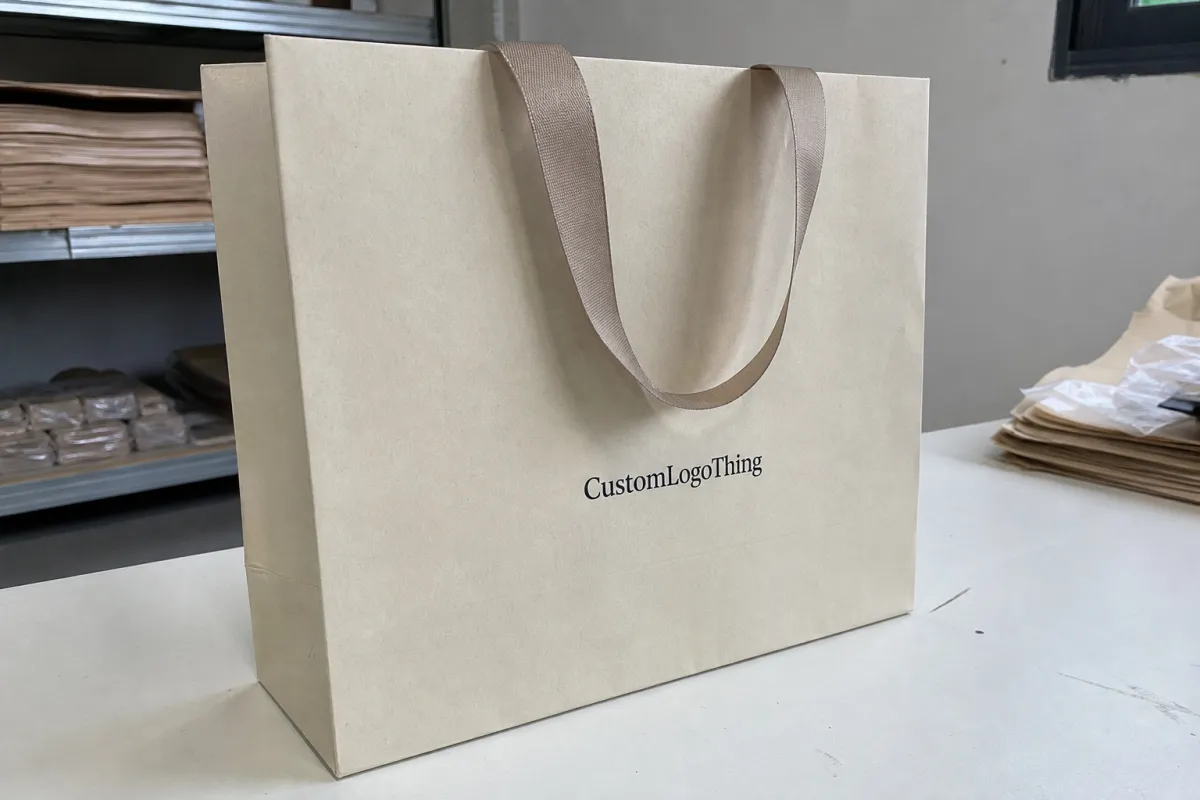
A paper bag does more than carry a product. In home fragrance, it also frames the purchase, supports the brand mood, and influences what buyers think the product is worth before they open it. That is why a home fragrance ribbon handle paper Bags Unit Cost Review should focus on the spec, not the sample alone. The right build feels premium without forcing the packaging into an expensive box format.
For candles, reed diffusers, room sprays, and small gift sets, the bag is often the first physical touchpoint. It needs to present well at retail, survive shipping and store handling, and still work within margin targets. A ribbon handle can improve the gift-ready read, but it also changes material use, assembly time, and final price. Those are the real decision points.
What matters most is repeatability. A bag that looks good once is useful only if it can be produced again with stable color, acceptable carry strength, and predictable lead time. Buyers usually discover the hidden cost drivers only after artwork is approved, so it helps to review them early: board weight, ribbon type, print coverage, finishes, and carton pack-out.
The useful spec is the one that fits the product weight, sales channel, and reorder plan. Everything else is decoration.
How Ribbon Handle Paper Bags Shape Fragrance Presentation
Home fragrance sells on mood, and packaging has to support that mood quickly. A ribbon handle moves a paper bag from plain carrier to gift-ready format in one step. That can be useful for boutique retail, seasonal launches, and bundled sets where the buyer expects a more finished presentation.
The bag still has to work as packaging, not just decoration. It may carry glass jars, diffuser bottles, inserts, and sometimes a sample spray or scent card. The handle should feel comfortable in hand, not sharp or flimsy after a short walk. Satin ribbon usually reads softer and more premium, while grosgrain feels firmer and more durable. The difference is small in a spec sheet and obvious in use.
Color choices shape the product story. Cream and taupe support a calm, spa-like feel. Dark board with metallic print pushes the bag toward gifting or holiday programs. Bright white is clean but shows scuffs faster, so it is best when the brand wants a crisp retail look and can tolerate more handling marks.
Carry behavior matters as much as appearance. If the bag bows at the base or twists under load, it will not feel premium for long. For heavier fragrance sets, the board, base construction, and handle attachment should be checked together. That is where a practical packaging review starts.
A ribbon handle should feel intentional, not decorative. Once the handle, board, and print finish line up, the bag does more of the selling work. If they do not, it still looks like packaging trying too hard.
Board Weight, Ribbon Style, and Print Specs That Change Cost
Most price movement comes from a few spec choices. Board weight is first. A lighter coated board keeps the quote lower, but it can feel thin if the product is heavy or if the bag needs to carry more than a short distance. For many fragrance programs, 300gsm to 350gsm is a practical starting point. When the product is heavier or the brand wants a stiffer hand feel, 400gsm becomes more common.
The handle is the second major driver. Standard satin ribbon is usually easier to source than a custom-dyed match, and that lowers risk and lead time. Wider ribbon can improve comfort and visual weight, but it adds material cost and can increase assembly time. If the handle is threaded, glued, or reinforced through a folded top, each added step will show up in the quote.
Print coverage is another cost lever. A clean one-color logo on a restrained layout is usually cheaper than a full-wrap design with several colors and tight registration. Full-panel artwork is fine when the brand needs it, but it often creates more waste, longer setup, and more proofing. Buyers should treat heavy coverage as a decision, not a free upgrade.
Finishes add another layer. Matte lamination, soft-touch coating, hot foil, embossing, and spot UV all improve presentation, but they also add handling and time. The common mistake is stacking too many finishes on one bag and then wondering why the unit price climbs. One strong finish often does more than three weak ones.
Size also matters more than many teams expect. Oversizing wastes board and increases shipping volume. Undersizing creates a poor fit and stresses the handle. For home fragrance, the quote should include internal dimensions, handle drop, and bottom construction, not just the outside measurement. That is the only way to know whether the bag fits the packed product.
Typical cost impact by build level
| Build level | Typical spec | Indicative unit cost at 3,000 pcs | Best use case |
|---|---|---|---|
| Standard retail | 300-350gsm coated board, 1-color print, satin ribbon, no special finish | $0.22-$0.34 | Entry fragrance sets and everyday retail carry bags |
| Mid-premium | 350gsm artboard, matte or soft-touch lamination, custom ribbon color, 2-4 color print | $0.34-$0.56 | Giftable candle and diffuser bundles with stronger shelf presence |
| High-decor | 400gsm board, foil, embossing, spot UV, custom inserts or reinforcement | $0.58-$0.95 | Seasonal programs, flagship gifting, and higher-margin collections |
Those figures move with size, quantity, finish complexity, and freight method. Still, they give buyers a realistic frame for a home fragrance ribbon handle paper Bags Unit Cost Review before a supplier quote turns into a guess.
Quality control should follow the spec. Check handle attachment strength, ribbon fray at the cut edges, print rub resistance, corner squareness, and whether the bag stands flat without twisting. These are small details, but they are the details customers notice when they carry the bag out of the store.
Pricing, MOQ, and Unit Cost Drivers for Custom Runs
Custom packaging pricing is mostly fixed costs spread across a run. Tooling, plate setup, color calibration, sample making, and finish setup all have to be paid before production begins. That is why short runs feel expensive: the same setup is carried by fewer units.
MOQ works the same way. A 1,000-piece order can make sense for a trial launch or seasonal test, but the unit cost usually drops as the run moves to 3,000, 5,000, or more. The savings come from spreading setup charges over a larger quantity, not from the supplier suddenly lowering margins.
There are practical ways to control the number. Use one bag size across a fragrance family, reuse ribbon colors across SKUs, and limit the number of finish combinations. A clean design with one strong premium cue usually looks better than a crowded spec trying to justify itself through decoration.
Carton pack-out and freight can change the landed number more than the factory quote suggests. A larger bag takes up volume even when it is not especially heavy, which affects pallet count, shipping mode, and storage. If a supplier only gives ex-factory pricing, the quote is incomplete. It is not wrong, just incomplete.
Ask for a tiered quote whenever possible. Good quotes separate tooling, samples, production, and freight. That makes comparison possible and exposes missing assumptions. If one quote is far below the others, the difference usually comes from a lighter spec, missing freight, or understated setup costs.
How to read a quote without getting trapped by the headline number
- Tooling fees should be listed once and kept separate from the unit price.
- Setup charges matter most on short runs and with complex finishes.
- MOQ break points should be clear enough for procurement to model real savings.
- Landed cost should include cartons, freight mode, and export packing requirements.
- Reorder consistency matters as much as first-run price if the bag will be repeated later.
Practical check: if a price looks too low, ask what was left out. Freight, finish complexity, handle reinforcement, and extra print waste are common omissions.
Process, Proofing, and Lead Time from Artwork to Delivery
A controlled process saves money. A rushed one usually spends it. The normal path starts with final dimensions and structure confirmation, then artwork review, die-line alignment, sample approval, and production release. If the bag uses ribbon handles, the supplier also needs to confirm how the ribbon is attached, whether the top fold is reinforced, and how the base will behave under the packed weight.
Lead time is usually driven by three things: approval speed, material availability, and finish complexity. Standard printed bags with common ribbon colors move faster than bags that need custom-dyed ribbon, foil stamping, or soft-touch lamination. Delays often happen before production starts, not during it, so a late artwork sign-off can push the whole schedule.
Sampling deserves real attention because a mockup on screen cannot show board tone, ribbon feel, ink depth, or surface reaction under light. The same logo can look refined on one board and blunt on another. Physical samples catch those differences early and also expose issues with handle placement or bag balance that are hard to see in a flat PDF.
Before release, confirm the final size, ribbon width, handle drop, color references, carton count, and any barcode or retail label placement. If the bags will ship inside a master carton or secondary shipper, ask whether transit testing using an ISTA method is relevant. If the packaging includes recycled content or fiber claims, guidance from FSC helps keep the language disciplined and defensible.
Seasonal programs compress the schedule quickly. That is normal. The risk is trying to compress sampling and production at the same time. A fast job can work; a vague approval chain usually cannot.
Why Buyers Choose This Build Over Rigid Gift Packaging
Rigid boxes have a role when a product needs stronger protection, a layered unboxing sequence, or a heavier luxury signal. But they are not always the best spend. Ribbon Handle Paper Bags usually ship flatter, stack more efficiently, and demand less warehouse space, which makes fulfillment easier.
For fragrance bundles, that difference matters. A bag can hold a candle plus diffuser set, a candle with inserts, or a seasonal kit without the same storage footprint as a rigid box program. Assembly is simpler too. Store staff and packers do not need to fold inserts, fit magnets, or manage multiple components.
Flexibility is another advantage. A fragrance line that changes by season can update artwork, switch ribbon colors, or adjust finishes without rebuilding the whole structure. That helps reduce dead inventory and makes repeat runs easier to manage.
Cost is not the only comparison, but it is still important. If the product needs high compression resistance or heavy-duty protection, a rigid box may still be the safer choice. If the goal is a polished retail read, moderate protection, and a cleaner packaging budget, ribbon Handle Paper Bags often sit in the practical middle.
The best choice is not the most elaborate one. It is the one that works across shelf impact, carrying comfort, and freight math without creating a problem in the next season.
What to Send for an Accurate Quote and Next Steps
An accurate quote starts with a complete brief. Send the final bag size, target quantity, packed product weight, print coverage, and finish requirements. Those five items remove most of the guesswork. Without them, the quote is really just a placeholder with numbers.
Add artwork files, brand colors, and any reference samples. If the design uses a specific ribbon color or a finish that needs matching, say so up front. Include the shipping destination and target delivery window as well, because freight can change landed cost enough to break a budget if it is treated as an afterthought.
It also helps to ask for two versions of the spec. One can be the efficient retail build. The other can be the more premium option with upgraded board, ribbon, or finish. That side-by-side view makes tradeoffs obvious and shows where extra spend buys visible value.
For home fragrance, the useful questions are practical ones: Will the handle hold? Will the board stay flat? Will the print still look clean after handling? Can the bag be repeated on the next run without color drift? If those answers are weak, the price is not really competitive.
That is the real point of a home fragrance ribbon handle paper bags Unit Cost Review: a bag that supports margin, presents well, and can be reordered without drama. If the spec does that, the packaging is doing its job.
For broader packaging terminology and material references, the resources at packaging.org can be useful alongside supplier quotes, especially when comparing board grades, finishing terms, and sustainability language.
FAQ
What affects home fragrance ribbon handle paper bag unit cost the most?
Board weight, ribbon style, and print coverage usually move the price first. MOQ matters because setup costs are spread across the total run, and finishes such as foil, embossing, lamination, and spot UV add labor. Freight and carton size also affect landed cost, so the lowest factory price is not always the lowest delivered price.
What MOQ should I expect for custom ribbon handle paper bags?
MOQ depends on size, print method, and finishing complexity. Standard printed bags usually support lower MOQs than heavily finished premium bags. If you need multiple SKUs, ask whether sizes or colors can be grouped to improve pricing, and request a tiered quote so you can see the cost difference clearly.
Can ribbon handle paper bags hold candles and diffuser sets safely?
Yes, if the board grade, bottom construction, and handle reinforcement are matched to the product weight. Heavier glass items may need a stronger bottom panel or internal insert. The handle attachment should be checked for carry strength, not just appearance, and the supplier should confirm the packed weight before production is released.
What files do I need for an accurate quote?
Send the bag size, quantity, artwork file, and print color references. Include finish requests such as lamination, foil, embossing, or special ribbons. If you already have a sample, share photos or measurements so the build can be matched correctly. Also provide the shipping destination and target delivery date for landed pricing.
How long do sampling and production usually take?
Timing depends on artwork approval, materials, and finishing steps. Sampling is usually faster when the structure is standard and the artwork is final. Production lead time increases when ribbon colors, special coatings, or custom die work are involved. The quickest schedules happen when specs are approved before the quote is released.