How to Choose an Event Merch Shopping Bags Supplier
Choose the Right event merch shopping bags supplier, and the bag keeps working long after the booth lights go down. It rides through airports, sits under desks, shows up in hotel corridors, and ends up in photos that were never part of the original marketing plan. Choose poorly, and the bag gets discarded before lunch. That gap sounds minor when you are comparing quotes. It becomes very real once the event starts and every attendee is carrying the result in public.
Shopping bags sit at a useful crossroads for event teams. They have to look good, hold weight, print cleanly, ship without damage, and arrive on time, all while fitting the event budget. A dependable event merch shopping bags supplier turns a rough concept into a usable spec with the right size, handle style, material, print method, and pack-out plan. That translation work is where the value lives.
Cost per impression matters here, even if the phrase sounds a little dry. A tote that gets reused ten times can outperform a cheaper bag that tears on day one. The lowest quote rarely tells the full story. A strong event merch shopping bags supplier helps a buyer think beyond unit price and toward the actual life of the bag once it leaves the venue. That longer view usually saves money, time, and a fair amount of stress.
Why Event Merch Bags Outlast the Event Booth
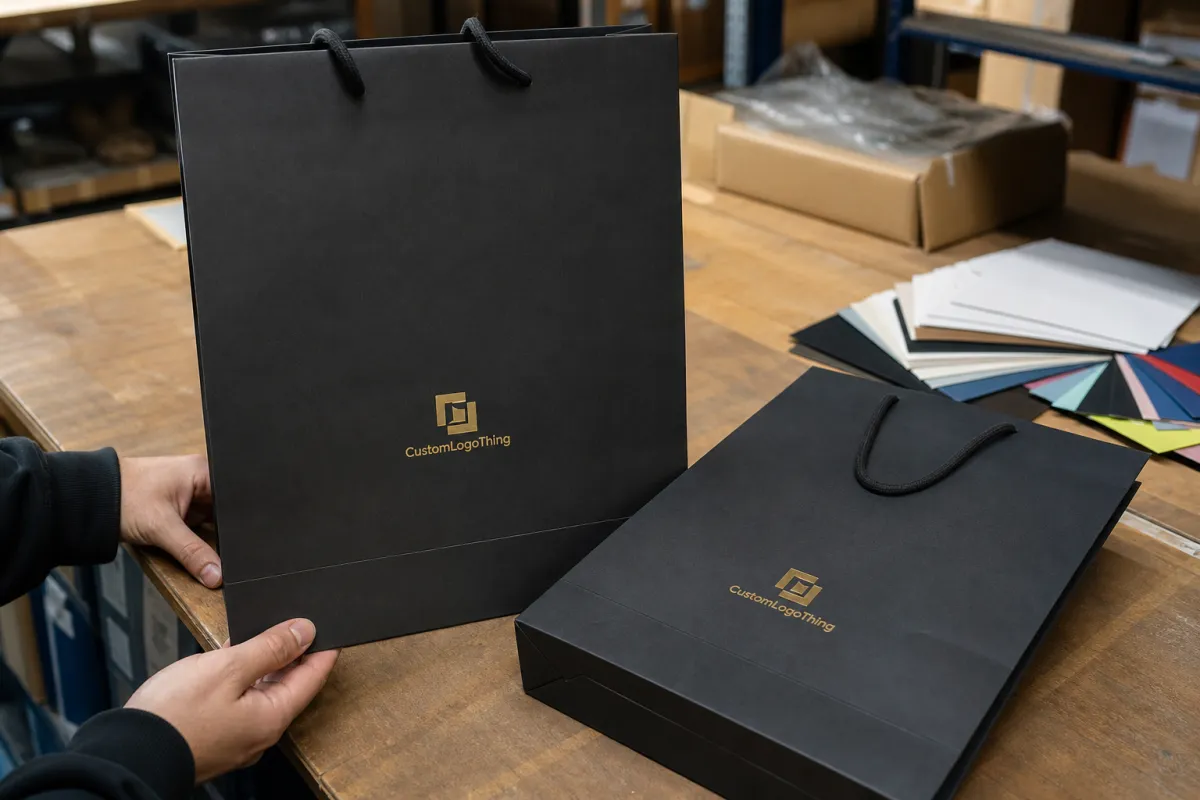
The booth may exist for three days. The bag can keep moving for months. That is one reason bags remain such a dependable event item. A registration tote picked up at the door can travel from a taxi to a plane to a conference room, then settle into a desk or gym locker where the brand remains visible. A thoughtful event merch shopping bags supplier knows that reuse is part of the product, not an accidental bonus.
Attendees reuse bags because the bags solve an immediate problem. Brochures, apparel, boxed samples, notebooks, chargers, and bottled drinks need to go somewhere. If the bag is too small, too thin, or awkward to carry, it disappears quickly. If it has the right depth, strong handles, and a shape that sits comfortably in the hand, it becomes the default carry item for the rest of the trip. That is why trade shows, conferences, festivals, and branded activations keep returning to shopping bags. The attendee needs one, and the brand gets repeated exposure without paying for each extra impression.
A buyer can think about this in practical terms. A paper shopping bag that costs a little more than the cheapest alternative can still deliver better value if it holds together, prints sharply, and keeps showing up in daily life after the event. A skilled event merch shopping bags supplier will talk through load weight, intended use, print durability, and pack format instead of stopping at the quote. Those are the details that separate a smart purchase from a false bargain.
The cheapest bag often becomes the most expensive choice once a torn handle, a dull print, or a late shipment erases the value of the order.
Bags also work as moving media. Someone carrying a branded tote through an airport terminal or commuter train is extending the event reach without any extra distribution cost. The bag is visible before the event, during the event, and after it ends. That kind of longevity gives the right event merch shopping bags supplier a very practical role in the marketing mix: they are not just filling cartons, they are helping the brand travel.
For buyers thinking about sustainability claims, the material story deserves close attention. Paper-based and fiber-based bags should come with clear sourcing language and documentation when needed. FSC guidance is a useful reference for paper and wood-fiber claims: fsc.org. A bag built for repeated use can support the story honestly, especially when the material and construction match the claim. That language should be part of the spec from the beginning, not an afterthought added during the final proof review.
I have seen event teams get pulled into last-minute arguments over recycled content, print finish, or handle strength simply because those details were not discussed until after design approval. That is the kind of avoidable mess a good supplier helps prevent. Not fancy, just useful.
What an Event Merch Shopping Bags Supplier Does
At the simplest level, an event merch shopping bags supplier takes a concept and turns it into a physical bag. The real work starts once the buyer asks for dimensions, structure, handle style, material thickness, print method, finishing, packing method, and shipping plan. Miss one of those decisions and the order can drift out of budget or out of schedule very quickly. Bags look straightforward from a distance. The spec sheet tells the truer story.
That is where the difference between a supplier, a printer, and a broker becomes important. A printer may handle graphics well but stay close to standard formats. A broker may collect quotes without controlling the production process. A true event merch shopping bags supplier usually understands how the bag is built, what can be changed without restarting the job, how artwork behaves on different substrates, and how cartons should be packed for the event receiving desk. That knowledge is unglamorous and very useful.
The product range is wider than many buyers expect. Common requests include:
- Paper shopping bags with twisted or ribbon handles
- Non-woven bags for high-volume conferences
- Cotton totes for premium attendee kits
- Canvas bags for heavier loads and longer reuse
- Laminated promo bags for glossy retail-style presentation
- Specialty carriers with reinforced bottoms or custom closures
A capable event merch shopping bags supplier also helps with the less visible work that keeps an order on track. They may send a dieline, suggest a better gusset, warn that a thin logo will break up on textured stock, or point out that a planned handle length will be awkward for shoulder carry. Those are small interventions on paper and large improvements on the floor.
Larger event programs benefit from a specialized partner more than a general promo vendor. Once the order moves into several thousand units, color consistency, construction quality, and delivery timing matter more than the lowest line item in a catalog. A specialized event merch shopping bags supplier is more likely to ask about carton labels, overage, split shipments, and venue receiving windows. That is not extra noise. That is how expensive surprises are avoided.
For orders that need transit testing or pack validation, ask whether the supplier works with established shipping performance methods such as ISTA protocols. The International Safe Transit Association publishes useful references for packaging and transport conditions: ista.org. Not every bag needs formal testing, but heavy sample kits, multi-stop shipments, and longer routes benefit from that kind of planning.
Key Factors That Matter Before You Buy
Before reaching out to an event merch shopping bags supplier, the buyer should know how the bag will be used. A VIP gift bag, a retail-style shopping bag, and a high-volume conference tote solve different problems. One may need a rigid, premium feel. Another may need light structure and a lower unit cost. Another may need to survive two flights, a hotel checkout line, and an afternoon spent being overfilled with sample packs. The right spec depends on the job, not just the logo.
Audience behavior changes the bag choice more than many brand teams expect. If attendees are carrying brochures and a pen, a light paper or non-woven bag can be enough. If they are leaving with apparel, boxed samples, water bottles, or multiple handouts, handle strength and bottom support move to the front of the line. That is why a good event merch shopping bags supplier asks what will actually go inside the bag rather than jumping straight to artwork.
Material choice deserves real attention. Paper can feel polished and retail-like, but it may not suit wet weather or heavier contents. Non-woven material often works well for volume and repeat use. Cotton and canvas bring a more tactile, premium impression, yet they also increase cost and sometimes add lead time. Recycled paper and recycled fiber options can support sustainability goals, though those surfaces may print differently from standard stock. A practical event merch shopping bags supplier will explain the tradeoffs plainly instead of pretending one material solves every problem.
Size matters more than teams often realize. A bag can look perfect in a mockup and still fail on the floor because the gusset is too shallow or the handle drop is too short. A standard conference bag might need to fit A4 or letter-sized materials comfortably, while a merch bag for apparel or bundled kits may need added depth. Exact dimensions make the quote better and the finished bag better. Guessing creates waste, and the waste usually shows up in the form of reprints or emergency replacements.
Decoration changes both the look and the cost. Matte lamination gives one kind of finish, gloss another. Foil can lift a premium brand, but it is not ideal for every stock. Spot UV adds contrast. Full-color printing can look excellent when the files are prepared cleanly, yet it can expose banding, weak resolution, or artwork that was never designed for the material. A good event merch shopping bags supplier will tell you which finish suits the stock, not which finish sounds the most impressive in a presentation.
Some events need more than one version of the same bag. VIPs may get a premium tote while general attendees receive a simpler version. Sponsors may require co-branded bags that sit apart from the main event design. That split adds planning, but it often keeps spend under control and makes the end result more intentional. A flexible event merch shopping bags supplier can compare one universal bag against a two-tier approach and show where the money actually goes.
| Bag Type | Typical Feel | Common MOQ Range | Approx. Unit Price Range | Best Use |
|---|---|---|---|---|
| Paper shopping bag | Clean, retail-like, light to medium duty | 500-2,000 | $0.18-$0.45 | Registration kits, boutique activations, brand launches |
| Non-woven tote | Practical, lightweight, reusable | 300-1,000 | $0.22-$0.60 | High-volume conferences, sponsor giveaways, repeated carry |
| Cotton tote | Natural, soft, familiar | 250-1,000 | $0.80-$2.50 | Premium attendee packs, lifestyle brands, retail resale |
| Canvas bag | Heavy, durable, more substantial in hand | 250-800 | $1.40-$4.50 | Heavier merch, longer reuse, stronger perceived value |
| Laminated promo bag | Glossy, bold, presentation-focused | 500-2,000 | $0.55-$1.60 | Retail-style campaigns, premium visual impact, image-first events |
Those price ranges only help if the spec stays consistent. A quote for a 10 x 12 x 4 bag is not a fair comparison to a 12 x 16 x 5 bag. Handle type, print coverage, finishing, and carton packing change the economics just as much as size. A proper comparison starts by asking every event merch shopping bags supplier to quote the same dimensions, same material, same print method, and the same ship-to location.
One more thing: if a supplier refuses to clarify what is included, that quote is already too muddy to trust. A good partner should be able to explain the bag in ordinary language without turning the conversation into a maze of half-answers.
Event Merch Shopping Bags Supplier Pricing: What Changes Cost
Price is usually the first question, though it should never be the only one. An event merch shopping bags supplier builds cost from a small set of variables: material, size, handle type, print colors, finishing, and quantity. Once those inputs are clear, the unit price starts to make sense. Before that, quotes can feel random even when they are perfectly logical.
Material choice has one of the largest effects on price. Paper bags are often lower cost at volume, especially for lighter loads. Cotton and canvas climb faster because fabric, stitching, and labor add up. Lamination, reinforced bottoms, and specialty closures also push the number higher. A buyer who wants a premium feel should expect that premium to show up in the quote from the event merch shopping bags supplier. That is the normal outcome of better materials and more work.
Quantity matters just as much. Setup, tooling, proofing, and production labor get spread across the order. With smaller runs, the per-unit cost rises. That is why minimum order quantity exists. A lower MOQ is convenient, but it often costs more per bag. A seasoned event merch shopping bags supplier will explain whether a small run makes sense or whether a stock size with custom print is the better path for the budget.
Hidden costs can catch teams off guard. Artwork fixes take time. Sampling may be charged separately. Freight can become a major line item, especially for bulky bags. Rush fees exist for a reason. If the order ships internationally, customs and duties can change the final landed cost. A transparent event merch shopping bags supplier should itemize those pieces rather than hiding them inside one vague number.
A cleaner way to compare quotes is to line up the exact bag size, construction, print coverage, handle style, carton count, and delivery address, then ask whether sampling, proofing, freight, and compliance checks are included. A lower unit cost can still end up more expensive if the bags arrive late or require rework. In practice, a good event merch shopping bags supplier often saves money by preventing those mistakes before production starts.
Some buyers assume the cheapest bag is the smartest budget decision. That is not always true. A slightly higher quote may include stronger handles, cleaner print, better carton packing, and tighter production control. Those details reduce damage, reprints, and event-day stress. The real procurement question is not “Which quote is lowest?” It is “Which event merch shopping bags supplier gives the best landed result for this event?”
If the budget needs to come down without damaging the product, there are practical ways to do it. Reduce print coverage instead of reducing strength. Simplify the handle. Standardize the bag size. Use one color on natural stock. Increase the run size if the bag will support multiple events. Those choices are plain, which is why they work. A practical event merch shopping bags supplier can usually show ideal, balanced, and stripped-back versions of the same order.
Freight density is the other pricing detail that gets overlooked. Bulky bags take up cubic space, and that space costs money. A folded canvas tote is not the same as a flat paper bag when it comes to carton efficiency. If the order is shipping to a show site with limited receiving windows, ask the event merch shopping bags supplier how the cartons will be packed, labeled, and palletized. Logistics can move the budget more than the print itself.
In practice, I usually tell teams to budget for the bag, the packing, and the movement of the bag as three separate costs. If one of those is missing from the quote, the number is not finished yet. It is just the first draft.
Event Merch Shopping Bags Supplier Process, Timeline, and Lead Time
A reliable event merch shopping bags supplier should walk the buyer from brief to delivery without hand-waving. The steps are predictable, even if the timeline changes with season, material, and quantity. Most delays happen when the buyer and the supplier are not talking about the same thing. Clear process avoids that problem before it starts.
Step 1: Build the brief. Include dimensions, quantity, artwork files, event date, shipping address, and any requirements tied to sustainability, premium feel, or load capacity. If the bag needs to hold heavy merch, say so. If the audience is VIP, say that too. The more specific the brief, the faster an event merch shopping bags supplier can quote something useful.
Step 2: Request a Quote and sample direction. This is where the supplier should send a dieline, suggest a material, and show what can be produced without forcing a redesign. Many bad orders start here because the buyer treats the bag like a poster. It is not a poster. It has folds, seams, handles, and a stress point at the bottom. A good event merch shopping bags supplier catches those issues before they become expensive.
Step 3: Approve artwork proofs and color targets. This step deserves time. A logo can look fine on a screen and still need adjustments on paper, cotton, or laminated stock. Pantone references help, but exact matching can vary by substrate and print method. The more critical the color, the more useful a physical proof becomes. That matters even more when a sponsor, keynote, or brand manager is reviewing the bag. A careful event merch shopping bags supplier will ask for that review before production begins.
Step 4: Production and quality control. During production, the supplier should be checking print alignment, handle strength, stitching or sealing, carton counts, and packing instructions. If the bags will ship to multiple event locations, labeling matters. If the bags need to arrive flat or pre-folded, that matters too. Production is where an order either stays organized or starts drifting. The right event merch shopping bags supplier keeps that drift under control.
Step 5: Shipping and buffer time. This is where event teams often get optimistic. Sample lead time, production lead time, and freight time are not the same number. A bag can be approved in a week and still miss the event if freight or customs run longer than expected. Build buffer days into the schedule. If the venue needs advance receiving, add more time. An experienced event merch shopping bags supplier will usually suggest that cushion before you ask.
For planning, simple orders can move in roughly 10-15 business days after proof approval, while more custom work often takes 15-25 business days or longer, depending on quantity and finish. International freight can add another 5-15 business days or more. That is not a scare tactic. It is just the math of manufacturing and transit. If a supplier says everything can arrive instantly, ask to see the production plan. A trustworthy event merch shopping bags supplier should be able to explain each stage clearly.
Samples and production proofs are different things. A sample helps review feel, structure, color, and print quality. A production proof confirms how the final run will be made. Some buyers ask for one and then wonder why the finished order differs from the sample. A careful event merch shopping bags supplier separates those steps so nobody confuses them later.
Common Mistakes That Turn Simple Orders Expensive
The most expensive mistake is choosing only on price. A low quote from an event merch shopping bags supplier can hide thin material, weak handle reinforcement, poor print clarity, or a schedule that only works if nothing slips. Something usually slips. The better question is whether the supplier has already planned for that reality.
Another mistake is ignoring how the bag will be used. Outdoor events bring weather. Expo floors bring long carry times. VIP kits tend to include heavier items than the first brief suggested. If the bag is too light for the load, the brand takes the blame even when the merch inside is excellent. A good event merch shopping bags supplier asks about the actual use case, not just the artwork dimensions.
Artwork errors create another expensive trap. Low-resolution logos, missing bleed, incorrect color assumptions, and ignored dielines can trigger reproofing or, in worse cases, reprinting. If the supplier says a logo needs to be redrawn or simplified for production, listen carefully. That advice usually comes from experience, not from sales pressure. An experienced event merch shopping bags supplier can often save days by catching those issues early.
MOQ confusion causes budget pain too. Buyers sometimes compare a quote for 500 pieces against one for 2,000 pieces and wonder why the smaller run is so much higher. Setup costs are being spread across fewer units. That is the math. The same applies to sample charges, print plates, and finishing tools. A transparent event merch shopping bags supplier should explain those line items before the purchase order is signed.
Skipping a physical sample is risky when the bag is meant to represent a sponsor, keynote, or premium event tier. On-screen approval tells only part of the story. Texture, handle feel, stiffness, sheen, and print sharpness are difficult to judge in a PDF. If the order is high visibility, request the sample. A dependable event merch shopping bags supplier will treat sampling as part of quality control, not as an inconvenience.
Shipping buffers are easy to underestimate. A freight quote is not a guaranteed arrival date. Transit disruptions, customs delays, venue receiving rules, and weather can all move the schedule. If the event build-out is on a Thursday, the bags should not be landing on Wednesday afternoon. A disciplined event merch shopping bags supplier will recommend a cushion, and that advice is worth taking seriously.
For teams that want a better sustainability or packaging performance story, standards keep the conversation honest. The EPA’s recycling guidance is a useful reference for general claims and end-of-life thinking. It does not replace supplier documentation, but it does help keep language grounded in reality. Honest language matters, especially when the bag itself is part of the brand message.
One honest warning: not every bag can be both premium and inexpensive. If a quote sounds too tidy, there is usually a tradeoff hiding somewhere in the construction, print method, or shipping plan. Better to surface that early than argue about it on the loading dock.
Expert Tips and Next Steps for a Better Shortlist
Shortlisting an event merch shopping bags supplier gets easier when the brief is tight. Start with a one-page spec sheet: quantity, size, material, handle preference, print colors, target budget, event date, shipping location, and whether samples are needed. That single page cuts down back-and-forth and keeps every supplier quoting the same job instead of three different interpretations of it.
Ask for sample photos or a sample kit before narrowing the list. Real bags tell the truth faster than a sales deck. Look closely at print clarity, seam quality, handle attachment, and how the material behaves under light. If possible, compare a few finished bags side by side. A good event merch shopping bags supplier will welcome the request because their work should hold up in your hands, not just in a PDF.
A simple scorecard helps as well. Rate each supplier on price, lead time, print quality, communication, and flexibility. A vendor that is cheap but vague is not a bargain. A vendor that is slightly higher but asks smart questions may be the safer partner, especially when the event has no room for delay. The best event merch shopping bags supplier is usually the one that reduces uncertainty rather than the one that says yes to everything.
It also helps to request two quotes: one for the exact spec and one for a simplified alternate. Maybe the first version includes foil, lamination, and reinforced handles. The alternate may use a clean single-color print and a standard handle. Seeing both numbers reveals the true cost drivers. That is more useful than haggling over a quote based on a fuzzy idea. A thoughtful event merch shopping bags supplier should be comfortable showing that tradeoff.
Reserve a little overage if the budget allows. Press, VIPs, speakers, sponsors, and last-minute registrations always consume more bags than expected. A 3-7% buffer is often enough for many programs, though the right number depends on scale. It is easier to have a few boxes left over than to scramble for emergency replacements on site. A forward-looking event merch shopping bags supplier can help build that cushion into the order without pushing the budget off course.
If the event ships to multiple destinations, say so early. A lot of delays come from split deliveries that were never mentioned in the first quote. The supplier needs to know whether boxes are going to one warehouse, three venues, or a mix of offices and show sites. Logistics changes pricing and timing. Carton labeling changes it too. Good planning turns a complicated shipment into a manageable one, and a capable event merch shopping bags supplier will structure the order around that reality.
The next step is straightforward: gather the brief, confirm the budget, define the event date, and request samples or reference photos. Send the same spec to every candidate so the quotes can actually be compared. From there, choose the supplier that can explain material, construction, lead time, and freight without fuss. That is the cleanest way to pick an event merch shopping bags supplier and avoid the kind of last-minute surprises that make event weeks feel longer than they need to.
If you need a simple rule to carry forward, use this one: prioritize the supplier who can prove the bag will survive the event, the transit, and a few weeks of real use afterward. That is the point where price, presentation, and practicality finally line up.
FAQ
How do I compare two event merch shopping bags supplier quotes?
Use the same bag size, material, print method, handle style, and delivery destination for both quotes. Then check whether setup fees, sampling, freight, and duties are included or listed separately. Lead time matters as much as price. A cheaper event merch shopping bags supplier can still cost more if the bags miss the event date or need rework after approval.
What MOQ should I expect from an event merch shopping bags supplier?
MOQ depends on bag type and print complexity, but custom orders usually start higher than stock promo items. Paper and simple non-woven bags often carry lower minimums than premium sewn totes or fully custom constructions. If the quantity is small, ask whether a stock size with custom print could reduce setup pressure. A practical event merch shopping bags supplier will usually offer that option.
How long does custom event merch shopping bags production usually take?
A realistic timeline includes quote approval, artwork proofing, sampling, production, and freight. Simple orders can move faster, but custom sizes, special finishes, or busy seasonal periods add lead time. Build in buffer days for artwork revisions and shipping so the bags arrive before the event build-out, not during it. A dependable event merch shopping bags supplier should help you plan that cushion.
What bag material works best for conferences and trade shows?
Cotton, canvas, non-woven, and paper each serve different goals: durability, premium feel, cost control, or sustainability messaging. Choose based on what attendees will carry, how long the bag needs to last, and how the brand should feel in hand. If the bag must handle heavy merch or repeated use, prioritize strength over the lowest unit cost. That is where an experienced event merch shopping bags supplier earns its keep.
Can an event merch shopping bags supplier match branded colors exactly?
Many suppliers can get very close, but exact matching depends on the material, print method, and color standard you provide. Use Pantone references, approved artwork files, and a physical proof when color is critical. Expect slight variation across different materials, especially on textured, recycled, or uncoated surfaces. A careful event merch shopping bags supplier will say that up front instead of promising perfection.


