Buyer Fit Snapshot
| Best fit | make sustainable packaging choice for packaging buyers comparing material specs, print proof, MOQ, unit cost, freight, and repeat-order risk where brand print, material, artwork control, and repeat-order consistency matter. |
|---|---|
| Quote inputs | Share finished size, material target, print colors, finish, packing count, annual reorder estimate, and delivery region. |
| Proofing check | Approve dieline scale, logo placement, barcode or warning zones, color tolerance, and any recyclable or compostable wording before bulk production. |
| Main risk | Vague material claims, crowded artwork, or missing packing details can create delays even when the unit price looks attractive. |
Fast answer: Make Sustainable Packaging Choice: Claims, Protection, MOQ, and Cost should be specified like a repeatable production item. The safest quote includes material, print method, finish, artwork proof, carton packing, and reorder notes in one written spec.
What to confirm before approving the packaging proof
Check the product dimensions against the actual filled item, not only the sales mockup. Ask for tolerance on folds, seals, hang holes, label areas, and retail display edges. If the package carries a logo, QR code, warning copy, or legal claim, reserve that space before decorative graphics fill the panel.
How to compare quotes without losing quality
Compare board or film grade, print process, finish, sampling route, tooling charges, carton quantity, and freight assumptions side by side. A lower quote is only useful if the supplier can repeat the same color, closure quality, and packing count on the next order.
How to Make Sustainable Packaging Choice That Actually Works for 5,000-Unit Runs
How do you make a sustainable packaging choice?
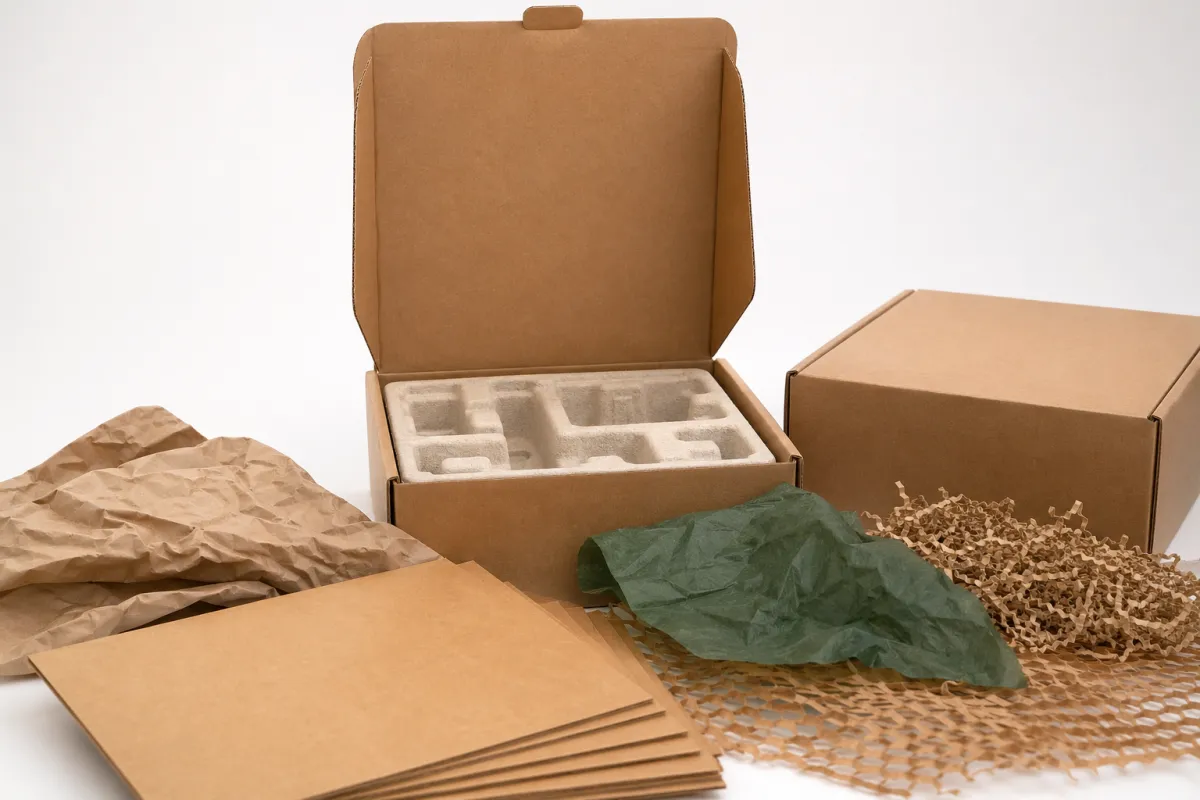
The short version of how to Make Sustainable Packaging choice is simple enough to say and annoying enough to do well: match the structure to the product's failure mode, then test it under the same humidity, drop, compression, and handling conditions it will see in real life. A quick life cycle assessment, a Review of Post-consumer recycled content, and a check on whether the pack is actually accepted as recyclable packaging in the target market usually tells you more than a polished sales deck ever will. Specs beat slogans. Every time.
If you are trying to figure out how to make sustainable packaging choice without blowing up a launch budget in Dongguan or New Jersey, start with the part people usually skip: the trade-offs. I remember standing in a Shenzhen folding-carton plant, holding a recycled board sample that looked beautiful on a sample table, only to watch it split on the inner fold after 180 units because the aqueous coating was too slick for the glue pattern. That mistake cost a client $2,400, plus 6 lost ship dates and a week of irritated phone calls, which nobody wanted. “Eco” does not mean finished. How to make sustainable packaging choice is the work of balancing material impact, protection, print quality, freight weight, and end-of-life behavior in one spec, not in five separate marketing fantasies.
Packaging is rarely one decision. It is a chain of them: board caliper, glue bead, crease depth, ink coverage, pallet pattern, warehouse humidity, carrier handling, and the final mile all matter. For branded packaging, the visual side matters too, but a sharp print cannot rescue a box that arrives crushed or a mailer that swells in damp storage. I have seen beautiful packaging fail in a warehouse in Ho Chi Minh City that felt like a greenhouse in July, with 78% relative humidity at 3 p.m. The point of how to make sustainable packaging choice is not perfection. The point is the best practical choice that ships safely, prints cleanly, and still makes sense at your MOQ, whether that is 3,000 units or 50,000. That answer is often plain, and plain answers protect margins better than fancy ones do.
A lot of brands spend money in the wrong order. They begin with the material instead of the job the package must do. A 350gsm C1S artboard folding carton for a lightweight cosmetic jar is one decision. A 32 ECT corrugated shipper for a 450 ml glass bottle is another. Fragile product, e-commerce route, two climate zones, and a 1,200-mile transit lane from Ohio to Texas? The sustainable choice may need more structure, not less. How to make sustainable packaging choice starts with a blunt question: what failure costs more, a slightly heavier box or 6% damage on the outbound load? I have seen companies save $0.03 per unit and then lose $0.67 per order in returns, replacements, and support tickets. That is not sustainability. That is expensive waste with a clean spreadsheet and a smug label.
Factory-floor rule: the prettiest sample is not the best sample. The one that runs clean at 3,000 units in Shenzhen, survives a 24-inch drop, and still looks sharp after 20 rub cycles earns the order. The one that only looks good under fluorescent lighting in a sample room? Cute, but no.
How to Make Sustainable Packaging Choice: Start With the Trade-Offs
Trade-offs come first. Slogans come later, if they belong at all. A package can score well on recycled content and still fail because the coating cracks, the adhesive gums up, or the folds tear at the score line. I learned that during a client meeting with a food brand in Melbourne that wanted a kraft sleeve, soy-based ink, and zero plastic. Clean brief. Pretty prototype. Then a 12-minute cold-chain test bent the sleeve by 2 mm, and the barcode scanner missed one out of five units. The fix was not “less sustainable.” The fix was a smarter structure, a smaller ink area, and a better fiber mix. That meeting ran long, but the carton shipped on time from Ningbo after the spec changed.
My working definition of sustainability for packaging has five parts: material impact, production waste, shipping weight, protection performance, and end-of-life behavior. That is the real frame for how to make sustainable packaging choice. A package that uses 15% less virgin fiber but creates 8% more breakage is not an upgrade. A package that is recyclable in theory but too weak for the route is not a win. Regional systems matter too. What works in Germany may not work in Texas, and a “compostable” claim on a sales deck may require industrial facilities your customer never sees. I have had suppliers say “compostable” with a straight face while the nearest composting site was 42 miles away, near Bristol, and not accepting that film. That kind of thing makes me tired in a very specific way.
No material solves every problem. Recycled paperboard, FSC-certified kraft, molded fiber, corrugated shippers, mono-material plastic reductions, and compostable films each have a place. I have sat through supplier pitches in Guangzhou where molded fiber was presented as the answer for every SKU, from lip balm to 2 kg gift sets. It is not. I have also watched a beauty brand in Chicago switch to lightweight custom printed boxes, then spend more on inserts because the product shifted in transit. The right choice depends on the product, the channel, the climate, the decoration method, and the budget. That is why how to make sustainable packaging choice is a decision matrix, not a single line item. If it were that simple, everybody would already be doing it, and my inbox would be quieter, which would be lovely.
Standards beat vibes every time. For transit testing, the ISTA test methods give a real baseline for drop, vibration, and compression. For fiber sourcing, FSC chain-of-custody matters when the claim is printed on the pack. For recycling guidance, the EPA has a useful public starting point at EPA recycling basics. None of those standards chooses the box for you. They simply keep claims honest, and honestly, honesty is a very underrated design tool.
The supplier does not control everything. The brand controls the brief, the artwork, the target market, the volume forecast, and usually the story the product tells. The supplier controls the material structure, print method, finishing, and whether the line can actually run the job at 10,000 units without 300 rejects. If you are working with Custom Packaging Products, or any other vendor, bring both sides into the same room early. That is how to make sustainable packaging choice without turning the project into a blame parade in week six.
The first question I ask is rarely “What is the greenest material?” It is “What failure mode costs us the most?” If moisture is the enemy, you may need a coated fiber or a hybrid structure. If freight is the pressure point, shave grams off the pack. If shelf presence matters most, print area and finish outrank a headline recycling claim. How to make sustainable packaging choice works best when sustainability is treated like a balance sheet, not a slogan. I know that sounds unromantic, but packaging is not a mood board; it is a working object that has to survive forklifts in Liverpool and parcel conveyors in Dallas.
How to Make Sustainable Packaging Choice Work in Real Production
Real production changes the conversation fast. How to make sustainable packaging choice only makes sense if the package is followed through the whole lifecycle, not just read on a material description page. Raw material sourcing is the first step. Then comes converting, printing, packing, shipping, use, and disposal. Every stage can add waste. I reviewed a run of 20,000 custom printed boxes for a client in Austin who wanted a matte finish and a low-carbon story. The board itself was fine, but the press had to slow down by 22% because of the heavy ink coverage, and that created extra spoilage. The board was the “green” part. The waste showed up in production. That always annoys me, because the glossy brochure never mentions the spoiled sheets piling up on the floor.
Different materials shift different risks. Recycled board can reduce virgin fiber use, but it may need tighter humidity control. Kraft can support a natural look for package branding, yet uncoated kraft scuffs faster in retail packaging, especially on pallets moving through Atlanta in August. Molded fiber works well for trays and inserts, though it often needs more mold development time and can take up more freight space because the shapes are bulkier. Compostables can fit the right food service applications, but they are not a universal substitute. A film that needs industrial composting is not helpful if the nearest facility is 40 miles away. That myth causes more disappointment than almost anything else in how to make sustainable packaging choice. It also causes more awkward conversations with customers than I care to remember.
The best option changes with fragility, shipping distance, retail display needs, and moisture exposure. A subscription box traveling 1,200 miles from Los Angeles to Denver needs a different spec than a counter display selling within 50 miles of Milan. A fragile serum bottle in a mailer needs more edge strength than a dry goods pouch. A shelf-facing carton needs cleaner print and tighter registration than a secondary shipper. How to make sustainable packaging choice means matching the material to the route. Otherwise you are paying for a nice theory and a bad outcome, which is a terrible place to spend money.
Brand and supplier responsibilities should be explicit. A supplier can tell you whether a 24pt SBS board can be FSC certified, whether the ink system is water-based, and whether the die-cut tool will hold a 0.5 mm tolerance on the window. The brand decides whether the SKU needs a hang tab, a tamper seal, or a display-ready carton. I have seen teams argue for six weeks over sustainability while ignoring that the product only needed a 1-color print and a standard tuck-end structure. That kind of delay burns cash quickly. If the package can be standardized, standardize it. That is often how to make sustainable packaging choice without paying for custom drama you do not need.
Branded packaging often gets overworked. Full-bleed foil, spot UV, layered inserts, and a three-part sleeve look premium, yet every extra step adds material and labor. A cleaner packaging design can still feel elevated if the typography is sharp and the structure is disciplined. I have seen a skincare client in Seoul move from a 5-panel setup to a single outer carton with a well-designed insert and cut material use by 17%. The box looked better, not worse. Good package branding is not about adding more parts. It is about saying the right thing with fewer of them. That is one of those rare moments where restraint actually wins, which feels mildly miraculous in packaging meetings.
Cost and Pricing Factors in a Sustainable Packaging Choice
Cost begins with total landed cost, not unit price. That little $0.02 or $0.05 difference looks clever until freight, spoilage, insert labor, and the cost of a return enter the picture. I watched a client choose a “cheaper” board at $0.18 per unit for 5,000 pieces, then spend another $0.06 per unit on extra padding because the package flexed too much. The final landed cost came in worse than the original quote at $0.23 per unit. Cheap materials become expensive once failure rates rise. I wish there were a more elegant way to say that, but there really is not.
The big pricing variables are predictable and still annoying: MOQ, tooling, coatings, inks, freight, spoilage, and machine speed. A die-cut tool may add $280 to the first run. A specialty aqueous coating might add $0.03 per unit. A water-based ink system might slow the press by 12%. A molded fiber insert can require a longer lead time and higher mold cost, especially if the cavity is custom in Zhejiang or northern Italy. If you are trying to figure out how to make sustainable packaging choice, ask for those costs separately. Otherwise the quote is a decorated guess, and decorated guesses are how budgets die.
| Option | Typical Cost at 5,000 Units | Best Use | Sustainability Strength | Tradeoff |
|---|---|---|---|---|
| FSC recycled paperboard carton | $0.19-$0.28/unit | Cosmetics, supplements, light retail packaging | Good fiber sourcing story, widely recyclable | Needs careful scuff and moisture testing |
| Kraft folding box | $0.16-$0.24/unit | Natural-branded product packaging, direct mail | Lower-ink look, often easier to recycle | Less premium print coverage, can show wear faster |
| Molded fiber insert | $0.22-$0.38/unit | Fragile goods, trays, internal protection | Can reduce plastic parts and improve fiber recovery | Tooling cost and bulkier freight profile |
| Corrugated mailer | $0.14-$0.26/unit | E-commerce shippers, subscription kits | Strong protection with widely accepted recovery paths | Print finishes are simpler than rigid cartons |
Those figures are not universal, and anyone pretending they are has not spent enough time negotiating with a converter in Guangdong or Ohio. In one supplier meeting, I pushed a molded fiber quote from $0.31 to $0.24 at 20,000 units simply by switching to a standard cavity and agreeing to a 90-day forecast. That saved the client more than the “eco premium” they were worried about. How to make sustainable packaging choice often comes down to volume discipline. Standard sizes usually beat fancy custom geometry on both cost and sustainability, and they do it without making everyone in the room sigh.
Higher-performance sustainable materials can save money when they reduce waste, breakage, or labor. I have seen an e-commerce brand move from a flimsy mailer to a slightly heavier corrugated shipper and cut damage claims by 41% in one quarter. The per-unit cost rose by $0.04. The return cost fell by $0.21. That is a solid trade. The package did not get prettier. It got smarter. In packaging, smarter usually beats prettier, even if people pretend otherwise.
If you want better quotes, ask suppliers for the exact material spec, finish, and test assumptions. Ask whether the price assumes 1-color print or full bleed. Ask whether the MOQ is 3,000, 5,000, or 10,000 units. Ask whether freight is ex-works, FOB, or landed. Ask whether the quote includes master cartons, palletization, and a 2% overrun. If you are serious about how to make sustainable packaging choice, those questions matter more than a green badge on a sample board. Green badges are easy. Good production is not.
Step-by-Step: How to Make Sustainable Packaging Choice
Here is the process I use when a brand asks how to make sustainable packaging choice without turning it into a six-month argument. Start with a packaging audit. Look at what is being wasted now, where damage happens, which inserts are decorative rather than functional, and which finishes exist only because someone liked them on a sample wall. I did this with a DTC candle brand in Toronto that used three shipper sizes for one product. We cut it to one master size, one insert, and one printed sleeve. Material waste dropped by 14% before we changed anything else. That alone made the warehouse team noticeably happier, which is rare enough to mention.
Next, define the must-haves. Protection first. Shelf appeal second. Compliance third. Budget fourth. Sustainability target fifth. That order usually irritates people until the first damaged pallet arrives. If the product needs to pass a 24-inch drop test, say so. If the brand wants FSC certification, say so. If the package must look strong on a retail endcap, say so. How to make sustainable packaging choice works best when the brief is specific enough to eliminate dead-end options early. A vague brief is basically an invitation for expensive misunderstandings.
Then build a shortlist of three materials and compare them under the same conditions. Do not compare a glossy sample to a rough sample and pretend that tells you anything. Ask for the same dimensions, the same print coverage, and the same closure style. Request data sheets, finish notes, and photos from live production. If your product line includes custom printed boxes, insist on a sample that matches your real artwork, not a generic logo on a white carton. A pretty mockup can hide ugly production problems more often than people admit. I have been burned by that more than once, and I learned to stop trusting glamour shots.
Test what matters. Drop strength. Humidity exposure. Print rub. Assembly time. Fulfillment speed. If the pack takes 18 seconds longer to assemble, that labor cost matters. If the ink rubs off after 20 cycles, shelf appeal disappears fast. If a material passes in a dry room but fails at 75% relative humidity, you have a seasonal problem waiting to happen. How to make sustainable packaging choice is not a desk exercise. It is a test exercise. If a sample cannot survive your actual route, it is not your sample.
- Audit the current pack with 10 to 20 real units, not screenshots.
- Set 4 must-haves: protection, budget, compliance, and brand fit.
- Request 3 sample builds with identical dimensions and print coverage.
- Run drop, rub, and humidity checks for at least 72 hours.
- Choose 1 primary spec and 1 backup spec before you order full volume.
I used this exact sequence with a supplement client shipping 8,000 units per month from a fulfillment center near Dallas. Their first instinct was to chase the lowest board cost. Their second instinct was to switch to a lighter box. Both were wrong. The winning spec was a midweight recycled board with a tighter die line and a simpler 2-color print. It was $0.02 higher than the cheapest quote, but the packing line ran 11% faster and the damage rate fell under 1%. That is how to make sustainable packaging choice without letting the spreadsheet lie to you. The spreadsheet is useful, but it is not a crystal ball, no matter how much procurement wishes it were.
Process and Timeline for a Sustainable Packaging Choice
Timing changes the outcome. A clean switch needs planning. A simple swap, where the size and structure stay close to the old pack, may move in 2 to 4 weeks if the printer in Shenzhen has the board in stock. A custom structure with new tooling, special coating, or revised artwork can take 6 to 10 weeks or longer. I once lost three weeks because a client’s legal team changed a claim line after proof approval at 4:15 p.m. on a Thursday. One sentence cost them a full production slot. Printing is not a forgiving business. It has a long memory and no sense of humor.
A realistic timeline moves in stages: brief, material selection, sampling, revisions, approval, production, and freight. If the project needs FSC paperwork, certification checks can add 3 to 5 business days. If you are changing from a stock box to a custom insert system, the tooling lead time might add 7 to 14 business days. If the paper mill is tight on raw stock, expect variability, especially in March and September when demand spikes. How to make sustainable packaging choice gets easier when you build in a buffer instead of hoping for one. Hope is not a scheduling strategy, despite what some calendars seem to suggest.
Small runs and large runs behave differently. At 3,000 units, a supplier may accept more manual handling and still keep the project moving. At 50,000 units, the same supplier needs stronger scheduling, tighter tolerance control, and a more stable raw material source. I negotiated one run in Guangdong where the client wanted a compostable mailer for a seasonal launch. The supplier could do it, but only if we kept the print to 1 color and accepted a 15% wider production window. That was the honest answer. Honest answers save money faster than optimistic nonsense. I always trust the supplier more when they tell me what will be annoying instead of pretending everything is fine.
A pilot run is the fastest way to catch problems while the order is still fixable. Order 250 to 500 units if the program allows it. Check assembly speed, transit damage, and shelf appearance. If the pack passes, scale up. If it fails, fix the problem before the full purchase order lands. How to make sustainable packaging choice becomes less risky when pilot runs are treated like insurance, not like a nuisance. I know nobody loves the extra step, but neither does anyone love paying for a failed launch.
If you are sourcing through Custom Logo Things, pair the artwork review with the production schedule early. Get die lines approved, confirm finishes, and check whether the quote includes overrun tolerance, which matters more than people think. A box that looks great in proof and runs poorly at scale is not a production plan. It is an expensive mood board.
Common Mistakes When You Make a Sustainable Packaging Choice
The biggest mistake is choosing by recycled content alone. Recycled content helps, but only if the package still protects the product and works in the supply chain. I have watched brands chase a high recycled percentage, then Ship Fragile Items in a structure that crumbled during fulfillment at a warehouse in Newark. A weak package that breaks in transit creates more waste than a slightly less recycled option that performs properly. How to make sustainable packaging choice means looking at the whole system, not the label on the front panel. Labels are quick. Systems are harder, and that is exactly why they matter.
Another classic trap is picking a lighter material that fails in the real world. A thinner carton that saves 8 grams may look impressive on a spreadsheet. Then the corners crush, the customer complains, and the returns pile up. I reviewed a cosmetics launch where the team switched to a lighter mailer to claim less material use. Damage rose by 5.8% in the first month. The brand spent more on replacements than it saved on the box. That is not a sustainable packaging choice. That is a quiet disaster with a nice marketing slide and a very enthusiastic meeting.
Print compatibility and machine efficiency get ignored far too often. A water-based ink system can be excellent, but if the press needs a slower run speed and the drying time causes blocking, labor cost climbs. A rough kraft surface can look authentic, but if the logo loses edge sharpness, the package branding suffers. I have seen a brand push for a textured finish and then discover their barcode scanner hated the glare at the distribution center in Rotterdam. Small technical problems can erase the savings you thought you were getting. That is why how to make sustainable packaging choice must include the production line, not just procurement.
Regional rules matter too. Recycling acceptance, composting access, and labeling guidance differ by market. A pack that works in one region may be useless in another. Do not assume a claim on a supplier sheet means the customer can actually dispose of it that way. Check the local rules. Ask the supplier for the disposal logic. Then verify it. The EPA, local MRF guidance, and market-specific standards all belong in the decision. If a claim is vague, treat it as a warning sign. Vague claims are where good intentions go to hide.
One more mistake: treating the first quote like a final answer. It is not. I have negotiated with enough mills and converters to know that 2 or 3 rounds of quoting can change the result by 10% to 18%, especially if the artwork, size, or finish is flexible. The first number is often the “let’s see if they bite” number. How to make sustainable packaging choice means asking the second question. And the third. Sometimes the fifth, if the first four were built on wishful thinking.
Expert Tips and Next Steps for a Sustainable Packaging Choice
A scorecard helps. Rank each option on sustainability, cost, performance, brand fit, and supply reliability. Give each category a 1 to 5 score. Then weight the categories based on the product. For fragile e-commerce, performance might count 40%. For a shelf display, brand fit may count 30%. That is a more defensible way to make sustainable packaging choice than arguing over one attractive sample in a conference room with bad coffee. I have sat through those conversations in Chicago and Munich, and the coffee is somehow always terrible.
Ask suppliers for live production samples, not only polished mockups. A mockup can hide a lot. A live sample shows the real ink density, the true fold line, the actual scuff resistance, and whether the adhesive behaves in a warm warehouse at 29 C. I learned that lesson during a negotiation with a corrugated supplier who sent a perfect sample from the sample room. The line-run version had a slight warp because the board was running 3% higher moisture. That difference was enough to change the nesting on the pallet. I trust factory samples more than sales samples. Every time. Sales samples are charming; factory samples are truthful.
Negotiate smarter by talking about standard sizes, annual volume, and shared tooling. If your package can fit a standard die, use it. If your forecast can support 20,000 units instead of 5,000, say so. If two SKUs can share a tray insert, do that. You do not need a bespoke solution for every product unless the product truly demands it. I have saved clients $1,100 to $3,500 on initial setup costs by pushing for a standard cavity or a shared outer box. That is real money. Not marketing money. Real money. The kind that shows up in a budget line and makes finance stop squinting at you.
Here is the action plan I use when the brief lands on my desk: choose one primary material, choose one backup material, get side-by-side quotes, run a pilot, then document the final spec. Keep the die line, coating, ink system, board grade, and tolerance notes in one place. If the supplier changes later, you have a clear baseline. That is how to make sustainable packaging choice repeatable instead of random. And repeatable wins. Random may be charming in other parts of life, but not here.
If you are building your next line of branded packaging, start with the product, not the trend. A package should protect the product, support the brand, and keep the operation sane. That is true for cosmetic cartons, subscription kits, and retail packaging alike. If you want help selecting from Custom Packaging Products, ask for specs, not slogans. Spec sheets tell the truth faster than a sales pitch ever will.
My honest view: the Best Sustainable Packaging choice usually removes waste from the system at three points: the factory in Guangdong, the freight lane across 900 miles, and the consumer’s bin. If you can reduce scrap on press, lower damage in transit, and keep the material easy to sort or recycle, you are doing the real work. That is the standard I use after years of factory visits, supplier negotiations, and enough late-night proof checks to last a lifetime. If you want how to make sustainable packaging choice to become a repeatable process, write the spec, test the sample, and trust the numbers more than the buzzwords. That is how to make sustainable packaging choice That Actually Works. I would much rather have a boring spec that performs than a gorgeous story that falls apart on arrival.
How do I make sustainable packaging choice for a small brand without overspending?
Start with one standard size and one material that works across your main products, such as a 24pt recycled paperboard carton or a corrugated mailer priced around $0.18 to $0.22 per unit at 3,000 pieces. Compare total landed cost, not only the unit price, so freight, inserts, and damage risk stay visible. Order a small pilot run first, even if it is just 250 to 500 units, because one bad full run costs more than a careful test. That is the cleanest way to make sustainable packaging choice on a small budget.
Is recycled material always the best sustainable packaging choice?
No. Recycled content helps, but only if the package still protects the product and works in your supply chain. A weak package that breaks in transit creates more waste than a stronger option with slightly less recycled fiber. I would rather see a 90% workable solution than a 100% claim that falls apart after a 24-inch drop test or a 75% humidity exposure test. That is the practical side of how to make sustainable packaging choice.
What should I ask a supplier before I commit to a sustainable packaging choice?
Ask for the exact material spec, coating, ink system, minimum order quantity, and lead time in writing. Request live samples, not only mockups, and ask about tooling or setup costs before you approve the quote. Also ask how the package is recycled, composted, or disposed of in your target market, whether that is California, Ontario, or the UK. Those details matter if you want how to make sustainable packaging choice to hold up after launch.
How long does it take to switch to a more sustainable packaging choice?
Simple swaps can move in 2 to 4 weeks if the size and structure stay close to the current pack. Custom structures, tooling changes, or artwork revisions can stretch the timeline to 6 to 10 weeks, and proof approval delays can add another 3 to 5 business days. A pilot run is the fastest way to catch issues before a full rollout. That is usually the safest path for how to make sustainable packaging choice.
What is the biggest mistake people make when trying to make sustainable packaging choice?
They chase the most eco-friendly label instead of the most workable solution. Protection, assembly time, and freight weight get forgotten. Suppliers get compared using different specs, and the decision turns into a mess. If you want how to make sustainable packaging choice to be defensible, compare apples to apples and test the real pack, not the pitch deck.