Buyer Fit Snapshot
| Best fit | create unboxing experience branding selection review for packaging buyers comparing material specs, print proof, MOQ, unit cost, freight, and repeat-order risk where brand print, material, artwork control, and repeat-order consistency matter. |
|---|---|
| Quote inputs | Share finished size, material target, print colors, finish, packing count, annual reorder estimate, and delivery region. |
| Proofing check | Approve dieline scale, logo placement, barcode or warning zones, color tolerance, and any recyclable or compostable wording before bulk production. |
| Main risk | Vague material claims, crowded artwork, or missing packing details can create delays even when the unit price looks attractive. |
Fast answer: Create Unboxing Experience Branding Selection Review: Dieline, Finish, Proof, and Buyer Review should be specified like a repeatable production item. The safest quote includes material, print method, finish, artwork proof, carton packing, and reorder notes in one written spec.
What to confirm before approving the packaging proof
Check the product dimensions against the actual filled item, not only the sales mockup. Ask for tolerance on folds, seals, hang holes, label areas, and retail display edges. If the package carries a logo, QR code, warning copy, or legal claim, reserve that space before decorative graphics fill the panel.
How to compare quotes without losing quality
Compare board or film grade, print process, finish, sampling route, tooling charges, carton quantity, and freight assumptions side by side. A lower quote is only useful if the supplier can repeat the same color, closure quality, and packing count on the next order.
How to Create Unboxing Experience Branding That Sells
If you want how to Create Unboxing Experience branding that actually changes how customers feel about a purchase, start before the product is touched. The first visual cue works like a tiny billboard for your brand. In a lot of categories, that split-second impression does more than a week of polished ads. A package is not just protection. It is branded packaging with a job to do.
Two products can be identical on paper and still feel miles apart once they land in a buyer's hands. One shows up in a blank mailer. The other opens in a deliberate sequence of proof, care, and personality. That is the real power behind how to Create Unboxing Experience Branding: it turns delivery into a branded moment instead of a forgettable utility event.
For a packaging team, the smart way to think about this is not decoration. It is system design. Structure, texture, color, messaging, protection, and reveal sequence all need to work together. If one of those pieces is weak, the whole package feels less convincing, even when the print looks great. I have seen otherwise strong brands lose the room here because they treated the box like a last-minute add-on. Cute, but no.
That is the part a lot of people miss. The unboxing experience starts long before the seal breaks. It starts with the promise the package makes at a distance.
What Is Unboxing Experience Branding?
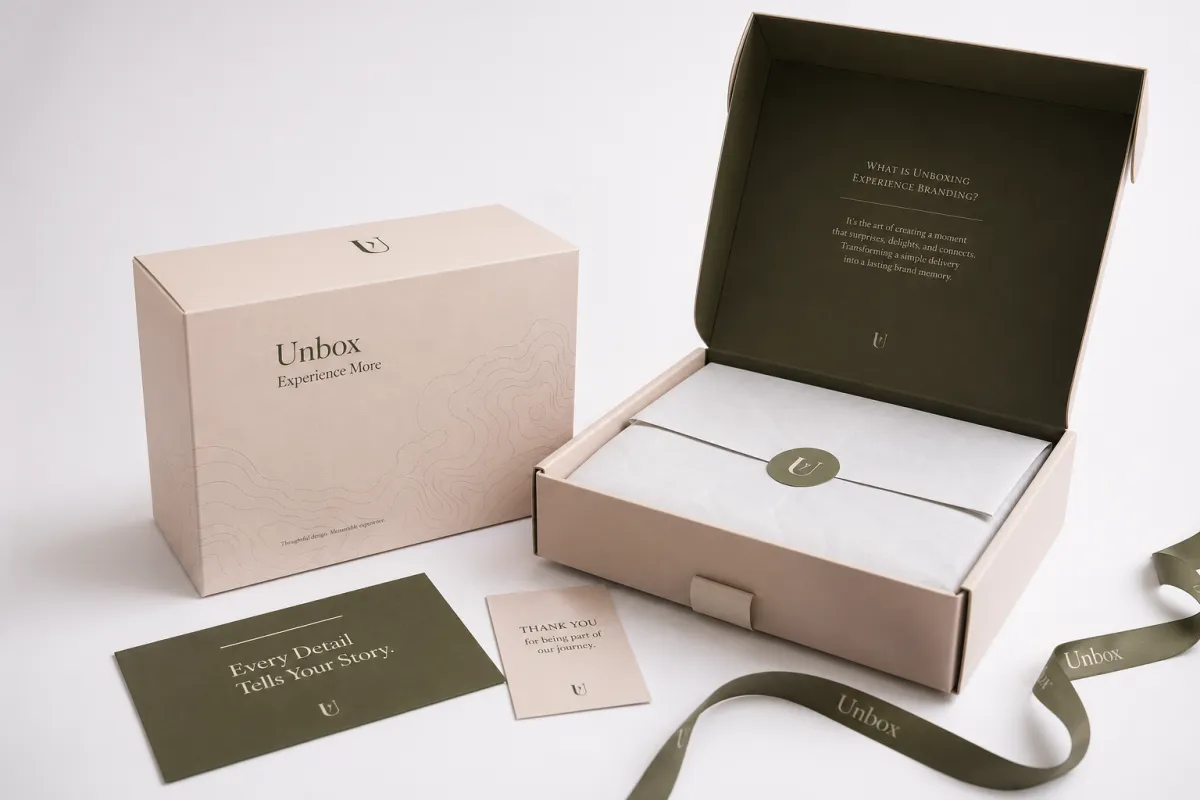
Unboxing experience branding is the full set of cues a customer notices while opening a package: the outer shipper, the first layer, the inner reveal, the message hierarchy, the tactile finish, and the way the product lands in the hand. It is not just a printed box. It is brand identity translated into motion.
The opening moment starts before the flap lifts. The customer sees the color palette, the type treatment, the clean fold lines, or the recycled paper texture and starts forming a judgment. That judgment can happen in under 10 seconds. That is one reason how to create unboxing experience branding matters so much for ecommerce brands that never meet the buyer face to face.
From a packaging buyer's point of view, the goal is simple: make the delivery feel intentional. A generic shipper says, "Here is your order." A branded delivery says, "This is who we are." That shift changes customer perception, and it often changes what the buyer expects from the product itself.
That is not a small detail. Presentation can influence whether a customer assumes the item is premium, giftable, sustainable, or rushed. The package becomes a signal. Strong visual branding does more than decorate the outside; it supports brand recognition and helps the buyer connect the physical item with the online promise they saw before checkout.
I think a lot of brands overcomplicate this part. They imagine they need a full theatrical reveal, but the strongest how to create unboxing experience branding plans usually begin with one clear idea: what should the customer feel first, and what should they learn second?
"If the packaging looks premium but the reveal feels random, customers notice the gap immediately."
That is why the best version of how to create unboxing experience branding is a system, not a pile of add-ons. It should support protection, reduce confusion, and reinforce the promise behind the sale. Otherwise the box turns into noise.
Good packaging does three things at once. It protects the order in transit, it makes the brand easier to remember, and it helps the buyer feel confident that the product inside is worth the money. That combination separates a memorable opening from a forgettable shipment.
How Do You Create Unboxing Experience Branding?
You create how to create unboxing experience branding by defining the feeling first, then building the box around it. Start with the emotional target, Choose the Right packaging format, and make sure every layer has a job. A good package does not shout. It guides. That is the difference between random decoration and a true customer experience.
Ask one simple question: what should the customer notice first, second, and last? If the answer is clear, the package usually gets better fast. If the answer is vague, the box turns into a pile of nice-looking choices with no direction. That is not strategy. That is a mood board with a shipping label.
Another useful filter: can the customer explain your packaging in one sentence after opening it? If not, the system probably needs tightening.
How to Create Unboxing Experience Branding and Why It Works
The psychology behind how to create unboxing experience branding is practical, not mystical. People remember moments of reveal, contrast, and completion. A flat shipping experience gives them almost nothing to hold onto, while a layered reveal creates a sequence the brain can file as a story.
Think about the customer journey. It starts with order confirmation, continues through tracking updates, and peaks when the box lands on the doorstep. By the time the lid opens, anticipation has already been built. Good unboxing experience branding does not try to create anticipation from zero; it gives shape to the anticipation that already exists.
That shape matters because the first layer sets expectations. The second layer confirms them. The final reveal either rewards the buyer or disappoints them. When brands plan how to create unboxing experience branding carefully, they are really controlling the order in which trust gets built.
There is also a social effect. Memorable packaging is more likely to be photographed, filmed, shared, and described to other people. That does not guarantee virality, and it should never be the only goal. It does mean the package can quietly generate referrals without a hard sell. In many categories, that is a better return than chasing a flashy gimmick.
The visual hierarchy inside the box matters just as much as the exterior. The first visible element should introduce the brand. The next layer should reinforce quality or care. The final layer should deliver the product in a way that feels finished. If too many things compete at once, the package loses clarity. The buyer sees effort, but not direction.
For brands that care about operational discipline, this is where packaging and logistics meet. Protection cannot be sacrificed for style. If inserts shift in transit, if tissue tears, or if the product rattles, the whole experience suffers. ISTA transport testing exists for a reason: real distribution is harsher than a mockup on a desk. Learn more from the testing standards at ISTA.
The lesson is straightforward. How to create unboxing experience branding is not about adding more pieces. It is about making each item earn its place. The package should move the customer from curiosity to confidence without friction.
Key Factors That Shape the Experience
If you want how to create unboxing experience branding to work in practice, look at the pieces that shape the experience before a single order ships. Packaging format, brand cues, material quality, message design, and audience fit all matter. Miss one of them and the package can feel off, even if the print itself is strong.
Packaging format changes the emotional tone immediately. A corrugated mailer feels different from a rigid box. A sleeve around a carton creates a different reveal than a sticker seal. Tissue paper adds anticipation. An insert card adds information. A molded tray says something different again. Each format makes a different promise, and each one affects cost and assembly time.
Brand cues need to stay consistent. Typography, color palette, icon style, and voice should match the site, ads, and product pages. If the online store feels modern and restrained but the insert card is cluttered and loud, the brand breaks its own contract. That is where brand consistency matters more than decoration.
Material quality influences perception more than many teams expect. A 14pt insert card and a 24pt rigid board do not just feel different in hand; they imply different levels of care and price positioning. Coating matters too. Soft-touch lamination feels very different from uncoated kraft or aqueous-coated artboard. In how to create unboxing experience branding, touch can be as persuasive as print.
Message design is another lever. The buyer should know what to notice first, second, and last. Maybe the first message introduces the brand, the second gives care instructions, and the final one invites repeat purchase or review. If every panel says the same thing, the package feels padded. If every panel says something different, it feels noisy.
Audience fit is where a lot of concepts get lost. Luxury buyers often expect restraint, better paper, tighter spacing, and a more confident tone. Subscription customers usually want repeatable consistency and practical inserts that reduce confusion. First-time purchasers may need reassurance, a welcome note, and a clearer explanation of product value. The same packaging structure will not serve all three equally well.
Here is a useful comparison for planning purposes:
| Packaging Option | Typical Use | Approx. Cost at 5,000 Units | Brand Effect |
|---|---|---|---|
| Printed Mailer | Lightweight apparel, accessories, small ecommerce goods | $0.18-$0.45 each | Strong first impression with low assembly effort |
| Mailer + Insert Card | Brands that want a simple welcome message or care note | $0.24-$0.60 each | Improves perceived organization and brand clarity |
| Custom Tuck Box | Retail-ready products, kits, giftable items | $0.55-$1.40 each | Feels more premium, supports better reveal sequencing |
| Rigid Box with Inserts | High-value goods, PR drops, specialty launches | $2.50-$7.00 each | Highest perceived value, but higher freight and labor costs |
Those ranges are not fixed. Print coverage, board grade, finishing, and order volume move the price fast. Still, the table shows a simple truth: how to create unboxing experience branding is partly a design decision and partly a financial decision.
If you want more examples of how format and print choices shape perception, review the packaging examples in our Case Studies. The differences are often visible in the first five seconds.
For teams that are also thinking about sustainability claims, certifications matter. FSC-certified paper can support responsible sourcing claims when the supply chain is documented correctly. See the standards and certification framework at FSC. That does not make a package "green" by itself, but it does strengthen trust when sustainability is part of the brand story.
How to Create Unboxing Experience Branding Step by Step
The cleanest way to approach how to create unboxing experience branding is to build from the customer backward. Start with the emotional target, then map the physical package around it. If the end goal is premium positioning, the package should feel composed. If the goal is social sharing, the reveal needs a memorable moment. If the goal is retention, the package needs clarity and repeatability.
Step 1: Audit the current experience. Order your own product. Open it like a customer would. Notice where it feels generic, where the product moves too much, where information is missing, and where the brand could have said something better. A lot of teams skip this because they already know the product. That is a mistake. Familiarity hides friction.
Step 2: Choose one primary objective. Do not try to solve premium perception, lower damage rates, sustainability messaging, and social media traction with one vague concept. Pick the highest-value outcome first. In how to create unboxing experience branding, focus wins. A package that does one thing clearly is usually stronger than a package that tries to do five things at once.
Step 3: Build the package architecture. Think in layers: outer shipper, inner protection, reveal layer, product presentation, and final message. That sequence is not just visual. It controls the timing of the customer's attention. When every layer has a role, the opening feels intentional rather than random.
Step 4: Write the message system. Every insert, sticker, and panel should have a job. The welcome card can establish tone. The care card can reduce support tickets. The discount insert can drive repeat orders. The thank-you note can add warmth, but only if it sounds like the brand. If a card does not strengthen memory, trust, or usability, it probably does not belong in the box.
Step 5: Prototype before scaling. This is where real packaging teams save money. Order sample boards, short-run digital proofs, or a limited production batch. Assemble them by hand and ship them through normal channels. Then ask three practical questions: Did it survive transit? Did it open cleanly? Did the reveal feel worth the cost? In how to create unboxing experience branding, the prototype stage is where expensive mistakes become affordable.
Step 6: Test with real people. A small user group can tell you whether the package feels polished, confusing, or overdesigned. Ask them what they noticed first, what they remembered after opening, and whether they would describe the package to someone else. Their language is valuable. If they use the same words your brand team uses internally, the branding is landing.
Step 7: Refine for production and fulfillment. A beautiful sample is not enough. Can the fulfillment team pack 200 orders a day without slowing down? Does the box still close properly after the insert is added? Will the mailer hold up under stacking? That is the unglamorous side of how to create unboxing experience branding, and honestly, it is where the best systems are separated from the pretty ones.
One practical detail many brands miss: labels and tags can carry more than product data. They can reinforce hierarchy, add care instructions, or create a little branded moment at the final reveal. If that is relevant to your line, explore Custom Labels & Tags as part of the package system, not as an afterthought.
In plain terms, how to create unboxing experience branding step by step is a disciplined process: define the goal, control the layers, test the build, and only then scale the system.
Cost and Pricing: What to Budget For
Budgeting for how to create unboxing experience branding works best when you break the cost into buckets instead of treating packaging as one number. The main cost centers are materials, print setup, finishing, assembly labor, freight, and storage. If you ignore one of those, the real cost will surprise you later.
Materials are the obvious line item, but the details matter. A plain mailer is much cheaper than a rigid box. A 16pt insert card is cheaper than a foil-stamped, soft-touch piece with spot UV. Corrugated board, chipboard, uncoated paper, and specialty stocks all sit at different price points. A few cents per piece can matter a lot when the volume gets high.
Print setup can be a bigger driver than people expect, especially on small runs. Custom die lines, multiple PMS colors, and specialty finishes increase prep time. If a brand wants a two-sided insert, a printed inner flap, and a branded seal, those elements can look simple but still add separate setup costs.
Assembly labor is easy to overlook. A system with one insert card and one sticker is fast. A system with tissue, tape, a note card, a coupon, a wrapped product, and a rigid box takes more time per order. At scale, labor can become the difference between a smart brand investment and a margin leak.
Freight and storage also affect how to create unboxing experience branding. Heavy boxes cost more to ship. Oversized packaging takes up more warehouse space. Some brands pay more for premium presentation and then hand some of it back through freight inefficiency. That tradeoff is not always bad, but it should be intentional.
Here is a practical budget view:
| Approach | Best For | Strength | Watch-Out |
|---|---|---|---|
| Minimal Branded Insert | Small brands, low-risk testing, fast launches | Low cost, easy to assemble, quick to revise | Limited impact if the outer package is plain |
| Mid-Tier Branded Mailer System | Growing ecommerce brands | Good balance of cost, presentation, and consistency | Needs careful message hierarchy to avoid clutter |
| Premium Multi-Layer Presentation | Giftable, luxury, PR, or launch campaigns | Highest perceived value and strongest reveal | Higher assembly time and freight cost |
If the budget is tight, spend first on the first visible layer and the most touchable element. Those are the points customers notice immediately. The internal filler that nobody sees is not the place to overspend. That is a common mistake in how to create unboxing experience branding: teams buy every embellishment except the one that creates the strongest memory.
For brands that want a cleaner environmental story, there is another angle. The U.S. EPA has useful guidance on waste reduction and material choices for packaging and recycling systems. See EPA recycling guidance if your packaging decisions need to support broader sustainability claims. That is especially relevant when the marketing team wants to talk about less waste, but operations needs a realistic, recyclable structure.
My honest rule of thumb: spend where the customer can feel the difference. If they cannot see it, touch it, or remember it, it probably does not deserve a larger slice of the budget.
Process and Timeline: From Concept to Doorstep
The process for how to create unboxing experience branding usually moves through discovery, concept sketches, structural mockups, artwork, sampling, approval, production, and fulfillment. That sounds linear, but in practice it is a loop. Every stage can send you back one step if the brand story, the structure, and the shipping requirements do not agree.
Discovery should define the job the package has to do. Is it protecting fragile goods? Is it creating a more premium first impression? Is it supporting retail readiness? Does it need to fit subscription replenishment or one-off ecommerce orders? The answers change the build.
Concept and mockup are where the design language takes shape. Structural mockups can be plain white, because the point is to test size, folds, and load-bearing behavior. This is a good moment to decide whether the outer layer should be a mailer, carton, sleeve, or rigid box. The choice will affect timelines, especially for custom dies or specialty finishes.
Artwork and sampling can be fast on simple projects and slower on complex ones. A branded insert card or seal label may move through proofing in days. A fully custom box with multiple finishes may need several rounds. A common lead time for straightforward branded components is often 12-15 business days from proof approval, while custom structures can run much longer depending on volume, finish, and queue position.
Approval bottlenecks are where many launches stall. Someone wants to adjust the logo placement. Someone else wants the copy shorter. Then the product dimensions change, and the insert no longer fits. Small revisions are normal, but too many of them can push a launch back by weeks. Build review time into the schedule from the beginning.
Production and fulfillment should be tested together. A good sample still needs to survive real packing conditions. If your team is shipping 100 orders, a manual build is manageable. If you are shipping 10,000, every extra fold and insert has an operational cost. That is why how to create unboxing experience branding should always be planned alongside assembly speed, not after it.
One thing worth doing is a test shipment batch. Send a small production run through the same carrier, same pack-out method, and same handling path as the real orders. You will learn more from ten real shipments than from ten perfect mockups on a table.
Timeline reality check: the package usually takes longer than the artwork. Buyers often expect the design phase to be the slow part, but material sourcing, sampling, and fulfillment setup are where the calendar expands. That is especially true when the project includes custom labels, specialty coatings, or a new box size that requires fresh tooling.
So, if you are building how to create unboxing experience branding for a launch, plan for buffer time. You will use it.
Common Mistakes That Undercut the Experience
Most failures in how to create unboxing experience branding are not dramatic. They are small mismatches that add up. The package looks fine from a distance, but the details tell a different story.
Overdesigning the box is a classic problem. Too many patterns, too many inserts, too many messages, too much copy. The customer has to work to understand where the brand wants their attention. Instead of a clear opening sequence, the box becomes visual clutter. A better system is usually simpler and more disciplined.
Ignoring shipping reality is another mistake. A package can look beautiful in a mockup and still arrive dented, split, or scuffed. If the outer layer is too delicate, the opening moment is compromised before the customer even sees the product. The package must survive the carrier network first. That is not optional.
Inconsistency across SKUs also hurts trust. If one product line uses kraft inserts, another uses glossy white, and a third uses mismatched stickers, the brand starts to feel disorganized. Some variation is fine, but the system needs rules. The customer should sense a family of products, not separate packaging decisions made by different teams.
Weak copy is easy to overlook because it seems harmless. Generic thank-you notes and vague slogans do little for memory or reassurance. The best lines are specific. They tell the buyer what the product is, why it matters, or how to use it. In how to create unboxing experience branding, language should do work, not just take up space.
Chasing virality without utility is probably the costliest mistake. A hard-to-open package can frustrate customers. A heavy package can inflate shipping charges. An overly elaborate build can slow fulfillment. If the brand wants social sharing, the experience still has to be practical. Utility and presentation are partners, not rivals.
"Pretty packaging that slows the warehouse is not premium. It is expensive friction."
There is one more issue that shows up often: inconsistency between the website and the box. If the site feels modern, calm, and premium, but the package feels rushed, the customer notices the gap instantly. Strong brand identity depends on continuity. The moment the package breaks that continuity, the perceived value drops.
The fix is not always expensive. Sometimes it is as simple as tightening the hierarchy, reducing one insert, improving board stock, or reworking the first reveal. Small changes can sharpen how to create unboxing experience branding far more than a new design direction.
Expert Tips and Next Steps for Unboxing Experience Branding
If you want how to create unboxing experience branding to deliver better results, start with one hero moment. That might be a striking first reveal, a tactile thank-you card, a color reveal under tissue, or a well-placed seal. One memorable moment anchors the whole opening. Without that anchor, the package can feel busy but forgettable.
Test with a small customer group. Ask specific questions, not vague ones. Did the package feel premium? Was it easy to open? What do you remember first? Would you describe the package to someone else? Those answers are more useful than a generic "liked it" response. They tell you whether the branding actually landed.
Measure more than aesthetics. A good package should improve more than appearance. Track social mentions, repeat purchase rate, support tickets, refund complaints, and any unboxing-related user content. If the packaging looks great but generates more damage claims or slower assembly, the system needs revision. How to create unboxing experience branding is a business decision, not just a design exercise.
Roll out in stages. Upgrade the most visible touchpoints first, then expand to more SKUs once the system proves itself. That sequence lowers risk and gives the team room to refine the details. It also makes budgeting easier because the spend follows evidence instead of optimism.
Use labels and tags strategically. A branded seal, product tag, or care label can do a lot of quiet work. It can reinforce identity, organize information, and make the final reveal feel complete. For many ecommerce brands, the easiest win is not a bigger box. It is a cleaner system of small branded pieces that work together.
Review real examples. If you want to compare structure, finish, and pack-out choices side by side, our Case Studies page is a useful place to start. It is often easier to see what works when the packaging is tied to actual business goals rather than a mood board.
My strongest advice is simple: keep the package honest. If the brand promise is premium, the build should feel premium. If the promise is functional, the experience should be clean and efficient. If sustainability matters, the materials and claims should line up. That is the real work of how to create unboxing experience branding.
When the box, the message, the materials, and the logistics all support one another, how to create unboxing experience branding stops being a marketing phrase and becomes a repeatable system. Pick one clear reveal, one protection standard, and one message hierarchy, then test it in a real shipment before you scale. That is the part that actually matters.
How do I create unboxing experience branding for a small business?
Start with one branded insert, a well-designed mailer or box, and one memorable reveal moment instead of trying to customize every layer. Match the package to your top promise, such as premium quality, sustainability, or fast delivery, so the design feels honest. Test one low-risk version on a small batch, then refine based on customer reactions and shipping performance. That is usually the fastest path for how to create unboxing experience branding without overcommitting cash.
What should be included in a branded unboxing experience?
Include the essentials first: product protection, clear brand identity, a welcome message, and a clean final presentation. Add only the extras that support the story, such as tissue, stickers, care cards, discount inserts, or QR codes with a real purpose. If an item does not improve memory, trust, or usability, it usually does not belong in the box. That rule keeps how to create unboxing experience branding focused and cost-aware.
How much does unboxing experience branding usually cost?
Costs vary by structure, print complexity, order volume, and finishing, so the cheapest option is usually a simple printed mailer or insert card. Custom boxes, specialty coatings, and multiple insert pieces raise the per-order cost quickly, especially at low quantities. The smartest budgeting move is to invest in the most visible touchpoint first and expand only after testing the return. That approach keeps how to create unboxing experience branding grounded in margin reality.
How long does it take to produce a custom unboxing experience?
Simple branded components can move from concept to launch faster than fully custom structures, which need more sampling and approval time. Lead time is often shaped by artwork revisions, material sourcing, print queues, and fulfillment setup, not just manufacturing. Build a buffer for testing shipments so you can catch fit, damage, or assembly issues before the real launch. Good planning makes how to create unboxing experience branding much less stressful.
How do I know if my unboxing experience branding is working?
Look for repeat purchases, social posts, customer photos, fewer damage complaints, and stronger review language about presentation. Ask buyers direct questions about what they remember first, because recall is a better test than generic satisfaction. If customers describe the package in the same words you use internally, the branding is landing. That is the clearest sign that how to create unboxing experience branding is doing its job.


