Buyer Fit Snapshot
| Best fit | to seasonal spring packaging branding for packaging buyers comparing material specs, print proof, MOQ, unit cost, freight, and repeat-order risk where brand print, material, artwork control, and repeat-order consistency matter. |
|---|---|
| Quote inputs | Share finished size, material target, print colors, finish, packing count, annual reorder estimate, and delivery region. |
| Proofing check | Approve dieline scale, logo placement, barcode or warning zones, color tolerance, and any recyclable or compostable wording before bulk production. |
| Main risk | Vague material claims, crowded artwork, or missing packing details can create delays even when the unit price looks attractive. |
Fast answer: To Seasonal Spring Packaging Branding: Dieline, Finish, Proof, and Buyer Review should be specified like a repeatable production item. The safest quote includes material, print method, finish, artwork proof, carton packing, and reorder notes in one written spec.
What to confirm before approving the packaging proof
Check the product dimensions against the actual filled item, not only the sales mockup. Ask for tolerance on folds, seals, hang holes, label areas, and retail display edges. If the package carries a logo, QR code, warning copy, or legal claim, reserve that space before decorative graphics fill the panel.
How to compare quotes without losing quality
Compare board or film grade, print process, finish, sampling route, tooling charges, carton quantity, and freight assumptions side by side. A lower quote is only useful if the supplier can repeat the same color, closure quality, and packing count on the next order.
Guide to Seasonal Spring Packaging Branding That Sells
Seasonal spring packaging branding changes what shoppers feel before they ever touch the product. In a 48-unit retail bay or a 14-SKU beauty line, the right spring cue can sharpen shelf presence, signal freshness, and keep a brand recognizable from March through mid-May. I have watched that first impression do more work than a 10% discount sticker, which is both fascinating and mildly irritating if you are the person who spent three weeks on the promo math.
Here is the piece most brands miss: guide to seasonal spring packaging branding can alter buying behavior before a label is read, a lid is lifted, or a carton is opened. I have seen a $0.12 artwork change beat a 10% discount because the package looked lighter, cleaner, and closer to the season without shouting about it. That is not magic. It is perception doing what perception does best: making snap judgments before the rational brain gets a coffee, usually in under 3 seconds.
That matters in food, beauty, wellness, and gifting, where the first decision often happens in 2 to 4 seconds at shelf or in a 300-pixel mobile grid. Shoppers may not articulate why one pack feels fresher than another, yet they react to the difference instantly. A strong guide to seasonal spring packaging branding treats that reaction as data, not decoration. Honestly, I think that is the real job here: making emotion measurable enough that a supply chain team in Chicago, Atlanta, or Rotterdam will not roll its eyes and call it fluff.
I still think about a tea client in Chicago who wanted a small spring refresh for a 14-SKU range. We shifted only two details, a softened green palette and a matte aqueous coating, and the buyers said the line looked 20% more premium even though the structure never changed. That kind of result explains why guide to seasonal spring packaging branding works best as a disciplined seasonal system, not a costume change. I remember staring at those samples on a conference table in a loop of fluorescent light and thinking, well, there goes my theory that more decoration always equals more impact.
Guide to Seasonal Spring Packaging Branding: What It Means
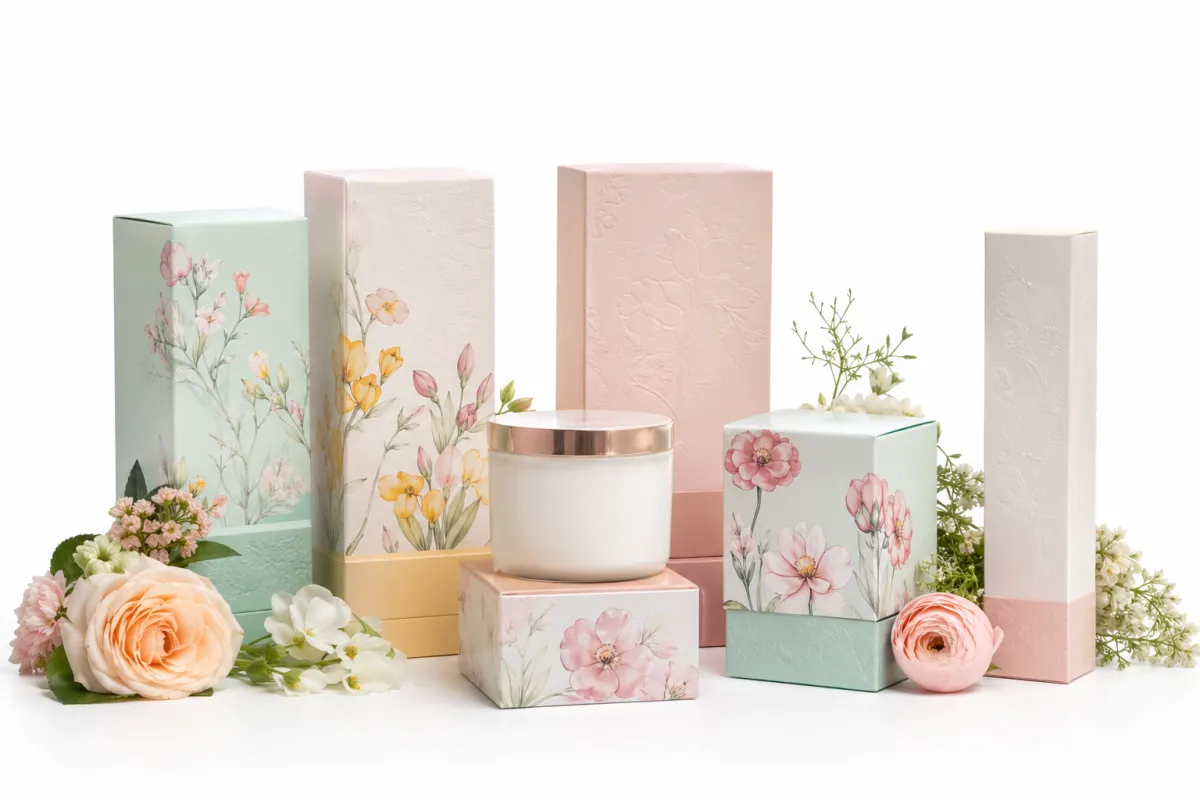
A useful guide to seasonal spring packaging branding starts with a simple idea: spring is a signal, not a style. Renewal, growth, softness, and light all carry visual meaning, and shoppers pick up those cues long before they decode claims or ingredients. In a crowded aisle, that emotional shorthand can matter more than a louder promotion. I have watched a package sell freshness with a pale wash of color and one clean line of copy, which is a lot less glamorous than it sounds and somehow more effective.
What many people call seasonal spring packaging branding is really a short-term layer placed over the core packaging architecture. The logo, product name, and hierarchy still need to be recognizable from 1.5 meters away. A spring palette, seasonal copy, and lighter texture can do the seasonal work without breaking the brand system that already earns trust. Repeat buyers should spot the product in one glance, even if the packaging feels fresher than last season. If they have to squint and wonder whether it is the same SKU, the design has already wandered off the road.
Spring cues behave differently by category. In food, a pale green accent can suggest garden-fresh ingredients or a lighter flavor. In beauty, a soft floral line can imply renewal, hydration, or gentle exfoliation. In wellness, more white space and botanical detail can make a formula feel calmer. Gift packaging uses the season differently again, because buyers often associate spring with generosity and optimism. A solid guide to seasonal spring packaging branding respects those category codes instead of copying one visual formula across every SKU in the range.
On a factory floor in Shenzhen, I watched a client test 3 spring sleeves for a snack brand that had been losing shelf attention. The winning version did not use the most flowers or the loudest color. It used a restrained blush accent, 350gsm C1S artboard, and a cleaner logo lockup that improved readability from 2 meters away. That one decision lifted the retail presentation without changing the recipe, which is exactly why guide to seasonal spring packaging branding can be commercially useful. I also remember the client saying, half-jokingly, "So the snack got a spring makeover and the peanuts did not even know it." He was right, and the shelf did not care about the joke at all.
Timing matters as much as color. Spring packaging does not need to scream seasonal to work. It needs to feel current for 6 to 10 weeks, then exit gracefully when the next campaign arrives. That is why the best guide to seasonal spring packaging branding tends to be careful with core brand marks and more expressive with the supporting visuals. I would rather see a quiet seasonal shift that lasts than a loud one that starts looking tired by week four, especially on products that move through 12-week retailer reset cycles.
"We did not need a new product. We needed a better spring story on the pack." A merchandiser said that after a retailer test in Minneapolis, and the numbers supported her point: the seasonal sleeve lifted engagement by 17% while the SKU itself stayed unchanged. I have repeated that sentence to clients more times than I can count, usually after they ask for one more flower and one more gradient, which is where my patience starts to thin.
For brands building the system from nothing, I usually recommend starting with one seasonal application instead of a full suite. A sleeve, a limited label, or a short-run carton can prove the idea without flooding inventory. If response is strong, the next cycle can expand into Custom Packaging Products with more confidence. That path is slower than a full redesign, yet far less risky. And frankly, slower is not always bad when the alternative is a warehouse in Dallas or Louisville full of boxes that nobody wants by midsummer.
How Does the Guide to Seasonal Spring Packaging Branding Work?
The mechanics are straightforward even when the execution is difficult. In guide to seasonal spring packaging branding, color, material, copy, shape, and finish all communicate seasonality before the shopper reads a word. When those signals work together, the package feels intentional. When they compete, the result looks like leftover promotional art from a campaign nobody had the heart to kill.
Color usually comes first. Pastels still have a place, though they do not need to look sugary or generic. A saturated sage, warm sky blue, or softened citrus tone can feel fresher than the standard pink-and-mint pairing. For a premium olive oil client, we used a muted chartreuse accent against cream stock, and the pack read as spring without drifting into craft-store territory. That is the difference between decoration and guide to seasonal spring packaging branding with a point of view. Honestly, I think a lot of spring work fails because teams confuse seasonal with sweet, and those are not the same thing.
Material and finish matter just as much. Matte stock, uncoated paper, and soft-touch lamination tend to feel quieter than gloss. Embossing adds a tactile cue, and a small window cutout can hint at freshness or a natural ingredient. I have seen a 0.3 mm emboss do more for perceived quality than a second foil pass because touch persuades in ways flat print cannot. Good guide to seasonal spring packaging branding uses that tactile advantage carefully. There is a reason the sample table always ends up covered in fingerprints; people want to feel the difference before they admit they see it.
Hierarchy is the part most teams rush. The logo should remain the logo, the product name should still carry the scan, and the seasonal message should support the story rather than replace it. If the spring headline takes over, repeat buyers hesitate. If it is too quiet, the promotion disappears. A clear guide to seasonal spring packaging branding keeps those layers in order, even on busy Custom Printed Boxes or narrow labels. I have had more than one designer defend a beautiful seasonal banner that completely buried the product name, and I can only describe that as artistic confidence running ahead of common sense.
The seasonal theme also needs to travel across formats. A mailer can use more negative space, a pouch may need stronger contrast, a label can carry a smaller motif, and a retail display should amplify the package rather than repeat it mechanically. I like to compare carton, label, and display mockups side by side before approval. If you need a reference point for short-run label work, our Custom Labels & Tags page can help frame the options. I have learned that a concept can look charming on one format and absolutely baffling on another, which is why consistency matters more than cleverness.
One retailer example has stayed with me. A natural soap brand refreshed its spring line with lighter backgrounds, 2 botanical icons, and a short seasonal line of copy. The formula never changed. The buyer still said the package finally matched the scent profile, which is a reminder that guide to seasonal spring packaging branding is really about alignment, not ornament. Sometimes the most useful design decision is the one that makes the product feel like it finally stopped arguing with itself.
If you want a practical benchmark, I use 5 signals: distance read, color mood, material feel, seasonal message, and shelf contrast. That framework keeps guide to seasonal spring packaging branding tied to actual shopping behavior instead of mood-board theory. It also gives a designer a sharper brief than vague notes about making things feel more springlike. Vague notes are the enemy here; I have seen make it feel fresher translated into ten minutes of frantic flower sketches and one very tired art director in Portland.
Key Factors in Seasonal Spring Packaging Branding
Color strategy deserves more thought than most teams give it. Pastel does not automatically mean effective, and bright spring accents can work better for premium items that need a harder shelf edge. A guide to seasonal spring packaging branding should start with the brand's existing palette, then ask which 1 or 2 seasonal shifts improve freshness without weakening recognition. Restraint usually wins. The brands that try to shout spring with every square inch usually end up looking like a florist's leftovers bin.
Typography is the next pressure point. Elegant serif pairings can feel refined for gifts or specialty foods, while a clean sans serif often suits wellness, personal care, or direct-to-consumer product packaging. I have seen a whimsical script fail badly because it made the pack look like a party favor instead of a retail SKU. The better question is not "What font feels springy?" but "What font keeps the brand personality intact while nudging it toward lightness?" That question sits near the center of guide to seasonal spring packaging branding. I am biased here: if the type cannot survive a thumbnail and a shelf scan, it is probably trying too hard.
Material choices can make or break the seasonal impression. Recycled paperboard, matte varnish, and soft-touch coating often support a calm, high-trust feel. For companies that want to signal responsible sourcing, FSC certification can reinforce the message, especially on fiber-based cartons and sleeves. In one procurement discussion in Toronto, a buyer told me she would accept a 4% higher unit cost if the substrate and sourcing story were clear, because her customers were already asking about responsible packaging. That is a real trade-off guide to seasonal spring packaging branding has to anticipate. I sympathized with her immediately; the cheapest quote is rarely the one you want to defend in a meeting six weeks later.
Visibility cannot be an afterthought. A design that looks elegant on a 24-inch monitor can vanish in a crowded aisle or fail as a marketplace thumbnail. I check spring packaging at 3 distances: 2 meters on shelf, 18 inches in hand, and 160 pixels on screen. If it misses any one of those tests, the concept needs work. That rule has saved me from more than one overdesigned seasonal launch in New York and Milan. It has also saved me from the special brand of embarrassment that comes from presenting a gorgeous concept that turns into a beige smudge on mobile.
The unboxing experience matters too, especially for ecommerce brands. A spring insert card, a lightly printed interior flap, or a branded tissue sheet can extend the seasonal story without forcing the outer pack to do all the work. For a skincare client in Los Angeles, we paired a clean white mailer with a sage interior print, and the open-box moment felt more thoughtful than the shelf photo suggested. That is a subtle way to apply guide to seasonal spring packaging branding across both retail packaging and direct shipping. I like that kind of move because it rewards attention instead of shouting for it.
Here is the practical filter I use before approving any concept:
- Shelf clarity: can a shopper identify the SKU in 2 seconds?
- Seasonal cue: does it signal spring without falling into cliché?
- Brand fit: would a loyal customer still recognize it instantly?
- Production reality: can the artwork survive the print method and substrate?
If all 4 answers are yes, the design is probably ready. If one answer is shaky, guide to seasonal spring packaging branding should stop for another proof round instead of rushing into production. I have seen too many teams skip that step and pay for it in reprints. Nothing ruins a cheerful spring launch faster than a carton arriving with a color shift and everyone staring at the sample like it betrayed them personally.
Cost and Pricing in Seasonal Spring Packaging Branding
Cost is where strategy turns into a spreadsheet. The main drivers in guide to seasonal spring packaging branding are print method, material selection, finishing complexity, order quantity, and how many SKUs need separate artwork. A 2-color label update is one kind of project; a 6-SKU carton program with foil, embossing, and insert cards is another. The gap can be dramatic, and it tends to grow right when someone says, "Can we also add a foil accent?"
For a small seasonal refresh, I have seen artwork-only updates land around $0.15/unit for 5,000 pieces on a paper label run, especially when the structure stays the same. A custom carton with a seasonal sleeve might sit closer to $0.42 to $0.78/unit, depending on 350gsm C1S artboard, coating, and whether the line is printed in Dongguan, Shenzhen, or Xiamen. A rigid gift box with foil and embossing can move to $1.60 to $3.20/unit very quickly. That is why guide to seasonal spring packaging branding should begin with the business goal, not the prettiest concept board. Pretty is useful. Pretty without a margin plan is just expensive confidence.
| Option | Typical Unit Cost at 5,000 Units | Best Use | Watch-Out |
|---|---|---|---|
| Artwork-only refresh | $0.10-$0.22 | Labels, sleeves, inserts, short-run promos | Limited tactile impact |
| Printed sleeve or band | $0.18-$0.35 | Existing cartons, limited-edition SKUs | Extra assembly step |
| Custom printed box | $0.42-$0.95 | Retail packaging and gift sets | Higher setup and MOQ pressure |
| Rigid gift box | $1.60-$3.20 | Premium seasonal launches | Freight, storage, and labor costs rise fast |
Minimum order quantity changes the math too. A 3,000-unit spring run may cost more per unit than a 20,000-unit annual pack, yet it lowers inventory risk and gives the team room to react to sell-through. For brands carrying 4 or 5 seasonal colorways, that flexibility can matter more than shaving 2 cents off a unit. The cheapest pack is not always the least expensive decision. I have sat through enough budget meetings in London, Newark, and Singapore to know that the lowest quote can turn into the highest headache if the launch misses its window.
Budgeting should include more than print. Design time, structural sampling, plate or setup fees, freight, and the cost of late launches all belong in the model. If the spring pack misses the retail window by 2 weeks, the missed opportunity can outweigh the packaging spend. I usually tell clients to protect at least 10% of the budget for revision, freight buffers, or a surprise board upgrade. That cushion has saved more than one guide to seasonal spring packaging branding project from embarrassment. And yes, the surprise board upgrade always shows up right after everyone says the budget is basically locked.
Transit testing can also change the budget, especially for ecommerce or wholesale programs that travel far. For corrugated shippers and mailers, ISTA testing is a sensible starting point because a beautiful pack that arrives crushed is not a branding win. On one West Coast launch, a client skipped drop testing and lost 8% of the first shipment to corner damage. The reprint cost ended up higher than the test would have been. I still remember the silence in that meeting, which is usually what happens right before everyone starts pretending the damage must have happened in transit somewhere. Sure. Somewhere very expensive.
Here is the decision framework I use with clients:
- Invest more if the seasonal pack is tied to a hero SKU, a retail buyer presentation, or a premium unboxing experience.
- Keep it light if the product has a short 6-8 week window, low margin, or a highly recognizable core pack.
- Split the difference with a sleeve, label, or insert if you need seasonal energy without changing the full structure.
That middle path is often the smartest. A seasonal sleeve can deliver enough freshness to matter while keeping the underlying pack and inventory stable. For many brands, that is the point where guide to seasonal spring packaging branding becomes commercially useful instead of simply attractive. I would argue it is also the point where everyone on the team breathes a little easier.
Process and Timeline for Seasonal Spring Packaging Branding
A clean workflow keeps seasonal work from spiraling. The usual path in guide to seasonal spring packaging branding is brief, concept, proof, prepress, production, quality review, and delivery. That sounds neat on paper. Real projects bounce around, especially when marketing wants stronger emotion and operations wants a simpler build. I have never seen a spring launch completely obey the first schedule. I have, however, seen many people act surprised by that fact.
Spring campaigns often need more lead time than teams expect. If you are using custom structures, special inks, or overseas production, sampling and freight need breathing room. I have watched 2-week easy projects become 8-week scrambles because a dieline changed after approval. A better guide to seasonal spring packaging branding assumes friction and plans for it. That does not make the process romantic, but it does make it survivable.
Here is the timeline I would call realistic for a well-run project:
- Brief and positioning: 2-3 business days.
- Concept development: 3-5 business days, depending on how many SKU families need variants.
- First proof round: 2-4 business days.
- Sampling and revisions: 5-7 business days.
- Production: typically 12-15 business days from proof approval for straightforward print jobs, longer for specialty finishing.
- Freight: 5-8 business days by air or 4-6 weeks by ocean, depending on origin and route.
That timeline can stretch fast. A small change to a 0.5 mm dieline or a shift from clay-coated board to kraft stock can affect registration, folding behavior, or color density. I have seen a white logo disappear on a natural kraft sample simply because the ink density was too low. The lesson is plain: lock the brand story first, then refine the decorative details. If you do it in the opposite order, you end up paying for pretty things that do not survive the press.
Who should be involved? At minimum, I want marketing, brand, operations, procurement, and the packaging supplier in the same decision loop. If ecommerce is a major channel, add the person who owns unboxing assets and product photography. If retail is the priority, bring in the buyer presentation owner or sales lead. That cross-functional group keeps guide to seasonal spring packaging branding aligned with launch goals instead of personal taste. Personal taste is fine for coffee orders; it is less useful when 25,000 units are on the line.
I also recommend working from a concrete reference set. A stack of 5 printed samples, 3 competitor packs, and 2 internal brand examples will speed up the conversation faster than 30 mood-board images. If you need a starting library, our Case Studies page shows how different categories solved seasonal challenges under different budgets and formats in markets like Berlin, Vancouver, and Ho Chi Minh City. That usually helps more than guessing. I have seen a three-sample table settle a debate that had eaten up two hours of meeting time, which is the kind of efficiency that makes everyone suspicious and relieved at the same time.
One more operational note: approve the dieline before approving the artwork lockup. It sounds obvious, yet this is where many guide to seasonal spring packaging branding projects slip. A beautiful concept that does not fit the folding carton, label gap, or fill line is just expensive artwork. I learned that the hard way on a beverage project where the cap height changed by 4 mm and the seasonal banner lost its balance. It was one of those moments where the sample looked mostly fine and that word, in packaging, is often code for please do not ask more questions.
Common Mistakes in Seasonal Spring Packaging Branding
The first mistake is leaning too hard on the obvious spring cliché. Too many flowers, too much pale pink, and too many hand-drawn leaves can make the pack feel generic rather than strategic. A stronger guide to seasonal spring packaging branding uses 1 or 2 seasonal cues with discipline, rather than stacking every visual shortcut that says April in a hurry. Spring is not a scrapbook page.
The second mistake is changing too much at once. If the logo shifts, the palette shifts, the type changes, and the structure changes, loyal buyers may stop recognizing the product. I have seen a wellness brand lose shelf continuity because it tried to turn a familiar SKU into a seasonal collectible. Sales did not fall because the design was bad. Sales fell because the customer could not find the old friend inside the new costume. That one still bothers me a little, because it was completely avoidable.
Poor contrast is another frequent problem. Spring art often leans light, but light type on a light background is a fast way to make the pack look weak or cheap. Crowded layouts do the same thing. If the seasonal icon, offer copy, ingredient callout, and logo all fight for space, the eye has nowhere to land. I tell designers to imagine the package on a shelf with 40 competitors, not on a flat design deck. Real shelves are unforgiving. They do not care how lovely the comp looked in Figma.
Operations can create damage too. Artwork approved before confirming the dieline, material, or inventory timing can cause reprints, delayed launches, or missed promotions. I have seen a 6,000-piece spring run arrive 9 days late because the buyer signed off before checking the carton nesting pattern. The brand had to extend the campaign by 2 weeks just to clear stock. That kind of delay is avoidable if guide to seasonal spring packaging branding is treated like a production project, not only a marketing moment. I may sound slightly irritated saying that, but it is because I have watched good ideas get kneecapped by preventable process mistakes.
Ecommerce brings its own trap. A package that looks lively in person may fail in a 300-pixel thumbnail or social ad crop. The fix is not always more decoration. Often it is stronger contrast, a tighter focal point, or a larger seasonal cue near the logo. I test every major design in a small digital crop because that is where many spring concepts quietly lose their force. A good guide to seasonal spring packaging branding has to survive the screen as well as the store. If it cannot hold up in a thumbnail, it is not a finished idea.
To make that easier, check your package against these 4 common failure points before production:
- Visual noise: too many motifs, gradients, or copy blocks.
- Recognition loss: loyal customers cannot find the core brand fast enough.
- Print risk: thin lines, soft colors, or low contrast on the chosen substrate.
- Timing risk: launch dates that leave no room for proof fixes or freight delays.
Expert Tips and Next Steps for Seasonal Spring Packaging Branding
The smartest teams build a reusable spring system, not a one-off design. That means 3 or 4 seasonal color families, a small set of approved motifs, and 2 type treatments that can be recombined without feeling repetitive. Once that framework exists, guide to seasonal spring packaging branding becomes faster, cheaper, and easier to approve the next time around. I am a big fan of this because it keeps creativity from turning into chaos every March in the same way a fixed dieline keeps a box from collapsing in transit.
Testing should happen before full production, not after. I like to show 2 or 3 visual directions to customers, distributors, or internal sales teams and ask a simple question: which version feels freshest without losing the brand? That small test can save a week of debate. In one client meeting, the winning spring version was not the prettiest board; it was the one sales reps could describe in one sentence. That is a useful reminder that packaging has to be explainable, not only attractive.
Do a packaging audit before you sign off. Check shelf impact, shipping durability, sustainability claims, and brand consistency in the same pass. A design can feel strong in isolation and still fail under load, especially if the insert folds, the substrate dents, or the color shifts in daylight. That is why I prefer a checklist with numbers and specs rather than a subjective thumbs-up. Subjective approvals are how people end up saying "I thought it would look different in print," which is not a sentence anyone enjoys hearing twice.
Make the seasonal calendar visible. I ask brands to map artwork deadlines, proof windows, launch dates, promo dates, and replenishment windows on a single page. For a spring release, that page should be shared 10 to 14 weeks before the shelf date. Once everyone sees the same dates, the approval process gets calmer. That alone can improve guide to seasonal spring packaging branding performance because the team is not improvising under pressure. Calm teams make better decisions. Frazzled teams make expensive ones.
If you are ready to move, start with 4 actions: gather reference packs, define a budget range, request samples, and decide how much of the package should change versus stay fixed. Then apply the same rules across the next spring run, whether you are creating retail packaging, ecommerce mailers, or a limited gift set. The brands that do this well treat guide to seasonal spring packaging branding as a repeatable operating habit, not a once-a-year rush. That may sound a little unromantic, but I would rather have a repeatable system than a dramatic mess with fresh flowers on it.
Here is my honest take after years of walking production lines in Shenzhen and Dongguan, sitting in buyer meetings in Chicago and London, and negotiating material quotes in dollars and euros: the best spring packages are rarely the most decorated. They are the ones that feel fresher by one careful step, not 12 loud ones. Keep the core identity stable, use spring cues with discipline, and plan the launch like a real production schedule. Then the guide to seasonal spring packaging branding becomes a sales tool, not a seasonal expense. I have seen that formula work across categories, and I trust it more than any trend forecast that promises the next big thing every other Tuesday.
How do I start a guide to seasonal spring packaging branding for a small brand?
Start with 1 or 2 seasonal elements, such as a color accent or a limited-edition sleeve, instead of redesigning the full pack. Keep the logo, product hierarchy, and core brand codes steady so the spring version still feels like your brand, even on a run of 2,000 or 5,000 units. I have found that smaller changes are easier to approve, easier to produce, and a lot less likely to trigger a panic email at 6 p.m. from a warehouse manager in St. Louis.
What does seasonal spring packaging branding usually cost?
Cost depends on print method, material, finish, order volume, and whether you are changing artwork only or the physical structure too. A small refresh can stay close to $0.15/unit for 5,000 pieces, while specialty finishes and custom construction can push the price much higher. If someone quotes you a number that sounds suspiciously low, I would ask what got left out. Usually something did.
How far ahead should I plan a spring packaging launch?
Plan 10 to 14 weeks ahead so design approvals, sampling, production, and freight delays do not compress the schedule. If you need custom materials or 4 or more SKUs, add extra time for revisions, inventory alignment, and any required transit testing. Spring arrives whether the schedule is ready or not, which is rude but true.
Which colors work best for seasonal spring packaging branding?
Soft greens, sky blues, warm neutrals, and restrained pastels often signal spring, but contrast and brand fit matter more than trend alone. Use color to create freshness and clarity, not just decoration, and test the palette in both print and thumbnail view before approval. I have a soft spot for muted green because it can carry freshness without screaming "spring," and it stays usable across skincare, tea, and home fragrance.
Should I refresh the whole package or only part of it?
Most brands are better off refreshing one layer first, such as a sleeve, label, insert card, or outer carton band. That approach protects inventory, keeps the core brand recognizable, and gives you a cleaner read on what worked before the next seasonal cycle.
How do I know if the design is too seasonal?
If the pack stops looking like your brand once the flowers, pastels, or motifs are removed, it is probably doing too much. A strong seasonal system should add spring energy while still letting the core identity do the heavy lifting.
Pick one spring cue, one structural change, and one production constraint before you approve anything. If those three stay aligned, the package will feel seasonal without losing the brand, and that is the version that usually sells best.


