Buyer Fit Snapshot
| Best fit | Design Product Packaging Prototypes projects where brand print, material claims, artwork control, MOQ, and repeat-order consistency need to be specified before quoting. |
|---|---|
| Quote inputs | Share finished size, material target, print colors, finish, packing count, annual reorder estimate, ship-to region, and any compliance wording. |
| Proofing check | Approve dieline scale, logo placement, barcode or warning zones, color tolerance, closure strength, and carton packing before bulk production. |
| Main risk | Vague material claims, crowded artwork, missing packing details, or unclear freight terms can make a low unit price expensive after revisions. |
Fast answer: Design Product Packaging Prototypes: Quote Scope, Sample Proof, MOQ, and Lead Time should be specified like a repeatable production item. The safest quote records material, print method, finish, artwork proof, packing count, and reorder notes in one written spec.
Production checks before approval
Compare the actual filled-product size with the drawing, then confirm tolerance on folds, seals, hang holes, label areas, and retail display edges. Reserve space for logos, QR codes, warning copy, and material claims before decorative graphics fill the panel.
Quote comparison points
Review material grade, print process, finish, sampling route, tooling charges, carton quantity, and freight assumptions side by side. A quote is only useful when the supplier can repeat the same color, closure quality, and packing count on the next order.
Learning how to Design Product Packaging prototypes is where packaging concepts leave the screen and start facing gravity, friction, and warehouse reality. A sample that looks elegant on a monitor can still fail when someone lifts it, packs it, drops it into a tote, or shelves it upside down during a last-minute reflow. That is why prototyping is a decision process, not a beauty contest. If you are comparing starter formats, the right base structure often matters more than the artwork, and a practical library such as Custom Packaging Products can help teams begin with proven options instead of starting from zero.
I have sat in enough pre-launch reviews to know this pattern: the room goes silent over visuals, then everyone points at the same package and argues about the same weak seam. The package looked ready, but the closure was off by a few millimetres and the product shifted during transport. When a sample cannot survive ordinary handling, a fancy finish is just lipstick on structural bruises. That lesson changes how teams run prototype rounds.
From a packaging buyer's seat, prototyping is the least expensive place to catch a weak edge lock, a short closure, a vague insert cavity, or a glossy finish that looks premium on screen but turns flat under retail light. Unfinished-looking samples are not setbacks; they are checkpoints. A rough first run is often the one that gives useful truth, not just reassurance.
Startups use prototypes to defend margin and avoid preventable delays; established brands use them to remove emotion from decisions when schedules are tight. Both groups improve outcomes when packaging is tested with evidence. Good product packaging is not a lucky shot. It is a sequence of design choices that survives handling, transport, and repetition.
How to Design Product Packaging Prototypes Without Wasting Money
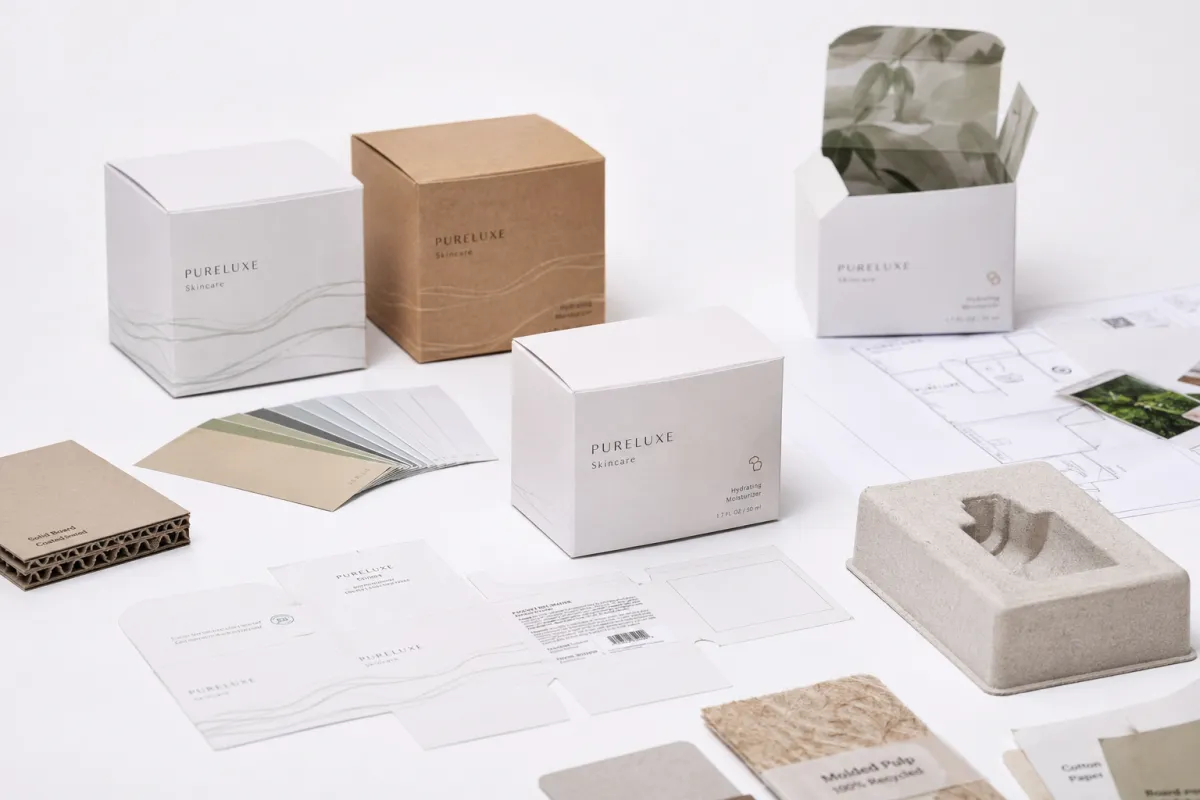
The practical truth is uncomfortable: the sample that looks perfect in 3D mode usually reveals its weakness the moment it becomes tactile. How to design product packaging prototypes Without Wasting Money starts with the first sample's purpose. If you ask it to be perfect, you force every later iteration to chase cosmetics. If you ask it to expose flaws, you get directional certainty fast.
A prototype is a decision engine. That sounds obvious until you watch teams spend a month arguing matte versus satin while nobody checks whether the carton closes under the weight of the real product. Structure first, artwork second. A good sample proves product hold, opening logic, transport durability, and assembly time under real motion. Anything else is deferred judgment, and deferred judgment is expensive.
Not all errors cost the same. A color mismatch can usually be corrected with less pain. A wrong carton dimension can force tooling changes, insert redesign, and freight replanning all at once. In practice, structural errors move like dominoes: one mis-size can trigger several upstream and downstream changes, and suddenly a small issue becomes a launch risk with a very large ripple factor.
Picture a bottle that looks fine in dry fitting, then binds at the neck because foam compression changed the orientation by 2 mm. Picture a rigid case that photographed beautifully and then warped after drop simulation because board profile, laminate, and corrugation were never tested together. These are not edge-case hypotheticals. They are repeatable patterns in packaging development when structure is tested late.
If the sample is so pretty nobody dares to question it, chances are someone skipped the hard checks. In packaging, pretty is not the same as approved.
Plain mockups can be the most powerful version. A white prototype with tape, visible seams, and small imperfections exposes movement, rattle, and awkward opening moments better than a polished art-only version. You notice if the product shifts, if the insert collapses, and whether hand-opening feels natural instead of forced. That level of friction test belongs in prototyping, not in a final launch deck.
This matters whether you are shipping one initial run for a young brand or managing dozens of SKUs across distribution. A flawed prototype can trigger late correction that collides with print slots, freight booking, and forecast freeze windows all at once. That collision is exactly how small packaging errors become expedited crises. How to design product packaging prototypes means building certainty before change becomes a premium-cost option.
People often assume one round can solve everything. It usually cannot. I have seen teams spend time and budget on visual polish while carrying structural ambiguity into every later stage. The fix is almost boring: define what each sample must prove and stop the same sample from trying to prove everything at once.
How Do You Design Product Packaging Prototypes From Brief to Physical Sample?
When you design product packaging prototypes with discipline, the chain is straightforward: brief, structural concept, dieline, material selection, first sample, testing, revision, and final approval. If any link is skipped, ambiguity appears, and ambiguity is where timelines die.
Use three separate sample categories and keep their purpose strict. A mockup checks size and proportion. A structural sample checks fit, stacking behavior, and handling. A near-production sample checks print, coatings, and final assembly under production-like conditions. A mixed-purpose sample can look polished but still answer the wrong questions, and that costs more than a slower process with clean checkpoints.
| Prototype Type | Best For | Typical Cost Range | Typical Turnaround | What It Proves |
|---|---|---|---|---|
| Plain mockup | Size checks and early fit | $25-$120 per sample | 2-5 business days | Dimensions, ergonomics, basic structure |
| Structural sample | Protection and assembly testing | $80-$250 per sample | 4-10 business days | Product fit, closures, inserts, stacking |
| Near-production sample | Print and finish validation | $180-$600+ per sample | 7-15 business days | Artwork, coatings, foil, embossing, final feel |
Every sample type should give one clear answer. One proves product fit. Another proves handling survival. The third proves that appearance and finish still hold under production constraints. This is why how to design product packaging prototypes becomes manageable: you stop treating visual and mechanical questions as the same experiment.
Not every function must sit in every round, but the right roles must review at the right time. Creative should validate dieline logic and visual hierarchy. Operations should confirm filling, closure, and line feasibility. Procurement should confirm supplier capability, lead times, and cost impact. Fulfillment should test stack geometry and flow through warehouse handling. A retail or sales perspective helps if shelf scan and replenishment speed matter.
Approving artwork does not equal approving packaging. A clean layout can still fail if the tray depth is wrong, a flap overlap is too deep, or the product moves during transport. Those defects stay hidden until the sample is filled with a real unit and exercised. That is where how to design product packaging prototypes gains rigor: test criteria must be explicit, and they must be non-negotiable.
Validation standards should match the workload. A sample for shipping should endure distribution-level stress, not a desk-level check. The ISTA test standards are practical when teams need a shared baseline instead of "we think it's fine." If sustainability messaging and paper-based materials are part of the brief, the FSC framework is worth tying into early planning to avoid last-minute proof rejections.
A rule that keeps teams from spinning is this: every round ends with pass/fail criteria, a documented change log, and a clear decision - revise, approve, or pause. That one decision point is boring, but it keeps teams moving instead of debating forever. For teams that already know their category, the best shortcut is often to compare early concepts against proven Custom Packaging Products so the first physical sample starts closer to a workable structure.
Key Factors That Shape a Good Prototype
The first axis is always the product itself. Weight, shape, fragility, and movement inside the pack matter more than color stories. If the item can shift, the pack has failed its earliest checkpoint, no matter how crisp the graphic is. How to design product packaging prototypes starts with physics before aesthetics, and teams learn this fast.
Material is the second determinant. Paperboard commonly performs well for light premium retail displays, often in the range of 16 to 24 pt depending on rigidity needs. Corrugated remains a strong workhorse for e-commerce and heavy transport loads, with flute choice usually driven by crush resistance and print requirements. Rigid board supports categories where shelf impact matters, while flexible formats can be excellent for lightweight SKUs, though seal reliability, barrier performance, and reseal behavior become a different engineering problem. There is no universal winner; there is only the material stack that creates fewer hidden tradeoffs for your use case.
Finishes reshape both cost and function, which is often misunderstood. Coatings influence scuff resistance and moisture behavior. Foil can increase shelf impact but usually increases process control and registration cost. Embossing adds touch, while spot UV can create contrast if substrate conditions are right. Soft-touch laminates can improve perceived quality in some categories but may show soiling or scuffing under high-traffic handling. In short, finish should follow structure, logistics, and budget - not the other way around.
Then there is shelf communication. At retail distance, most shoppers have one glance, maybe two, before deciding whether the package communicates category and value. A prototype should therefore prove hierarchy under 3D reality: icons should remain readable once the object sits among others, claims should be legible once the carton is not perfectly aligned, and orientation should be obvious with normal hand movement. If structure distracts from the message, the sample is only partially correct.
Manufacturing and logistics constraints turn theory into execution. Stackability, pallet footprint, insert architecture, sealing behavior, and assembly count are design decisions, not afterthoughts. If the line can only support a certain number of manual actions, a design requiring extra handling is a planning risk disguised as styling progress. How to design product packaging prototypes without ignoring operations means testing throughput assumptions from day one.
Compliance cannot be postponed until after mockups. Food, wellness, cosmetics, and electronics each carry different legal and labeling constraints. If mandatory warnings, traceability fields, or batch identifiers do not fit cleanly, design risk becomes regulatory risk. That can lead to relabeling, recalls, or delayed regional launch windows. It is possible to avoid most of that by involving quality and legal early.
For repeat launches, the most reliable path is often to adapt proven structures from Custom Packaging Products before inventing a new one from scratch. A stable base format aligned with your category can reduce variation, preserve consistency, and preserve design speed.
What strong prototypes usually get right
Strong examples protect the product first, make the brand legible under real viewing conditions, and stay feasible on production equipment without requiring a redesign just to remain practical.
What weak prototypes usually miss
Weak examples over-index on decorative detail, then discover structural failure, freight risk, and user friction only when the launch calendar starts dictating urgency.
Step-by-Step Guide to Building the First Prototype
Step one is the brief, and if you are designing how to design product packaging prototypes, this is where most failures begin. Capture dimensions, target customer, channel, shipping mode, expected shelf environment, budget cap, and the single top uncertainty the first sample must resolve. A loose brief always makes for a vague sample.
Step two is intentional referencing. Competitor research is useful if you evaluate structure and operational logic, not if you copy styles blindly. Track where they place opening guidance, how they prioritize claims across surfaces, and how they manage product protection without making the package feel defensive.
Step three is choosing the prototype class. Are dimensions uncertain? Start with a plain fit mockup. Are dimensions stable but durability unknown? Move to structural sample. Is structure sound and you are ready for visual verification? Use a near-production sample for finish and color validation. Matching sample type to question is how how to design product packaging prototypes stays efficient.
Step four is designing dieline and assembly flow. Before heavy artwork starts, lock fold lines, glues, flaps, and label zones. It is the phase where teams decide what is visible, what is hidden, and what can be repaired if needed. If that logic is sloppy, revision cycles become visual-only and expensive.
Step five is stress testing in realistic conditions. Use the actual product every time. Shake it, stack it, palletize it, and leave it for a period before opening. Ask someone not tied to the project to assemble and open it blind. Their instinctive reaction usually catches the most practical flaws.
Step six is disciplined revision. Change only what validation proves wrong. If fit is right but closing force is high, adjust closure geometry. If interior movement exists, improve insert retention first. If finish alone is failing, focus on coating and varnish choices. A shifting spec without evidence makes prototypes into an expensive loop.
After each cycle, force a one-line outcome from the decision owner: revise, approve, or pause for rework. Anything else becomes endless debate with no output.
- Write a complete brief including product specs, channel assumptions, shipping profile, and budget constraints.
- Choose the right sample type based on what you need to verify, not your preferences.
- Build the dieline before artwork locks into structural details.
- Test with the real product so fit and handling behavior are measured correctly.
- Document decisions so each sample moves the project forward, not sideways.
Process and Timeline: What to Expect Round by Round
Simple tests can be completed in days. Complex custom builds with finish revisions can stretch into weeks. That gap is normal. Trouble starts when teams plan structure, artwork, and logistics as if they require identical assumptions. How to design product packaging prototypes well means respecting the actual duration each decision point needs.
In a typical sequence, round one handles briefing and dieline validation. Round two builds the first sample. Round three covers structured review with pre-defined criteria. A fourth round appears when material behavior or unresolved assumptions remain. Premium and regulated categories often need this extra round, especially when finish controls are strict.
Most delays come from common causes: incomplete specs, poor file management, mixed feedback channels, and late decision changes. Suppliers are rarely the bottleneck. The bottleneck is usually a framework that keeps design direction unresolved while sample production is already underway.
Version control is simple to ignore and painful to rebuild. Label each iteration with version, date, and change rationale. Without this, teams get stuck arguing, "Was this the version with the taller bottom flange?" A single structured filename standard and changelog avoids that entire loop.
Build timeline planning backward from shipping milestones. A sample calendar disconnected from freight cutoffs will look healthy and then explode when export docs, label proofs, or warehouse holds collide with production windows. How to design product packaging prototypes is partly timing engineering, especially where logistics and compliance are stacked tight.
Review cycles should be focused and decisive. Invite the smallest group with approval authority, and keep everyone else to consultative input. One empowered decision loop beats multiple weak loops where no one can sign off.
If the project has a fixed launch date, set your approval sequence before sample number one is released. That one administrative act usually saves more schedule damage than any rush job on the same project.
Cost and Pricing: What Packaging Prototypes Really Cost
Pricing is driven by material choice, print process, finish complexity, insert architecture, and revision count. A near-production sample costs more because it carries more production risk reduction up front. How to design product packaging prototypes efficiently means deciding what needs exact reproduction now and what can wait.
Structural mockups are often the smartest first move when dimensions are still uncertain. A cheaper model is not inferior; it just tests a different question. If the structure is wrong, any finish upgrades added afterward only make a bad fit easier to admire and harder to fix.
Small quantities cost more per unit because setup time, test runs, and handling overhead are spread across fewer units. Teams usually dislike this reality because it sounds illogical, but in print and die-cut workflows it is standard math. A 50-piece development run can carry a higher per-piece cost than a later larger planning batch.
Money-saving tactics are less about bargain hunting and more about sequencing. Validate structure first. Reduce finish variables early. Delay aesthetic refinements until fit and mechanical reliability are confirmed. Keep each sample tied to one test objective. This keeps quality high while avoiding expensive rework on decisions that will not survive long-term testing.
Unplanned expenses usually come from courier turnaround, express add-ons, repeated review samples, and file rework that should have been fixed before release. A realistic budget includes at least one revision cycle from the start. "One and done" sounds tidy on a spreadsheet, but packaging reality is usually messier.
One practical framework:
- Lowest cost: fit-only mockups and early structure confirmation.
- Middle cost: printed prototypes with standard coating and straightforward inserts.
- Highest cost: premium near-production runs with complex finishes and advanced assembly behavior.
The comparison below is a reminder that cost shifts with format and process demands, not with visual ambition alone.
| Packaging Format | Common Use | Prototype Complexity | Typical Cost Pressure |
|---|---|---|---|
| Folding carton | Retail goods, cosmetics, supplements | Moderate | Artwork precision, coatings, insert fit |
| Corrugated mailer | E-commerce shipping, subscription boxes | Moderate to high | Protection, stacking, print consistency |
| Rigid box | Luxury sets, gifts, premium launches | High | Board construction, wrap, finish quality |
| Flexible pack | Lightweight consumer goods | Variable | Sealing, barrier, label performance |
From a trust perspective, treat any published numbers as directional. Regional labor costs, substrate availability, and supplier queue can shift actual quotes by a lot. For teams serious about discipline, set aside budget for at least one revision cycle before production sign-off; that reserve is usually cheaper than one emergency production correction.
Common Mistakes That Ruin Packaging Prototypes
The first recurring error is locking graphics before structural validation. Strong visuals cannot rescue wrong dimensions. If the product moves or rattles, decoration becomes a bandage. How to design product packaging prototypes derails when visual approval outruns physical validation.
The second error is testing empty shells. Empty carton checks often pass because flaps line up by chance. Add the real product and weak points surface fast: pressure points, orientation changes, insert conflict, and stress around fasteners. If you want reliable data, test with actual units.
The third error is too many late-stage reviewers reopening fixed decisions. New voices are valuable earlier; after direction is set, too much debate turns into noise. A clear owner and defined gates reduce circular feedback and keep each revision purposeful.
The fourth error is forgetting distribution reality. A carton that survives hand-hold tests can still fail in warehouse cycles or e-commerce packaging loops. Repeated shelf restacking, vibration, and compression all amplify flaws that never appear in controlled studio conditions.
The fifth mistake is treating cost as only a per-unit line item. Hidden costs often come from delayed milestones, damage claims, and extra logistics handling after revision rounds. A prototype that appears budget-friendly up front can become the most expensive choice once rework multiplies.
The sixth error is skipping technical records. If board grade, adhesive profile, laminate stack, and assembly method are not documented, every new round starts from memory instead of evidence. Team members may say, "We approved this," but without traceable notes, implementation drifts.
Better practice is simple: each sample is a controlled experiment. Record what was tested, what passed, what failed, and what is now locked. That is how you build repeatability and stop reinventing the wheel on the next launch.
Another trap is treating packaging as a shelf object only. If it is hard to open, expensive to ship, or awkward to assemble, it is not production-ready even if it photographs beautifully. Packaging has to work in motion, not just under soft studio lights.
Expert Tips and Next Steps After the Prototype Passes
Use a four-column scorecard during every review: fit, function, branding, and manufacturability. Objective criteria cut emotional loops and create cleaner decisions than broad opinions. How to design product packaging prototypes improves when teams compare against the same rubric.
Bring in one external tester who is not embedded in the project language. A fresh operator or shopper can spot awkward edges, confusing symbols, and heavy labor moments faster than an internal team attached to the design vision. That perspective often reveals obvious usability issues before they become customer complaints.
Then compare everything against production constraints before declaring success. A sample that performs once in a clean test run is not enough if you cannot repeat behavior across planned volume. Production-ready packaging handles process variation. Anything else is likely a one-off success.
Consolidate final specs, approved dielines, print notes, and photograph sets in one controlled location before handoff. This is where trust in execution is built. Production teams should not have to rebuild the current version from fragmented threads and outdated files.
Approve the handoff only after practical stress checks: fill, stack, open, close, reseal, and shelf reading all pass again. A short pilot run is still the best bridge from prototype confidence to manufacturing reliability. Skipping pilot evaluation on complex designs can quietly convert confidence into assumption.
Learning discipline matters more than any single round. If a corner crushes, record the load and failure location. If a coating scuffs, document the substrate and process variables. If label readability drops, adjust hierarchy before final lock. Over time this turns how to design product packaging prototypes into a system, not a one-time exercise.
For repeatability, archive validated structures, maintain a clean version repository, request pilot quotations early, and create a reusable template library for your most common formats. Teams that do this rediscover fewer mistakes and resolve variation faster.
In practical terms, how to design product packaging prototypes is done right when the approved package is clear to open, stable in transit, and repeatable at scale under your actual operating pressures.
FAQ
How do you design product packaging prototypes for a new product launch?
Start with product dimensions, channel context, handling profile, and shipping path. Build a structural mockup first and only add graphic-heavy prototypes after fit is confirmed. Always test with real product before placing production-equivalent commitments. That is the practical sequence if you want to avoid timeline and rework shocks in new launch programs.
How many rounds are normal when you design product packaging prototypes?
Most projects need more than one round unless files are already mature and structure is straightforward. A common pattern is structural validation first, then a print and finish sample. Expanding scope late usually increases rounds and can accelerate total cost. Decision ownership early is the biggest way to keep iteration within reason.
What files do I need to design product packaging prototypes with a supplier?
Start with measurements, weight, material preference, budget limits, and a clear problem statement for the first sample. Add final dieline data if available, artwork files, brand standards, compliance fields, and any mandatory legal statements. Photos of the existing product and benchmark references help suppliers align engineering and aesthetics at the same time. Cleaner inputs almost always produce cleaner first-round progress.
How much should I budget to design product packaging prototypes?
Budget is driven by material, print process, finish complexity, and revision count. Structural checks are usually cheaper than premium near-production rounds, especially at the beginning. Add contingency for courier fees, expedited handling, and at least one revision sequence. Budgets that exclude iteration are rarely realistic, especially with physical products.
How long does it take to design product packaging prototypes and get samples?
Timing depends on complexity and scope. A basic structural mockup can be quick, while printed, finish-heavy, and revised runs can take weeks. Late changes and weak source files are the most common timeline killers. Set review gates up front and plan backward from your actual ship date if your how to design product packaging prototypes process has multiple stakeholders and tight logistics.
If packaging needs to do more than sit in a file, treat how to design product packaging prototypes as a measurable decision engine: start with product behavior, verify structure first, confirm print and finish under real handling, document every change, and release production only after practical criteria are met. That framework protects margin, limits surprises, and supports a launch that can actually hold together in the field.
Use the next two weeks to run a short reset: verify your current brief, confirm the next sample's objective, lock the review gate, and collect one clean set of inputs for the next build. The key takeaway is simple - if your next prototype does not prove one specific decision under real conditions, you are not prototyping design, you are just decorating uncertainty.