Buyer Fit Snapshot
| Best fit | Personalized Packaging for Brand Awareness Marketing projects where brand print, material claims, artwork control, MOQ, and repeat-order consistency need to be specified before quoting. |
|---|---|
| Quote inputs | Share finished size, material target, print colors, finish, packing count, annual reorder estimate, ship-to region, and any compliance wording. |
| Proofing check | Approve dieline scale, logo placement, barcode or warning zones, color tolerance, closure strength, and carton packing before bulk production. |
| Main risk | Vague material claims, crowded artwork, missing packing details, or unclear freight terms can make a low unit price expensive after revisions. |
Fast answer: Personalized Packaging for Brand Awareness Marketing should be specified like a repeatable production item. The safest quote records material, print method, finish, artwork proof, packing count, and reorder notes in one written spec.
Production checks before approval
Compare the actual filled-product size with the drawing, then confirm tolerance on folds, seals, hang holes, label areas, and retail display edges. Reserve space for logos, QR codes, warning copy, and material claims before decorative graphics fill the panel.
Quote comparison points
Review material grade, print process, finish, sampling route, tooling charges, carton quantity, and freight assumptions side by side. A quote is only useful when the supplier can repeat the same color, closure quality, and packing count on the next order.
The first time I watched personalized packaging for brand awareness marketing beat a paid campaign, the box won by a mile. A skincare founder in Austin spent $18,000 on click traffic, then put $4,200 into a printed mailer, a 350gsm C1S insert card, and a die-cut sticker. Three weeks later, customers were posting the package on Instagram, not the ad. I remember staring at the numbers and thinking, well, that is inconvenient for the ad budget. The pattern shows up more often than brands like to admit. The package sits on a desk, kitchen counter, or office shelf for 10 to 14 days, and personalized packaging for brand awareness marketing keeps speaking after a sponsored post has already vanished from the feed.
I have watched brands treat packaging like shipping filler, then act surprised when nobody remembers them. Honestly, that surprise is the funniest part, because the clue is right there in plain sight. The larger issue is how few physical brand moments remain in e-commerce. If you are comparing formats, sizes, or print methods, our Custom Packaging Products page is a practical starting point. The bigger point is sharper: personalized packaging for brand awareness marketing turns a carton, mailer, or insert kit into a repeatable memory trigger, not a line item that exists only to get a parcel out the door. A 12 x 9 x 4 inch mailer with one strong message can do more than three social posts in a row.
Teams often make this harder than it needs to be. Brand awareness gets discussed as if it lives entirely in ads, social, and email. Then every order ships in the same brown box and the brand hopes for a miracle. That is not a plan. personalized packaging for brand awareness marketing is a plan because it shapes a controlled physical impression at the exact moment the customer is most receptive to the product. The customer is already holding your thing; why not let the packaging do some of the talking? Even a $0.15 insert card printed in Shenzhen can alter the opening moment more than a $500 boosted post.
Personalized Packaging for Brand Awareness Marketing: What It Means
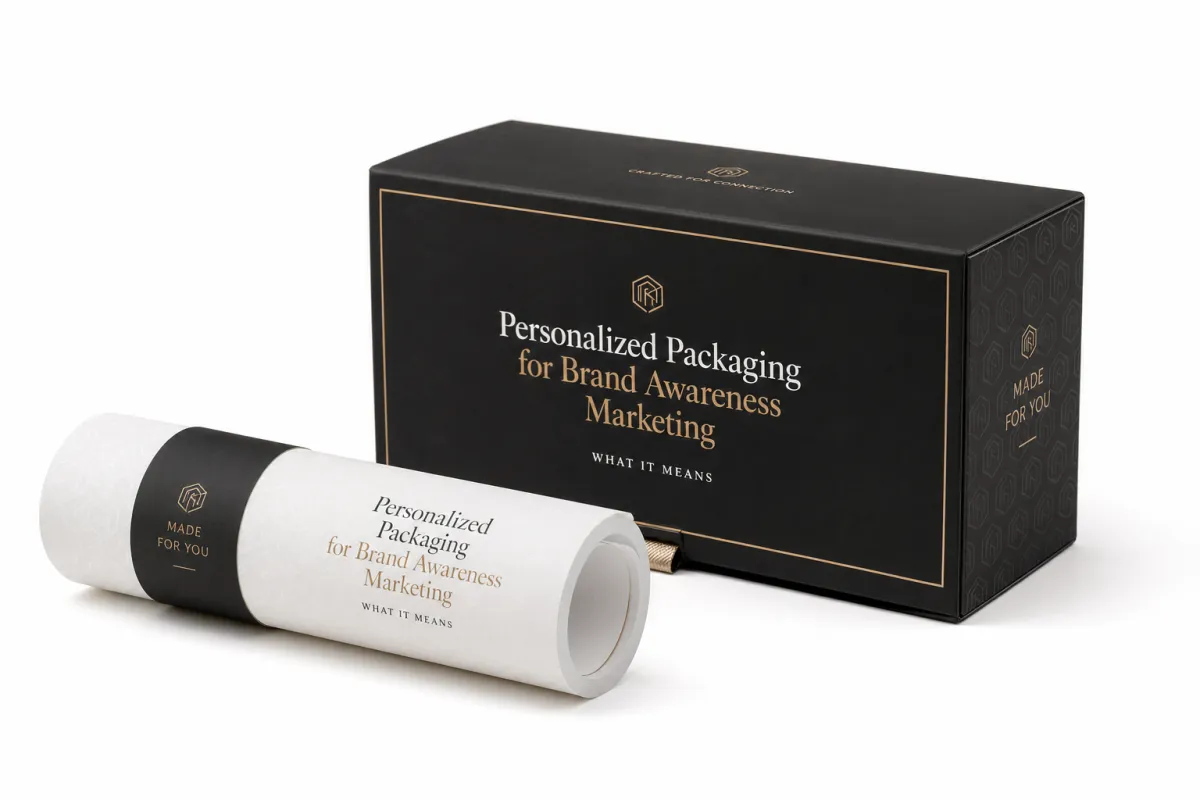
In plain English, personalized packaging for brand awareness marketing means the package changes based on the audience, order, region, product line, or campaign. It is more than a logo on a mailer. It is packaging designed around recognition. That may look like a box with a different insert for wholesale buyers, a regional thank-you note for West Coast orders, or a holiday sleeve that keeps the same brand identity while changing the first impression. I have seen brands use one dieline across six SKUs and vary only the outer print, which is enough when the structure is a clean 24pt SBS carton.
I learned that lesson on a factory floor in Dongguan, where a manufacturer kept calling every printed carton "custom." The trouble was that half the cartons were just the same box with a logo in one corner. Useful? Yes. Strategic? Not really. Real personalized packaging for brand awareness marketing makes the customer feel like the package was made for them, even when the base structure is standardized. That difference sounds tiny until you see how it changes the opening moment. It is the difference between "a box arrived" and "someone planned this." A 1.5mm greyboard rigid box wrapped in art paper tells that story faster than a blank corrugated mailer ever could.
Recognition depends on repetition. The customer sees the outer mailer on delivery day, then the tissue paper, then the thank-you card, then the product label. Four or five visual hits, all carrying the same colors, type, and copy tone, build memory faster than a single logo ever will. That is one reason personalized packaging for brand awareness marketing works so well for branded packaging and package branding. It gives the eye a pattern to keep, and the brain is annoyingly good at keeping patterns. A three-touch sequence with a 2-color exterior, a 1-color insert, and a matching seal can raise recall more than a single premium finish.
There is also a psychological layer that brands ignore at their own expense. A personalized insert or a region-specific carton makes the order feel intentional. A customer thinks, "Someone planned this," which is a useful thought to plant before they even touch the product. That is the gap between decoration and strategy. Decoration makes a box pretty. personalized packaging for brand awareness marketing makes the box do marketing work. A 90 mm by 50 mm note card with one specific line can create more warmth than a full-page paragraph of copy.
If you want a fast test, ask this: does the package help someone remember the brand name one week later? If the answer is no, you probably have product packaging, not a brand awareness system. I have sat in meetings where a finance lead celebrated saving $0.12 per unit by removing the insert. Fine. Then the team lost the chance to print a QR code, a short story, or a referral offer. Saving twelve cents on personalized packaging for brand awareness marketing can cost far more in recall and repeat orders. The spreadsheet never cries, but the customer memory does the math, especially after 5,000 units ship from Guangzhou and the box is the only thing left on the shelf.
"We thought the box was overhead," a founder told me after her first branded packaging run. "Then customers started keeping the insert cards on their desks. That little $0.09 card got more attention than our last ad set."
How Does Personalized Packaging for Brand Awareness Marketing Work?
The full journey starts before the parcel even exists. Discovery may happen on social or search, but the package carries the memory into the home, office, or studio. In personalized packaging for brand awareness marketing, each touchpoint has a job: the order confirmation sets expectation, the outer mailer signals the brand on arrival, the internal wrap slows the reveal, and the insert card gives a reason to remember or share. That sequence matters because the unboxing experience is a story with a beginning, a middle, and a photo-worthy ending. A customer who opens the box 48 hours after checkout remembers the waiting and the reveal together.
I saw this play out with a coffee brand that shipped subscription kits in two formats: a plain kraft mailer for standard orders and a deep green Custom Printed Box for first-time buyers. The product inside was identical, down to the 250g pouch and paper valve bag. Still, the first-time kit drew three times more social mentions because the outer packaging told a better story. That is personalized packaging for brand awareness marketing in action. Same product. Different memory. Same caffeine, better gossip. The green box, printed in Dongguan with a matte aqueous finish, was the one customers kept on their countertops.
The inside of the box matters as much as the outside. I usually map the touchpoints in this order: outer box, tissue, void fill, insert card, product label, and return packaging. If one element feels random, the brand identity starts to wobble. A soft-touch outer carton paired with a flimsy, low-contrast insert can make the whole package feel cheap. Good personalized packaging for brand awareness marketing keeps the visual language consistent from the first tear to the last reveal. A 350gsm C1S artboard insert and a 1-color logo repeat the same signal without inflating the budget.
Customization does not require rebuilding everything from scratch. One brand can keep the same 12 x 9 x 4 inch mailer and change only the insert card, the exterior print, and the sticker color by audience segment. Another may use the same folding carton for every SKU but switch the sleeve by campaign. That is the practical version of personalized packaging for brand awareness marketing: enough variation to feel specific, not so much complexity that operations buckles. I have seen teams try to personalize everything and then spend half a month untangling SKUs like they were Christmas lights, especially after a 3,000-piece holiday run.
After years in sample rooms and production lines, one thing stands out: people remember structure. A blue box with white type, a matte finish, a certain opening style, a phrase on the inside flap - those details accumulate. Two identical products can feel completely different if the packaging tells a more coherent story. That is why personalized packaging for brand awareness marketing is not only a design exercise. It is a memory system. A rigid lid-and-base box in 1.5mm greyboard with a 15 mm ribbon pull feels different from a plain mailer before the product is even seen.
One more practical detail: timing changes perception. If the package arrives two days after the customer forgot about the checkout, the reveal feels stronger. If it arrives six days late, the emotional temperature drops. I have seen brands blame the box when the real issue was fulfillment lag. So yes, personalized packaging for brand awareness marketing works through design, but it also lives or dies on delivery speed, packing accuracy, and how much white noise the customer has to ignore before the parcel lands.
Key Factors That Shape the Result
Design hierarchy comes first
If everything shouts, nothing speaks. That line came from a packaging director I worked with in Chicago, and she was right. In personalized packaging for brand awareness marketing, the customer should notice the brand name first, the value proposition second, and the call to action third. Put five messages on the box and the package turns into clutter with a shipping label. Clean hierarchy keeps the brand from looking desperate, which is a look no one is trying to launch. A 48 pt logo on the top flap and a 12 pt message inside the lid usually beats a crowded all-over print.
Materials send price signals
A rigid box with 1.5mm greyboard and wrapped art paper tells a different story than a 200# corrugated mailer. Neither one is automatically better. The right choice depends on the product margin, shipping method, and audience expectation. In my experience, personalized packaging for brand awareness marketing works best when the material matches the price point. A $28 candle in a 24pt SBS carton can feel polished. The same candle in a heavy rigid box may feel overbuilt unless the rest of the brand supports that level of presentation. I have seen packaging cost more than the thing inside, which is a strange thing to witness and a little hard to defend in a room full of accountants.
Print method changes perception fast
Digital print is strong for shorter runs and variable art. Offset print gives sharper consistency on larger quantities. Foil stamping, spot UV, embossing, and soft-touch lamination all change how people judge the box before they open it. At one Shenzhen supplier, I watched a team compare two samples side by side: one with flat CMYK print and one with a single silver foil logo. The foil sample looked like it cost $2 more than it did. That is the power, and the trap, of personalized packaging for brand awareness marketing. Sometimes a tiny amount of shine does more than a whole paragraph of copy ever could, especially on a 5,000-piece run.
For anyone who wants a reference point for terminology and industry basics, the Institute of Packaging Professionals at packaging.org is a solid place to start. I also keep the transit-test standards from ISTA close by when a client wants to know whether a delicate box can survive a carrier drop test. Fancy visuals are nice. Surviving shipping is nicer. A beautifully crushed corner is still a crushed corner, whether it left Ningbo or Los Angeles.
Brand fit matters more than trend chasing
Many teams copy a luxury beauty box because it looks great on a mood board, then try to use it for supplements, tech accessories, or apparel. That usually fails. personalized packaging for brand awareness marketing has to fit the category, the audience, and the actual unboxing moment. A wellness brand may need calm typography and recyclable paperboard. A streetwear brand may need bolder color blocking and a more graphic package branding style. Same principle. Different language. Same customer, different expectations. A 30-count gummy bottle and a $120 facial serum should not wear the same packaging costume.
Shareability should be designed, not hoped for
If the package photographs well, people are more likely to share it. That sounds obvious, yet I still see boxes with dark interiors, tiny logos, and awkward proportions that disappear on camera. A good branded packaging system gives customers a reason to take a photo: a contrast line, a hidden note, a nicely framed insert, or a reusable box they want to keep on a shelf. That is personalized packaging for brand awareness marketing doing quiet, practical work after delivery. The best version is not loud. It is photogenic without trying too hard. A white interior, a 10 mm border, and one high-contrast accent color often outperforms a full-bleed design.
I also like to think about the shelf life of the box itself. Some packages are opened and tossed in under a minute. Others hang around for weeks because they are useful, sturdy, or just nice to look at. That afterlife matters. A mailer that becomes desk storage or a rigid box that holds cables keeps the brand in the room longer. That is a small thing, but small things stack up. personalized packaging for brand awareness marketing works best when it earns that extra ten days of visibility without feeling forced.
Cost and Pricing for Personalized Packaging
Money tends to hide in packaging budgets. The main cost drivers for personalized packaging for brand awareness marketing are size, board grade, print coverage, finishing, insert count, and quantity. A bigger box costs more because of material and freight. A fully wrapped rigid box costs more because wrapping and assembly take time. Add foil, embossing, and multiple inserts, and the unit price climbs quickly. Nothing mystical is happening there; it is labor, material, and time adding up on the invoice. A 350gsm C1S artboard insert can be cheap at 5,000 pieces and surprisingly expensive at 500.
Low quantities usually cost more per unit, and the reason is dull but real: setup time, die cuts, proofing, and waste do not disappear just because the order is small. A run of 500 mailers might carry a unit price that makes the accounting team wince, while 5,000 units can drop the per-box cost dramatically. That is why I tell clients to plan personalized packaging for brand awareness marketing around realistic volume, not wishful volume. Hope is not a production forecast, no matter how often people pretend it is. A 500-piece run from Dongguan can cost nearly twice as much per unit as a 5,000-piece order from the same plant.
There is a cleaner way to save money without looking cheap. Use fewer inks. Standardize one insert size across three SKUs. Pick a smart box dimension so you are not paying to ship air. Reserve spot UV or foil for the logo or top flap instead of flooding the whole structure with finishes. With personalized packaging for brand awareness marketing, restraint usually reads better than a finish buffet. Too many finishes can make a package feel like it fell into the crafts aisle. One silver foil mark on a 12 x 9 x 4 inch mailer usually beats four competing effects.
| Packaging Option | Example Unit Price at 5,000 Units | Best Use | Main Tradeoff |
|---|---|---|---|
| Plain corrugated mailer | $0.42-$0.68 | Basic e-commerce shipping | Low brand recall and limited visual impact |
| Branded insert card in 350gsm C1S artboard | $0.15-$0.22 | Entry-level personalized packaging for brand awareness marketing | Low cost, but limited structural impact |
| Custom printed mailer with 1-color exterior | $0.78-$1.10 | Direct-to-consumer orders and subscription kits | Good visibility, but limited premium feel |
| Custom printed box with insert card and tissue | $1.90-$3.25 | Premium DTC orders and gifting | Higher setup and assembly cost |
| Rigid box with foil and nested insert | $3.80-$7.50 | Luxury launches and PR kits | Best presentation, highest freight and build cost |
Those numbers are examples, not promises. Freight from Asia to the U.S. can swing landed cost by $0.20 to $0.80 per unit, depending on cube, season, and whether you ship ocean or air. I have seen a brand save $0.11 on board and then lose $0.36 to a rushed air shipment because a campaign date got squeezed. That is not a win. It is a very expensive lesson in personalized packaging for brand awareness marketing. The invoice will remind you long after the launch applause fades, especially if the cargo moved from Shenzhen to Long Beach in peak season.
Hidden costs matter too. Sample rounds can add $150 to $600 before production even begins. Storage can appear if you import 20,000 units and only need 2,000 a month. Kitting can add labor if the box, tissue, sticker, and card are packed separately. If the packaging fails transit, replacement units can destroy the margin on the entire run. That is why I push for landed estimates, not polished per-unit quotes that ignore the real world. A quote that forgets freight is basically a bedtime story for procurement. A quote that includes kitting at $0.08 per unit is usually closer to reality.
If your team needs a starting point for format comparisons, the internal Case Studies page shows how different clients balanced presentation and cost across Custom Printed Boxes, retail packaging, and subscription kits. Good personalized packaging for brand awareness marketing is rarely the cheapest option on paper. It is the option that earns the right kind of attention without wrecking the margin. A $0.15 insert card can be smarter than a $2.50 rigid box if the product is a sample set or a launch mailer.
One thing I tell founders early: do not judge packaging by unit price alone. Judge it by the number of moments it creates. If a box adds $0.40 and gives you a better unboxing, better recall, and better shelf life in the customer's home, that is a real marketing cost, not a vanity expense. The opposite is true as well. If a finish adds $1.20 and nobody notices it unless they hold the box under a lamp, that money might be better spent on structure, inserts, or shipping protection.
Step-by-Step Process and Timeline
Start with definition, not design. Before anyone argues about foil, define the audience, product dimensions, campaign date, and channel. If the package is for retail packaging, the requirements differ from a direct-to-consumer shipment. If it is for a limited campaign, the timeline can be tighter. If it needs to live across three SKUs, the dieline has to be smarter. That is how personalized packaging for brand awareness marketing stays controlled instead of chaotic. A 12 x 9 x 4 inch mailer and a 24pt SBS carton do not solve the same problem.
The next step is dielines and samples. Ask for structure drawings, material options, and physical builds before you lock artwork. I once had a client fall in love with a sleeve design that looked elegant on screen but bowed at the corners because the board was too thin. A sample would have caught that in two days. It is much cheaper to fix a 24pt SBS sample than to explain 10,000 warped boxes to a warehouse manager. That is the kind of practical headache personalized packaging for brand awareness marketing is supposed to prevent. A sample in hand usually costs $150 to $300 and saves a far larger mistake.
Artwork and compliance come after that. Barcode placement matters. Copy on the inside flap matters. If the box includes claims, recycling info, or legal text, those lines need to survive print and handling. For shipping-heavy formats, I also like to test against a transit protocol such as ISTA 3A so nobody is surprised by crushed corners or scuffed corners after distribution. Good personalized packaging for brand awareness marketing is not only pretty. It is legible, scannable, and durable. A UPC printed 6 mm too close to a fold line can ruin the whole batch.
Sample approval is the stage where teams often move too fast because everyone wants the launch to happen yesterday. I understand the pressure. Still, a physical sample needs to be opened, closed, stacked, photographed, and dropped from actual desk height. Measure the product clearance to the millimeter. Check whether the tissue slides. Check whether the insert shifts. If the sample feels wrong, the production run will not rescue it. Printing faster only gives you a larger version of the mistake. I have seen a 3 mm clearance issue become a 3,000-unit headache in one afternoon.
Production, finishing, assembly, and freight follow. A simple digital printed mailer typically takes 12-15 business days from proof approval. A more complex rigid box with foil and custom inserts may need 18-28 business days, plus transit. If the factory is doing kitting, give them a full packing spec and a labeled master carton plan. In personalized packaging for brand awareness marketing, delays usually come from late approvals, not from the printer trying to ruin your week. Though sometimes it feels personal, I admit. A plant in Guangzhou can hit the date if the artwork is final on Tuesday, not Friday.
One negotiation stands out clearly. A cosmetics brand wanted 6,000 units delivered for a launch event in Dallas. The sample was approved on a Tuesday, but the team kept changing the inner card copy until Friday. The ship date moved by four business days because the printer had already locked plates. Nobody likes that email. The fix was simple: final copy cutoff dates, one approver, and a production calendar nobody could "just tweak." That is how you keep personalized packaging for brand awareness marketing on schedule. A locked proof on Wednesday is worth more than three rounds of "almost final" edits.
Here is the sequence I use when a project has a hard deadline and no room for drama: lock the audience first, then the size, then the structure, then the copy. If you reverse that order, someone will eventually ask for a bigger logo on a board that cannot support it, and the calendar will pay for the mistake. Packaging projects do not usually fail because people are lazy. They fail because decisions arrive in the wrong order. That is a fixable problem, which is why this process matters so much.
- Define the goal, audience, size, and campaign window.
- Request dielines, board specs, and structural samples.
- Approve artwork, barcode placement, and compliance text.
- Review physical samples for fit, durability, and finish.
- Lock production dates, freight mode, and kitting instructions.
Timelines stretch when specialty finishes or multiple SKUs enter the plan. If you need FSC-certified board or a recycled paper option, build in a few extra days for sourcing and QC. personalized packaging for brand awareness marketing works best when everyone knows the sequence and nobody pretends revisions are free. I have never seen a project recover time lost to vague decision-making. Never. A 2-day delay on proofing can snowball into a 7-day freight scramble.
Common Mistakes Brands Make
The first mistake is overdesigning the box. A mockup can look impressive with six colors, three foils, and a big quote on every panel. Then the real customer opens it and wonders where to look first. I have seen this happen more than once in a sample room, usually right after someone says, "Can we make it feel more premium?" Premium is not the same as busy. personalized packaging for brand awareness marketing needs clarity more than it needs decoration. A 2-color layout with one strong focal point often works better than a full-surface effect.
The second mistake is choosing finishes before confirming margin. Foil stamping on a 1,000-unit run can be a perfectly reasonable choice. Foil stamping on a low-margin consumable can wreck the economics. I once sat through a client meeting where the team wanted soft-touch lamination, embossing, and foil on every panel of a subscription box that sold for $34. By the time assembly and freight were priced in, the packaging had eaten the profit like it was an appetizer. That is not personalized packaging for brand awareness marketing. That is self-sabotage with a matte coating. The better move was a single foil logo on a 350gsm C1S sleeve.
The third mistake is ignoring shipping durability. A box can be gorgeous and still fail if the corners crush, the print scuffs, or the insert slides around. Transit testing and real-world handling matter. A good box should survive a drop, a stack, and a humid warehouse without turning into paper soup. I tell clients to test the actual route, not the fantasy route. personalized packaging for brand awareness marketing loses its value the moment the brand arrives damaged. A shipment that survives a 36-inch drop test in Los Angeles is worth more than a sample that only survives on a desk in Guangzhou.
The fourth mistake is copy that sounds branded but says almost nothing. A phrase like "elevate your experience" does not help a customer remember who you are. I would rather see one honest sentence about sourcing, one specific product benefit, or one clear thank-you note than a wall of vague marketing fluff. Sharp copy is part of package branding. So is restraint. So is actually saying something a human might repeat later. That is how personalized packaging for brand awareness marketing earns recall. A line like "packed in Dongguan with FSC-certified board" is more memorable than a dozen empty adjectives.
The fifth mistake is forgetting scale. A one-off sample can look perfect because someone hand-adjusted it, trimmed it, and coddled it like a museum piece. Production boxes do not get that treatment. If the insert only fits when a technician nudges it, the design is wrong. If the box requires five extra seconds of assembly per unit, labor costs climb fast. personalized packaging for brand awareness marketing has to work on line speed, not just on a designer's desk. If it only works in a presentation deck, it does not really work. A 20-second assembly is one thing; a 45-second assembly is a margin leak.
There is also a quieter mistake: pretending every customer segment wants the same tone. Wholesale buyers, retail shoppers, and subscription customers do not read packaging the same way. Wholesale often cares about logistics and reliability. Retail wants instant recognition. Subscriptions reward familiarity with just enough novelty to keep the repeat order from feeling stale. If one box has to serve every segment, the copy and structure need to be disciplined. Otherwise the result feels generic, which is exactly what this strategy is meant to avoid.
Expert Tips and Next Steps for Personalized Packaging for Brand Awareness Marketing
My first rule is simple: start with one touchpoint and make it excellent. A custom printed box with a well-written insert card often does more than a whole stack of half-finished extras. I have watched brands chase ten packaging ideas at once and end up with none of them landing. Pick the outer mailer, or the insert, or the thank-you note, and get that one element right before you expand the system. That keeps personalized packaging for brand awareness marketing focused and measurable. One 350gsm C1S card with a sharp CTA can outperform three decorative add-ons.
My second rule is to inspect the package in person. Screen mockups lie all the time. Color shifts, gloss levels, paper texture, and fold accuracy only make sense in hand. I once visited a supplier in Shenzhen where the digital rendering made a peach-colored carton look rich and warm. The actual sheet arrived muted and gray because the art file was built for coated stock, not the uncoated board we selected. One sample saved a 12,000-unit disaster. That is why personalized packaging for brand awareness marketing needs physical proofing, not optimism. A sample mailed from Shenzhen to Austin tells you more than five PDFs ever will.
My third rule is to compare at least two suppliers. One might give you sharper print but weaker board. Another might offer better assembly pricing but slower lead times. A third might be strong on variable digital print and weak on finishing consistency. The best supplier is not always the cheapest. It is the one that can hit your spec, your timeline, and your budget without acting like you are asking for the moon. If you want to compare approaches, our Case Studies page shows how different brands handled personalized packaging for brand awareness marketing across launches, subscriptions, and retail-ready sets. A plant in Dongguan may quote lower than one in Suzhou, but the lead-time math often tells a different story.
My fourth rule is to treat packaging like a testable marketing asset. Change the insert copy for one audience. Switch the interior print for a seasonal segment. Run one version with a QR code to a referral offer and another with a short founder note. Then measure what happens. Track repeat orders, scan rate, social shares, and customer support mentions. That is the kind of data that turns personalized packaging for brand awareness marketing into a repeatable channel instead of a nice idea everyone claps for in a meeting. If one card drives a 6% scan rate and another drives 1.5%, the winner is obvious by week two.
I also recommend checking sustainability claims with real sourcing details instead of vague green language. If the board is recycled, say what percentage. If the paper is FSC-certified, make sure the documentation exists. If the mailer is recyclable in curbside programs, confirm the local rules. I have seen too many brands say "eco-friendly" while using materials that confuse customers and frustrate operations. Honest specs beat fluffy claims every time. Good personalized packaging for brand awareness marketing can be responsible and still look sharp. A 30% recycled board callout is more credible than a vague green badge.
Here is the practical next step I give most clients: pick one product, one audience, and one packaging change to prototype this month. Maybe it is a revised insert card with a stronger offer. Maybe it is a custom printed box for first-time buyers only. Maybe it is a smarter mailer size that cuts void fill by 30%. Start there. Measure the response. Then expand. That is how personalized packaging for brand awareness marketing grows without eating your calendar or your cash. A single prototype approved in 14 business days is better than a six-month concept that never ships.
When people ask me whether the box really matters, I usually answer with a number. If a package costs $0.32 More Per Order and lifts repeat purchases by even 3% on a $48 average order value, the math gets interesting fast. That is not hype. That is what happens when the package becomes part of the brand identity instead of a forgotten shipping shell. personalized packaging for brand awareness marketing is one of the few tactics that can touch awareness, retention, and word of mouth at the same time. A 10,000-order month can absorb that $3,200 packaging lift if retention moves by only a small fraction.
Start small. Test a sleeve, a mailer, or an insert. Talk to your supplier in real numbers, not adjectives. If you want the short version from someone who has stood on enough factory floors to distrust shiny renderings, here it is: personalized packaging for brand awareness marketing works when it is specific, durable, and easy to remember. Get those three right, and the box stops being overhead and starts pulling its weight. A clean proof approved in Guangzhou, a sturdy carton from Dongguan, and a clear message can do more than an expensive mood board ever will.
How does personalized packaging for brand awareness marketing actually increase recall?
It works because the customer sees the same colors, type, and copy more than once: on delivery, during unboxing, and often again when they keep the box or card. A well-built personalized packaging for brand awareness marketing system creates repeated visual cues, and that repetition makes the brand easier to remember one week later, not just on arrival day. A 350gsm C1S card with the same Logo Placement on every order can lift memory more than a one-time ad impression.
What is the best packaging type for personalized brand awareness campaigns?
Pick the format that fits the product and shipping method first. A mailer box works well for e-commerce, a rigid box fits premium presentation, and a folding carton can be efficient for retail packing. The best choice for personalized packaging for brand awareness marketing is usually the one that balances protection, print area, and unit cost without forcing your team into extra labor. A 12 x 9 x 4 inch mailer with one insert is often enough for a subscription kit.
How much does personalized packaging for brand awareness marketing cost per unit?
Cost depends on material, print coverage, finishing, order quantity, and whether inserts or assembly are included. Low quantities usually cost more per unit because setup and sampling are spread across fewer boxes. A supplier should give you a full landed estimate for personalized packaging for brand awareness marketing, not just a neat unit price that ignores freight, storage, and kitting. For example, a 5,000-piece insert card run on 350gsm C1S artboard can land around $0.15 per unit before freight.
How long does the packaging process usually take?
Simple custom packaging can move quickly if the dieline and artwork are ready, but sample approval still takes time. Special finishes, multiple SKUs, and kitting add more days. A realistic personalized packaging for brand awareness marketing timeline includes proofing, production, freight, and a buffer for revisions so a late approval does not wreck the launch. A simple mailer is typically 12-15 business days from proof approval; a rigid box with foil may need 18-28 business days.
What should I test before ordering personalized packaging at scale?
Test fit, drop durability, print clarity, color consistency, and how the package photographs in real light. Check whether the insert stays in place and whether the box opens cleanly after shipping. Order a physical sample, not just a render, because personalized packaging for brand awareness marketing only matters if the board, ink, and folds behave the way the mockup promised. A 36-inch drop test and a one-day humidity check can reveal problems a PDF never will.
If you are deciding where to begin, choose the packaging element that touches every order and make that one piece measurable: the insert card, the mailer, or the outer box. Then track one real outcome, such as recall, scan rate, or repeat purchase, before you add another finish or another layer. That is the clearest way to make personalized packaging for brand awareness marketing earn its place in the budget.