Buyer Fit Snapshot
| Best fit | Seasonal Custom Packaging Swaps Work projects where brand print, material claims, artwork control, MOQ, and repeat-order consistency need to be specified before quoting. |
|---|---|
| Quote inputs | Share finished size, material target, print colors, finish, packing count, annual reorder estimate, ship-to region, and any compliance wording. |
| Proofing check | Approve dieline scale, logo placement, barcode or warning zones, color tolerance, closure strength, and carton packing before bulk production. |
| Main risk | Vague material claims, crowded artwork, missing packing details, or unclear freight terms can make a low unit price expensive after revisions. |
Fast answer: Seasonal Custom Packaging Swaps Work: Material, Print, Proofing, and Reorder Risk should be specified like a repeatable production item. The safest quote records material, print method, finish, artwork proof, packing count, and reorder notes in one written spec.
Production checks before approval
Compare the actual filled-product size with the drawing, then confirm tolerance on folds, seals, hang holes, label areas, and retail display edges. Reserve space for logos, QR codes, warning copy, and material claims before decorative graphics fill the panel.
Quote comparison points
Review material grade, print process, finish, sampling route, tooling charges, carton quantity, and freight assumptions side by side. A quote is only useful when the supplier can repeat the same color, closure quality, and packing count on the next order.
I still remember the first time I watched a brand burn through 20,000 units because someone approved artwork before the carton spec was locked. Same box family, wrong measurements: the insert was off by 3 mm, the sleeve buckled at the score line, and the whole run turned into a very expensive lesson in Tips for Seasonal custom packaging swaps. The damage was not caused by bad design. It was caused by a late-stage change in a plant outside Dongguan that should have been caught during sampling, not after press sheets were already signed off.
At Custom Logo Things, I treat tips for seasonal custom packaging swaps as a planning system, not a decorative exercise. Seasonal swaps can mean folding cartons, inserts, sleeves, labels, belly bands, shippers, or finishes tied to holidays, launch windows, retail resets, or a six-week promotional run. The goal stays simple: make the package feel current without wrecking inventory, freight, or production time, whether the job is running in Shenzhen, Ningbo, or a domestic facility near Chicago. That is how branded packaging stays sharp instead of looking like leftovers from a campaign nobody wants to claim.
Most brands are not stuck on Packaging Design Ideas; they are stuck on timing, budget, and warehouse discipline. A pretty mockup is easy, but a clean rollout across 6 SKUs, 2 warehouses, and a sales team that forgot to update the item master is where the trouble starts. Good tips for seasonal custom packaging swaps keep the product packaging fresh, protect margin, and stop old stock from fighting with the new version on the same pallet, especially when 3,000 legacy cartons still sit beside the new holiday run. I have seen that happen in a distribution center near Atlanta, and it is as messy as it sounds.
"If the carton spec moves after pre-press, everything downstream gets more expensive." I heard that from a press operator in Dongguan while he was checking a 350gsm C1S artboard job on a 12-color line, and he was not being dramatic. A 2 mm change can turn into a 2-hour press delay, a re-cut insert, and a freight headache you did not budget for. That kind of mistake has a way of traveling farther than the actual package.
Tips for Seasonal Custom Packaging Swaps: Why They Matter
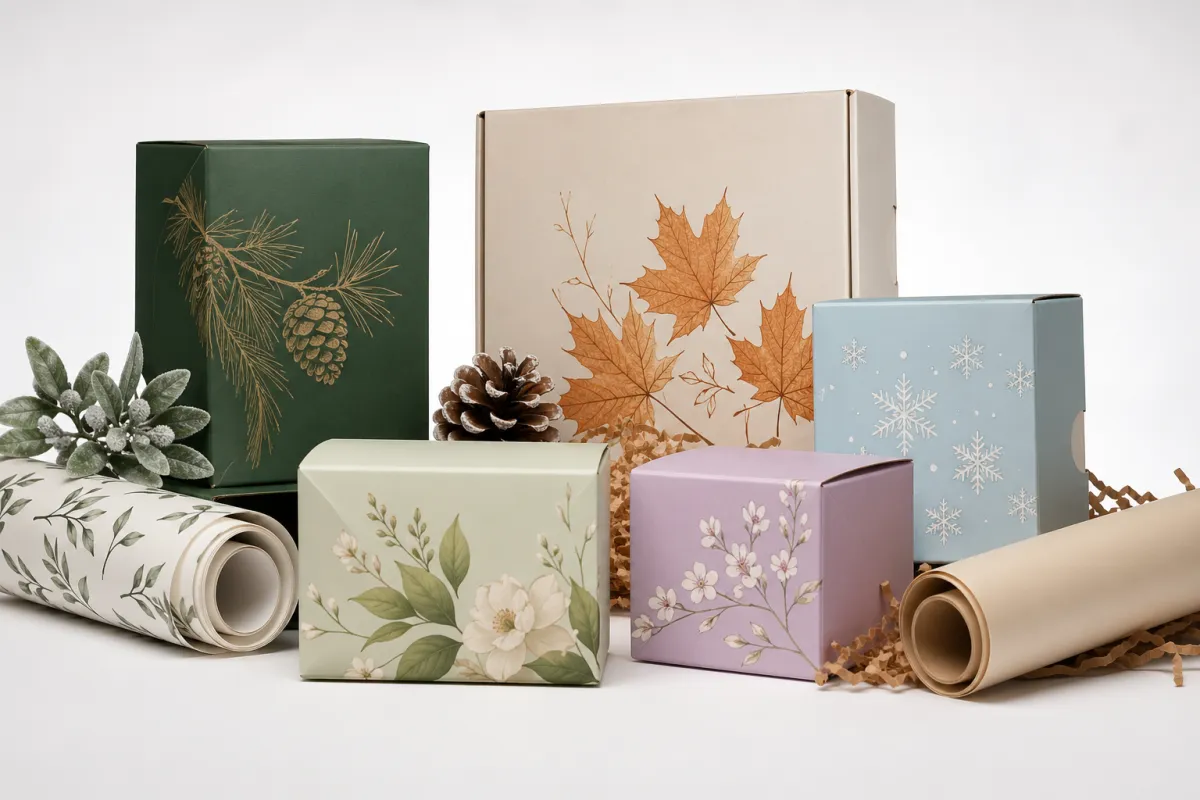
The strongest tips for seasonal custom packaging swaps start with one blunt truth: seasonal packaging is not just about looking festive. It is about making retail packaging feel timely enough to catch attention while keeping the structure stable enough to survive print, pack, and ship, whether the run is 5,000 sleeves in Shenzhen or 25,000 mailers in Los Angeles. I visited a client in our Shenzhen facility once with a holiday sleeve that used metallic foil, a new tuck lock, and a different insert depth. On screen, it looked beautiful; on the floor, it created a 4 mm fit issue that would have cost them another $2,300 in rework on a 6,000-piece run. I have rarely seen a prettier problem become such an ugly expense.
That is why tips for seasonal custom packaging swaps matter beyond the visual layer. A good seasonal change can lift conversion by making the box feel current, support a higher perceived value, and keep the shelf from looking stale after a long sell cycle. I have seen a simple shift from plain kraft mailers to printed mailers add enough visual pop to move average order value by 8% in a two-week promo window, which is meaningful on a $28 product with a 32% margin. Not magic. Just package branding doing the job it was hired to do.
The pain point is usually not creativity; it is coordination. A brand may have strong ideas for Custom Printed Boxes, but if the order quantity, SKU count, and shipping schedule are not aligned, the warehouse ends up with Version A still on the dock while Version B is already being sold online. I keep repeating tips for seasonal custom packaging swaps to clients who think design alone will solve it. It will not. A seasonal swap lives or dies by timing, and a 9-day miss can wipe out a whole retail window, which is a boring way to lose money but a very common one.
Here is the short version: seasonal swaps work because they give you a controlled way to refresh product packaging without rebuilding the whole line. You might change only a sleeve, only an insert, or only a label on a standard carton, and that small move can still make the box feel more expensive, more giftable, or more aligned with the promotion calendar. On a 3,000-unit gift set, a $0.18 sleeve can change the shelf impression without forcing a full structural reset. That is smart branded packaging. Everything else is just spending money to feel busy.
How Do Tips for Seasonal Custom Packaging Swaps Work?
The cleanest tips for seasonal custom packaging swaps begin with a simple workflow: brief, dieline, artwork, proofing, sampling, approval, and mass production. That sounds basic because it is basic, and basic is where most teams go sideways. If the brief says 10,000 units and the sales forecast says 7,400, somebody is already making the wrong assumption about inventory, freight, or both. I would rather lose one afternoon to forecast cleanup than lose three weeks to a carton rerun from a plant in Suzhou. The rerun is always more annoying than people expect.
In a well-run seasonal swap, only a few things should actually change. The strongest tips for seasonal custom packaging swaps I give buyers are to keep the core structure locked unless there is a real reason to move it. Keep the carton footprint, the board grade, the closure style, and the core logo placement stable, then rotate the seasonal artwork, a spot finish, an insert card, a printed sleeve, or a ribbon element. That keeps tooling costs down and protects consistency across the shelf, whether the pack is built from 350gsm C1S artboard or a 2 mm E-flute shipper. It also keeps your team from reinventing the wheel every quarter, which is a hobby I do not recommend.
What changes around the package matters as much as the package itself. Seasonal swaps affect forecasting, purchase orders, warehouse labeling, fulfillment training, and sell-through timing. If a fulfillment team is still picking the old SKU because the item master was not updated, the launch gets messy fast. One of my more irritating factory-floor memories was watching 1,200 cartons sit in a staging area in Phoenix because the buyer had not confirmed which of the two UPC labels should ship first. That was a full day lost over a spreadsheet field, not a production defect. A spreadsheet field.
My rule is simple: treat tips for seasonal custom packaging swaps like a system, not a one-off stunt. The best version is repeatable. You should be able to swap the graphics next season without redesigning the whole line, and that means keeping the carton spec, the Pantone targets, and the insert depth documented down to the millimeter. If the process only works once, it is not a process. It is a lucky accident, and luck is a terrible production strategy.
For reference, the standards side matters too. If you are changing shipper performance or running a new box style, I always ask whether the pack should be checked against ISTA testing guidance or internal drop criteria, especially if the run is headed through a 3PL in Dallas or New Jersey. That matters for custom printed boxes that need to survive fulfillment from a third-party warehouse. A package can look beautiful and still fail in transit, and I have seen both things happen in the same week.
Cost, Pricing, and Timeline for Seasonal Custom Packaging Swaps
The first thing I price in tips for seasonal custom packaging swaps is not art. It is setup. New plates, new cutting rules, minimum order quantities, specialty finishes, freight, and rush charges decide whether the project is sensible or silly. A simple label change on existing stock may run $0.15 per unit for 5,000 pieces, while a printed sleeve might land around $0.24 to $0.38 per unit. A rigid box with foil, emboss, and custom inserts can jump to $1.40 to $3.80 per unit, depending on the board, finish, and packing method, with production typically taking 12-15 business days from proof approval for a straightforward sleeve program and longer for premium structures.
That spread is why tips for seasonal custom packaging swaps should never be based on vibes. Low-cost swaps are usually labels, sleeves, insert cards, and belly bands. They reuse the structure and only change the outer layer, which keeps tooling light and turnaround faster, often in the 7-12 business day range after proof sign-off from a plant in Guangzhou or Jiangsu. Higher-cost swaps include fully Custom Rigid Boxes, structural changes, and premium finishes like soft-touch lamination, hot foil stamping, or deep embossing. Those upgrades can earn their keep for gift sets or retail packaging, but they need to do real work. Otherwise you are paying extra to impress people for three seconds.
I tell clients to think in terms of value per unit, not just unit cost. If a $0.22 sleeve swap helps you sell a $28 product at full margin during a four-week promo, that is usually a good trade. If a $2.10 rigid box adds polish but does not move conversion, then you are decorating the SKU, not improving the business. That distinction matters, especially on runs of 4,000 to 8,000 units where a $0.05 difference in finishing can change the total spend by hundreds of dollars. Tips for seasonal custom packaging swaps are supposed to protect margin, not just make the launch table look prettier.
| Swap Type | Typical Unit Cost | Common MOQ | Lead Time | Best Use |
|---|---|---|---|---|
| Label only | $0.15 per unit for 5,000 pieces | 3,000-10,000 | 7-12 business days from proof approval | Fast seasonal refresh on existing stock |
| Printed sleeve | $0.24-$0.38 | 2,000-5,000 | 12-15 business days from proof approval | Retail-facing visual update with low tooling |
| Insert card or belly band | $0.09-$0.21 | 2,500-8,000 | 8-14 business days from proof approval | Gift sets, promo notes, limited-run offers |
| Printed mailer or carton | $0.38-$0.95 | 1,000-3,000 | 12-18 business days from proof approval | E-commerce launches and seasonal unboxing |
| Rigid box with finish upgrades | $1.40-$3.80 | 500-2,000 | 15-25 business days from proof approval | Premium holiday sets and luxury product packaging |
Timeline is where the panic usually shows up. For simple seasonal work, I budget 8 to 12 weeks from concept to delivery, and for full box programs with sampling, tooling, and freight, 12 to 16 weeks is more realistic. If the artwork is late, the board spec changes, or the inventory file is messy, add another 1 to 2 weeks. I have never seen a late project improve because everyone pretended it was still on schedule. That is not planning; that is office theater with a packing list.
If you want to compare options faster, start with the materials and finishes in Custom Packaging Products and ask your supplier to quote them side by side. I have had better results when the quote separates design, print, tooling, sampling, and freight instead of bundling everything into one cheerful number. One supplier in Chicago once quoted me $8,400 for a run that looked identical to a $6,700 quote, and the only difference was a hidden rush freight line on a 1,500-piece order. Cute trick. Not useful.
There is also a sustainability angle that buyers should not ignore. The EPA has plain-language recycling guidance at EPA recycling guidance, and I still see brands forget to leave space for recycling marks or disposal instructions on seasonal packs. If your insert covers the code, or your foil blocks the material note, you just made the package harder to use and harder to trust. Small stuff, big headache, and customers notice that kind of thing more than teams think.
Step-by-Step Process for Seasonal Custom Packaging Swaps
The best tips for seasonal custom packaging swaps start with the sales calendar, not a mood board. I want to know which SKU is going seasonal, how long it will stay live, how much stock is already in the warehouse, and what the sell-through target is. If the promo lasts 21 days, the packaging plan should not assume a 60-day run, because that mismatch is how brands end up with cartons they cannot clear before the next cycle. I have seen it happen in New Jersey and Texas, and nobody enjoys answering for the leftovers.
- Start with inventory and timing. Count what is already on hand, confirm the launch date, and map backward from the ship deadline. One of the simplest tips for seasonal custom packaging swaps is to stop guessing about stock and check the actual warehouse numbers, especially if there are 1,800 units still sitting in transit.
- Audit the current structure. If the existing dieline works, reuse it. I have seen teams redesign a perfectly good mailer just because they wanted a fresh look, and that adds cost without adding value. Good tips for seasonal custom packaging swaps reuse structure and change only what the customer will notice.
- Build artwork around production rules. Keep bleed at 3 mm, check ink limits, and confirm that finishing choices work with the substrate. A matte soft-touch film behaves differently than a gloss varnish on 350gsm C1S artboard, and a foil panel can crack if the score is too tight. If you ignore that, the press sheet will tell on you.
- Approve samples, not just PDFs. A proof can hide a lot. A sample carton shows fit, fold pressure, and finish behavior. I once caught a sleeve that looked perfect on screen but cracked at the fold line after the second insertion, which would have turned into a $1.60 problem on every unit.
- Update warehouse and fulfillment notes. The old version should have a cutoff date, a disposal plan, and a clear item code. Tips for seasonal custom packaging swaps fail fast when the warehouse keeps shipping the wrong version because nobody changed the pick list, and the mistake can repeat on 500 orders before anyone notices.
- Check sell-through after launch. The swap is not done when cartons arrive. Track the first 500 orders or the first retail week and check for damage, confusion, or label errors. Real feedback is cheaper than a reprint, especially if the reprint has to come from Vietnam or another overseas line with a 2-week freight cycle.
One reason I push sampling so hard is that the factory floor always finds the one thing the deck forgot. At our Shenzhen facility, a buyer once approved a mailer with a seasonal insert that overlapped the glue flap by 5 mm. On paper, it was fine; in production, it jammed the line twice every 40 boxes and cost a half-day of labor. That is exactly why tips for seasonal custom packaging swaps need a real sample step, not just a sign-off email. A PDF can be polite in ways a machine never will.
I also like to tie the process to performance testing. If you are shipping by parcel, ask whether the pack should be reviewed against an ISTA 3A style drop profile or another relevant test standard, especially for custom printed boxes that will move through a Dallas or Memphis fulfillment center. That is the difference between a package that looks good in a photo and one that survives a fulfillment center. A package can survive the pitch meeting without surviving the truck, and those are not the same thing.
The final operational piece is communication. Your marketing team, operations team, and supplier should all know the same production calendar, the same approval deadline, and the same sell-through date. I have sat in client meetings where the brand team wanted a two-color holiday print, the ops team only had room for a one-color rerun, and the warehouse had already booked inbound pallets for the old version. That is a three-way traffic jam in a 48-hour window. Clear tips for seasonal custom packaging swaps prevent that mess, which is reason enough to put the dates in writing and then put them in writing again.
Common Mistakes to Avoid in Seasonal Custom Packaging Swaps
I can usually spot bad tips for seasonal custom packaging swaps before the order even leaves the buyer’s desk. The biggest warning sign is late involvement. If the printer gets called after the artwork is final and the ship date is fixed, somebody is already asking the impossible. Seasonal packaging is not a same-day coffee order; it needs planning, and it needs enough lead time to absorb the small surprises that always show up in prepress, sampling, and freight booking. They always show up.
- Changing too much at once. If you swap the structure, color palette, finish, and insert copy in one cycle, you make approvals slower and confuse customers. The best tips for seasonal custom packaging swaps usually keep one or two brand anchors constant, like a logo panel or a signature color.
- Ignoring leftover stock. If 3,000 units of the old pack are still in the warehouse, you need a clear plan for them. Discount bundles, outlet channels, internal promos, and phased sell-through can all help, especially if the old stock is sitting in two separate locations.
- Forgetting compliance details. Barcode placement, ingredient panel space, recycling marks, and legal copy do not disappear just because the artwork is seasonal. I have seen a holiday box fail a retail check because the UPC sat too close to a fold line and the scanner missed it by 4 mm.
- Ordering by gut feel. A forecast based on “we sold well last year” is not a forecast. Use the actual shipment curve, the margin plan, and the channel mix. Better tips for seasonal custom packaging swaps start with numbers, not nostalgia.
- Treating the swap like a one-time event. If you do not document what happened, you will repeat the same mistakes next season. That gets expensive fast, especially when the same fold issue returns in Q4.
One buyer told me, after a painful holiday run, "We spent more fixing the rush than we saved on the box." That line stuck with me because it was true. They had saved $0.11 per unit by choosing a cheaper finish on a 4,500-piece order, then spent $740 on expedited freight and another $390 on hand relabeling. That is how bad tips for seasonal custom packaging swaps turn into a budgeting joke nobody laughs at, including the accounting team in Ohio.
Another mistake is chasing novelty so hard that the packaging stops feeling like the brand. I have seen teams add three new colors, a special die-cut window, and a metallic liner for a short promo, only to discover the product looked like it came from a different company. Package branding should still feel connected to the core line, especially if the permanent range uses a restrained palette and a 2-color print system. If a seasonal box has to be explained in the first sentence, the design missed the point.
My blunt advice: keep the change list short. One strong visual idea usually beats five half-formed ones. If the promotional goal is to drive giftability, then improve the outer box, the sleeve, or the insert. If the goal is speed, keep the structure and update only the printed layer. That is how tips for seasonal custom packaging swaps stay useful instead of turning into a creative exercise that burns budget and everybody’s patience.
What Are the Best Tips for Seasonal Custom Packaging Swaps?
After enough plant visits, supplier calls, and quote fights, I have a short list of tips for seasonal custom packaging swaps that actually save money. First, keep a master dieline and a seasonal artwork library. That one move cuts launch time because the next design team is not redrawing the same box from scratch. I have seen that save 2 to 4 days on a simple carton program in Suzhou and even more sanity than anyone puts in the spreadsheet.
Second, lock two or three brand anchors and leave them alone. Maybe the logo stays in the same top-left zone, maybe the brand color remains the same, or maybe the closure style never changes. That makes the seasonal version feel intentional instead of random. Strong tips for seasonal custom packaging swaps do not ask the customer to relearn who you are every quarter, and customers notice that difference in a 3-second shelf scan.
Third, negotiate early with your suppliers on MOQ flexibility, freight windows, and finish upgrades. A good rep at Uline, Bay Cities, or your carton plant in Guangzhou or Longgang can save real money if you ask the right way and give them clean specs. I once shaved $0.09 per unit off a sleeve program by moving the ship window by 6 days and dropping a nonessential foil hit. Not glamorous. Very effective. That is the kind of trade that makes tips for seasonal custom packaging swaps worth following.
Fourth, plan for sell-through, not just launch day. The best seasonal packaging has an exit plan. If the holiday version sells for four weeks, know exactly what happens to the remaining stock on week five. You can route leftovers to a bundle, a discount channel, or a post-promo carton. I learned this the hard way in a client meeting in Chicago where everyone loved the new package until they realized they had 1,800 old sleeves and only 900 new cartons. The math did not care about the mood board, which is rude but fair.
Fifth, document the factory feedback while it is still fresh. Keep notes on print density, fold cracking, insert fit, glue coverage, and freight condition. If you do not write it down, somebody will re-discover the same problem next quarter like it is a brand-new surprise. I still keep a one-page report for every seasonal change, including the line speed, the press room, and the pallet count. It is boring, and it saves money. Good tips for seasonal custom packaging swaps are often boring, and that is part of their charm.
Finally, make sure the materials match the job. If you need recycled board, ask about FSC-certified sources. If you need premium shelf presence, use a finish that survives handling instead of one that only photographs well. If your team is choosing between Product Packaging Options, start with the structure, then the print method, then the finish. That order keeps the project grounded, whether the substrate is 350gsm C1S artboard or a heavier 18-point board. It also keeps your package from becoming an expensive mood board that nobody wants to admit was an expensive mood board.
And yes, keep looking at the site tools that already exist. If you need a faster starting point, browse Custom Packaging Products to see which sleeves, cartons, inserts, and labels can be repurposed rather than rebuilt. I have seen brands save a full week just by reusing the right base format and changing the seasonal art, especially on runs manufactured in Shenzhen and finished in Los Angeles. That is not clever. It is disciplined.
Next Steps for Tips for Seasonal Custom Packaging Swaps
If you want to turn tips for seasonal custom packaging swaps into a real operating plan, start with the next three selling periods. Pick one SKU, one promo window, and one packaging change. Then map backward from the ship date, not the design kickoff, using the actual freight date and not the marketing wish list. That simple shift helps you separate what is nice to have from what actually needs to happen. Most teams already have enough moving parts. They do not need another one.
- Review your next three promotions. Write down the launch date, sell-through window, and expected order volume. Strong tips for seasonal custom packaging swaps always start with a calendar and a forecast, whether the run is 2,500 gift boxes or 18,000 labels.
- Choose one packaging layer to swap first. A sleeve, label, or insert is usually easier than a full box redesign. That keeps risk low and lets you test the customer response without changing the full structure.
- Request a clean quote. Ask for separate pricing on design, print, tooling, sampling, and freight so you can compare options without guessing. A quote that hides freight on a 1,200-piece job is not a quote you can trust.
- Build a handoff checklist. Include artwork approval, stock cleanup, production booking, warehouse labeling, and cutoff dates for the old version. A checklist with 10 items is easier to use than a binder with 40.
I always tell clients to keep the checklist short enough that a warehouse lead will actually read it. Ten items beats thirty, and a one-page timeline beats a slide deck when the dock is busy at 6:30 a.m. If the process is clear, the seasonal version ships on time and the team stops improvising at the dock. That is the point of tips for seasonal custom packaging swaps: reduce chaos, protect margin, and make the package feel timely without making the operation miserable.
The best tips for seasonal custom packaging swaps are not flashy. Plan early. Reuse what already works. Lock the carton spec before the art goes live. Keep the warehouse informed. Let the numbers make the call. That is the version that protects your brand, keeps your product packaging looking intentional, and stops the next “same box, wrong measurements” disaster before it starts. If you are gonna change only one thing this season, make it the process, not the panic.
How far in advance should I plan seasonal custom packaging swaps?
Start 8 to 12 weeks ahead for simple label or sleeve changes, and 12 to 16 weeks ahead for full box runs. If you need new tooling, specialty finishes, or overseas production in Shenzhen or Dongguan, I would add another 2 to 3 weeks. One of the most practical tips for seasonal custom packaging swaps is to work backward from the ship date, not from the design meeting. That sounds obvious, but I have seen enough projects drift to know people need the reminder.
What usually costs the most in seasonal custom packaging swaps?
The biggest cost jumps usually come from new tooling, low MOQs, special finishes, and rush freight. Structural changes almost always cost more than artwork-only updates because they affect setup, die cutting, and material use. If you want the cleanest cost control, keep the same dieline and change only the graphics, which is one of the simplest tips for seasonal custom packaging swaps I can give. On a 5,000-piece run, that choice can keep the difference between a $0.15 label and a $1.80 carton from swallowing your margin.
Can I reuse the same box structure for multiple seasonal designs?
Yes, and that is usually the smartest move. Reusing the same structure keeps tooling costs down and makes it easier to rotate seasonal graphics across different campaigns, whether the packs are printed in Suzhou or assembled in Chicago. You can swap sleeves, inserts, labels, or printed shippers while keeping the base carton consistent. If you are building a repeatable program, that is one of the best tips for seasonal custom packaging swaps to keep in your playbook.
What is the best packaging type to swap seasonally first?
Labels and sleeves are usually the easiest entry point because they are lower cost and faster to produce. After that, printed mailers, cartons, and inserts are strong options if you want a bigger visual change. I usually tell teams to start with the item that creates the biggest customer-facing impact without forcing a full rebuild, especially on a 2,000-piece test run. That is the most practical path for tips for seasonal custom packaging swaps, especially if you want a real test before you scale the idea.
How do I avoid ending up with leftover old packaging stock?
Match the run size to your forecast and sell-through speed instead of ordering by gut feel. Use the old stock first through discount channels, bundles, or internal promos before the new version launches, and set a clear cutoff date for the warehouse. If you build that discipline into your process, your tips for seasonal custom packaging swaps stop being theory and start saving real money. I have seen that save clients from a storage headache that would have lingered for months, especially when 1,500 old sleeves were still sitting beside the new holiday cartons.