Buyer Fit Snapshot
| Best fit | Plan Seasonal Packaging Inventory Without Waste projects where brand print, material claims, artwork control, MOQ, and repeat-order consistency need to be specified before quoting. |
|---|---|
| Quote inputs | Share finished size, material target, print colors, finish, packing count, annual reorder estimate, ship-to region, and any compliance wording. |
| Proofing check | Approve dieline scale, logo placement, barcode or warning zones, color tolerance, closure strength, and carton packing before bulk production. |
| Main risk | Vague material claims, crowded artwork, missing packing details, or unclear freight terms can make a low unit price expensive after revisions. |
Fast answer: Plan Seasonal Packaging Inventory Without Waste: Material, Print, Proofing, and Reorder Risk should be specified like a repeatable production item. The safest quote records material, print method, finish, artwork proof, packing count, and reorder notes in one written spec.
Production checks before approval
Compare the actual filled-product size with the drawing, then confirm tolerance on folds, seals, hang holes, label areas, and retail display edges. Reserve space for logos, QR codes, warning copy, and material claims before decorative graphics fill the panel.
Quote comparison points
Review material grade, print process, finish, sampling route, tooling charges, carton quantity, and freight assumptions side by side. A quote is only useful when the supplier can repeat the same color, closure quality, and packing count on the next order.
How to Plan Seasonal Packaging Inventory Without Waste
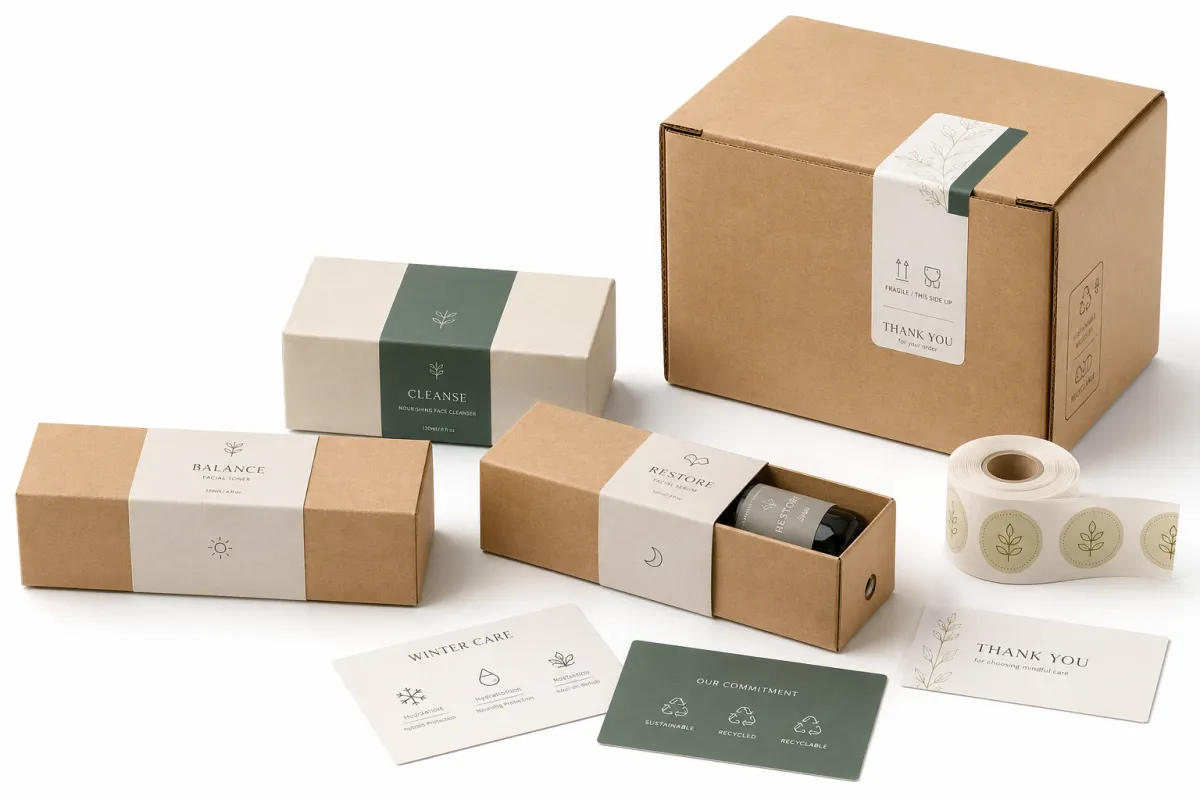
One missed signal can wreck a whole season: packaging arrives after demand has already peaked and the window starts closing. How to plan seasonal packaging inventory begins with a detail teams still underestimate: packaging often has a longer hidden lead time than the product it holds. In practical seasonal demand planning, that mismatch is where speed gets mistaken for control.
I have seen brands spend weeks polishing a launch forecast, only to realize the boxes were still waiting on artwork approval. That kind of delay feels small in a meeting. On the floor, it is anything but small.
The gap is not abstract. It is the sum of approvals, print setup, material sourcing, and freight. A finished product might be ready in 10 to 14 days once components land, while custom inserts, dielines, and print signoff can add three to six more weeks to a packaging run. For a limited campaign, those weeks are not padding. They decide whether the launch feels controlled or frantic.
Seasonal packaging inventory is the exact stock needed for a narrow demand window: a winter gift line, a spring launch, a summer promo, or a short event campaign. A holiday drop may have a useful shelf window of only three to six weeks. Outside that window, the same SKU can sit untouched. That makes overbuy and underbuy equally expensive, just in different ways.
Overbuy hurts in three places. Cash gets trapped first. If one unit costs $0.24 with foil spot and matte laminate, then 5,000 extra units tie up $1,200 before storage even enters the equation. In shared warehouses, pallet storage plus handling can add the equivalent of $0.18 to $0.35 per unit per month once shelving, retrieval labor, and shrink risk are counted. Storage friction follows. Oversized cartons block racks, and a late campaign can push forklifts into priority stock zones. Brand discipline suffers too. Old promo colors and dated artwork become dead stock, then get used in the wrong places, which fractures package branding across channels.
Underbuy is louder in the room and harder to recover. Stockouts during key sales days can cut take rate by 8% to 20% in a weekend launch, then teams scramble for rush quotes, emergency setup, and expedited freight. Rushed reprints can cost 25% to 60% more than planned print, and expedited freight can double once a shipment slips into peak freight windows. The result is uneven presentation, missed upsell opportunities, and a team that spends the season reacting instead of shipping.
Take a real planning example. A brand needs 15,000 Custom Printed Boxes for a November gift campaign, with first customer orders expected by November 15. If product is ready by October 28, packaging should already be arriving by November 8 so fulfillment can begin cleanly. Supplier lead time is 22 business days, design proofing takes 6, artwork correction takes 4, and freight to the fulfillment center takes 5. That means the purchase order needs to go out around September 8, not mid-October. One timing mismatch can erase the margin on an entire seasonal push. It also shows how how to plan seasonal packaging inventory works in the real world: backward planning, not optimistic guessing.
Most brands do not fail because they got one number wrong. They fail because they assume one number should work for every channel, region, and version. Retail packaging for e-commerce behaves differently from channel returns in B2B drops. Learning how to plan seasonal packaging inventory means splitting demand before the order is placed, with one forecast for each distribution path and not one monolithic total.
That is why this topic sits on executive dashboards every year: it is where commercial pressure meets execution reality. A good answer to how to plan seasonal packaging inventory is never only a spreadsheet; it is design discipline, lead-time control, and a clear plan for what happens when assumptions break.
“If the package is late, the story is late too. A campaign cannot recover once the calendar closes around it.”
How to Plan Seasonal Packaging Inventory Around Lead Times
To plan how to plan seasonal packaging inventory, start with the stages, not the purchase order. Ordering is the last visible step. The real work begins earlier:
- Forecasting window: collect campaign volumes by channel, final packaging requirements by SKU, and constraints from sales and fulfillment.
- Artwork and packaging design signoff: lock the dieline, colors, varnish, barcode placement, and inward-facing instructions.
- Sampling and approval: review physical samples, check tape lift, print quality, and fit with product.
- Production and tooling: die-cut setup, plate approval, coating, lamination, and print scheduling.
- Freight and customs: export prep, route delays, and last-mile carrier capacity.
- Receiving and QA: inspect against spec, confirm barcode checks, define damage rejection criteria, and tag pallets.
- Warehouse placement: assign zones and pick sequence so campaign spikes do not choke operations.
Notice how many steps sit between “order placed” and “available to fulfill.” Supplier lead time is not the same as usable lead time. In one common case, a converter quotes 12 business days for printing. Internal approvals consume 3 days, sample iteration adds 4, color stabilization adds 2, and freight volatility adds 3. Usable lead time drops to 7 business days, not 12. If the launch window is only 20 days, the buffer disappears quickly.
Some teams ask whether supplier lead time plus 15% is enough safety margin. That can work as a baseline only if every stage is visible. A cleaner formula is:
Usable lead time (days) = Supplier lead time + internal proofing + sampling + compliance checks + freight buffer + receiving lead time - hidden waits already included.
The subtraction matters. If proofing already lives inside a supplier-managed portal, subtract it from the buffer. If the same proof cycle gets counted twice, the plan looks safer than it really is.
For the same campaign, a working-backward method is cleaner:
- Launch day: Day 0, when the customer can first buy.
- Buffer before launch: 5 to 7 days for receiving, quarantine inspection, and pick-ready staging.
- Freight due date: Launch day minus buffer.
- Production complete date: Freight due date minus trucking and transit.
- Proof freeze: Production complete minus 4 to 6 business days for a digital proof-and-approve loop.
- Artwork lock: Proof freeze minus 2 to 3 days for legal and compliance checks.
- Forecast freeze: Two to three weeks before artwork lock for final volume confirmation.
If your season starts on November 20 and usable lead time is 24 business days, production cannot start until around October 19. If the product team is still revising SKUs after September, a contingency path needs to exist before the order goes out. The pattern is simple: the earlier the packaging design locks, the less chaos lands in freight and storage.
One line of truth helps here too: not every packaging format behaves the same. A glossy mailer, rigid box, and insert sleeve each carry different process durations. Custom embossing and UV spot can add 3 to 7 days, while specialty substrate availability can add 2 to 6 weeks in peak quarters. A seasonal planning calendar should separate standard packaging from custom runs that rely on special materials.
Better teams build around standards. ISTA transport simulation profiles help decide whether a format survives regional warehousing and last-mile handling. For paper-based formats, ASTM references for humidity and compression performance are useful. For sustainability claims, FSC-aligned language keeps sourced board descriptions clean. Standards will not fix demand accuracy, but they expose operational risk before the campaign starts.
How to plan seasonal packaging inventory without stockouts or surplus?
Start with a controlled sequence and the answer is usually the same: split your forecast by market behavior, define your reorder point, and make your Packaging Lead Time visible to everyone who can delay it. In practice, the teams that do this consistently do not guess their way through launch week; they execute a documented sequence in reverse time.
First, map the campaign timeline by date, not by optimism. That gives you a hard production trigger for each SKU family: core pack, hero pack, and optional variant. Second, tie each trigger to a measurable metric like inventory carrying cost rather than vague comfort. If carrying cost rises faster than forecast upside, scale variants before quantities. Third, decide your fallback stock band before supplier quoting starts. The goal is simple: keep stockout risk and overstock exposure in the same equation, not in separate meetings.
When teams ask how to measure this, the practical framing is this: how to plan seasonal packaging inventory is mostly about preventing avoidable uncertainty. You can control three things directly - lead-time buffers, SKU complexity, and calendar discipline - and then monitor what cannot be controlled, such as port delays. The teams that survive those disruptions are already running the first two steps before demand even lifts.
The same principle applies across product categories, whether you sell retail packaging through grocery shelves or fulfillment packaging to e-commerce. If the demand pattern changes, package planning should change with it. The target is never perfect forecasting. It is confidence bands that stay close to lived data and leave a little room for reality to be annoying, which it usually is.
Key Factors That Shape Seasonal Demand, Cost, and Lead Time
Demand and lead time are linked, though the link is usually hidden inside campaign details. Forecasting volume correctly does not save a launch if demand shape gets ignored. Seasonality is not just more sales in December. It is promotion cadence, weather cycles, and channel-specific bursts.
Holiday demand for retail packaging can jump 30% to 50% in one week for one category and fall 20% the next for another. A skincare brand may see stronger spring activity in smaller markets, while beverage subscriptions can peak in midsummer depending on temperature and shipping constraints. Even within the same category, trade shows, coupon calendars, and ad blackout windows can shift pack demand by 15% or more in short periods.
SKU complexity matters more than many teams admit. Extra sizes, colorways, and versions can improve test-and-learn flexibility, but each variation carries setup, proof, and risk. If you run four sleeve colors, two paper stocks, and one shrink-wrap finish, you may end up with four or six micro-lead times instead of one. That can stretch production from 3 weeks to 6. In one case, cutting SKU permutations from 12 to 4 improved forecast reliability by almost 40% because inventory no longer sat split across too many variants.
Supplier capacity and material availability can dominate price and schedule. Specialty substrates, matte foil, transparent windows, and special adhesives are often tight during busy manufacturing windows. If your season depends on metallic cold-stamp foil and the supplier has one weekly varnish slot, a low quote can hide a fragile release date. In that situation, the cheapest unit price should trigger caution. The timing risk may be the real cost.
Climate and handling constraints are the silent inventory tax. A large-format mailer is heavy, easy to crush, and expensive to handle each time it moves. A 3D mock-up that looks great in photo marketing can become a storage and labor headache if the warehouse is not set for dimensional-weight planning. Oversized cartons may require more forklift passes, and one return event can damage finished stock. Every extra 1,000 units increases not just carrying cost, but also the chance of picking errors during peak demand.
Storage and warehouse behavior are often ignored until a late audit. A 4,000-unit surplus of rigid festive boxes can cost up to $140 in extra handling every two weeks in some facilities once bin rental, pick labor, and damage control are counted. That is one reason teams get stuck defending overbuying even when their forecasting software looks polished.
EPA guidance is clear on reducing waste and improving materials use. Seasonal runs can follow that logic by cutting obsolete inventory and right-sizing packaging quantities. Less leftover stock means less discarded corrugated, less landfill risk, and cleaner accounting in packaging sustainability programs. This is also a practical entry point for how to plan seasonal packaging inventory without creating hidden waste in the back end.
Another practical angle: in many industries, product packaging demand shifts once the campaign moves from direct-to-consumer to retail channels. In-store replenishment usually runs slower and flatter than online spikes. Branded packaging needs separate demand curves for retail packaging and fulfillment packaging. Blend them, and you either overstock the wrong form factor or miss a true channel ramp.
When teams treat the whole operation as a single forecast, they often lose visibility into the very question they need to answer first: what does each channel require in packaging lead-time tolerance? That distinction is what separates competent how to plan seasonal packaging inventory from spreadsheet theater.
Step-by-Step Guide to Build a Seasonal Inventory Plan
Most brands stall because they want one clean number. They do not get one clean number. They get a range, then a disciplined decision. The process is straightforward once it is broken into steps.
Step 1: Build a reliable baseline from last season without copying it blindly
Start with last year’s actual usage, not the forecast. Capture sell-through, cancellations, returns, and leftover stock by SKU. If last season sold 28,000 gift wraps, had 2,400 returns, and left 3,200 unused, the demand baseline is not 28,000. Baseline is usually closer to 27,200 after policy adjustments. Then split by channel. Direct-to-customer may have held 62%, wholesale 24%, and event bulk 14%.
Capture the signals too: were there two sample rejections, a channel pause because of label mismatch, or a promo graphic change that forced a reprint? Those notes are not side comments. They change the next planning cycle. In other words, a repeatable seasonal demand forecast starts where the obvious numbers stop and the exceptions begin.
If you are serious about how to plan seasonal packaging inventory, track exception events as part of demand data. A sample rejection is as influential as a sales spike when planning 20,000 units in a 6-week window.
Step 2: Forecast by campaign and channel, not by generic total demand
Model the seasonal plan in three layers: base demand, campaign uplift, and risk-adjusted upside. A simple equation works:
Seasonal forecast = (base demand × channel mix adjustment) + promotional uplift + growth factor.
If the baseline is 20,000 and you expect a 12% growth launch with a campaign adding 2,500 units, the working number is 22,900. Then set a range, not a single number. For example: 22,500 to 24,500 with low, expected, and high scenarios. That is how how to plan seasonal packaging inventory moves from hope to control.
Use current campaign structures. If a paid social push shifts from display to creator partnerships, packaging demand may change by format. If the sales team promises early-bird pricing, demand may move earlier rather than increase. If a wholesale partner asks for co-branded packs, variant counts increase. Every difference belongs in the forecast model. At the same time, every difference has a cost and a lead-time implication.
When channel pacing is lopsided, the safe answer is not always the highest forecast. It is the most plausible range based on evidence, plus the operating ability to replenish quickly if channel mix changes.
Step 3: Set the target range and reorder trigger from volatility and lead time
Pick a service target per SKU. If stockout tolerance is low for hero SKUs, use a higher safety stock. A practical setting is 10% to 20% above base for critical SKUs and 4% to 8% for stable ones.
Use this formula:
ROP = (average daily demand x lead time in days) + safety stock
Example: 350 units/day, 18-day lead time, and 1,200 safety stock gives a reorder trigger of 7,500 units. That is not overbuying. It is controlled coverage.
Safety stock can be tied to volatility. If daily demand standard deviation is 45 units, a 95% service target, roughly Z 1.65, gives a reasonable range for fast-moving SKUs. If lead time changes often, increase the buffer. This is repeatable math, not guesswork. For teams asking how to plan seasonal packaging inventory, this is one of the fastest ways to improve reliability. It also keeps stockout risk from becoming a panic conversation in week three.
Keep one more control in the formula: a maximum inventory cap per SKU to avoid unnecessary capital exposure. That small rule gives how to plan seasonal packaging inventory the same shape as finance, not just operations.
Step 4: Lock artwork, proofs, and PO deadlines on a shared calendar
This is the anti-panic move. Put calendar deadlines around version freeze, final print approval, and supplier PO placement. If the campaign starts on November 20 and lead time is 22 business days, the PO date needs a hard stop long before everyone finishes tinkering. Three gates work well:
- Gate 1 (T-45): all packaging design approved, final counts still in draft.
- Gate 2 (T-30): final proofs signed, sample acceptance completed.
- Gate 3 (T-22): PO and production confirmation.
Put legal and quality signoff on the same calendar. Last-minute ingredient list edits or barcode changes erase the safety margin faster than most teams expect. If your planning starts to drift here, your how to plan seasonal packaging inventory reliability drops before materials even hit production.
If the product family needs custom printed boxes for one promo, compare lead-time risk across suppliers early. One converter may offer the same cost with a 10-day approval window, while another takes 16 days. The cheapest quote is not always the right quote when the season starts fast.
For common SKUs, Custom Packaging Products from an approved list can reduce variant risk because pre-validated structures shorten internal prep time.
And if your commercial team insists on “only one exception,” ask them to sign where that exception lands in the calendar. If it lands after final proof, it is not an exception. It is a new launch risk.
Step 5: Plan receiving and release so stock arrives usable and moveable
Receiving is where many plans break. A perfect order can still lose 10% to 15% of usability if inbound staging is disorganized. Use these steps:
- Designate a pre-launch hold area with humidity and temperature control for humidity-sensitive board.
- Inspect each lot for print drift, barcode readability, dimensional accuracy, and glue seam strength.
- Tag each lot by SKU, promo code, and campaign region.
- Use FIFO for promotional periods with short windows; keep a separate reserve for high-margin SKUs.
- Test 10% of cartons for fit with product dimensions before full release.
This is the stage that protects packaging design consistency or accidentally damages it. If pack faces are misaligned by even 2 mm from approved art, brand image takes a hit. If you sell through four channels, this step decides whether picking stays accurate at scale.
“A campaign can survive a late forecast. It cannot survive late receiving with unknown quality because the clock is already running.”
By now, how to plan seasonal packaging inventory has shifted from a phrase to an operating rhythm. The demand range is set, the buffer is visible, the dates are locked, and receiving has a plan instead of a guess.
Pricing, Storage, and Cash Flow Tradeoffs You Cannot Ignore
Commercially, seasonal inventory looks like a math problem, then turns into a management problem. Yes, unit cost often falls as quantity rises. A 5,000-piece run of 350gsm C1S artboard with UV matte can run around $0.23 to $0.31 per unit depending on complexity. At 15,000 pieces, that may drop to $0.19 to $0.26. Tempting. Total cost is a different question.
| Order Strategy | Typical Unit Cost | Hidden Cost Risk | Delivery Reliability | Best Use Case |
|---|---|---|---|---|
| Lean pre-season order (exact volume only) | $0.26–$0.34 | High stockout risk, emergency replenishment | Moderate | Uncertain demand, short lead times available |
| Balanced base + 10% buffer | $0.24–$0.30 | Lower storage pressure, manageable upside risk | High when supplier windows fixed | Most seasonal launches |
| Early overbuild (25–40% extra) | $0.18–$0.24 | High carrying cost, obsolescence, markdown write-offs | High on-time delivery, low run-out risk | Very stable, repeatable high-confidence seasons |
The table looks simple, though the economics shift the moment freight and labor enter the picture. A planned run may save 10% to 12% in unit cost. A rush run can wipe that out with a 20% to 45% expedited freight premium plus overtime and redesign fees. One-day production reschedules can cost more than a year of storage for a single pallet. In practice, the cheapest quote is often the least effective quote if the season has little room for interruption.
Storage and handling costs are underrated. If one palletized pack type costs $18 per month to store in a regional fulfillment center and you need 20 pallets, that is $360 monthly. Add two weeks of labor at $12 an hour for two operators and the supposedly discounted order starts to look expensive. Over six weeks, a large 20,000-piece surplus can quietly absorb several thousand dollars before accounting closes.
Damage risk matters too. Fragile mailers with paper tape edges can tear when stacked beyond the recommended load. In some climates, uncoated stock can warp or absorb humidity and weaken print adhesion. In those cases, carrying stock from one season into the next creates hidden rework costs that can exceed production savings. Ask for humidity tolerance and stacking limits in the spec sheet.
If your product depends on premium finish, the knock-on effects are easy to miss. Soft-touch lamination, hot foil, and specialty inks all increase cycle time and minimum order thresholds. Brands sometimes push this too far and pay 30% more in freight because the cartons get oversized. Cost control is not just quantity discipline; it is format discipline too.
From a cash flow angle, compare two scenarios:
- Scenario A: order 12,000 now at $0.24, hold for 3 months, use 8,500. Total landed cost includes about $900 storage plus $2,500 write-down risk.
- Scenario B: order 9,000 at $0.28, reorder 2,000 in one wave if needed. If no reorder is required, carrying cost drops. If reorder triggers, total can rise to 8% to 10% above plan.
Neither scenario wins every time. Seasonality, confidence, and internal speed decide the outcome. If you focus only on quoted unit rates, the decision gets skewed fast. That is a structural issue in how to plan seasonal packaging inventory: cost should be assessed as a full landed picture, not just printing price.
Common Mistakes That Derail Seasonal Packaging Inventory
The failure patterns repeat often enough to predict.
First, copying last year’s order exactly is a quiet trap. If channel mix changed, if campaign timing shifted, or if a major partner added new shelf space, the forecast changes too. Teams with historical demand variance below 10% can still run into 25% distortion after a new event partnership enters the mix.
Second, late approvals are usually an approval-process problem, not a design problem. Artwork sent on a Friday afternoon with unclear ownership can delay the PO for days. If proofs are not checked by operations, fulfillment constraints surface too late. At that point, how to plan seasonal packaging inventory stops being a planning question and becomes an ownership problem.
Third, too many SKU versions in a small campaign creates fragmentation. Twelve SKUs with 2,000 units each feels flexible; in reality it creates slow turns and leftovers. A cleaner strategy often means fewer pack versions with a stronger campaign logic. If the same branded message can run across two formats, simplify first, then scale only if demand proves the need.
Fourth, no contingency plan turns ordinary disruption into a crisis. A fallback supplier, a simplified version, and a contingency stock band are not luxuries. Weather events, port congestion, paper shortages, and line maintenance delays all happen. The brands that hold together treat disruption as a parameter, not an exception.
Fifth, overrating forecast precision is easier to spot than admit. A polished dashboard can hide weak assumptions, and if the chart updates faster than the calendar, execution loses pace. For teams trying to improve how to plan seasonal packaging inventory, the fix is to tie every forecast to a practical trigger date and a documented recovery option.
Each one of these mistakes makes how to plan seasonal packaging inventory harder. The frustrating part is that each one is fixable with plain operating rules: tighter version control, earlier cutoffs, explicit upside planning, and a willingness to say “we do not know yet” before the season starts. That last part matters more than people admit.
Expert Tips and Next Steps for a Better Seasonal Rollout
For teams that already know the basics, the next moves reduce risk without creating new friction.
Tip 1: Set a recurring seasonal review cadence. Start 8 to 10 weeks before each campaign. The first meeting should review what sold, what sat, and which packaging versions failed. Refresh forecasts by channel and decide order quantities. Keep the cadence fixed even when the numbers are messy.
Tip 2: Use tiered stocking. Keep a core quantity as base stock, then reserve a contingency buffer for one likely upside scenario. If the base is 10,000 units for a flagship pack, reserve 1,200 to 1,800 units for second-wave demand. That reduces obsolescence while protecting the best sellers.
Tip 3: Standardize where possible. If your product packaging family can use one reusable structural platform with seasonal sleeve variations, use it. Fewer tools and fewer formats lower lead-time dependency. That does not mean dull packaging; it means controlled variation where the structure stays steady.
Tip 4: Tighten the PO trigger logic. A seasonal reorder point tied to forecast and lead time beats weekly gut calls. For each SKU, define reorder in units and in calendar date. If the reorder date slips because demand is flat and forecast confidence is high, escalate only after checking remaining lead time against the revised forecast.
Tip 5: Predefine a simplification fallback for late changes. If demand shifts after proof freeze, simplify finishes, cut optional versions, and keep the highest-volume pack format. That can save a campaign when timing starts to collapse.
Tip 6: Keep a materials buffer list. If a finish or substrate is unavailable, know the closest substitute that keeps the same brand direction and package branding intact. Keep the color and print approvals ready. The earlier this gets done, the less likely a custom printed boxes run gets delayed.
Tip 7: Track post-mortem metrics and not just the delivery date. Compare forecast variance, forecast hold, and late change counts against each cycle. If your season succeeds operationally, repeat that architecture. If it limps, do not hide the exception log. Use it to refine how to plan seasonal packaging inventory for the next window.
Practical next steps before the next seasonal order goes live:
- Build a backward timeline with clear deadlines.
- Confirm supplier deadlines and sampling windows in writing.
- Set reorder triggers by SKU and channel, then approve safety stock with a documented formula.
- Run a mock receiving drill for at least one variant from each format family.
If new formats are under review, start from a stable structure list in Custom Packaging Products, then customize only where campaign performance truly calls for it.
Conclusion
Strong seasonal execution is less about perfect forecasting and more about disciplined sequencing. The process is simple to describe, hard to execute, and repeatable once it becomes a system: define demand windows, lock design milestones, calculate buffers, verify supplier reliability, and scale quantity only after that.
Getting how to plan seasonal packaging inventory right is a commercial advantage, not a back-office chore. It protects cash flow, cuts waste, improves branded packaging consistency, and gives teams confidence when the season gets loud. The pattern is easy to see in hindsight. Brands that plan backward, compare true landed cost, and set clear contingency points recover faster and waste less. Brands that gamble on one number pay for the gamble in freight, write-offs, and lost momentum.
In practical terms, improving how to plan seasonal packaging inventory requires less guesswork and better alignment across three teams: demand, design, and fulfillment. Do that, and the same campaign that once looked like roulette becomes an operation that can be defended, explained, and repeated. The takeaway is straightforward: lock the calendar early, size the buffer from real lead time, and keep one simplification path ready before the season starts.
FAQ
How far ahead should I plan seasonal packaging inventory?
Start once the seasonal campaign calendar is confirmed, then work backward from launch and first-pick date. As a practical floor, many teams begin at least 10 to 12 weeks before launch for standard paper formats and longer for custom finishes. If a pack uses foil, embossing, custom die lines, or specialty adhesive, planning can stretch to 14 to 20 weeks. That usually surprises teams who are learning how to plan seasonal packaging inventory for the first time.
How do I forecast demand for seasonal packaging accurately?
Use last-season data as the starting point, then adjust for campaign changes, channel shifts, new product additions, and expected distribution changes. A single baseline number is weak; use a range and scenario planning. If one campaign produced abnormal spikes because of one-time influencer activity or weather-driven demand, remove that distortion before setting final quantities. That discipline is central to practical how to plan seasonal packaging inventory decisions.
What is the biggest cost mistake in seasonal packaging planning?
Overordering to chase lower unit price is the classic mistake. Buying 20% to 30% extra may reduce unit cost, but it can trigger storage, labor, and write-off costs that stay hidden until audit time. In many seasons, emergency rush, expedited freight, and manual fulfillment disruptions erase those savings. A strong how to plan seasonal packaging inventory process compares total cost, not quoted price only.
How much safety stock should I keep for seasonal packaging?
Safety stock should reflect demand volatility, supplier reliability, and the cost of stockout. High-visibility holiday SKUs often justify 10% to 20% above base forecast. Low-variance or easy-to-replenish SKUs can sit closer to 3% to 7%. Review per SKU and per channel every season, and adjust with actual forecast performance after launch. That keeps your how to plan seasonal packaging inventory model realistic and financially sane.
What should I do if my seasonal packaging forecast changes late?
Re-open the timeline immediately and separate what is still executable from what has already slipped. Prioritize high-margin or high-volume SKUs first, then simplify versions for the rest. If needed, reduce complexity or switch to a standard substrate while keeping campaign continuity intact. Fast response plus a predefined fallback is what keeps commercial operations stable when demand direction changes. That is the final test of how to plan seasonal packaging inventory.


