Buyer Fit Snapshot
| Best fit | Shop Custom Poly Mailers for Small Batches projects where brand print, material claims, artwork control, MOQ, and repeat-order consistency need to be specified before quoting. |
|---|---|
| Quote inputs | Share finished size, material target, print colors, finish, packing count, annual reorder estimate, ship-to region, and any compliance wording. |
| Proofing check | Approve dieline scale, logo placement, barcode or warning zones, color tolerance, closure strength, and carton packing before bulk production. |
| Main risk | Vague material claims, crowded artwork, missing packing details, or unclear freight terms can make a low unit price expensive after revisions. |
Fast answer: Shop Custom Poly Mailers for Small Batches: Film, Print, MOQ, and Carton Packing should be specified like a repeatable production item. The safest quote records material, print method, finish, artwork proof, packing count, and reorder notes in one written spec.
Production checks before approval
Compare the actual filled-product size with the drawing, then confirm tolerance on folds, seals, hang holes, label areas, and retail display edges. Reserve space for logos, QR codes, warning copy, and material claims before decorative graphics fill the panel.
Quote comparison points
Review material grade, print process, finish, sampling route, tooling charges, carton quantity, and freight assumptions side by side. A quote is only useful when the supplier can repeat the same color, closure quality, and packing count on the next order.
That phone call still plays in my mind sometimes. A client—a founder of a sustainable swimwear brand based in Austin—was losing sleep over packaging. She'd just closed a deal with a major boutique retailer, and that meant ramping up to 500 units per month. Her manufacturer in China had a 5,000-unit minimum order quantity, and she was staring at a warehouse full of mailers she couldn't use with designs that looked like they'd been printed on a 1990s copier. "I don't know how to shop custom poly mailers small batches without either breaking my budget or compromising my brand," she told me.
Three years later, the problem persists—but here's the thing, the supplier landscape has shifted dramatically. As more brands launch DTC (direct-to-consumer) and compete for shelf space, the need for flexible, high-quality branded packaging at reasonable volumes has created genuine opportunities. Brands that need custom poly mailers in quantities that won't require a second mortgage now have more options than ever.
From factory floors in Shenzhen to production facilities in Los Angeles and 东莞, this guide covers pricing traps, sourcing strategies, and the specific questions that separate brands who get great packaging from those who get expensive disappointments.
The Small Batch Poly Mailer Dilemma (And Why Most Brands Get It Wrong)
A number worth considering: according to a 2022 report from the Environmental Protection Agency, approximately 14.5 million tons of plastic packaging waste was generated in the United States alone. This isn't a lecture about sustainability (though it's worth considering EPA guidelines on sustainable packaging if you haven't). The reason for sharing that stat is that a significant chunk of that waste comes from overproduced packaging—brands ordering way more than they need because suppliers force them into massive minimums.
Across dozens of supplier negotiations, one pattern stands out: traditional manufacturers built their economics around volume. Setup costs for printing presses, tooling, and labor allocation make small orders economically unviable for most factories. Factories either refuse small batches outright or price them so high that only enterprise brands can afford them. This leaves a massive gap in the market.
That gap is exactly where a new generation of packaging design suppliers has rushed in. Companies offering MOQs (minimum order quantities) of 250, 100, and even 50 units have emerged specifically to serve e-commerce brands, subscription boxes, and small-batch product launches. The right supplier doesn't just make small orders possible—they make them practical without the quality compromises that used to come standard.
The equation has changed for e-commerce brands. Brand consistency no longer requires sacrificing inventory flexibility. When I help brands source packaging now, we focus on finding suppliers who treat 500-unit orders with the same attention they'd give a 50,000-unit job. That partner selection process? That's where most brands go wrong. They pick the first Google result, get a generic quote, and don't discover the issues until boxes arrive wrong.
What Exactly Are Custom Poly Mailers for Small Batches?
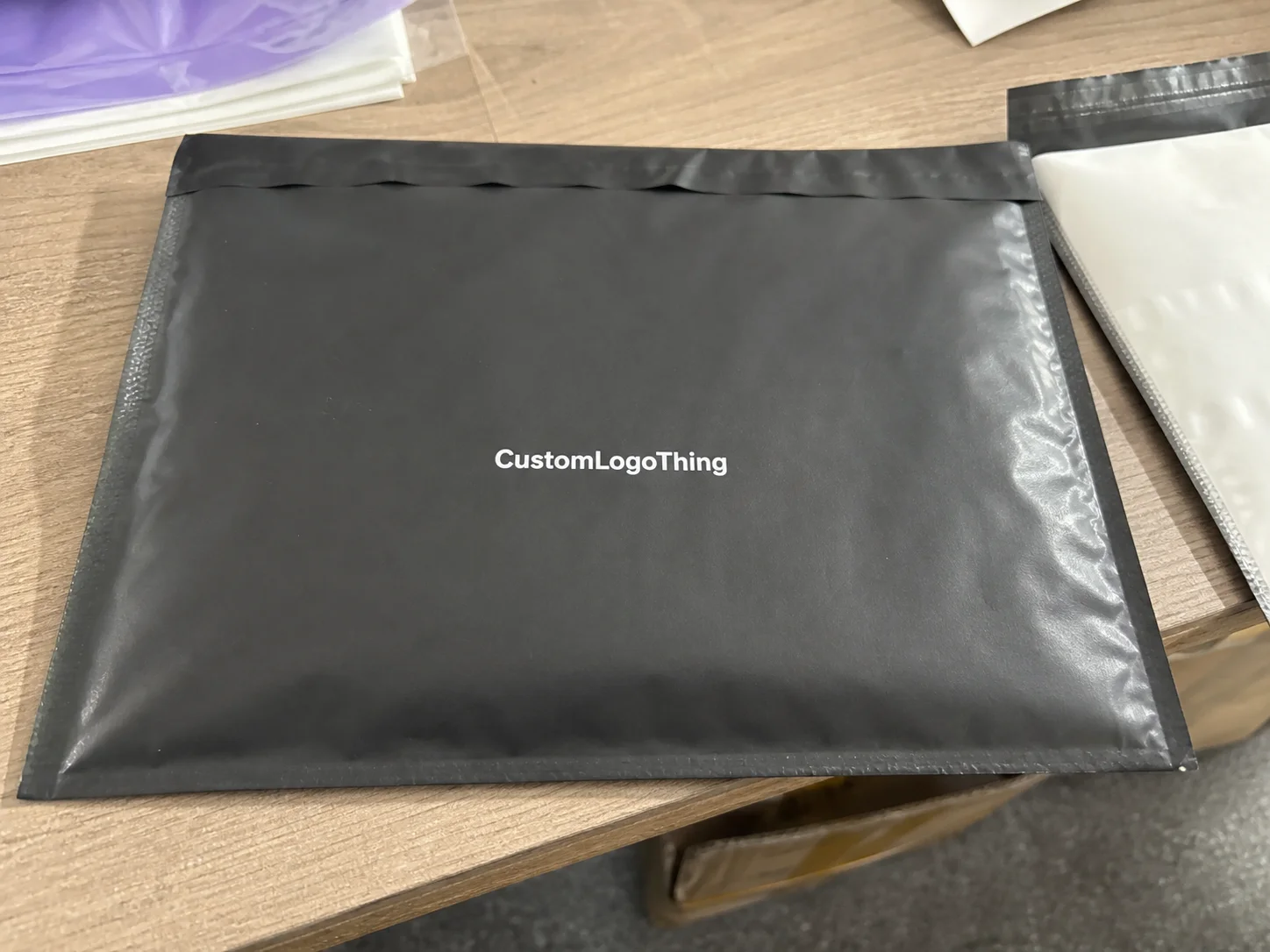
Starting with the basics helps because I've sat in meetings where people use terms interchangeably and it causes real problems downstream. A poly mailer is a flexible, lightweight shipping bag typically made from polyethylene (that's the plastic, for those keeping track at home). They're designed to protect products during transit while providing a clean exterior that can be customized with branding, opening instructions, or promotional messaging.
The key difference between standard and custom poly mailers comes down to branding. Standard mailers are plain, typically black or white, and serve a purely functional purpose. Custom poly mailers incorporate your brand colors, logo, typography, and design elements. The customization happens through printing—usually rotogravure, flexographic, or digital printing depending on the supplier's capabilities and your volume.
Precision matters here: "small batch" doesn't have a universal definition in this industry. When discussing product packaging quantities, orders under 5,000 units typically fall into this category. Some suppliers consider 2,500 units as their threshold; others specialize in runs of 100-500 units specifically. Understanding where your potential suppliers draw their lines is crucial for the conversation.
The misconception I encounter most often is that small batch equals low quality. I've seen suppliers produce poly mailers with 8-color process printing at 500 units that looked better than 50,000-unit runs from competitors using outdated equipment. Material quality, print technology, and quality control processes matter far more than volume. A well-equipped facility with modern digital printers can deliver exceptional results at any quantity.
Common use cases for Small Batch Custom packaging include: seasonal product launches, limited edition releases, pop-up shop inventory, subscription box onboarding for new products, market testing before full-scale rollout, and corporate gift programs. Essentially, any scenario where demand is uncertain or you want to test designs before committing to volume production.
How the Custom Poly Mailer Ordering Process Works
Walking dozens of clients through this process, thinking of it as a straightforward workflow with clear checkpoints helps. Here's how it typically unfolds:
Step 1: Initial Consultation and Specification Gathering
This usually starts with a quote request. You'll need to provide your specifications: dimensions (width × height, with the flap included), material type (linear low-density polyethylene, high-density polyethylene, or recycled content options), thickness (measured in mils or microns), print colors (Pantone matching or CMYK process), design artwork, and quantity needed. The more detailed your initial request, the more accurate your quote will be.
Step 2: Quote Review and Supplier Selection
Once you receive quotes, you're evaluating more than just price. Lead time, payment terms, sample policies, and communication responsiveness all factor into the decision. Here's a pattern I've noticed: brands save money initially by choosing the cheapest quote only to lose twice that amount when production goes wrong and they can't get anyone on the phone. Don't be that brand.
Step 3: Design File Preparation and Artwork Approval
Your supplier should provide a die line or template showing exactly where your design will be printed. Design file requirements vary by supplier, but standard specifications include: high-resolution PDF or vector files (AI, EPS), minimum 300 DPI for raster elements, 3mm bleed on all sides, and fonts converted to outlines or embedded. Most suppliers offer complimentary artwork review to catch issues before production.
Step 4: Sample Production and Approval
This step is non-negotiable in my book. Pre-production samples let you physically verify print quality, material feel, color accuracy against your brand standards, seal functionality, and dimensional accuracy. A sample typically costs $15-75 depending on complexity and whether it's a digital print proof or production-line sample. Never regretted ordering samples. Definitely regretted skipping them.
Step 5: Full Production Run
After sample approval, production scheduling begins. The actual manufacturing involves several stages: material extrusion (creating the plastic film), printing (applying your design), lamination if applicable, slitting and cutting to size, and quality inspection. Most suppliers build in 10-15% overage to account for defects, so you might receive slightly more than you ordered.
Step 6: Packaging and Shipping
Finished mailers are typically packed in bundles (usually 50 or 100 per bundle) and master cartons for shipping. Your supplier should provide tracking information and update you on expected delivery dates. For international orders, factor in customs clearance time which can add 5-10 business days beyond standard shipping estimates.
How Much Does It Cost to Shop Custom Poly Mailers Small Batches?
Pay close attention here, because this is where most brands get surprises. When you shop custom poly mailers small batches, the pricing structure involves multiple components that don't always appear prominently on quotes.
Breakdown of Pricing Components
A typical quote will include some combination of these elements:
- Unit cost: The per-mailer price based on your quantity and specifications
- Tooling/setup fees: One-time charges for creating printing plates, dies, or digital setup—usually $50-500 depending on complexity
- Artwork/design fees: If the supplier provides design services (optional but sometimes worth it)
- Shipping and handling: Often quoted separately, can represent 5-20% of total cost
- Sample fees: Pre-production samples are typically charged separately from the main order
A real example from a recent project: a beauty brand needed 750 custom poly mailers for a limited product launch. Their quote breakdown: $0.68 per unit ($510 total), $150 setup fee, $35 sample fee, and $85 shipping. Total came to $780, or about $1.04 per mailer all-in. That gave them fully branded mailers with their signature coral logo and tagline, printed on 2.5mil LLDPE film with a tear strip and adhesive seal.
How Order Quantity Affects Per-Unit Pricing
Here's the honest truth: smaller quantities almost always cost more per unit. This isn't supplier greed—it's basic economics. Fixed setup costs get spread across fewer units. However, the price penalty for small batches has decreased significantly with digital printing technology. Where a 500-unit order used to cost 3-4x the per-unit price of a 10,000-unit order, many suppliers now offer only 1.5-2x pricing for the same job.
Tiered pricing structures reward larger orders. When you shop custom poly mailers small batches, look for suppliers offering graduated pricing. A common structure might look like this:
| Order Quantity | Typical Per-Unit Cost | Setup Fee |
|---|---|---|
| 100-250 units | $0.85-1.50 | $100-200 |
| 500-1,000 units | $0.55-0.95 | $75-150 |
| 2,500-5,000 units | $0.35-0.65 | $50-100 |
| 10,000+ units | $0.22-0.45 | $25-75 |
These ranges vary based on specifications, but you should never accept pricing that falls significantly outside these bands without asking why.
Material Choices and Cost Implications
Material selection significantly impacts pricing. Standard polyethylene (PE) films offer the best value. Bio-based or recycled content options typically add 15-30% to material costs. Thicker gauges (3mil vs. 2mil) add approximately 8-12% to unit costs. If sustainability is a brand priority, consider that the FSC certification for paper components may be relevant if you're adding cardboard inserts or hang cards to your retail packaging.
Color Printing Complexity and Pricing Tiers
Print pricing typically follows a tier structure:
- 1-2 colors (Pantone spot colors): Most economical, usually baseline pricing
- 3-4 colors: Moderate increase, common for logos with supporting graphics
- Full CMYK process printing: Higher cost, necessary for photorealistic images or gradient effects
- Special finishes: Metallic inks, soft-touch lamination, spot UV—these add premium costs
When you shop for custom shipping bags in small batches, one to two spot colors usually delivers the best balance of visual impact and cost efficiency. I've helped brands redesign elaborate 6-color logos into clean 2-color versions that actually improved brand recognition while cutting packaging costs by 35%.
Step-by-Step Guide to Ordering Custom Poly Mailers in Small Quantities
The exact process I use when advising clients follows. These aren't theoretical steps—these are the steps that have consistently produced successful outcomes.
Step 1: Define Your Specifications Before Reaching Out
Document everything in writing before contacting suppliers. Your specification sheet should include: exact dimensions needed (measure your products first), material preference if you have one, required features (tear notch, adhesive strip, hang hole), color requirements (Pantone codes preferred), quantity needed (with acceptable ranges), and your deadline. Having this ready signals professionalism and gets you better, more focused responses.
Step 2: Research and Shortlist Suppliers
Where you source matters. Domestic suppliers (US, Canada, UK, EU) typically offer faster turnaround, easier communication, and consistent quality standards, but at 20-40% higher pricing. Asian manufacturers (China, Vietnam, India) can offer remarkable value but require more vetting and tolerance for longer lead times. Look for suppliers who specifically mention small batch capabilities in their marketing—those are the ones who've invested in equipment and processes to serve your segment.
For package branding specifically, I recommend shortlisting 3-5 suppliers who meet your basic criteria, then requesting quotes from all of them simultaneously. This gives you leverage and comparison data.
Step 3: Request Quotes with Detailed Requirements
Send your specification sheet to all shortlisted suppliers. Ask for itemized quotes that break down every cost component. A red flag: suppliers who give vague estimates or refuse to provide itemized breakdowns. When I query suppliers now, I specifically ask for unit pricing, setup fees, sample fees, tooling costs if any, and shipping to my location. Anyone who hesitates to provide this level of detail isn't someone I want managing my production.
Step 4: Evaluate Samples Before Committing
Order samples from your top 2-3 candidates. Compare them side-by-side under good lighting. Check color accuracy against your brand standards (use a Pantone chip or digital reference). Test the seal—does it peel cleanly? Does it hold? Evaluate the material—does it feel substantial or cheap? These tactile assessments reveal things that photos and specs can't capture.
Step 5: Place Your Order and Track Production
Once you've selected a supplier, confirm all details in writing before payment. Your order confirmation should include: exact specifications, quantity, pricing, payment terms, production timeline with milestones, shipping method, and tracking information. Establish check-in points during production—at proof approval, during printing, and before shipping. Good suppliers welcome this level of engagement; it shows you're a serious client.
5 Common Mistakes When You Shop Custom Poly Mailers for Small Batches
After seeing hundreds of orders through (some successful, some instructive), the patterns that reliably cause problems become clear. Avoid these and you'll be ahead of most brands sourcing packaging.
Mistake 1: Choosing Suppliers Without Minimum Order Flexibility
This sounds obvious, but brands get seduced by low per-unit pricing from suppliers whose actual minimum is 5,000 or 10,000 units. Before requesting a quote, confirm the supplier's actual MOQ. If a supplier's minimum is 2,500 units and you need 500, keep looking. The per-unit rate looks great until you're sitting on inventory you can't use.
Mistake 2: Ignoring Material Quality Specifications
Buyers often focus on the visible—print quality and design—while ignoring the material. When you shop custom poly mailers small batches, always ask about film thickness and material composition. A 1.5mil mailer might save you $0.05 per unit, but if it bursts during shipping and you lose products, that savings evaporates instantly. For most e-commerce applications, 2-2.5mil LLDPE provides optimal balance of protection and cost.
Mistake 3: Skipping the Sample Approval Stage
Never met a brand that regretted ordering samples. Definitely heard stories from brands who skipped them. One client received 2,000 mailers with her logo printed backwards—a simple pre-production sample would have caught this before $1,400 in production costs were committed. Another received mailers where the adhesive strip failed above 85°F—would've been a disaster for their summer skincare shipments. Sample approval is your insurance policy.
Mistake 4: Not Comparing Like-for-Like Quotes
Quote comparison seems straightforward until you realize how much can vary. Supplier A quotes $0.45/unit with a $200 setup fee. Supplier B quotes $0.55/unit with a $50 setup fee. Which Is Better? It depends on your quantity. Run the math at your specific volume before deciding. Also compare payment terms, lead times, and sample policies—these have real value implications beyond the quoted price.
Mistake 5: Underestimating Production and Shipping Timelines
When brands plan product launches, packaging often gets delayed attention. "We need these in three weeks!" is a phrase I hear often, and the reality is that Small Batch Custom poly mailers typically require 15-30 days minimum for domestic production and 30-45 days for international. Rushing is possible (usually at 25-50% premium) but stressful and error-prone. Build packaging procurement into your product launch timeline from day one. The International Safe Transit Association (ISTA) provides testing protocols that can help you plan realistic timelines for packaging that actually protects your products.
How Long Does It Take to Get Custom Poly Mailers When You Shop Small Batches?
Breaking down the actual timeline you should plan for when you shop custom poly mailers small batches, based on what's realistic rather than optimistic supplier estimates.
Typical Timeline Breakdown by Phase
- Quote and selection: 3-7 days to request, compare, and decide
- Artwork preparation: 3-5 days if you have design files ready (longer if you need design work)
- Artwork approval: 2-4 days for revisions and final sign-off
- Sample production: 5-10 days (if ordered; this adds time but saves headaches)
- Full production: 10-15 days for digital printing; 15-25 days for traditional printing
- Quality control and packaging: 3-5 days
- Shipping: 3-7 days domestic; 14-30 days international
Total realistic timeline: 4-6 weeks for domestic production, 6-10 weeks for international. These ranges assume no major revisions, no production queue backups, and smooth logistics.
Factors That Speed Up or Slow Down Production
Several variables affect your actual timeline. Simpler designs (1-2 colors) process faster than complex multi-color artwork. Suppliers with available production capacity respond faster than those booked solid during peak seasons (typically Q3 for holiday packaging). Digital printing offers faster turnaround than flexographic or rotogravure for small runs because it requires less setup time. Artwork that's production-ready shortens timelines; artwork requiring revisions or file reconstruction extends them significantly.
Rush Order Options and Premium Costs
Most suppliers offer expedited production for an additional fee—typically 25-50% above standard pricing. This often gets you 5-7 day production windows instead of 15+. However, rush orders don't accelerate shipping, and during peak periods (September-November is brutal), even rush fees don't guarantee on-time delivery. Plan ahead. The cost of rushing rarely justifies the premium when you factor in the risk of mistakes and the stress on your team.
International vs. Domestic Production Timelines
Geography matters significantly here. When you shop custom poly mailers small batches from Asian suppliers, you're typically adding 4-6 weeks of shipping on top of production time. While per-unit costs might be 30-40% lower, the total landed cost often looks different once you factor in shipping, duties, longer lead times, and the higher risk of issues. For most e-commerce brands, especially those doing DTC, domestic production makes more sense. The speed, communication, and quality consistency are worth the price premium.
Expert Tips to Get the Best Value When You Shop Custom Poly Mailers
Strategies developed and refined over years of packaging procurement negotiations follow. Use them and you'll consistently get better outcomes.
Negotiation Strategies That Actually Work
Suppliers negotiate differently based on their position. For high-MOQ suppliers courting your business, you have leverage—use it. Ask for better payment terms (net-30 instead of net-15), extended sample periods, or small upgrades (thicker material, better finish) at no additional cost. For suppliers already quoting at their floor, pivoting to relationship-building questions often works: "If our first order goes well, we'd like to establish an ongoing relationship. What could that look like?" This opens conversations about future pricing that can save 10-20% on repeat orders.
How to Get Better Pricing on Repeat Orders
Volume commitment, even without prepayment, has value to suppliers. When you commit to quarterly reorders, suppliers can include you in production planning more efficiently. This reduces their scheduling risk, which translates to better pricing for you. I've seen brands lock in 15% discounts by committing to consistent monthly or quarterly orders, even at lower per-order quantities.
Design Tricks That Reduce Printing Costs
A professional secret: one-color designs on natural (white or natural polyethylene) film are almost always the most cost-effective option. They print faster, require less setup, and qualify for the lowest pricing tiers. If your brand can accommodate a one-color logo treatment, you'll save 20-40% compared to full-color alternatives. I helped brands create striking one-color designs that actually improved brand recognition because simplicity forced clarity.
Bundling Opportunities With Other Packaging Needs
If you need other Custom Packaging Products—boxes, tissue paper, stickers, tape—asking about bundling can unlock better overall pricing. Suppliers prefer consolidated orders because they reduce transaction costs and build relationships. "We'd like to consolidate our packaging order with poly mailers, tissue paper, and Custom Printed Boxes" often results in better unit economics across all items.
Questions to Ask Before Signing Any Contract
- What happens if my order has quality issues? (Warranty and remake policies)
- What's your defect rate, and how is it measured? (Industry standard is under 2%)
- Do you include overage, and if so, how much? (Standard is 5-10%)
- What's your policy on late delivery? (Financial penalties or credits)
- Can I place repeat orders with the same pricing, or does every order requote? (Lock-in vs. re-quote)
- Do you offer stock fulfillment options for emergency reorders? (Backup inventory programs)
Your Action Plan: Ready to Shop Custom Poly Mailers for Small Batches?
Turning this information into immediate action follows. If you've read this far, you're better prepared than 90% of brands entering the packaging procurement process. Now let's use that advantage.
Your 3-Step Checklist to Start Today
Step 1: Document Your Specifications
Create a one-page specification document with: your required dimensions, quantity range you're comfortable with (with minimums and targets), color requirements (Pantone codes if possible), any required features (tear notch, adhesive strip, etc.), and your timeline. Having this ready before contacting suppliers immediately elevates your position and gets you better, more accurate responses.
Step 2: Request Quotes From Three Suppliers
Use your specification document to request quotes from at least three suppliers. Include the same detailed requirements for each to enable true comparison. When evaluating responses, look beyond unit pricing to total landed cost including all fees and estimated shipping. This is where most brands drop the ball—comparing only unit prices misses the full picture.
Step 3: Order Samples Before Committing
Select your top two candidates and order physical samples. The $30-100 investment will save you from potentially thousands in wrong orders. Evaluate samples critically: check color accuracy, material quality, seal functionality, and overall presentation. If something feels off, trust your instincts and keep evaluating alternatives.
What to Prepare Before Contacting Suppliers
Have your design files ready (or a timeline for when they'll be ready), know your acceptable price range per unit, understand your absolute deadline, and identify who has approval authority in your organization. The last point matters more than people think—brands delay orders because marketing hadn't approved the final logo or legal hadn't reviewed the supplier agreement.
Why Starting Small Leads to Better Long-Term Partnerships
Resist the temptation to order more than you need to get better pricing. Volume discounts are real. But so is the risk of being stuck with packaging that no longer reflects your brand evolution, or worse, that you've overstocked while your business pivoted. Starting with smaller quantities when you shop custom poly mailers small batches builds your relationship with suppliers at a manageable scale, allows you to test quality and service, and positions you to grow into larger orders as your business actually grows. The supplier who treats your 500-unit order with care is the supplier who'll still be treating your 5,000-unit orders right two years from now.
Frequently Asked Questions
What's the minimum order quantity for custom poly mailers in small batches?
Typical MOQs range from 250 to 1,000 units depending on the supplier. Some manufacturers offer MOQs as low as 100 units but at higher per-unit costs. Ask about tiered pricing that rewards larger orders without penalizing small batches. When you're ready to view our poly mailer options, you'll see we offer flexible quantities starting at 100 units for brands that need true small-batch flexibility.
How much do custom poly mailers cost when ordered in small quantities?
Small batch orders typically range from $0.35 to $1.50 per unit. Setup fees usually add $50 to $300 to the total order. Factors affecting price include size, material thickness, print colors, and design complexity. Always request itemized quotes that break down every component so you can compare apples-to-apples between suppliers.
Can I get a sample before placing a full order for custom poly mailers?
Most reputable suppliers offer pre-production samples for $10-50. Samples let you verify print quality, material feel, and size accuracy. Always order samples before committing to large production runs—this is non-negotiable if you want to protect your brand and your budget.
How long does it take to receive small batch custom poly mailers?
Standard production takes 10-21 business days after design approval. Shipping adds 3-7 days for domestic or 14-30 days for international orders. Rush orders can cut production time to 5-7 days but cost 25-50% more. Build in buffer time for revisions and unexpected delays.
What file format do I need for custom poly mailer artwork?
High-resolution PDF, AI, or EPS files with 300 DPI minimum are standard requirements. Include 3mm bleed on all sides and convert fonts to outlines to avoid rendering issues. Most suppliers provide free design templates and file review services—take advantage of these before sending final artwork.
Where can I shop custom poly mailers small batches with low minimums?
Look for custom packaging suppliers that specifically market low minimum order options, typically ranging from 50 to 500 units. These specialized manufacturers have invested in digital printing technology that makes small runs economically viable. Wholesale Poly Mailers with custom printing are now accessible to brands of all sizes, not just large enterprises. When researching suppliers, prioritize those with clear MOQ information on their websites and responsive communication during the inquiry stage.