Buyer Fit Snapshot
| Best fit | start a packaging wholesale business for packaging buyers comparing material specs, print proof, MOQ, unit cost, freight, and repeat-order risk where brand print, material, artwork control, and repeat-order consistency matter. |
|---|---|
| Quote inputs | Share finished size, material target, print colors, finish, packing count, annual reorder estimate, and delivery region. |
| Proofing check | Approve dieline scale, logo placement, barcode or warning zones, color tolerance, and any recyclable or compostable wording before bulk production. |
| Main risk | Vague material claims, crowded artwork, or missing packing details can create delays even when the unit price looks attractive. |
Fast answer: Start A Packaging Wholesale Business: MOQ, Samples, Lead Time, and Quote Checks should be specified like a repeatable production item. The safest quote includes material, print method, finish, artwork proof, carton packing, and reorder notes in one written spec.
What to confirm before approving the packaging proof
Check the product dimensions against the actual filled item, not only the sales mockup. Ask for tolerance on folds, seals, hang holes, label areas, and retail display edges. If the package carries a logo, QR code, warning copy, or legal claim, reserve that space before decorative graphics fill the panel.
How to compare quotes without losing quality
Compare board or film grade, print process, finish, sampling route, tooling charges, carton quantity, and freight assumptions side by side. A lower quote is only useful if the supplier can repeat the same color, closure quality, and packing count on the next order.
How to start packaging wholesale business is not a branding exercise. It is a numbers business with paper, board, freight, setup charges, and enough quote revisions to make tidy spreadsheets cry a little. The first mistake is usually the same: people fall in love with how a box looks before they know whether it can be sold again, shipped without damage, and still leave margin after sampling, tooling, and delivery. If you want a real packaging business instead of a folder full of pretty renders, build around repeatable packaging design, clear specs, and buyers who trust you enough to reorder.
I have seen this play out more than once. A buyer gets excited about foil, soft-touch lamination, and a magnetic closure, then calls three weeks later asking why the landed cost is higher than their product margin. That is not a mystery. That is math doing its job. The practical side of how to start packaging wholesale business is less glamorous and far more useful. Buyers do not stick around because a carton has nice graphics. They stick around because the branded packaging shows up on time, matches the approved sample, and does not make their ops team babysit every shipment. That boring consistency is the whole point. Boring pays.
How to Start Packaging Wholesale Business Without Guessing
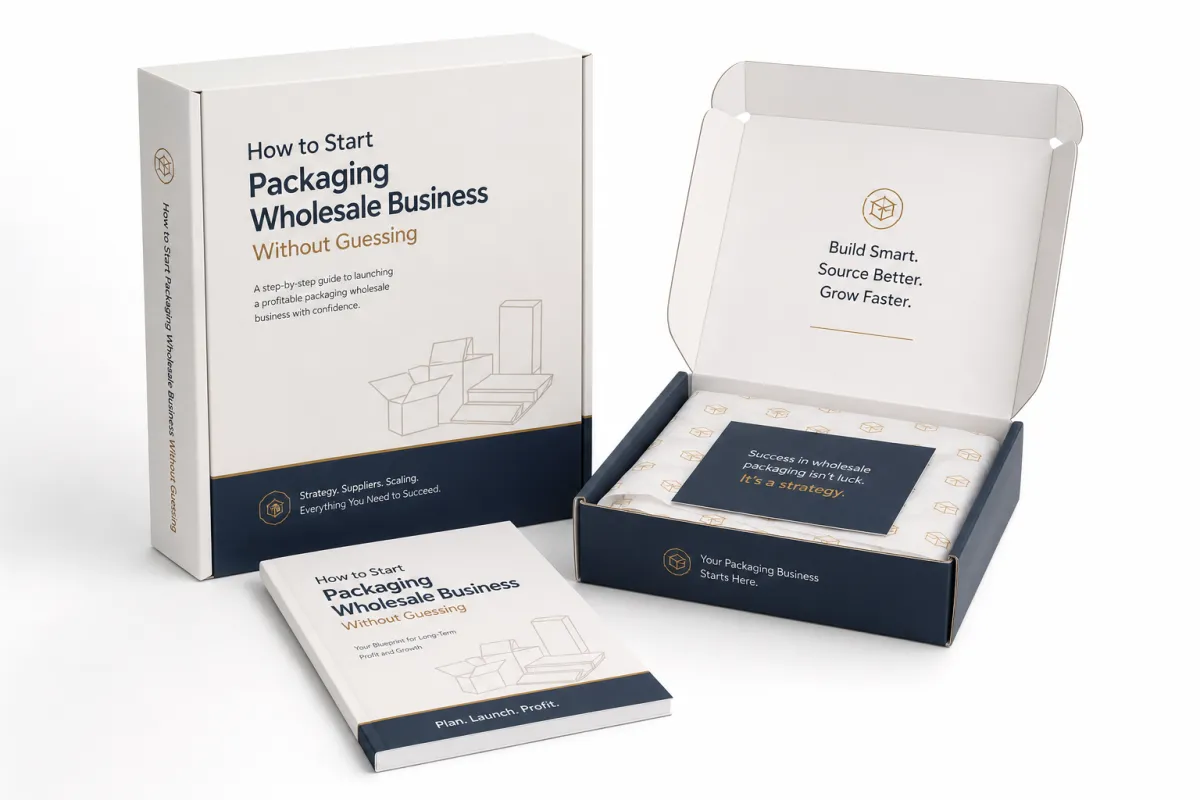
The quickest way to bleed money in how to start packaging wholesale business is to offer every structure under the sun before you know what actually sells. Start narrow. Pick a few formats you can explain without a whiteboard, sample without pain, and reorder without drama. A tight offer makes quoting cleaner and keeps production from turning into a scavenger hunt.
Buyers want the same three things every time: packaging that is easy to reorder, print that stays consistent, and delivery dates that do not wander off. Nobody enjoys chasing a supplier because the last run drifted in color or the dieline changed after approval. The minute you can deliver repeatability, you become valuable. That beats being "creative" for the sake of it.
Define the customer groups you can actually serve well. E-commerce brands need shipping strength and a solid unboxing experience. Cosmetics brands care about shelf presence and clean print. Food brands want materials that feel safe and specs that do not raise compliance alarms. Subscription brands and local retailers usually care about volume, speed, and branded packaging that looks polished without blowing up cost. Try to serve everyone with one generic offer and your pricing gets muddy fast.
"The quote sheet is where the business lives or dies. Pretty samples help, but the paper trail pays the bills."
A sensible starting model for how to start packaging wholesale business is to sell structure first and decoration second. Offer a limited set of base boxes and packaging styles, then let buyers customize print, inserts, and finish. That keeps sales conversations focused. It also makes it much easier to build a clean quote template for Custom Packaging Products instead of rebuilding estimates from scratch every time a lead comes in.
Set the goal early. You want recurring orders, controlled defect rates, and enough gross margin to cover sampling, freight, and the customer who wants luxury on a discount budget. If margin disappears into paper waste, print setup, and rework, the business will look busy and still pay badly. Busy is not the same thing as healthy.
In the first month of how to start packaging wholesale business, validation matters more than volume. Sell one or two hero SKUs. Watch which buyer types ask for the same thing twice. If a structure keeps generating repeat inquiries, it deserves more attention. If it only produces endless revisions, shelve it and move on.
Product Details That Make Packaging Wholesale Easy to Sell
The second lesson in how to start packaging wholesale business is the one people resist the hardest: product selection matters more than most new sellers want to admit. A short product list is easier to quote, easier to explain, and easier to keep profitable. Mailer boxes, folding cartons, rigid boxes, paper bags, and inserts cover most early demand. That is enough to build a serious wholesale offer without drowning in options.
Choose products that fit the buyer's use case instead of forcing a one-size-fits-all pitch. E-commerce brands usually need mailer boxes or corrugated Custom Printed Boxes with enough crush resistance to survive transit. Cosmetics buyers often want folding cartons or small rigid boxes that present well on shelves. Food brands care about grease resistance, material confidence, and whether the packaging feels safe. Gift brands care more about the opening moment than raw shipping toughness. Match the product to the problem and selling gets easier.
Keep the launch catalog tight, ideally two to four core SKUs. Fewer structures mean cleaner pricing and faster sampling. They also mean fewer opportunities for production to go sideways. If a salesperson needs a diagram, a follow-up call, and a long apology just to describe the product, the margin usually gets eaten by revisions, file prep, and approval loops.
Here is the kind of lineup that works better than a giant, vague offer:
- Mailer boxes: good for shipping, subscriptions, and e-commerce kits.
- Folding cartons: useful for cosmetics, supplements, small retail packaging, and lightweight retail packaging displays.
- Rigid boxes: better for premium gift sets and package branding that needs shelf appeal.
- Paper bags: easy add-on for retail, events, and branded packaging bundles.
- Inserts: foam, paperboard, or corrugated inserts that help protect the product and keep it seated.
Keep the first round of customization to the options buyers actually ask for: size, board grade, print, coating, and inserts. Save exotic structures and specialty add-ons for later. Foil, embossing, window patches, and custom sleeves can work, but they should not be the default starting point. They add setup time, proofing complexity, and cost noise that is hard to explain to a first-time buyer.
For most new wholesale offers, product packaging should stay simple enough that you can quote it without improvising every line item. That is one reason Wholesale Programs work best when the catalog is disciplined. Buyers trust a supplier who knows exactly what is standard and what is special.
A useful rule: if the product takes more than one page of notes to quote correctly, it probably does not belong on the early-stage hero list. How to start packaging wholesale business gets easier when you choose packaging that can be described in one sentence, not one rescue call.
The buying side benefits from this discipline too. A simple catalog lets customers compare options quickly. It gives them a clearer sense of pricing tiers and lowers the chance that they feel trapped in a custom project before they have even tested demand. Wholesale buyers want control. Surprises dressed up as consultation do not help.
One more thing: do not launch with low-volume specialty packaging unless the customer is already committed. Complex kits, oversized formats, and multi-part setups consume time before they earn it back. They look exciting in a mockup deck and awkward in an actual production schedule. A clean launch beats an impressive mess every time.
| Product Type | Best For | Typical MOQ Shape | What Buyers Care About Most | Pricing Pressure |
|---|---|---|---|---|
| Mailer boxes | E-commerce, subscriptions, shipping kits | Moderate, often 500 to 1,000 units | Crush resistance, print clarity, reorder speed | Medium |
| Folding cartons | Cosmetics, supplements, light retail packaging | Lower to moderate, often 1,000 to 3,000 units | Clean print, board quality, shelf look | Medium to high |
| Rigid boxes | Gift sets, premium branded packaging | Higher, often 500 to 2,000 units | Presentation, fit, finish consistency | High |
| Paper bags | Retail stores, events, add-on branding | Moderate to high, depending on print | Handle strength, color consistency, print area | Medium |
| Inserts | Protection, presentation, product fit | Usually tied to the main carton order | Fit, protection, assembly efficiency | Low to medium |
The table above is not theory. It is the kind of structure that makes how to start packaging wholesale business easier to quote and easier to explain. The more a product behaves predictably, the better your margin tends to be. Predictability is not glamorous. It is just useful.
Specifications That Keep Packaging Wholesale Quotes Honest
If you want how to start packaging wholesale business to make sense financially, your quote process has to stop leaning on vague language. Every quote should begin with the same core spec set: dimensions, material, thickness, print method, finish, quantity, and ship-to location. Leave one out and the number turns into fiction. That may sound blunt. It is still true.
Use dielines whenever the structure is custom. A verbal size like "about the same" is not a spec. It is a delay with a friendly face. A buyer can guess at a box shape. A production team cannot guess at fit, fold lines, or glue areas without risking expensive mistakes. If you are serious about how to start packaging wholesale business, exact dielines are part of the job.
Spell out tolerances for size, color, and material variation. Buyers can live with standard manufacturing variance if they know the range before production starts. Color is especially messy. If a customer wants a PMS match, say it clearly. If the artwork is CMYK, say that too. If the file is not press-ready and needs layout cleanup, that belongs in the quote. Clean spec language saves everyone time.
Print expectations should not be fuzzy either. Define whether the job is CMYK, spot color, or a mix. State whether white ink is required for dark board. List bleed limits, minimum line weights, and file format needs. A smart seller in how to start packaging wholesale business understands that most delivery problems are really file problems wearing a shipping label.
Performance requirements matter when the packaging ships instead of sitting on a shelf. Compression resistance, drop resistance, scuff resistance, and assembly fit all shape the end-user experience. If the package is for shipping, test it like shipping. If it is for a shelf display, test it for shelf conditions. Standards like ISTA testing protocols can help there. You do not need to turn every order into a lab project, but you do need to speak the same language as professional buyers.
Sustainability claims need discipline. Recycled content, FSC paper, soy inks, and compostable claims should only appear when documentation backs them up. I would rather underclaim than overpromise. Buyers may forgive a plain box. They do not forgive a claim that collapses under a basic audit.
A quote that looks complete but hides key details is not complete. In packaging, incomplete specs cause the same mess over and over: re-quoting, reproofing, changed lead times, and trust damage. That is why how to start packaging wholesale business needs a spec checklist from day one.
For buyers who need compliance-minded language, documentation matters just as much as design. If you are using FSC-certified paper, keep the chain-of-custody paperwork ready. If the order is for a shipping carton, be ready to talk about performance expectations and the right test level. Buyers notice when a supplier knows the difference between a marketing claim and a production fact. That difference affects price, risk, and whether the buyer comes back.
One practical habit helps a lot: keep a one-page quote template that forces every rep to collect the same information. This is how how to start packaging wholesale business becomes repeatable instead of improvisational. The template should ask for final dimensions, print coverage, finish, quantity, destination, timeline, and whether the buyer needs mockup approval before production. That is not bureaucracy. That is survival.
And yes, packaging buyers will sometimes ask for "the same as the sample" while the sample was built from a different board grade, a different print method, and a different finishing stack. That is exactly why clear spec language matters. If you want accurate pricing, the order has to be described like a manufacturing job, not a mood board.
How to Start Packaging Wholesale Business Pricing and MOQ
Pricing is where how to start packaging wholesale business either becomes real or collapses into wishful thinking. Price from the actual cost stack, not from a competitor's brochure or a number that merely feels right. Material, printing, finishing, tooling, labor, waste, packaging for shipment, and freight all belong in the number. Leave one out and margin gets drained later. Quietly. Usually painfully.
Set MOQ by structure, not by ego. Simple mailer boxes can start lower because setup and waste are easier to control. Rigid boxes, complex inserts, and premium finishes need higher minimums to stay profitable. There is nothing noble about taking tiny orders that consume the same admin time as larger ones but deliver half the margin. That is just bad pricing dressed up as flexibility.
For a practical launch, a pricing ladder works well. Offer a sample price, a pilot run, a standard wholesale tier, and a reorder tier. Buyers like choices. They hate surprise math. A ladder also makes how to start packaging wholesale business feel less risky for the customer because they can start small and scale after they see the product perform.
Here is a realistic way to think about pricing ranges for early-stage wholesale packaging:
- Mailer boxes: often around $0.45-$1.20 per unit at 1,000 pieces, depending on size, print coverage, board, and freight.
- Folding cartons: often around $0.18-$0.60 per unit at 3,000 pieces, depending on board grade and finishing.
- Rigid boxes: often around $1.80-$5.00 per unit at 1,000 pieces, depending on insert type and wrap material.
- Paper bags: often around $0.30-$1.10 per unit at 5,000 pieces, depending on handle style and print count.
- Inserts: usually priced with the main package, but custom foam or molded options can move the total materially.
Those numbers are ballpark figures, not a quote. They help buyers understand the shape of the market, but the final price still depends on size, print coverage, material grade, finishing, and the destination. A full-coverage, foil-stamped rigid box is not priced like a plain wrap box. A corrugated mailer with inside and outside print is not priced like a single-color exterior job. Obvious? Sure. Ignored all the time? Also yes.
Protect margin by baking in the ugly extras early. Custom dies, foil, embossing, lamination, color changes, rush jobs, split shipments, and art cleanup all cost real money. If you do not charge for them, you will pay for them yourself. That is not a strategy. That is a donation.
Use concrete range language instead of fake precision. Saying an order is "about the same price" helps nobody if freight or finishing can swing the quote by double digits. A better answer is, "This spec usually lands in this band, and here is what pushes it up or down." That kind of honesty builds trust. It also cuts down on endless negotiation.
Be willing to reject tiny orders that break your floor. A bad deal with a cheerful tone is still a bad deal. In how to start packaging wholesale business, discipline matters more than politeness. If the order cannot clear your minimum margin after setup, sampling, and freight, say no. Or simplify the structure. Otherwise you are gonna train people to expect miracles for pennies.
For buyers, the biggest pricing mistake is assuming every supplier wants the same kind of order. They do not. Some are built for fast reorders. Some are set up for premium retail packaging. Some do better with long-run custom printed boxes. The best fit is usually the supplier whose MOQ, spec range, and turnaround line up with the buyer's real need.
Packaging pricing should also reflect how much handholding the order needs. A clean, press-ready file with a standard size and a known board grade is straightforward. A brand refresh with four approval rounds and a shifting dieline is not. That takes more time to manage, and it should cost more. Fair enough. It is also the reason some suppliers quietly lose money while telling themselves they "won" the account.
If you are serious about how to start packaging wholesale business, do not hide your MOQ. State it early. State the reason if asked. Buyers respect a floor tied to setup and waste more than they respect a vague minimum that changes every time they ask a question.
Process and Timeline for Packaging Wholesale Orders
Once pricing is sensible, how to start packaging wholesale business comes down to process. Map the workflow before you sell anything: inquiry, spec check, quote, dieline approval, artwork proof, sample, production, quality control, and shipment. If your team cannot explain the order path in one pass, customers will feel that confusion right away.
Give realistic timing bands for each stage. Quoting should move fast if the spec is complete. Sampling usually takes longer than buyers expect because structural checks and art revisions are where delays pile up. Production time depends on complexity, quantity, and finishing. Freight adds its own pace. The honest seller gives a range and explains the risk factors instead of promising fantasy.
The biggest delay sources are predictable: missing dielines, late artwork, color corrections, and approval loops that send the project back to square one. The fix is not mysterious. Use a buyer checklist. Ask for final dimensions, brand files, quantity target, destination, finish preference, and whether the order must hit a fixed launch date. If the buyer cannot answer those questions, the order is not ready to quote seriously.
A clean timeline for how to start packaging wholesale business often looks like this:
- Inquiry and spec review: 1-2 business days if the request is complete.
- Quote and revision: 1-3 business days depending on complexity.
- Dieline and artwork approval: 2-7 business days, longer if the buyer needs design help.
- Sampling: often 5-12 business days for standard structures.
- Production: often 10-20 business days after approval, depending on order size and finishing.
- Freight: varies widely by air, ocean, and domestic delivery route.
Those are practical bands, not promises carved into stone. A rush job can compress one stage and wreck another. A complicated custom packaging run can stretch if the buyer keeps changing the art after proof approval. The business works better when you say what is normal and what is exceptional.
Recommend a pilot launch instead of a full rollout. One hero SKU and one test quantity can validate demand before the customer commits to a larger run. That is especially smart for new brands still learning how their product packaging performs in the market. The goal is to prove the order path before scaling it.
Shipping deserves its own conversation. Air freight is faster but expensive. Ocean freight is slower but often makes more sense when the order is heavy and the date is flexible. Domestic trucking can be a strong middle ground for some warehouse destinations. A good supplier should explain that tradeoff plainly, not hide it behind a cheerful rate sheet.
For shipping cartons and heavier packaging, it helps to understand test language like ASTM and ISTA references before promising drop or compression performance. If a buyer is putting product into transit, a packaging seller should know whether the structure was designed for display or transport. Different problem. Different solution. Same box does not magically do both.
In short, how to start packaging wholesale business gets easier when the process is boring in the best way. Clear steps. Clear documents. Clear timing. Buyers do not need drama. They need boxes that show up the way the sample did.
Why Choose Us and What to Do Next
A strong packaging wholesale partner should make buying simpler, not louder. That means clear quotes, structural support, sample development, and production coordination that does not disappear after the deposit clears. In how to start packaging wholesale business, the supplier relationship matters because wholesale buyers are buying reliability as much as packaging.
Look for the traits buyers actually pay for: fewer mistakes, stable reorders, consistent color, and lead times that are honest even when they are not glamorous. A good partner will tell you when a spec is risky. They will also tell you when a simpler board grade or a different finish gets you closer to budget without wrecking the design.
Use proof, not slogans. Ask for sample photos, reorder examples, delivery performance by product type, and the actual spec limits for each structure. If a supplier can only talk in broad claims, they probably are not built for serious wholesale work. FSC documentation should be available when a sustainability claim is part of the order, and production testing language should be clear when shipping performance matters.
Before you launch, audit your top three SKUs and decide which one has the cleanest margins, easiest specs, and highest reorder probability. That one should go first. Not the most exciting one. Not the one with the fanciest finish. The one that makes sense. How to start packaging wholesale business is usually won with discipline, not drama.
Then request sample specs, compare MOQ tiers, and test one production run before expanding the line. That is the sane way to scale. It protects cash and tells you whether the supply chain can actually hold up once orders become real.
If you want to know how to start packaging wholesale business without burning cash, launch one SKU, confirm the MOQ, and test the reorder path before expanding the catalog. That is the business. Everything else is decoration.
Start with the package that can sell twice. One good run means nothing if the reorder is a headache. One repeatable structure can build a whole wholesale line. That is how how to start packaging wholesale business becomes a company instead of a sample folder.
FAQ
How do I start packaging wholesale business with low MOQ?
Start with one simple structure and one print method so setup costs stay controlled. Digital print or standard board options usually make the entry point easier, especially when you are testing demand. Offer tiered quantities so smaller buyers can enter without forcing you into unprofitable one-off runs. That keeps how to start packaging wholesale business realistic instead of expensive.
What products work best when I start packaging wholesale business?
Mailer boxes, folding cartons, rigid boxes, inserts, and paper bags usually sell fastest because they solve common buyer needs. They are easier to quote, easier to ship, and easier to reorder without a major redesign. Match the product to the buyer type: shipping strength for e-commerce, presentation for gifts, and clean print for cosmetics. That is the practical route in how to start packaging wholesale business.
How much capital do I need to start packaging wholesale business?
Your capital needs depend on whether you hold inventory, produce to order, or do both. Budget for samples, dielines, artwork setup, first production run, freight, and a working cash buffer. Do not ignore cash flow. Packaging jobs often look profitable on paper long before the payment terms catch up, which is why how to start packaging wholesale business needs a finance plan, not just a sales plan.
What MOQ should I set for custom packaging wholesale?
Set MOQ based on material, setup time, and finishing complexity rather than trying to match a competitor blindly. Simple structures can support lower minimums; rigid and specialty packaging usually need higher thresholds. Your MOQ should protect margin after waste, labor, and freight are included. That is the cleanest way to handle how to start packaging wholesale business without losing money on small jobs.
How long does packaging wholesale take from quote to delivery?
A clean quote should move quickly if the spec sheet is complete. Sampling and approvals often take longer than buyers expect, especially if artwork or dielines are still moving. Production and shipping vary by order size, complexity, and freight method, so lock the timeline before the buyer commits to a launch date. That is the only honest way to manage how to start packaging wholesale business for repeat orders.
How to start packaging wholesale business the right way is not about chasing every request. It is about choosing the right structures, quoting from real specs, setting MOQ that protects margin, and delivering repeatable branded packaging that buyers can trust. Start with one product that can reorder cleanly, one process that does not break under pressure, and one timeline you can actually keep. That is how the business gets built.


