Most decoration failures are not caused by ugly artwork. They happen because the transfer, fabric, wash cycle, and heat settings were never matched. That is why iron on stickers custom orders need more thought than uploading a logo and choosing “3 inches wide.”
Iron-on stickers are heat-applied graphics used on T-shirts, hoodies, tote bags, uniforms, staff apparel, merch drops, drawstring bags, promotional pouches, and other textile items. From a packaging buyer’s point of view, they sit close to the same family as Custom Labels & Tags: small branded pieces, often inexpensive per unit, but very visible when the customer handles the product.
The problem is simple. Textile decoration looks easy until fabric chemistry gets involved. Cotton, polyester, nylon, fleece, canvas, coated bags, and stretch apparel do not behave the same under heat. A transfer that looks perfect on a cotton tee may peel from a coated nylon pouch or crack on a compression shirt. Annoying? Yes. Avoidable? Also yes.
What Iron On Stickers Custom Orders Actually Include
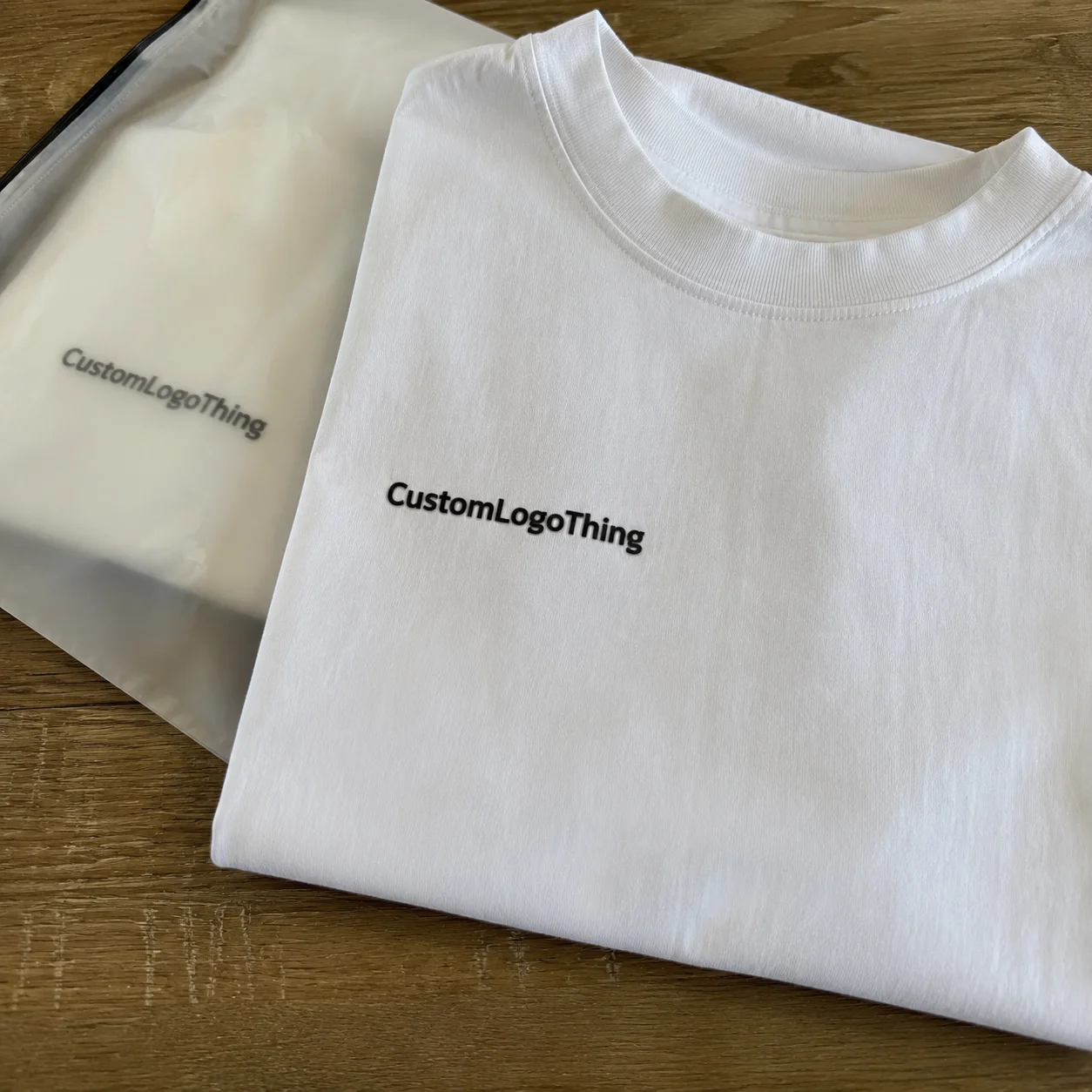
A custom iron-on order is more than a printed graphic with glue on the back. A complete order usually includes artwork preparation, color setup, material selection, adhesive backing, carrier sheet, finished size, quantity, packing format, and application instructions. If the supplier is also pressing the graphics onto garments, the order needs garment size breakdowns, placement standards, folding requirements, packing method, and quality checks after pressing.
Buyers often mix up iron-on stickers, heat transfers, heat-transfer vinyl, DTF transfers, and embroidered patches. They are related, but not identical. Cut heat-transfer vinyl is made from colored film cut into shapes, then weeded and pressed. DTF-style printed transfers use ink and powder adhesive, which can handle multi-color artwork and fine detail well. Printable films are often used for full-color images. Flock has a soft, raised, suede-like texture. Embroidered patches use thread on a fabric base and may have heat-activated backing, but the patch itself is not a printed transfer.
For small brands, schools, creators, event teams, and staff uniforms, custom iron-on graphics are practical because they allow shorter runs without committing to a full garment decoration program. They also work well beside branded packaging, especially for companies sending merch in Custom Printed Boxes or adding textile gifts to retail packaging kits.
Practical rule: choose the transfer by garment fiber, artwork detail, finish preference, and expected wear. Price matters, but the cheapest transfer on the wrong fabric becomes expensive after the first wash complaint.
The strongest quote requests are usually plain. “This is a 60/40 cotton-poly hoodie, black fabric, left chest logo, 3 inches wide, washed weekly.” That one sentence gives a production team far more to work with than “high-quality iron-ons.” Vague requests create vague recommendations. Shocking, I know.
How Heat, Pressure, Adhesive, and Fabric Work Together
Heat-applied decoration is a controlled bonding process. Heat activates the adhesive. Pressure pushes that adhesive into the textile surface. Dwell time, often 8 to 20 seconds depending on the material, gives the adhesive enough time to flow evenly and form a bond.
Miss one of those variables and the graphic may look fine for a day. Then the corners lift after washing.
Cotton is usually forgiving because it handles heat well and has a fiber surface that adhesives can grip. Polyester can be trickier because high heat may cause dye migration, shine marks, or scorching. Blends vary by fiber ratio and fabric construction. Canvas often needs firmer pressure because the surface is coarse. Fleece has pile that can interfere with even contact. Nylon and coated performance fabrics may need lower-temperature adhesives, specialty films, or a test press because water-resistant finishes can block adhesion.
Common transfer constructions include printable polyurethane films, cut heat-transfer vinyl, DTF-style printed transfers, flock, reflective film, metallic film, glitter film, stretch film, and silicone-like performance transfers. Each one feels different on the garment. Some have a soft hand and thin edge. Others feel rubbery, raised, glossy, textured, or intentionally heavy. That hand feel matters on retail merch because customers notice stiff graphics quickly, especially on lightweight shirts.
Stretch recovery matters on leggings, compression shirts, athletic sleeves, and children’s apparel. A transfer that cannot flex with the fabric will crack, wrinkle, or hold the garment in an odd shape. For workwear and bags, abrasion may matter more than stretch. For uniforms, repeated washing is usually the bigger test.
A home iron can work for some small applications, especially on cotton shirts with simple graphics. It is still less consistent than a heat press. An iron has hot and cool zones, curved edges, and no calibrated pressure. A clamshell or swing-away heat press gives a flatter plate, controlled temperature, and repeatable pressure across the full design area.
| Decoration Goal | Good Transfer Direction | Watch For |
|---|---|---|
| Bold logo marks | Cut vinyl, printed film, or DTF transfer | Edge thickness, exact brand color, garment color contrast |
| Fine illustrated artwork | DTF-style printed transfer or printable film | Tiny gaps, gradients, thin outlines, white underbase |
| Name labels | Thin film or small-format transfer | Legibility below 0.12 inch letter height |
| Team numbers | Heat-transfer vinyl or performance film | Stretch, abrasion, repeated washing |
| Retail merch graphics | Soft-hand printed transfer with testing | Hand feel, wash durability, production consistency |
Artwork, Size, Color, and Fabric Specs That Matter
Clean artwork makes production faster and lowers the chance of proof revisions. Vector files such as AI, EPS, PDF, and SVG are best for crisp logos, text, icons, and simple brand marks because they scale without losing edge quality. High-resolution PNG, PSD, or TIFF files can work for detailed illustrations or photo-style designs, but they should be built at final print size. For raster artwork, 300 dpi at actual size is a sensible target.
Small details need respect. Minimum line thickness varies by transfer type, but very thin strokes below roughly 0.02 to 0.04 inch can break, fill in, or lift after pressing. Tiny text under about 6 points may be readable on screen and useless on fabric. Transparent areas, distressed textures, tight gradients, hairline outlines, and delicate speckles often need simplification before production. That is not a downgrade. It is how artwork survives real textile handling.
Sizing should follow the use case. A left chest logo is commonly 2.5 to 4 inches wide. Sleeve marks often sit between 2 and 3.5 inches. Full-front graphics may run 9 to 12 inches wide on adult shirts. Back prints can go wider, often 10 to 13 inches depending on garment size. Tote bag graphics need attention to handle placement, gussets, seams, and the printable panel. Children’s apparel needs separate scaling; a 10-inch adult front print can overwhelm a youth small.
Placement also deserves more attention than it gets. A centered front logo, a pocket-area logo, and a true left chest logo are not the same position. On hoodies, drawstrings and pouch pockets limit usable space. On tote bags, the seam and handle reinforcement can block pressure. On caps, curved surfaces are a separate decoration problem entirely and usually need a different setup.
Fabric color affects opacity. Bright artwork on dark garments often needs a white underbase or opaque film so red, yellow, white, and pastel colors do not look dull. Screen color is not production color, either. Monitors emit light; transfers reflect light from ink, film, or toner on fabric. Spot color references help, but tolerances still exist because substrate, ink system, curing, and press conditions can shift appearance.
Testing on the actual garment is the safest move for stretch fabrics, coated textiles, water-resistant surfaces, fleece, nylon bags, and heat-sensitive synthetics. A supplier can advise based on fiber content, but the real garment tells the truth. If you are building a larger package branding program with apparel, mailers, inserts, and Custom Packaging Products, keep the same discipline across all items: confirm material, print method, finish, and durability expectations before the full run starts.
Cost, Pricing, MOQ, and Unit Cost Drivers
Pricing for iron on stickers custom orders is shaped by quantity, transfer size, number of colors, material type, artwork complexity, finishing style, and whether application is included. Loose transfers for self-application cost less to ship and give the buyer flexibility, but they also move application responsibility to the buyer. Finished garments cost more because labor, placement, pressing, inspection, folding, and sometimes bagging are included.
MOQs are not the same for every transfer. Some digitally printed options are friendly to short runs of 25, 50, or 100 pieces. Specialty films, metallic finishes, reflective materials, oversized layouts, or exact spot-color setups may require higher minimums because setup waste and material handling are higher. Large sheets can be nested to save cost, but only if sizes and artwork fit efficiently.
Unit cost drops as quantity rises because prepress and setup time are spread across more pieces. A small 3-inch logo transfer might land around $0.45 to $1.25 per loose transfer at low quantities, while larger runs can move lower depending on material and print coverage. A full-front printed transfer may range from about $1.50 to $4.50 per loose piece for common quantities, with specialty finishes or large formats costing more. Pressing onto garments can add roughly $1.00 to $3.50 per location, depending on placement complexity, garment handling, and inspection requirements. These are planning ranges, not guaranteed quotes.
Add-ons can change the total quickly: sample proofs, rush production, specialty finishes, individual bagging, size sorting, branded instruction cards, retail hang tags, or branded packaging. For sellers building product packaging around apparel bundles, those extras can be worth it because the unboxing and first-use experience feels more organized. Just separate “nice to have” from “must have” before quoting, or the project can balloon fast.
| Order Choice | Typical Use | Cost Driver | Buyer Responsibility |
|---|---|---|---|
| Loose small logo transfers | Left chest marks, sleeve logos, pouch branding | Size, quantity, film type, color setup | Pressing, placement, wash testing |
| Loose full-front transfers | Creator merch, events, school apparel | Print coverage, sheet size, underbase, artwork detail | Press consistency and garment prep |
| Finished pressed garments | Retail merch, uniforms, team apparel | Labor, sorting, placement, inspection, garment handling | Proof approval and size breakdown |
| Specialty finish transfers | Reflective, metallic, flock, stretch, premium merch | Material cost, minimums, testing, slower handling | Approving feel, finish, and care limits |
A good quote request includes artwork file, finished size, quantity, fabric type, garment color, application location, deadline, shipping location, and whether you need loose transfers or fully applied goods. That checklist prevents the back-and-forth that often eats two or three business days before production even starts.
Process, Timeline, and Production Steps from File to Press
A typical order follows a clean sequence: submit artwork, confirm specs, receive quote, approve a digital proof, produce transfers, inspect output, pack, ship, then apply or distribute. If garments are included, add garment receiving, size sorting, placement setup, pressing, final inspection, folding, and packing.
Prepress is where many problems are caught. The production team checks resolution, cut paths, color separations, transparent backgrounds, underbase needs, margins, scale, and safe spacing between design elements. For kiss-cut vinyl, the cut path matters. For printed transfers, the underbase and edge control matter. For small text, the question is not only “Can it print?” but “Will it stay readable after press, stretch, and wash?”
Proof approval deserves careful eyes. Check spelling, logo proportions, finished dimensions, orientation, colors, and placement notes before production starts. If the proof says the front logo is 4 inches wide and centered, that is what production will follow. A half-inch mistake may not sound like much, but it can look obvious on a chest logo or sleeve mark.
Timelines depend on artwork readiness, order quantity, material availability, sampling, proof revisions, curing requirements, quality checks, and shipping method. Clean artwork and standard materials often move through production in about 5 to 10 business days after proof approval for loose transfers. Finished garment programs may need 10 to 20 business days depending on volume and handling. Rush orders are easier when the artwork is clean, quantities are realistic, materials are standard, and decision-makers approve proofs quickly.
Quality control should include more than counting sheets. Check print clarity, color consistency, registration, missing details, adhesive coverage, edge cleanliness, carrier condition, and sheet labeling. For pressed garments, inspect placement consistency, scorched areas, lifting corners, dye migration, pressure marks, and packing accuracy by size. If the job includes multiple designs or garment colors, label everything clearly. Nobody enjoys solving a mystery stack of black hoodies at 6 p.m.
Once transfers arrive, store them flat, clean, dry, and away from heat or humidity. Do not leave transfer sheets in a hot vehicle, damp warehouse corner, or direct sun. Packaging professionals already know this pattern from labels, cartons, and product packaging: adhesive-backed materials behave best when storage conditions are controlled. For general packaging performance thinking, standards from groups such as ISTA are useful because they push buyers to think about handling, storage, transit, and final use as one connected chain.
Step-by-Step Application Guide for Clean Results
Application starts before the press closes. Confirm the garment material, read the transfer instructions, preheat the press, and make sure the fabric is clean, dry, and wrinkle-free. Use the supplier’s exact temperature, pressure, dwell time, and peel instructions. Guessing is how good transfers get blamed for bad application.
- Pre-press the garment. Press for 2 to 5 seconds to remove moisture, flatten wrinkles, and warm the surface.
- Set placement. Measure from seams, collar, pocket edges, or center lines. Alignment guides and T-squares help maintain consistency across a run.
- Avoid uneven areas. Do not press over zippers, thick seams, drawcords, raised pockets, snaps, or heavy fabric transitions unless the transfer is designed for that condition.
- Press with the right variables. Temperature, pressure, and time work together. A typical range may be 275°F to 325°F for 8 to 15 seconds, but specialty materials can sit outside that range.
- Peel correctly. Hot peel, warm peel, and cold peel transfers behave differently. Peeling too early can lift edges, stretch fine detail, or leave adhesive texture uneven.
- Finish if required. Some transfers benefit from a second press for 2 to 5 seconds with a cover sheet to improve surface feel and edge bond.
Cover sheets protect the graphic and garment surface. Parchment, silicone paper, or a Teflon sheet may be recommended depending on the transfer. Pressure should be firm and even. If the press closes easily with almost no resistance, it may be too light. If it crushes fleece or leaves hard platen marks, it may be too heavy or too hot for that fabric.
After pressing, allow the graphic to cool and cure according to instructions. Avoid stretching the garment while the adhesive is still warm. Many transfers should sit at least 24 hours before the first wash. For care, turn garments inside out, use mild detergent, avoid bleach, skip fabric softener if the supplier recommends it, and dry on low heat. High dryer temperatures are rough on decoration, just as heat and abrasion are rough on labels, coated papers, and retail packaging finishes.
Common Mistakes, Expert Checks, and Next Steps Before Ordering
The most common mistakes are painfully ordinary: ordering the wrong transfer for the fabric, using tiny text, skipping proof review, pressing over seams, guessing the temperature, applying with steam, peeling at the wrong time, and washing too soon. None of those mistakes look dramatic during ordering. They show up later as returns, complaints, or a box of shirts nobody wants to sell.
Signs of poor application include lifting corners, scorching, adhesive bleed, cracking, faded color, ghosting, uneven texture, poor stretch recovery, and shiny press marks around the graphic. Some problems point to heat. Others point to pressure, dwell time, fabric coating, dye migration, or an incompatible transfer. Not every failure has one simple cause, so testing one piece before decorating 500 is cheap insurance.
Before ordering, confirm the fabric content, Choose the Right finish, test one piece, verify artwork size on the actual garment, and ask for care instructions. If the transfer will be used for retail merch, staff uniforms, event apparel, subscription box gifts, or textile items packed with custom printed boxes, make a small approval sample. Wash it. Dry it. Stretch it if the garment is meant to stretch. Then check it under normal light, not just under flattering office lighting.
There is also a sustainability angle to getting it right the first time. Failed decoration means wasted garments, wasted adhesive, wasted shipping, and extra replacement production. For broader material thinking, the EPA recycling and waste reduction resources are a useful reminder that prevention usually beats disposal. In packaging design and apparel decoration, fewer failures mean less scrap.
Before requesting a quote, gather the artwork, garment specs, quantity, deadline, application location, and desired finish. The more real information you share, the tighter the recommendation can be. Iron on stickers custom orders are easiest to price and produce accurately when the buyer shares the real fabric, real artwork, and real use case up front.
FAQ
Are custom iron on stickers washable?
Yes, custom iron-on stickers are washable when the transfer type matches the fabric and the graphic is applied with the correct heat, pressure, and time. For best results, wait before the first wash, turn garments inside out, use mild detergent, avoid bleach, and dry on low heat. Wash durability depends on material quality, application consistency, fabric texture, and how often the item is laundered.
Can iron on stickers custom designs be applied with a home iron?
Some small designs can be applied with a home iron, but results are less predictable because irons do not provide even pressure or stable temperature across the full plate. A heat press is recommended for business orders, uniforms, retail merch, or any project that needs consistent wash performance. If using an iron, apply firm pressure on a hard surface, avoid steam, and follow the transfer supplier’s exact instructions.
What file do I need for custom heat transfer stickers?
Vector files such as AI, EPS, PDF, or SVG are best for logos, text, and clean graphic marks. High-resolution PNG, PSD, or TIFF files can also work for detailed artwork if they are sized correctly and have enough resolution. Artwork should include final size, desired colors, transparent background if needed, and any placement notes.
How much do custom iron on transfers cost per piece?
Unit cost depends on size, quantity, material, artwork complexity, color requirements, specialty finish, and whether application is included. Small logo transfers may cost less than full-front artwork, while pressed garments add labor and inspection cost. A complete quote should include transfer size, order quantity, fabric type, garment color, deadline, and shipping needs.
How long is the turnaround for custom iron on stickers?
Turnaround depends on proof approval speed, material availability, quantity, artwork readiness, sampling needs, and shipping method. Clean artwork and standard materials usually move faster than specialty finishes, complex revisions, or rush orders. Build in time for testing if the transfers will be used on stretch fabrics, coated textiles, performance wear, or retail merchandise.