Buyer Fit Snapshot
| Best fit | Kraft Boxes for Subscription Brands projects where brand print, material claims, artwork control, MOQ, and repeat-order consistency need to be specified before quoting. |
|---|---|
| Quote inputs | Share finished size, material target, print colors, finish, packing count, annual reorder estimate, ship-to region, and any compliance wording. |
| Proofing check | Approve dieline scale, logo placement, barcode or warning zones, color tolerance, closure strength, and carton packing before bulk production. |
| Main risk | Vague material claims, crowded artwork, missing packing details, or unclear freight terms can make a low unit price expensive after revisions. |
Fast answer: Kraft Boxes for Subscription Brands: Board, Finish, Dieline, and Unit Cost should be specified like a repeatable production item. The safest quote records material, print method, finish, artwork proof, packing count, and reorder notes in one written spec.
Production checks before approval
Compare the actual filled-product size with the drawing, then confirm tolerance on folds, seals, hang holes, label areas, and retail display edges. Reserve space for logos, QR codes, warning copy, and material claims before decorative graphics fill the panel.
Quote comparison points
Review material grade, print process, finish, sampling route, tooling charges, carton quantity, and freight assumptions side by side. A quote is only useful when the supplier can repeat the same color, closure quality, and packing count on the next order.
Kraft Boxes for Subscription Brands: Smart Packaging
Kraft boxes for subscription brands are more than shipping containers; they are the monthly handshake between a brand and the person who decided to trust it again. The box hits the porch, gets carried inside, gets opened under whatever light happens to be on, and gets judged fast. Real fast. That tiny moment carries more weight than a lot of teams want to admit, which is why kraft boxes for subscription brands deserve careful planning instead of a last-minute packaging grab.
In plain terms, kraft boxes are paperboard or corrugated packaging made with kraft fiber and chosen for strength, recyclability, and that clean natural look people tend to read as honest. Some are plain brown and understated. Others are white-lined, printed, die-cut, or paired with inserts so they feel closer to retail presentation than standard shipping. For recurring orders, that flexibility matters. Kraft boxes for subscription brands have to protect the product, keep costs under control, and still feel fresh after the third or fourth delivery.
That balance is where a lot of projects go sideways. A box can look earth-friendly and still be too weak. It can feel premium and still be too expensive to repeat every month. It can move quickly through a warehouse and still let the customer down if the reveal feels flat or improvised. The strongest kraft boxes for subscription brands sit in the middle of those pressures: practical enough for fulfillment, polished enough for retention, and simple enough to scale without constant rework.
I have sat through enough packaging reviews to know that the best box is rarely the flashiest one. It is usually the one that survives the warehouse, the carrier, and the customer’s expectations without creating drama anywhere along the way.
Kraft boxes for subscription brands: why they beat generic mailers
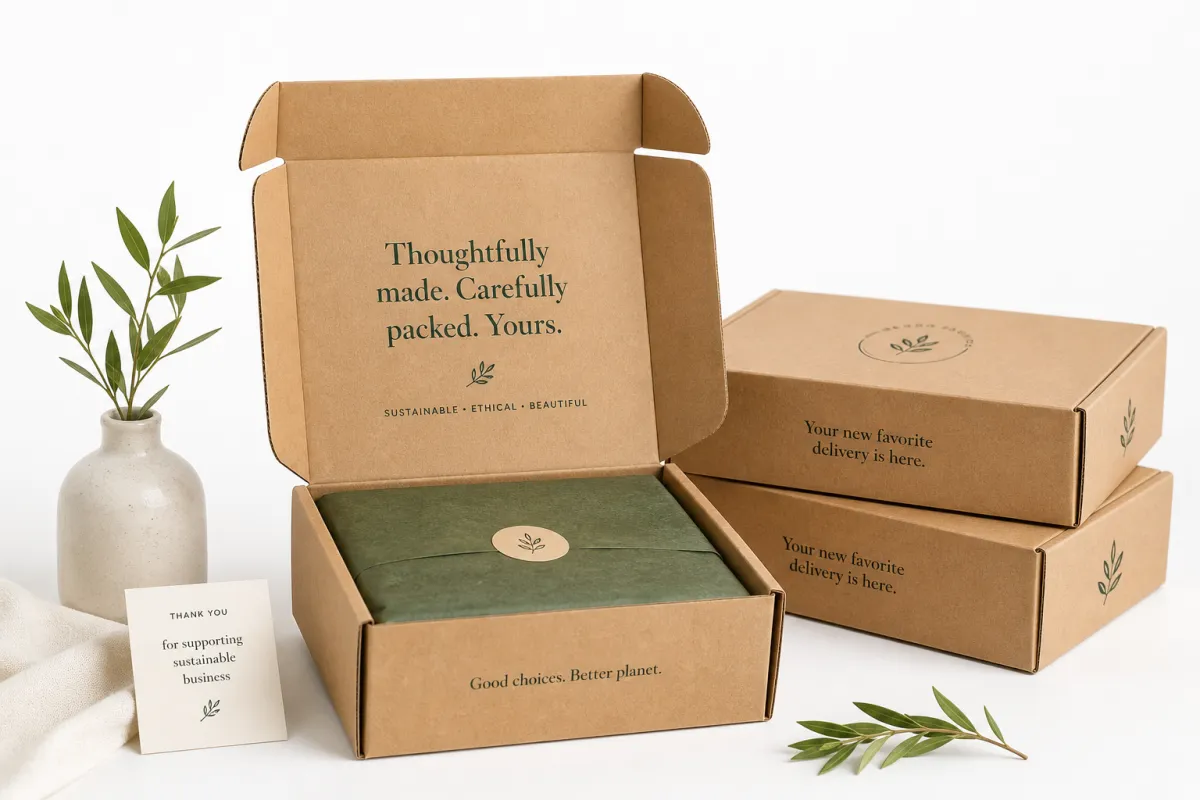
Subscription packaging is not judged once. It is judged over and over, month after month, and that changes the standard completely. That is the first reason kraft boxes for subscription brands beat generic mailers: they create a repeatable ritual. A customer may tolerate a plain envelope for a one-off order, but recurring shipments need memory, consistency, and a sense that the brand is still paying attention.
Economics matter too. Generic mailers can move quickly, but they often stop short on protection and presentation. Kraft boxes for subscription brands can be sized more precisely, which reduces movement, improves stackability, and cuts the amount of filler needed to hold products in place. In real operations, less movement means fewer broken items, fewer replacements, and fewer support tickets. One damaged shipment can wipe out the savings from choosing the cheapest pack format, so the true cost of a box shows up after it leaves the warehouse, not before.
Perception carries a lot of weight in a subscription business. A subscription box is often the first physical proof that a customer made the right choice. Kraft boxes for subscription brands signal care in a way that feels grounded rather than showy. Brown kraft reads as honest, efficient, and modern when the design is restrained. A deliberate logo placement, crisp construction, and thoughtful use of space can make the package feel premium without pretending to be something it is not.
That is the real value from a buyer’s point of view. Kraft boxes for subscription brands support retention not because they are trendy, but because they make the recurring experience feel planned. The structure is familiar, the production is controllable, and the branding can evolve without forcing a full packaging overhaul. For a business that ships every month, repeatability is a feature, not a compromise.
It also helps to define the format clearly. Kraft boxes for subscription brands can mean a simple corrugated mailer, a tuck-end presentation box, or a folding carton used inside a protective shipper. The right choice depends on product weight, carrier stress, and whether the box is expected to be opened on camera, on a kitchen counter, or straight out of the delivery carton. That range is why the term covers more than one style, and why buyers need to think beyond appearance alone.
If the brand is still testing the offer, a well-made kraft structure can be the safer starting point. It is easier to standardize across multiple SKUs, easier to recycle in common curbside systems, and easier to adjust as the assortment changes. That is a big reason kraft boxes for subscription brands often outperform decorative alternatives: they let the packaging do more work with less noise.
How kraft boxes for subscription brands work in subscription fulfillment
Once the box enters the warehouse, the conversation changes. Kraft boxes for subscription brands are not only a design choice; they are a process choice. The pack line needs a box that can be grabbed, opened, filled, closed, and labeled without slowing the team down. If the structure fights the workflow, the brand pays for it every month in labor and inconsistency. That is why the physical build matters as much as the visual finish.
Think through the journey. Products are picked, inspected, nested into the box, protected with inserts or void fill, sealed, and then stacked for carrier pickup. Kraft boxes for subscription brands need enough rigidity to hold shape under that pressure, enough closure strength to survive transit, and enough surface clarity to carry the brand story before the lid is even opened. The outer panel is a billboard, but it is also a structural skin.
Three material directions come up often. Uncoated kraft gives the most natural, rustic look and usually keeps printing simple. White-lined kraft adds a brighter surface for graphics without losing the kraft structure underneath. Printed kraft can move in either direction, from minimalist one-color branding to richer coverage, depending on the brand’s budget and the customer experience it wants to create. Kraft boxes for subscription brands can live in any of those lanes, but the choice should match the product story, not just the mood board.
Interior structure deserves as much attention as the outside. Inserts, partitions, and die-cut supports prevent movement and keep the reveal organized. A neatly divided interior can make a small assortment feel curated, while loose packing makes even a good box feel improvised. Kraft boxes for subscription brands often benefit from simple inserts rather than decorative extras because the customer experiences stability and order at the same time.
Assembly speed is another overlooked factor. A beautiful box that takes too long to fold or tape becomes a drag on fulfillment. Most teams do better with constructions that are intuitive, repeatable, and easy to train. Kraft boxes for subscription brands should be designed so that a new packer can learn the sequence quickly and still achieve the same result as an experienced one. That consistency is worth more than a clever closure that slows every shipment.
There is a real gap between a box that photographs well and a box that performs well across 5,000 shipments. In subscription operations, the second one wins. Kraft boxes for subscription brands should be tested while products are packed, stacked, dropped, and opened by actual staff. Not every issue shows up on a mockup. Sometimes the problem is a lid that springs back, a tuck flap that catches, or a divider that looks elegant but adds thirty seconds to every pack. Those small frictions compound quickly.
For brands that want to compare structural paths, the broader range of Custom Packaging Products is a useful starting point. A mailer-style box, a straight tuck carton, or a heavier shipper can each solve a different piece of the same problem. The goal is not to find the prettiest format. It is to find the one that keeps kraft boxes for subscription brands efficient from the line to the doorstep.
Key factors that decide performance, sustainability, and brand fit
Structure comes first. For kraft boxes for subscription brands, the board grade and flute style need to match the actual shipment, not an idealized version of it. Lighter kits may be fine in 32 ECT corrugated or a sturdy folding carton, while heavier assortments often need 44 ECT or stronger, and some products justify double-wall construction. That is not a universal rule, but it is a practical one. The more a shipment is handled by parcel carriers, the more the box should be treated like a structural component rather than a decorative shell.
Sustainability claims need discipline. Kraft boxes for subscription brands can support a real sustainability story if the materials are chosen carefully, the print system is compatible with recycling, and the end-of-life path is clear. Recycled content helps, but it is not the whole story. FSC-certified board can strengthen the sourcing story, and low-coverage printing usually keeps the package easier to recycle than mixed-material builds with heavy coatings and unnecessary laminations. The EPA recycling guidance is a useful baseline for understanding how materials are handled in common curbside systems, while ISTA test methods help teams judge whether the packaging survives the abuse it will actually face.
Brand fit comes next, and this is where many teams overcomplicate things. Kraft boxes for subscription brands do not need loud graphics to feel premium. They need visual control. One or two colors, clear logo placement, and a consistent opening sequence usually do more for perception than heavy ink coverage. Texture matters too. A slight tooth to the kraft surface can communicate authenticity, while a clean white-lined interior can create contrast and polish without changing the outer message.
Operational fit is easy to underestimate. A box that occupies less shelf space can reduce warehouse clutter. A box that nests well can lower freight cost. A shape that matches the product dimensions more closely can cut void fill and improve dimensional weight pricing. Kraft boxes for subscription brands should also be reviewed across tiers if the brand has a starter kit, a standard plan, and a premium plan. If one structure can cover several sizes with minor insert changes, the program becomes simpler and cheaper to run.
Here is the tension in practical terms: better materials usually cost more, but the cheapest material is often the most expensive choice by the time damage, labor, and replacements are counted. Kraft boxes for subscription brands work best when the buyer looks at total shipment economics rather than the unit price alone. That means asking whether the box lowers breakage, speeds pack-out, and keeps the customer experience steady over multiple deliveries.
Rule of thumb: if a packaging change saves twenty cents but adds returns, extra handling, or a higher complaint rate, it is not a savings. It is a transfer of cost to another department.
To compare the most common paths, use the table below as a practical starting point. The ranges are typical working figures, not a quote, because size, print coverage, inserts, and freight can move the numbers quickly.
| Option | Best for | Typical unit cost at 5,000 pieces | Strengths | Tradeoffs |
|---|---|---|---|---|
| Plain unprinted kraft mailer | Simple recurring shipments, low-ink branding | $0.45-$0.85 | Low visual noise, strong natural look, usually easy to recycle | Less premium perception, limited brand storytelling |
| Single-color printed kraft box | Brands that want a cleaner reveal and stronger identity | $0.65-$1.20 | Better unboxing impact, still efficient for fulfillment | Print setup raises cost, artwork needs restraint |
| Printed kraft box with insert system | Fragile sets, multi-item kits, higher retention focus | $0.95-$1.80 | Controls movement, creates a more organized reveal | More components, more sampling, more pack time |
| Heavier presentation shipper | Premium subscription tiers or gift-led programs | $1.20-$2.40 | Strong structure, better shelf and camera presence | Higher freight and storage impact, can feel overbuilt for lighter goods |
Notice how the cheapest line is not always the smartest line. Kraft boxes for subscription brands should be priced as a system: material, freight, storage, labor, and damage rate all belong in the same calculation. A cheap box with poor fit can erase the savings quickly, especially if the subscription includes fragile items, liquids, glass, or components that shift during transit.
Step-by-step process and timeline for launching kraft boxes
A clean packaging brief saves more time than most teams expect. Start with product dimensions, total weight, shipping method, subscription tier count, target look, target cost ceiling, and any insert or divider needs. Kraft boxes for subscription brands get much easier to source once the supplier knows whether the box is holding one item, five items, or a mixed kit that must remain stable through parcel handling. If the brief is vague, the quote will be vague too.
Next comes the dieline and sample stage. This is where the box becomes real enough to judge. Kraft boxes for subscription brands should be reviewed as flat artwork, as folded samples, and as fully packed units. A supplier can show one thing on a render and another on a physical prototype. The prototype matters more because it reveals closure strength, fit, print contrast, and how easy the box is to assemble on a real table under real time pressure.
A practical timeline often looks like this: brief intake, quote, structural recommendation, dieline setup, first sample, revision, second sample if needed, production approval, manufacturing, and transit to the warehouse. For a straightforward run, that can mean roughly 7-10 business days to samples and 15-25 business days for production after approval, though print complexity and insert tooling can extend the schedule. Kraft boxes for subscription brands should always include buffer time, especially if the launch date is tied to a renewal cycle or a seasonal campaign.
Testing should be specific. Do not approve kraft boxes for subscription brands until the packed sample survives basic drop checks, corner-impact checks, and a few open-close cycles. If the box is for a monthly shipment, test the exact pack-out process the warehouse will use. How long does it take to fill? Does the lid bow? Does the insert resist shifting? Does the customer see the product immediately, or does the reveal feel cluttered? Those questions are more useful than a generic thumbs-up.
A small pilot run is often the smartest move. A few hundred units can show whether the packaging holds up in the wild without locking the brand into a large inventory position too early. Kraft boxes for subscription brands are especially sensitive to this stage because subscription demand can change quickly. A new offer may grow faster than expected, or retention may soften after the first month. A pilot keeps the risk contained while giving the team hard data.
There is one more hidden benefit to a methodical launch: the team learns how the packaging behaves before the scale-up. That means fewer retrains, fewer emergency fixes, and fewer surprises when volume climbs. Kraft boxes for subscription brands reward teams that think in stages. Brief first. Sample second. Pilot third. Scale only after the box has proven itself in the conditions that matter.
Cost, pricing, MOQ, and unit cost: what really drives the quote
Pricing for kraft boxes for subscription brands is usually driven by five things: board grade, size, print coverage, structure, and freight. A smaller box in a lighter board can be surprisingly economical, while a large box with multiple panels, inserts, and special finish work can climb quickly. The logo is rarely the expensive part. The expensive part is usually everything around the logo.
MOQ matters because it changes the economics of the run. For many custom programs, minimums can start around a few hundred units for very simple builds and move into the 1,000 to 5,000 range for more conventional custom work. Kraft boxes for subscription brands with special inserts, multiple print colors, or custom tooling can require higher minimums. That is fine if demand is stable, but it becomes a problem if the brand is still testing product-market fit or trying to manage cash flow tightly.
Hidden costs deserve equal attention. Sample rounds can add time and spend. Tooling can raise the first-order budget. Storage charges can appear if the order lands in a warehouse too early. Rush fees can show up when a launch gets compressed. Freight is often the quiet budget breaker, especially on larger corrugated runs. Kraft boxes for subscription brands should always be evaluated as landed cost, not just factory cost, because the number that looks good on paper can become less attractive once shipping and labor are added.
A useful test: ask for a quote three ways - ex-works, delivered to your warehouse, and delivered plus estimated pack labor. Those three numbers will tell you more about the economics of kraft boxes for subscription brands than the unit cost alone ever will.
One reason buyers get surprised is that box economics scale unevenly. Going from 1,000 to 5,000 units can lower the unit price, but it also raises inventory exposure. Kraft boxes for subscription brands are recurring items, yet subscription demand is not perfectly predictable. If a brand overbuys, it can end up with boxes that are technically cheap and operationally expensive because they tie up cash and storage space for months.
If the packaging saves money only before it lands in the warehouse, it is probably not the right packaging.
For brands comparing options, the question is not whether kraft boxes for subscription brands are cheaper than every alternative. The better question is whether they reduce the right costs: damage, labor, and customer confusion. A slightly higher-cost box can still produce a lower total cost per shipment if it fits better, packs faster, and protects the contents more reliably.
That is also why a supplier should be willing to show cost tradeoffs clearly. If the quote changes because the box is 1/2 inch shorter, that is useful information. If the quote changes because the print coverage expands from one color to three, that is normal. If the quote changes because the insert needs a die-cut bridge or a stronger board grade, that is not a surprise; it is the actual economics of kraft boxes for subscription brands showing up where they should.
Common mistakes subscription brands make with kraft boxes
The first mistake is choosing a box that looks sustainable but fails in transit. Kraft boxes for subscription brands need to survive real carrier handling, which means corners, drops, compression, and stacking pressure all matter. A flimsy box can create a cycle of refunds, replacements, and negative reviews that destroys the value of the packaging decision. If the box crushes easily, the customer will not admire the recycled content.
The second mistake is overdesigning the package. Too much ink coverage, oversized dimensions, and heavy finishing can wipe out the practical advantages of kraft. Kraft boxes for subscription brands should usually stay focused: structure first, branding second, decoration third. A package that tries to do everything often ends up doing none of it well. The customer may see more graphics, but the brand loses speed, economy, and sometimes recyclability.
The third mistake is ignoring fulfillment reality. A packaging concept can look beautiful in a meeting and still fail on the pack line. If the box needs extra taping, has a confusing fold sequence, or requires constant adjustment to keep products centered, it will become a source of friction. Kraft boxes for subscription brands work best when the warehouse can repeat the same motion every time without thinking too hard about it.
The fourth mistake is careless sustainability messaging. If the box is marketed as recyclable but includes mixed materials that are difficult to separate, customers notice the mismatch. If the brand claims recycled content without supplier documentation, that creates another problem. Kraft boxes for subscription brands should be backed by actual material specs, not vague green language. That includes board source, coating choices, and any special finish that could affect the end-of-life story.
The fifth mistake is forgetting the subscription cycle itself. A box that works for the first shipment but feels flat by the fourth may not support retention as well as expected. Kraft boxes for subscription brands need enough design discipline to stay interesting over time. That does not mean adding more graphics every month. It usually means planning a system: a consistent base structure, a few seasonal variations, and a clear internal rhythm for inserts, sleeves, or messages.
One more issue comes up often: teams underestimate the role of consistency. Customers notice when one box ships well and the next one arrives crushed or loosely packed. Kraft boxes for subscription brands are judged by repetition, so the production spec has to be stable. A slight change in board grade or closure design can create a visible difference in performance, even if the artwork looks identical.
The biggest mistakes are rarely dramatic. They are usually small compromises repeated at scale. Kraft boxes for subscription brands magnify those decisions. A half-inch of extra space, a weak flap, a too-thick insert, or a recycled-content claim that is not backed by documentation can become a pattern across thousands of shipments.
Expert tips and next steps for kraft boxes for subscription brands
Start with a pilot run. That is the cleanest way to see how kraft boxes for subscription brands behave in actual fulfillment. A few hundred units can reveal damage rates, assembly time, customer reaction, and whether the box still looks good after carrier handling. Most brands learn more from one pilot than from ten mockups.
Test at least two or three constructions side by side if the budget allows. One can be optimized for cost, one for presentation, and one for shipping strength. Kraft boxes for subscription brands are rarely one-dimensional, so the comparison should not be one-dimensional either. Compare the numbers that matter: unit cost, pack time, defect rate, and how the unboxing feels after the box has been handled roughly.
A packaging scorecard helps keep the decision honest. Track the cost per unit, the average packing time, the percentage of damaged arrivals, and customer comments about the unboxing experience. Kraft boxes for subscription brands should be evaluated across at least one renewal cycle, because the first shipment may generate enthusiasm while the second or third shipment reveals whether the packaging still feels special enough to justify the format.
If you need a broader benchmarking point, the material can help you think clearly about the right structure. Review your own assortment against the projects in Case Studies, then compare the options available in Custom Packaging Products. That pair of references is useful because it shifts the conversation from general ideas to actual packaging behavior.
Before approval, ask for the practical details that matter most: board spec, print method, insert design, freight estimate, and timeline with buffer. Kraft boxes for subscription brands should not be approved on artwork alone. They need fit validation, pack-out validation, and a clear sense of how the box will perform under recurring use. That is the difference between a nice prototype and a reliable program.
Seasoned buyers stay cautious until the sample passes the real test for a reason. Packaging is one of the few pieces of brand strategy that has to survive gravity, rough handling, storage pressure, and customer impatience at the same time. Kraft boxes for subscription brands can handle that challenge well, but only if the brief is disciplined and the rollout is measured.
The sequence stays simple: define the brief, request samples, validate the timeline, test the structure, and scale only after the pilot proves the fit. Done well, kraft boxes for subscription brands can cut waste, protect recurring shipments, and sharpen the monthly reveal without turning operations into a cost sink. That is not a flashy promise. It is a practical one, and practical packaging is usually the kind that keeps paying off.
If you are deciding on a final direction, the actionable takeaway is straightforward: choose the lightest kraft structure that still passes your real pack-out and transit tests, then lock the spec before ordering at scale. That single discipline tends to save more money, time, and customer frustration than chasing a prettier box ever will.
Are kraft boxes for subscription brands strong enough for repeated shipping?
Yes, if the board grade, box style, and closure method match the product weight and carrier environment. Kraft boxes for subscription brands often perform well with the right corrugated spec, but fragile items still need inserts, partitions, or a stronger shipper. I would not trust appearance alone; packed samples, drop checks, and corner-impact checks tell the real story.
How much do kraft boxes for subscription brands usually cost?
There is no fixed market rate because size, board thickness, print coverage, inserts, and freight all affect the quote. As a working range, simpler kraft boxes for subscription brands can sit well under a dollar per unit at volume, while more complex presentation builds can climb past that quickly. Ask for landed cost so the box, shipping, and labor are evaluated together.
What MOQ should a subscription brand expect for kraft boxes?
MOQ varies by supplier and construction, but custom runs usually require more than stock packaging. For kraft boxes for subscription brands, lower-volume pilot runs are often possible for simpler builds, while more customized projects may need larger commitments. If demand is still uncertain, a pilot or a standard-size option can reduce inventory risk.
How long is the process and timeline for custom kraft boxes?
Plan for brief intake, dieline setup, sampling, revisions, production, and shipping rather than expecting a single turnaround number. Kraft boxes for subscription brands often move in a few stages, and artwork changes or approval delays are usually what stretch the schedule. A buffer before launch helps avoid last-minute panic if the sample needs another round.
Can kraft boxes still feel premium for subscription brands?
Absolutely. Premium feel can come from structure, texture, restraint, and a thoughtful opening sequence rather than glossy decoration. Kraft boxes for subscription brands often feel more elevated when the fit is tight, the reveal is clean, and the branding is controlled. A neat insert and a clear hierarchy of packaging layers can make the experience feel intentional without adding unnecessary complexity.


