Buyer Fit Snapshot
| Best fit | kraft hang tags for retail uses costs practices for packaging buyers comparing material specs, print proof, MOQ, unit cost, freight, and repeat-order risk where brand print, material, artwork control, and repeat-order consistency matter. |
|---|---|
| Quote inputs | Share finished size, material target, print colors, finish, packing count, annual reorder estimate, and delivery region. |
| Proofing check | Approve dieline scale, logo placement, barcode or warning zones, color tolerance, and any recyclable or compostable wording before bulk production. |
| Main risk | Vague material claims, crowded artwork, or missing packing details can create delays even when the unit price looks attractive. |
Fast answer: Kraft Hang Tags for Retail Uses Costs Practices: Cost, MOQ, Proof, and Reorder Checks should be specified like a repeatable production item. The safest quote includes material, print method, finish, artwork proof, carton packing, and reorder notes in one written spec.
What to confirm before approving the packaging proof
Check the product dimensions against the actual filled item, not only the sales mockup. Ask for tolerance on folds, seals, hang holes, label areas, and retail display edges. If the package carries a logo, QR code, warning copy, or legal claim, reserve that space before decorative graphics fill the panel.
How to compare quotes without losing quality
Compare board or film grade, print process, finish, sampling route, tooling charges, carton quantity, and freight assumptions side by side. A lower quote is only useful if the supplier can repeat the same color, closure quality, and packing count on the next order.
Kraft Hang Tags for Retail: Uses, Costs, and Best Practices
A $30 sweater can still look forgettable if the tag feels lazy. Kraft Hang Tags for Retail fix that faster than most people expect. They change how a product reads on the shelf, in a product photo, and in the customer’s hand. Small piece of paper. Big opinion. Retail does not care that the effort was tiny.
The appeal is straightforward. Kraft Hang Tags for retail bring texture, warmth, and a natural look that works for apparel, candles, accessories, gifts, and home goods. They also keep spend under control if the spec is handled with a little discipline. Pick the right stock. Pick the right print method. Stop piling on extras just because they sounded nice in a meeting.
I have watched strong products get dragged down by awkward packaging more times than I can count. A tag is not supposed to steal the spotlight. It is supposed to make the product easier to buy. That is the job. Anything else is decoration, and decoration gets expensive fast if nobody is paying attention.
Kraft Hang Tags for Retail: What They Are and Why They Stand Out
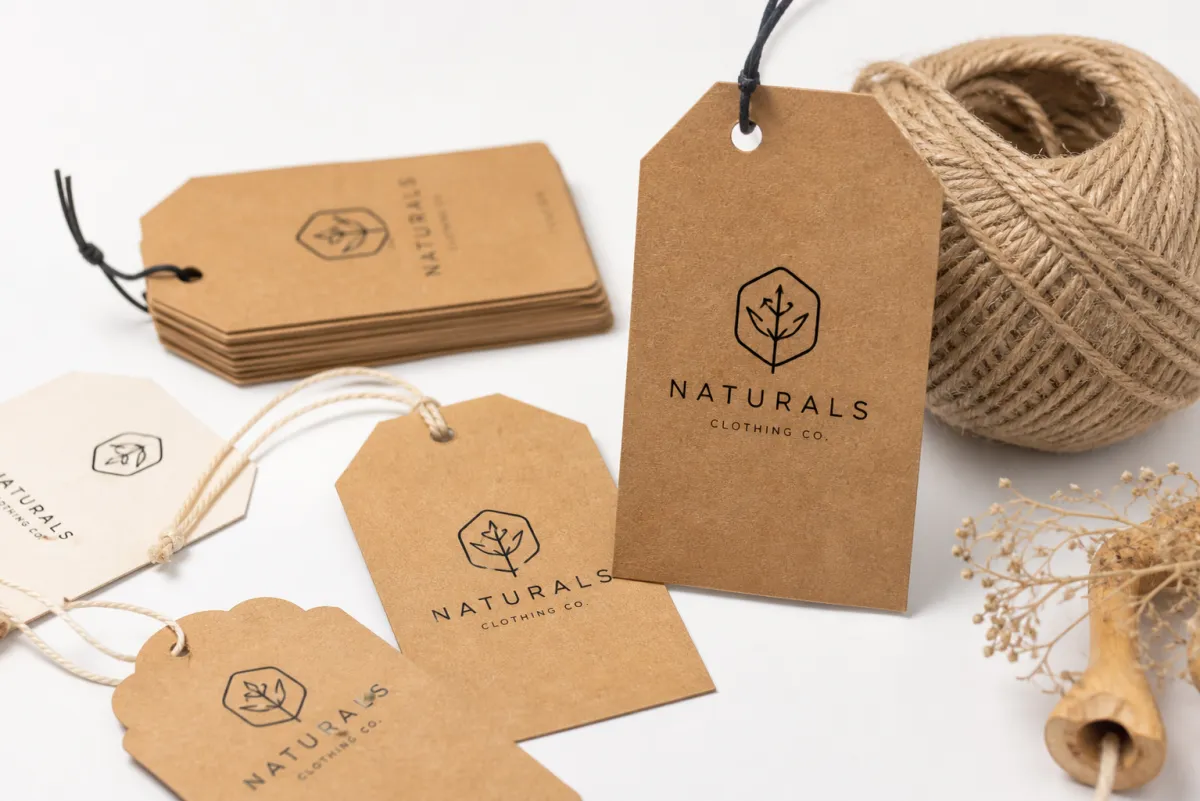
Kraft Hang Tags for retail are product tags made from uncoated or lightly coated kraft board, usually in brown, natural, or recycled-looking tones. The surface has fiber and tooth. The color feels earthy. The print result is usually more restrained than on bright white stock, which is exactly why brands pick it. A good kraft tag can make a product feel honest, handmade, and less like it came off a generic line that forgot to pack a personality.
I see the same retail scene over and over. Two similar products sit side by side. One has a shiny tag that could belong to anything. The other uses kraft hang tags for retail with clear typography, a simple logo, and a price that is easy to read. The second product usually feels more intentional. That happens even when the products are nearly identical. Buyers notice that kind of detail before they can explain why.
Texture does a lot of work here. Kraft fibers catch light differently from coated paper, so the tag has a physical presence before anyone reads a word. The warm tone also plays well with black ink, dark brown ink, white ink, and simple line art. For earthy, handmade, organic, or minimalist brands, kraft hang tags for retail support the story without shouting over it.
Kraft is not magic, though people keep treating it like a personality transplant. It is still a material choice. Kraft hang tags for retail need the right thickness, a sensible layout, and a print method that fits the artwork. Too thin, and the tag curls. Too busy, and the texture starts fighting the message. Wrong finish, and the tag loses the look that made it attractive in the first place.
From a packaging buyer’s point of view, the best kraft tag does three things at once: identifies the product, reinforces the brand, and stays within budget. That is the real value. Not the rustic vibe by itself. Kraft hang tags for retail earn their keep when they help the product sell instead of merely hanging there looking sincere.
Brands often use them alongside Custom Labels & Tags so the full product line feels consistent across packaging touchpoints. If the hang tag says one thing and the carton or label says another, customers feel that disconnect immediately. They may not name it. They still notice.
A hang tag is not a billboard. It has one job: make the product easier to buy.
How Kraft Hang Tags for Retail Work on Products and Displays
Kraft hang tags for retail are a small system, not just a rectangle of card. The base stock carries the brand message. The front usually holds the logo, product name, price, or a short positioning line. The back can hold care instructions, a barcode, a QR code, or a short brand note. Then there is the hole or slot, the string or fastener, and any coating or finish that changes how the tag handles in real life.
On shelf, kraft hang tags for retail need to do three things quickly: stay readable at arm’s length, support the product story, and stay out of the way of the merchandise. That is why they work so well on apparel, accessories, candles, soaps, notebooks, home goods, and gift items. These categories benefit from texture. The tag can feel like part of the product instead of a random accessory dangling off the side.
Good kraft hang tags for retail also behave nicely with simple display systems. Peg hooks, header cards, garment bags, ribbon ties, and product wraps all benefit from a tag that does not fight the rest of the presentation. Kraft usually sits quietly next to fabric, wood, glass, or recycled mailers. Glossy tags can work too, but they tend to bring their own agenda. Sometimes that helps. Usually it just adds noise.
Print contrast matters a lot. Black ink on kraft usually gives the cleanest result and keeps costs lower. White ink can work if the press setup supports it, but it is less forgiving and can look soft if the coverage is weak. Kraft hang tags for retail with one or two colors often look more confident than tags trying to cram six ideas into a small piece of paper and calling it design.
If you want a cleaner paper system across several SKUs, coordinate the tag with other pieces in the line. A custom packaging set plus custom logo tags creates a stronger shelf presence than one polished piece floating in a sea of generic packaging.
According to general guidance from the packaging industry at packaging.org, the strongest paper components match the product, the distribution channel, and the customer expectation. That sounds obvious. It is also the part rushed buyers skip when the calendar gets loud.
Key Factors That Affect Kraft Hang Tag Performance
Kraft hang tags for retail only look simple from a distance. Under the surface, several decisions change how the tag performs in hand, in transit, and on the rack. Paper weight is the first big one. Lighter kraft stock costs less and bends more easily, which is fine until the tag is large and starts curling like it has given up. Heavier stock feels more substantial and holds shape better, but it costs more and may need stronger attachment hardware.
For most retail work, a mid-weight board is the sweet spot. Think 14pt to 18pt equivalent, depending on how the paper is built and how the printer measures it. Smaller tags can work on lighter stock. Larger tags, or tags that need to survive repeated handling, usually need more body. Kraft hang tags for retail that are too flimsy feel unfinished. Tags that are too heavy can overwhelm small products and waste material for no good reason.
Print method comes next. One-color black print on kraft hang tags for retail is usually the most cost-efficient option, and it often gives the cleanest result. Two-color work adds more visual interest without wrecking the budget. Full-color process printing can work, but the natural brown base changes how colors read. Bright yellows and pale pastels can disappear into the stock. Deep, saturated colors usually behave better. If the design depends on photographic realism, kraft may not be the right call.
Finish choices matter more than people expect. No coating keeps the rustic look and lowers complexity. Aqueous coating or a matte finish can improve rub resistance and make the tag more durable, especially for high-touch categories. Soft-touch lamination is possible, but it often cuts against the natural feel that made kraft hang tags for retail attractive in the first place. You can do it. I just would not do it unless the brand has a very clear reason.
Shape and size are not decoration-only decisions. Oversized tags pull attention and can work beautifully on premium apparel or gift items. Smaller tags are easier to manage on high-volume SKUs and keep material costs down. A custom die-cut shape can turn kraft hang tags for retail into a memorable brand piece, but a custom die also adds tooling cost and usually adds lead time. Fancy shapes are fun. Timelines are not.
| Option | Typical Use | Typical Unit Range | Tradeoff |
|---|---|---|---|
| Light kraft stock, one-color print | Small accessories, low-cost items, short runs | $0.12-$0.28 | Lowest cost, but can curl or feel thin |
| Mid-weight kraft stock, one- or two-color print | Apparel, candles, gift items, general retail | $0.18-$0.42 | Best balance of price, stiffness, and shelf presence |
| Heavier kraft board, custom shape, special finish | Premium goods, seasonal launches, brand-led packaging | $0.32-$0.85 | Stronger impression, but setup and tooling cost more |
Brand fit is the last piece, and this is where some packages drift off course. Kraft hang tags for retail work well for organic, handmade, minimal, rustic, and sustainable positioning. They can support luxury branding too, if the typography is controlled and the layout is calm. But if the product is ultra-glossy, fashion-forward, or heavily engineered, rough kraft can feel off. Material mismatch is one of the fastest ways to make a product look cheaper than it is.
If sustainability claims are part of the pitch, use paper and sourcing language carefully. FSC certification matters if you want to talk about responsible fiber sourcing, and the claim should be accurate rather than decorative. The FSC system helps because it gives buyers a traceable framework instead of vague green words that sound polished and mean almost nothing.
Kraft Hang Tags for Retail Pricing: What Drives Cost
Kraft hang tags for retail are usually priced by quantity, size, stock thickness, number of print colors, shape complexity, and finishing. That is the short version. The longer version matters more: the first quote you see is not the full story unless every spec matches. A cheap number can grow teeth the moment you add die-cutting, foil, specialty ink, or a stronger fastener.
Quantity is the biggest swing. Small runs spread setup costs across fewer pieces, so the unit price climbs fast. Larger runs drop the per-piece cost because the press setup, cutting, and finishing are shared across more tags. Kraft hang tags for retail often look expensive at 250 or 500 pieces and suddenly look reasonable at 2,500 or 5,000. That is normal. Printing math is rarely subtle.
Here is a practical pricing view for common retail buys:
| Run Size | Spec Example | Typical Price Range | Notes |
|---|---|---|---|
| 250-500 pieces | 2 x 3.5 in, one-color print, standard hole | $0.28-$0.85 per tag | Setup cost is doing the heavy lifting |
| 1,000-2,500 pieces | 2 x 3.5 in or 2.5 x 4 in, one or two colors | $0.12-$0.32 per tag | Often the sweet spot for growing brands |
| 5,000+ pieces | Custom size, one to four colors, optional coating | $0.05-$0.18 per tag | Best unit economics if the design is locked |
Costs rise when the tag gets complicated. Custom dies add tooling. Heavy coverage adds ink and press time. Special finishes add another process step. Separate SKUs or language versions add art setup and sometimes separate printing plates. Kraft hang tags for retail with variable data, QR codes, or serialized numbering can also increase prepress time. None of that is mysterious. It just needs planning before the estimate lands in your inbox.
Hidden costs show up in the boring places. Rush shipping can erase savings. Multiple proof rounds can push back launch dates and add admin time. If the tag fails on shelf and has to be reprinted, the real cost is not only the replacement order. It is also the waste, the delay, and the awkward moment when the product is ready but the tag is not.
My practical advice is dull and useful: compare quotes only after the specs are identical. Same stock. Same size. Same number of colors. Same attachment method. Same finish. Kraft hang tags for retail can look cheaper or pricier depending on how the estimate is written. Good buyers compare apples to apples. Everyone else compares apples to whatever fruit happened to be closest to the estimate.
For commercial buyers, a slightly better stock often pays for itself. Kraft hang tags for retail that hold shape better, print cleaner, and survive handling reduce reprints and make the product feel more legitimate. That is not a theory exercise. It is a packaging budget issue.
Step-by-Step Process and Timeline for Ordering
Kraft hang tags for retail are easiest to order when the brief is clear from the start. Step one is defining the job. Is the tag mainly for branding, price display, care instructions, SKU support, or sustainability messaging? A tag can do more than one thing, but not every tag should try to do everything. The cleanest specs start with a job, not a mood board pretending to be strategy.
Step two is choosing the stock and size range. Once the product weight and handling expectations are known, the board thickness gets easier to narrow down. A lightweight accessory might need a smaller tag on a lighter kraft board. A folded sweater or premium candle can support something heavier. Kraft hang tags for retail should feel balanced on the product, not merely acceptable in a spreadsheet.
Step three is artwork and dieline review. Mistakes tend to start here. Missing safe margins, barcode errors, tiny QR codes, and poor contrast show up all the time. If the tag has a hole, slot, or rounded corners, the artwork has to respect those cut lines. If the back side carries care instructions or a UPC, the layout must still be readable after punching and trimming. Basic? Yes. Still missed constantly? Also yes.
Here is the typical order flow for kraft hang tags for retail:
- Define the product and the tag's job.
- Choose the paper weight, size, and shape.
- Confirm the print colors and finish.
- Approve the artwork and dieline.
- Review the proof or sample.
- Move to production and shipping.
Timeline depends on complexity. Simple kraft hang tags for retail on stock-size formats can often move in about 7-10 business days after proof approval. Custom shapes, specialty finishes, or larger quantities are more likely to land in the 10-15 business day range, sometimes longer if the schedule is crowded or the proof cycles drag. Add shipping time on top. If you need a physical sample first, build in another few days. That is not pessimism. That is reality with better shoes on.
Delays usually come from the same places: unfinished artwork, multiple revision cycles, missing barcode specs, or a late decision on the finish. If the product launch is tied to a season or a promotion, do not leave final sign-off until the last possible hour. Kraft hang tags for retail may be small, but a missing tag can stall the whole presentation like it owns the place.
The safest planning rule is simple: allow time for proofing, one sample check if the order matters, and shipping cushion. If the tags need to arrive with packaging, care labels, or Custom Labels & Tags, keep the timelines aligned so one component does not land while another is still stuck in revision limbo.
Common Mistakes Retail Brands Make
Kraft hang tags for retail are forgiving in some ways and brutal in others. The first mistake is choosing stock that is too thin. Thin kraft can save a little money, but if the tag bends, curls, or looks limp on the rack, the brand takes the hit. A tag should support the product, not look like it missed breakfast and wants to go home.
The second mistake is stuffing the layout. Too much copy turns a tag into a pamphlet. Too many claims make the design noisy. Kraft hang tags for retail need room to breathe because the surface is already textured and visually active. Clean typography usually beats clutter, even when the brand team wants to say five different things at once.
Barcode and QR problems are another common failure. Low contrast can make scanning unreliable. Tiny codes can fail on small tags. Codes placed too close to folds, holes, or edges can get damaged during trimming or handling. If the tag is supposed to support retail operations, test the code size before the run is approved. Nobody enjoys discovering scan failure after the boxes are packed.
Brand mismatch is subtle and expensive. A premium product with a rough edge, awkward font pairing, or badly chosen brown can feel cheaper than it should. A natural product with an overdesigned tag can feel forced. Kraft hang tags for retail work best when the visual language matches the product promise. If the product is quiet, keep the tag quiet. If the product is warm and artisanal, let the tag carry that tone without turning it into theater.
Skipping samples is one of the fastest routes to regret. Paper tone can shift in real production. Print density can look darker or lighter than the digital proof. What reads as warm kraft online can look dull, dusty, or gray in hand if the stock is wrong. A physical sample tells you more than a screen ever will. That matters even more for kraft hang tags for retail because the whole value of the material depends on texture, color, and contrast.
Then there is the sustainability trap. Brands love saying "eco-friendly." Buyers have heard that word so often it has become wallpaper. If you want to make a sustainability claim, check the stock source, the ink system, and any certification before you print the statement on the tag. The EPA has useful background on responsible material and waste handling at epa.gov, and the claim should fit what is actually being used, not what sounds good in a product meeting.
One more thing: do not confuse "natural look" with "unfinished." Kraft hang tags for retail can look premium, but only if the design is deliberate. Slightly raw is fine. Sloppy is not. There is a difference, and customers can spot it from across the aisle.
Expert Tips for Better Results With Kraft Hang Tags
Kraft hang tags for retail get better fast when the layout has discipline. Start with high contrast. Black or deep brown type on kraft usually reads better than soft grays, pale greens, or delicate pastel inks. If the brand wants a natural look, the answer is not to make the typography faint. The answer is to make it confident and let the paper carry the warmth.
Keep the message tight. One clear claim beats four competing ones. If the tag is about price, make it about price. If it is about sustainability, keep the claim specific. If it is about care instructions, do that job clearly and move the brand story to the back. Kraft hang tags for retail work best when they are not overloaded with branding theater.
Attachment choice matters more than most teams realize. Thin cotton string suits lightweight goods and softer visual branding. Twine can fit rustic products, but too much twine starts to look like craft store costume department. Plastic barb fasteners are functional but less elegant. For heavier products, use a stronger attachment so the tag does not twist, tear, or disappear under the weight of the item. Kraft hang tags for retail should hang cleanly. If they spin like a broken weather vane, the shelf presentation is already damaged.
Use the back side properly. Too many brands waste that space. A clean back can hold care symbols, fiber content, a QR code, sizing help, or a brand line that would clutter the front. Kraft hang tags for retail are often small, so every side has to earn its keep. You are paying for paper, printing, and finishing. Might as well use the whole thing.
Match the tag size to the product category. Small jewelry pieces usually need a modest tag that does not overwhelm the item. Apparel can handle a larger format. Home goods and gifts can support a more visible tag because the product usually has enough physical scale to carry it. If you are not sure, compare two directions side by side: one plain and cost-efficient, one with a little more branding. In hand, the better choice usually becomes obvious.
Ask for a physical sample when the order matters. That is not a luxury step. It is how you verify tone, stiffness, print density, and edge finish. Kraft hang tags for retail can look completely different in real life than they do in a PDF. If the launch matters, test the tag before you run thousands of pieces. That is a lot cheaper than finding the flaw after production.
And if the tag is part of a larger packaging system, keep the materials consistent across the line. Kraft hang tags for retail, cartons, inserts, and labels should feel like they belong to the same brand family. Consistency is what makes a product line feel finished instead of assembled in a rush.
Next Steps for Ordering Kraft Hang Tags for Retail
Kraft hang tags for retail are one of the easiest packaging upgrades to underestimate. They are small, yes. They are also visible, tactile, and tied directly to how customers judge the product before they buy. The next step is not "pick something brown and hope for the best." The next step is to define the job, lock the specs, and get a sample if the order matters.
Start with three numbers: size range, quantity, and print complexity. Those three tell you most of what you need to know about cost and lead time. If you can also decide on stock weight and attachment type, the quote gets much cleaner. Kraft hang tags for retail are easier to buy well when the brief is specific instead of vague. Vague briefs are where budgets go to disappear.
Then compare two directions. One should be simple, cost-aware, and easy to print. The other can have a little more personality, a stronger finish, or a custom shape. Seeing both options in hand helps you separate what the brand team likes from what the product actually needs. Kraft hang tags for retail often land best in the middle: clear, tactile, and controlled enough to feel intentional.
Build an approval checklist before the order goes in. Check contrast. Check barcode size. Check hole placement. Check whether the material supports the brand tone. Check whether the tag can be attached without slowing down packing. If the tag is for a seasonal or launch-driven product, give yourself enough cushion for proofing and shipping. A tight launch schedule can turn a small tag into a ridiculous problem.
My practical advice is simple. Tighten the spec, ask for a sample, and place the order before the calendar starts pushing back. Kraft hang tags for retail work best when they are chosen on purpose. Treat them like a real branding and selling tool instead of an afterthought, and they do the job surprisingly well.
How do kraft hang tags for retail compare to coated paper tags?
Kraft usually feels more natural and sustainable, while coated paper looks smoother and can carry more vivid color. Kraft hang tags for retail are often better for earthy, handmade, or minimalist branding, but coated stock can be stronger for photo-heavy layouts. Pick based on the product story, not just the material name.
What paper weight works best for kraft hang tags for retail?
A mid-to-heavy stock is usually the sweet spot because it hangs well and resists curling. Lighter stocks can work for small, low-cost items, but they bend more easily and can feel flimsy. Heavier stock makes sense for premium apparel, gifts, and products that need a more substantial feel. Kraft hang tags for retail should feel intentional in the hand.
How much do kraft hang tags for retail usually cost?
Price depends on quantity, size, print colors, finish, and whether you need custom die-cut shapes. Small runs cost more per piece because setup spreads across fewer tags. Larger runs usually drop the unit cost fast. The cheapest quote is not always the best deal if the tag needs to be reprinted or replaced. Kraft hang tags for retail should be judged on total value, not just the headline number.
How long does it take to produce kraft hang tags for retail?
Simple orders move faster than custom shapes, multi-color printing, or specialty finishes. Most delays come from artwork changes, proof approvals, and missing barcode or dieline details. If the tags support a launch date, leave enough time for samples and shipping. Kraft hang tags for retail are not hard to produce, but rushed approvals tend to make everything slower.
Can kraft hang tags for retail still look premium?
Yes, if the typography, print contrast, size, and attachment are chosen carefully. A clean layout on good kraft stock can look more premium than glossy tags that feel off-brand. Premium does not mean complicated; it usually means disciplined. Kraft hang tags for retail look best when every detail supports the product instead of competing with it.
What is the quickest way to avoid a bad order?
Approve a physical proof, verify barcode readability, and make sure the stock matches the product weight. That three-step check catches most of the expensive mistakes before production starts. If the tag still looks right in hand, you are probably in decent shape. If not, fix it now. It's way cheaper than reprinting later.
Final takeaway: choose the lightest kraft tag that still holds its shape, keep the design clean enough to read at arm’s length, and approve a real sample before you commit to production. That is the shortest path to kraft hang tags for retail that actually help the product sell instead of just hanging there looking earnest.