Buyer Fit Snapshot
| Best fit | Kraft Pouches Manufacturer projects where brand print, material claims, artwork control, MOQ, and repeat-order consistency need to be specified before quoting. |
|---|---|
| Quote inputs | Share finished size, material target, print colors, finish, packing count, annual reorder estimate, ship-to region, and any compliance wording. |
| Proofing check | Approve dieline scale, logo placement, barcode or warning zones, color tolerance, closure strength, and carton packing before bulk production. |
| Main risk | Vague material claims, crowded artwork, missing packing details, or unclear freight terms can make a low unit price expensive after revisions. |
Fast answer: Kraft Pouches Manufacturer: Film, Print, MOQ, and Carton Packing should be specified like a repeatable production item. The safest quote records material, print method, finish, artwork proof, packing count, and reorder notes in one written spec.
Production checks before approval
Compare the actual filled-product size with the drawing, then confirm tolerance on folds, seals, hang holes, label areas, and retail display edges. Reserve space for logos, QR codes, warning copy, and material claims before decorative graphics fill the panel.
Quote comparison points
Review material grade, print process, finish, sampling route, tooling charges, carton quantity, and freight assumptions side by side. A quote is only useful when the supplier can repeat the same color, closure quality, and packing count on the next order.
Kraft Pouches Manufacturer: How to Choose the Right One
If you are comparing a kraft pouches manufacturer, do not let the brown-paper look fool you. A good pouch is usually a layered structure built to protect the product, hold a seal, survive shipping stress, and still look clean under retail lighting. That is a very different job from “printing a logo on something that happens to be kraft-colored,” and the cheapest quote usually gives itself away first at the zipper, the seal edge, or the corner that starts splitting after a few handling cycles.
For buyers, the hard part is practical and expensive at the same time: balancing product protection, brand presentation, and freight efficiency without paying for extras you do not need. A good kraft pouches manufacturer should help you make those tradeoffs with real specs instead of vague promises. If you want a quick sense of how Custom Logo Things handles packaging projects, the About Custom Logo Things page is a useful place to start.
Kraft Pouches Manufacturer: What It Really Means
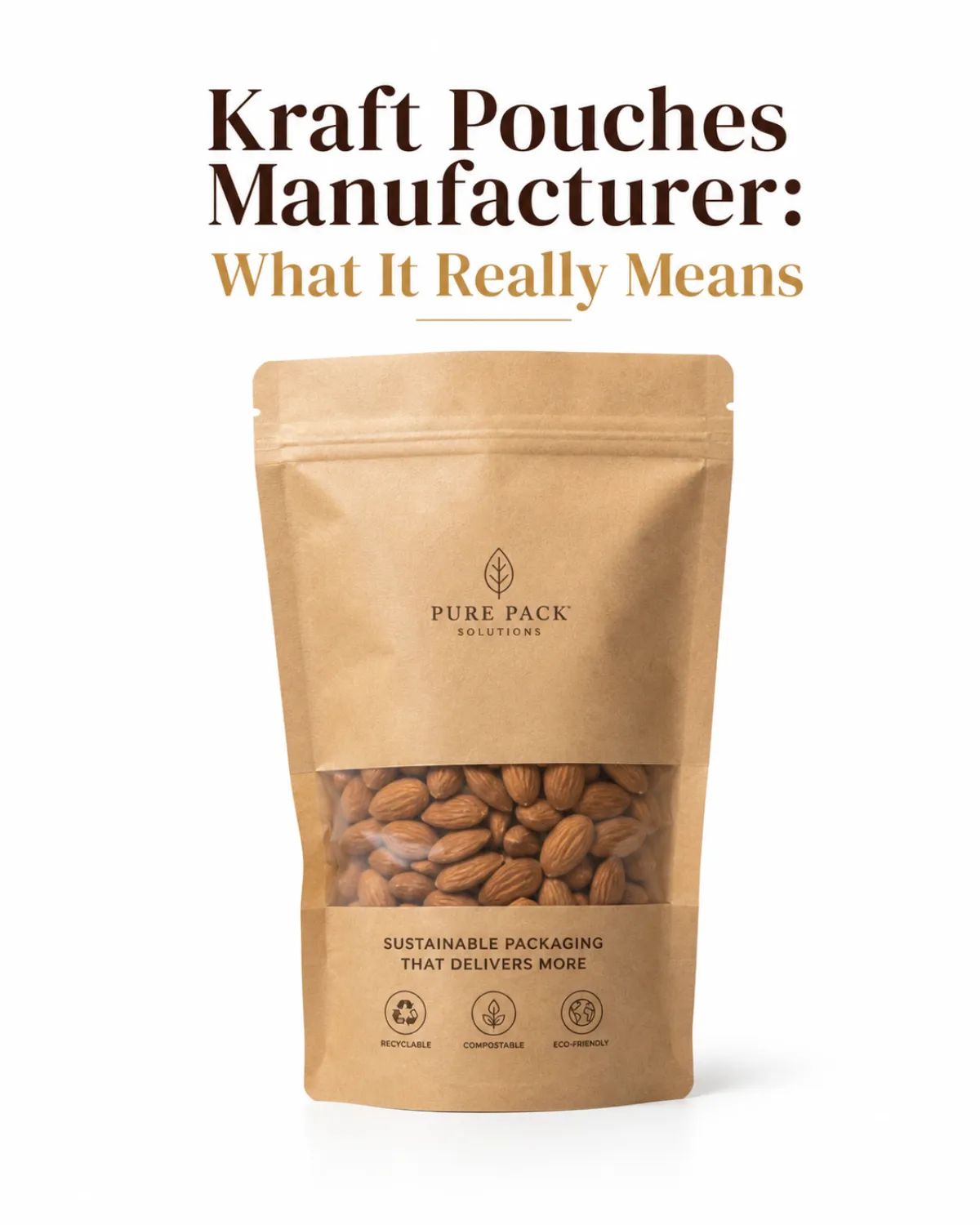
A kraft pouches manufacturer is not just printing logos on a paper surface. In practice, the pouch is often a laminated build, with kraft paper on the outside for the natural look and barrier films inside for moisture, oxygen, grease, aroma, or puncture resistance. That inner stack does the heavy lifting. The paper gives the package its warm, earthy presentation. The protection comes from the layers you do not see, which is exactly why the material conversation matters so much.
I have seen buyers fixate on the front panel art and then act surprised when the first shipment arrives with weak seals or a pouch that cannot tolerate the product weight. That is usually not bad luck. It is a spec problem. A seasoned kraft pouches manufacturer will talk about seal width, film thickness, barrier targets, and drop performance before they talk about the print file, because the structure has to work before the branding can shine.
Here is the basic breakdown buyers should keep in mind:
- Stand-up pouches for retail shelves, coffee, snacks, powders, and pet treats.
- Flat pouches for single-serve products, samples, wipes, and lighter fills.
- Gusset bags for products that need more volume or a cleaner display shape.
- Zipper pouches for resealability and repeat use.
- Custom-printed variants for branding, compliance text, and shelf differentiation.
The type of supplier matters as well. A printer may produce strong graphics but not know much about structure selection. A converter can turn materials into pouches but may rely on outside print capacity. A full-service kraft pouches manufacturer can usually guide material choice, print method, pouch format, and finishing under one roof. That does not automatically make them the better fit, because some full-service shops are sloppy and some specialized shops are excellent. It does, however, change the questions you should ask and the proof points you should expect.
From the buyer side, the job is not to find the flashiest supplier. The job is to find the kraft pouches manufacturer that can protect the product, present the brand clearly, and keep freight from eating the margin. That means fewer surprises, fewer reprints, and fewer awkward calls with sales or operations later. It also means fewer “we thought the other side was handling that” moments, which, frankly, are never fun.
"If the quote does not mention barrier, seal width, or the exact pouch structure, it is not a quote. It is a rough guess with a logo attached."
One more practical point: a good kraft pouches manufacturer should explain whether the pouch is intended for shelf display, ship-and-store handling, or both. Those are not the same use case. A pouch that looks great under retail lights may still be the wrong choice if it has to survive pallet compression, parcel sorting, and a warehouse floor that is not exactly gentle.
For broader packaging terminology and industry context, the resources at packaging.org are useful for buyers who want to sanity-check material and packaging language before they sign off on a run.
Kraft Pouches Manufacturer Process and Lead Time
The production path inside a kraft pouches manufacturer is usually more involved than buyers expect. It starts with quoting, but a real quote should not be built from a product name and a logo file alone. The supplier needs dimensions, fill weight, shelf-life target, storage conditions, shipping environment, and the finish you want. Once the brief is clear, artwork prep begins, then material selection, print method confirmation, lamination, curing, slitting, pouch making, and final inspection. Miss one step early and the schedule starts wobbling later, usually right when the order was supposed to be moving.
That sequence is why lead time gets stretched so easily. Every artwork change can trigger a new proof. Specialty finishes such as matte varnish, soft-touch feel, spot gloss, metallic effects, or window cutouts can add setup time. Zipper sourcing can become a bottleneck if the pouch uses a specific profile or a child-resistant style. If you rush proof approval, a kraft pouches manufacturer may have to pause or restart parts of the job. That is how “just one small edit” turns into another week on the schedule, and everyone suddenly gets very quiet on the group email.
Sample timing and mass production timing are not the same thing. A digital mockup may be ready in a few business days. A physical sample may take one to three weeks depending on the structure and whether material stock is already available. Full production can run from 12 to 25 business days after proof approval, and that is before freight. A reliable kraft pouches manufacturer should explain which steps happen in parallel and which steps are sequential, because that difference keeps inventory planning from becoming guesswork.
Here is a realistic project flow for a custom order:
- Day 1-3: Send product brief, quantity target, and artwork.
- Day 3-6: Receive initial quote and material recommendation.
- Day 6-10: Confirm dieline, structure, and proof adjustments.
- Day 10-15: Approve digital proof or request a physical sample.
- Day 15-30: Production, curing, conversion, and inspection.
- Day 30+: Freight transit, which can vary by lane and mode.
That timeline is not fixed. It depends on print method, material availability, and how quickly you answer questions. A capable kraft pouches manufacturer reduces delays by locking specs early and calling out issues before production starts. If your barcode is too small, they should say so. If the seal area eats into copy, they should say so. If the pouch shape makes filling awkward, they should say so. Silence is not service, and it is definitely not quality control.
For shipment testing and distribution durability, many packaging teams look at ISTA methods, especially for transit risk and parcel handling. The standards library at ista.org is worth reviewing if your product will move through e-commerce, warehouses, or mixed parcel networks.
Kraft Pouches Manufacturer Cost, MOQ, and Quote Factors
Price is where most conversations go sideways. A kraft pouches manufacturer can give you a low unit number, but that number means very little unless the spec behind it is identical. Size, barrier level, print colors, finish, zipper type, valve, tear notch, and window style all change cost. Quantity changes it too. Packing format changes it too. So does whether the supplier is quoting FOB, EXW, or delivered pricing. If you skip those details, you are comparing apples to a toolbox, and the budget math gets weird fast.
MOQ, or minimum order quantity, is another point buyers tend to underestimate. Small runs cost more per pouch because setup, waste, and conversion time get spread across fewer units. A kraft pouches manufacturer may support a low MOQ for digital work, but if you need gravure printing, custom laminations, or complex finishing, the economics change fast. That is not greed. That is the cost structure of the process.
Here is a practical pricing framework you can use before you request quotes:
| Tier | Typical Unit Range | Best For | Tradeoff |
|---|---|---|---|
| Basic kraft pouch | $0.10-$0.18 at 5,000-10,000 units | Dry goods, samples, lower-barrier items | Limited print complexity and fewer finish options |
| Branded pouch | $0.16-$0.30 at 5,000-10,000 units | Retail shelves, e-commerce, repeat use | Higher setup and a little more lead time |
| Premium pouch | $0.24-$0.45 at 5,000-10,000 units | Special finishes, windows, stronger branding | Costs rise quickly with add-ons |
| High-barrier pouch | $0.30-$0.60+ at 5,000-10,000 units | Coffee, powder, odor-sensitive, longer shelf life | Material stack and testing matter more than appearance |
Those are working ranges, not promises. A larger order can push the unit price down. A smaller order can push it up fast. A complicated pouch can cost more than expected even at volume. A fair kraft pouches manufacturer should tell you what is driving the number: plate charges, cylinders, zipper sourcing, special inks, or higher-barrier film. If they cannot, the quote is incomplete, and you are basically buying a surprise.
Watch for hidden costs too. Some suppliers exclude plates or cylinders. Some exclude freight. Some charge extra for custom color matching or revisions after proof approval. Some quote a clean unit price and then punish you with sampling fees and expensive reprint risk if the dieline was wrong. A disciplined kraft pouches manufacturer will state these items plainly, because hidden costs do not help anyone except the salesperson trying to close a spreadsheet before lunch.
One useful way to judge supplier value is total landed cost, not just unit price. If one kraft pouches manufacturer charges a bit more but gets the structure right, ships on time, and avoids rework, that is usually cheaper than the bargain option that needs two reprints and a fire drill from operations. I have seen buyers save pennies and spend dollars. That pattern gets old fast, and it tends to repeat when nobody slows down long enough to compare the specs line by line.
Materials, Barrier, and Printing Choices That Matter
Kraft paper is the visible layer, not the full solution. Most products need more than paper to stay stable. A proper kraft pouches manufacturer will match the inner layers to the product, because moisture, oxygen, grease, and aroma migration each behave differently. Coffee needs aroma retention. Dry food often needs moisture control. Powders may need puncture resistance and better seal integrity. Pet treats can need grease resistance and odor protection. One film stack does not magically solve all of that.
Barrier is often described with MVTR and OTR numbers. Those stand for moisture vapor transmission rate and oxygen transmission rate. If a supplier cannot state what barrier level a pouch delivers, ask why. They may still be capable, but you need clarity before you approve a run. A good kraft pouches manufacturer should explain whether the product needs moderate protection or high-barrier performance, and which layer combination achieves it without overbuilding the pouch and making the order more expensive than it needs to be.
Printing choice matters too. Flexographic printing can be efficient for larger runs and simpler artwork. Digital printing is useful for shorter runs, quicker testing, and frequent design changes. Gravure is often used for premium, high-volume work where color consistency and image quality matter. A thoughtful kraft pouches manufacturer will not force one method on every job. They will recommend the method that fits the order size, visual target, and budget.
Finish changes the feel and the cost. Matte tends to look quieter and more natural. Gloss gives stronger contrast and a sharper shelf pop. Soft-touch feels premium, but it can raise cost and is not always the right fit for food packaging that will be handled often. Natural kraft looks earthy and honest, but that style alone does not make the pouch sustainable. That is marketing, not engineering, and the distinction matters more than people sometimes admit. A competent kraft pouches manufacturer should separate appearance from performance and tell you exactly what each choice changes.
Other features also change the buying decision:
- Windows help show product but reduce printable area and can affect barrier.
- Resealable zippers improve usability but add cost and setup complexity.
- One-way valves are common for coffee and some aroma-sensitive products.
- Tear notches improve opening, but their placement must be planned early.
- Rounded corners may look cleaner but can change tooling and lead time.
Material claims need proof. If a pouch is labeled recyclable or compostable, the claim should match the actual material structure and regional acceptance rules. A responsible kraft pouches manufacturer should be able to tell you whether the pouch is FSC paper based, whether it uses recycled content, and whether the entire structure supports the sustainability claim. FSC certification is worth checking if paper sourcing matters to your brand; see fsc.org for the standard and certification context. If you are unsure about environmental claims more broadly, the EPA also has helpful guidance at epa.gov.
The bottom line is straightforward: the right material stack depends on the product, not the trend. A kraft pouches manufacturer who tells you every pouch should look natural and use the same structure for coffee, powder, and snacks is not helping. They are selling convenience. Convenience is fine until the product fails, and then everybody gets to explain why the “simple” pouch turned into a problem.
Step-by-Step Guide to Working with a Supplier
The easiest way to work with a kraft pouches manufacturer is to show up prepared. That does not mean you need a polished brand deck and a stack of mood boards. It means you need the basics: product type, fill weight, target quantity, shelf-life target, storage conditions, shipping environment, and branding assets. If you can describe the use case clearly, the supplier can recommend a pouch that fits it instead of guessing. That alone saves a surprising amount of time.
Start with a clean brief. Say what the product is, how it is filled, whether it is powder, solid, or greasy, and whether it will sit on a shelf, move through distribution, or both. A good kraft pouches manufacturer will ask questions about seal area, zipper placement, and how much of the front panel is needed for legal copy. That is not fussiness. That is how you avoid a pouch that does not fit the job. If they skip those details, the quote might look tidy, but the project will not.
Next, ask for a spec sheet and a dieline before you approve artwork. Guessing the dimensions is an easy way to waste money. I have seen buyers design to a rough size and then discover the barcode lands too close to the fold, the copy gets cut by the tear notch, or the logo sits inside the seal margin. A proper kraft pouches manufacturer will hand over a dieline that shows safe zones, bleed, and closure placement so the design can be built around reality instead of wishful thinking.
Then compare two or three suppliers using the same brief. That is the only fair way to do it. If one quote includes a high-barrier laminate, a zipper, and freight, while another quote excludes all three, the lower number is fake savings. A strong kraft pouches manufacturer should help you compare like-for-like specs so you can judge actual value. If they are uncomfortable with that comparison, there is usually a reason.
Before final approval, review the proof carefully. Check text size, barcode clarity, seal area, corner radius, zipper line, tear notch, and any regulatory copy. If the pouch has a window, check what it reveals and what it hides. If the design is crowded, the supplier should tell you where the layout needs breathing room. A reliable kraft pouches manufacturer is not just printing what you send. They are checking whether it can be built cleanly and whether the finished pouch will still make sense once it is actually filled.
Approval is a gate, not a suggestion. Once production starts, changes get expensive fast. Yes, sometimes a correction can be made. No, that does not mean it is cheap. A disciplined kraft pouches manufacturer will make the approval point obvious because it protects both sides from last-minute chaos. That is one of those unglamorous habits that separates a real packaging partner from a supplier who only wants the order number.
If you want a faster supplier screen, use these five checks:
- Responsiveness: Do they answer specific questions or dodge them?
- Spec accuracy: Do the numbers line up across quote, dieline, and proof?
- Material clarity: Can they explain barrier, structure, and finish in plain language?
- Sampling support: Do they offer a proof or sample before bulk production?
- Consistency: Do they sound organized, or just enthusiastic?
That process may sound fussy, but packaging is fussy. A kraft pouches manufacturer that respects that fact is usually easier to work with than one that pretends everything is simple. The simple-looking jobs are often the ones with the most hidden risk.
Common Mistakes Buyers Make With Kraft Pouches
The most common mistake is buying by appearance alone. A pouch can look beautiful and still be the wrong build for the product. If a kraft pouches manufacturer does not ask about barrier, shelf life, and shipping stress, that is a warning sign. A nice-looking pouch that leaks or collapses is not premium. It is a return, and returns are expensive in ways that do not show up on the first quote.
Another classic mistake is writing a vague brief. “Need kraft pouch for snacks” is not enough. What snack? How much fill? What storage temperature? Does it need a zipper? Does it sit in a warehouse for months? Does it ship in master cartons or direct to consumer? A decent kraft pouches manufacturer can work with a messy brief, but the quote will be fuzzy, and fuzzy quotes become expensive problems later. I wish that were dramatic, but it is just common packaging math.
Recycling and compostability claims are another trap. Buyers sometimes assume every kraft pouch is recyclable because the outer layer is paper. That is not how it works. Laminated structures can include plastics, adhesives, and barrier layers that change end-of-life options. A trustworthy kraft pouches manufacturer should be able to tell you exactly what the material stack is, and whether the sustainability claim is valid in the markets where you sell. If they hand-wave that part, keep asking.
MOQ mistakes are common too. People chase the lowest minimum without checking whether the pouch size, zipper style, and print method are actually production-friendly. Then they find out the “small run” is only small on paper, not in setup effort. A practical kraft pouches manufacturer will tell you whether digital printing, a simpler structure, or a different pouch format is smarter for the order size you have. That answer may not be as exciting as a bargain headline, but it is usually the one that saves money.
The last mistake is approving artwork before confirming the dieline. That is how text gets cut off, icons sit in the wrong panel, and barcodes land in risky areas. Once you see enough reprints, you stop romanticizing the approval step. A good kraft pouches manufacturer should prevent that by forcing the design to respect the structure rather than the other way around. That small bit of discipline saves a lot of awkward explanations later.
There is also a shipping mistake that shows up more than buyers admit. Some teams spec a pouch that survives on a shelf but not in transit. If your product will be moved through parcel networks, pallet stacking, or temperature swings, your kraft pouches manufacturer should know that before finalizing the build. Packaging that only works in a showroom is decorative, not functional, and decorative packaging does not protect margin.
Honestly, most failures come from missing details, not bad intentions. A kraft pouches manufacturer can only build what the brief supports. If the brief is thin, the pouch will be thin in all the wrong ways. That is why a few extra questions up front are worth more than a rushed order and a box of regrets later.
Next Steps for a Kraft Pouches Manufacturer Project
If you are ready to contact a kraft pouches manufacturer, gather five basics first: product details, target quantity, pouch dimensions, barrier needs, and brand artwork. That simple prep makes quoting cleaner and faster. It also keeps the supplier from filling the gaps with assumptions, which is how bad specs get born. A decent brief usually makes the whole process feel less like guesswork and more like engineering.
Request two quotes per supplier if you can. Ask for one standard spec and one upgraded spec. That makes the tradeoff obvious. A standard pouch may be fine for a dry product with limited shelf life. An upgraded pouch may be worth it for aroma-sensitive goods or shipping-heavy products. A thoughtful kraft pouches manufacturer will not be offended by comparison. They should welcome it, because clear comparison usually reveals whether the recommendation actually fits the product.
Ask for a sample or digital proof, then test it with real product. Empty pouches tell you almost nothing. Fill it. Seal it. Put it in a carton. Shake it. Drop-test it if the product is fragile. If you are shipping parcels, think about transit stress, not just tabletop appearance. A practical kraft pouches manufacturer should be willing to discuss test methods and what failure would look like before you place the order. If they shrug, that is information too.
Build your shortlist around responsiveness, spec accuracy, and consistency, not just price. A lower quote can be fine. It can also hide problems. A better kraft pouches manufacturer is the one that asks the right questions, sends a clean proof, and ships the same pouch on repeat without drama. That is harder to sell in a flashy pitch deck, but it is what actually matters once the product is on a shelf or in a customer’s hands.
One final buying rule: do not treat packaging as an afterthought. The pouch is part of the product experience. It affects shelf appeal, freight efficiency, and whether the customer thinks the brand is serious. A strong kraft pouches manufacturer helps you avoid waste, reduce rework, and keep the launch moving instead of stalling over preventable mistakes. If you start with the product requirements, the right pouch usually becomes a pretty straightforward choice.
If you want a partner that understands the practical side of packaging decisions, the team behind the About Custom Logo Things team page can help you think through the structure before you commit. And yes, the right kraft pouches manufacturer can save time, waste, and rework if you give them the information they need up front.
FAQ
How do I compare kraft pouches manufacturers on price?
Compare the same pouch size, material stack, print method, and quantity before you judge the unit price. Ask whether the quote includes plates, cylinders, freight, and sampling so you do not get surprised later. A lower unit cost is useless if the pouch leaks, wrinkles badly, or misses your shelf-life target. A fair kraft pouches manufacturer will quote the same spec line by line so the comparison is clean and the decision is based on real numbers.
What should I ask a kraft pouches manufacturer before ordering?
Ask what barrier levels the pouch offers for moisture, oxygen, grease, and aroma protection. Confirm MOQ, production lead time, artwork requirements, and whether a sample or proof is included. Request a spec sheet so you can compare suppliers without guessing. A serious kraft pouches manufacturer should answer these questions without turning it into a sales lecture, because the answers are part of the job.
How long does a kraft pouch manufacturer usually take?
Sample and proof timing is usually faster than full production, but exact timing depends on artwork and material availability. Special finishes, custom zippers, and complex print setups can extend the schedule. A clear spec and fast proof approval are the easiest ways to keep lead time from ballooning. A dependable kraft pouches manufacturer will show you where the clock is likely to move so you can plan inventory without crossing your fingers.
Can a kraft pouches manufacturer make small runs?
Yes, but small runs usually cost more per pouch because setup costs are spread across fewer units. Digital printing is often the better fit for short runs and market testing. If you need a tiny quantity, confirm MOQ early so you do not waste time on suppliers who only handle volume. A flexible kraft pouches manufacturer should tell you whether the order size fits the production method instead of pretending every project is a fit.
What makes a good kraft pouches manufacturer for shipping products?
Look for consistent seal quality, strong barrier performance, and packaging that survives warehousing and transit. A good supplier asks detailed questions about your product instead of throwing a generic quote at you. They should help you balance durability, branding, and freight efficiency instead of just selling a pretty pouch. That is the difference between a decorative package and a practical one, and the better kraft pouches manufacturer understands it right away.
If you are moving forward, the most useful thing you can do next is simple: send your chosen kraft pouches manufacturer a product brief that includes fill weight, target shelf life, shipping conditions, quantity, and artwork files, then ask them to quote two structures side by side so you can compare real tradeoffs instead of guesswork.